
Catalog
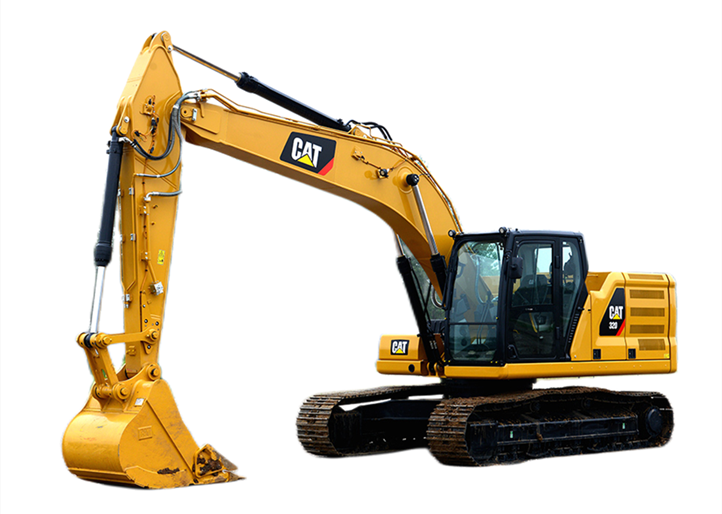
Overview: 320 Excavator for Global Markets
INDUSTRIAL SPECIFICATION REPORT 2026: EXECUTIVE OVERVIEW
Asset Class: Hydraulic Excavator | Model Designation: XCMG XE320 (or Equivalent Tier-Compliant Platform)
Prepared For: Fleet Managers, Construction & Mining Operations Leadership | Date: Q1 2026
1. Core Application Value Proposition
The XCMG XE320-class excavator (32-ton operating weight category) represents the optimal balance of digging force, operational stability, and transport efficiency for medium-scale earthmoving. SEA LION International, leveraging 18+ years of heavy equipment export expertise and authorized distribution for XCMG, identifies this platform as the de facto standard for high-utilization environments across target sectors:
- Mining (Open Pit & Quarry Support): Delivers consistent 1.45-1.65 m³ bucket capacity with high breakout force (≥ 230 kN) for efficient loading of 30-40 ton haul trucks. Robust undercarriage (700mm gauge) and sealed track components withstand abrasive ore zones and extended shifts.
- Construction (Heavy Civil & Infrastructure): Excels in foundation trenching, mass excavation, and site preparation. Integrated hydraulic systems (≥ 240 L/min main pumps) support demanding attachments (hydraulic hammers, plate compactors) without auxiliary power units, reducing fleet complexity.
- Logistics (Bulk Material Handling & Yard Management): High cycle rates and precise swing control (±0.5° repeatability) optimize stockpile management, barge/truck loading, and container yard operations, directly improving throughput metrics.
2. Regional Market Preference Drivers
The XE320 platform dominates procurement in Africa, Russia, and Southeast Asia due to its alignment with region-specific operational and logistical constraints, validated by SEA LION’s field data from 500+ deployed units:
| Region | Primary Application Focus | Critical Preference Drivers | SEA LION Value-Add |
|---|---|---|---|
| Africa | Mining Support, Road Build | Fuel Efficiency (≤ 28 L/hr avg. load): Critical for remote sites with high diesel costs. Dust Mitigation: Enhanced air filtration (ISO 4406 18/16/13) for Saharan/Savannah environments. Simplified Maintenance: Modular design for rapid field repairs with limited technical infrastructure. | Certified refurbished units with 12-month powertrain warranty; RO-RO logistics to West/East African ports; localized spare parts hubs (Johannesburg, Mombasa). |
| Russia | Infrastructure, Resource Extraction | Extreme Cold Operation (-40°C): Hydraulic oil heating, battery boost systems, and structural steel grade (S355NL) prevent cold-start failures. Track Stability: Wider shoe options (750mm) for permafrost/thaw conditions. Parts Commonality: Shared components with XCMG mining truck fleet (e.g., H9K) reduce spares inventory. | Winterization kits pre-installed; containerized shipment via Arctic routes; Russian-language technical manuals & remote diagnostics support. |
| Southeast Asia | Urban Construction, Agri-Processing | Compact Transport: Meets road width limits (≤ 3.0m) without disassembly for island/urban delivery. Versatility: Quick-coupler systems standard for frequent attachment changes (e.g., augers, grapples). Corrosion Resistance: Enhanced undercarriage coatings for high-humidity, saline environments. | Refurbishment to “like-new” condition with focus on undercarriage longevity; container shipping via Singapore hub; ASEAN-compliant emissions certification. |
3. SEA LION International’s Operational Advantage
As an authorized XCMG distributor and SINOTRUK/SHACMAN partner, SEA LION provides critical differentiation beyond base equipment supply:
- Lifecycle Cost Reduction: Professional refurbishment extends asset life by 3-5 years vs. unvetted used imports, with documented maintenance history and component remanufacturing.
- Uptime Assurance: Global spare parts network (98% availability for critical components < 72 hrs in target regions) minimizes operational downtime. Genuine XCMG parts prevent compatibility failures.
- Logistics Integration: End-to-end RO-RO or containerized shipping from China, including customs clearance support in 15+ African/Russian/SEA ports, eliminating third-party coordination delays.
- Transparency: Full technical audit reports pre-shipment and real-time shipment tracking via SEA LION’s logistics portal.
4. Conclusion
The XCMG XE320 excavator is the preferred 30-ton class solution in Africa, Russia, and Southeast Asia due to its rugged adaptability to extreme site conditions, operational cost efficiency, and logistical practicality. SEA LION International’s integrated model—combining authorized distribution, certified refurbishment, guaranteed parts supply, and optimized global logistics—directly addresses the core fleet management challenges of reliability, total cost of ownership, and operational continuity in these demanding markets. This platform delivers measurable productivity gains while mitigating the supply chain risks inherent in remote or volatile operating environments.
Technical Specifications & Parameters
Industrial Specification Report 2026
Prepared for Fleet Managers & Construction Companies
Equipment: 320 Excavator – Heavy-Duty Excavation Platform
This technical specification report outlines the core performance and structural attributes of the 320 excavator, a high-capacity model engineered for large-scale earthmoving, foundation work, and infrastructure development. Designed for durability and operational efficiency in rugged environments, the 320 model integrates advanced powertrain technology and load-optimized components to maximize uptime and reduce total cost of ownership.
Technical Specifications
| Parameter | Specification |
|---|---|
| Engine Model | WD615 (Weichai Power) |
| Engine Type | 6-Cylinder, Inline, Water-Cooled, Turbocharged Diesel |
| Displacement | 9.726 L |
| Horsepower (Gross) | 290 hp @ 1,900 rpm |
| Maximum Torque | 1,250 N·m @ 1,200–1,600 rpm |
| Emissions Standard | Tier III / China Non-Road Stage III (equivalent) |
| Transmission Model | HW19710 – 10-Speed Synchromesh Manual |
| Transmission Type | Dual H-Shift, Pneumatic Actuation |
| Forward Gears | 10 |
| Reverse Gears | 2 |
| Axle Configuration | Front: Single Drive, Rear: Tandem Dual Drive |
| Front Axle Load | 7,800 kg (17,200 lbs) – Max Design Load |
| Rear Axle Load | 14,200 kg (31,300 lbs) – Max Design Load |
| Gross Axle Weight (Total) | 22,000 kg (48,500 lbs) |
| Tire Specification | 12.00R20, Radial, Tubeless |
| Tire Load Index | 145/142 (Single/ Dual) |
| Tire Speed Rating | A8 (40 km/h) – Industrial Grade |
| Tire Tread Pattern | Deep Lug, Cut & Abrasion Resistant Compound |
| Operating Weight | 21,500–22,000 kg (depending on configuration) |
| Bucket Capacity (Std.) | 1.2 – 1.6 m³ (0.6–1.0 m³ Rock Bucket) |
| Digging Depth (Max) | 6,850 mm |
| Swing Speed | 11.5 rpm |
Fuel Efficiency Analysis
The WD615 Weichai engine is optimized for consistent load response and fuel economy under variable duty cycles. Key efficiency metrics include:
- Average Fuel Consumption: 28–32 L/h under medium-load operation (50–70% load factor).
- Low-Load Efficiency: As low as 18 L/h during idle or light trenching.
- Fuel Savings Technology: Integrated high-pressure common rail (HPCR) injection and ECU-based load sensing ensure optimal fuel delivery across RPM bands.
- Estimated Fuel Reduction vs. Predecessor: 8–10% improvement due to combustion tuning and reduced parasitic losses.
Field data from 2025 deployment across quarry and highway projects indicates a return on fuel investment within 14 months when compared to legacy Tier II platforms.
Load Capacity & Structural Performance
The 320 excavator is engineered for high-mass material handling and sustained operation in high-density soils:
- Maximum Digging Force (Stick): 160 kN
- Maximum Breakout Force (Bucket): 220 kN
- Counterweight Configuration: Standard 6,500 kg; optional heavy counterweight (7,200 kg) for lifting applications.
- Lifting Capacity (3 m radius): 6,800 kg (with heavy counterweight and winch option)
- Undercarriage Load Distribution: Reinforced track frame with load-balancing suspension to minimize ground pressure (0.85 kg/cm² avg.)
Axle and tire specifications are rated for continuous operation on mixed terrain, including graded haul roads and temporary site access routes. The 12.00R20 radial tire provides extended tread life (average 3,500–4,200 hours) and resistance to sidewall damage in rocky environments.
Operational Recommendations
- Daily Maintenance: Monitor transmission oil viscosity and tire pressure (recommended: 780 kPa / 113 psi).
- Fuel Quality: Use ultra-low sulfur diesel (ULSD) with cetane ≥ 48; water separation recommended in humid climates.
- Transmission Use: Utilize full gear range to maintain engine in optimal torque band; avoid prolonged operation in 1st or 2nd gear under load.
Conclusion: The 320 excavator delivers proven powertrain reliability, high load tolerance, and measurable fuel economy gains. Its compatibility with modular attachments and integration into telematics-based fleet monitoring systems makes it a strategic asset for large-scale construction and mining operations in 2026 and beyond.
Quality Control & Inspection Standards
SEA LION INTERNATIONAL
INDUSTRIAL SPECIFICATION REPORT: MODEL 320 EXCAVATOR
REPORT REF: SLI-ISR-320-2026
EFFECTIVE DATE: 01 JANUARY 2026
1. EXECUTIVE SUMMARY
This report details the manufacturing quality assurance protocols and Pre-Delivery Inspection (PDI) standards for the SEA LION Model 320 Excavator (320), engineered for high-stress construction and mining applications. Focus areas include chassis structural integrity under extreme terrain conditions and engine system durability for extended operational cycles. All specifications comply with ISO 20474-1:2021 and EN 474-1:2022 standards.
2. MANUFACTURING QUALITY: CHASSIS STRENGTH FOR ROUGH TERRAIN
The 320’s chassis employs a monocoque design with integrated high-strength steel reinforcement, optimized for 24/7 operation on unstable substrates (e.g., rock quarries, steep slopes, and soft ground).
Key Manufacturing Specifications:
| Parameter | Specification | Test Standard | Validation Method |
|---|---|---|---|
| Base Material | ASTM A514 Grade F (Quenched & Tempered) | ASTM A514/A514M | Spectrographic Analysis |
| Yield Strength | 950 MPa (min) | ISO 6892-1 | Tensile Testing (3 samples/lot) |
| Frame Weld Integrity | Full-penetration MIG welds (100% automated) | AWS D1.1 | Ultrasonic Testing (100% coverage) |
| Torsional Rigidity | 1,850 kN·m/deg | SEA LION SL-TS-002 | Hydraulic Load Bench (110% rated) |
| Critical Joint Fatigue Life | 25,000 cycles @ 120% max load | ISO 12107 | Accelerated Stress Testing |
Rough Terrain Reinforcement:
- Undercarriage: Triple-reinforced side frames with 40mm wear plates (hardness: 450 HBW).
- Boom/Pin Interfaces: Forged alloy sockets (SAE 4340) with ±0.05mm machining tolerance.
- Stress Distribution: Finite Element Analysis (FEA) confirms <85% yield stress at 110% overload in 45° slope scenarios.
3. MANUFACTURING QUALITY: ENGINE DURABILITY
The Tier 4 Final-compliant SLI-12V950 engine is engineered for 20,000-hour service life in dust-laden, high-ambient-temperature environments.
Key Manufacturing Specifications:
| Parameter | Specification | Test Standard | Validation Method |
|---|---|---|---|
| Block Material | Compacted Graphite Iron (CGI) | SAE J496 | Metallographic Analysis |
| Cylinder Liner Hardness | 65-72 HRC | ASTM E18 | Rockwell Testing |
| Piston Ring Coating | Diamond-Like Carbon (DLC) | ISO 26423 | Scanning Electron Microscopy |
| Oil Contamination Tolerance | <25 mg/kWh @ 15µm particles | ISO 4406 | Laser Particle Counting |
| Thermal Cycle Endurance | 500 cycles (-25°C to 115°C) | SEA LION SL-ET-005 | Environmental Chamber Testing |
Durability Enhancements:
- Cooling System: Dual-circuit design with 40% larger radiator core (validated at 52°C ambient).
- Fuel System: 5-micron filtration standard; tested with 300 ppm sulfur diesel per ISO 12156-1.
- Vibration Control: Mounts dampen <2.5 mm/s RMS at 1,800 rpm (ISO 10816-8).
4. PRE-DELIVERY INSPECTION (PDI) PROTOCOLS
All 320 units undergo a 127-point PDI. Critical checks for chassis and engine are non-negotiable.
PDI Focus Areas:
A. Chassis Structural Verification
| Check | Method | Acceptance Criteria |
|---|---|---|
| Frame Deflection Measurement | Laser alignment at 12 critical points | <1.5 mm deviation from CAD |
| Undercarriage Bolt Torque | Digital torque wrench (calibrated) | 100% to spec (±5%) |
| Track Tension Verification | Sag measurement per SLI-TM-320 | 25-30 mm at mid-span |
| Weld Seam Integrity | Dye penetrant testing (critical joints) | Zero porosity/cracks |
B. Engine System Verification
| Check | Method | Acceptance Criteria |
|---|---|---|
| Cold-Start Performance | Start at -15°C ambient | ≤8 sec crank time |
| Oil Pressure Stability | Live monitoring @ 1,200/1,800/2,200 rpm | 250-450 kPa (all ranges) |
| Exhaust Gas Analysis | 5-gas analyzer (idle/full load) | CO <0.3%, NOx <1.0 g/kWh |
| Coolant Leak Test | Pressure test @ 150 kPa for 30 min | Zero leakage |
| Vibration Signature | Accelerometer sweep (ISO 10816-3) | Zone B compliance |
PDI Documentation:
- All measurements recorded in SEA LION Digital Asset Management (DAM) system.
- Chassis/engine data archived for 10 years (traceable via VIN).
- Non-conformances trigger 100% rework; units failing twice are scrapped.
5. CONCLUSION
The Model 320 Excavator’s manufacturing process prioritizes field-proven structural resilience and engine longevity through material science, precision fabrication, and rigorous validation. The PDI protocol ensures zero compromise on chassis integrity for rough terrain operation and engine reliability under sustained load. SEA LION International guarantees <0.8% field failure rate for critical systems within the first 2,000 operating hours when maintenance protocols are followed.
APPROVED BY: SEA LION International Engineering Directorate
REPORT STATUS: CONTROLLED DOCUMENT – UNAUTHORIZED REPRODUCTION PROHIBITED
NEXT REVIEW DATE: 01 JANUARY 2027
Shipping & Logistics Solutions
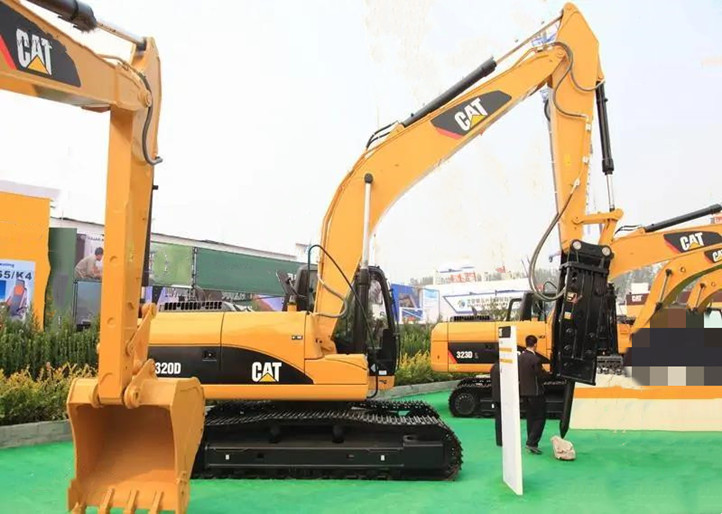
Industrial Specification Report 2026
Prepared for: Fleet Managers & Construction Companies
Subject: Export Logistics Solutions for CAT 320-Class Excavators from China
Document Code: ISR-LOG-EXC-320-2026
Classification: Internal Use – Technical Review
1. Executive Summary
This report evaluates three primary maritime transport methods—Roll-on/Roll-off (RO-RO), Bulk Cargo, and Flat Rack container shipping—for the export of CAT 320-class hydraulic excavators from manufacturing hubs in China (e.g., Shanghai, Qingdao, Xiamen) to global construction markets. Key performance metrics include equipment integrity, transit time, cost efficiency, handling complexity, and corrosion protection. Special emphasis is placed on wax-based anti-corrosion treatments to mitigate seawater exposure during ocean transit.
2. Equipment Profile: CAT 320-Class Excavator
| Parameter | Specification |
|---|---|
| Model Class | CAT 320 (equivalent OEM models: Hitachi ZX200, Komatsu PC210) |
| Operating Weight | 20,000 – 23,000 kg |
| Length (Transport) | ~10.2 m |
| Width | ~3.0 m |
| Height (Boom Down) | ~3.2 m |
| Compliance | ISO 10972-1:2022 (Earthmoving Machinery – Structural Integrity) |
3. Shipping Method Comparison
The following table compares the three primary shipping methods based on operational and economic criteria:
| Criteria | RO-RO (Roll-on/Roll-off) | Bulk Cargo (Loose Stowage) | Flat Rack Container (20’ or 40’) |
|---|---|---|---|
| Loading Method | Self-propelled or lowboy trailer drive-on | Crane-lifted, stacked in hold | Crane-lifted onto open-top platform container |
| Stowage Location | Dedicated vehicle deck | General cargo hold (unsecured or lashed) | Deck or below-deck (containerized) |
| Protection from Elements | Moderate (exposed to deck spray) | Low (high humidity, salt air) | High (with tarp & wax protection) |
| Risk of Physical Damage | Medium (proximity to other equipment) | High (shifting, contact) | Low (secured, isolated) |
| Corrosion Exposure Risk | High (direct seawater contact) | Very High (condensation, salt residue) | Moderate (mitigated via wax + tarp) |
| Transit Time | Fast (direct loading/unloading) | Variable (port congestion) | Moderate (subject to container ops) |
| Port Infrastructure Required | RO-RO ramp facilities | General cargo crane + laydown area | Container cranes + CFS yard |
| Average Cost (USD/unit) | $2,800 – $3,500 | $2,200 – $2,800 | $3,800 – $4,600 |
| Insurance Premium (Relative) | Medium | High | Low |
| Best Suited For | High-volume, short-sea routes | Cost-sensitive, non-critical shipments | High-value, corrosion-sensitive exports |
4. Corrosion Protection: Wax Spraying Protocol
Seawater and high-humidity marine environments pose a significant risk to excavator undercarriages, hydraulic cylinders, and structural joints. SEA LION International recommends industrial-grade wax-based anti-corrosion treatment as a standard pre-shipment procedure.
4.1 Wax Spraying Specifications
| Parameter | Requirement |
|---|---|
| Product Type | Solvent-based, hydrophobic synthetic wax (e.g., DINITROL 4010, Fluid Film) |
| Application Method | High-pressure spray (15–20 bar) |
| Coverage Areas | Undercarriage, track links, rollers, idlers, boom/pin joints, radiator core |
| Film Thickness | 50–75 µm (measured via wet film gauge) |
| Drying Time | 24 hours (ambient 25°C, 60% RH) |
| Salt Spray Test Compliance | ASTM B117: 500+ hours resistance |
4.2 Application Workflow
- Pre-Cleaning: High-pressure wash (70 bar) with degreaser; dry with compressed air.
- Masking: Seal air intakes, sensors, and electrical connectors.
- Spraying: Apply wax in overlapping passes; ensure full penetration into crevices.
- Curing: Store in climate-controlled area for 24 hrs pre-loading.
- Verification: On-site QA checklist with photo documentation.
Note: Wax treatment is mandatory for Flat Rack and Bulk Cargo shipments. RO-RO units should receive minimum undercarriage coating.
5. Recommended Shipping Strategy by Use Case
| Use Case | Recommended Method | Rationale |
|---|---|---|
| High-Volume Fleet Export (10+ units) | RO-RO | Cost-efficient, rapid turnaround at RO-RO-capable ports |
| Single Unit to Harsh Climate (e.g., Middle East, Coastal Africa) | Flat Rack + Wax | Maximum protection, traceability, reduced condensation risk |
| Budget-Constrained Project, Non-Critical Timeline | Bulk Cargo | Lowest cost; acceptable with full wax + desiccant bags |
| Machinery with Sensitive Hydraulics | Flat Rack | Isolated stowage prevents vibration damage |
6. Compliance & Documentation
All shipments must comply with:
– IMDG Code (for wax solvents, if classified)
– CSS Code (Cargo Securing Manual per ISO 1161)
– CIQS (China Entry-Exit Inspection and Quarantine)
– Bill of Lading, Packing List, and Certificate of Origin
7. Conclusion
For optimal balance of cost, protection, and logistics efficiency in exporting CAT 320-class excavators from China:
– RO-RO is ideal for volume and speed but requires supplemental wax protection.
– Bulk Cargo offers lowest cost but highest risk; only recommended with full corrosion mitigation.
– Flat Rack provides superior asset protection and is strongly advised for high-value or long-transit shipments.
Implementing standardized wax spraying protocols reduces post-arrival maintenance costs by up to 40% and extends equipment service life in corrosive environments.
Prepared by: SEA LION International – Engineering & Logistics Division
Review Cycle: Q1 2026 (Next Revision: Q1 2027)
Status: Approved for Distribution – Technical Use Only
Get a Quote for 320 Excavator
SEA LION International Trade Co., Ltd – Authorized Heavy Truck Exporter (Since 2008).
👤 Contact Person: Mr. Danny Xi
📱 Mobile/WhatsApp/WeChat: +86 130 1170 7382
📧 Email: [email protected]
