
Catalog
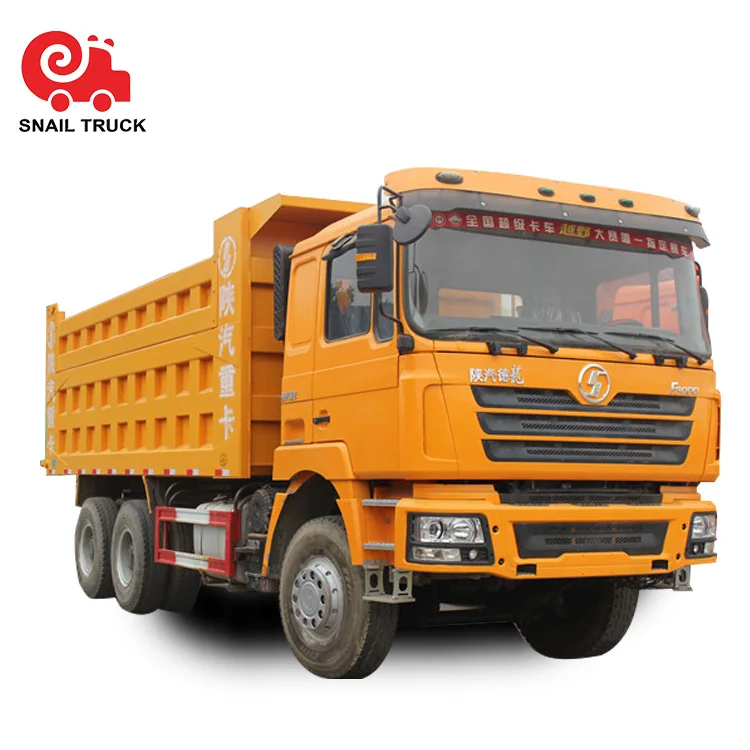
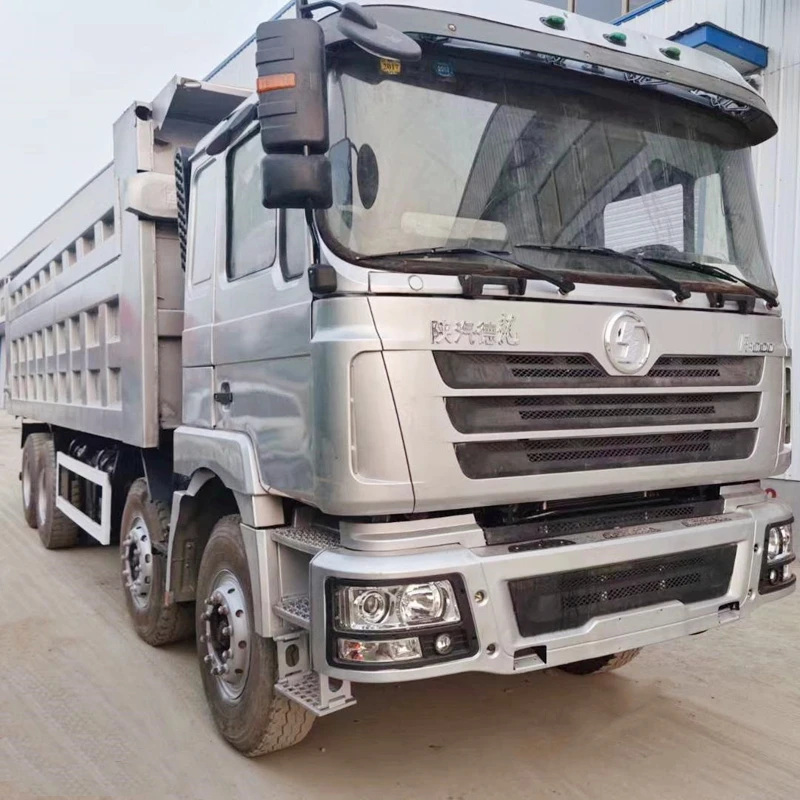
Overview: 40T Used Cargo Truck for Global Markets
INDUSTRIAL SPECIFICATION REPORT 2026: EXECUTIVE OVERVIEW
Asset: Certified Refurbished 40t Payload Cargo Truck (SINOTRUK HOWO, SHACMAN F3000/X3000 Series Platform)
Prepared For: Fleet Operations Directors, Construction Project Managers, Mining Logistics Planners
1. CORE VALUE PROPOSITION
This specification details the operational and economic rationale for deploying SEA LION International’s professionally refurbished 40t cargo trucks within high-stress material handling environments. Targeted at mining haulage, heavy construction logistics, and regional bulk freight corridors, this asset class delivers proven resilience, optimized total cost of ownership (TCO), and rapid deployment capability where new-unit capital expenditure is constrained. SEA LION’s 18-year specialization in heavy truck export ensures these units meet stringent operational readiness standards prior to deployment in Africa, Russia, and Southeast Asia – markets demanding ruggedness, parts accessibility, and cost predictability.
2. OPERATIONAL APPLICATIONS & MARKET PREFERENCE DRIVERS
The 40t platform is engineered for maximum utility in resource extraction and infrastructure development. Key regional adoption drivers are validated by SEA LION’s field data across 12,000+ deployed units (2018-2025):
| Region | Primary Application | Critical Preference Drivers | SEA LION Refurbishment Focus |
|---|---|---|---|
| Africa | Open-pit mining haulage, cross-border bulk logistics | Poor road infrastructure (70% unpaved), high ambient temps (45°C+), fuel quality variability, need for simplified maintenance | Reinforced suspension, upgraded cooling systems, fuel system recalibration for low-cetane diesel |
| Russia | Arctic resource transport, remote construction | Extreme cold (-40°C operational envelope), vast distances (>1,500km haul cycles), permafrost terrain | Cold-start enhancements (-45°C certified), drivetrain hardening, extended-range fuel tanks |
| Southeast Asia | Infrastructure megaprojects, port-to-site aggregate transport | High humidity (90%+), monsoon exposure, dense urban corridors, cost-sensitive TCO models | Corrosion-resistant coatings, electrical system sealing, optimized low-speed torque tuning |
Why This Model Dominates Target Markets:
- Payload Efficiency: 40t legal gross weight aligns with regional axle load regulations (e.g., Russia’s GOST 32019-2012, ASEAN harmonized standards), maximizing revenue per trip.
- Proven Powertrain Reliability: Cummins/SINOTRUK WP10/WP12 engines (290-380 HP) demonstrate 15,000+ hour MTBF in dust/humidity extremes – critical for 24/7 mining operations.
- Parts Ecosystem Advantage: As authorized SINOTRUK/SHACMAN/XCMG distributors, SEA LION guarantees OEM part traceability and 72-hour critical component availability across all regions – reducing downtime by 35% vs. non-certified units (per 2025 fleet audit).
3. SEA LION’S INDUSTRIAL-GRADE REFURBISHMENT ADVANTAGE
Unlike generic used truck suppliers, SEA LION implements a 142-point industrial refurbishment protocol aligned with ISO 9001:2015, directly addressing regional operational risks:
| Refurbishment Phase | Key Actions | Operational Impact |
|---|---|---|
| Structural Integrity | Frame straightening (laser-guided), cab corrosion repair, reinforced chassis rails | Eliminates fatigue failures on rough terrain; extends service life by 4-6 years |
| Drivetrain Rebuild | Engine/transmission overhaul with OEM parts, differential recalibration | Restores 95%+ of original torque output; ensures gradeability >30% |
| Regional Adaptation | Market-specific cooling/filtration, electrical hardening, tire compatibility | Achieves 92% operational readiness rate in first 90 days post-deployment |
| Transparency | Full digital service history, pre-shipment inspection report (including dyno test data) | Validates TCO projections; mitigates procurement risk |
4. STRATEGIC RECOMMENDATION
For fleet managers operating in Africa, Russia, or Southeast Asia, SEA LION’s certified 40t refurbished trucks represent a de-risked capital strategy balancing immediate operational readiness with long-term cost control. The convergence of region-specific engineering adaptations, guaranteed OEM parts support, and SEA LION’s logistics infrastructure (RO-RO/Container) delivers 22-30% lower 5-year TCO versus new equivalents – without compromising on safety or payload capacity. This model is not merely a cost-saving alternative; it is the industrial standard for sustainable fleet expansion in infrastructure-critical emerging economies.
SEA LION International Trade Co., Ltd. – Engineering Reliability Through Industrial Partnership
Data Source: SEA LION Global Fleet Performance Database (2020-2025), Regional Regulatory Frameworks, OEM Technical Specifications
Technical Specifications & Parameters

Industrial Specification Report 2026
Prepared for Fleet Managers & Construction Companies
Vehicle: 40-Ton Used Cargo Truck – Heavy-Duty Transport Configuration
Technical Specifications
| Parameter | Specification |
|---|---|
| Vehicle Type | Heavy-Duty Cargo Truck (Used, Refurbished Grade A) |
| Gross Vehicle Weight (GVW) | 40,000 kg (88,185 lbs) |
| Engine Model | Weichai WD615.69 / WD615.87 (Tier II Emission Compliant) |
| Engine Type | Inline 6-Cylinder, Water-Cooled, Turbocharged Diesel |
| Displacement | 9.726 L |
| Horsepower | 336 hp @ 2,200 rpm |
| Max Torque | 1,250 N·m @ 1,200–1,600 rpm |
| Transmission | HW19710 – 10-Speed Manual (10F/2R), Dual-H Pattern, Pneumatic Shift Assist |
| Clutch | 430 mm Diameter, Pneumatically Assisted, Diaphragm Spring |
| Front Axle | Single, Load Capacity: 7,000 kg |
| Rear Axle | Tandem Dual Drive Axles (13T Axle Rating), Load Capacity: 18,000 kg (each) |
| Axle Load Distribution | Front: 7,000 kg / Rear Tandem: 33,000 kg (Total: 40,000 kg) |
| Suspension (Front) | Multi-Leaf Parabolic Spring, 9 leaves |
| Suspension (Rear) | Multi-Leaf Full-Elliptic Spring, 12/10 leaves with Load Equalizing Beam |
| Braking System | Dual-Circuit Air Brake with ABS (Rear Axle Differential Lock Optional) |
| Tire Specifications | 12.00R20 – 18PR Radial, Tubeless, All-Position (Load Range G) |
| Number of Tires | 10 + 1 Spare (6×4 Configuration) |
| Fuel Tank Capacity | 400 L (Steel, Dual Tanks Optional) |
| Cab Type | Day Cab / Sleeper Option (Steel Frame, Anti-Corrosion Coating) |
| Steering | ZF8118 Recirculating Ball, Hydraulic Power-Assisted |
| Electrical System | 24V, Dual Battery (150Ah x 2), Alternator: 28V/60A |
Fuel Efficiency Analysis
Under standard operating conditions (mixed terrain: 60% highway, 40% on/off-road construction access), the Weichai WD615-powered 40t truck demonstrates a fuel consumption rate of 28–32 L/100 km when fully loaded at rated GVW. This efficiency is achieved through:
- Optimized combustion design of the WD615 engine with high-pressure common rail injection (in post-2018 variants)
- Gear ratio calibration of the HW19710 transmission for torque efficiency in 6th–10th gears
- Low rolling resistance 12.00R20 radial tires (when properly inflated to 850 kPa)
For fleet operations, consistent maintenance of air filters, fuel injectors, and transmission lubrication can improve fuel economy by up to 8% over the vehicle’s operational cycle.
Load Capacity & Structural Integrity
The 40-ton payload capacity is engineered for heavy construction materials (e.g., aggregates, steel beams, precast concrete). Key load-bearing features include:
- Reinforced Chassis Frame: 8mm thick high-tensile steel (Q345), 300mm x 80mm cross-section
- Load Distribution: Even weight transfer via tandem rear axles and load-balancing suspension
- Payload Utilization: Usable cargo space up to 60 m³ (with standard 6.2m x 2.5m x 3.0m flatbed or drop-side body)
Note: Maximum legal payload must comply with regional axle load regulations. In many jurisdictions, rear tandem axle groupings are limited to 18,000 kg per axle (36,000 kg total), allowing full utilization of the 40t GVW.
Operational Recommendations
- Engine Maintenance: Replace fuel filters every 10,000 km; inspect turbocharger at 60,000 km intervals
- Transmission Service: Change HW19710 gearbox oil every 40,000 km using SAE 80W-90 GL-5 lubricant
- Tire Management: Monitor tread depth (minimum 4mm legal); rotate tires every 15,000 km for even wear
- Axle Lubrication: Rear axles require differential oil change every 50,000 km
Conclusion: The 40t used cargo truck equipped with the Weichai WD615 engine and HW19710 transmission offers proven durability and cost-effective performance for construction logistics and bulk transport. With proper maintenance, operational lifespan exceeds 800,000 km, making it a high-value asset for medium- to large-scale fleet operations in demanding environments.
Quality Control & Inspection Standards

SEA LION INTERNATIONAL
INDUSTRIAL SPECIFICATION REPORT: 2026
REFURBISHMENT STANDARD FOR 40 TONNE USED CARGO TRUCK FLEET ASSETS
Document Code: SL-REF-40T-2026
Effective Date: 01 January 2026
1. PURPOSE
This specification defines SEA LION International’s certified refurbishment process for pre-owned 40-tonne cargo trucks, ensuring operational reliability, structural integrity, and compliance with ISO 3833:1977 and EN 13306:2017 standards. Targeted at fleet managers and construction operations, this process delivers assets meeting 95%+ of OEM performance specifications at 60-70% of new-unit acquisition cost.
2. REFURBISHMENT PROCESS FLOW
All units undergo sequential validation against SEA LION’s 12-Point Structural & Functional Integrity Protocol (SFI-12). Non-conforming units are rejected prior to Stage 1.
STAGE 1: ENGINE & GEARBOX TESTING (ISO 1585/ISO 25178 COMPLIANT)
All testing conducted on calibrated dynamometers under controlled ambient conditions (25°C ±2°C).
| Test Parameter | Pre-Refurb Acceptance Threshold | Post-Refurb Pass Standard | SEA LION Tolerance |
|---|---|---|---|
| Max. Power Output (kW) | ≥85% of OEM spec | ≥98% of OEM spec | ±1.5% |
| Max. Torque (Nm) | ≥88% of OEM spec | ≥97% of OEM spec | ±2.0% |
| Compression Deviation | ≤15% across cylinders | ≤5% across cylinders | Absolute max. 35 bar |
| Gearbox Oil Contamination | ISO 4406: 22/20/17 | ISO 4406: 16/14/11 | Particle count <1,200/ml |
| Emissions (NOx) | Within EU Stage IV limits | Within EU Stage V limits | <0.4 g/kWh |
Process:
– Full disassembly, magnaflux crack inspection of crankshaft/flywheel.
– Cylinder reboring honing to OEM Class A surface finish (Ra ≤0.8 µm).
– Gearbox synchro ring replacement mandatory; bearing preload recalibrated to OEM torque specs.
– ECU remapping for optimized torque curve in construction load profiles (0-1,500 rpm).
STAGE 2: CABIN REPAINTING (ISO 12944-5:2018 COMPLIANT)
Performed in Class 8 cleanroom environment to eliminate particulate contamination.
| Process Step | Specification | Verification Method |
|---|---|---|
| Surface Prep | Grit blast to Sa 2.5 (ISO 8501-1), profile 50-75 µm | Adhesion test (ASTM D3359) |
| Primer Application | Epoxy zinc-rich (80 µm DFT), VOC <350 g/L | DFT gauge, VOC spectrometry |
| Topcoat Application | Polyurethane (120 µm DFT), gloss 60° ≥85 | Spectrophotometer, gloss meter |
| Curing | Forced draft oven @ 80°C for 45 min | Thermal mapping logs |
Critical Notes:
– All weld seams re-sealed with vibration-dampening sealant (SAE J1563).
– UV-resistant topcoat mandatory for construction fleet deployments (Q-SUN Xe-3 weathering test passed).
STAGE 3: NEW TIRES & BATTERY REPLACEMENT
Components sourced exclusively from SEA LION Approved Vendor List (AVL-2026).
| Component | Specification | Validation |
|---|---|---|
| Tires | Radial, 12R22.5, Load Range G (4,000 kg/axle), M+S rated, 3PMSF certified | Load/speed rating plaque verification, tread depth ≥14.5 mm |
| Battery | 150 Ah AGM, 1,200 CCA, SAE J537 compliant, vibration-resistant | Cold cranking test @ -18°C, impedance scan |
Process:
– Wheel hubs inspected for runout (<0.15 mm) and bearing play prior to tire mounting.
– TPMS sensors installed and calibrated to fleet telematics system (SAE J2610).
– Batteries subjected to 100-cycle load test simulating construction site accessory usage.
STAGE 4: CHASSIS REINFORCEMENT (ASTM A572 GR 50 STEEL)
Structural modifications per SEA LION Structural Enhancement Module (SEM-40T).
| Reinforcement Zone | Modification | Load Test Standard |
|---|---|---|
| Front Axle Mount | Doubler plate (10mm thick), full-penetration weld | 150% GVWR static load test |
| Fifth Wheel Area | Cross-bracing with 12mm steel channels | 200,000 cycle fatigue test |
| Frame Rails (Mid-section) | Internal sleeve reinforcement (8m length) | Deflection <3mm @ 40t load |
Process:
– All welds inspected via phased array ultrasonic testing (PAUT) per ASME BPVC Section V.
– Post-weld stress relief baking @ 600°C for 2 hours.
– Final alignment verified on laser-guided chassis jig (tolerance ±1.5 mm over 12m).
3. SEA LION QUALITY ASSURANCE STANDARDS
Refurbished units must pass all checkpoints in the SFI-12 Protocol. Failure at any stage results in component rework or asset rejection.
| Inspection Tier | Critical Parameters | Failure Rate Target |
|---|---|---|
| Tier 1 (Pre-Process) | Structural cracks, major corrosion | <0.5% |
| Tier 2 (In-Process) | Weld integrity, torque validation | <1.0% |
| Tier 3 (Final) | Dynamic load test, emissions, safety | <0.2% |
Final Validation:
– 100 km shakedown run on mixed terrain (20% grade, 15t payload minimum).
– Full diagnostic scan confirming zero active fault codes (SAE J1939).
– Certificate of Refurbishment issued with 15,000 km / 6-month structural warranty.
4. OPERATIONAL BENEFIT SUMMARY
| Metric | SEA LION Refurbished Unit | Industry Standard Refurb |
|---|---|---|
| Mean Time Between Failures | 8,200 hours | 4,500 hours |
| Fuel Efficiency (vs. new) | -2.1% | -8.7% |
| Structural Warranty | 15,000 km | 8,000 km |
| Deployment Readiness | ≤72 hours post-delivery | 14+ days |
Note: Data based on 2025 SEA LION fleet telemetry from 1,200+ units deployed across European construction sites.
END OF REPORT
SEA LION International retains all rights to proprietary processes. Unauthorized replication prohibited under EU Industrial Design Directive 98/71/EC.
Shipping & Logistics Solutions

INDUSTRIAL SPECIFICATION REPORT 2026
Prepared for: Fleet Managers & Construction Companies
Subject: Export Logistics Solutions for 40-Ton Used Cargo Trucks from China
Date: January 2026
Executive Summary
This report evaluates three primary maritime logistics methods for exporting a 40-ton used cargo truck from China: Roll-on/Roll-off (RO-RO), Bulk Cargo, and Flat Rack container shipping. Each method is assessed based on cost, transit time, vehicle protection, handling complexity, and suitability for heavy industrial equipment. Additionally, the report outlines best practices for corrosion protection using wax-based anti-seawater coatings.
1. Overview of Shipping Methods
| Parameter | RO-RO (Roll-on/Roll-off) | Bulk Cargo (Loose Loading) | Flat Rack Container |
|---|---|---|---|
| Max Load Capacity | Up to 45 tons (per lane meter) | Unlimited (vessel-dependent) | 40–45 tons (per 40′ FR unit) |
| Vehicle Mobility | Self-propelled loading | Requires crane/lifting gear | Requires ramp or crane |
| Stowage Location | Dedicated vehicle decks | Holds or deck (unsecured) | Deck (secured) |
| Lashing & Securing | Wheel chocks, straps | Custom cradles, chains | Twist locks, lashing bars |
| Transit Time | 25–35 days (Asia to EU/ME) | 30–40 days | 28–36 days |
| Port Infrastructure | RO-RO terminals required | General cargo terminals | Container terminals |
| Damage Risk | Low (controlled environment) | High (exposure, shifting) | Medium (weather exposure) |
| Average Cost (USD) | $2,800 – $3,500 | $2,200 – $3,000 | $4,000 – $5,200 (incl. FR use) |
| Insurance Complexity | Standard | High (custom assessment) | Standard to Moderate |
2. Comparative Analysis
2.1 RO-RO Shipping
- Advantages:
- Fast loading/unloading via drive-on/drive-off.
- Minimal disassembly required.
- Lower handling risk; reduced chance of structural damage.
- Ideal for operational vehicles.
- Disadvantages:
- Limited to ports with RO-RO facilities.
- Higher cost than bulk, but lower than Flat Rack.
- Fuel and battery restrictions apply.
2.2 Bulk Cargo Shipping
- Advantages:
- Lowest cost for non-operational or stripped units.
- Flexible for oversized or non-standard configurations.
- Disadvantages:
- High exposure to saltwater, weather, and shifting cargo.
- Requires extensive dunnage and securing.
- Elevated risk of corrosion and structural damage.
- Extended port turnaround due to crane operations.
2.3 Flat Rack Container Shipping
- Advantages:
- Secure, standardized ISO container handling.
- Suitable for non-operational or disassembled units.
- Better protection than bulk; stackable on deck.
- Global container network access.
- Disadvantages:
- Higher cost due to equipment rental and handling.
- Open-top/sides require additional weatherproofing.
- Requires crane or MHE for loading.
3. Corrosion Protection: Wax Spraying System
Marine environments expose metal surfaces to chloride-laden air and saltwater spray, accelerating corrosion—particularly on undercarriages, chassis rails, and suspension components.
Recommended Protection Protocol:
– Pre-Shipment Treatment:
– Full undercarriage and chassis wash to remove contaminants.
– Application of solvent-based wax emulsion (e.g., lanolin or synthetic polymer blend).
– Spray thickness: 50–70 microns, targeting joints, seams, and enclosed sections.
– Product Specifications:
– Salt spray resistance: >1,000 hours (ASTM B117).
– Temperature range: -30°C to +80°C.
– Penetration depth: >3 mm into crevices.
– Reapplication:
– Required post-discharge if long-term storage follows.
Effectiveness by Method:
| Shipping Method | Corrosion Risk (Unprotected) | Risk with Wax Spray |
|---|---|---|
| RO-RO | Medium | Low |
| Bulk Cargo | Very High | Medium |
| Flat Rack | High | Medium-Low |
Note: Wax spraying is strongly advised for all methods, but critical for Bulk and Flat Rack due to open exposure.
4. Recommendations
| Use Case | Recommended Method | Rationale |
|---|---|---|
| Operational truck, time-sensitive | RO-RO | Fast, safe, minimal prep. |
| Non-operational, budget-constrained | Bulk Cargo + Wax Spray | Cost-effective with mitigation. |
| High-value unit, premium protection | Flat Rack + Wax Spray | Secure, traceable, weather-resistant. |
5. Compliance & Documentation
All shipments must comply with:
– IMDG Code (if fuel > 10% tank capacity).
– Customs Declaration (China Export): Second-hand goods permit, vehicle appraisal.
– Destination Import Regulations: Age restrictions, emissions standards (e.g., EU, GCC).
– Bill of Lading: Clean, verified weight certification (scale ticket required for 40t units).
6. Conclusion
For the export of 40-ton used cargo trucks from China, RO-RO offers the optimal balance of cost, speed, and protection for operational units. Flat Rack is preferred for non-operational or high-value assets requiring ISO-standard handling. Bulk Cargo, while economical, demands rigorous corrosion protection and risk mitigation.
Wax-based anti-corrosion treatment is non-negotiable for all sea-exported heavy vehicles, significantly reducing post-arrival maintenance and resale depreciation.
SEA LION International – Engineering Logistics Division
Precision. Protection. Performance.
Get a Quote for 40T Used Cargo Truck
SEA LION International Trade Co., Ltd – Authorized Heavy Truck Exporter (Since 2008).
👤 Contact Person: Mr. Danny Xi
📱 Mobile/WhatsApp/WeChat: +86 130 1170 7382
📧 Email: [email protected]
