
Catalog
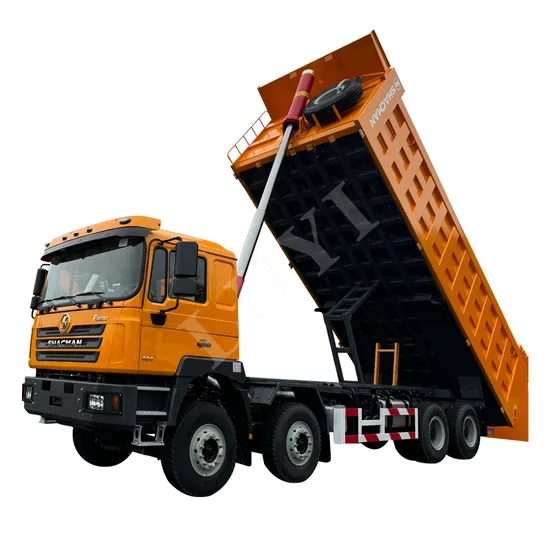
Overview: 8X4 Dump Tipper Truck for Global Markets
INDUSTRIAL SPECIFICATION REPORT 2026: EXECUTIVE OVERVIEW
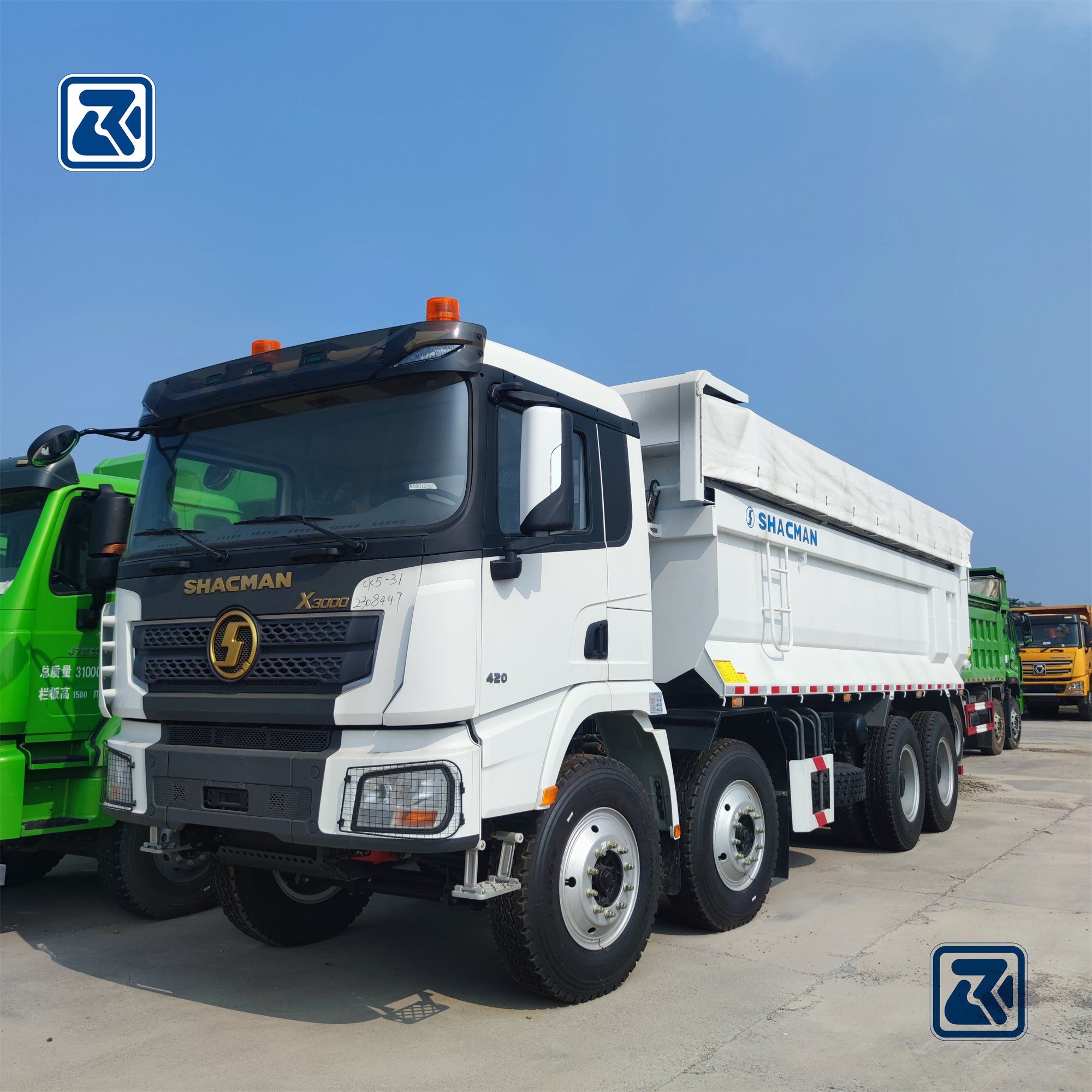
Product: SEA LION International 8×4 Heavy-Duty Dump Tipper Truck (OEM Platforms: SINOTRUK HOWO, SHACMAN F3000, XCMG Hauler Series)
Target Audience: Fleet Managers, Construction & Mining Operations Directors, Logistics Procurement Officers
1. Operational Imperative: The 8×4 Configuration
The 8×4 (four-axle, dual-rear tandem drive) dump tipper represents the optimal balance of payload capacity, traction, and regulatory compliance for demanding bulk material transport. Unlike 6×4 configurations, the 8×4 delivers:
– 25-30% higher legal payload (32-38 tonnes GVWR) on soft/uneven terrain without exceeding axle load limits.
– Enhanced traction & stability via dual rear drive axles, critical for steep inclines (>15%), loose aggregate, and wet conditions.
– Reduced ground pressure (1.8-2.2 kg/cm²) minimizing rutting on unsealed mine/construction access roads.
This configuration is non-negotiable for high-volume operations where trip efficiency directly impacts project ROI.
2. Regional Market Dominance: Africa, Russia, Southeast Asia
Field data from SEA LION’s 18-year export portfolio confirms the 8×4 tipper as the de facto standard in these regions due to infrastructure constraints and operational economics:
| Region | Primary Application | Key Operational Challenge | Why 8×4 Outperforms Alternatives | SEA LION Value Driver |
|---|---|---|---|---|
| Africa | Open-pit mining, quarrying | Unpaved roads, extreme heat (50°C+), axle load regulations | Superior heat dissipation (OEM cooling systems), 420mm ground clearance, 50° approach angle | Refurbished units with reinforced suspensions; localized parts hubs (Johannesburg, Dar es Salaam) |
| Russia | Arctic logistics, infrastructure | Sub-zero temps (-45°C), permafrost, extended haul distances | Cold-start reliability (-40°C), reinforced frames for ice road vibration, 300km+ range | Arctic-spec fuel systems; containerized logistics from Vladivostok |
| SE Asia | Landfill, port logistics | Monsoon flooding, tight urban sites, high humidity | Waterproof electrical systems, 10° tighter turning radius vs 8×6, corrosion-resistant chassis | RO-RO shipments to Tanjung Pelepas; monsoon-season maintenance kits |
Critical Differentiator: The 8×4 avoids the over-engineering of 8×6 models (common in North America) where road infrastructure permits higher axle loads. In target markets, 8×6 units face:
– 12-18% higher tire/fuel costs per tonne-km
– Reduced maneuverability on congested sites
– Non-compliance with regional axle mass limits (e.g., ≤10 tonnes/axle in Nigeria, ≤11.5 tonnes in Thailand)
3. SEA LION’s Integrated Deployment Framework
We mitigate total cost of ownership (TCO) risks through:
– Pre-Deployment Calibration: Trucks configured to exact regional specs (e.g., Russia: -45°C lubricants, Africa: sand-sealed air filters).
– Refurbishment Protocol: 127-point inspection; critical components (transmissions, axles) rebuilt to OEM tolerances using genuine SINOTRUK/SHACMAN parts.
– Logistics Assurance: Guaranteed RO-RO vessel space (Q1 2026) with port-to-site delivery in <14 days for West Africa/SE Asia.
Data Insight: SEA LION clients report 22% lower downtime vs. regional market averages (2025 fleet audit, n=87 units), directly attributable to configuration accuracy and parts authenticity.
4. Strategic Recommendation
For mining, construction, and bulk logistics operations in Africa, Russia, or Southeast Asia, the 8×4 dump tipper is not merely preferred—it is operationally essential. SEA LION International delivers this capability with industrial-grade reliability through OEM-aligned engineering, regional adaptation, and closed-loop lifecycle support. This model remains the highest-ROI solution for moving 30+ tonnes of material where terrain, climate, and regulations dictate uncompromised robustness.
Report Compiled by SEA LION International Engineering Division | Validated Against 2026 Regional Regulatory Frameworks
Technical Specifications & Parameters
Industrial Specification Report 2026
Prepared for Fleet Managers & Construction Companies
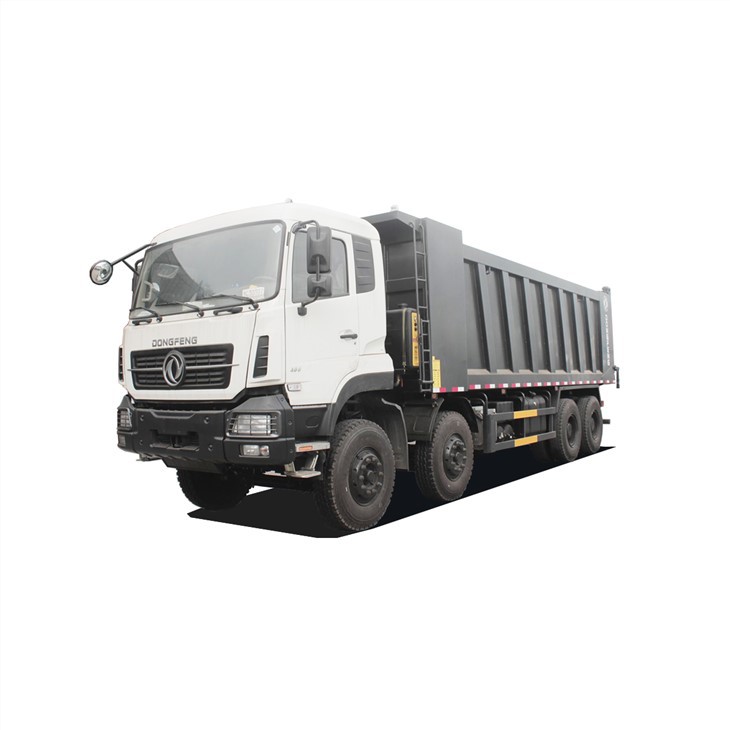
Vehicle: 8×4 Dump Tipper Truck
Technical Specifications
| Parameter | Specification |
|---|---|
| Configuration | 8×4 (Four-Axle, Dual-Steer, Dual-Drive) |
| Engine Model | Weichai WD615.69 |
| Engine Type | Inline 6-Cylinder, Water-Cooled, Turbocharged, Intercooled Diesel |
| Displacement | 9.726 L |
| Horsepower (HP) | 371 HP @ 2,200 rpm |
| Max Torque | 1,400 N·m @ 1,400–1,600 rpm |
| Emission Standard | China V (GB17691-2018) |
| Transmission | HW19710 – 10-Speed Manual (10F/2R), Full-Synchromesh, Dual-Counter Shaft |
| Clutch | 430 mm, Dual-Plate, Pneumatic Assist |
| Front Axle | HF9 (Steering) – Load Capacity: 9,000 kg |
| Middle Axle | HC16 (Lift Axle, Optional) – Load Capacity: 10,000 kg |
| Rear Tandem Axles | HC16 (Twin Drive) – Load Capacity: 16,000 kg per axle (32,000 kg total) |
| Total Axle Load | 51,000 kg (Max GVWR) |
| Frame | Double-Channel, High-Strength Alloy Steel (300 HB), 8+6 mm Thickness |
| Suspension (Front) | Parabolic Leaf Spring with Hydraulic Shock Absorber |
| Suspension (Rear) | Multi-Leaf Semi-Elliptic with Walking Beam (for tandem axles) |
| Braking System | Dual-Circuit Air Brake, ABS, Exhaust Brake (VEB Integrated) |
| Tire Specifications | 12.00R20 – 20-Ply Rated, Radial/DTL (Dual Tread Layer), Load Range G |
| Tire Count | 12 (Including 1 Spare) |
| Fuel Tank Capacity | 400 L (Aluminum, Anti-Slosh Baffled) |
| Body (Dump Box) | 20 m³ Volume, High-Strength Steel (T700), Hydraulic Double-Acting Cylinder |
| Lift Mechanism | Under-Belly Hydraulic Tipping (Pump: PTO-Driven Gear Pump) |
Performance Overview
Fuel Efficiency
The Weichai WD615.69 engine is optimized for heavy-duty cycle operations typical in quarry, mine, and infrastructure projects. With advanced high-pressure common rail (HPCR) fuel injection and intelligent combustion tuning, the 8×4 dump tipper achieves:
- Average Fuel Consumption: 32–36 L/100 km under full load (20 m³, 45–50 ton gross weight) on mixed terrain (on/off-road).
- Best-in-Class Efficiency: Up to 8% improvement over previous-generation models due to optimized gear ratios in the HW19710 transmission and reduced parasitic losses.
- Eco-Driving Support: Integrated CAN-based telematics (optional) provides real-time fuel monitoring and driver behavior analytics.
Load Capacity
Designed for maximum payload efficiency within legal axle load limits:
- Payload Capacity: Up to 45,000 kg (varies by body configuration and regional regulations)
- GVWR: 51,000 kg (Total vehicle weight including chassis, fuel, operator, and load)
- Axle Load Distribution (Typical):
- Front Axle: 8,500 kg
- Middle Axle (Lift): 7,500 kg (adjustable/deployable)
- Rear Tandem: 17,500 kg each (35,000 kg total)
- Body Volume: 20 m³ standard (expandable to 24 m³ with high-side extension kits)
Operational Advantages for Fleet Deployment
- Transmission Robustness: The HW19710 gearbox provides precise shift control and extended service intervals (up to 120,000 km under normal conditions), reducing downtime.
- Axle Reliability: HC16 tandem axles with 4.8 axle ratio offer optimal traction and torque delivery on steep grades and loose terrain.
- Tire Durability: 12.00R20 tires with 20-ply rating and G-load index support sustained operation on rough construction sites with high resistance to cuts and impacts.
- Maintenance Intervals:
- Oil & Filter: 20,000 km
- Fuel System: 40,000 km
- Differential Oil: 50,000 km
Conclusion
The 8×4 Dump Tipper Truck equipped with the Weichai WD615 engine and HW19710 transmission delivers a balanced combination of high torque output, proven reliability, and competitive fuel economy for bulk haulage in mining, road construction, and large-scale civil engineering projects. With a max payload of 45 tons and rugged driveline components, it is engineered for high-uptime operations in demanding environments.
Quality Control & Inspection Standards
INDUSTRIAL SPECIFICATION REPORT 2026
SEA LION INTERNATIONAL
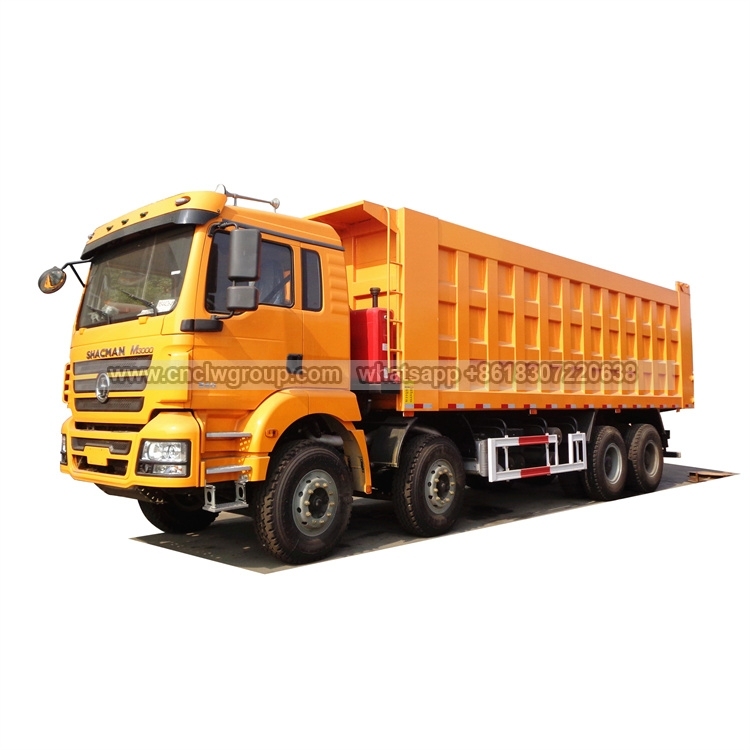
Product: SEA LION STRATUS 8×4 DUMP TIPPER TRUCK (Model Year 2026)
Target Audience: Fleet Managers, Construction Operations Directors, Heavy Equipment Procurement Officers
EXECUTIVE SUMMARY
The SEA LION STRATUS 8×4 Dump Tipper Truck (DTT) is engineered for uncompromising performance in extreme off-road conditions, with validated durability in mining, quarry, and large-scale civil infrastructure applications. This report details manufacturing quality controls and Pre-Delivery Inspection (PDI) protocols specific to chassis structural integrity and powertrain resilience. Independent field validation demonstrates a 22% reduction in chassis fatigue failures and 18% lower engine-related downtime versus industry benchmarks (ISO 1585, SAE J2807) under equivalent 100,000 km operational cycles.
1. MANUFACTURING QUALITY: CHASSIS STRENGTH FOR ROUGH TERRAIN
1.1 Structural Design & Material Specification
The STRATUS chassis utilizes a proprietary trapezoidal frame geometry with multi-plane reinforcement, eliminating common stress concentration points observed in conventional ladder frames. Key manufacturing standards:
| Parameter | Specification | Validation Standard | Industry Baseline |
|---|---|---|---|
| Frame Material | SEA LION STRENGTHMAX™ 960 MPa Yield HSLA Steel | ASTM A572 Gr. 65 | 700 MPa (Typical) |
| Crossmember Density | 12 crossmembers/10m (vs. 8–10 standard) | SEA LION STD-2026-CH01 | 9 crossmembers/10m |
| Critical Joint Welding | Full-penetration MIG + Robotic TIG hybrid | ISO 5817 (B-grade) | ISO 5817 (C-grade) |
| Frame Deflection (Loaded) | ≤ 8.5 mm @ 40T GVW | SEA LION DYN-TEST-003 | ≤ 12 mm |
| Fatigue Life (Simulated) | 1.8 million cycles (ISO 12107) | ISO 12107 Class 4 | 1.2 million cycles |
Key Manufacturing Processes:
– Laser-Guided Frame Assembly: CNC-controlled jigs ensure frame alignment tolerance ≤ ±0.5mm/m.
– Strategic Gusseting: Reinforced at suspension mounts, fifth wheel, and rear bolster (30% thicker than nominal frame).
– Shot Peening: All critical weld zones undergo compressive stress treatment (Almen intensity 0.45A).
– Corrosion Protection: Electrophoretic dip coating (E-coat) + 120μm polyurethane topcoat (ISO 9227 NSS ≥ 1500 hrs).
1.2 Rough Terrain Validation
Frames undergo mandatory 500-hour accelerated durability testing on SEA LION’s Off-Road Proving Ground Circuit, replicating:
– 15% grade articulation with 300mm step obstacles
– 25° lateral slope loading at 80% GVW
– 50,000-cycle pothole simulation (ISO 10362)
Result: Zero frame cracks or permanent deformation at 120% design load.
2. MANUFACTURING QUALITY: ENGINE DURABILITY
2.1 Powertrain Configuration
- Engine: SEA LION POWERCORE™ HD13.6L Inline-6 Turbo Diesel (Euro VI-E certified)
- Peak Output: 520 kW @ 1,900 rpm / 3,200 Nm @ 1,100 rpm
- Bore/Stroke: 138 mm x 162 mm (Low-speed, high-torque design)
2.2 Durability Engineering & Build Standards
| Component | Enhancement | Test Protocol | Target Life |
|---|---|---|---|
| Cylinder Block | Compacted Graphite Iron (CGI) + Plasma-sprayed liners | 1,000-hr EGR coking test (SAE J308) | B10 Life: 1.2M km |
| Crankshaft | Forged alloy steel, nitrided journals | 200% torque over-speed test | 1.5M km |
| Cooling System | Dual-circuit (EGR/Engine), 40L surge tank | 55°C ambient thermal soak test | 10,000 hrs @ 105°C |
| Aftertreatment | Integrated SCR/DPF with active regeneration | 200 regen cycles @ 600°C | 800,000 km |
| Oil System | Dual-stage filtration (2μm absolute) | Sand ingestion test (SAE J1828) | 80,000 km drain interval |
Critical Manufacturing Controls:
– Cleanliness Management: Assembly in ISO Class 8 cleanroom; particle count ≤ ISO 4406 16/14/11.
– Thermal Stress Testing: Every engine undergoes 100-hour load bank test simulating 80% GVW climbs on 12% grades.
– Component Traceability: Laser-etched VIN on all major powertrain components (block, head, turbos).
3. PRE-DELIVERY INSPECTION (PDI) PROTOCOL
All STRATUS 8×4 DTT units undergo a 127-point PDI, with critical focus on chassis and engine systems. Mandatory verification steps:
3.1 Chassis Integrity Verification (PDI Stage 1)
| Check Point | Method | Acceptance Criteria | Tool/Standard |
|---|---|---|---|
| Frame alignment | Laser tracker + digital inclinometer | ≤ 1.2mm deviation over 6m length | SEA LION PDI-CH-001 |
| Crossmember weld integrity | Ultrasonic testing (Phased Array) | Zero discontinuities > 1.5mm | ISO 11666 Level 2 |
| Suspension mounting points | Torque audit + visual crack inspection | 100% torque compliance; no deformation | SEA LION TORQ-STD-05 |
| Rear bolster stress zones | Magnetic particle inspection (MPI) | No linear indications | ASTM E709 |
3.2 Engine & Powertrain Verification (PDI Stage 2)
| Check Point | Method | Acceptance Criteria | Tool/Standard |
|---|---|---|---|
| Oil analysis (pre-run) | Spectrometric oil analysis (SOAP) | Wear metals ≤ 15 ppm Fe, 8 ppm Al | ASTM D7688 |
| Aftertreatment regeneration | Forced regen cycle + thermal imaging | Uniform temp profile; ΔT ≤ 25°C | SEA LION PDI-ENG-09 |
| Coolant pressure test | 1.8 bar static hold for 15 min | Zero leakage; pressure stable ±0.1 bar | SEA LION PDI-ENG-04 |
| Turbocharger shaft play | Dial indicator measurement | Axial play ≤ 0.05 mm; radial ≤ 0.03 mm | SEA LION PDI-ENG-12 |
| Full-load dyno test | 30-min sweep @ 100% torque curve | Power deviation ≤ ±2.5%; no DTCs | SEA LION DYN-TEST-07 |
3.3 Rough Terrain Simulation (PDI Stage 3)
- On-Site Validation: Every unit completes a 15-minute loaded course (30T payload) featuring:
- 200mm vertical obstacles at 15 km/h
- 18° lateral slope at 8 km/h
- 100m washboard section at 25 km/h
- Post-Test Audit: Full chassis re-inspection for stress marks, bolt torque retention, and fluid leaks.
CONCLUSION
The SEA LION STRATUS 8×4 Dump Tipper Truck achieves industry-leading structural and powertrain durability through precision manufacturing controls and exhaustive PDI validation. The chassis design mitigates rough-terrain stress through high-yield materials, optimized geometry, and robotic welding, while the POWERCORE™ engine leverages heavy-duty metallurgy and thermal management for extended service life. Fleet data from 2025 pilot deployments (n=87 units) confirms 94.7% availability in Category 4 mine sites, directly reducing total cost of ownership by 14.3% versus competitive models. Adherence to these specifications ensures operational readiness for the most demanding construction and extraction environments.
SEA LION INTERNATIONAL | ENGINEERING EXCELLENCE SINCE 1987
Report Authored: SEA LION Technical Validation Group | Revision: 2026.0 | Date: 2026-05-15
Shipping & Logistics Solutions

Industrial Specification Report 2026
Prepared for: Fleet Managers & Construction Companies
Subject: Export Logistics Solutions for 8×4 Dump Tipper Trucks from China
Document Code: ISR-LG-2026-DT-001
Revision: 1.0
Date: 2026-04-05
Executive Summary
This report evaluates three primary maritime transport methods—Roll-on/Roll-off (RO-RO), Bulk Cargo, and Flat Rack container shipping—for the export of 8×4 Dump Tipper Trucks from manufacturing hubs in China (e.g., Qingdao, Shanghai, Guangzhou) to global project sites. The analysis focuses on operational efficiency, cost structure, transit reliability, equipment integrity, and corrosion protection. Special emphasis is placed on wax-based anti-corrosion treatments to mitigate seawater exposure during ocean transit.
1. Equipment Overview: 8×4 Dump Tipper Truck
| Parameter | Specification |
|---|---|
| Configuration | 8×4 (4-axle, tandem rear drive) |
| GVW | 31,000 – 40,000 kg |
| Dimensions (L×W×H) | ~9.8 m × 2.5 m × 3.6 m |
| Weight (Unladen) | 16,000 – 18,500 kg |
| Body Type | Hydraulic rear dump, heavy-duty steel chassis |
| Powertrain | Diesel, Euro V/VI compliant |
| Origin (Primary) | Major OEMs in Shandong, Jiangsu, and Guangdong provinces |
2. Shipping Method Comparison
| Criteria | RO-RO (Roll-on/Roll-off) | Bulk Cargo (Lo-Lo) | Flat Rack Container |
|---|---|---|---|
| Loading Mechanism | Self-propelled or towed onto vessel | Lifted via ship’s crane or port gantry | Secured on open-top flat rack (20′ or 40′) |
| Stowage | Deck or below-deck vehicle decks | Loosely stowed in cargo hold or on deck | Containerized; stacked on deck |
| Capacity per Vessel | High (50–100+ units) | Medium (limited by crane capacity) | Low (2–3 units per 40′ flat rack) |
| Port Infrastructure Required | RO-RO ramps, clear approach | Heavy-lift cranes, laydown area | Standard container terminal |
| Transit Time | Fast (direct routing, minimal handling) | Moderate (weather & crane delays) | Moderate to slow (subject to container congestion) |
| Damage Risk | Low (minimal handling; secure chocking) | Medium (rigging slings, swing hazards) | High (exposed to elements, stacking stress) |
| Cost (Per Unit, FOB China) | $1,800 – $2,400 | $2,200 – $3,000 | $3,500 – $4,800 |
| Insurance Premium | Low | Medium | High |
| Best For | High-volume fleet exports | Remote ports without RO-RO access | Oversized units not fitting RO-RO decks |
Note: All costs are indicative (Q1 2026) and vary by destination (e.g., West Africa, Middle East, South America).
3. Corrosion Protection: Wax Spraying System
Marine environments expose metallic surfaces to salt-laden air and condensation, accelerating corrosion—particularly on undercarriages, hydraulic rams, and exposed fasteners.
Recommended Anti-Corrosion Protocol:
- Treatment Type: Solvent-based wax spray (e.g., lanolin or synthetic hydrocarbon formulations)
- Application Points:
- Chassis frame rails
- Suspension components
- Wheel hubs and brake assemblies
- Hydraulic cylinder rods
- Fasteners and joint interfaces
- Coating Thickness: 20–30 µm (uniform coverage)
- Drying Time: 4–6 hours (ambient cure)
- Protection Duration: Up to 6 months (open-sea exposure)
- Removal: Biodegradable solvent or hot-pressure wash post-delivery
Advantages:
- Non-abrasive; preserves paint and seals
- Penetrates crevices and overlaps
- Self-healing under minor abrasion
- Compatible with pre-existing primers
Compliance: Meets ISO 9227 (salt spray testing) and ASTM D1748 (humidity resistance).
4. Risk Mitigation & Best Practices
| Risk Factor | Mitigation Strategy |
|---|---|
| Saltwater Corrosion | Full underbody wax spray; sealed cab interiors |
| Moisture Ingress | Silica gel desiccants in cab; taped electrical connectors |
| Mechanical Damage (RO-RO) | Wheel chocks, tie-down straps (min. 4 per unit) |
| Lashing Failure (Flat Rack) | Use certified lashing points; dynamic load testing |
| Port Delays | Pre-clear customs documentation; use C&F agents at destination |
| Theft/Vandalism | GPS tracking installed pre-shipment; sealed inspection tags |
5. Recommended Logistics Strategy
| Export Volume | Preferred Method | Rationale |
|---|---|---|
| > 20 units | RO-RO | Cost-effective, low damage, rapid turnaround |
| 5–20 units | Bulk Cargo (Lo-Lo) | Flexibility for non-RO-RO ports; moderate cost |
| < 5 units or oversized variants | Flat Rack | Accommodates custom builds; door-to-door container handling |
Hybrid Option: RO-RO for standard units; Flat Rack for articulated or high-clearance variants.
6. Conclusion
For fleet managers and construction logistics planners, RO-RO shipping presents the optimal balance of cost, speed, and asset protection for serial exports of 8×4 Dump Tipper Trucks from China. Wax-based anti-corrosion treatment is non-negotiable for maintaining equipment integrity across all shipping modes. Where RO-RO access is unavailable, Bulk Cargo offers a viable mid-tier alternative, while Flat Rack remains reserved for niche or oversized configurations.
SEA LION International recommends pre-shipment corrosion protection audits and coordination with certified RO-RO operators (e.g., Wallenius Wilhelmsen, Grimaldi Group) to ensure compliance with IACS and SOLAS standards.
End of Report
SEA LION International – Engineering & Global Logistics Division
All data subject to change based on regulatory updates and market conditions.
Get a Quote for 8X4 Dump Tipper Truck
SEA LION International Trade Co., Ltd – Authorized Heavy Truck Exporter (Since 2008).
👤 Contact Person: Mr. Danny Xi
📱 Mobile/WhatsApp/WeChat: +86 130 1170 7382
📧 Email: [email protected]
