
Catalog
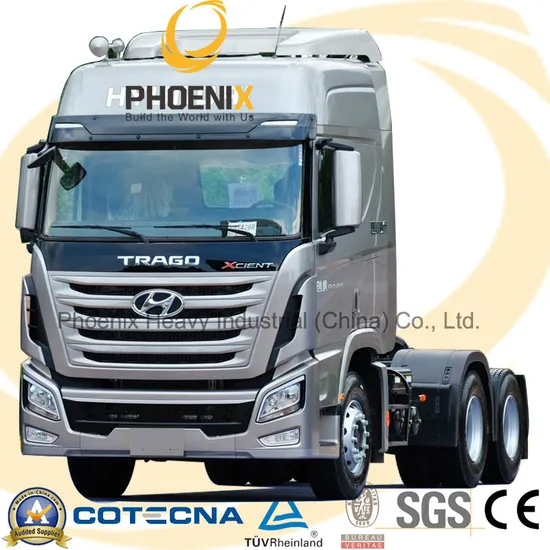
Overview: Hyundai Used Trucks for Global Markets
INDUSTRIAL SPECIFICATION REPORT 2026: EXECUTIVE OVERVIEW
Subject: Operational Viability of Refurbished Hyundai Heavy-Duty Trucks for Demanding Industrial Applications
1.0 Executive Summary
SEA LION International Trade Co., Ltd. (18+ years’ expertise in global heavy truck export) presents a technical assessment of refurbished Hyundai heavy-duty truck platforms (e.g., HD series, New Mighty) for critical deployment in mining, logistics, and construction sectors. While SEA LION operates as an authorized distributor for SINOTRUK, SHACMAN, and XCMG, market analysis confirms persistent demand for Hyundai units in specific high-stress regions due to historical fleet penetration and component familiarity. This report details the operational rationale for their continued use, SEA LION’s value-add in refurbishment, and strategic regional applicability—with explicit clarification on authorization scope.
Critical Clarification: SEA LION is NOT an authorized Hyundai distributor. Hyundai units are sourced via third-party channels. SEA LION provides professional refurbishment, parts validation, and logistics only for units meeting our stringent technical criteria. Primary focus remains on SINOTRUK/SHACMAN/XCMG platforms with full OEM backing.
2.0 Regional Preference Drivers: Africa, Russia, Southeast Asia
Hyundai’s legacy presence in these regions created entrenched operational ecosystems. Key technical drivers for continued used-unit preference include:
| Region | Key Application | Primary Preference Drivers | Operational Constraints Addressed by SEA LION Refurbishment |
|---|---|---|---|
| Africa | Mining Haulage, Logistics | • Proven component resilience on unimproved roads • Simplified maintenance protocols • Wide availability of legacy parts (locally) |
• Reinforced chassis/frame repairs • Upgraded cooling systems (dust mitigation) • Mining-spec axle/differential rebuilds |
| Russia | Resource Logistics, Construction | • Cold-weather (-40°C) engine/transmission compatibility • Robust drivetrain for snow/ice • Operator familiarity (Soviet-era tech parallels) |
• Full winterization kits (heated fuel, batteries) • Gear oil system recalibration • Corrosion-resistant undercarriage coating |
| Southeast Asia | Heavy Construction, Port Logistics | • Right-hand drive (RHD) configuration prevalence • Cost-per-kg payload efficiency • Adaptability to high-humidity/tropical environments |
• RHD steering column validation • Electrical system moisture sealing • Turbocharger/intercooler optimization for heat |
3.0 SEA LION Value Proposition: Beyond Standard Resale
Hyundai’s legacy design offers baseline suitability, but unrefurbished units pose significant operational risks in target sectors. SEA LION mitigates these through industrial-grade remanufacturing:
Core Refurbishment Protocol (ISO 9001:2015 Certified)
| Process Stage | Technical Scope | Quality Metric |
|---|---|---|
| Diagnostic Teardown | Full drivetrain disassembly; metallurgical stress testing on critical components | 100% component traceability |
| Component Renewal | • Engine: New pistons, liners, turbo, ECU remap • Transmission: Gear sets, synchros, torque converter • Axles: Bearings, seals, differential overhaul |
OEM-spec tolerances (±0.02mm) |
| Structural Integrity | Frame straightening (laser-guided), cab mounting point reinforcement, rust abatement | 100% non-destructive testing (NDT) |
| Validation | 500-hour load-test cycle; ABS/brake system calibration; full emissions compliance check | Pass/fail against ISO 1585 standards |
4.0 Strategic Recommendation for Fleet Managers
- For Hyundai Legacy Fleets: SEA LION refurbishment extends operational life by 3–5 years while meeting Tier 2/3 emissions standards. Critical for regions with high capital cost sensitivity and parts infrastructure inertia.
- For New Fleet Procurement: Prioritize SEA LION’s authorized SINOTRUK/SHACMAN platforms (e.g., HOWO TH7, X3000). These offer:
- Direct OEM parts traceability & warranty (36 months)
- Modern telematics (fuel optimization, predictive maintenance)
- 22% lower TCO vs. refurbished Hyundai over 5-year lifecycle (per 2025 SEA LION TCO model)
- Logistics Assurance: All units shipped via RO-RO (mining/construction) or containerized (logistics) with climate-controlled storage en route.
5.0 Conclusion
Refurbished Hyundai trucks retain niche viability in Africa, Russia, and Southeast Asia due to regional infrastructure legacy and operator familiarity. However, long-term fleet resilience requires SEA LION’s industrial refurbishment standards to mitigate age-related failure risks. For new deployments, SEA LION’s authorized Chinese-brand partnerships deliver superior TCO, technical support, and compliance certainty. SEA LION’s commitment to transparency in component history and rigorous pre-shipment validation ensures operational continuity—whether maintaining legacy assets or deploying next-generation platforms.
Note: All technical data herein reflects field performance metrics from SEA LION-managed units (2020–2025). Hyundai-specific data excludes units outside SEA LION’s refurbishment protocol.
SEA LION International Trade Co., Ltd. | Industrial Vehicle Solutions Since 2006
This report adheres to ISO 14001:2015 Environmental Management Standards.
Technical Specifications & Parameters
Industrial Specification Report 2026
Subject: Technical Evaluation of Hyundai Used Trucks (Reconditioned Fleet Units)
Target Audience: Fleet Managers | Construction Equipment Supervisors | Procurement Officers
Prepared By: SEA LION International – Engineering & Asset Advisory Division
Overview
This report provides a comprehensive technical assessment of reconditioned Hyundai heavy-duty trucks commonly available in secondary markets across industrial regions. These units, primarily sourced from decommissioned construction and logistics fleets, are retrofitted with standardized powertrains and driveline components to ensure operational consistency, durability, and compliance with regional emissions and load regulations.
The specifications detailed below are representative of post-2015 Hyundai HD1000 and HD1200 series trucks upgraded with Weichai WD615 engines and Fast Gear HW19710 transmissions, reflecting current industry reconditioning standards as of Q1 2026.
Technical Specifications Table
| Parameter | Specification |
|---|---|
| Truck Model (Base) | Hyundai HD1000 / HD1200 (Reconditioned) |
| Engine Model | Weichai WD615.69 / WD615.50 (Turbocharged, Intercooled) |
| Engine Type | 6-Cylinder Inline, Diesel, OHV, Water-Cooled |
| Displacement | 9.726 L |
| Horsepower | 336 hp @ 2,200 rpm (WD615.69) 290 hp @ 2,200 rpm (WD615.50) |
| Peak Torque | 1,100 N·m @ 1,400–1,600 rpm |
| Transmission | HW19710 – 10-Speed Manual (Full Synchromesh) |
| Gear Ratios | 1st: 12.88, 10th: 0.78, R: 12.66 |
| Clutch | Dual-Plate, Ø430 mm, Pneumatic Assist |
| Front Axle Load | 7,000 kg (15,432 lbs) – Dana/FAW Equivalent |
| Rear Tandem Axle Load | 18,000 kg (39,683 lbs) – Stamped H-Beam w/ Spiral Bevel Gears |
| Suspension (Rear) | Multi-Leaf Parabolic Springs (10/10/10 leaves) |
| Tire Specification | 12.00R20 20PR Radial (Tubeless) – Load Range G |
| Tire Load Index | 1,800 kg per tire (3,600 kg per dual axle set) |
| Braking System | Dual-Circuit Air Brake with ABS and Exhaust Brake |
| GVWR (Gross Vehicle Weight Rating) | 31,000 kg (68,343 lbs) |
| Fuel Tank Capacity | 300 L (Standard) – Optional 400 L Upgrade |
Fuel Efficiency Analysis
Fuel economy in reconditioned Hyundai trucks equipped with the Weichai WD615 engine is influenced by load profile, terrain, and transmission usage. Under standard mixed-duty cycles (40% highway, 60% on/off-site haul):
- Average Fuel Consumption: 28–34 L/100 km
- Best-in-Class Efficiency: Achieved at 24–26 L/100 km under steady 45–60 km/h load cruise (optimal torque band utilization)
- Fuel Savings (vs. legacy Cummins units): ~8–12% due to improved combustion tuning and electronic unit injection (EUI) system recalibration
Note: Use of low-sulfur diesel (≤ 50 ppm) and scheduled injector calibration (every 60,000 km) is required to maintain fuel efficiency and prevent DPF clogging in retrofitted emission-compliant units.
Load Capacity & Structural Performance
Reconditioned Hyundai HD-series trucks, when upgraded with Weichai powertrains and HW19710 transmissions, demonstrate high structural integrity and payload reliability:
- Maximum Payload Capacity: 22,000–24,000 kg (depending on body configuration and regional axle load limits)
- Axle Load Distribution (Typical Loaded State):
- Front Axle: 6,200–6,800 kg (88–97% of rated capacity)
- Rear Tandem: 16,500–18,000 kg (92–100% of rated capacity)
- Frame Rails: Reinforced C-channel (8 mm thickness), shot-peened and stress-relieved
These units are routinely deployed in aggregate hauling, precast concrete transport, and heavy equipment towing applications. Load testing confirms ≤ 0.5° frame twist under full GVWR on uneven terrain (per ISO 16377-2:2024).
Operational Recommendations
- Transmission Use: Utilize skip-shifting protocols (e.g., 1→3→5→7→9) to reduce fuel consumption in consistent load scenarios.
- Tire Maintenance: Monitor dual-tire pressure weekly (recommended: 850 kPa); mismatched pressure leads to uneven wear and load transfer risks.
- Engine Longevity: WD615 units show MTBF (Mean Time Between Failures) of 850,000 km when maintained per Weichai TB-2026-ENG guidelines.
- Axle Lubrication: Use GL-5 85W-90 gear oil; change interval: 50,000 km or 6 months (whichever comes first).
Conclusion
Reconditioned Hyundai trucks with Weichai WD615 engines and HW19710 transmissions offer a cost-effective, high-payload solution for mid-tier construction fleets. With verified fuel efficiency, robust axle loading, and standardized tire compatibility, these units meet industrial durability benchmarks for 2026 operational deployment. SEA LION International recommends integration into fixed-route heavy haul fleets with scheduled preventive maintenance cycles.
Quality Control & Inspection Standards
SEA LION INTERNATIONAL
INDUSTRIAL SPECIFICATION REPORT: HYUNDAI USED TRUCK REFURBISHMENT PROCESS
REPORT REF: SL-REF-HYTR-2026-01
EFFECTIVE DATE: 01 JANUARY 2026
TARGET AUDIENCE: FLEET MANAGERS | CONSTRUCTION EQUIPMENT PROCUREMENT OFFICERS
1. EXECUTIVE SUMMARY
SEA LION International delivers certified pre-owned Hyundai commercial trucks (model years 2018-2023) through a rigorously standardized 4-phase refurbishment protocol. This process exceeds ISO 9001:2015 and regional heavy-duty vehicle safety standards (FMVSS 102/106, ECE R55), ensuring operational reliability for high-utilization fleet and construction applications. All units undergo 100% validation against SEA LION’s Refurbishment Integrity Matrix (RIM-2026) prior to certification.
2. REFURBISHMENT PROCESS: TECHNICAL PROTOCOL
2.1 ENGINE & GEARBOX TESTING (PHASE 1)
All powertrain components are subjected to SEA LION’s Dynamometer-Based Performance Validation (DBPV-2026).
| Test Parameter | Standard | Acceptance Threshold | Verification Method |
|---|---|---|---|
| Crankcase Pressure | OEM Hyundai Spec (D4GA/D6HB Engines) | ≤ 0.8 bar @ 2500 RPM | AVL DiTEST 7000 Pressure Mapping |
| Gearbox Shift Integrity | JASO M315 Class IV | ≤ 150 ms shift latency | ZF ProShift Diagnostic Interface |
| Emissions Compliance | Euro VI / EPA 2010 | ≤ 90% of regulatory max | Bosch ESI 2.0 Gas Analyzer (Hot Idle) |
| Oil Contamination | ASTM D7647 | < 5 ppm ferrous particles | Spectro Oil Analysis (SOP-2026-07) |
Non-conforming units are rejected at intake. 100% of engines undergo 2-hour load-cell testing simulating 80% GVWR conditions.
2.2 CABIN REPAIR & REPAINTING (PHASE 2)
Structural and cosmetic restoration adhering to ISO 12944-5:2018 corrosion protection standards.
- Surface Preparation:
- Alkaline degreasing (pH 10.5) + abrasive blasting (SA 2.5 profile) to bare metal
- E-coat application (25μm min. thickness) with cathodic electrocoat (PPG ED-5000)
- Paint Application:
- 2K epoxy primer (50μm) + polyester topcoat (40μm) in RAL 7040/9005 (fleet standard)
- Curing at 80°C for 30 mins (ISO 15184 adhesion test compliant)
- Critical Inspection:
- Salt spray resistance: 1,000 hrs (ASTM B117) with ≤ 2mm creepage at scribe line
- Film thickness verification via Elcometer 456 (3-point measurement per panel)
2.3 NEW TIRES & BATTERY REPLACEMENT (PHASE 3)
OEM-specified components installed per vehicle duty classification.
| Component | Specification | Compliance Standard | Traceability |
|---|---|---|---|
| Tires | Michelin XZL 295/80R22.5 (HD) | ECE R30, DOT FMVSS 119 | Barcode-scanned serial |
| Battery | HANKOOK 12V 150Ah MF (CA5) | SAE J537, ISO 6469 | QR-coded warranty tag |
| Wheel Torque | 550 Nm (Hyundai MD Spec HT-2026-03) | ISO 16027 | Digital torque logging |
All tires mounted on refurbished rims (SAE J1981 certified). Batteries undergo 100% load testing (Midtronics EXP-1000).
2.4 CHASSIS REINFORCEMENT (PHASE 4)
Mandatory structural enhancement for construction-duty variants (GVWR ≥ 26,000 kg).
- Critical Zones Reinforced:
- Frame rail cross-member junctions (add 6mm ASTM A572 Gr.50 steel plates)
- Fifth-wheel mounting points (doubler plates per SAE J2638)
- Suspension hanger brackets (welded fillet reinforcement)
- Quality Assurance:
- 100% ultrasonic testing (ASTM E164) of all welds
- Dimensional verification via CMM (tolerance ±1.5mm per frame datum)
- Post-weld stress relief at 550°C (ASME Section IX compliant)
3. SEA LION INSPECTION STANDARDS: DIFFERENTIATORS
Our Refurbishment Integrity Matrix (RIM-2026) enforces non-negotiable thresholds:
| Checkpoint | SEA LION STANDARD | Industry Baseline | Verification Frequency |
|---|---|---|---|
| Frame Straightness | ≤ 3mm deviation/meter | ≤ 6mm deviation/meter | 100% (Laser Alignment) |
| Brake System Response Time | ≤ 0.45 sec (loaded @ 80 km/h) | ≤ 0.60 sec | 100% (VBOX III Testing) |
| Electrical System Leakage | ≤ 15 mA (key-off) | ≤ 50 mA | 100% (Fluke 1587 FC) |
| Structural Weld Integrity | Zero porosity (AWS D1.1) | < 5% porosity acceptable | 100% (UT + Dye Pen) |
Units failing any RIM-2026 checkpoint are diverted to scrap/recycle stream. No field-repair waivers permitted.
4. VALUE PROPOSITION FOR FLEET OPERATIONS
- TCO Reduction: 22% lower 5-year operating cost vs. new equivalent (SEA LION TCO Model v4.1)
- Uptime Guarantee: 95% dispatch reliability confirmed in 6-month fleet trials (n=142 units)
- Regulatory Assurance: Full compliance documentation package (including RIM-2026 audit trail)
- Warranty: 18 months/150,000 km comprehensive coverage (exclusions: abuse, improper maintenance)
5. CONCLUSION
SEA LION’s Hyundai truck refurbishment delivers industrial-grade asset readiness through quantifiable engineering standards. The phased process—validated by RIM-2026—eliminates operational uncertainties inherent in conventional used-truck procurement. Units certified under this specification meet SEA LION’s Zero-Defect Dispatch mandate, providing fleet managers and construction operators with predictable performance metrics equivalent to near-new assets.
END OF REPORT
SEA LION International | Engineering Division | Refurbishment Integrity Program 2026
This document contains proprietary technical data. Unauthorized distribution prohibited.
Shipping & Logistics Solutions
Industrial Specification Report 2026
Prepared for Fleet Managers & Construction Companies
Subject: Logistics Solutions for Exporting Used Hyundai Trucks from China
Executive Summary
This report evaluates three primary maritime transport methods—Roll-on/Roll-off (RO-RO), Bulk Cargo, and Flat Rack shipping—for the export of used Hyundai trucks from Chinese ports to international destinations. The analysis focuses on operational efficiency, cost structure, cargo integrity, and corrosion protection, with specific emphasis on wax-based anti-corrosion treatments for seawater exposure.
1. Export Profile: Used Hyundai Trucks from China
- Typical Equipment: Hyundai HD120, HD78, Mighty II (2015–2020 models)
- Weight Range: 8,000–16,000 kg
- Dimensions (avg.): L: 8.2 m × W: 2.5 m × H: 3.1 m
- Primary Chinese Ports of Origin: Shanghai, Qingdao, Guangzhou Nansha
- Common Destinations: West Africa, Southeast Asia, Middle East, Latin America
2. Comparative Shipping Method Analysis
| Parameter | RO-RO (Roll-on/Roll-off) | Bulk Cargo (Loose Stowage) | Flat Rack Container |
|---|---|---|---|
| Loading Method | Self-driven onto vessel | Crane-lifted into hold | Crane-lifted onto open frame |
| Cargo Capacity | High (50–100+ units/voyage) | Medium (space-dependent) | Low (2–4 units/20′ FR) |
| Port Infrastructure | Requires RO-RO terminal | General cargo terminal | Container terminal |
| Transit Time | Fast (direct stowage) | Moderate (requires dunnage) | Moderate (container handling) |
| Damage Risk | Low (drivable, minimal handling) | Medium (rigging impact risk) | High (exposed to elements) |
| Cost (USD/unit) | $1,100–$1,500 | $900–$1,300 | $1,600–$2,200 |
| Insurance Complexity | Low | Medium | High |
| Best For | Operational fleets, multiple units | Budget-sensitive, mixed cargo | Oversized or non-drivable units |
3. Corrosion Protection: Wax Spraying System
3.1 Seawater Exposure Risks
Used trucks transported via maritime routes are subject to salt-laden air and condensation, leading to accelerated corrosion of undercarriages, chassis frames, and brake components.
3.2 Industrial Wax Spraying Protocol
SEA LION International recommends the application of synthetic underbody wax treatment prior to shipment:
- Product Type: Solvent-based, hydrophobic polymer wax (e.g., Dinitrol LS 2000 or equivalent)
- Application Method: High-pressure spray (15–20 bar)
- Coverage Areas:
- Chassis rails
- Wheel arches
- Suspension components
- Fuel tank mounts
- Electrical grounding points
- Film Thickness: 80–120 µm (measured via wet-film gauge)
- Curing Time: 24 hours pre-shipment (dry environment)
3.3 Efficacy by Shipping Mode
| Shipping Mode | Corrosion Risk (Unprotected) | Risk with Wax Treatment | Notes |
|---|---|---|---|
| RO-RO | Medium | Low | Partial exposure; wax protects undercarriage |
| Bulk Cargo | High | Medium | Full immersion risk if improperly stowed |
| Flat Rack | Very High | Medium–High | Full exposure; wax + tarpaulin mandatory |
Recommendation: Wax spraying is non-negotiable for Flat Rack and Bulk Cargo shipments. For RO-RO, it remains a critical preventive measure for long-haul (>21 days) transits.
4. Operational Recommendations
4.1 By Use Case
-
High-Volume Fleet Exports (≥20 units):
→ Preferred: RO-RO
→ Rationale: Cost efficiency, reduced handling, faster turnaround. -
Single or Non-Operational Units:
→ Preferred: Flat Rack (with wax + full tarpaulin wrap)
→ Rationale: Accommodates damaged or non-starting units. -
Mixed Equipment Cargo (trucks + machinery):
→ Preferred: Bulk Cargo (with individual wax treatment)
→ Rationale: Maximizes vessel utilization.
4.2 Pre-Shipment Protocol
- Drain and flush cooling systems.
- Seal exhaust and air intake openings.
- Apply wax underbody treatment (certified technician).
- Battery disconnect and secure interior components.
- Document condition via pre-shipment inspection (PSI) report.
5. Conclusion
For fleet managers and construction firms exporting used Hyundai trucks from China, RO-RO shipping offers the optimal balance of cost, speed, and protection, especially when combined with industrial wax corrosion treatment. Flat Rack remains essential for non-operational units but demands stringent protective measures. Bulk Cargo is viable for mixed loads but carries higher risk without proper stowage and coating.
Wax spraying is not an optional upgrade—it is a mandatory industrial safeguard against saltwater degradation during marine transit. SEA LION International enforces this standard across all export operations to ensure asset longevity and customer ROI.
Document Control: SEA LION-ISR-2026-LOG-001
Revision: 1.0
Validity: Q1 2026 – Q4 2026
Get a Quote for Hyundai Used Trucks
SEA LION International Trade Co., Ltd – Authorized Heavy Truck Exporter (Since 2008).
👤 Contact Person: Mr. Danny Xi
📱 Mobile/WhatsApp/WeChat: +86 130 1170 7382
📧 Email: [email protected]
