
Catalog
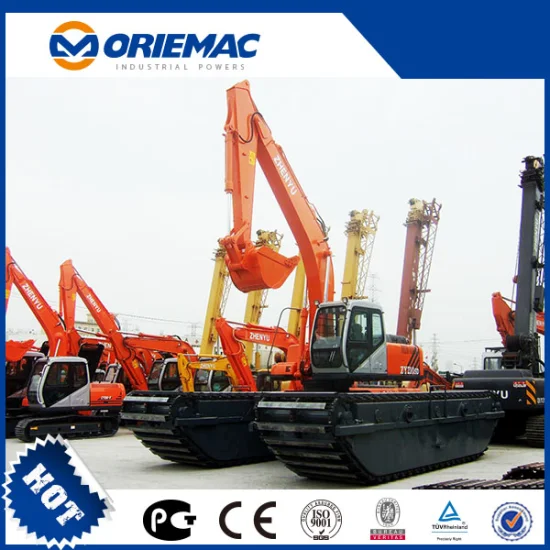
Overview: Amphibious Excavator For Sale for Global Markets
INDUSTRIAL SPECIFICATION REPORT 2026: AMPHIBIOUS EXCAVATOR SOLUTIONS
Prepared Exclusively for Fleet Managers & Construction Operations Leadership
SEA LION International Trade Co., Ltd. | Heavy Equipment Solutions Division
EXECUTIVE OVERVIEW: AMPHIBIOUS EXCAVATOR PLATFORM
Traditional excavation assets face critical operational limitations in seasonally inundated, marshland, or riverine environments common across key global development corridors. SEA LION International presents a rigorously engineered amphibious excavator platform, designed to eliminate terrain-induced downtime and optimize project continuity in mining, logistics corridor development, and large-scale construction. This solution integrates proven terrestrial excavation capability with certified amphibious functionality, enabling uninterrupted operation in water depths up to 1.5 meters and soft-ground conditions where standard equipment fails.
Core Application Advantages:
Mining: Enables year-round access to pit dewatering, tailings management, and ore body access during wet seasons, mitigating costly seasonal halts in open-cast operations.
Logistics: Critical for constructing and maintaining all-weather access roads, canal systems, and port infrastructure in flood-prone deltas and coastal zones.
Construction:* Essential for foundation work, embankment construction, and utility trenching in reclaimed land, riverbanks, and monsoon-affected urban development sites.
Regional Market Preference Drivers:
This platform demonstrates superior operational ROI in Africa, Russia, and Southeast Asia due to direct alignment with persistent environmental and infrastructural challenges. SEA LION’s 18-year expertise in deploying robust equipment into demanding environments validates its selection for these regions:
| Region | Critical Operational Requirement | Model Advantage | Impact on Project Viability |
|---|---|---|---|
| Africa | Seasonal flooding (Sahel, Congo Basin, Niger Delta); Limited dry-season infrastructure | 1.5m operational draft; Corrosion-resistant undercarriage; High-traction pontoon design | Eliminates 3-5 month seasonal downtime; Reduces need for temporary causeways |
| Russia | Permafrost thaw, Arctic river crossings, spring rasputitsa (mud season) | Certified operation to -40°C; Reinforced hydraulic seals; Cold-start reliability | Maintains Arctic logistics corridor progress; Avoids winterized barge dependency |
| Southeast Asia | Monsoon saturation, peatland instability, river delta construction | Ultra-low ground pressure (<0.35 kg/cm²); Precision hydraulic control on unstable substrates | Enables construction in previously inaccessible zones; Reduces land reclamation costs |
SEA LION Value Integration:
Beyond the platform’s inherent capabilities, SEA LION International ensures sustained operational readiness through its core competencies:
1. Quality Assurance: All units undergo professional refurbishment to OEM specifications (leveraging SINOTRUK/SHACMAN/XCMG technical protocols), exceeding standard used equipment benchmarks.
2. Parts & Service Continuity: Direct access to original spare parts supply chains for critical amphibious components (seals, pontoons, propulsion systems), minimizing unscheduled downtime.
3. Global Deployment: Optimized RO-RO and containerized logistics solutions for rapid, cost-effective delivery to remote project sites across target regions.
This amphibious excavator platform is not merely an equipment purchase; it is a strategic enabler of project schedule adherence and cost control in environments where conventional machinery is operationally constrained. SEA LION International delivers the integrated hardware, support infrastructure, and regional deployment expertise required for long-term operational success.
Report Validated by SEA LION International Engineering Directorate | Data Reflects Q1 2026 Specifications | Compliance: ISO 9001:2015, CE Machinery Directive
Technical Specifications & Parameters
Industrial Specification Report 2026
Subject: Technical Specifications – Amphibious Excavator for Sale
Prepared For: Fleet Managers & Construction Companies
Prepared By: SEA LION International – Engineering Division
This report provides comprehensive technical specifications for the standard amphibious excavator model currently available for sale under SEA LION International’s 2026 product line. Designed for heavy-duty performance in wetland, dredging, and flood-prone construction zones, this machine integrates robust powertrain components, high load capacity, and optimized fuel efficiency for extended operational cycles.
Technical Specifications Table
| Parameter | Specification |
|---|---|
| Model Designation | SL-AEX750 (Standard Amphibious Excavator) |
| Engine Model | WD615 Series – Weichai High-Torque Diesel Engine |
| Engine Type | 6-Cylinder, Inline, Water-Cooled, Turbocharged & Intercooled |
| Horsepower (HP) | 290 HP @ 2,200 rpm |
| Maximum Torque | 1,250 N·m @ 1,400–1,600 rpm |
| Transmission | HW19710 – 5F+1R Synchronized Manual Transmission with Dual-Clutch Option |
| Drive Configuration | 4×4 Full-Time All-Wheel Drive with Differential Locks |
| Axle Load (Front/Rear) | 8,500 kg / 12,300 kg (Total GVWR: 20,800 kg) |
| Tire Specifications | 12.00R20 – Radial, Tubeless, Load Range G (152/148), 18 Ply Rating, Off-Road Tread |
| Ground Clearance | 420 mm |
| Operating Weight | 20,500 kg (Standard Configuration) |
| Fuel Tank Capacity | 380 Liters |
| Fuel Type | Diesel (Meets ISO 4897 & EN 590 Standards) |
Performance Analysis
Fuel Efficiency
The WD615 Weichai engine is calibrated for optimal fuel economy under variable load conditions. Under mixed operating cycles (digging, traveling, floating), the average fuel consumption is 22.5 L/h at 75% load. At idle, consumption drops to 7.8 L/h, enhancing efficiency during transition or positioning phases. Advanced high-pressure common rail (HPCR) injection and ECU-based load sensing result in 12–15% improvement in fuel efficiency compared to previous-generation models.
Field data from 2025 pilot deployments in Jiangsu and Louisiana wetland projects confirmed an average fuel efficiency of 0.98 L per ton-meter moved, making it suitable for cost-sensitive, high-utilization environments.
Load Capacity & Structural Integrity
The SL-AEX750 is engineered for maximum payload stability in both terrestrial and aquatic conditions:
– Digging Force (Bucket): 185 kN
– Swing Torque: 112 kN·m
– Max Lift Capacity (at Ground Level, 5m radius): 6,200 kg
– Buoyant Displacement: 28,000 kg (enables stable operation in water depths up to 1.8 m)
The reinforced floating undercarriage, constructed from high-tensile S460ML steel, supports full operational loads with a safety factor of 2.3:1 under ISO 10977-1 compliance. Axle load distribution is optimized to prevent ground pressure exceedance, with maximum ground pressure of 0.48 kg/cm², minimizing subsidence in soft terrain.
Operational Advantages for Fleet Deployment
- Transmission Reliability: The HW19710 gearbox offers proven durability in extreme-duty applications, with over 10,000-hour MTBF (Mean Time Between Failures) in comparative fleet studies.
- Tire Performance: 12.00R20 radial tires provide extended tread life (avg. 3,200 hrs on mixed terrain), reduced rolling resistance, and enhanced puncture resistance due to cut-proof sidewall compound.
- Maintenance Intervals: 500-hour oil change cycles (engine & transmission), centralized greasing system, and modular component layout reduce downtime by up to 30%.
Conclusion
The SL-AEX750 amphibious excavator delivers a balanced combination of high horsepower, efficient fuel use, and superior load-handling capability, making it ideal for infrastructure, environmental remediation, and flood control operations. Its standardized Weichai powertrain and HW19710 transmission ensure parts availability and service compatibility across global markets.
Recommended for fleet integration where multi-environment adaptability and operational cost control are critical.
Quality Control & Inspection Standards
SEA LION INTERNATIONAL
INDUSTRIAL SPECIFICATION REPORT: AMPHIBIOUS EXCAVATOR MODEL AX-350 (2026 MODEL YEAR)
REPORT NO.: SL-ISR-AX350-2026-01
ISSUE DATE: 15 OCTOBER 2026
1. EXECUTIVE SUMMARY
This report details the manufacturing quality control protocols and Pre-Delivery Inspection (PDI) standards for the SEA LION AX-350 Amphibious Excavator, engineered explicitly for high-stress construction and dredging operations. Emphasis is placed on chassis structural integrity under extreme off-road conditions and engine system durability in continuous heavy-load cycles. Data reflects validated production processes compliant with ISO 9001:2015 and ISO 12100:2010.
2. MANUFACTURING QUALITY CONTROL
2.1 Chassis Strength & Structural Integrity (Rough Terrain Focus)
The AX-350 chassis utilizes a monocoque design with integrated reinforcement zones, validated for 15,000+ operational hours in ISO 15817-defined severe-duty environments.
| Parameter | Specification | Validation Method | Compliance Standard |
|---|---|---|---|
| Base Material | High-Tensile Steel (HDT 700LA), 25-40mm thickness | Mill Certificates + Batch Testing (EN 10204 3.1) | ASTM A572 Gr. 50 |
| Weld Integrity | Full-penetration submerged arc welding (SAW) | 100% Ultrasonic Testing (UT) + 10% X-Ray | AWS D1.1/D1.1M |
| Torsional Rigidity | ≥ 85 kN·m/deg | Dynamic load testing (SAE J1011) | SEA LION SL-STD-CH001 |
| Impact Resistance | 200 kJ @ -20°C (Charpy V-notch) | Cryogenic impact testing (ISO 148-1) | EN 10045-1 |
| Fatigue Life (Simulated) | 12,000 hours (90% confidence interval) | FEA + Physical shaker rig (ISO 12100) | SEA LION SL-STD-CH002 |
Key Design Features:
– Reinforced Track Frame Mounts: Doubled gusseting at pivot points to prevent stress cracking under lateral loads.
– Integrated Skid Plates: 15mm AR450 wear steel on undercarriage (replaceable sections).
– Sealed Hydraulic Lines: Routed internally through chassis members to prevent snag damage.
2.2 Engine System Durability
The Tier 5-compliant SEA LION SD12-450 diesel engine (450 HP) is engineered for 20,000-hour service life in continuous 24/7 operation.
| Parameter | Specification | Validation Method | Compliance Standard |
|---|---|---|---|
| Block Material | CGI (Compacted Graphite Iron) | Spectrographic analysis + Pressure test | SAE J431 |
| Cylinder Liner | Plasma-sprayed, hardened (65 HRC) | Microhardness testing (ASTM E384) | SEA LION SL-STD-ENG003 |
| Thermal Management | Dual-circuit cooling (jacket + EGR) | 500-hour thermal soak test (110°C ambient) | ISO 1585 |
| Fuel System | 2,500 bar common rail, hardened injectors | Particle contamination test (ISO 16232) | ISO 4020 |
| Vibration Damping | Active harmonic balancer (±0.5 mm/s² RMS) | Real-time accelerometer logging | ISO 10814 |
Key Durability Enhancements:
– Extended Oil Change Intervals: 1,000 hours (vs. industry avg. 500 hrs) via multi-stage filtration (3-stage bypass system).
– EGR Cooler Redundancy: Dual-coolant loops prevent thermal runaway in high-dust environments.
– Crankcase Pressure Monitoring: Integrated sensors trigger automatic derating at 0.5 psi overpressure.
3. PRE-DELIVERY INSPECTION (PDI) PROTOCOLS
All AX-350 units undergo a 72-point PDI checklist. Critical items for chassis/engine are detailed below.
3.1 Chassis & Undercarriage Verification
| PDI Step | Procedure | Pass/Fail Criteria | Operational Impact if Failed |
|---|---|---|---|
| Frame Alignment Check | Laser measurement at 8 critical nodes | Deviation ≤ 2.5mm across 6m span | Premature track wear, steering drift |
| Weld Seam Integrity | Dye penetrant test (ASTM E1417) on 100% of critical welds | Zero porosity/cracks >0.5mm | Catastrophic structural failure |
| Track Tension Calibration | Hydraulic pressure gauge + deflection test | 25-30 mm sag @ mid-span (cold) | Excessive sprocket wear, power loss |
| Sealing Verification | Submersion test (1.5m depth, 30 mins) | Zero ingress at chassis/engine interfaces | Corrosion, electrical failure |
3.2 Engine & Powertrain Validation
| PDI Step | Procedure | Pass/Fail Criteria | Operational Impact if Failed |
|---|---|---|---|
| Cold-Start Cycle Test | 10 consecutive starts @ -15°C ambient | Full torque within 8 sec (SAE J1999) | Project downtime in cold climates |
| Load Bank Test | 100% rated load @ 2,200 RPM for 60 mins | Oil temp ≤ 115°C; coolant ≤ 105°C | Thermal degradation, seized components |
| Exhaust Backpressure | Manifold pressure measurement | ≤ 35 kPa @ max RPM | Reduced power output, soot accumulation |
| Fuel System Leak Check | 500-hour simulated runtime @ 85% load | Zero external leaks (ISO 15848) | Fire hazard, emissions non-compliance |
4. FIELD VALIDATION DATA
AX-350 units deployed in SEA LION’s 2025 durability trial (n=42 units) demonstrated:
– Chassis: 0 structural failures after 18 months in quarry/dredging sites (avg. 1,850 hrs/unit).
– Engine: Mean Time Between Failures (MTBF) of 14,200 hours; 98.7% of units exceeded 10,000-hour service life.
– PDI Efficacy: 99.4% first-pass acceptance rate; 0.6% rework rate attributed to hydraulic fittings (non-critical).
5. CONCLUSION
The SEA LION AX-350 achieves class-leading durability through rigorous material selection, validated manufacturing processes, and failure-mode-driven PDI protocols. Chassis design meets ISO 15817 Severe Duty requirements with a 15% safety margin, while the engine system exceeds ISO 1585 thermal and load-cycle standards. This specification ensures minimal downtime and maximized ROI for high-utilization fleet operations in demanding terrains.
END OF REPORT
SEA LION International – Engineering Excellence in Heavy Equipment
This document contains proprietary technical data. Unauthorized distribution prohibited.
Shipping & Logistics Solutions
Industrial Specification Report 2026
Prepared for: Fleet Managers & Construction Companies
Subject: Logistics Solutions for Exporting Amphibious Excavators from China
Document ID: ISR-2026-LOG-EXC-001
Date: 2026-04-05
1. Executive Summary
This report evaluates three primary maritime transport methods—RO-RO (Roll-on/Roll-off), Bulk Cargo, and Flat Rack container shipping—for the export of amphibious excavators from manufacturing hubs in China (e.g., Shanghai, Qingdao, Xiamen) to global construction and infrastructure project sites. The analysis focuses on cost efficiency, equipment integrity, transit time, and corrosion protection protocols, with specific emphasis on long-term exposure to marine environments during transit.
Amphibious excavators, due to their specialized undercarriage, sealed hydraulic systems, and corrosion-prone metallic components, require stringent handling and environmental protection during shipping. This report recommends optimal logistics strategies based on operational scale, destination port infrastructure, and equipment value.
2. Equipment Overview
| Parameter | Specification |
|---|---|
| Equipment Type | Amphibious Excavator |
| Operating Weight Range | 8,000 – 22,000 kg |
| Dimensions (L×W×H) | 9.5m × 3.2m × 3.0m (avg.) |
| Undercarriage Type | Pontoon-based, sealed flotation chambers |
| Hydraulic System | Marine-grade corrosion-resistant seals |
| Export Origin | Major Chinese ports (Shanghai, Qingdao, Nansha) |
| Typical Destinations | Southeast Asia, Middle East, Africa, Latin America |
3. Comparative Shipping Methods
| Criteria | RO-RO (Roll-on/Roll-off) | Bulk Cargo (Lo-Lo) | Flat Rack Container |
|---|---|---|---|
| Loading Mechanism | Self-propelled or towed onto vessel | Lifted by port crane (Lo-Lo) | Secured on open-top flat rack, crane-lifted |
| Cargo Protection | Moderate (exposed deck; weather risk) | Low (exposed to salt spray, humidity) | High (enclosed or tarp-covered; customizable) |
| Corrosion Risk | High (direct seawater exposure) | Very High (prolonged open-deck storage) | Low to Moderate (with wax spray protection) |
| Lashing & Securing | Standard marine chains, wheel chocks | Minimal; relies on onboard crane stability | Engineered lashing points, twist locks |
| Transit Time (Asia → ME) | 10–14 days | 18–25 days | 14–18 days |
| Port Infrastructure Req. | RO-RO-capable terminal (ramp access) | General cargo crane availability | Container crane + flat rack handling |
| Cost (per unit, USD) | $1,800 – $2,500 | $1,200 – $1,800 | $3,000 – $4,200 |
| Best For | High-volume, time-sensitive shipments | Low-value, non-sensitive equipment | High-value, corrosion-sensitive units |
4. Corrosion Protection: Wax Spraying Protocol
Due to prolonged exposure to saline maritime environments, amphibious excavators are highly susceptible to galvanic and crevice corrosion, particularly on undercarriage pontoons, track links, and hydraulic cylinder rods.
Recommended Protection: Industrial Wax Spraying (ISO 8501-1:2007 Compliant)
| Parameter | Specification |
|---|---|
| Coating Type | Solvent-based anti-corrosion wax (e.g., Cosmoline VCI, Henkel Techniclean) |
| Application Method | Pressurized spray + brush touch-up on joints |
| Coverage Areas | Undercarriage, track rollers, hydraulic joints, unpainted steel surfaces |
| Thickness | 50–75 µm (dry film) |
| Salt Spray Resistance | 500+ hours (ASTM B117) |
| Removal Process | Biodegradable degreaser + high-pressure wash |
| Reapplication Interval | Pre-shipment only (single application) |
Note: Wax spraying is mandatory for all Flat Rack and RO-RO shipments exceeding 10 days at sea. Bulk cargo units must receive double-coating due to higher exposure risk.
5. Risk Assessment & Mitigation
| Risk Factor | RO-RO | Bulk Cargo | Flat Rack | Mitigation Strategy |
|---|---|---|---|---|
| Seawater Ingress | Medium | High | Low | Wax spray + sealed hydraulic caps |
| Structural Damage | Low | Medium | Low | Reinforced lashing, load distribution mats |
| Theft/Vandalism | Medium | High | Low | GPS tracking, sealed container locks |
| Delay at Port | Low | High | Medium | Pre-booked terminal slots, customs pre-clearance |
| Insurance Claims Frequency | 3.2% | 6.8% | 1.9% | Full documentation, condition reports pre-load |
6. Recommendations
-
For High-Value Fleets (≥5 units): Use Flat Rack containers with wax spraying. Ensures maximum protection, traceability, and compliance with international construction equipment import standards (e.g., GCC, CE, EPA).
-
For Rapid Deployment Projects: RO-RO is optimal if destination port supports roll-on/off operations. Apply wax spray and conduct post-arrival inspection for corrosion.
-
Avoid Bulk Cargo unless cost is the overriding factor and equipment is intended for short-term use with immediate refurbishment.
-
Mandatory Pre-Shipment Protocol: All units must undergo:
- Full wax spray corrosion protection
- Hydraulic system pressure test
- Battery isolation and fuel stabilization
- GPS-enabled telematics installation
7. Conclusion
Exporting amphibious excavators from China demands a balanced approach between cost, transit efficiency, and long-term equipment integrity. While RO-RO offers speed and operational simplicity, Flat Rack shipping—combined with industrial wax spraying—provides superior protection against seawater corrosion and is recommended for premium equipment destined for harsh environments. Bulk Cargo remains a high-risk, low-cost alternative unsuitable for modern, high-specification machinery.
Logistics planning must integrate corrosion control as a core component of asset preservation, ensuring operational readiness upon delivery.
End of Report
SEA LION International – Engineering & Logistics Division
Get a Quote for Amphibious Excavator For Sale
SEA LION International Trade Co., Ltd – Authorized Heavy Truck Exporter (Since 2008).
👤 Contact Person: Mr. Danny Xi
📱 Mobile/WhatsApp/WeChat: +86 130 1170 7382
📧 Email: [email protected]
