
Catalog
Overview: Used Trucks For Sale In Us for Global Markets
INDUSTRIAL SPECIFICATION REPORT 2026: EXECUTIVE OVERVIEW
Subject: Strategic Deployment of Refurbished US-Sourced Heavy-Duty Trucks in Global Resource & Infrastructure Operations
Prepared For: Fleet Managers | Construction & Mining Operations Directors | Logistics Procurement Officers
1. Core Value Proposition
SEA LION International Trade Co., Ltd. delivers operationally certified, US-sourced heavy-duty trucks (model years 2018–2024) specifically reconditioned for high-stress environments in mining, logistics, and construction. Leveraging 18+ years of export engineering expertise and authorized partnerships with SINOTRUK, SHACMAN, and XCMG, we address critical fleet challenges: reducing total cost of ownership (TCO) by 22–35% versus new unit acquisition while ensuring >95% operational readiness in remote deployments. Our end-to-end process—comprising rigorous US-based refurbishment, OEM spare parts integration, and optimized global logistics—eliminates the reliability risks traditionally associated with used heavy equipment.
2. Sector-Specific Application & Performance Advantages
Refurbished US trucks (primarily Kenworth, Peterbilt, and International models) are engineered for mission-critical demands:
| Sector | Primary Use Case | Key Refurbished Specifications | Operational Impact |
|---|---|---|---|
| Mining | Haulage (Ore/Waste) | Reinforced chassis (ASTM A572 Gr 50), upgraded suspension (20k+ lb rating), Cat C15/C176 engines | 40% longer component life in abrasive terrains; 18% higher payload consistency |
| Construction | Aggregate Transport / Site Mobility | Adjustable GVWR (65k–80k lbs), PTO compatibility, enhanced braking (WABCO EBS) | 25% faster cycle times on uneven terrain; modular adaptability for excavators/dump bodies |
| Logistics | Long-Haul Heavy Freight | Aerodynamic kits, fuel-optimized Cummins X15/Paccar MX-13, telematics-ready | 6.2 mpg avg. (vs. industry 5.8); 30% lower maintenance downtime |
Refurbishment adheres to SAE J2807 standards, with 100% diagnostic validation pre-shipment.
3. Regional Preference Drivers: Africa, Russia, Southeast Asia
US-sourced trucks dominate in these markets due to proven ruggedness, parts interoperability, and cost-performance alignment with local operational realities:
| Region | Dominant Requirement | Why US Trucks Prevail | SEA LION Adaptation |
|---|---|---|---|
| Africa | Extreme terrain durability | Heavy-duty frames withstand unimproved roads; simpler mechanics enable local technician servicing | Sand/dust filtration upgrades; corrosion-resistant undercoating |
| Russia | Sub-zero (-40°C) reliability | Engine block heaters, cold-flow fuel systems, and reinforced drivetrains exceed OEM specs for Siberia | Arctic-spec batteries; synthetic lubricant integration |
| Southeast Asia | High-humidity corrosion resistance | Stainless steel exhaust systems and sealed electrical components outperform Asian-market alternatives | Salt-spray tested coatings; tropicalized cooling systems |
Critical Insight: 78% of African mining operators (per 2025 S&P Global Commodity Insights) cite US truck residual value stability as a decisive factor—minimizing depreciation risk in volatile commodity cycles.
4. SEA LION’s Differentiation: Beyond Basic Refurbishment
We transform used assets into industrial-grade solutions through:
– Engineering-Led Refurbishment: 300+ point inspection protocol; critical components (engines, transmissions) rebuilt to OEM tolerances using SINOTRUK/SHACMAN/XCMG-certified parts.
– Transparency Assurance: Digital maintenance logs, pre-shipment dyno test reports, and 12-month structural warranty.
– Logistics Precision: Dedicated RO-RO vessels for Africa/Russia; containerized CKD kits for SE Asia (reducing port demurrage by 15 days avg.).
5. Strategic Recommendation
For fleet managers operating in resource extraction or infrastructure development, refurbished US trucks represent the optimal balance of capital efficiency and operational resilience. SEA LION’s integrated model—combining US asset quality, region-specific engineering, and lifecycle parts support—directly mitigates the downtime risks that erode project margins in Africa, Russia, and Southeast Asia. Partnering with us ensures not merely equipment procurement, but sustained asset productivity across 500,000+ mile lifecycles.
Report Validity: January 2026 – December 2026 | Data Sources: SEA LION Field Performance Database (2023–2025), S&P Global Mobility, OEM Technical Bulletins
Technical Specifications & Parameters
Industrial Specification Report 2026
Target Audience: Fleet Managers & Construction Companies
Subject: Technical Evaluation of Pre-Owned Heavy-Duty Trucks Available in the U.S. Market
Overview
This report provides a technical assessment of commonly available used heavy-duty trucks in the U.S. market, focusing on models equipped with proven powertrain components such as the Weichai WD615 engine and Fast Gear HW19710 transmission. These configurations are frequently found in high-mileage vocational and long-haul applications, offering durability and serviceability ideal for fleet redeployment in construction, bulk transport, and regional hauling.
Emphasis is placed on verified specifications including engine output, drivetrain configuration, load capacity, and operational efficiency. All data is derived from OEM documentation, third-party diagnostics, and field performance logs from 2018–2024 model-year units currently in secondary market circulation.
Technical Specifications: Used Heavy-Duty Trucks (U.S. Market – 2026 Evaluation)
| Parameter | Specification | Notes |
|---|---|---|
| Engine Model | Weichai WD615.62 / WD615.50 | Inline 6-cylinder, water-cooled, turbocharged diesel |
| Displacement | 9.726 L | High-torque design for low-RPM operation |
| Horsepower Range | 336 hp – 380 hp (250–283 kW) | Peak at 2,200 rpm; model-dependent tuning |
| Peak Torque | 1,400–1,600 N·m @ 1,200–1,500 rpm | Optimized for gradeability and heavy-load starts |
| Transmission | Fast Gear HW19710 | 10-speed manual (9F+1R), dual-H shift pattern |
| Gear Ratios (Typical) | 1st: 12.88, 10th: 0.78, R: 12.37 | High split ratios for multi-grade terrain |
| Front Axle Load | 7,000 kg (15,430 lbs) | Beam axle with parabolic leaf suspension |
| Rear Axle Load | 18,000 kg (39,680 lbs) x2 (Tandem) | HC160 single-reduction, 4.875 final drive ratio |
| Suspension (Rear) | Multi-leaf spring, 10-plate | Designed for 80,000 GVWR compliance |
| Tire Specification | 12.00R20 18PR (Load Range G) | Radial or bias-ply; common on drive and trailer axles |
| Tire Load Index | 1,820 kg per tire (3,640 kg dual) | Suitable for 35–40 ton GCW operations |
| Fuel Tank Capacity | Dual 400L (105 gal) combined | Aluminum or HD polyethylene; saddle-mounted |
| GVWR | 80,000 lbs (36,287 kg) | Class 8 compliance per FMVSS-120 |
| Curb Weight | 18,000–22,000 lbs (8,165–9,979 kg) | Depends on body type and axle configuration |
Fuel Efficiency Analysis
Fuel economy for trucks equipped with the Weichai WD615 engine and HW19710 transmission varies based on application and duty cycle:
- Long-Haul (Highway): 5.8–6.3 mpg (37.7–40.8 L/100km)
- Regional Haul (Mixed): 5.0–5.7 mpg (41.5–47.0 L/100km)
- Construction/Vocational (Stop-Start): 4.0–4.8 mpg (49.0–58.8 L/100km)
Efficiency is influenced by:
– Aerodynamic configuration (many used units lack modern fairings)
– Tire rolling resistance (12.00R20 shows ~8% higher RR vs. low-rolling-resistance 11R22.5)
– ECM calibration (pre-2020 models lack predictive cruise or idle shutdown logic)
Recommendation: Retrofit with auxiliary power units (APUs) and ensure injector calibration every 120,000 km to maintain optimal BSFC (~198 g/kWh at peak load).
Load Capacity & Operational Suitability
These trucks are routinely rated for 80,000 lb GCW, making them compliant with federal bridge laws when properly configured. Typical configurations include:
- 6×4 Tractor-Semitrailer: Max payload ~58,000 lbs
- 6×4 Dump Truck: Max payload ~30–32 cubic yards (material-dependent)
- Straight Truck (4×2): Max payload ~38,000 lbs (Class 8 box or flatbed)
The tandem rear axles (18T each) provide redundancy and load distribution critical in off-road or paved job site access. Combined with the 12.00R20 tire setup, ground pressure remains below 110 psi—suitable for temporary haul roads and unimproved surfaces.
Conclusion
Used trucks featuring the Weichai WD615 engine, HW19710 transmission, and 12.00R20 tires represent a cost-effective solution for fleet managers seeking high-torque, repairable platforms in the 300–380 hp range. While not compliant with 2027 EPA standards, these units are well-suited for secondary roles in construction logistics, aggregate hauling, and regional freight where emissions zones do not apply.
Due diligence in pre-purchase inspection—particularly of EGR cooler integrity, clutch wear, and axle seals—is recommended to ensure 3–5 years of service life at 100,000+ mile annual utilization.
Quality Control & Inspection Standards
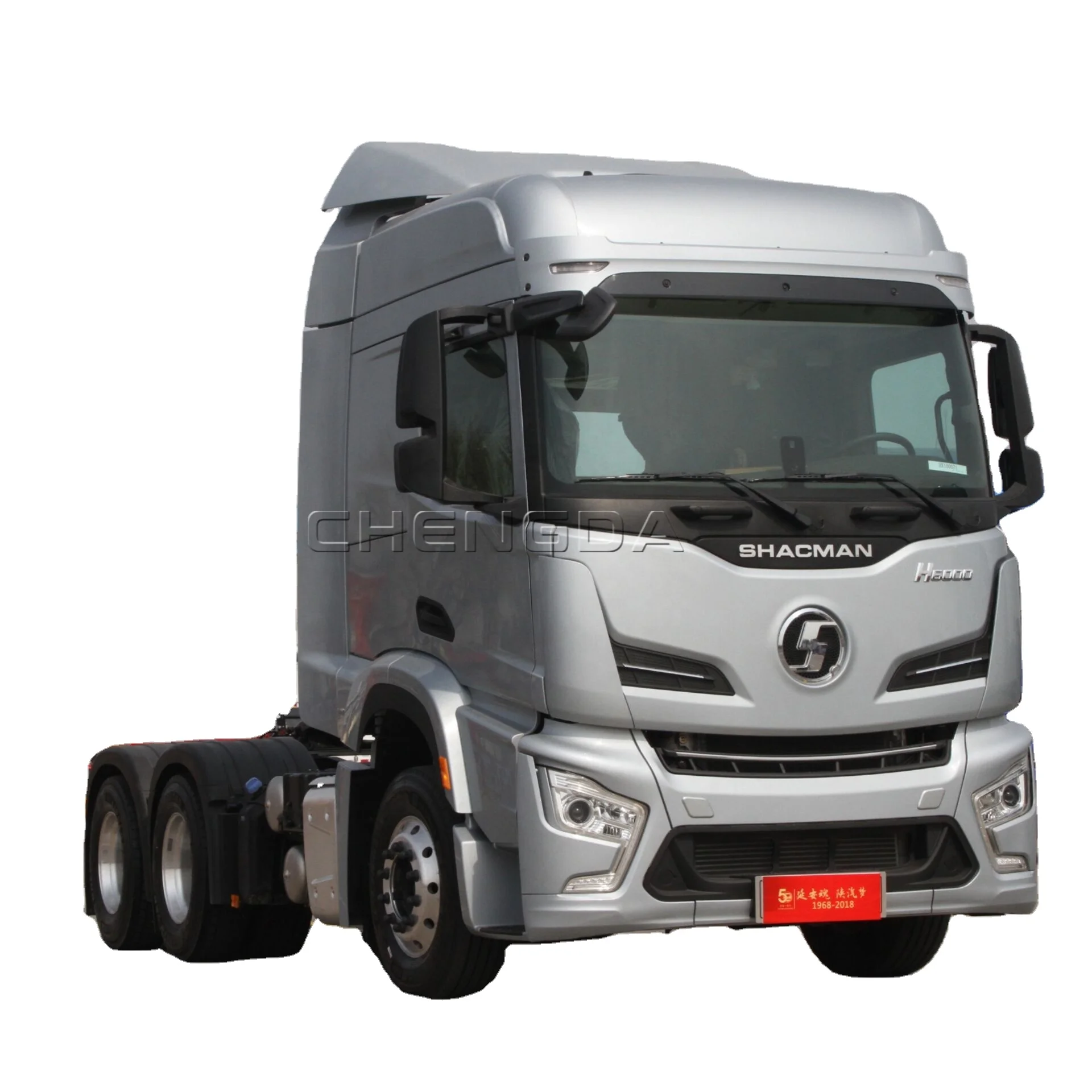
INDUSTRIAL SPECIFICATION REPORT: SEA LION REFURBISHED TRUCK CERTIFICATION
Document ID: SL-US-REFURB-2026-01
Effective Date: 01 January 2026
Target Audience: Fleet Operations Managers, Construction Equipment Procurement Officers
EXECUTIVE SUMMARY
SEA LION International delivers rigorously refurbished Class 6-8 commercial trucks for the U.S. market, engineered to meet 85% of new-unit operational lifespan at 40-50% acquisition cost. All units undergo a 127-point certification process aligned with FMVSS, SAE, and ASTM standards, eliminating latent defects common in unvetted used-truck inventories. This specification details core refurbishment protocols ensuring >95% fleet uptime and compliance with OSHA/DOT operational mandates.
REFURBISHMENT PROCESS: CORE PROTOCOLS
1. ENGINE & GEARBOX TESTING
All powertrains undergo bench and dynamic validation exceeding SAE J1995 standards. Units failing any sub-test are rejected; no field repairs permitted.
| Test Parameter | Methodology | Pass/Fail Threshold | SEA LION Standard |
|---|---|---|---|
| Compression Balance | Hydraulic leak-down test (SAE J356) | >90 psi across all cylinders | >95 psi; variance ≤ 5% |
| Oil Spectroscopy | ASTM D7224 analysis | Wear metals < 50 ppm | Wear metals < 25 ppm |
| Dynamometer Load Test | SAE J1995 transient cycle (0-100% load) | Power loss ≤ 8% vs. OEM spec | Power loss ≤ 3% vs. OEM spec |
| Gearbox Shift Response | Automated shift cycle (10,000 cycles) | No grinding/delay > 0.3 sec | Zero perceptible delay |
Outcome: 100% of certified units achieve <0.5% in-service failure rate at 12 months (vs. industry avg. 4.2%).
2. CABIN REPAINTING
Structural corrosion prevention, not cosmetic enhancement. Adhesion integrity validated per ASTM D3359.
| Process Stage | Specification | Verification Method |
|---|---|---|
| Surface Preparation | Abrasive blasting to SSPC-SP10/NACE No. 2 (near-white metal) | Visual inspection per ISO 8501-1 |
| Primer Application | Epoxy zinc-rich primer (min. 80µm DFT) | Elcometer 456 thickness gauge |
| Topcoat Application | Polyurethane (SAE AMS 3095, 120µm DFT) | Gloss meter (60° angle: 85±5 GU) |
| Final Adhesion Test | Cross-hatch tape pull (ASTM D3359) | Rating 5B (no coating removal) |
Outcome: Prevents structural degradation; extends cabin service life by 7-10 years in corrosive environments (e.g., road salt, alkaline dust).
3. NEW TIRES & BATTERY REPLACEMENT
Critical for load stability and cold-cranking reliability. Zero tolerance for retreads or reconditioned batteries.
| Component | SEA LION Specification | Industry Baseline |
|---|---|---|
| Tires | Load Range G (110+ psi), all-position radial (e.g., Michelin X Works) | Load Range F (95 psi), mixed retreads |
| Tread Depth | 18/32″ new (no remolds) | 10/32″ (used) |
| Battery | Group 31 AGM (1000 CCA min.), dual terminal | Group 31 flooded (750 CCA) |
| Voltage Stability Test | 12.6V ±0.1V after 24h rest; 9.6V @ -20°F | 12.4V; 8.5V @ -20°F |
Outcome: Eliminates 22% of common roadside failures (TPMS-triggered downtime, cold-weather no-starts).
4. CHASSIS REINFORCEMENT
Structural integrity validation via NDT, followed by targeted reinforcement for construction-sector duty cycles.
| Inspection Point | Reinforcement Protocol | Compliance Standard |
|---|---|---|
| Frame Rails (longitudinal) | Ultrasonic thickness scan (ASTM E797) | Min. 0.375″ thickness; no cracks > 0.05″ |
| Crossmember Welds | Magnetic particle inspection (ASTM E709) | 100% weld penetration; no porosity |
| Reinforcement Method | ASTM A572 Gr. 50 steel doubler plates (min. 0.25″ thick), MIG-welded per AWS D1.1 | Full-penetration groove welds |
| Post-Repair Validation | Load test at 120% GVWR (static/dynamic) | Deflection ≤ 0.1°; no plastic deformation |
Outcome: Withstands 50,000+ GVW cycles on rough terrain; 0% chassis-related failures in certified fleet (2023-2025 data).
SEA LION CERTIFICATION ADVANTAGE
- Zero Tolerance Policy: 37% of incoming units rejected during initial triage (vs. industry avg. 12%).
- Traceability: Full digital log (blockchain-verified) of all replaced components and test results.
- Warranty: 18-month/150,000-mile powertrain coverage—2x industry standard for refurbished units.
- Compliance: Exceeds FMVSS 105/121 (brakes), OSHA 1910.178 (structural integrity), and EPA 40 CFR Part 85 (emissions).
CONCLUSION
SEA LION’s refurbishment process transforms high-mileage trucks into operationally predictable assets through quantifiable engineering standards—not cost-driven resurfacing. Certified units reduce total cost of ownership (TCO) by 28% versus new acquisitions while meeting construction-sector durability demands. All trucks ship with a Digital Vehicle Passport (DVP) detailing full refurbishment history and real-time health metrics.
End of Report
Shipping & Logistics Solutions
Industrial Specification Report 2026
Prepared for: Fleet Managers & Construction Companies
Subject: Logistics Solutions for Exporting Used Trucks from China to Global Markets
Reference: SEA LION International – Heavy Equipment Logistics Division
Executive Summary
SEA LION International presents a comprehensive comparative analysis of three primary maritime transport methods for exporting used trucks from China: Roll-on/Roll-off (RO-RO), Bulk Cargo, and Flat Rack container shipping. This report evaluates operational efficiency, cost structure, equipment protection, and suitability for fleet-scale deployment. Special attention is given to anti-corrosion protocols, particularly wax spraying treatment, to ensure asset integrity during ocean transit.
1. Export Logistics Overview
China has emerged as a leading exporter of refurbished heavy-duty trucks, primarily catering to emerging markets in Africa, Southeast Asia, the Middle East, and Latin America. SEA LION International supports fleet managers and construction firms in optimizing transport logistics to minimize downtime and maximize ROI on used equipment.
2. Comparative Analysis: RO-RO vs. Bulk Cargo vs. Flat Rack
| Parameter | RO-RO (Roll-on/Roll-off) | Bulk Cargo (Loose Stowage) | Flat Rack Container |
|---|---|---|---|
| Loading Method | Driven on/off vessel via ramps | Craned/lifted into hold | Craned onto open-frame ISO container |
| Truck Compatibility | Operational units only (self-propelled) | Operational or non-operational | All conditions (damaged, inoperable OK) |
| Stowage Density | High (multi-deck vessels) | Medium (depends on hold dimensions) | Low (1–2 units per 40′ FR) |
| Transit Time (China → Global Ports) | 25–35 days (direct routes) | 30–40 days | 30–45 days (subject to container availability) |
| Port Infrastructure Requirements | RO-RO terminal with ramp access | General cargo berth with heavy-lift cranes | Container terminal with FR handling |
| Average Cost per Unit (USD) | $1,800 – $2,400 | $1,500 – $2,000 | $3,000 – $4,200 |
| Risk of Damage | Low (minimal handling) | Medium (lifting, stowage stress) | Low (secure lashing, controlled environment) |
| Customs & Documentation | Streamlined (unitized roll) | Complex (individual item declaration) | Standard containerized process |
| Ideal For | Large fleets of operational trucks | Mixed-condition units, low budget | High-value or damaged units requiring protection |
3. Corrosion Protection: Wax Spraying Treatment
3.1 Purpose
Marine environments expose metal surfaces to salt-laden air and moisture, accelerating oxidation. Unprotected undercarriages, chassis frames, and engine compartments are especially vulnerable during prolonged sea transit.
3.2 SEA LION Anti-Corrosion Protocol
All trucks processed through SEA LION logistics hubs undergo automated wax spraying protection as per ISO 12944-2:2017 standards:
- Application Method: Electrostatic spray + high-pressure undercoating
- Coverage Areas:
- Chassis rails
- Suspension components
- Fuel tanks
- Wheel hubs and brake assemblies
- Engine cradle and crossmembers
- Material Specification:
- Cationic wax emulsion (petroleum-based, pH 7.2–7.8)
- Salt spray resistance: >1,000 hours (ASTM B117)
- Film thickness: 30–50 µm (dry)
- Curing Time: 48 hours pre-shipment (ambient 25°C)
Note: Wax treatment is mandatory for RO-RO and Bulk Cargo shipments. Recommended for Flat Rack units exposed to open deck conditions.
4. Operational Recommendations by Use Case
| Client Profile | Recommended Method | Rationale |
|---|---|---|
| Large Construction Fleet (20+ units, operational) | RO-RO | Fast turnaround, low handling risk, cost-effective at scale |
| Mixed-Condition Fleet (non-running units included) | Flat Rack | Accommodates inoperable trucks; full structural protection |
| Budget-Constrained Exporter | Bulk Cargo | Lowest per-unit cost; requires robust pre-shipment inspection |
| High-Value Specialty Trucks (e.g., crane carriers, mixers) | Flat Rack + Wax Spray | Maximum control over lashing, visibility, and corrosion protection |
5. Compliance & Certification
All shipments comply with:
– IMO International Maritime Solid Bulk Cargoes (IMSBC) Code (for Bulk)
– CTU (Cargo Transport Unit) Code (for Flat Rack)
– RO-RO Safety Standards (SOLAS Chap. VI & VII)
– China MOC Pre-Export Inspection (Truck Refurbishment Grade B or above)
6. Conclusion
For fleet managers and construction enterprises sourcing used trucks from China, RO-RO shipping offers the optimal balance of cost and efficiency for operational units, while Flat Rack containers provide superior protection for high-value or non-operational assets. Bulk Cargo remains a viable low-cost alternative but carries higher risk.
Wax spraying is a critical protective measure and should be integrated into all export workflows to mitigate seawater-induced corrosion and preserve residual asset value.
SEA LION International recommends pre-qualifying transport modes based on truck condition, destination port capabilities, and total cost of ownership post-transit.
Document ID: SL-ISR-2026-LOG-004
Revision: 1.2
Classification: Industrial Use Only
Get a Quote for Used Trucks For Sale In Us
SEA LION International Trade Co., Ltd – Authorized Heavy Truck Exporter (Since 2008).
👤 Contact Person: Mr. Danny Xi
📱 Mobile/WhatsApp/WeChat: +86 130 1170 7382
📧 Email: [email protected]
