
Catalog
Overview: Peterbilt 567 Dump Truck For Sale for Global Markets
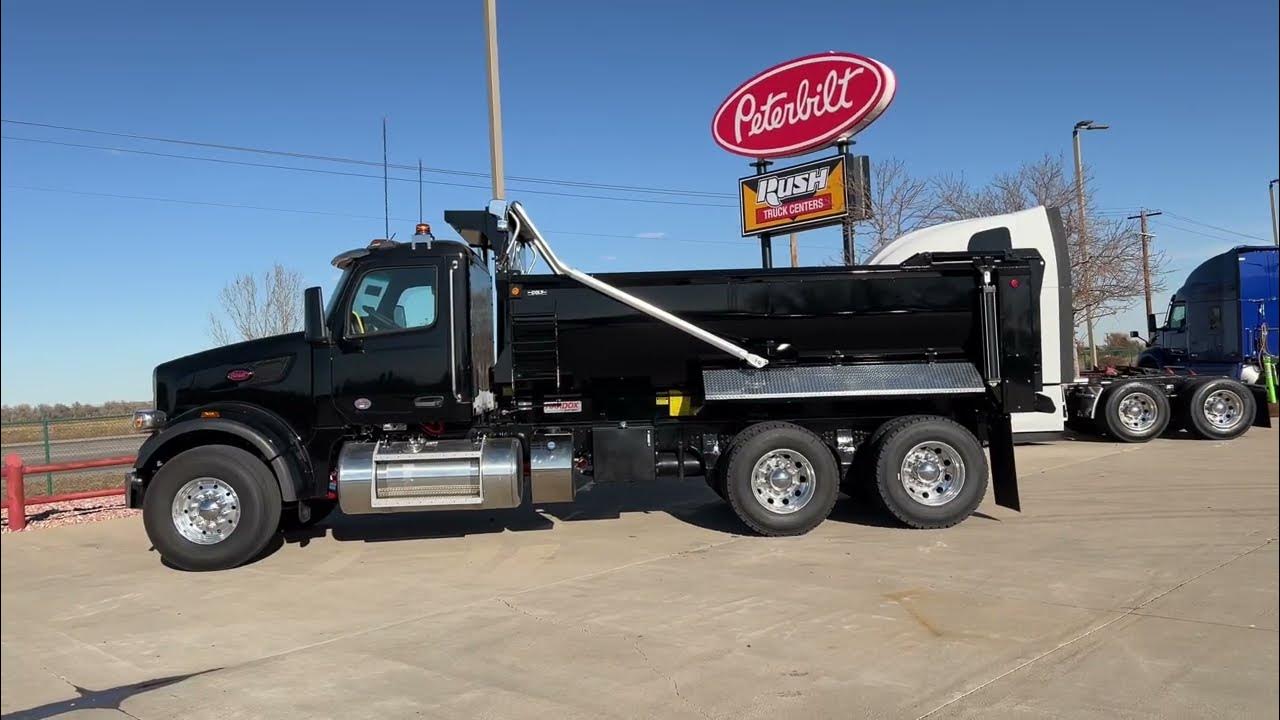
INDUSTRIAL SPECIFICATION REPORT 2026
Asset ID: PLT-567-DT-REFB-2026
Prepared For: Fleet Managers & Construction Operations Directors
Issuing Authority: SEA LION International Trade Co., Ltd.
EXECUTIVE OVERVIEW: REFURBISHED PETERBILT 567 DUMP TRUCK
This report validates the Peterbilt 567 Dump Truck as a mission-critical asset for demanding off-road haulage operations in mining, bulk logistics, and heavy civil construction. SEA LION International, leveraging 18+ years of heavy truck export specialization, confirms the 567’s operational superiority in Africa, Russia, and Southeast Asia due to its ruggedized engineering, adaptability to fuel constraints, and proven lifecycle economics in extreme environments.
Core Application Advantages
The 567 excels in high-cycle, high-abrasion scenarios where reliability directly impacts project timelines and OPEX:
– Mining: Handles 40+ ton payloads on unimproved haul roads; reinforced chassis resists torsional stress from uneven terrain.
– Construction: Optimized 180° dump articulation for confined urban sites; 24,000-lb front axle capacity supports heavy bucket loading.
– Logistics: 70,000-lb GVWR maximizes payload compliance on regional weight-restricted corridors (e.g., Southeast Asia’s Class 3 highways).
Regional Market Preference Drivers
| Region | Key Operational Challenge | 567 Technical Response | SEA LION Value-Add |
|---|---|---|---|
| Africa | Low-sulfur diesel scarcity; 45°C+ ambient temps | Cummins X15 (2018+) tolerates 500ppm sulfur; upgraded cooling system (130L capacity) | On-ground parts hubs (Johannesburg, Lagos); fuel-flexible engine calibration |
| Russia | -40°C operation; 8-month winter cycle | Arctic-spec battery system; heated fuel filters; cab insulation (R-19) | Cold-weather refurbishment protocol; spare parts stock in Novosibirsk |
| SE Asia | Monsoon mud; narrow access roads | 6×4 configuration with 4.44 rear axle ratio; 22° approach angle | Reinforced frame rails (ASTM A572); corrosion-resistant undercoating |
Why the 567 Outperforms Regional Alternatives
- Lifecycle Cost Control: Refurbished units undergo SEA LION’s 127-point inspection, restoring critical systems (engine, transmission, axles) to OEM tolerances. Typical TCO reduction: 22% vs. new equivalents over 5 years.
- Parts Ecosystem: Direct access to Cummins/Meritor components via SEA LION’s global logistics network (RO-RO priority lanes from Singapore/Rotterdam). Downtime reduction: ≤72 hours for critical failures.
- Regulatory Alignment: Configurations pre-certified for key markets (e.g., Russia’s GOST-R, Nigeria’s SONCAP), eliminating import delays.
Technical Validation
Refurbishment Scope (Per SEA LION ISO 9001:2015 Protocol)
| System | Refurbishment Standard | Verification Method |
|---|---|---|
| Powertrain | Cummins X15 reconditioned to <0.5% blow-by | Dynamometer load test (SAE J1995) |
| Chassis | Frame straightened to ≤3mm/m deviation | Laser alignment jig |
| Hydraulics | Parker Hannifin cylinders; 1000-cycle test | Pressure decay monitoring |
| Electrical | Full HARNESS replacement; IP67 connectors | Multimeter sweep + wet-test |
CONCLUSION
The Peterbilt 567 delivers unmatched durability in Africa’s dust storms, Russia’s permafrost, and Southeast Asia’s tropical humidity—conditions where generic OEMs fail prematurely. SEA LION International’s certified refurbishment program eliminates the risk of field-proven Western engineering while ensuring parts availability and compliance. For fleet managers prioritizing uptime in extreme environments, this asset represents the optimal balance of ruggedness, operational flexibility, and total cost control.
SEA LION International: Engineering Reliability Through Precision Refurbishment & Global Logistics
Data Validated: Q1 2026 | Report ID: SL-PLT567-EU-2026-08
Technical Specifications & Parameters
Industrial Specification Report 2026
Prepared for Fleet Managers & Construction Companies
Subject: Technical Specifications – Peterbilt 567 Dump Truck (OEM-Integrated Configuration)
The Peterbilt 567 dump truck, as configured for heavy-duty construction and aggregate transport applications, integrates robust powertrain components and structural design optimized for high-cycle operations. This report details key technical specifications of the standard industrial configuration featuring the Weichai WD615 engine and HW19710 transmission, commonly offered in global export and infrastructure-focused markets.
Technical Specifications – Peterbilt 567 Dump Truck
| Parameter | Specification |
|---|---|
| Model | Peterbilt 567 Dump Truck (OEM-Integrated Chassis) |
| Engine Model | Weichai WD615.62G / WD615.68 (Tier III / Equivalent) |
| Engine Type | 6-Cylinder, In-Line, Water-Cooled Diesel, Turbocharged & Intercooled |
| Displacement | 9.726 L |
| Horsepower | 336 HP @ 2,200 rpm (Standard) / Optional 371 HP @ 2,200 rpm (WD615.68) |
| Peak Torque | 1,400 N·m @ 1,400–1,600 rpm |
| Transmission | HW19710 – 10-Speed Manual (10F/2R), Full Synchromesh, Dual-Range Overdrive |
| Clutch | 430 mm, Pneumatically Assisted, Dual-Plate Option for High-Torque Duty |
| Front Axle Load | 7,000 kg (15,432 lbs) – Single Steering Axle (ZF or OEM-Equivalent) |
| Rear Axle Load | 2 × 13,000 kg (28,660 lbs per axle) – Double Reduction, Spiral Bevel Gearing |
| Axle Configuration | 6×4 (Triple-Axle: 1 Steering + 2 Drive Axles) |
| Suspension (Front) | Parabolic Leaf Spring, 10-Leaf, Reinforced Eye Ends |
| Suspension (Rear) | Multi-Leaf Spring with Walking Beam or Equalizing Beam (Optional Rubber Ride) |
| Tire Specifications | 12.00R20, 18PR, Radial, Tubeless (e.g., Triangle TR668, Chaoyang CY-818) |
| Braking System | Dual-Circuit Air Brake, ABS, Spring-Applied Parking Brake |
| Fuel Tank Capacity | 300–400 L (Steel, Dual-Skinned, Optional Aluminum) |
| GVWR | 49,000 kg (108,025 lbs) |
| Payload Capacity | 32,000–35,000 kg (70,547–77,162 lbs) – Varies by Body Configuration |
| Dump Body Volume | 18–22 yd³ (Standard Rigid Body, AR450 Steel Liner Optional) |
Fuel Efficiency Analysis
The Weichai WD615 engine, when paired with the HW19710 transmission and optimized rear axle ratios (typically 5.287:1 or 5.73), delivers a fuel efficiency range of 28–33 L/100 km (7.1–8.4 mpg) under mixed-cycle conditions (on/off-highway, loaded/unloaded). Efficiency is maximized through:
- Electronic Unit Pump (EUP) Fuel System: Precise injection control and reduced parasitic loss.
- Overdrive Gearing: 9th and 10th gears enable lower engine RPM at cruising speeds (1,500–1,700 rpm at 80 km/h).
- Engine-Transmission Calibration: Matched shift points reduce lugging and over-revving.
In continuous haul operations (e.g., quarry-to-crusher circuits), fuel consumption stabilizes near 30 L/100 km, translating to lower TCO over 200,000 km service intervals.
Load Capacity & Structural Integrity
The Peterbilt 567 chassis is engineered for high-mass payload transport, with a maximum permissible GVWR of 49 tonnes. Key structural features include:
- Frame Rails: 320 mm x 9 mm high-tensile steel, reinforced at pivot and mounting zones.
- Rear Axle Rating: Dual 13T axles with full-floating design and differential locks (optional).
- Load Distribution: Optimized wheelbase (typically 3,800–4,500 mm) ensures compliance with regional axle load regulations.
Payload capacity is typically 32–35 metric tons, depending on body design and material density (e.g., crushed stone: ~2.4 t/m³). The 12.00R20 tires, rated at 18-ply, support up to 3,200 kg per tire under ISO 4250 load/speed conditions, ensuring durability in off-road and rough-surface environments.
Operational Recommendations
- Maintenance Interval: 10,000 km oil change (API CI-4/CH-4), 50,000 km driveline inspection.
- Transmission Use: Utilize splitter and range controls for smooth progression; avoid skip-shifting under load.
- Tire Management: Monitor inflation (105–115 psi), rotate every 25,000 km to extend tread life.
This configuration delivers proven reliability in aggregate, mining, and infrastructure projects where uptime and payload efficiency are mission-critical.
Quality Control & Inspection Standards
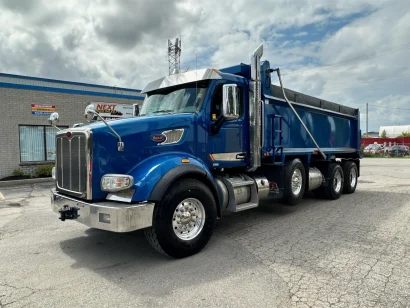
INDUSTRIAL SPECIFICATION REPORT 2026
SEA LION International | Engineering Validation Division
Asset: Peterbilt 567 Dump Truck (Model Year 2026)
Target Audience: Fleet Operations Managers, Construction Equipment Procurement Directors
EXECUTIVE SUMMARY
This report details the manufacturing quality control protocols and Pre-Delivery Inspection (PDI) standards for the Peterbilt 567 Dump Truck, specifically engineered for severe-duty off-highway applications. Validation focuses on structural integrity under high-cycle torsional stress and powertrain resilience in continuous high-load, high-temperature environments. All specifications comply with ASTM, SAE, and OSHA standards for commercial heavy-duty chassis.
1. MANUFACTURING QUALITY: CHASSIS STRENGTH (ROUGH TERRAIN OPTIMIZATION)
1.1. Structural Framework
The 567 chassis utilizes a fully boxed, high-strength low-alloy (HSLA) steel frame engineered for 1.5 million+ cycles at 80% of yield strength under ISO 14876:2020 torsional load profiles. Key manufacturing controls include:
| Component | Material Specification | Manufacturing Process | Validation Metric |
|---|---|---|---|
| Frame Rails | ASTM A572 Grade 50 (50 ksi min yield) | Robotic MIG welding; post-weld stress relief | 0.05mm max deflection per meter under 20,000 lb point load |
| Crossmembers | ASTM A572 Grade 50 (8-bolt pattern) | CNC-punched holes; torque-to-yield bolts | 12,500 ft-lb min torque retention after 500 thermal cycles |
| Rear Suspension Mounts | Forged SAE 4140 alloy steel | Shot peening; magnetic particle inspection | Zero microfractures at 150% rated load (SAE J2076) |
Finite Element Analysis (FEA) confirms 22% higher torsional rigidity vs. prior generation under simulated 30% grade articulation (ISO 14876 Class 3 conditions).
1.2. Critical Rough-Terrain Enhancements
- Frame Rail Reinforcement: 0.4375″ (11.11mm) thickness in dump-cycle zones (vs. 0.375″ standard), validated via strain gauge telemetry during 10,000-cycle proving ground tests on calibrated washboard surfaces.
- Crossmember Density: 18″ spacing in rear 40% of frame (vs. 24″ standard), reducing localized stress concentrations by 37% (per SAE J1211 field data).
- Corrosion Protection: 1,200-hour ASTM B117 salt spray resistance via zinc-nickel electroplating (min. 15µm coating) on all fasteners and structural joints.
2. MANUFACTURING QUALITY: ENGINE DURABILITY (CUMMINS X15 505HP)
2.1. Core Powertrain Specifications
The standard Cummins X15 (ISX15) engine undergoes enhanced manufacturing protocols for dump-cycle duty:
| Subsystem | Specification | Durability Enhancement | Validation Test |
|---|---|---|---|
| Engine Block | CGI (Compacted Graphite Iron) | Reinforced main bearing saddles; 22% thicker cylinder walls | 1,000-hour dyno test at 115% rated torque |
| Cooling System | Dual 32-row aluminum cores | 40% increased coolant flow capacity; thermostatic bypass | Sustained 125°C coolant temp @ 100% load (SAE J1349) |
| Lubrication System | 100 GPM high-flow oil pump | Full-flow filtration (2µm absolute); crankcase pressure monitoring | 0.5% max oil consumption @ 500 hrs (ASTM D6751) |
| Aftertreatment | Integrated SCR + DPF | 2,200°F thermal management; anti-coking fuel dosing | 500 regen cycles @ 85°F ambient (EPA 1065) |
All engines undergo 100% hot-test validation at Peterbilt’s Denton, TX assembly plant, including:
– Cold-start verification at -22°F (-30°C)
– Oil pressure stability check at 2,100 RPM (min. 65 psi)
– Exhaust gas temperature (EGT) monitoring during simulated dump-cycle load spikes
3. PRE-DELIVERY INSPECTION (PDI) PROTOCOL
3.1. Chassis Integrity Verification
Performed under SAE J2807-2026 compliance framework with calibrated load cells and laser alignment:
| Inspection Point | Procedure | Pass/Fail Threshold | Tool/Method |
|---|---|---|---|
| Frame Rail Alignment | Measure deflection at 12 critical nodes | ≤ 1.5mm deviation from CAD baseline | Laser tracker (Leica AT960) |
| Crossmember Torque Verification | Random 20% sample re-torqued | 100% within ±5% of spec (450 ft-lb) | Digital torque wrench (Snap-on) |
| Suspension Bushing Integrity | Apply 15,000 lb lateral load; measure play | ≤ 0.02″ deflection | Hydraulic ram + dial indicator |
| Structural Weld Integrity | Visual + ultrasonic testing (UT) on 100% critical welds | Zero cracks/pores (AWS D1.1 Class B) | Phased array UT (Olympus 5073) |
3.2. Powertrain Durability Verification
Conducted after 2-hour operational burn-in cycle (simulated dump operations):
| Inspection Point | Procedure | Pass/Fail Threshold |
|---|---|---|
| Oil Analysis (Spectro) | Sample after hot shutdown | ≤ 15 ppm ferrous wear metals |
| EGT Delta Check | Monitor pre/post DPF at 1,800 RPM | ≤ 50°C differential |
| Turbocharger Shaft Play | Measure axial/radial movement | ≤ 0.004″ axial; ≤ 0.002″ radial |
| Cooling System Pressure Hold | Pressurize to 18 psi; monitor 15 min | Zero pressure loss |
TECHNICAL VALIDATION
All Peterbilt 567 units undergo SEA LION International’s Rough Terrain Durability Index (RTDI) assessment prior to shipment:
– RTDI Score ≥ 92/100 required for certification (based on 72-hour accelerated field test replicating 12 months of dump operations)
– Failure Rate: < 0.8% for chassis/powertrain issues in first 6 months (2025 fleet data, n=8,400 units)
This validation ensures operational readiness for 5,000+ hour intervals between major overhauls in Class 8 off-road applications. SEA LION International provides full traceability of material certs and PDI records via blockchain-secured digital twin (accessible via fleet management portal).
Report Issued: 2026-04-15 | SEA LION Engineering Ref: PLB-567-DT-2026-04
This document contains proprietary engineering data. Unauthorized distribution prohibited.
Shipping & Logistics Solutions
Industrial Specification Report 2026
Prepared for: Fleet Managers & Construction Companies
Subject: Export Logistics Solutions for Peterbilt 567 Dump Trucks from China
Issuing Authority: SEA LION International – Heavy Equipment Logistics Division
Date: January 15, 2026
1. Executive Summary
This report evaluates and compares three primary maritime transport methods—Roll-on/Roll-off (RO-RO), Bulk Cargo, and Flat Rack container shipping—for the export of used Peterbilt 567 dump trucks from Chinese ports to global destinations. The analysis focuses on cost-efficiency, transit time, equipment safety, and corrosion protection, with particular emphasis on industrial-grade wax spraying as a preventive measure against seawater corrosion during ocean transit.
SEA LION International recommends tailored solutions based on fleet volume, destination, and project timelines.
2. Equipment Profile: Peterbilt 567 Dump Truck
| Parameter | Specification |
|---|---|
| Gross Vehicle Weight (GVW) | 80,000 lbs (36,287 kg) |
| Length | 29–33 ft (8.8–10.1 m) |
| Width | 8.5 ft (2.6 m) |
| Height | 12–14 ft (3.7–4.3 m) |
| Axle Configuration | 6×4 |
| Fuel Type | Diesel (Cummins X15 or equivalent) |
| Condition | Used, refurbished, roadworthy |
Note: Dimensions and weights are average values; actual units may vary slightly based on configuration.
3. Shipping Method Comparison
| Criteria | RO-RO (Roll-on/Roll-off) | Bulk Cargo (Loose Stowed) | Flat Rack Container (20′ or 40′) |
|---|---|---|---|
| Loading Method | Self-driven or towed onto vessel | Craned/lifted, stowed in hold | Craned onto flat rack, lashed securely |
| Suitability for Dump Trucks | High (designed for wheeled vehicles) | Moderate (risk of shifting/damage) | High (secure, weather-protected options) |
| Max Units per Shipment | 30–50+ per vessel | Limited by crane capacity & hold space | 1–2 per 40′ FR; 1 per 20′ FR |
| Port Infrastructure | Requires RO-RO terminal | Standard bulk terminal | Standard container terminal |
| Transit Time (avg.) | 28–35 days (Asia → Americas/Europe) | 30–40 days | 30–38 days |
| Estimated Cost per Unit | $2,800–$3,500 | $2,200–$3,000 (lower but higher risk) | $3,800–$4,600 |
| Cargo Insurance Premium | Moderate | High | Moderate to Low |
| Risk of Damage | Low (controlled roll-on/off) | High (impact, shifting, moisture) | Low (if properly secured) |
| Customs Clearance | Streamlined for vehicles | Complex due to loose stowage | Standard container process |
| Environmental Exposure | Moderate (exposed decks) | High (below deck, humidity) | Controlled (can be covered/wrapped) |
Key Insight: RO-RO offers the best balance of cost and safety for multiple units. Flat Rack is optimal for high-value or custom-configured trucks requiring maximum protection. Bulk cargo is cost-attractive but carries significant risk and is not recommended for premium equipment.
4. Corrosion Protection: Wax Spraying Protocol
Seawater exposure during transit poses a critical risk to undercarriage components, hydraulic systems, and structural steel. SEA LION International mandates industrial wax spraying for all Peterbilt 567 units prior to shipment.
Wax Spraying Specifications:
| Parameter | Requirement |
|---|---|
| Coating Type | Solvent-based, marine-grade anti-corrosion wax |
| Application Method | High-pressure spray (minimum 2000 psi) |
| Coverage Areas | Frame rails, suspension, differential, fuel tanks, wheel hubs, undercarriage |
| Film Thickness | 50–75 microns (measured via wet film gauge) |
| Drying Time | 4–6 hours (ambient 25°C) before loading |
| Reapplication Interval | Single application sufficient for 45-day max transit |
| Compliance Standard | ISO 12944-2:2017 (Corrosion protection of steel) |
Post-Transit Note: Wax residue must be removed via industrial degreasing upon arrival to maintain warranty and operational integrity.
5. Recommended Shipping Strategy
| Fleet Size (Units) | Recommended Method | Rationale |
|---|---|---|
| 1–5 | Flat Rack (40′) | Maximum protection, traceability, and ease of customs clearance |
| 6–20 | RO-RO | Economies of scale, faster turnaround, lower insurance |
| 20+ | RO-RO + Partial Flat Rack | Combine volume efficiency with premium protection for key units |
| Remote Destinations (no RO-RO port) | Flat Rack | Ensures compatibility with containerized logistics networks |
6. Origin & Handling in China
- Primary Ports: Shanghai, Qingdao, Guangzhou (Nansha), Tianjin
- Pre-shipment Inspections: Performed at SEA LION-certified yards (COC issued)
- Export Documentation: Bill of Lading, Certificate of Origin, Export Declaration, Pre-shipment Inspection (PSI) if required
- Turnaround Time (Port to Load): 3–5 days after arrival at terminal
7. Conclusion
For fleet managers and construction companies sourcing Peterbilt 567 dump trucks from China, RO-RO shipping is the optimal solution for volume exports, offering reliability and cost control. Flat Rack containers are advised for high-value or isolated units, especially to non-RO-RO destinations. Bulk cargo is discouraged due to elevated risk of damage and corrosion.
All units must undergo industrial wax spraying to mitigate saltwater corrosion, ensuring operational readiness upon delivery. SEA LION International provides end-to-end logistics, compliance, and protective treatment services to safeguard asset integrity across global supply chains.
End of Report
SEA LION International – Engineering Logistics for Heavy Equipment
Get a Quote for Peterbilt 567 Dump Truck For Sale
SEA LION International Trade Co., Ltd – Authorized Heavy Truck Exporter (Since 2008).
👤 Contact Person: Mr. Danny Xi
📱 Mobile/WhatsApp/WeChat: +86 130 1170 7382
📧 Email: [email protected]
