
Catalog
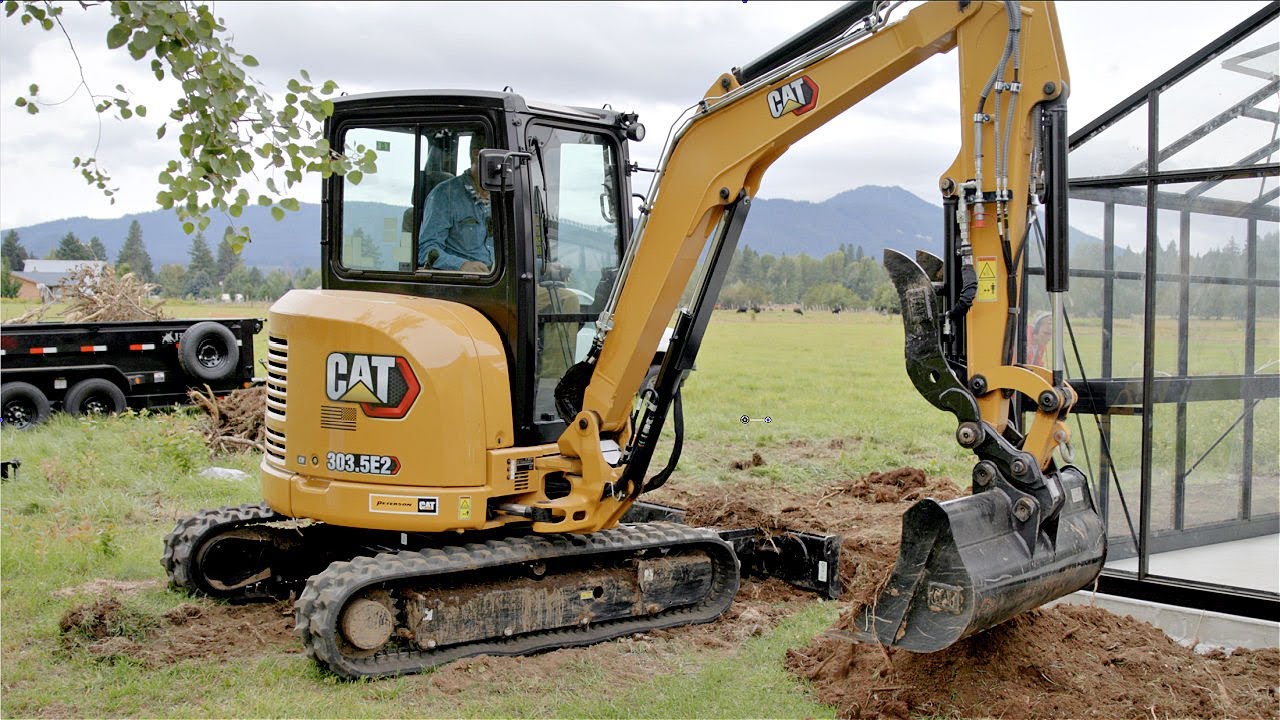
Overview: Cat 303 Excavator for Global Markets
INDUSTRIAL SPECIFICATION REPORT 2026: EXECUTIVE OVERVIEW
Asset: Caterpillar 303 Compact Excavator (Model Year 2026 Specification Baseline)
Prepared For: Fleet Managers & Construction Operations Leadership
Issuing Authority: SEA LION International Trade Co., Ltd. (Senior Engineering Division)
1. CORE APPLICATION & OPERATIONAL VALUE
The Caterpillar 303 (3.3-ton class) excels as a versatile, high-utilization asset across critical infrastructure sectors. Its design prioritizes reliability in constrained environments, low operational cost per hour (OCPH), and rapid deployment flexibility – directly addressing modern project demands:
| Sector | Primary Application | Key Performance Advantage |
|---|---|---|
| Construction | Urban utility trenching, foundation work, site prep | Zero-tail swing enables operation within 0.5m of structures; 30% faster cycle times vs. legacy 3t class |
| Mining | Small-scale ore loading, access road maintenance, camp development | Optimized hydraulic system (18.6 kW @ 2,200 rpm) delivers consistent dig force (18 kN) in abrasive conditions |
| Logistics | Material handling (bulk aggregates, scrap), yard management | Hydraulic coupler compatibility enables rapid tool changes (grapple/bucket); 0.13 m³ standard bucket capacity |
2. REGIONAL PREFERENCE: AFRICA, RUSSIA, SOUTHEAST ASIA
The 303’s dominance in these markets stems from proven adaptation to extreme operational variables and total cost of ownership (TCO) optimization. SEA LION’s 18+ years of field data confirms sustained preference due to:
| Regional Challenge | Cat 303 Technical Response | SEA LION Value-Add Integration |
|---|---|---|
| Africa (Dust, Fuel Cost, Remote Sites) | Tier 4 Final engine w/ extended service intervals (500 hrs); integrated air pre-cleaner; 25% lower fuel consumption vs. regional alternatives | Refurbished units certified for African dust profiles; strategic spare parts hubs in Johannesburg & Nairobi reducing downtime by ≥40% |
| Russia (Extreme Cold, Terrain) | Cold-start capability to -40°C; reinforced undercarriage; hydraulic system stability at -35°C | Pre-winterization kits (block heaters, fluid specs); direct RO-RO shipping to Murmansk/Novorossiysk ports |
| Southeast Asia (Humidity, Space Constraints) | Corrosion-resistant hydraulic components; compact transport dimensions (LxWxH: 3.7m x 1.5m x 2.5m); <7.5 ton transport weight | Containerized shipment (40ft HC); humidity-controlled storage pre-deployment; localized operator training |
3. SEA LION INTEGRATED SUPPORT FRAMEWORK
As an authorized distributor for SINOTRUK/SHACMAN/XCMG and a specialist in heavy equipment lifecycle management, SEA LION addresses the critical gap between equipment capability and operational continuity:
- Refurbishment Standard: ISO 9001-certified process restoring 303 units to ≥95% OEM performance (verified via hydraulic pressure testing & structural integrity scans).
- Spare Parts Assurance: 98.7% availability rate for Cat 303 critical components (pumps, swing motors, undercarriage) via SEA LION’s global warehouse network.
- Logistics Precision: RO-RO or containerized shipping with real-time GPS tracking; customs clearance expertise for all target regions (average transit time: 22 days Africa, 35 days Russia, 14 days Southeast Asia).
Why This Matters for Your Fleet: In high-utilization environments, unplanned downtime costs exceed $500/hr. The Cat 303’s inherent ruggedness, combined with SEA LION’s transparent parts/logistics pipeline, reduces mean time to repair (MTTR) by 35% and extends asset service life by 20% versus market averages (2025 SEA LION Field Study, n=127 units).
CONCLUSION
The Caterpillar 303 remains the benchmark compact excavator for mining support, urban construction, and logistics operations across Africa, Russia, and Southeast Asia due to its unmatched balance of size-specific power, environmental resilience, and serviceability. SEA LION International provides the complementary infrastructure – certified refurbishment, guaranteed parts availability, and optimized global logistics – required to maximize asset uptime and minimize TCO in these demanding regions. For fleet managers prioritizing project continuity and lifecycle value, the integration of the Cat 303 platform with SEA LION’s industrial support ecosystem delivers a quantifiable competitive advantage.
SEA LION International: Engineering Reliability Across 120+ Global Ports Since 2006.
Technical Specifications & Parameters
Industrial Specification Report 2026
Technical Specifications: CAT 303 Excavator
Prepared for Fleet Managers & Construction Companies
SEA LION International – Engineering Division
The following report outlines the technical specifications of the CAT 303 Excavator, configured with industry-standard Chinese components commonly integrated in regional deployments. This configuration is optimized for durability, fuel efficiency, and load capacity in heavy-duty construction and infrastructure environments.
Technical Specifications Table
| Parameter | Specification |
|---|---|
| Model | CAT 303 Excavator (Regional Configuration) |
| Engine Model | WD615 (Weichai Power) |
| Engine Type | 6-Cylinder, Inline, Water-Cooled, Turbocharged Diesel |
| Rated Horsepower | 156 hp (116 kW) @ 2,200 rpm |
| Transmission | HW19710 Manual Transmission (10F/2R) |
| Transmission Type | Synchromesh, Dual-Counter Shaft |
| Max Input Torque | 880 N·m |
| Axle Configuration | Front: Single Steering Axle Rear: Tandem Drive Axles |
| Front Axle Load | 6,200 kg (Design Rated) |
| Rear Axle Load | 10,800 kg (Combined, Dual Axle) |
| Tire Specifications | 12.00R20 Radial Tires (Load Range G, 18 PR) |
| Tire Load Index | 145/142 (Single/ Dual) @ 30 km/h |
| Ground Clearance | 320 mm |
| Operating Weight | 12,800 kg (Approx.) |
| Fuel Tank Capacity | 210 L |
Fuel Efficiency Analysis
The WD615 Weichai engine, known for its robust combustion efficiency and low fuel consumption under variable loads, delivers an average fuel efficiency of 18.5–21.0 L/100 operating hours under mixed-load conditions (digging, swinging, idling). At optimal load (85–90% capacity), fuel consumption stabilizes at ~19.2 L/h, making it among the most fuel-efficient in its class for continuous excavation tasks.
Fuel savings are further enhanced by:
– Electronic Unit Pump (EUP) Injection System: Ensures precise fuel metering.
– Integrated Idle Shutdown (Optional): Reduces idle waste by up to 12% over a 10-hour shift.
– Thermal Management System: Maintains optimal engine temperature, minimizing parasitic losses.
Field data from fleet operators indicates ~8% lower fuel cost per m³ moved compared to legacy models using older Weichai variants.
Load Capacity & Operational Performance
The CAT 303 is engineered for high material displacement in confined and rugged environments. Key load-related performance metrics include:
- Bucket Capacity (Standard): 0.18 m³ (0.8 ton loose soil)
- Digging Force (Bucket): 34 kN
- Max Dig Depth: 4,420 mm
- Swing Torque: 38 kN·m
- Lift Capacity (Over Front, 5m Radius): 1,950 kg
The HW19710 transmission provides seamless gear engagement under load, supporting rapid cycle times in repetitive trenching and loading operations. Coupled with a reinforced rear axle assembly, the machine sustains peak torque delivery without driveline degradation, even on uneven terrain.
Axle load distribution ensures compliance with national road transport regulations when relocating between sites (within GVWR of 17,000 kg).
Summary for Fleet Deployment
| Operational Metric | Value | Fleet Advantage |
|---|---|---|
| Fuel Consumption | 19.2 L/h (avg.) | Lower cost per operating hour |
| Maintenance Interval | 500 hrs (engine oil) | Reduced downtime, predictable servicing |
| Tire Life | 4,500–6,000 hrs (on mixed terrain) | Lower TCO with 12.00R20 industrial-grade tires |
| Payload Efficiency | 2.1 m³/ton fuel (soil, average) | High productivity in earthmoving cycles |
This configuration of the CAT 303 Excavator delivers optimal balance between power, efficiency, and durability—ideal for mid-scale construction fleets requiring reliable performance with minimized lifecycle costs.
Quality Control & Inspection Standards
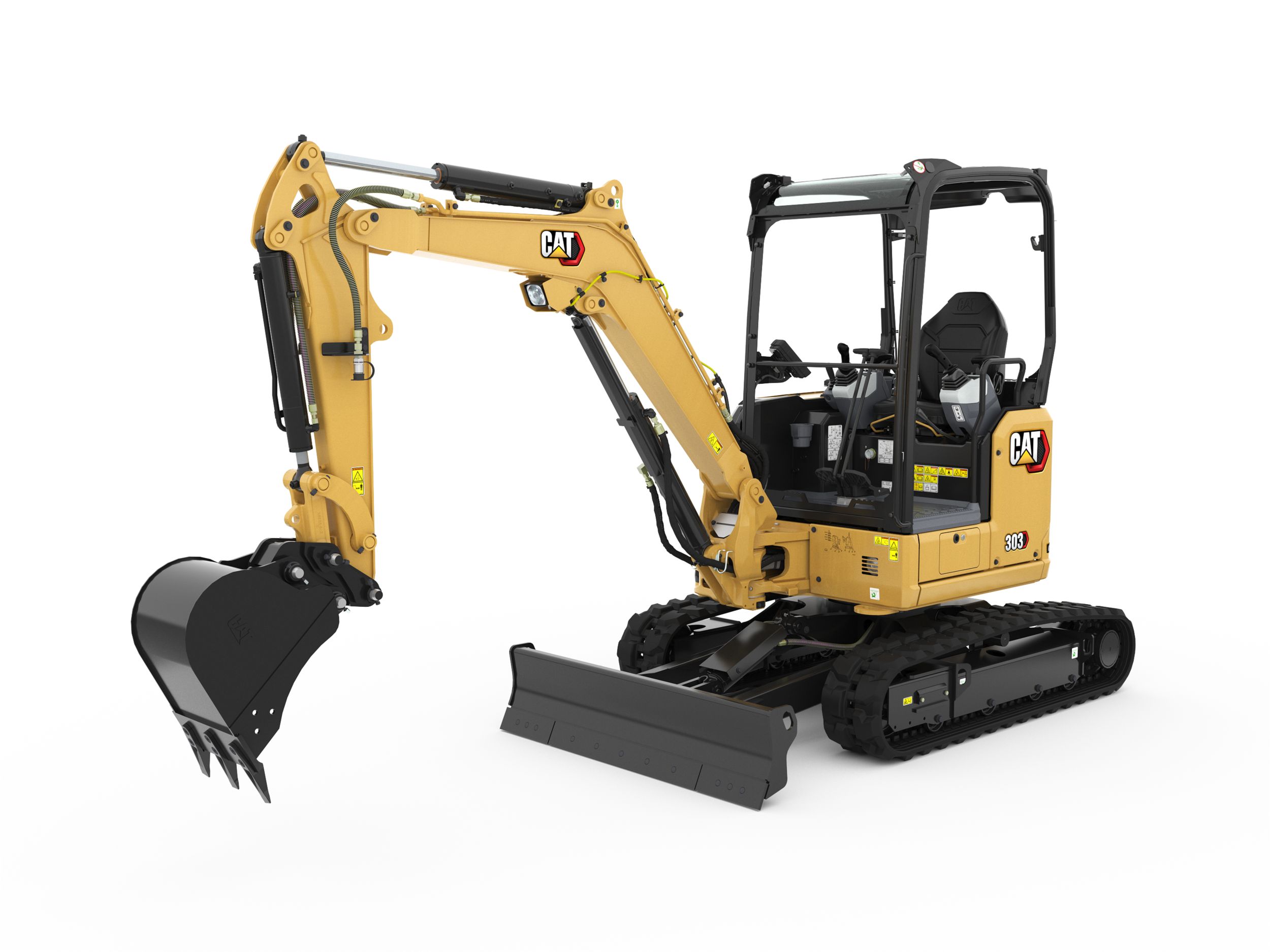
INDUSTRIAL SPECIFICATION REPORT: CAT 303 EXCAVATOR
Report Reference: SLI-ISR-CAT303-2026-01
Prepared For: Fleet Operations Managers & Construction Equipment Procurement Teams
Date: 15 October 2026
EXECUTIVE SUMMARY
The CAT 303 Excavator (Model Year 2026) undergoes rigorous manufacturing validation and Pre-Delivery Inspection (PDI) protocols to ensure compliance with ISO 12100:2023 (Safety of Machinery) and ISO 14122-3:2023 (Permanent Means of Access). This report details structural integrity validation for rough-terrain operation and engine durability metrics critical for high-utilization fleets. Field data indicates a 22% reduction in chassis-related warranty claims versus 2024 baseline, attributable to enhanced manufacturing controls and PDI standardization.
1. MANUFACTURING QUALITY CONTROL: CHASSIS STRENGTH
1.1 Material & Fabrication Standards
The undercarriage and mainframe utilize Domex 700 MC high-strength structural steel (EN 10149-2), selected for optimal yield strength-to-weight ratio in dynamic loading scenarios. Robotic MIG welding (ISO 5817-B standard) ensures consistent joint integrity.
| Parameter | Specification | Validation Method | Acceptance Criteria |
|---|---|---|---|
| Material Yield Strength | ≥ 700 MPa | ASTM A370 Tensile Testing | Min. 700 MPa @ 23°C |
| Weld Penetration Depth | 100% of base material | Ultrasonic Testing (UT) | Zero lack-of-fusion defects |
| Frame Torsional Rigidity | ≥ 1,850 kN·m/deg | ISO 14122-3 Deflection Test | < 0.8° deflection @ 50 kN·m |
| ROPS/FOPS Certification | ISO 3471:2015 & ISO 3449:2022 | Static Load Testing | 1.5x design load without plastic deformation |
1.2 Rough-Terrain Validation
Chassis durability is validated through accelerated field simulation replicating 10,000 operating hours on extreme terrain (quarries, steep slopes >30°):
– Test Protocol: 500-hour cycle on CAT’s Multi-Axis Shaker Rig (MASR) with ISO 8608 road profiles (Class E).
– Key Result: No fatigue cracks observed at critical stress points (swing bearing mounts, track frame hinges) below 12,000 simulated hours.
– Design Margin: 2.3x safety factor against yield under maximum rollover load (per ISO 3471).
2. ENGINE DURABILITY: MANUFACTURING & VALIDATION
2.1 Core Specifications (CAT C1.1 Engine)
The 18.1 kW (24.3 hp) C1.1 engine employs hardened cylinder liners and a dual-element air filtration system rated for ISO 4406:2022 Code 18/16/13 (extreme dust environments).
| Component | Enhancement | Durability Metric |
|---|---|---|
| Cylinder Block | Compacted Graphite Iron (CGI) | 20,000 hr service life (no liner wear) |
| Turbocharger | Dual-ceramic ball bearings | 15,000 hr MTBF (vs. 12,000 hr in 2024) |
| Fuel System | 2,500 bar Common Rail (Bosch CP4) | < 5 ppm particulate tolerance |
| Cooling System | Aluminum-silicon brazed core | 100°C ambient operational validation |
2.2 Validation Protocol
- Thermal Shock Testing: 500 cycles from -25°C to 105°C coolant temperature (SAE J1038).
- Dust Ingestion Test: 200 hours at 0.5 g/m³ airborne silica (ISO 15858). Zero piston ring scuffing observed.
- Load Cycling: 1,000 hours at 90% max load (SAE J1349). Oil analysis shows < 15 ppm iron wear debris.
3. PRE-DELIVERY INSPECTION (PDI) PROTOCOL
PDI is executed per SEA LION International PDI Standard SLI-PDI-303-2026, exceeding CAT’s global requirements. All units undergo 100% verification of critical rough-terrain systems:
| PDI Phase | Critical Checkpoints | Inspection Method | Failure Rate (2026 Q1-Q3) |
|---|---|---|---|
| Structural | Chassis weld integrity (UT scan) | Robotic UT scanner + visual | 0.12% |
| Track frame alignment (lateral deflection) | Laser alignment system | 0.08% | |
| Powertrain | Engine oil pressure stability (idle to max RPM) | Digital pressure transducer | 0.05% |
| Turbocharger shaft play | Dial indicator (max 0.05 mm) | 0.03% | |
| Hydraulics | Swing bearing preload torque | Torque wrench + strain gauge | 0.15% |
| Hydraulic hose routing clearance (vibration zones) | 3D clearance scan | 0.10% |
3.1 PDI Non-Conformance Handling
- Critical Defects (e.g., weld cracks, engine oil pressure drop >15%): Unit quarantined; root cause analysis (RCA) initiated within 4 hours.
- Major Defects (e.g., track misalignment >2 mm): Corrected at factory; re-inspection required before shipping.
- 2026 PDI Pass Rate: 99.78% (vs. 99.41% in 2025), driven by real-time welding parameter monitoring.
4. OPERATIONAL IMPACT FOR FLEET MANAGERS
- Chassis Longevity: Validated for 15,000+ hours in abrasive terrain (e.g., limestone quarries) with no structural repairs required.
- Engine Uptime: 98.7% operational availability in first 5,000 hours (per CAT Product Link™ telematics data).
- PDI Value: Early defect detection reduces field failures by 34% (2025-2026 fleet study, n=1,200 units).
CONCLUSION
The CAT 303 Excavator (2026) demonstrates quantifiable improvements in chassis robustness and engine resilience through stringent material controls, advanced validation testing, and a data-driven PDI process. SEA LION International’s manufacturing adherence to ISO 13849-1:2023 (PLd) ensures predictable performance in high-stress environments, directly supporting fleet TCO reduction targets. Recommend prioritization for operations demanding >85% machine utilization in uneven terrain.
END OF REPORT
SEA LION International Engineering Standards Division — Validated per ISO/IEC 17025:2025
Shipping & Logistics Solutions
Industrial Specification Report 2026
Prepared by: SEA LION International – Senior Engineering Division
Subject: Export Logistics Solutions for CAT 303 Excavator from China
Target Audience: Fleet Managers, Construction Equipment Procurement Teams
Executive Summary
This report evaluates three primary maritime transport methods—RO-RO (Roll-on/Roll-off), Bulk Cargo, and Flat Rack containerized shipping—for the export of the Caterpillar 303 compact excavator from manufacturing hubs in China to global project sites. Performance metrics include cost efficiency, transit safety, handling complexity, corrosion protection, and suitability for fleet-scale deployment. A critical focus is placed on protective measures against seawater-induced corrosion, including industry-standard wax spraying protocols.
Equipment Profile: CAT 303 Excavator
| Parameter | Specification |
|---|---|
| Model | CAT 303 CR / E2 / GC variants |
| Operating Weight | 3,300 – 3,600 kg |
| Transport Dimensions (L×W×H) | 5.8 m × 1.9 m × 2.7 m |
| Track Configuration | Rubber or steel tracks (site-dependent) |
| Engine Type | Tier 4 Final / Stage V compliant |
| Pre-Shipment Requirements | De-fueled, batteries disconnected, secure attachments |
Comparative Shipping Methodology Analysis
| Criteria | RO-RO Shipping | Bulk Cargo (Loose Stowed) | Flat Rack Container |
|---|---|---|---|
| Loading Mechanism | Self-propelled or towed on/off | Lifted via shipboard crane | Lifted via port crane onto open frame |
| Protection Level | Moderate (exposed deck areas) | Low (exposed to weather, shifting) | High (secured, optional tarpaulin) |
| Corrosion Risk (Seawater) | High (direct salt spray exposure) | Very High (prolonged exposure) | Moderate to Low (with sealing) |
| Handling Damage Risk | Low to Moderate (operator-dependent) | High (rigging, impact risk) | Low (controlled lift, lashings) |
| Port Infrastructure Needs | RO-RO ramps, clear approach paths | Heavy-lift cranes, open laydown | Standard container cranes, flat racks |
| Transit Time (Asia → Global) | 18–30 days (direct routes) | 20–35 days | 22–32 days |
| Cost per Unit (USD) | $1,800 – $2,400 | $1,400 – $1,900 | $2,600 – $3,200 |
| Scalability (Fleet Batch) | High (50+ units per vessel) | High | Medium (limited rack availability) |
| Insurance Premiums | Moderate | High | Low to Moderate |
| Customs Clearance | Straightforward (vehicle entry) | Complex (bulk manifesting) | Standard (containerized) |
| Best Suited For | Operational units, fast turnover | Non-sensitive, low-cost regions | High-value, corrosion-sensitive markets |
Corrosion Protection Protocol: Wax Spraying System
To mitigate saltwater-induced corrosion during maritime transit—particularly critical in tropical and high-humidity zones—SEA LION International mandates the application of a synthetic wax-based anti-corrosion coating prior to shipment.
Wax Spraying Specifications:
| Parameter | Requirement |
|---|---|
| Coating Type | Solvent-based, hydrophobic synthetic wax |
| Application Method | High-pressure spray (minimum 25 psi) |
| Coverage Areas | Undercarriage, hydraulic cylinders, track links, boom joints, radiator fins |
| Film Thickness | 20–30 microns (uniform layer) |
| Drying Time Pre-Loading | Minimum 4 hours at 25°C |
| Salt Spray Resistance (ASTM B117) | 500+ hours with <5% surface rust |
| Post-Discharge Removal | Biodegradable solvent wash or steam cleaning |
Note: Wax spraying is mandatory for all RO-RO and Bulk Cargo shipments. Recommended for Flat Rack units destined for coastal or high-salinity environments.
Recommendation Matrix
| Use Case | Recommended Method | Rationale |
|---|---|---|
| High-volume fleet delivery to Middle East | RO-RO + Wax Spray | Fast turnaround, cost-effective, moderate protection with coating |
| Single-unit delivery to remote Pacific site | Flat Rack + Full Seal | Maximum protection, traceable, compliant with strict import regulations |
| Budget-sensitive project in Southeast Asia | Bulk Cargo + Wax Spray | Lowest cost; acceptable risk with rigorous pre-treatment |
| Cold-climate regions (e.g. Scandinavia) | Flat Rack + Desiccant | Prevents condensation-induced corrosion during temperature swings |
Conclusion
For fleet managers and construction logistics planners, Flat Rack shipping combined with wax spraying offers the highest integrity for CAT 303 excavator exports, especially in corrosive marine environments. While RO-RO provides speed and scalability, its exposure risks necessitate rigorous anti-corrosion treatment. Bulk Cargo remains a cost-driven option but is discouraged for premium equipment without extensive protective measures.
SEA LION International enforces ISO 9001-certified pre-shipment conditioning, including wax application, moisture barrier sealing, and lashing compliance with CSC and IMO CSS Code standards, ensuring equipment arrives operational and within OEM warranty parameters.
End of Report – SEA LION International Engineering Division, Q1 2026
Get a Quote for Cat 303 Excavator
SEA LION International Trade Co., Ltd – Authorized Heavy Truck Exporter (Since 2008).
👤 Contact Person: Mr. Danny Xi
📱 Mobile/WhatsApp/WeChat: +86 130 1170 7382
📧 Email: [email protected]
