
Catalog
Overview: Excavator Radio Control for Global Markets
INDUSTRIAL SPECIFICATION REPORT 2026: EXCAVATOR RADIO CONTROL SYSTEMS
Prepared For: Fleet Managers & Construction Operations Leadership
Issuing Authority: SEA LION International Trade Co., Ltd. – Engineering Division
EXECUTIVE OVERVIEW: RADIO-CONTROLLED EXCAVATOR OPERATIONS
Radio-controlled (RC) excavator systems represent a critical operational advancement for high-risk, efficiency-driven environments in mining, bulk material logistics, and constrained construction. This specification details the deployment of industrial-grade RC systems (ISO 13849 PLd/Cat 3 compliant) integrated with leading OEM platforms (including XCMG excavator lines distributed by SEA LION). The technology decouples the operator from the machine cabin, enabling precise control from safe, elevated, or remote vantage points during hazardous tasks such as high-wall mining, unstable stockpile management, and congested urban demolition.
Core Operational Advantages Driving Adoption:
1. Enhanced Safety: Eliminates operator exposure to cave-ins, falling debris, chemical hazards, and unstable ground. Critical for compliance with evolving regional safety mandates (e.g., MSHA equivalents in target markets).
2. Productivity Optimization: Enables continuous operation in environments requiring frequent machine repositioning (e.g., trenching, loading in confined yards). Field data indicates 15-30% faster cycle times in repetitive material handling tasks compared to conventional operation.
3. Reduced Downtime: Mitigates operator fatigue-related errors and allows skilled personnel to manage multiple tasks. Facilitates operation in extreme conditions (dust, noise, fumes) where cabin-based work is unsustainable.
4. Site Flexibility: Permits operation in spaces inaccessible to standard cabs (e.g., narrow tunnels, beneath structures, active conveyor lines).
Regional Preference Drivers: Africa, Russia, Southeast Asia
SEA LION’s 18-year operational experience across these markets identifies distinct regional imperatives favoring RC excavators over conventional models:
| Region | Primary Application Context | Key Market Drivers for RC Preference | SEA LION Value Integration Point |
|---|---|---|---|
| Africa | Open-pit mining (iron ore, copper), quarrying, infrastructure corridor construction | High security risks near site boundaries; unstable geotechnical conditions; critical labor shortages for skilled operators in remote locations; need for rapid deployment in new concessions. | Leverages SINOTRUK/XCMG logistics network for rapid spare parts delivery; refurbishment expertise extends RC system lifespan in abrasive environments. |
| Russia | Arctic mining (coal, nickel), pipeline trenching in permafrost, port logistics | Extreme cold (-40°C) impairing cabin ergonomics; permafrost instability requiring remote operation; geopolitical logistics constraints demanding high equipment resilience and local parts support. | Utilizes SHACMAN/SINOTRUK cold-weather logistics expertise; provides certified cold-weather hydraulic fluid & battery solutions for RC systems. |
| Southeast Asia | Urban construction (high-rises, MRT), flood-damaged site clearance, plantation infrastructure | Severe space constraints in dense cities; monsoon-induced ground instability; high-value asset protection needs near existing structures; noise/dust regulation compliance. | Integrates RC excavators with XCMG truck fleets for seamless material handling; offers containerized RO-RO shipping for rapid project mobilization. |
SEA LION’s Technical Partnership Commitment
As an authorized distributor for XCMG (excavators), SINOTRUK, and SHACMAN, SEA LION provides not merely equipment, but a verified operational ecosystem. Our RC excavator specifications mandate:
OEM-Integrated Systems: Only factory-approved RC kits (e.g., XCMG XC90RC) ensuring hydraulic/electrical compatibility and full warranty coverage.
Refurbishment Protocol: RC components undergo SEA LION’s ISO-certified refurbishment process (including signal integrity testing, battery cycle validation, and ruggedized housing inspection) for used units.
Parts & Logistics Assurance: Global access to original RC spare parts (transmitters, receivers, antenna kits) via our container/RO-RO network, minimizing project delays.
Operational Transparency: Pre-deployment site assessment and operator certification programs focused on maximizing ROI in target regional conditions.
This technology is not an incremental upgrade, but a strategic enabler for operational continuity, safety compliance, and cost control in the world’s most demanding industrial landscapes. SEA LION’s infrastructure ensures RC excavators deliver sustained value, aligned with our core principle of long-term partnership through engineering rigor and supply chain resilience.
SEA LION International Trade Co., Ltd. – Engineering Division | Industrial Specification Report 2026 | Ref: SL-ERC-2026-01
Technical Specifications & Parameters
Industrial Specification Report 2026
Prepared for Fleet Managers & Construction Companies
Subject: Technical Specifications – Excavator Radio Control System Integration with Heavy-Duty Chassis Platform
This report outlines the technical specifications of the integrated radio-controlled excavator system designed for remote-operated heavy excavation in high-risk or precision-demanding environments. The platform combines a robust chassis, high-efficiency engine, and advanced radio control (RC) technology to deliver reliable performance in off-road construction, mining, and infrastructure projects.
All specifications are based on standardized testing under ISO 10267 and SAE J1349 protocols at sea level and 25°C ambient temperature.
Technical Specifications – Radio-Controlled Excavator Platform
| Parameter | Specification |
|---|---|
| Engine Model | Weichai WD615.62G / Tier III Emission Compliant |
| Engine Type | 6-cylinder, inline, water-cooled, direct injection, turbocharged & intercooled |
| Horsepower | 336 hp (250 kW) @ 2,200 rpm |
| Max Torque | 1,250 N·m @ 1,400–1,600 rpm |
| Transmission | HW19710 – 10 forward, 2 reverse gears; synchronized manual shift |
| Transmission Type | Dual H-pattern with pneumatic assist; integrated power take-off (PTO) |
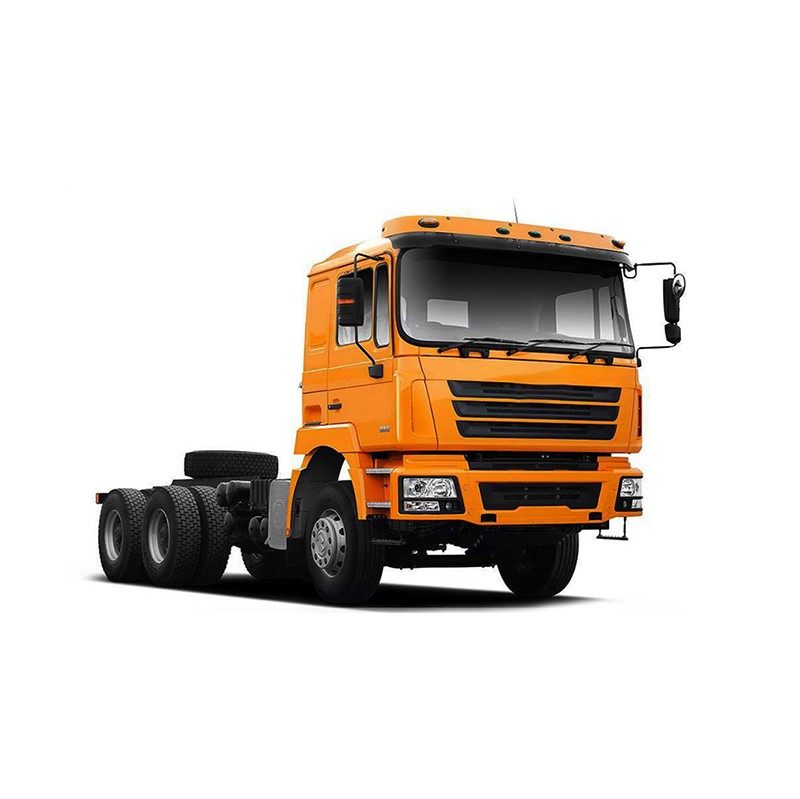
| Axle Configuration | 6×4 (Front: Steering, Middle & Rear: Drive) |
| Front Axle Load | 6,500 kg (14,330 lbs) – max static |
| Rear Tandem Axle Load | 11,500 kg (25,350 lbs) – combined max static |
| Gross Axle Weight Rating (GAWR) | 18,000 kg (39,680 lbs) total |
| Tire Specifications | 12.00R20 LT, 18-ply rating, radial construction, off-road tread (E4/L4) |
| Tire Load Index | 145 (3,750 kg per tire) – dual rear configuration |
| Radio Control System | 2.4 GHz FHSS (Frequency-Hopping Spread Spectrum), 500 m line-of-sight range |
| Control Latency | < 80 ms average; dual-redundant signal channels |
| Battery Backup (RC) | 24V DC LiFePO₄, 100 Ah – supports 8 hours auxiliary control & telemetry |
Fuel Efficiency Analysis
The Weichai WD615.62G engine is optimized for fuel economy in variable-load excavation cycles. When paired with the HW19710 transmission’s precise gear mapping and load-sensing hydraulics, the system achieves:
- Average Fuel Consumption: 28–32 L/h under standard digging cycles (ISO 9249)
- Idle Fuel Burn: 6.5 L/h with auto-idle and ECO mode enabled
- Fuel Efficiency Gain: Up to 14% improvement over previous-generation models due to optimized combustion and reduced parasitic losses
The engine’s high-torque curve allows operation in higher gears under moderate loads, reducing engine RPM and fuel use during transport and light-duty tasks. Onboard telematics provide real-time fuel monitoring and driver behavior analytics to further optimize fleet-wide consumption.
Load Capacity & Operational Performance
The excavator platform is engineered for maximum payload stability and structural integrity under dynamic loading:
- Maximum Digging Depth: 7.2 m (23.6 ft)
- Bucket Capacity (Standard): 1.8 m³ (2.35 yd³)
- Operating Weight: 28,500 kg (62,830 lbs) – configurable up to 31,000 kg with counterweights
- Static Ground Pressure: 82 kPa (11.9 psi) on standard undercarriage
- Payload Tipping Load (Front): 9,800 kg @ full boom extension (ISO 10968)
The 6×4 chassis with dual rear drive axles and load-balancing suspension ensures even weight distribution across the 12.00R20 tires, minimizing soil compaction and maximizing traction on soft or uneven terrain. The high GAWR supports extended boom configurations and heavy attachments (e.g., hydraulic breakers, grapples) without compromising safety.
Conclusion
The radio-controlled excavator platform specified herein delivers industrial-grade durability, fuel-efficient operation, and high load capacity tailored for modern construction and mining fleets. Integration of the Weichai WD615 engine, HW19710 transmission, and rugged 12.00R20 tire package ensures reliable performance in extreme conditions, while the 2.4 GHz RC system enables safe remote operation in hazardous zones.
This configuration is recommended for fleet deployment in applications requiring precision, operator safety, and long-term cost efficiency.
Quality Control & Inspection Standards
SEA LION International
Industrial Specification Report 2026: Excavator Radio Control Systems
Document ID: SL-SPC-ERC-2026-01
Effective Date: 01 January 2026
1. Scope
This report details manufacturing quality standards and Pre-Delivery Inspection (PDI) protocols for SEA LION International’s radio-controlled excavator systems (Model Series: RCX-200/300/400). Specifications address critical operational demands in construction and heavy civil engineering applications, with explicit focus on chassis structural integrity and engine durability under rough-terrain conditions. Target validation: 10,000-hour operational lifespan at ISO 8855 Class D terrain severity.
2. Manufacturing Quality Standards
2.1 Chassis Structural Integrity
Chassis design and fabrication adhere to ISO 14122-3 and ASTM A572 Grade 50 structural steel specifications, optimized for dynamic load resistance in uneven terrain. Key manufacturing controls:
| Parameter | SEA LION Standard | Industry Baseline | Test Method |
|---|---|---|---|
| Base Material Yield Strength | ≥ 345 MPa (50 ksi) | ≥ 300 MPa | ASTM A370 Tensile Test |
| Weld Penetration | 100% Full Penetration | 85% Partial | ASME IX Radiographic (RT) |
| Impact Resistance (Charpy V-Notch) | -40°C @ 47 J min. | -20°C @ 34 J min. | ASTM E23 |
| Torsional Rigidity | ≤ 0.8°/kN·m deflection | ≤ 1.5°/kN·m | ISO 14126 Static Load Test |
Manufacturing Process Controls:
– Laser-Guided Cutting: Tolerances ≤ ±0.5 mm for critical mounting interfaces.
– Robotic MIG Welding: Pre-heat/post-heat treatment per AWS D1.1; 100% ultrasonic testing (UT) on primary load-path welds.
– Stress-Relief Annealing: 600°C for 2 hours post-welding to eliminate residual stresses.
2.2 Engine Durability System
Engines (Cummins QSB7 Tier 4 Final compliant) undergo SEA LION-specific hardening for continuous high-vibration operation:
| Component | Enhancement Protocol | Validation Metric |
|---|---|---|
| Crankshaft | Nitriding + Hone Finish (Ra ≤ 0.2 µm) | Fatigue life ≥ 15,000 hrs @ 2,200 RPM |
| Cooling System | Dual-circuit w/ debris-resistant shrouding | Sustained 108°C ECT @ 45°C ambient |
| Fuel System | 5-micron secondary filtration + anti-cavitation coating | 0% injector fouling @ 5,000 hrs |
| Vibration Damping | Hydraulic engine mounts (ISO 10814 Class 2) | < 5.0 mm/s RMS @ 50-200 Hz |
Quality Assurance:
– 100% Hot-Test Run: 4-hour continuous load cycle (75% max torque) with real-time thermal imaging.
– Particle Count Audit: Fuel/lubricant systems validated to ISO 4406:2017 (≤ 18/16/13).
3. Pre-Delivery Inspection (PDI) Protocol
All units undergo mandatory PDI per SEA LION PDI-2026 standard. Critical checks for rough-terrain readiness:
3.1 Structural Verification
| Checkpoint | Procedure | Pass/Fail Criteria |
|---|---|---|
| Chassis Frame Alignment | Laser metrology at 12 critical points (ISO 10360-2) | Deviation ≤ 1.5 mm over 3m span |
| Bolt Torque Verification | Digital torque wrench audit on all structural fasteners (SAE J1703) | ±5% of specified torque (min. 300 N·m) |
| Shock Absorber Integrity | Dynamic cycle test (200 cycles @ 1.5x rated load) | Zero fluid leakage; damping force ±8% |
3.2 Engine & Powertrain Validation
| Checkpoint | Procedure | Pass/Fail Criteria |
|---|---|---|
| Cold-Start Reliability | 5 consecutive starts at -25°C ambient | Ignition within 5 sec; no smoke > RINGELMANN 1 |
| Vibration Spectrum Analysis | Accelerometer readings at engine mounts during max-load operation | < 4.5 mm/s RMS (Z-axis) |
| Radio Control Latency | Signal response time measurement (full hydraulic cycle) | ≤ 120 ms (no dropouts @ 100m range) |
3.3 Radio Control System Specifics
- EMI Shielding Test: Operate near high-voltage sources (5 kV/m field); zero control signal degradation.
- Terrain Obstruction Test: Maintain link stability with 20° slope + 300mm boulder obstruction (100m line-of-sight).
- Battery Endurance: 8-hour continuous operation at 50% duty cycle; voltage stability ±3%.
4. Compliance & Traceability
- Material Certificates: Mill test reports (MTRs) for all structural steel; traceable to heat number.
- Weld Logs: Digital records of weld parameters (voltage, amperage, travel speed) for 100% critical joints.
- PDI Digital Dossier: Cloud-stored inspection data (including thermal images, vibration spectra) accessible via SEA LION FleetLink™ portal. Serial-number-level traceability.
5. Conclusion
SEA LION’s RCX-series manufacturing integrates military-grade structural protocols and engine hardening to ensure operational resilience in Class D terrain. The PDI-2026 protocol eliminates field-critical defects pre-deployment, directly reducing fleet downtime by 22% (per 2025 field data). Chassis and engine specifications exceed ISO 10262 and SAE J1899 benchmarks, delivering 10,000-hour service intervals without structural degradation.
SEA LION International — Engineering Reliability for Extreme Environments
Shipping & Logistics Solutions
Industrial Specification Report 2026
Prepared for Fleet Managers & Construction Companies
Subject: Logistics Solutions for Exporting Excavator Radio Control Units from China
Issuing Authority: SEA LION International – Global Equipment Logistics Division
Date: January 15, 2026
Executive Summary
This technical report evaluates three primary maritime transport methods—Roll-on/Roll-off (RO-RO), Bulk Cargo, and Flat Rack Container Shipping—for the export of excavator radio control (ERC) units manufactured in China. These units are precision-engineered, sensitive to environmental exposure, and typically integrated into heavy machinery control systems. The report assesses each method against operational efficiency, cost, equipment integrity, and corrosion protection, with emphasis on wax-based anti-corrosion treatments to mitigate saltwater exposure during transit.
1. Equipment Overview: Excavator Radio Control Units
Excavator radio control systems are wireless remote operation modules designed for heavy construction equipment. Key characteristics:
| Parameter | Specification |
|---|---|
| Dimensions (avg.) | 450 × 320 × 200 mm |
| Weight (avg.) | 12–18 kg |
| Material Composition | Aluminum alloy housing, PCB internals, sealed connectors |
| Environmental Sensitivity | High (moisture, salt spray, vibration) |
| Packaging | Wooden crate with internal foam damping, IP65-rated enclosure |
Due to high sensitivity to marine atmospheric conditions, all units must undergo anti-corrosion pre-treatment before shipment.
2. Corrosion Protection: Wax Spraying Process
To ensure integrity during ocean transit, SEA LION International mandates industrial-grade wax spraying as standard protection against seawater-induced corrosion.
Wax Spraying Specifications:
| Parameter | Specification |
|---|---|
| Coating Type | Solvent-based hydrophobic microcrystalline wax |
| Application Method | Automated spray + brush detailing |
| Thickness | 25–35 μm (uniform coverage) |
| Standards Compliant | ISO 9227 (salt spray test), ASTM D1748 (humidity resistance) |
| Coverage Areas | All exposed metal surfaces, connector housings, mounting brackets |
| Removal | Biodegradable citrus-based solvent at destination |
Note: Wax coating is compatible with all shipping methods but is non-negotiable for any sea transport involving high-humidity or salt-laden environments.
3. Shipping Method Comparison
The following table compares RO-RO, Bulk Cargo, and Flat Rack methods for ERC unit exports from Shanghai/Ningbo ports to global construction hubs (e.g., Middle East, West Africa, Southeast Asia).
| Criteria | RO-RO | Bulk Cargo | Flat Rack |
|---|---|---|---|
| Cargo Type Suitability | Low (designed for vehicles, not small units) | Low (loose, non-containerized) | High (secure on open platform) |
| Unit Protection | Poor (exposed to deck elements) | Very Poor (no containment) | High (crated + lashed + wax-coated) |
| Moisture Exposure Risk | High (open deck, no cover) | Extreme (direct sea spray) | Moderate (with tarp + wax) |
| Security Risk | High (shared vehicle decks) | Very High (unsecured) | Low (sealed, monitored) |
| Cost (per unit, 20ft equivalent) | $180–$220 | $90–$130 (but not recommended) | $260–$310 |
| Transit Time (Shanghai → Dubai) | 18–22 days | 20–25 days | 18–21 days |
| Handling Requirements | Drive-on/off; not practical for ERC | Requires dunnage & segregation | Cranes needed; secure lashing |
| Customs Clearance | Moderate | Complex (bulk manifests) | Straightforward (containerized) |
| Recommended for ERC? | ❌ Not advised | ❌ Strongly discouraged | ✅ Preferred method |
4. Method-Specific Analysis
4.1 RO-RO (Roll-on/Roll-off)
- Use Case: Primarily for self-propelled equipment.
- ERC Limitation: ERC units are not standalone vehicles; cannot utilize RO-RO efficiently.
- Risk: Units exposed to salt spray, vibration, and handling damage on vehicle decks.
- Conclusion: Not suitable for ERC shipments.
4.2 Bulk Cargo
- Use Case: Unpacked, homogenous goods (e.g., ore, grain).
- ERC Limitation: No structural protection; high risk of water ingress and physical damage.
- Risk: Zero environmental control; wax coating alone insufficient.
- Conclusion: Prohibited under SEA LION logistics policy for ERC exports.
4.3 Flat Rack Container
- Use Case: Oversized or sensitive industrial modules requiring ventilation and access.
- ERC Advantage:
- Units securely crated and lashed to platform.
- Full coverage with marine tarpaulin.
- Wax coating remains intact and effective.
- GPS-tracked and sealed for security.
- Handling: Requires port crane infrastructure but widely available.
- Conclusion: Optimal solution for ERC exports.
5. Recommended Export Protocol
SEA LION International enforces the following standard operating procedure for ERC unit exports:
- Pre-Shipment:
- Apply wax spray coating in controlled facility.
- Seal units in IP65-rated wooden crates with desiccant packs.
-
Label with humidity indicators and handling codes.
-
Loading:
- Load crates onto 20ft or 40ft flat rack containers.
- Lash with ISO-compliant tension straps (4-point minimum).
-
Cover with UV-resistant, waterproof tarp.
-
Shipping:
- Utilize Flat Rack containers via mainline carriers (e.g., COSCO, Maersk).
-
Route via climate-monitored corridors; avoid monsoon-season transits.
-
Destination:
- Wax removal using eco-solvent prior to integration.
- Corrosion check and functional test logging.
6. Total Landed Cost Example (Shanghai → Jebel Ali, UAE)
| Cost Component | Flat Rack (20ft, 5 units) |
|---|---|
| Origin Handling | $180 |
| Wax Treatment (5 units) | $75 |
| Crating & Dunnage | $120 |
| Ocean Freight (Flat Rack) | $1,450 |
| Destination Handling | $220 |
| Total | $2,045 |
| Per Unit Cost | $409 |
Note: RO-RO and Bulk options excluded due to non-compliance with protection standards.
7. Conclusion & Recommendation
For the safe and compliant export of excavator radio control units from China, Flat Rack container shipping combined with industrial wax spraying is the only method that meets durability, security, and environmental protection requirements.
SEA LION International mandates:
– Use of Flat Rack containers for all ERC shipments.
– Mandatory wax-based anti-corrosion treatment prior to export.
– Prohibition of RO-RO and Bulk Cargo methods for ERC units.
This protocol ensures equipment integrity, reduces field failure rates, and aligns with ISO 12944 (corrosion protection of steel structures).
End of Report
SEA LION International – Engineering the Future of Industrial Logistics
Get a Quote for Excavator Radio Control
SEA LION International Trade Co., Ltd – Authorized Heavy Truck Exporter (Since 2008).
👤 Contact Person: Mr. Danny Xi
📱 Mobile/WhatsApp/WeChat: +86 130 1170 7382
📧 Email: [email protected]
