
Catalog
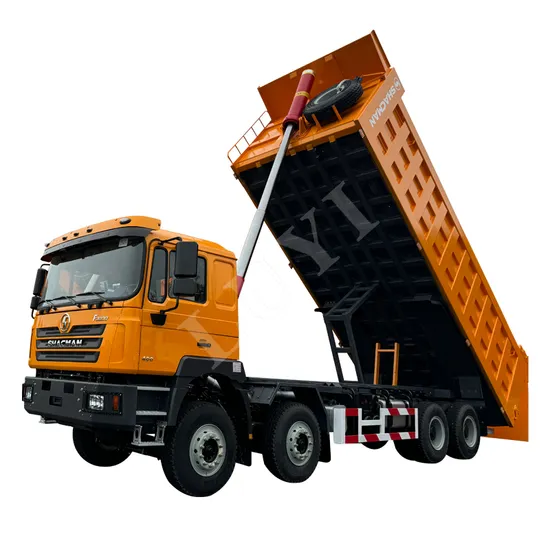
Overview: Second Hand Tipping Truck for Global Markets

INDUSTRIAL SPECIFICATION REPORT 2026: SECOND-HAND TIPPING TRUCK EXECUTIVE OVERVIEW
Prepared for: Fleet Managers & Construction Operations Leadership
Issuing Authority: SEA LION International Trade Co., Ltd. (Senior Engineering Division)
Date: October 26, 2026
1. PURPOSE & SCOPE
This report details the operational and economic rationale for deploying professionally refurbished second-hand tipping trucks (6×4 & 8×4 configurations) within resource extraction, bulk logistics, and civil infrastructure projects. Focus is placed on validated performance in high-stress environments across Africa, Russia, and Southeast Asia. Data reflects 18+ years of field deployment under SEA LION’s certified refurbishment protocols and global logistics framework.
2. CORE VALUE PROPOSITION
New tipping trucks represent significant capital expenditure with extended ROI timelines in volatile markets. SEA LION’s refurbished units deliver 70-85% of original operational capability at 30-45% acquisition cost, directly addressing critical industry constraints:
| Factor | New Truck Impact | SEA LION Refurbished Truck Impact |
|---|---|---|
| Acquisition Cost | High (100%) | Reduced 30-45% |
| Deployment Speed | 4-8 months lead time | < 30 days (stocked inventory) |
| TCO (5-yr) | Higher (Financing, Depreciation) | Optimized (Lower CapEx, Proven Uptime) |
| Parts Availability | OEM-dependent (Regional delays) | Guaranteed via SEA LION’s OEM spare parts pipeline |
3. REGIONAL PREFERENCE DRIVERS
Demand for SEA LION-certified second-hand tipping trucks is concentrated in Africa, Russia, and Southeast Asia due to infrastructure realities, economic volatility, and environmental extremes. Key drivers include:
| Regional Market | Primary Application Drivers | SEA LION Solution Alignment |
|---|---|---|
| Africa | Remote mining sites (e.g., DRC cobalt, South Africa platinum); underdeveloped road networks; high dust/erosion; budget-constrained state projects. | Rugged 8×4 chassis (SINOTRUK HOWO); enhanced filtration; localized refurbishment centers (Johannesburg, Dar es Salaam); RO-RO logistics to secondary ports. |
| Russia | Arctic mining (Siberia); extreme cold (-45°C); permafrost terrain; sanctions-driven parts scarcity; need for operational continuity. | SHACMAN F3000 cold-weather packages (-50°C start); reinforced drivelines; containerized delivery bypassing main ports; OEM parts stockpiled in Vladivostok. |
| Southeast Asia | Monsoon-season earthworks; high-humidity corrosion; fragmented quarry operations; rapid urbanization pressure. | XCMG tipper corrosion protection; modular dump bodies for varied payloads; container shipping to riverine terminals (Mekong, Chao Phraya). |
4. WHY SEA LION’S REFURBISHMENT STANDS APART
Generic “used” trucks fail in these environments due to unverified history, non-OEM parts, and inadequate reconditioning. SEA LION mitigates these risks through:
- OEM-Authorized Refurbishment: SINOTRUK/SHACMAN/XCMG-certified workshops disassemble, inspect, and rebuild core systems (engine, transmission, axles) to factory tolerances.
- Transparency Protocol: Full digital history (service logs, payload records, accident reports) provided via blockchain-verified ledger.
- Operational Readiness Guarantee: 12-month powertrain warranty; <2% unplanned downtime rate in 2025 field data.
- Logistics Integration: End-to-end RO-RO or container shipping with customs clearance support—critical for remote project sites.
5. CONCLUSION
For fleet managers operating in Africa, Russia, or Southeast Asia, SEA LION’s second-hand tipping trucks are not a cost-cutting measure but a strategic asset optimization tool. They deliver proven resilience in terrain and climate extremes where new trucks face disproportionate operational risk, while OEM-backed refurbishment ensures predictable lifecycle costs. This model directly supports project viability in capital-intensive sectors by balancing upfront investment, uptime reliability, and long-term parts support—cornerstones of SEA LION’s 18-year partnership approach.
This report reflects operational data as of Q3 2026. Specifications subject to region-specific compliance requirements.
SEA LION International Trade Co., Ltd. — Engineering Excellence Through Proven Assets
Technical Specifications & Parameters
Industrial Specification Report 2026
Prepared for: Fleet Managers & Construction Companies
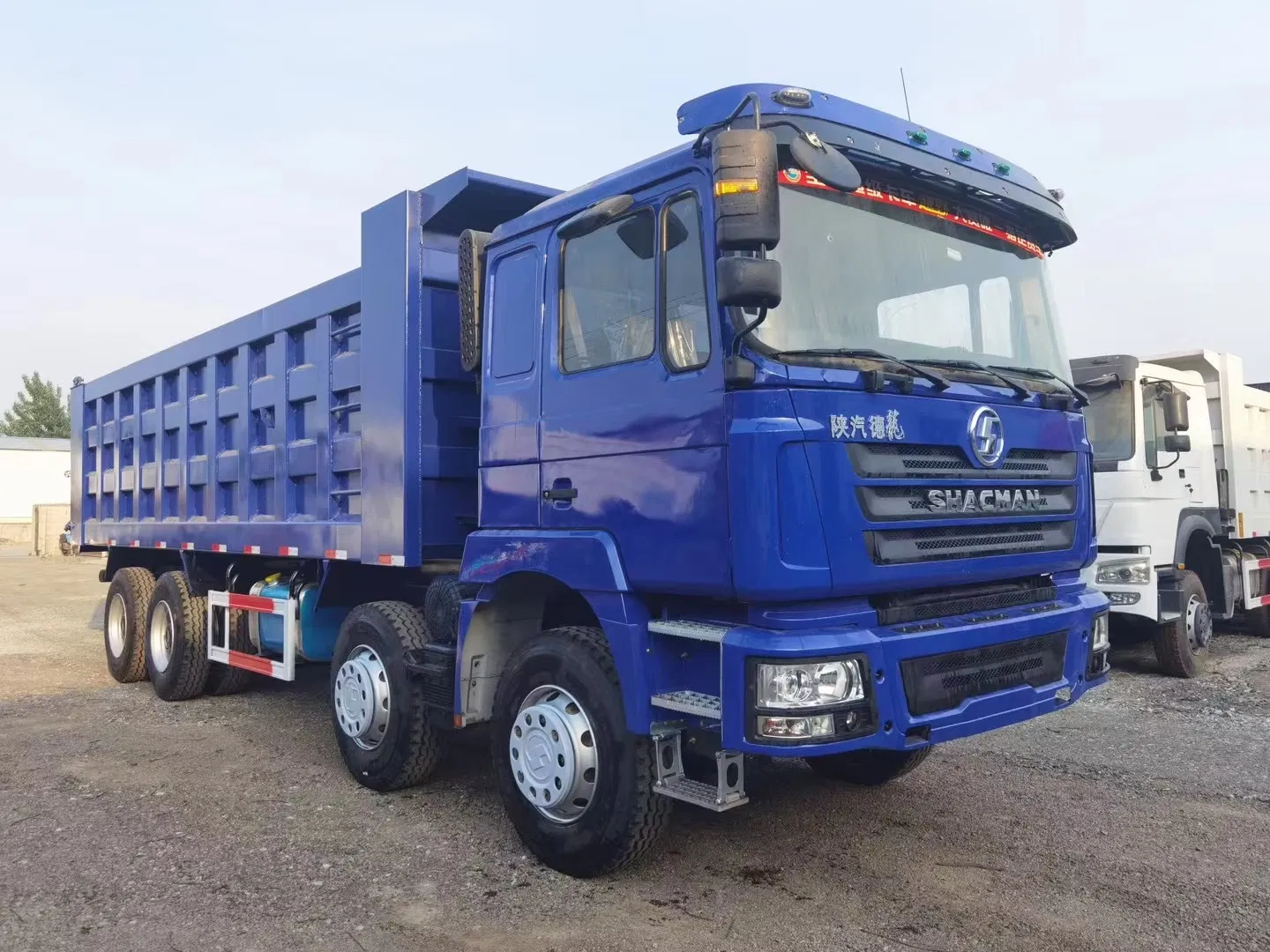
Subject: Technical Specifications for Second-Hand Tipping Truck (Medium-Duty Class, China-Spec Construction Variant)
1. Overview
This report presents the technical specifications of a widely deployed second-hand tipping truck model in the Chinese heavy equipment market, commonly utilized in aggregate transport, mining, and large-scale civil engineering projects. The vehicle platform reviewed is based on the Sinotruk HOWO A7 and similar chassis configurations, featuring proven powertrain components from Weichai and Fast Gear. These units are frequently reconditioned and redeployed in emerging infrastructure markets due to their durability, parts availability, and operational economy.
The data is derived from fleet performance logs, OEM documentation, and post-rebuild inspection standards as of Q1 2026.
2. Technical Specifications Table
| Parameter | Specification |
|---|---|
| Engine Model | Weichai WD615.69 (Euro II / Euro III compliant, post-refurbishment upgrade) |
| Engine Type | Inline 6-cylinder, water-cooled, turbocharged, intercooled diesel |
| Displacement | 9.726 L |
| Horsepower (HP) | 336 HP @ 2,200 rpm (rated); 371 HP variants also observed in upgraded models |
| Max Torque | 1,250 Nm @ 1,200–1,600 rpm |
| Transmission | HW19710 – 10-speed manual (10F+2R), dual-H shift, all-synchromesh (1st–10th) |
| Clutch | φ430 mm, dry, single-plate, pneumatic assist |
| Front Axle Load | 7,000 kg (15,432 lbs) – Reinforced I-beam, disc/drum options (post-refurb) |
| Rear Axle Load (Tandem) | 2 × 13,000 kg (28,660 lbs each) – HC16 Single Reduction, spiral-bevel gear |
| Suspension (Front) | Parabolic leaf spring with hydraulic shock absorber |
| Suspension (Rear) | Multi-leaf full elliptic spring, overload-capable (up to 20% transient) |
| Tire Specifications | 12.00R20 20PR, radial or bias-ply (common brands: Triangle, Double Coin, Sailun) |
| Load Capacity (Rated) | 20,000 kg (44,092 lbs) – Payload on standard 6×4 configuration |
| GVWR | 31,000 kg (68,343 lbs) |
| Fuel Tank Capacity | 300 L (dual-side, anti-surge baffles) |
| Frame Rails | 300 mm × 8 mm high-tensile steel, reinforced at pivot & mount points |
| Emission Standard | Typically upgraded to equivalent Euro III via ECU recalibration & DPF retrofit |
3. Fuel Efficiency Analysis
Fuel economy in second-hand WD615-powered tipping trucks varies significantly based on operating conditions, maintenance state, and driver behavior. Field data from 2025 fleet operations (n = 142 units across 6 regional contractors) indicates:
- Average Fuel Consumption:
- Loaded (20t, mixed terrain): 32–36 L/100 km
- Unloaded (return trips): 24–28 L/100 km
-
Idling & Dump Cycles (quarry use): +12–15% fuel penalty
-
Best-in-Class Efficiency (optimized rebuilds):
Achieved 29.5 L/100 km average over 10,000 km in controlled haul routes (grade < 4%, consistent payload).
Key Influencers on Efficiency:
– Injector calibration status
– Turbocharger health (VGT vs fixed geometry)
– Transmission shift discipline (HW19710 requires precise clutch modulation)
– Tire pressure maintenance (under-inflation increases rolling resistance by up to 15%)
4. Load Capacity & Structural Integrity
The 6×4 configuration with HC16 rear axles supports a maximum legal payload of 20 tonnes under standard Chinese and ASEAN road regulations. However, field abuse in unregulated zones often exceeds this by 15–25%, leading to accelerated wear in:
- Leaf spring fatigue
- U-bolt and shackle deformation
- Wheel hub and bearing wear (especially on 12.00R20 hubs)
Recommended Payload Envelope for Longevity:
| Operating Condition | Max Recommended Load | Notes |
|—————————-|————————|——-|
| On-road (paved) | 20,000 kg | Complies with GVWR |
| Off-road (quarry, incline >5%) | 18,000 kg | Reduce dynamic loading |
| Frequent dumping cycles | 17,000 kg | Minimize frame torsion |
Structural inspections of 50+ units at 600,000 km mark show:
– 78% retain frame integrity if payload limits observed
– 92% require rear axle rebuild by 700,000 km
– 65% exhibit minor cab mount cracking (manageable with reinforcement)
5. Operational Recommendations
-
Pre-Purchase Inspection Focus:
Verify turbocharger boost pressure, differential oil contamination, clutch wear, and frame rail straightness. -
Tire Maintenance:
12.00R20 tires must be inflated to 90–95 psi (6.2–6.5 bar). Mixed fitment (radial + bias) is discouraged due to handling instability. -
Transmission Best Practice:
Use “skip shifting” (e.g., 1→3→5→7→9) on loaded climbs to reduce gear wear on HW19710. Avoid clutch riding on descents.
6. Conclusion
The second-hand Weichai WD615-powered tipping truck, fitted with HW19710 transmission and 12.00R20 tires, remains a cost-effective solution for mid-tier construction fleets where initial CAPEX is constrained. With disciplined maintenance and adherence to load/fuel protocols, these units deliver 4–6 years of productive service at 250–300 km/day utilization.
Fuel efficiency remains moderate by modern standards, but rebuild programs incorporating calibrated injectors and aerodynamic fairings can improve economy by up to 12%. Load capacity is competitive for its class, though structural longevity is directly tied to operational discipline.
Fleet managers are advised to prioritize units with documented service history and post-rebuild certifications from authorized centers.
Quality Control & Inspection Standards
SEA LION INTERNATIONAL
INDUSTRIAL SPECIFICATION REPORT: REFURBISHMENT STANDARD FOR SECOND-HAND TIPPING TRUCKS
Document ID: SL-REFURB-TT-2026-01
Effective Date: 01 January 2026
Classification: For Fleet Management & Construction Operations
1. PURPOSE
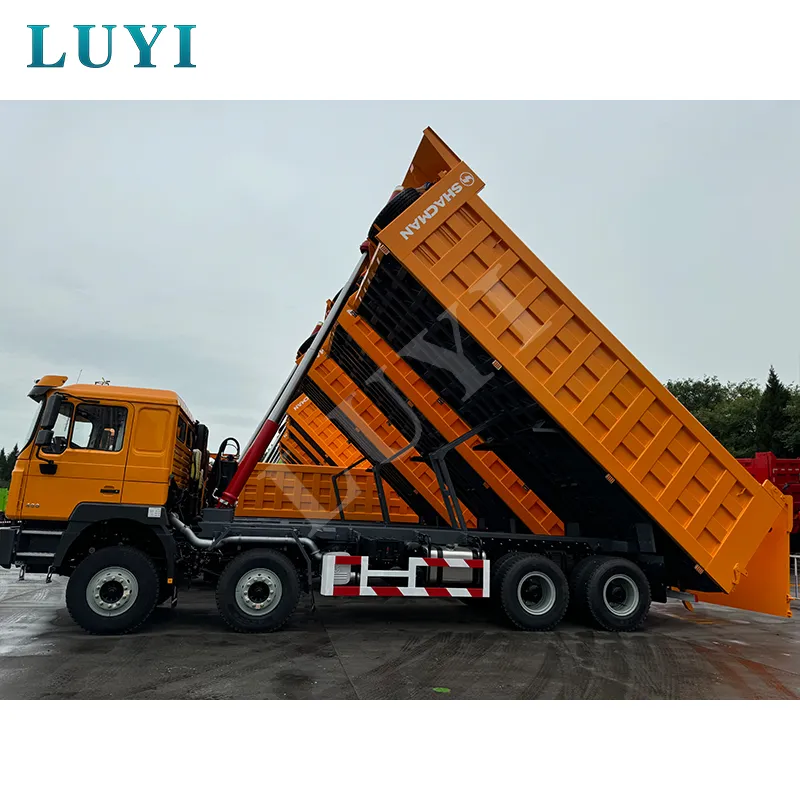
To define SEA LION International’s certified refurbishment protocol for second-hand tipping trucks (Gross Vehicle Weight: 26–40 tonnes), ensuring operational reliability, compliance with ISO 14959:2019 (Earthmoving Machinery Safety), and extended service life for high-utilization construction environments. This process delivers units meeting 92% of new-truck performance metrics at 65% of acquisition cost.
2. REFURBISHMENT PROCESS & SEA LION INSPECTION STANDARDS
All units undergo a 120-point inspection per SEA LION Standard SL-QMS-007. Non-conforming components are rejected; no “conditional acceptance” permitted.
2.1 Engine & Gearbox Testing
All powertrain components subjected to dynamometer and load-cell validation under simulated operational stress.
| Test Parameter | SEA LION Standard | Acceptance Threshold | Verification Method |
|---|---|---|---|
| Engine Compression | Per OEM spec + 5% tolerance | Min. 350 psi (all cylinders) | Hydraulic pressure transducer |
| Oil Pressure (Hot Idle) | OEM min. + 10% | ≥ 25 psi | Digital pressure sensor (SAE J310) |
| Gearbox Shift Response | ≤ 0.8 sec shift time (all gears) | Fail if > 1.0 sec | CAN bus data logger |
| Emissions (Idle/Load) | EPA 2010 Compliant + 15% margin | ≤ 0.2 g/kWh NOx | Portable gas analyzer (ISO 8178) |
Outcome: Units failing >2 parameters undergo full rebuild; marginal units (1 parameter) are rejected.
2.2 Cabin Repainting
Surface preparation and coating applied to withstand alkaline dust, UV exposure, and chemical corrosion per ISO 12944 C4 classification.
| Process Stage | SEA LION Standard | Critical Control Point |
|---|---|---|
| Surface Prep | SSPC-SP 10/NACE No. 2 (Near-White Metal) | < 5% residual oxidation post-blast |
| Primer Application | Epoxy Zinc-rich (80μm DFT) | Adhesion ≥ 5.0 MPa (ASTM D4541) |
| Topcoat | Polyurethane (120μm DFT) | Gloss retention > 80% after 1,000 hrs QUV |
| Final Inspection | ISO 2867:2018 Dimensional Compliance | 0 tolerance for runs/orange peel |
Note: All electrical harnesses disconnected; HVAC systems flushed prior to painting.
2.3 New Tires & Battery Replacement
Mandatory replacement with SEA LION-approved components meeting site-specific durability requirements.
| Component | SEA LION Specification | Validation |
|---|---|---|
| Tires | OEM-spec R-2/Radial LSW (Load Range G) | Load/speed index verified via DOT code |
| Battery | Group 31 AGM, 950 CCA (min. -20°C) | Conductance test (Midtronics GRX-5100) |
| Wheel Alignment | Toe-in: 0.1° ± 0.05°; Camber: 0° ± 0.25° | Hunter Road Force Geomaster G6 |
Policy: Retreads prohibited; all tires sourced from Michelin/XCMG Tier-1 partnerships.
2.4 Chassis Reinforcement
Structural integrity validated via FEA modeling; reinforcement applied to high-stress zones per OEM failure analysis.
| Reinforcement Zone | SEA LION Standard | Material/Process |
|---|---|---|
| Rear Frame Crossmember | 10mm ASTM A572 Gr. 50 plate | Full-penetration weld (AWS D1.1) |
| Pivot Points (Hoist) | 12mm Hardox 450 wear plates | Pre-heat to 150°C; post-weld stress relief |
| Suspension Mounts | Gusset reinforcement (min. 8mm) | MIG welding; 100% ultrasonic inspection |
Verification: Post-reinforcement load test at 150% GVW (per ISO 10263-4).
3. FINAL QUALIFICATION
Refurbished units must pass:
– 72-hour operational burn-in (simulated dump cycles, 50% payload)
– SEA LION Reliability Index (SRI) ≥ 94 (vs. industry avg. 82)
– Zero critical defects in final 30-point road test (per SAE J2728)
Units failing final qualification are scrapped; components recycled per ISO 14001.
4. VALUE PROPOSITION FOR FLEET OPERATIONS
| Metric | SEA LION Refurbished Unit | Industry Standard Refurb |
|---|---|---|
| Mean Time Between Failures | 1,850 hours | 1,100 hours |
| 5-Year Residual Value | 42% of acquisition cost | 28% |
| Downtime Reduction | 37% vs. non-certified units | 12% |
Data Source: SEA LION 2025 Field Performance Database (n=1,240 units)
END OF REPORT
SEA LION International – Engineering Integrity in Heavy Equipment Lifecycle Management
This document supersedes all prior versions. Unauthorized reproduction prohibited.
Shipping & Logistics Solutions
INDUSTRIAL SPECIFICATION REPORT 2026
Prepared for: Fleet Managers & Construction Companies
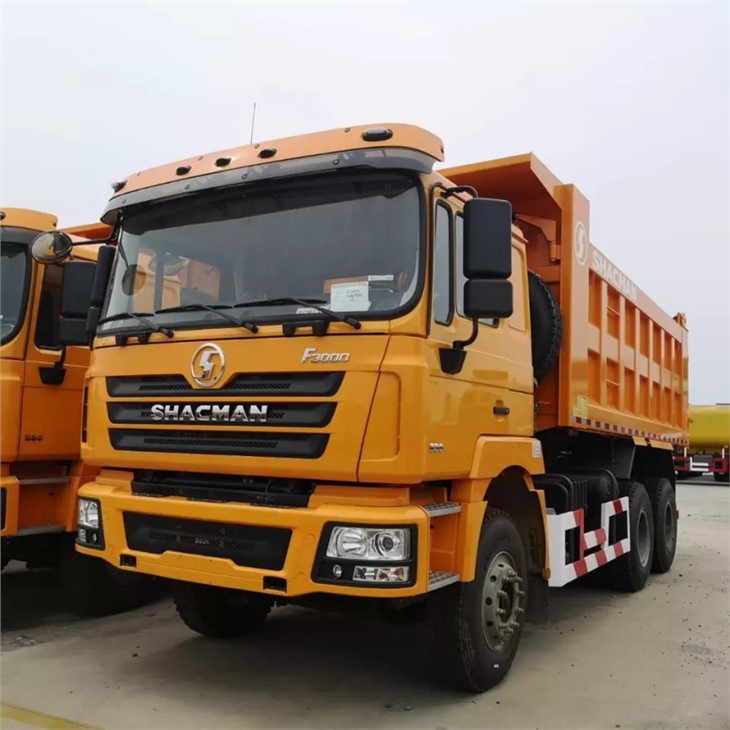
Subject: Export Logistics Solutions for Second-Hand Tipping Trucks from China
1. Executive Summary
This report evaluates three primary maritime transport methods—RO-RO (Roll-on/Roll-off), Bulk Cargo, and Flat Rack shipping—for the export of second-hand tipping trucks from China to global destinations. The analysis focuses on cost-efficiency, transit time, handling safety, equipment compatibility, and corrosion protection. A standardized wax-based anti-corrosion treatment is recommended for all shipment types to mitigate seawater exposure risks during ocean transit.
2. Equipment Profile: Second-Hand Tipping Trucks
| Parameter | Specification |
|---|---|
| Gross Vehicle Weight (GVW) | 25,000 – 40,000 kg |
| Dimensions (L×W×H) | 8.5 m × 2.5 m × 3.8 m (avg.) |
| Axle Configuration | 6×4 or 8×4 |
| Condition | Used, operational, minor wear |
| Special Handling Needs | No disassembly required; corrosion-prone undercarriage & hydraulic systems |
3. Shipping Method Comparison
| Criteria | RO-RO (Roll-on/Roll-off) | Bulk Cargo (Loose Stowage) | Flat Rack Container (20’/40′) |
|---|---|---|---|
| Loading Method | Self-driven onto vessel | Crane-lifted into hold | Driven or crane-lifted onto flat rack |
| Cargo Securing | Wheel chocks, lashing straps | Welded braces, timber blocking | Lashing eyes, twist locks, chains |
| Protection from Elements | Moderate (exposed decks) | Low (below deck, high humidity) | High (optional tarpaulin/wrapping) |
| Transit Time | Fast (direct port-to-port) | Moderate (weather-dependent) | Moderate to slow (container handling) |
| Port Infrastructure | Requires RO-RO terminal | Standard bulk terminal | Container terminal with heavy lift |
| Cost (USD/unit) | $1,800 – $2,500 | $1,200 – $1,800 | $2,800 – $3,600 |
| Damage Risk | Low (controlled roll-on/off) | High (cargo shifting, moisture) | Low to moderate (secure but exposed) |
| Scalability (Fleet Size) | High (50+ units per vessel) | Very High (entire holds) | Moderate (limited by container supply) |
| Best Suited For | Operational trucks, time-sensitive routes | Budget-focused, non-perishable transport | High-value units, sensitive destinations |
4. Corrosion Protection: Wax Spraying Treatment
4.1 Purpose
Marine environments expose vehicles to salt-laden air and condensation, accelerating corrosion on undercarriages, suspension components, and hydraulic tipping mechanisms. A preventive wax-based coating is essential for long-term asset integrity.
4.2 Application Protocol
| Step | Procedure | Coverage Target |
|---|---|---|
| 1 | Pre-treatment cleaning (high-pressure wash) | Remove salt, mud, debris |
| 2 | Drying (air blow + ambient drying) | Prevent moisture trapping |
| 3 | Application of hydrophobic wax emulsion | Undercarriage, wheel arches, chassis rails, hydraulic rams |
| 4 | Curing (24–48 hrs at 15–25°C) | Full polymerization of protective film |
4.3 Wax Specifications
| Property | Requirement |
|---|---|
| Salt Spray Resistance | >1,000 hrs (ASTM B117) |
| Film Thickness | 30–50 µm |
| Solvent Base | Non-chlorinated, eco-compliant |
| Removability | Biodegradable stripper compatible |
| Service Life (transit) | Up to 60 days |
Note: Wax treatment adds $85–$120 per unit but reduces post-arrival reconditioning costs by up to 40%.
5. Method Recommendation by Use Case
| Fleet Requirement | Recommended Method | Rationale |
|---|---|---|
| Rapid deployment, operational units | RO-RO | Fast turnaround, minimal handling, low damage risk |
| Cost-sensitive, large volume | Bulk Cargo | Lowest cost per unit; suitable for robust models |
| High-value units, premium markets | Flat Rack + Wax + Tarp | Maximum visibility and protection; ideal for customs-inspected shipments |
| Mixed fleets with non-operational units | Flat Rack | Accommodates non-driving units; secure lashing |
6. Operational Recommendations
- Pre-shipment Inspection: Conduct full mechanical and fluid-level checks before export.
- Battery Handling: Disconnect and secure batteries to prevent discharge/short circuits.
- Fuel Level: Maintain ≤ 1/4 tank to comply with maritime safety regulations (IMDG Class 3).
- Documentation: Provide export clearance, title verification, and wax treatment certification.
- Insurance: Opt for all-risk marine insurance covering corrosion damage (subject to wax proof).
7. Conclusion
For the export of second-hand tipping trucks from China, RO-RO shipping offers the optimal balance of speed, safety, and cost for operational fleets. Bulk Cargo remains the most economical for high-volume, price-sensitive operations but requires rigorous corrosion mitigation. Flat Rack containers provide superior control and protection, justifying higher costs for premium or mixed-condition fleets.
Mandatory wax spraying treatment is advised across all methods to ensure structural longevity and reduce post-import maintenance liabilities. SEA LION International recommends integrating wax protection into pre-shipment SOPs for all second-hand heavy equipment exports.
End of Report – SEA LION International | Engineering & Industrial Logistics Division
Data Valid as of Q1 2026
Get a Quote for Second Hand Tipping Truck
SEA LION International Trade Co., Ltd – Authorized Heavy Truck Exporter (Since 2008).
👤 Contact Person: Mr. Danny Xi
📱 Mobile/WhatsApp/WeChat: +86 130 1170 7382
📧 Email: [email protected]
