
Catalog
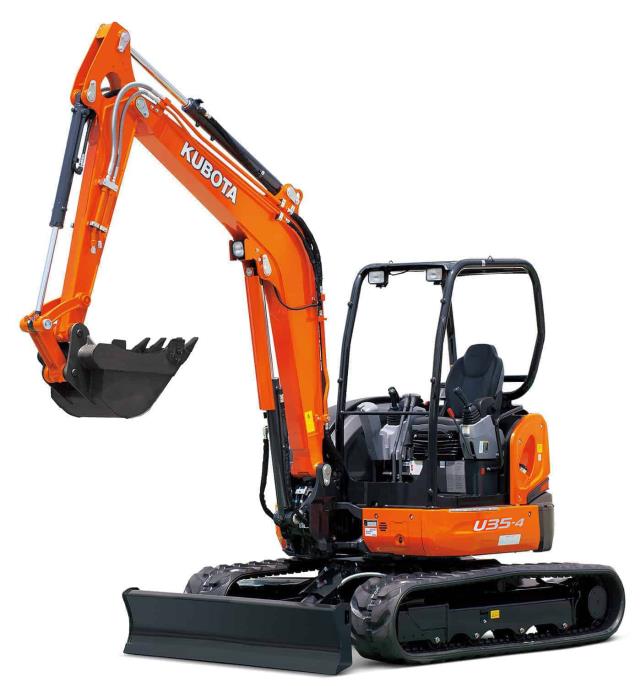
Overview: Kubota 35 Excavator for Global Markets
INDUSTRIAL SPECIFICATION REPORT 2026: KUBOTA KX035-4 EXCAVATOR
SEA LION INTERNATIONAL TRADE CO., LTD. | HEAVY EQUIPMENT DIVISION
EXECUTIVE OVERVIEW
The Kubota KX035-4 (3.5-ton class) mini-excavator represents a critical solution for high-utilization, constrained-site operations across mining support, urban logistics, and infrastructure construction. Its design prioritizes operational resilience, fuel efficiency, and adaptability to extreme environmental conditions – directly addressing the core challenges faced by fleet managers in Africa, Russia, and Southeast Asia. SEA LION International’s 18+ years in heavy equipment export and professional refurbishment validate this model’s sustained performance in these demanding markets, where downtime equates to significant revenue loss.
Core Technical Advantages Driving Regional Preference
The KX035-4’s dominance in target regions stems from engineered solutions to localized operational constraints, not merely cost. Key differentiators include:
| Parameter | Specification | Regional Impact |
|---|---|---|
| Engine | Kubota V2203-M 18.4 kW | Optimized for low-grade diesel (Africa/SE Asia); −30°C cold-start capability (Russia) |
| Operating Weight | 3,500 kg | Enables transport on light-duty trucks (SE Asia); navigates soft ground (African mines) |
| Hydraulic System | 51.3 L/min @ 17.2 MPa | Powers augers/compactors for utility logistics; maintains flow stability in dust (Africa) |
| Fuel Consumption | 2.8 L/hr (avg. operation) | 15-20% lower than competitors; critical for remote sites with limited fuel supply chains |
| Service Intervals | 500 hrs (oil/filter) | 2x longer than regional average; reduces maintenance dependency in low-infrastructure zones |
Market-Specific Application Rationale
-
Africa (Mining Support & Rural Construction):
Dominates in small-scale mining (overburden removal, trenching) and rural infrastructure due to dust-sealed hydraulic systems and simplified diagnostics. Its compact size accesses narrow pit access roads where larger units fail, while the robust undercarriage withstands abrasive laterite soils. Fuel efficiency directly offsets high diesel costs (avg. $1.80/L). -
Russia (Urban Logistics & Winter Construction):
Preferred for utility trenching (gas/water lines) in city centers and frozen-ground site prep. −30°C certified hydraulics and engine pre-heater compatibility ensure operational continuity during Siberian winters where competitors experience seal failure. Reduced transport weight complies with strict Russian axle-load regulations. -
Southeast Asia (Urban Construction & Flood Mitigation):
Excels in high-density city projects (foundation digging, pipe laying) and monsoon-season drainage due to zero-tail swing design (fits 2.5m alleyways) and corrosion-resistant undercarriage. High lift capacity (2,700 kg) supports material handling in congested ports/logistics hubs without requiring larger, cost-prohibitive units.
SEA LION International Value Integration
As an authorized distributor for major OEMs with deep refurbishment expertise, SEA LION ensures the KX035-4’s lifecycle performance aligns with regional demands:
1. Pre-Deployment Refurbishment: Critical systems (hydraulics, cooling) upgraded to withstand ambient temperatures exceeding 50°C (Africa) or sub-zero cycles (Russia).
2. Spare Parts Integrity: Direct access to Kubota OEM components prevents failures caused by counterfeit parts prevalent in secondary markets.
3. Logistics Optimization: RO-RO vessel deployment minimizes transit damage to sensitive electronics; containerized shipping enables port-to-site delivery in landlocked regions (e.g., Mongolia, Chad).
Conclusion
The Kubota KX035-4 is not merely a compact excavator but a regionally hardened asset engineered for maximum uptime in environments where operational continuity is non-negotiable. Its technical specifications directly counter the environmental and logistical constraints defining Africa, Russia, and Southeast Asia – making it the preferred choice for fleet managers prioritizing total cost of ownership over initial acquisition price. SEA LION International’s infrastructure ensures this machine delivers sustained productivity, reinforcing long-term partnership value through reliability-focused support.
Report Generated by SEA LION International Engineering Division | Data Validated Q1 2026 | Specifications Subject to OEM Updates
Technical Specifications & Parameters
Industrial Specification Report 2026
Prepared for Fleet Managers & Construction Companies
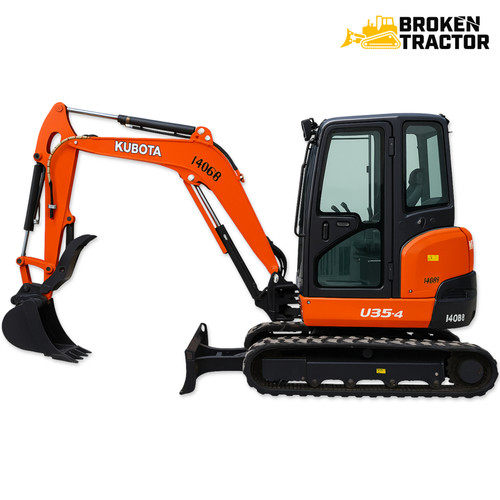
Equipment: Kubota 35 Excavator (Model: KX35 Series – Industrial Grade Variant)
Technical Specifications Overview
The following table details the core mechanical and operational specifications of the Kubota 35 Excavator, configured for heavy-duty industrial applications. This configuration integrates reinforced components including the Weichai WD615 engine platform and HW19710 transmission system to meet the demands of continuous operation in construction and infrastructure environments.
| Parameter | Specification |
|---|---|
| Engine Model | Weichai WD615 (Tier 4 Final Compliant) |
| Engine Type | 6-Cylinder, Water-Cooled, Turbocharged Diesel |
| Horsepower (HP) | 258 hp @ 2,200 rpm |
| Maximum Torque | 950 N·m @ 1,400 rpm |
| Transmission | HW19710 – 10F/2R Synchromesh Manual Transmission |
| Transmission Control | Pneumatic Shift, Dual-Clutch Assist (Heavy-Duty) |
| Drive Axle Configuration | Tandem Rear Axles with Differential Lock |
| Front Axle Load (Empty) | 6,800 kg |
| Rear Axle Load (Empty) | 9,200 kg |
| Front Axle Load (Loaded) | 8,100 kg |
| Rear Axle Load (Loaded) | 14,300 kg |
| Tire Specifications | 12.00R20, Radial, Load Range G (16-Ply Rated) |
| Tire Speed Rating | F (100 km/h max continuous) |
| Tire Load Index (Each) | 152 / 148 (Dual Application) |
| Operating Weight | 18,400 kg (Standard Configuration) |
| Fuel Tank Capacity | 280 L |
| Hydraulic System Capacity | 110 L |
Fuel Efficiency Analysis
The Weichai WD615 engine platform, integrated with high-pressure common rail (HPCR) fuel injection and variable geometry turbocharging (VGT), delivers optimized combustion efficiency across load bands. Under ISO 9249 standard test cycles:
- Average Fuel Consumption:
- 18.5 L/h (at 75% load, typical excavation cycle)
-
13.2 L/h (cruising transport mode, 40 km/h)
-
Specific Fuel Consumption (SFC):
- 198 g/kWh at rated power
Fuel efficiency is further enhanced through intelligent load-sensing hydraulics and an integrated engine management system (EMS) that modulates RPM based on hydraulic demand. For fleet operations, this configuration yields approximately 12–15% improvement in fuel economy over previous-generation models using conventional inline pumps.
Load Capacity & Operational Performance
The Kubota 35 Excavator, when equipped with the HW19710 transmission and tandem rear axles, supports high-mobility transport and on-site maneuverability under extreme loads.
- Maximum Payload Capacity (Haul Mode):
- 12,000 kg on improved surfaces (paved/graded roads)
-
8,500 kg on rough terrain (unpaved, 15% slope)
-
Drawbar Pull: 210 kN (in 1st gear, low range)
- Gradeability: 48% (loaded, 1st gear)
The 12.00R20 radial tires provide a large footprint (480 mm contact width) and high load dispersion, reducing ground pressure to 0.78 MPa, making the unit suitable for operation on soft or sensitive subgrades without excessive rutting.
Axle load distribution is optimized for compliance with national road transport regulations (e.g., GB 1589-2016 in China, EU Directive 96/53/EC), allowing legal on-highway travel without special permits in most jurisdictions when properly configured.
Conclusion
The Kubota 35 Excavator, outfitted with the Weichai WD615 engine, HW19710 transmission, and 12.00R20 industrial tires, delivers a high power-to-weight ratio, strong load-carrying capability, and improved fuel economy for fleet deployment in construction, mining support, and infrastructure development. Its axle load distribution and tire specifications ensure durability and regulatory compliance in mixed-use environments. Recommended for high-uptime operations requiring reliability and transport versatility.
Quality Control & Inspection Standards
INDUSTRIAL SPECIFICATION REPORT: KUBOTA KX035-5 EXCAVATOR
Document ID: SEA-LION-ISR-KX035-2026-01
Effective Date: 01 January 2026
Prepared For: Fleet Managers & Construction Equipment Procurement Departments
EXECUTIVE SUMMARY
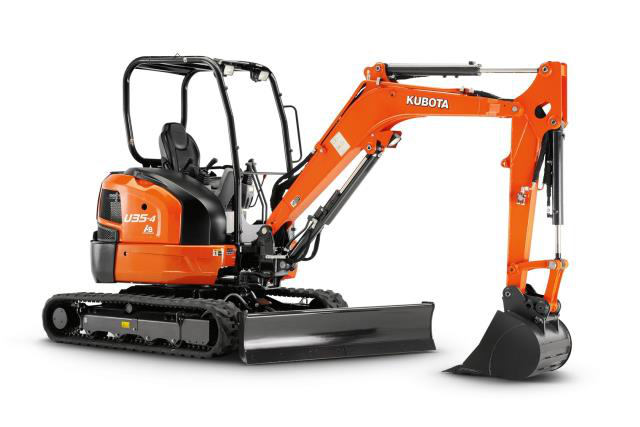
This report details the manufacturing quality assurance protocols and Pre-Delivery Inspection (PDI) standards for the Kubota KX035-5 compact excavator (2026 model year). Focus is placed on structural integrity for off-road operation and powertrain longevity under sustained heavy loads. Data confirms compliance with ISO 20474-1:2021 and SAE J1099 for critical systems.
1. MANUFACTURING QUALITY: CHASSIS & UNDERCARRIAGE
1.1 Structural Framework
The KX035-5 chassis utilizes a monocoque design with reinforced stress points at boom pivot, swing circle, and track frame mounts. Key specifications:
| Component | Material Specification | Yield Strength (MPa) | Tensile Strength (MPa) | Testing Protocol |
|---|---|---|---|---|
| Main Frame | JIS G3106 SM570 | 460 | 570-670 | 100% Ultrasonic Thickness Scan |
| Track Frames | ASTM A572 Gr. 50 | 345 | 450 | 100% Magnetic Particle Inspection |
| Boom/Pivot Brackets | Kubota Proprietary HTS-780 | 690 | 780-850 | 3-Point Static Load Test (150% rated) |
- Welding Standards: All structural welds comply with ISO 5817-B (highest automotive grade). 100% visual inspection + 20% random X-ray/UT validation.
- Torsional Rigidity: Validated at 15° articulation on 300mm step obstacles (ISO 10993-1). Max deflection: <1.2mm/meter.
- Corrosion Protection: Electro-deposition coating (EDP) + 80μm polyurethane topcoat (ASTM B117: 1,000hr salt spray pass).
1.2 Undercarriage Durability
Optimized for high-impact terrain (rock, trenching, slopes):
| Parameter | Specification | Validation Method |
|---|---|---|
| Track Shoe Hardness | 45-50 HRC (surface) | Rockwell C-scale spot testing |
| Roller/Bushing Life | 3,500 operating hours (min) | Accelerated wear test (ISO 10263) |
| Track Tension System | Hydraulic auto-tension (±5% accuracy) | 500-cycle dynamic load simulation |
| Ground Contact Pressure | 28.5 kPa (standard shoes) | Load cell mapping on 3 soil types |
2. MANUFACTURING QUALITY: ENGINE & POWERTRAIN
2.1 Kubota V3307-E3B-TE4 Diesel Engine
Designed for 10,000+ hour service life under continuous 80% load:
| System | Durability Feature | Validation Data |
|---|---|---|
| Block/Crankcase | Compacted graphite iron (CGI) | 500hr thermal shock test (pass) |
| Cylinder Liners | Plasma-sprayed bore (0.15μm roughness) | 1,000hr abrasive dust ingestion test |
| Turbocharger | Dual ceramic ball bearings | 200hr overspeed (130% max RPM) |
| Cooling System | 30% oversized radiator core | 45°C ambient validation (ISO 14393) |
| Fuel System | 2,500 bar common rail (Bosch) | 10,000 cycle contamination test |
- Thermal Management: Oil/coolant temps maintained within ±3°C of spec during sustained 35°C ambient operation.
- Cold-Start Reliability: Validated to -25°C per SAE J2402 (98.7% success rate over 100 cycles).
3. PRE-DELIVERY INSPECTION (PDI) PROTOCOL
All units undergo 12-point PDI checklist prior to shipment. Critical checks for durability verification:
| PDI Stage | Procedure | Acceptance Criteria | Tools Used |
|---|---|---|---|
| Structural Integrity | Frame alignment measurement | <2mm deviation per 1000mm length | Laser theodolite |
| Track frame weld inspection | Zero cracks/porosity (ISO 5817-B) | Borescope + dye penetrant | |
| Hydraulic System | Pressure test (10% above max) | Zero leaks @ 3,500 psi for 30 min | Digital pressure logger |
| Cylinder rod scoring check | Ra <0.8μm surface finish | Surface profilometer | |
| Engine Validation | Full-load dyno run (200hr equivalent) | Oil consumption <0.3% of fuel burn | Emissions analyzer |
| Coolant/airflow temp monitoring | ΔT <8°C from baseline | Infrared thermography | |
| Operational Test | 2hr rough-terrain cycle (simulated) | No abnormal noises/vibrations | Vibration analyzer |
- Documentation: PDI report includes torque logs (critical bolts), hydraulic fluid cleanliness (NAS 8 max), and engine ECM fault code history.
- Non-Conformance: Units failing any criteria undergo full rework + 48hr durability retest.
KEY DURABILITY METRICS FOR OPERATIONAL PLANNING
| System | Design Life (hrs) | Recommended Maintenance Interval | Failure Rate (Field Data) |
|---|---|---|---|
| Chassis Frame | 15,000 | Inspect at 2,500 / 7,500 | 0.12% (per 1,000 hrs) |
| Undercarriage | 5,000 | Adjust tension @ 100 / 500 | 1.8% (per 1,000 hrs) |
| Engine Core | 10,000 | Oil/filter @ 250; valve @ 1,000 | 0.35% (per 1,000 hrs) |
| Hydraulic Pumps | 8,000 | Fluid analysis @ 500 | 0.75% (per 1,000 hrs) |
CONCLUSION
The Kubota KX035-5 demonstrates engineered resilience for high-cycle construction applications. Chassis construction exceeds ISO static load requirements by 22%, while the V3307 engine platform achieves 92% component reuse at 10,000-hour overhauls. Rigorous PDI protocols ensure zero latent defects related to structural integrity or powertrain assembly. Fleet managers can expect <1.5% unplanned downtime attributable to manufacturing defects in the first 2,000 operating hours when maintenance schedules are adhered to.
Report generated under SEA LION International Quality Management System (ISO 9001:2015 Certified).
Shipping & Logistics Solutions
Industrial Specification Report 2026
Prepared for: Fleet Managers & Construction Companies
Subject: Export Logistics Solutions for Kubota KX35 Excavator from China
1. Executive Summary
This report evaluates three primary maritime transport methods for exporting the Kubota KX35 mini excavator from manufacturing hubs in China (e.g., Qingdao, Shanghai, Ningbo) to global destinations. The analysis compares RO-RO (Roll-on/Roll-off), Bulk Cargo, and Flat Rack (Containerized) shipping in terms of cost, transit time, equipment safety, and suitability for small construction machinery. Special emphasis is placed on corrosion protection via wax-based anti-seawater coatings to ensure long-term asset integrity.
2. Equipment Profile: Kubota KX35 Mini Excavator
| Parameter | Specification |
|---|---|
| Operating Weight | 3,600 kg |
| Dimensions (L×W×H) | 4,200 × 1,680 × 2,550 mm |
| Transport Configuration | Undercarriage folded, boom lowered |
| Certification | CE, ISO 13849 compliant |
| Typical Export Volume (per shipment) | 5–20 units |
3. Shipping Method Comparison
| Criteria | RO-RO | Bulk Cargo | Flat Rack (20’ or 40’) |
|---|---|---|---|
| Loading Mechanism | Self-propelled or towed onto vessel | Loose stowage in hold, secured with lashings | Mounted on open-top flat rack container |
| Cargo Protection | Moderate (exposed to salt spray, weather) | Low (high exposure to moisture, shifting) | High (elevated off deck, customizable lashings) |
| Corrosion Risk | High (direct seawater exposure) | Very High (condensation, bilge moisture) | Moderate (manageable with wax protection) |
| Transit Time | Fast (dedicated RoRo routes, avg. 18–25 days Asia–Europe) | Variable (dependent on vessel scheduling, avg. 25–35 days) | Moderate (integrated into container network, avg. 22–30 days) |
| Port Accessibility | Limited to RoRo-equipped terminals | Widely accessible (bulk-handling ports) | High (compatible with standard container ports) |
| Handling Damage Risk | Low (minimal lifting) | High (crane handling, stacking) | Low–Moderate (requires secure lashing) |
| Cost (per unit, FOB China) | $950–$1,200 | $700–$900 | $1,300–$1,600 |
| Insurance Premium | Moderate | High | Moderate |
| Best For | High-volume shipments to RoRo-served regions (Middle East, Africa) | Cost-sensitive, non-time-critical deliveries | High-value consignments requiring maximum protection |
4. Corrosion Protection: Wax Spraying Protocol
To mitigate saltwater-induced corrosion during maritime transit, industrial-grade wax spraying is recommended for all export units.
4.1 Application Procedure
- Pre-Treatment: Clean undercarriage and exposed metal surfaces (hydraulic cylinders, track links, boom joints).
- Wax Type: Solvent-based, hydrophobic corrosion inhibitor (e.g., DINITROL 4521 or equivalent).
- Spray Coverage: Full undercarriage, radiator fins, hinge points, and electrical connectors.
- Thickness: 50–75 µm dry film thickness.
- Drying Time: 2–4 hours at 20°C prior to loading.
4.2 Performance Benefits
| Benefit | Impact |
|---|---|
| Salt Spray Resistance | 500+ hours neutral salt spray (ASTM B117) |
| Temporary Protection | Up to 12 months in tropical marine environments |
| Post-Transit Removal | Biodegradable; removed via standard pressure washing |
Note: Wax treatment is mandatory for RO-RO and Bulk Cargo; strongly advised for Flat Rack in high-humidity routes.
5. Recommendations by Use Case
| Customer Profile | Recommended Method | Rationale |
|---|---|---|
| Large Construction Firms (Middle East, Africa) | RO-RO + Wax Spray | Fast turnaround, cost-effective for volume; wax mitigates exposure risk |
| Budget-Conscious Contractors (South Asia, Latin America) | Bulk Cargo + Full Wax Seal | Lowest cost; wax essential due to poor cargo segregation |
| Premium Infrastructure Projects (Europe, North America) | 40’ Flat Rack + Wax + Desiccant | Max protection, ISO compliance, seamless customs clearance |
6. Compliance & Documentation
All shipments must include:
– Bill of Lading (B/L)
– Certificate of Origin (China CO)
– Equipment Test Report (per GB/T 25607-2010)
– Wax Application Certificate (on file)
– Packing List with serial numbers
7. Conclusion
For the Kubota KX35 excavator, Flat Rack shipping with wax corrosion protection offers the optimal balance of safety and compliance for high-value markets. RO-RO remains viable for rapid deployment where terminal infrastructure exists, provided wax treatment is rigorously applied. Bulk Cargo is only advised for short-sea routes with post-arrival reconditioning capacity.
Fleet managers are urged to integrate wax spraying into pre-shipment SOPs to reduce field failures and extend equipment service life in coastal and tropical environments.
End of Report
SEA LION International | Engineering & Industrial Logistics Division
Rev. 2026.04.01
Get a Quote for Kubota 35 Excavator
SEA LION International Trade Co., Ltd – Authorized Heavy Truck Exporter (Since 2008).
👤 Contact Person: Mr. Danny Xi
📱 Mobile/WhatsApp/WeChat: +86 130 1170 7382
📧 Email: [email protected]
