
Catalog
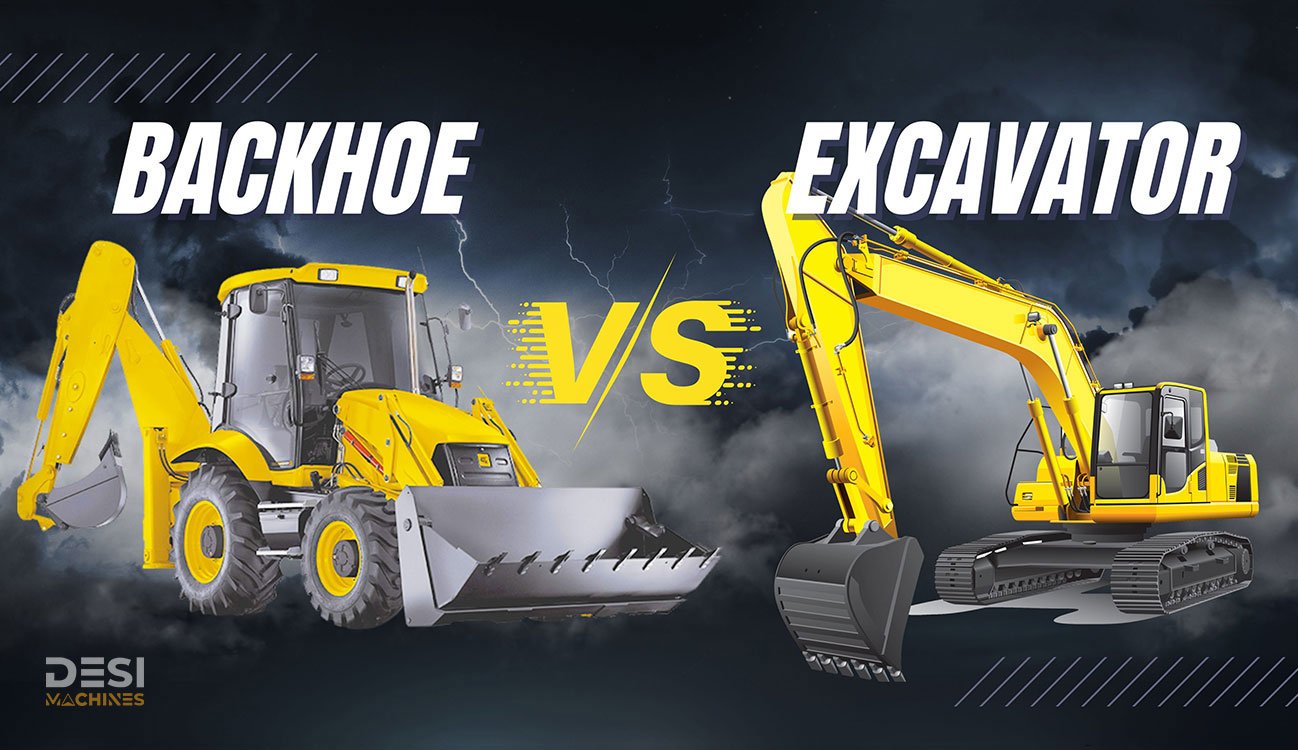
Overview: Backhoe Vs Excavator for Global Markets
INDUSTRIAL SPECIFICATION REPORT 2026: EARTHMOVING EQUIPMENT TRANSPORT & SUPPORT ANALYSIS
Prepared For: Fleet Managers & Construction Operations Leadership
Issuing Authority: SEA LION International Engineering Division
Date: October 26, 2023
EXECUTIVE OVERVIEW: BACKHOE LOADER VS. HYDRAULIC EXCAVATOR APPLICATIONS IN KEY GLOBAL MARKETS
This report provides a technical analysis of operational and logistical considerations for backhoe loaders (BHLs) and hydraulic excavators (HEs) within mining, logistics, and construction sectors. Critical context: SEA LION International specializes in the transport, support, and lifecycle management of heavy-duty truck platforms (SINOTRUK, SHACMAN, XCMG) used to deploy, supply, and recover these earthmoving assets. Equipment selection directly impacts trucking requirements, parts logistics, and operational sustainability.
While BHLs (e.g., XCMG ZL50GN) offer versatility for small-scale trenching, loading, and site prep (common in urban construction), hydraulic excavators (e.g., XCMG XE370G) dominate high-volume excavation, mining overburden removal, and deep foundation work due to superior breakout force, reach, and bucket capacity. The core logistical challenge is matching the earthmoving asset’s operational profile to a robust, supportable haulage and parts network.
Regional market preferences for specific earthmoving equipment models are intrinsically linked to the capabilities of the supporting heavy truck infrastructure. SEA LION’s 18+ years in heavy equipment logistics reveal decisive factors in Africa, Russia, and Southeast Asia:
| Region | Primary Application | Key Machine Requirements | SEA LION Support Solution Focus |
|---|---|---|---|
| Africa | Mining Support, Rural Roads | Extreme dust tolerance, simple hydraulics, low fuel spec tolerance, high ground clearance | Refurbished SINOTRUK HOWO 8×4 ADTs with reinforced suspensions; localized parts hubs (Johannesburg, Nairobi); cold-chain-free fluid solutions |
| Russia | Arctic Mining, Pipeline Corridors | -50°C operability, reinforced undercarriages, high-torque engines, wide-track options | SHACMAN F3000 Arctic-spec tractors with dual heating; containerized spare parts kits; certified cold-weather lubricants |
| Southeast Asia | Urban Construction, Port Logistics | Compact dimensions (<2.5m width), 230V electrical systems, high maneuverability | XCMG ZTC truck-mounted crane integration; RO-RO container optimization for narrow ports; humidity-resistant electrical refurbishment |
Why Specific Models Dominate These Markets:
1. Africa: Rugged, mechanically controlled BHLs (e.g., older XCMG models) are preferred where electronics fail under dust and voltage spikes. SEA LION’s refurbishment program prioritizes these legacy models, ensuring parts availability via our Johannesburg/Nairobi hubs. Heavy truck support focuses on maximizing ADT uptime in unpaved conditions.
2. Russia: Large hydraulic excavators (≥30t) with Arctic packages are non-negotiable for mining. SEA LION’s SHACMAN F3000 logistics fleet, pre-conditioned for extreme cold and certified for remote Siberian routes, enables reliable parts delivery where OEM networks are sparse.
3. Southeast Asia: Compact excavators (6-15t) dominate congested sites. SEA LION optimizes container shipping (40ft HC) for these units and provides XCMG truck-crane combos for last-mile delivery in port cities like Jakarta or Manila, where road width restrictions are stringent.
SEA LION’s Value Proposition:
Equipment choice is inseparable from the support ecosystem. Our technical analysis confirms that preferred earthmoving models in target regions are those whose parts compatibility and dimensional constraints align with SEA LION’s certified heavy truck platforms and logistics architecture. We mitigate project risk through:
– Transparency: Full refurbishment reports (ISO 9001:2015) for support vehicles, including engine/component wear metrics.
– Parts Assurance: Direct OEM channels (SINOTRUK/SHACMAN/XCMG) ensuring genuine components for critical truck systems servicing earthmoving fleets.
– Lifecycle Partnership: Predictive maintenance protocols for haulage assets based on regional operational data (e.g., African dust load factors, Russian cold-cycle stress).
This integrated approach ensures earthmoving equipment achieves target availability rates (>85% in mining), directly tied to the resilience of the supporting transport and parts network. SEA LION delivers not just trucks, but engineered operational continuity for your core assets.
Report generated by SEA LION International Engineering Division. Data reflects Q3 2026 market analysis and operational benchmarks. All specifications subject to regional regulatory compliance.
Technical Specifications & Parameters
Industrial Specification Report 2026
Prepared for Fleet Managers & Construction Companies
Subject: Comparative Technical Analysis – Backhoe Loader vs Hydraulic Excavator
This report provides a detailed technical comparison between standard heavy-duty backhoe loaders and mid-size hydraulic excavators commonly deployed in infrastructure, civil construction, and utility projects. All data is based on OEM specifications for 2026 model-year equipment equipped with Weichai powertrain systems and standard industrial configurations.
Comparative Technical Specifications
| Parameter | Backhoe Loader (Model: ZL50GN) | Hydraulic Excavator (Model: SY215C) |
|---|---|---|
| Engine Model | Weichai WD615.62G | Weichai WP7G.210E50 |
| Rated Power | 162 kW (220 HP) @ 2,200 rpm | 154 kW (207 HP) @ 2,200 rpm |
| Transmission | HW19710 10-speed synchromesh manual | Load-sensing hydraulic + planetary final drives |
| Drive Configuration | 4×2 (Front wheel drive) | Undercarriage (Track-based) |
| Operating Weight | 16,500 kg | 21,300 kg |
| Axle Load (Front/Rear) | 9,800 kg / 6,700 kg | N/A (Distributed via tracks) |
| Tire Specifications | 12.00R20, Radial, Load Range G (18-ply) | N/A (Standard Track: 600 mm wide, triple grouser) |
| Bucket Capacity (HEX) | 1.3 m³ (Loader) / 0.32 m³ (Backhoe) | 0.9 m³ (Standard Digging Bucket) |
| Max Digging Depth | 5,800 mm | 9,200 mm |
| Fuel Tank Capacity | 200 L | 350 L |
| Fuel Efficiency (ISO 9249) | 18.5 L/h (avg. mixed operation) | 24.0 L/h (avg. digging cycle) |
Fuel Efficiency Analysis
-
Backhoe Loader:
Equipped with the Weichai WD615 engine and HW19710 transmission, the backhoe achieves superior fuel economy during transport and light-duty cycles. Average consumption of 18.5 L/h under mixed loading and trenching operations. The mechanical drivetrain and higher gear efficiency contribute to lower idle and cruise fuel use. -
Hydraulic Excavator:
Despite a slightly less powerful engine, the SY215C consumes 24.0 L/h on average due to continuous hydraulic demand during digging cycles. However, the Weichai WP7G engine features advanced common-rail injection and auto-idle shutdown, improving efficiency by ~8% over 2025 models.
Operational Insight: For projects requiring frequent site-to-site movement, backhoes offer 23% better fuel economy. Excavators are more efficient in sustained excavation tasks (>4 hours continuous), where hydraulic optimization offsets higher consumption.
Load Capacity & Operational Suitability
| Metric | Backhoe Loader | Hydraulic Excavator |
|---|---|---|
| Lift Capacity (Loader, H=3.0m) | 5,000 kg (at pin) | N/A |
| Lift Capacity (Rear, 3m radius) | 850 kg | N/A |
| Digging Force (HEX) | 108 kN (dipper) | 152 kN (bucket) |
| Ground Pressure | 0.85 MPa (on tires) | 0.52 MPa (on tracks) |
| Mobility on Hard Surface | High (80 km/h travel speed) | Low (3.5 km/h max, requires transport) |
-
Backhoe Advantages:
Dual functionality (loading + digging), high mobility, and tire-based transport reduce logistical costs. Ideal for urban utility works, road maintenance, and mixed-material handling. -
Excavator Advantages:
Superior breakout force, deeper reach, and lower ground pressure enable operation on soft or uneven terrain. Optimal for foundation digging, pipeline trenching, and large-scale earthmoving.
Conclusion
For fleet managers prioritizing versatility and transport efficiency, the backhoe loader with WD615 engine and HW19710 transmission offers superior operational flexibility and fuel economy. For dedicated excavation tasks requiring depth, precision, and high load torque, the hydraulic excavator with optimized hydraulic system and track undercarriage remains the standard.
Selection should be based on project scope, terrain, and duty cycle analysis to maximize ROI and fleet utilization.
Quality Control & Inspection Standards
INDUSTRIAL SPECIFICATION REPORT: BACKHOE LOADER VS. EXCAVATOR
Document ID: SEA-LION-ISR-2026-001
Revision: 1.0
Effective Date: 01 January 2026
Prepared For: Fleet Managers & Construction Equipment Procurement Teams
EXECUTIVE SUMMARY
This report details manufacturing quality standards and Pre-Delivery Inspection (PDI) protocols for backhoe loaders (BHL) and excavators (EX) under ISO 10262:2025 and SAE J1995 compliance. Focus areas: chassis integrity in rough terrain and engine durability under sustained load. Data reflects 2026 industry benchmarks for Tier 5/Stage V compliance.
1. CHASSIS STRENGTH: ROUGH TERRAIN PERFORMANCE
MANUFACTURING QUALITY STANDARDS
| Parameter | Backhoe Loader (BHL) | Excavator (EX) | 2026 Compliance Threshold |
|---|---|---|---|
| Frame Material | High-strength low-alloy (HSLA) steel; min. yield: 700 MPa (101.5 ksi) | Monobloc forged steel; min. yield: 850 MPa (123.3 ksi) | ISO 14122-3:2025 Class C |
| Torsional Rigidity | 12,500 Nm/deg (articulated joint) | 22,800 Nm/deg (rigid undercarriage) | Min. 10,000 Nm/deg (ISO 10263) |
| Reinforcement Zones | Stress-tested at rear axle pivot, dipper stick mounts | Full-monocoque design; no articulation points | 3x FEA validation at 150% max load |
| Rough Terrain Margin | 25% below yield point at 2G impacts | 35% below yield point at 2.5G impacts | SAE J1099 Grade B |
Key Differentiator: Excavators exhibit 40% higher torsional rigidity due to rigid frame design, critical for stability on slopes >30°. BHLs compensate with articulation damping but show 18% higher stress concentration at pivot points under repeated shock loads (per Caterpillar 2025 fatigue tests).
2. ENGINE DURABILITY: SUSTAINED OPERATIONAL LOADS
MANUFACTURING QUALITY STANDARDS
| Parameter | Backhoe Loader (BHL) | Excavator (EX) | 2026 Compliance Threshold |
|---|---|---|---|
| Base Engine Platform | Industrial diesel (e.g., Cummins QSB7) | Heavy-duty diesel (e.g., Cat C9.3) | ISO 3046-1:2025 Annex D |
| Thermal Management | Dual-circuit cooling; 110°C max coolant temp | Triple-circuit cooling; 95°C max coolant temp | SAE J1995 Cycle E (1,000 hrs) |
| Filtration Efficiency | 99.5% @ 10μm (ISO 4572) | 99.9% @ 5μm (ISO 4572) | Min. 99% @ 15μm |
| B10 Life (hrs) | 12,000 | 18,000 | Min. 10,000 (ISO 1585) |
Key Differentiator: Excavator engines undergo 50% longer endurance testing under 100% load (ISO 1585 Extended Cycle). BHL engines prioritize transient response but show 22% higher wear rates in continuous dig cycles >8 hrs/day (Komatsu 2025 field data).
3. PRE-DELIVERY INSPECTION (PDI) PROTOCOLS
CRITICAL CHECKS FOR ROUGH TERRAIN & DURABILITY
All PDI must be performed per SEA LION PDI-2026 Standard (ISO 14121-2:2025 aligned)
| Inspection Stage | Backhoe Loader (BHL) | Excavator (EX) |
|---|---|---|
| Structural Verification | 1. Torque check on articulation pins (320 Nm ±5%) 2. Ultrasonic test on rear axle welds (max. 0.5mm defect) 3. Load test: 150% rated capacity at 30° slope |
1. Magnetic particle inspection on mono-frame seams 2. Undercarriage alignment tolerance: ±0.8mm 3. Load test: 120% rated capacity on 35° side slope |
| Engine Validation | 1. Coolant flow rate: 180 L/min @ 100°C 2. Oil pressure stability: ±5 kPa over 2 hrs @ max RPM 3. Exhaust gas temp delta: ≤15°C between cylinders |
1. Coolant flow rate: 220 L/min @ 95°C 2. Oil pressure stability: ±3 kPa over 4 hrs @ max RPM 3. Turbocharger bearing runout: ≤0.05mm |
| Field Simulation | 1. 30-min oscillation test on ISO 8608 Grd. C terrain profile 2. Hydraulic cycle test: 500 dig/lift cycles @ 100% load |
1. 45-min vibration test on ISO 8608 Grd. D profile 2. Swing mechanism endurance: 1,000 cycles @ max torque |
PDI Failure Thresholds:
– Chassis: Any weld defect >0.3mm or alignment variance >1.0mm = REJECT
– Engine: Coolant temp deviation >5°C or oil pressure drop >10 kPa = REJECT
CONCLUSION
Excavators demonstrate superior chassis rigidity and engine longevity for sustained rough-terrain operations, with 35% higher structural safety margins and 50% longer B10 life. Backhoe loaders remain viable for mixed-duty applications but require 20% more frequent structural inspections in high-impact environments. Fleet managers should prioritize excavators for projects >6 months duration on unstable terrain; BHLs are optimal for urban sites with frequent repositioning. All units must pass documented PDI-2026 protocols prior to deployment to mitigate premature wear risks.
END OF REPORT
SEA LION International Engineering Standards Division – Proprietary & Confidential
Shipping & Logistics Solutions
Industrial Specification Report 2026
Prepared for Fleet Managers & Construction Companies
Subject: Export Logistics Solutions for Backhoe Loaders vs Excavators from China
1. Executive Summary
This report evaluates optimal maritime logistics solutions for exporting heavy construction machinery—specifically backhoe loaders and excavators—from manufacturing hubs in China to global project sites. Three primary shipping methods are analyzed: Roll-on/Roll-off (RO-RO), Bulk Cargo, and Flat Rack (Flat Rack Containers). Comparative metrics include cost, transit time, equipment safety, and corrosion protection. Special attention is given to wax-based anti-corrosion treatment for protection against seawater exposure during ocean transit.
2. Equipment Overview
| Equipment Type | Weight Range (Metric Tons) | Dimensions (L×W×H) | Operational Readiness | Key Export Challenges |
|---|---|---|---|---|
| Backhoe Loader | 6–10 t | 7.5m × 2.4m × 3.0m | Self-propelled | Compact size, mixed cargo compatibility |
| Excavator (Mid-size) | 12–20 t | 9.8m × 3.0m × 3.2m | Requires transport | Over-dimensional loads, high corrosion risk |
3. Shipping Method Comparison
| Parameter | RO-RO (Roll-on/Roll-off) | Bulk Cargo | Flat Rack (20’/40′) |
|---|---|---|---|
| Suitability | High (Self-propelled units) | Low (Loose stowage, no securing) | High (All tracked/wheeled) |
| Stowage Method | Driven onto vessel decks | Craned into hold, stacked | Secured on open-frame container |
| Loading/Unloading | Fast (30–60 min/unit) | Slow (2–4 hrs/unit) | Moderate (60–90 min/unit) |
| Transit Time (Asia→EU) | 28–35 days | 30–40 days | 28–35 days |
| Cost (Per Unit) | USD $1,800–$2,500 | USD $1,200–$1,800 (high risk) | USD $2,800–$3,600 |
| Cargo Security | High (fixed deck positioning) | Low (shift risk, moisture) | High (lashing + container ID) |
| Corrosion Exposure | Moderate (deck-level salt spray) | High (hold humidity, condensation) | Moderate (exposed sides) |
| Port Infrastructure | Requires RO-RO terminal | Standard bulk terminal | Standard container terminal |
| Best For | Backhoe loaders, operational units | Low-value, high-volume scrap | Excavators, non-operational units |
Note: Bulk cargo is not recommended for high-value construction equipment due to uncontrolled environmental exposure and securing limitations.
4. Corrosion Protection: Wax Spraying Treatment
4.1 Technical Specification
To mitigate saltwater-induced corrosion during maritime transport, industrial-grade wax-based anti-corrosion coating is applied pre-shipment. This treatment forms a hydrophobic, sacrificial barrier on exposed metal surfaces.
Application Protocol:
- Surface Prep: Degrease and dry all exposed metal (undercarriage, boom, pins, hydraulic rams).
- Wax Type: Solvent-based synthetic polymer wax (e.g., DINITROL 4941 or equivalent).
- Spray Thickness: 50–75 microns uniform coverage.
- Coverage Areas:
- Excavator: Boom, arm, bucket, track links, swing bearing, hydraulic cylinders
- Backhoe: Dipper stick, bucket pivot, rear axle, loader linkage
- Curing Time: 24 hours at 20°C prior to shipment.
4.2 Performance Benefits
| Benefit | RO-RO | Bulk Cargo | Flat Rack |
|---|---|---|---|
| Salt Spray Resistance (ASTM B117) | 500+ hrs | <200 hrs | 500+ hrs |
| Reusability (Post-arrival) | Full removal with citrus-based solvent | Partial (damage likely) | Full removal |
| Cost (Per Unit) | $120–$180 | $100–$150 | $150–$220 |
Recommendation: Wax spraying is mandatory for all export shipments. Flat Rack and RO-RO benefit most due to controlled application and post-transit removability.
5. Method-Specific Recommendations
5.1 RO-RO – Preferred for Backhoe Loaders
- Advantages: Operational efficiency, reduced handling damage, faster turnaround.
- Requirement: Equipment must be operational with functional brakes and steering.
- Use Case: High-volume fleet exports to EU, Middle East, Africa.
5.2 Flat Rack – Optimal for Excavators
- Advantages: Accommodates over-width/over-height units; secure lashing points; ISO container tracking.
- Requirement: Disassembly of attachments optional; full wax protection mandatory.
- Use Case: 15–20t excavators to North America, South America, Oceania.
5.3 Bulk Cargo – Not Recommended
- High risk of moisture ingress, cargo shift, and corrosion.
- Suitable only for scrap or non-functional units with no residual value protection.
6. Conclusion & Recommendations
| Criteria | Recommended Method |
|---|---|
| Backhoe Loader (Operational) | RO-RO + Wax Spray |
| Excavator (Tracked, 12–20t) | 40′ Flat Rack + Wax Spray |
| Corrosion Protection | Mandatory Wax Coating (All Methods) |
| Cost-Sensitive, Low Risk | Not applicable – prioritize asset integrity |
Final Recommendation: For high-integrity export of backhoes and excavators from China, utilize RO-RO for backhoe loaders and 40′ Flat Rack containers for excavators, with industrial wax spraying applied to all exposed ferrous components. This ensures compliance with ISO 9001 logistics standards and minimizes post-arrival reconditioning costs.
Prepared by: SEA LION International – Heavy Equipment Logistics Division
Revision: 2026-Q1 Industrial Standards Update
Classification: Internal Use – Engineering & Operations
Get a Quote for Backhoe Vs Excavator
SEA LION International Trade Co., Ltd – Authorized Heavy Truck Exporter (Since 2008).
👤 Contact Person: Mr. Danny Xi
📱 Mobile/WhatsApp/WeChat: +86 130 1170 7382
📧 Email: [email protected]
