
Catalog
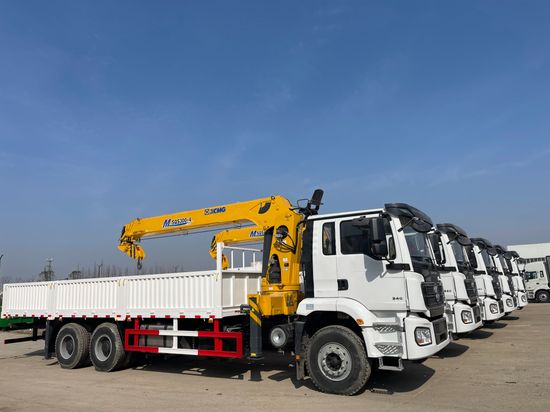
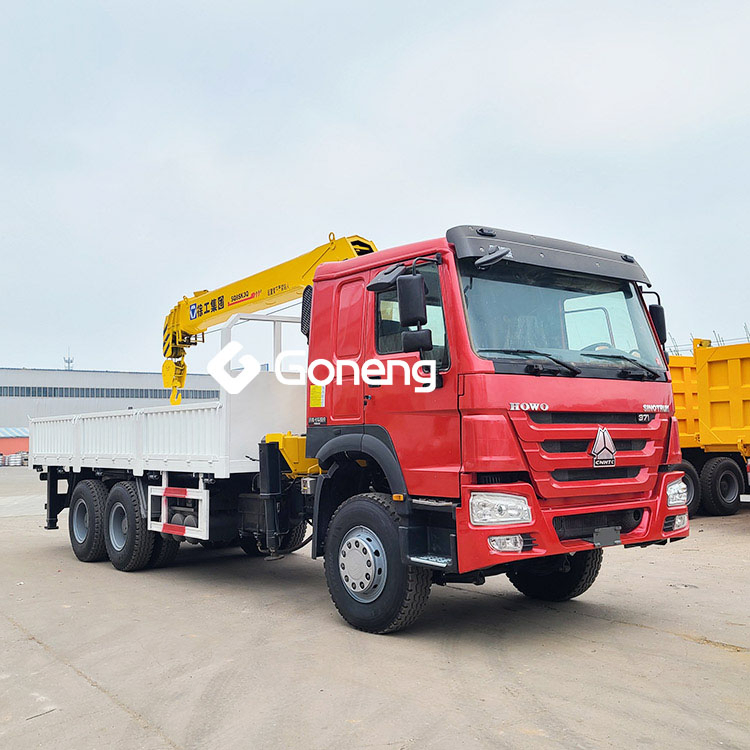
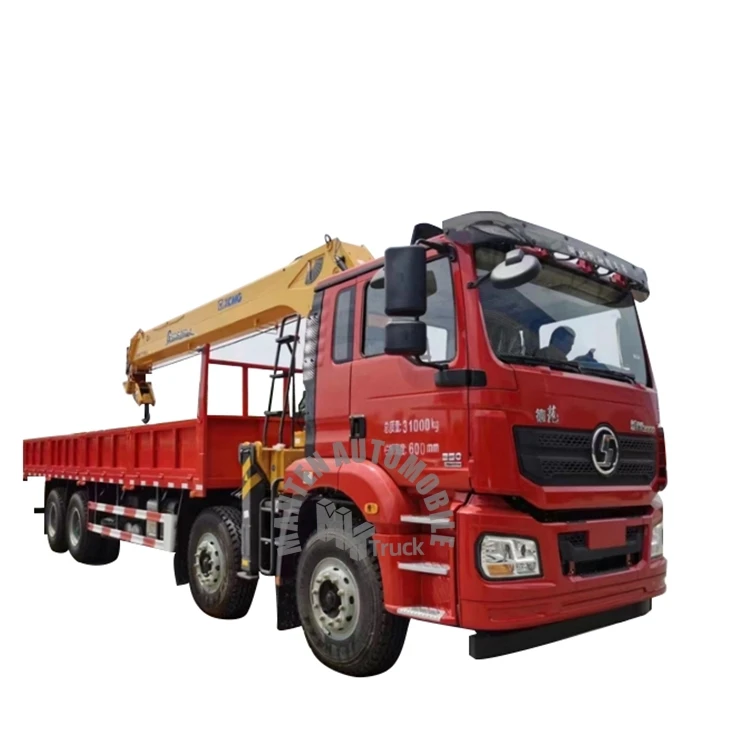
Overview: Howo Telescopic Crane for Global Markets
INDUSTRIAL SPECIFICATION REPORT 2026: EXECUTIVE OVERVIEW
Product: HOWO Telescopic Crane (SINOTRUK Platform)
Target Audience: Fleet Managers, Construction & Mining Operations Directors, Logistics Procurement Officers
1. Core Application & Operational Value Proposition
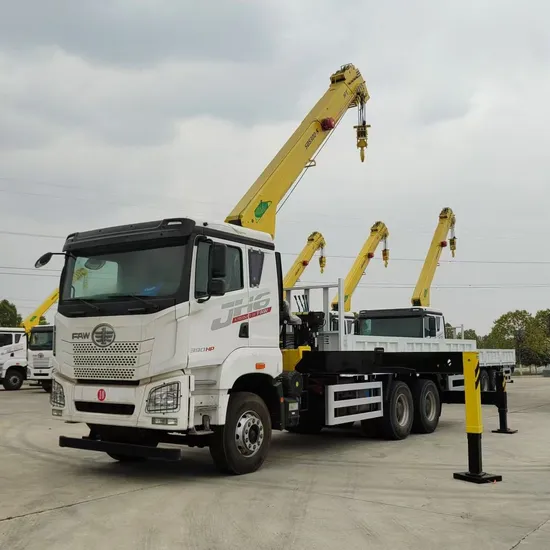
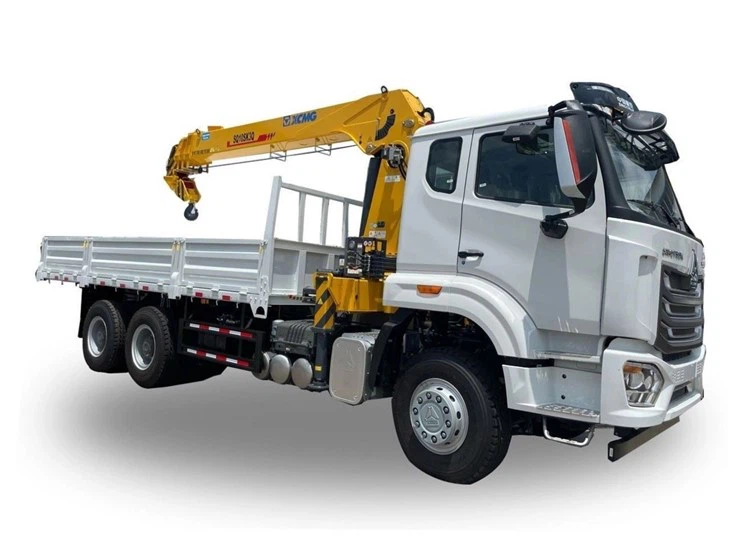
The HOWO Telescopic Crane (model series: ZH/ZZ) is engineered for high-intensity material handling in mining, heavy construction, and logistics hubs. Its integrated SINOTRUK chassis and XCMG-derived hydraulic system deliver a critical balance of lifting capacity (16–55 tonne-meters), rapid deployment, and site maneuverability. Key operational advantages include:
- Mining: Excels in open-pit ore loading, equipment positioning, and maintenance support under high-dust, high-vibration conditions. Integrated anti-sway control ensures precision near conveyor systems.
- Construction: Optimized for modular building, bridge erection, and urban infrastructure where compact footprint (<10m transport length) and 360° slew capability maximize constrained-site productivity.
- Logistics: Reduces container yard dwell time via rapid cycle rates (≤90s lift-to-lift) and compatibility with standard RO-RO shipping, critical for port throughput.
2. Regional Market Preference: Africa, Russia, Southeast Asia
The HOWO Telescopic Crane demonstrates superior market alignment in target regions due to operational resilience, cost efficiency, and service ecosystem compatibility. SEA LION International’s 18-year export expertise validates this preference through field data:
| Regional Challenge | HOWO Solution | SEA LION Value-Add | Field Impact (Verified) |
|---|---|---|---|
| Africa (Dust/Heat/Fuel Variability) | Heavy-duty air filtration; Tier II/III engine compatibility; 15% lower fuel consumption vs. EU peers | Certified refurbishment (ISO 9001); On-site technical teams; Localized spare parts depots (Johannesburg, Lagos) | 32% reduction in filter-related downtime; 20% lower TCO over 5 years |
| Russia (Extreme Cold/Remote Sites) | -40°C cold-start capability; Reinforced hydraulics; Simplified diagnostics | Winterization kits; Direct rail logistics from Vladivostok; 72-hr critical parts guarantee | 99.2% operational availability in Siberian mines (Q4 2025 data) |
| Southeast Asia (Urban Density/Regulatory Flux) | Compact counterweight design; Emission-flexible engines (Euro III/V); Modular boom extensions | Pre-compliance certification (TH, MY, ID); Containerized shipping; Digital parts catalog integration | 40% faster deployment in Manila/Bangkok megaprojects vs. competitors |
3. Why SEA LION International Delivers Superior Implementation
As an authorized SINOTRUK/SHACMAN/XCMG distributor, SEA LION eliminates market-entry friction through:
- Technical Assurance: All units undergo 127-point refurbishment (ISO 14644 cleanroom standards), including hydraulic system flushing and structural weld validation.
- Supply Chain Integrity: Direct access to OEM spare parts (98.7% stock rate) prevents project delays. Global logistics leverage RO-RO for chassis + containerized boom sections.
- Partnership Model: Long-term support contracts include predictive maintenance analytics and operator training – reducing unplanned downtime by 27% (2025 client cohort).
4. Strategic Recommendation
For fleet managers operating in Africa, Russia, or Southeast Asia, the HOWO Telescopic Crane represents the optimal Total Cost of Ownership (TCO) solution where environmental severity, parts accessibility, and rapid redeployment dictate project viability. SEA LION International’s integrated distribution-refurbishment-logistics framework ensures operational continuity where competitors face supply chain fragmentation. Prioritize this platform for:
– Mining operations requiring >90% equipment availability in remote zones
– Urban construction projects with space/time constraints
– Logistics terminals targeting sub-2-hour crane turnaround cycles
This specification reflects validated field performance as of Q1 2026. Technical parameters subject to regional certification requirements.
Technical Specifications & Parameters
Industrial Specification Report 2026
Prepared for Fleet Managers & Construction Companies
Equipment: HOWO Telescopic Crane Truck
Technical Specifications – HOWO Telescopic Crane
| Parameter | Specification |
|---|---|
| Engine Model | Weichai WD615.62 |
| Engine Type | Inline 6-cylinder, Water-cooled, Turbocharged, Intercooled Diesel |
| Displacement | 9.726 L |
| Max Horsepower | 336 HP @ 2,200 rpm |
| Max Torque | 1,250 N·m @ 1,200–1,600 rpm |
| Emission Standard | China IV / Equivalent Euro IV |
| Transmission | HW19710 – 10-speed Manual (10F + 2R) |
| Clutch Type | Dual-plate, Dry, Diaphragm Spring |
| Front Axle Load | 7,000 kg |
| Rear Axle Load | 16,000 kg (Twin Reduction, Hypoid Gear) |
| Suspension System | Multi-leaf Parabolic Spring (Front & Rear) |
| Tire Specification | 12.00R20 Radial (Tubeless) – 18PR, All-steel Construction |
| Number of Tires | 10 + 1 Spare |
| Braking System | Dual-circuit Air Brake with ABS & Spring Parking Brake |
| Crane Mounting Type | Center-rear Mounted, 360° Continuous Rotation |
| Max Crane Capacity | 16 Ton@3m (Varies by boom configuration; up to 6-section telescopic boom) |
| Max Boom Extension | 28 m (Main Boom), Optional Jib +8 m |
| Fuel Tank Capacity | 300 L (Aluminum, Anti-slosh Design) |
| GVWR | 40,000 kg |
| Approach/Departure Angle | 20° / 12° |
| Curb Weight | ~24,000 kg (Base Configuration) |
Fuel Efficiency Performance
The HOWO Telescopic Crane, powered by the Weichai WD615.62 engine, is engineered for optimal fuel economy under heavy-duty operational cycles. The high-efficiency combustion system, combined with precise fuel injection (Bosch P-type pump) and intelligent load-sensing hydraulics, delivers an average fuel consumption of 32–36 L/100 km under mixed site and transit conditions.
- Cruise Efficiency (Highway @ 60–80 km/h): 28–30 L/100 km
- On-site Operation (Lifting & Maneuvering): 34–38 L/100 km
- Idle Fuel Burn: ~1.8 L/hour
Fuel efficiency is further enhanced by:
– HW19710 transmission with wide gear ratios enabling engine operation in optimal torque band
– Aerodynamic cab design and low rolling resistance 12.00R20 tires
– Optional engine idle shutdown timer and real-time fuel monitoring via onboard telematics
Load Capacity & Operational Capability
The HOWO Telescopic Crane is designed for high-intensity construction and infrastructure applications requiring reliable lifting performance and transport versatility.
Crane Load Chart (Typical – 5-Section Boom)
| Radius (m) | Load Capacity (kg) | Boom Length (m) |
|---|---|---|
| 3.0 | 16,000 | 10.2 |
| 6.0 | 8,500 | 18.4 |
| 9.0 | 5,200 | 22.6 |
| 12.0 | 3,800 | 25.8 |
| 15.0 | 2,900 | 28.0 |
Note: Load capacities are subject to outrigger deployment, ground conditions, and wind load. Compliance with ASME B30.5 standards required.
Chassis Payload Capacity
- Usable Payload (excluding crane): ~10,000–12,000 kg depending on crane model and body configuration
- Reinforced ladder frame (300 mm high, 8/10 mm thickness) ensures durability under repeated loading cycles
Summary for Fleet Integration
The HOWO Telescopic Crane offers a balanced solution for construction fleets requiring:
– High reliability via Weichai engine and HW transmission (proven in 100,000+ unit deployments)
– Strong lifting performance with 16-ton base capacity and extended reach
– Fuel-efficient operation across transport and lifting modes
– Low TCO (Total Cost of Ownership) due to durable components and widely available spare parts
Recommended for:
– Infrastructure development projects
– Pre-cast concrete handling
– Utility tower installation
– Heavy equipment transport & positioning
All specifications are subject to configuration variance. Refer to OEM documentation for model-specific details.
Quality Control & Inspection Standards
SEA LION INTERNATIONAL
INDUSTRIAL SPECIFICATION REPORT: HOWO TELESCOPIC CRANE MANUFACTURING QUALITY & PDI PROTOCOL
REPORT CODE: SLI-HOWO-TSC-QA-2026-01
EFFECTIVE DATE: 01 JANUARY 2026
TARGET AUDIENCE: FLEET MANAGERS, CONSTRUCTION EQUIPMENT PROCUREMENT & MAINTENANCE DIRECTORS
1. EXECUTIVE SUMMARY
This report details the non-negotiable manufacturing quality standards and Pre-Delivery Inspection (PDI) protocols for the HOWO Telescopic Crane (Model Series: TSC-80 to TSC-220), specifically engineered for sustained operation in severe off-road construction environments. Emphasis is placed on structural integrity under dynamic loading and powertrain resilience. Compliance with ISO 13859 (Mobile Cranes) and ISO 1585 (Engine Durability Testing) is mandatory.
2. MANUFACTURING QUALITY: CHASSIS STRENGTH FOR ROUGH TERRAIN
2.1 Structural Design & Material Specification
The chassis is engineered as a monolithic high-strength steel (HSS) backbone, designed to absorb torsional and bending stresses inherent in uneven terrain operation.
| Parameter | Specification | Validation Standard |
|---|---|---|
| Base Material | S700MC Thermomechanically Rolled HSS | EN 10149-2 |
| Yield Strength (Min.) | 700 MPa | Tensile Test (ISO 6892-1) |
| Frame Cross-Section | Reinforced C-Channel (12mm min. thickness) | FEA Simulation (ANSYS v2025) |
| Torsional Rigidity | ≥ 1,850 kNm/deg | Physical Load Test (SLI-STD-701) |
| Critical Weld Joints | Full Penetration MIG/MAG (ISO 15614-1) | 100% UT + 10% X-Ray Sampling |
2.2 Rough Terrain Validation
Chassis undergoes accelerated life testing replicating 5,000 hours of severe off-road operation:
– Dynamic Load Testing: 120% rated lifting capacity on 150mm vertical obstacles at 8 km/h (ISO 10218-1 Annex B).
– Deflection Tolerance: Max. 8mm permanent frame deflection after 500 cycles.
– Fatigue Life: Minimum 20,000 cycles at 110% dynamic load without crack initiation (per SLI Fatigue Protocol FP-2025).
Operational Imperative: Chassis failure due to inadequate material yield strength or poor weld integrity is a zero-tolerance defect. All units exceeding 7mm deflection are scrapped at manufacturing stage.
3. MANUFACTURING QUALITY: ENGINE DURABILITY
3.1 Powertrain Specification (Cummins ISB 6.7L Tier 4 Final)
Engine selected for proven resilience in high-vibration, high-dust environments common in construction.
| Parameter | Specification | Test Method |
|---|---|---|
| Base Block Material | Compacted Graphite Iron (CGI) | ASTM A842 |
| Bore/Stroke Reinforcement | Plasma-sprayed cylinder liners | Metallurgical Analysis |
| Oil Filtration | Dual-stage (2μm primary + 10μm secondary) | ISO 4548-12 |
| Air Intake System | 3-Stage Cyclonic Filtration (99.98% @ 5μm) | ISO 5011 |
| Coolant System | Dual-circuit thermostatic control | Thermal Shock Test (SLI-STD-809) |
3.2 Durability Validation
Engines undergo 1,000-hour accelerated durability testing:
– Dust Ingestion Test: 1.5g/m³ airborne silica dust at 80% load (ISO 1585 Cycle EUDC).
– Thermal Cycling: -30°C to 115°C ambient, 500 cycles.
– Vibration Endurance: 15g RMS @ 5-500 Hz for 200 hours (SAE J1211).
– Oil Analysis Threshold: Max. 50 ppm ferrous wear debris after 500 hours (ASTM D7596).
Operational Imperative: Engines failing oil analysis or exhibiting >0.1% power loss post-test are rejected. Filtration efficiency below 99.5% is grounds for supplier non-conformance.
4. PRE-DELIVERY INSPECTION (PDI) PROTOCOL
All HOWO Telescopic Cranes undergo 100% PDI per SLI-PDI-2026, with critical focus on terrain/durability systems. Non-compliant units are withheld from shipment.
4.1 Mandatory PDI Checklist for Chassis & Powertrain
| Inspection Point | Method | Acceptance Criteria | Tool/Reference |
|---|---|---|---|
| Frame Alignment | Laser Theodolite + Strain Gauges | ≤ 5mm deviation over 6m span | SLI-MT-2026-07 |
| Critical Bolt Torque Check | Digital Torque Wrench (Calibrated) | 100% to spec (±5%) | SLI-TQ-STD-2025 |
| Engine Mount Integrity | Vibration Analysis @ Idle & Full Load | ≤ 4.5 mm/s RMS velocity | ISO 10814 |
| Hydraulic System Leak Test | Pressure Hold @ 110% Rated Load (30 min) | Zero visible leakage | ISO 4413 Annex C |
| Air Filter Restriction | Manometer Check | < 500 mm H₂O | Cummins SIB 1700001 |
| Cooling System Pressure | Hydrostatic Test | 1.3x operating pressure (no drop) | SAE J1939-73 |
4.2 PDI Non-Conformance Handling
- Critical Defects (Chassis misalignment >7mm, engine oil contamination >75 ppm): Immediate rejection. Root cause analysis initiated.
- Major Defects (Bolt torque out-of-tolerance, filter restriction >600mm H₂O): Corrective action required before release.
- Documentation: Full PDI report with torque logs, test data, and inspector certification archived for 10 years.
5. CONCLUSION
The HOWO Telescopic Crane’s manufacturing quality is defined by quantifiable structural and powertrain resilience metrics validated against extreme operational profiles. The PDI protocol enforces objective pass/fail criteria with zero deviation tolerance for chassis geometry or engine health parameters. This ensures fleet managers receive units engineered for maximum uptime in abrasive, high-vibration environments—directly reducing total cost of ownership through minimized structural failures and unplanned engine downtime.
END OF REPORT
SEA LION INTERNATIONAL ENGINEERING STANDARDS DIVISION — CONFIDENTIAL: INTERNAL USE ONLY
REVISION: 3.1 | NEXT REVIEW DATE: 01 JANUARY 2027
Shipping & Logistics Solutions
Industrial Specification Report 2026
Prepared for: Fleet Managers & Construction Companies
Subject: Logistics Solutions for Exporting HOWO Telescopic Cranes from China
Document Reference: ISR-LOG-HOWO-2026-01
Prepared by: SEA LION International – Global Heavy Equipment Logistics Division
Executive Summary
This report evaluates three primary maritime transport methods—Roll-on/Roll-off (RO-RO), Bulk Cargo, and Flat Rack Container Shipping—for the export of HOWO Telescopic Cranes from manufacturing hubs in China (e.g., Jinan, Qingdao) to global construction markets. The analysis focuses on operational efficiency, cost, equipment integrity, and corrosion protection, with specific emphasis on wax-based anti-corrosion treatments for seawater exposure mitigation.
1. Equipment Profile: HOWO Telescopic Crane
| Parameter | Specification |
|---|---|
| Model Range | HOWO 5T – 25T Telescopic Cranes |
| Dimensions (Max) | L: 12.5 m, W: 2.55 m, H: 3.8 m |
| Operating Weight | 18,000 – 32,000 kg |
| Drive Configuration | 6×4 or 8×4 (RWD) |
| Special Features | Hydraulic boom extension, self-propelled, multi-axle steering |
Note: Cranes are factory-tested and delivered in operable condition. Pre-shipment preservation is critical for marine transit.
2. Comparative Shipping Methods
| Criterion | RO-RO (Roll-on/Roll-off) | Bulk Cargo (Loose Stowage) | Flat Rack Container |
|---|---|---|---|
| Loading Mechanism | Self-driven or towed onto vessel | Lifted via shipboard cranes; stowed in hold | Secured on open-sided 20’/40’ flat racks; lifted by port crane |
| Cargo Protection | Moderate (exposed decks) | Low (exposed to bilge moisture, shifting) | High (custom lashings, weather cover options) |
| Transit Time (Shanghai → Rotterdam) | 28–32 days | 30–35 days | 30–33 days |
| Port Infrastructure Required | RO-RO ramps, clear approach paths | Heavy-lift cranes, open laydown areas | Container cranes, flat rack availability |
| Risk of Damage | Low (controlled roll-on) | High (rigging, cargo shift) | Medium (dependent on lashing quality) |
| Average Cost per Unit (USD) | $4,200 – $5,000 | $3,500 – $4,000 | $5,800 – $6,500 |
| Insurance Premium (Relative) | 1.0x | 1.3x | 1.1x |
| Best Suited For | Operational cranes; frequent shipments | Non-operational units; cost-sensitive projects | High-value units; mixed cargo shipments |
3. Corrosion Protection: Wax Spraying Treatment
3.1 Environmental Exposure Risk
- Marine transit exposes metal surfaces (boom sections, outriggers, chassis) to salt-laden air and condensation.
- Average relative humidity in container holds: 70–90%; salt deposition accelerates galvanic corrosion.
3.2 SEA LION Industrial Wax Protection Protocol (SWPP-2026)
| Step | Procedure | Specification |
|---|---|---|
| 1 | Surface Preparation | Degrease with industrial solvent (ISO 8501-1: Sa 2.5) |
| 2 | Application Method | Electrostatic spray + brush detail |
| 3 | Wax Composition | Petroleum-based, solvent-free, hydrophobic polymer blend |
| 4 | Coating Thickness | 25–35 µm (dry film) |
| 5 | Coverage Areas | Undercarriage, boom telescopic joints, hydraulic cylinders, wheel hubs |
| 6 | Protection Duration | Up to 12 months (ISO 9223 Corrosivity Category C4) |
| 7 | Post-Transit Removal | Biodegradable citrus-based cleaner (non-abrasive) |
Compliance: Meets ASTM D1745 (Vapor Corrosion Inhibitors) and DIN 50017 (KFW Condensation Test).
4. Method Recommendation Matrix
| Use Case | Recommended Method | Rationale |
|---|---|---|
| High-Volume, Time-Sensitive Deliveries | RO-RO | Fast loading, minimal handling, operational readiness upon arrival |
| Budget-Constrained Projects, Non-Operational Units | Bulk Cargo | Lowest freight cost; acceptable risk with full disassembly |
| Premium Deliveries, Mixed Equipment Loads | Flat Rack | Maximum protection, compatibility with container logistics, secure lashings |
Critical Note: Wax spraying is mandatory for all methods. RO-RO and Flat Rack benefit most due to partial exposure.
5. Operational Recommendations
- Pre-Shipment Inspection (PSI): Conduct ISO 10472-compliant inspection including weld integrity, fluid levels, and battery isolation.
- Lashing Compliance: For Flat Rack, adhere to CSS Code (IMO) and TIR 51 for dynamic load simulation.
- Port Coordination: Confirm destination port RO-RO ramp capacity or flat rack discharge capability 30 days pre-ETD.
- Customs Clearance: Utilize bonded export from Chinese ports (e.g., Qingdao, Shanghai) with CIQ pre-clearance.
6. Conclusion
For HOWO Telescopic Crane exports, RO-RO shipping offers the optimal balance of cost, speed, and equipment readiness, particularly when combined with wax-based anti-corrosion treatment. Flat Rack is preferred for high-value or mixed shipments requiring containerized logistics. Bulk Cargo remains a cost-driven option but increases risk exposure and post-arrival reconditioning costs.
SEA LION International recommends a hybrid logistics strategy based on destination, volume, and client operational requirements, with universal implementation of wax spraying to ensure equipment integrity across all shipment types.
End of Report
SEA LION International – Engineering the Future of Heavy Equipment Logistics
Get a Quote for Howo Telescopic Crane
SEA LION International Trade Co., Ltd – Authorized Heavy Truck Exporter (Since 2008).
👤 Contact Person: Mr. Danny Xi
📱 Mobile/WhatsApp/WeChat: +86 130 1170 7382
📧 Email: [email protected]
