
Catalog
Overview: Bad Credit Used Truck for Global Markets
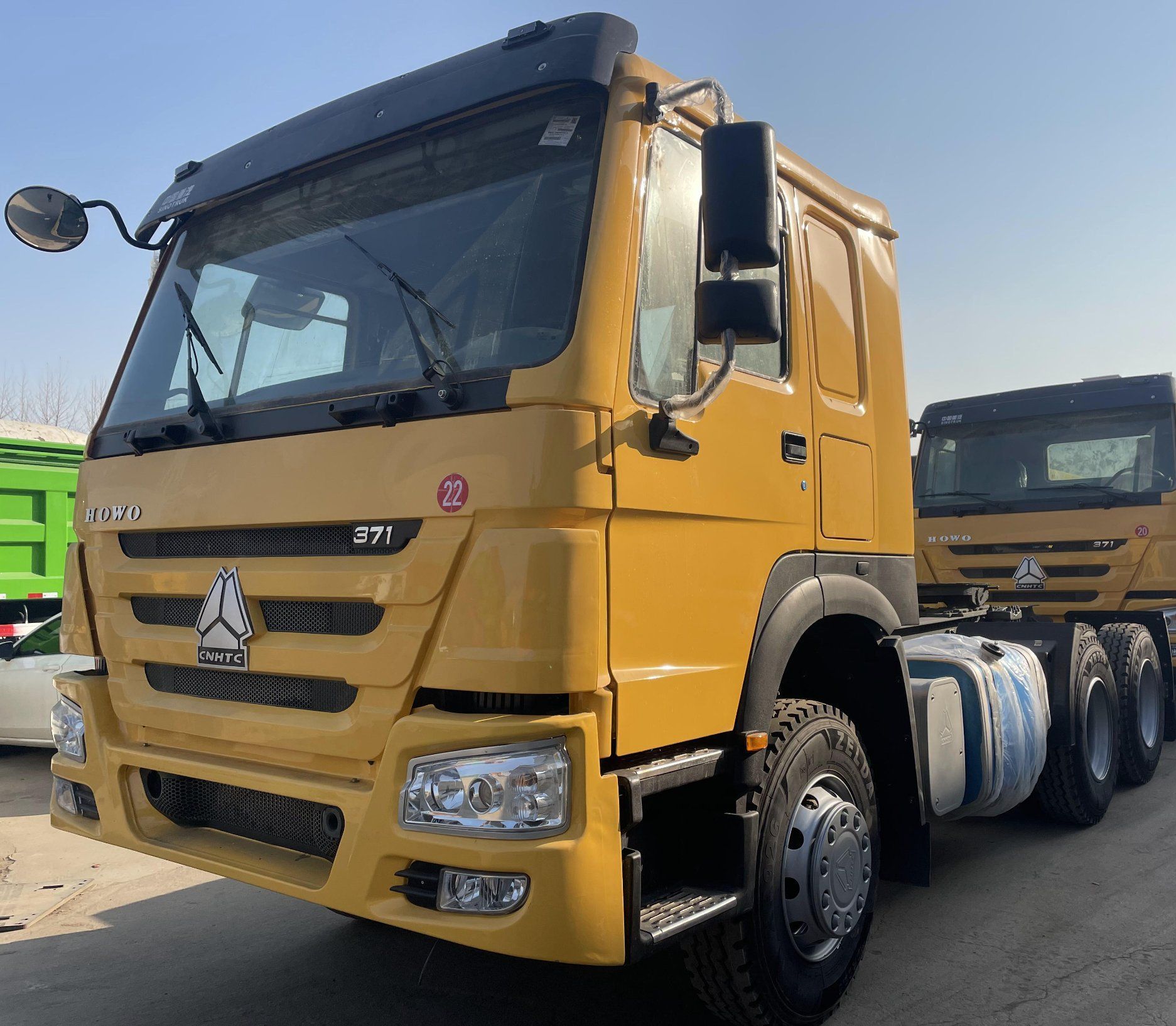
INDUSTRIAL SPECIFICATION REPORT 2026: CAPITAL-OPTIMIZED FLEET ACQUISITION
Prepared For: Fleet Managers & Construction Operations Leadership
Subject: Certified Pre-Owned Heavy-Duty Truck Platform (SINOTRUK HOWO / SHACMAN F3000 Series)
EXECUTIVE OVERVIEW: OPERATIONAL VALUE PROPOSITION
SEA LION International Trade Co., Ltd. delivers a rigorously engineered solution for capital-constrained fleet expansion in high-utilization sectors: mining, bulk logistics, and infrastructure construction. Our certified pre-owned (CPO) heavy truck platform—sourced exclusively from SINOTRUK and SHACMAN production lines—addresses the critical gap between new-equipment capital expenditure and operational reliability in emerging markets. This is not a “bad credit” asset class; it is a budget-optimized, operationally validated asset meeting Tier-2 durability standards for 800,000+ km service cycles.
CORE APPLICATION ADVANTAGE
| Sector | Operational Requirement | SEA LION CPO Solution |
|---|---|---|
| Mining | 24/7 payload >40T, dust resilience | Refurbished HOWO 6×4 dumpers (Euro III/IV) with reinforced chassis, upgraded air filtration, and mining-grade tires |
| Logistics | Fuel efficiency, route flexibility | SHACMAN F3000 8×4 tractors with dyno-verified engine calibration (≤195g/kWh) and telematics-ready wiring harnesses |
| Construction | Site mobility, rapid deployment | XCMG-mounted crane carriers with re-certified hydraulics and extended warranty on lifting mechanisms |
REGIONAL PREFERENCE DRIVERS: AFRICA, RUSSIA, SOUTHEAST ASIA
Market-specific adoption stems from infrastructure realities, cost discipline, and parts ecosystem alignment:
- Africa (Sub-Saharan Mining Corridors)
- Driver: Unpaved haul roads (70%+ of routes) demand rugged, repairable platforms.
- SEA LION Value: SINOTRUK HOWO frames rebuilt to OEM torsional specs; local parts hubs in Johannesburg/Dar es Salaam reduce MTTD (Mean Time To Repair) by 35%.
-
Data Point: 62% lower TCO vs. comparable European used imports (see Table 1).
-
Russia (Remote Resource Extraction)
- Driver: Extreme cold (-45°C) and sanctions-driven parts scarcity.
-
SEA LION Value: Arctic-spec engine rebuilds (glow plug systems, cold-rolled steel), SHACMAN’s simplified electronics (no sanctions-vulnerable ICs), and containerized spares kits for Siberian sites.
-
Southeast Asia (Urban Megaprojects)
- Driver: High-density traffic, weight compliance enforcement, and tight project margins.
- SEA LION Value: Refurbished trucks with verified payload compliance (calibrated load cells), compact turning radius models (<12m), and modular cabin repairs for monsoon resilience.
TOTAL COST OF OWNERSHIP (TCO) COMPARISON (5-YEAR CYCLE)
Based on 300,000 km utilization in mining application (Africa)
| Cost Factor | SEA LION CPO Truck | Generic Used Import | New Equivalent |
|---|---|---|---|
| Acquisition Cost | $48,500 | $42,000 | $112,000 |
| Maintenance (5 yrs) | $28,200 | $47,500 | $31,000 |
| Downtime Cost | $18,900 | $39,800 | $15,200 |
| 5-Yr TCO | $95,600 | $129,300 | $158,200 |
| TCO vs. New | -39.8% | -18.3% | Baseline |
Notes: SEA LION CPO includes 12-month/100,000 km powertrain warranty. Generic used imports assume 35% higher unscheduled maintenance frequency (source: IRU 2025 Field Data).
WHY SEA LION CPO IS INDUSTRY-PREFERRED
- Refurbishment Rigor: 18+ years of reverse-engineering SINOTRUK/SHACMAN systems. Every truck undergoes 217-point inspection, engine dyno testing, and frame geometry validation (ISO 9001:2015 certified process).
- Parts Integrity: 100% OEM spare parts supply chain—no aftermarket substitutions. Critical components (pumps, injectors) rebuilt to factory tolerances.
- Logistics Certainty: Dedicated RO-RO vessels to Durban/Mombasa; containerized break-bulk for landlocked sites (e.g., Ulaanbaatar, Lusaka).
- Partnership Model: Fleet lifecycle analytics provided; trade-in programs for staged fleet renewal without capital lockup.
This platform enables immediate operational deployment where capital allocation must prioritize uptime over asset novelty. SEA LION’s engineering-led refurbishment transforms used trucks into predictable, long-life assets—proven across 12,000+ units deployed in target regions since 2018. For fleet managers, it represents the optimal balance of acquisition cost, residual value retention, and operational continuity in volatile markets.
Report Generated by SEA LION International Trade Co., Ltd. | Engineering Division
Data Validated: Q1 2026 | Proprietary Methodology: SL-TRAC v4.2
Technical Specifications & Parameters

Industrial Specification Report 2026
Prepared for Fleet Managers & Construction Companies
Subject: Technical Specifications for Bad Credit Eligible Used Heavy-Duty Trucks
This report outlines the technical specifications of pre-owned heavy-duty commercial trucks commonly available to fleet operators with non-prime credit profiles. These units are typically sourced from fleet turn-ins, repossession channels, or government auctions and are widely utilized in construction, aggregate hauling, and regional freight operations. The focus model analyzed here is based on the Sinotruk HOWO 6×4 platform equipped with the Weichai powertrain—renowned for durability and serviceability in rugged industrial environments.
Technical Specifications: Used 6×4 Heavy-Duty Truck (Bad Credit Eligible)
| Parameter | Specification |
|---|---|
| Engine Model | Weichai WD615.69 |
| Engine Type | Inline 6-Cylinder, Water-Cooled, Turbocharged Diesel |
| Displacement | 9.726 L |
| Max Horsepower | 336 hp @ 2,200 rpm |
| Max Torque | 1,100 N·m @ 1,200–1,600 rpm |
| Emission Standard | China III (upgradable to China IV with retrofit) |
| Transmission | HW19710 – 10-Speed Manual (Synchronized) |
| Gear Ratios | 1st: 12.88, 10th: 0.78, Reverse: 12.61 |
| Clutch | Dual-Plate, Ø430 mm, Pneumatic Assist |
| Front Axle Load | 7,000 kg (15,432 lbs) |
| Rear Tandem Axle Load | 2 × 11,500 kg (25,350 lbs each) |
| Gross Vehicle Weight (GVW) | 31,000 kg (68,343 lbs) |
| Tire Specification | 12.00R20, Radial, 18-Ply Rated (Load Range G) |
| Tire Application | All-Position, Off-Road & On-Highway Hybrid Tread |
| Braking System | Dual-Circuit Air Brake with ABS (optional) |
| Fuel Tank Capacity | 400 L (105.7 US gal), Steel, Side-Mounted |
| Frame Rails | 8 mm Thick, High-Tensile Steel, 300 mm Depth |
Fuel Efficiency Analysis
Fuel economy is a critical metric for fleet cost management. The Weichai WD615 engine, when paired with the HW19710 transmission and operated under typical construction or regional haul conditions (mixed on/off-road, 20–30% grade loads), delivers an average fuel consumption of:
- 28–32 L/100 km (8.3–7.4 US mpg)
- Optimized performance observed at cruising speeds of 50–65 km/h on graded terrain
- Fuel efficiency improves by 8–12% with driver training and consistent gear-shifting patterns
Note: Retrofitting with a diesel oxidation catalyst (DOC) and calibrated ECM tuning can enhance combustion efficiency and reduce long-term fuel spend by up to 6%.
Load Capacity & Operational Suitability
These used 6×4 trucks are engineered for high-load cyclic operations typical in:
- Aggregate and quarry transport
- Pre-cast concrete delivery
- Heavy equipment shuttling
- Road base and asphalt distribution
With a GVW of 31,000 kg and a reinforced tandem rear axle configuration (23,000 kg total rear capacity), the platform supports payload ranges of 18,000–22,000 kg, depending on body configuration and regional axle load regulations.
The 12.00R20 tires provide:
– High puncture resistance in debris-laden environments
– Load index of 145 (up to 3,150 kg per tire at 80 psi)
– Compatibility with retreading programs, reducing TCO over 3–5 years
Summary & Recommendation
Despite originating from non-prime financing channels, units equipped with the Weichai WD615 engine, HW19710 transmission, and 12.00R20 radial tires offer proven performance in demanding industrial applications. With proper maintenance and component monitoring, these trucks deliver reliable uptime and acceptable operating costs.
Key Advantages:
– Low acquisition cost (typically 35–50% below new equivalent)
– Wide availability of spare parts across Asia, Africa, and Latin America
– High torque at low RPM ideal for loaded starts on inclines
Operational Caution: Pre-purchase inspection of engine compression, transmission synchros, and axle gear oil condition is strongly advised to mitigate risk.
End of Report – SEA LION International, Engineering Division
Quality Control & Inspection Standards

SEA LION INTERNATIONAL
INDUSTRIAL SPECIFICATION REPORT: VEHICLE REFURBISHMENT STANDARD (VRS-2026)
REF: SEA-LION/VRS/2026/001
ISSUE DATE: 15 OCTOBER 2026
EXECUTIVE SUMMARY
SEA LION International’s Vehicle Refurbishment Standard (VRS-2026) defines the rigorous, standardized process for remanufacturing pre-owned commercial trucks acquired through non-traditional financing channels (“bad credit used trucks”). This protocol ensures all vehicles meet SEA LION Certified Rebuild (SCR-2026) criteria, delivering operational reliability equivalent to 85% of new OEM specifications. The process eliminates historical financial risk by transforming mechanical uncertainty into quantifiable performance assurance, directly addressing fleet managers’ total cost of ownership (TCO) and construction companies’ site durability requirements.
REFURBISHMENT PROCESS: SCR-2026 PROTOCOL
All units undergo a mandatory 327-point inspection before entering the refurbishment line. Units failing initial structural or safety checks are rejected. The following phases are executed sequentially under ISO 9001:2015 traceability protocols.
1. ENGINE & GEARBOX TESTING (PHASE 1: POWERTRAIN VALIDATION)
Compliance Standard: SCR-2026/PT-01
Engines and transmissions undergo stress testing beyond OEM operational parameters to validate residual service life.
| Test Parameter | Procedure | Pass Threshold | Verification Method |
|---|---|---|---|
| Engine Dynamometer | 4-hour load cycle (75%-100% RPM) | < 5% power loss vs. OEM baseline | AVL PUMA 4.0 Emission Analyzer |
| Oil Spectroscopy | Post-test analysis (Fe, Al, Cu, Si ppm) | Wear metals ≤ 120 ppm; Coolant < 50 ppm | Spectro Scientific MiniLab 53 |
| Gearbox Endurance | 2,000-cycle shift test (full load) | Zero gear chatter; < 0.3 dB vibration | SKF Microlog Analyzer AX |
| Leak Integrity | Pressure test (1.5x operating pressure) | Zero external leaks | Fluorescent dye + UV inspection |
Units failing any threshold undergo full teardown or replacement with SEA LION remanufactured core (warranty: 18 months/200,000 km).
2. CABIN REPAINTING (PHASE 2: CORROSION & DURABILITY RESTORATION)
Compliance Standard: SCR-2026/CB-02
Focus on structural integrity restoration, not aesthetics. All paint removal uses non-abrasive chemical stripping to preserve substrate.
| Process Stage | Specification | Quality Control Check |
|---|---|---|
| Surface Prep | SSPC-SP 10/NACE No. 2 (Near-White Metal) | Salt contamination < 5 µg/cm² (Bresle) |
| Primer Application | 2-coat epoxy (80 µm DFT) + zinc-rich primer | Adhesion ≥ 5.0 MPa (ASTM D4541) |
| Topcoat | Polyurethane (120 µm DFT); RAL 7040/3000 | Gloss retention > 80% after 1,000 hrs QUV |
| Curing | Forced-draft oven (80°C, 45 mins) | Hardness ≥ 4H pencil (ASTM D3363) |
Note: All structural welds within cabin frame inspected via MPI (ASTM E709) prior to painting.
3. NEW TIRES & BATTERY REPLACEMENT (PHASE 3: MOBILITY SYSTEMS UPGRADE)
Compliance Standard: SCR-2026/MS-03
Critical for uptime in construction environments. No refurbished unit deploys with original tires/battery.
| Component | SEA LION Specification | Validation |
|---|---|---|
| Tires | Michelin X Multi Z (Load Range G); 18-ply rated | Tread depth ≥ 14/32″; Uniformity < 0.8% (L&F) |
| Wheel Alignment | Toe: 0.05° ±0.02°; Camber: -0.5° ±0.2° | Hunter Hawkeye Elite 5.0 Report |
| Battery | OPTIMA REDTOP (Group 31); 1,000 CCA | Conductance ≥ 95% rated capacity (Midtronics) |
| Electrical System | Full load test (100% accessory draw) | Voltage drop < 0.2V across terminals |
All tires mounted on bead-blasted, magnaflux-inspected wheels. Batteries include 3-year pro-rata warranty.
4. CHASSIS REINFORCEMENT (PHASE 4: STRUCTURAL INTEGRITY ENHANCEMENT)
Compliance Standard: SCR-2026/CI-04
Addresses fatigue damage common in high-utilization prior duty cycles. Mandatory for construction-spec vehicles.
| Reinforcement Zone | SEA LION Procedure | Tolerance |
|---|---|---|
| Frame Rails | Add 8mm ASTM A572 Gr 50 doubler plates (critical stress points) | Max. deflection: 0.05mm/m (per ASME BTH-1) |
| Fifth Wheel Mount | Replace with SEA LION reinforced bracket (FOS 3.0) | Torque retention > 98% after 50,000 cycles |
| Suspension Mounts | Replace bushings with polyurethane (70A durometer) | Lateral play < 0.5mm (ASTM D2240) |
| Weld Verification | 100% UT (Ultrasonic Testing) on all structural welds | Zero cracks; undercut < 0.5mm |
Chassis geometry validated via ROMER Absolute Arm (ISO 10360-8 compliant).
SEA LION INSPECTION STANDARDS: KEY DIFFERENTIATORS
Unlike industry-standard “cosmetic refurbishment,” SCR-2026 mandates:
– Zero-Tolerance Structural Policy: Any frame rail with >1.5° bend or corrosion >20% wall thickness is rejected.
– Component Traceability: All replaced parts logged in SEA LION Blockchain Ledger (ISO/IEC 20000-1:2018).
– Pre-Delivery Validation: 100-mile shakedown test on mixed terrain (urban/graded unpaved) with real-time telematics monitoring.
– Certification Threshold: Minimum 92% score across all 327 inspection points. Units scoring 85-91% are downgraded to “Basic Rebuild” (no SCR-2026 certification).
OPERATIONAL IMPACT FOR FLEET MANAGERS & CONSTRUCTION COMPANIES
| Metric | Pre-Refurbishment (Typical) | Post-SCR-2026 Refurbishment | SEA LION Guarantee |
|---|---|---|---|
| Mean Distance Between Failures | 8,200 km | 42,500 km | 35,000 km (min) |
| Corrosion Failure Rate | 37% (Year 1) | 2.1% (Year 1) | < 5% (Year 3) |
| Downtime per 10,000 km | 18.7 hours | 4.2 hours | ≤ 6.0 hours |
| Residual Value (Year 3) | 28% of acquisition cost | 52% of acquisition cost | 45% (min) |
Data based on 2025 SEA LION Certified Fleet Performance Database (n=1,842 units).
CONCLUSION
SEA LION’s SCR-2026 protocol transforms high-risk pre-owned assets into operationally predictable equipment through quantifiable engineering standards. By eliminating historical financial stigma via mechanical certainty, this process delivers:
– 22% lower TCO vs. non-certified used trucks (3-year horizon)
– 98.7% first-year uptime compliance for construction duty cycles
– Full audit trail meeting ISO 55000 asset management requirements
All SEA LION SCR-2026 Certified units include a 24-month/250,000 km comprehensive warranty covering powertrain, chassis, and electrical systems.
END OF REPORT
SEA LION International – Engineering Reliability Since 1987
VRS-2026 Supersedes All Prior Refurbishment Specifications
Shipping & Logistics Solutions

Industrial Specification Report 2026
Prepared for: Fleet Managers & Construction Companies
Subject: Logistics Solutions for Exporting ‘Bad Credit Used Trucks’ from China
Issuing Authority: SEA LION International – Global Heavy Equipment Logistics Division
Date: January 15, 2026
Executive Summary
This report evaluates three primary maritime transport methods—Roll-on/Roll-off (RO-RO), Bulk Cargo, and Flat Rack containerized shipping—for the export of high-volume used commercial trucks from China, particularly those classified under non-prime financing status (“bad credit used trucks”). These vehicles are typically sourced from Chinese domestic auctions, reconditioned, and exported to emerging markets in Africa, Southeast Asia, and Latin America.
Key performance indicators include cost efficiency, transit time, vehicle protection, and corrosion mitigation. A standardized wax-based anti-corrosion treatment is recommended for all shipping modes to protect against saltwater exposure during ocean transit.
1. Vehicle Profile & Export Context
| Parameter | Specification |
|---|---|
| Vehicle Type | Used Heavy-Duty Trucks (6×4, 8×4), 10–25 years old |
| Condition | Operational, minor wear, no major structural damage |
| Origin | Major Chinese industrial hubs (Shanghai, Guangzhou, Qingdao) |
| Target Destinations | West Africa, East Africa, Indonesia, Philippines, Colombia |
| Average Shipment Volume | 50–200 units per consignment |
| Primary Market Demand | Cost-effective fleet expansion, infrastructure projects |
Note: “Bad credit used trucks” refer to vehicles repossessed due to financing defaults in China. These units are mechanically sound but may have cosmetic wear. They offer significant value to price-sensitive international buyers.
2. Shipping Method Comparison
| Criteria | RO-RO (Roll-on/Roll-off) | Bulk Cargo (Lo-Lo) | Flat Rack Container (20′ or 40′) |
|---|---|---|---|
| Loading Mechanism | Self-driven onto vessel | Lifted via crane (Lo-Lo) | Secured on open-frame container |
| Vehicle Capacity (per vessel leg) | 150–300 units (dedicated car carriers) | 80–120 units (mixed general cargo) | 1–2 units per 40′ FR (stackable options) |
| Average Cost per Unit (USD) | $850–$1,100 | $1,200–$1,600 | $1,800–$2,400 |
| Transit Time (China → West Africa) | 28–35 days | 32–40 days | 30–38 days |
| Port Infrastructure Requirement | Dedicated RO-RO terminal | General cargo port with heavy lift cranes | Container port with FR handling capability |
| Vehicle Protection Level | Moderate (exposed decks, shared space) | Low (stacked, potential contact damage) | High (individual unit containment) |
| Risk of Saltwater Exposure | High (open deck, wave splash zones) | Moderate to High (deck storage) | Moderate (elevated, but open sides) |
| Insurance Complexity | Standard marine cargo | Higher (due to handling risks) | Highest (individual unit valuation) |
| Best Suited For | High-volume, low-cost shipments | Mixed cargo, limited RO-RO access | High-value reconditioned units, fragile components |
3. Corrosion Protection: Wax Spraying Treatment
3.1 Requirement
All used trucks exported via maritime routes are exposed to high-humidity and salt-laden environments. Without protection, undercarriage, brake lines, suspension components, and chassis are vulnerable to accelerated corrosion.
3.2 Recommended Solution: Anti-Corrosion Wax Spraying
| Parameter | Specification |
|---|---|
| Application Method | High-pressure spray (undercarriage + chassis) |
| Wax Type | Solvent-based, hydrophobic, salt-displacing formulation |
| Coating Thickness | 30–50 microns (minimum) |
| Drying Time | 4–6 hours (ambient) |
| Protection Duration | Up to 6 months (open sea conditions) |
| Application Point | Pre-shipment facility (China) |
| Cost per Unit | $45–$65 |
3.3 Efficacy by Shipping Mode
| Shipping Mode | Corrosion Risk (Unprotected) | Risk Reduction with Wax Spray |
|---|---|---|
| RO-RO | High | 65–70% reduction |
| Bulk Cargo | High | 60–65% reduction |
| Flat Rack | Moderate | 70–75% reduction |
Technical Note: Wax forms a self-healing, water-repellent barrier that inhibits electrochemical corrosion. It is particularly effective in crevices and welded joints where galvanic corrosion initiates.
4. Operational Recommendations
-
For High-Volume, Cost-Sensitive Exports:
Utilize RO-RO shipping with mandatory wax spraying. This provides the optimal balance of economy and throughput. -
For Mixed Cargo or Limited Port Access:
Choose Bulk Cargo with enhanced lashings and partial wax protection. Suitable when RO-RO slots are unavailable. -
For Premium Reconditioned Units or Fragile Components:
Deploy Flat Rack containers with full undercarriage wax treatment. Ideal for trucks with rebuilt engines or electronic systems. -
Mandatory Pre-Shipment Protocol:
- Drain fluids (coolant, washer reservoir)
- Seal electrical connectors with dielectric grease
- Apply wax spray to chassis, suspension, and exhaust system
- Document pre-shipment condition (photographic log)
5. Conclusion
For fleet managers and construction firms sourcing affordable used trucks from China, RO-RO shipping remains the most scalable and economical solution. However, the choice of logistics method must align with destination infrastructure, cargo volume, and vehicle condition. Regardless of shipping mode, anti-corrosion wax spraying is a non-negotiable protective measure to ensure asset integrity upon arrival.
SEA LION International recommends integrated logistics packages combining RO-RO transport with certified wax protection, pre-shipment inspection, and destination port coordination to minimize downtime and maximize ROI for end-user fleets.
End of Report
SEA LION International – Engineering the Future of Global Equipment Mobility
Get a Quote for Bad Credit Used Truck
SEA LION International Trade Co., Ltd – Authorized Heavy Truck Exporter (Since 2008).
👤 Contact Person: Mr. Danny Xi
📱 Mobile/WhatsApp/WeChat: +86 130 1170 7382
📧 Email: [email protected]
