
Catalog
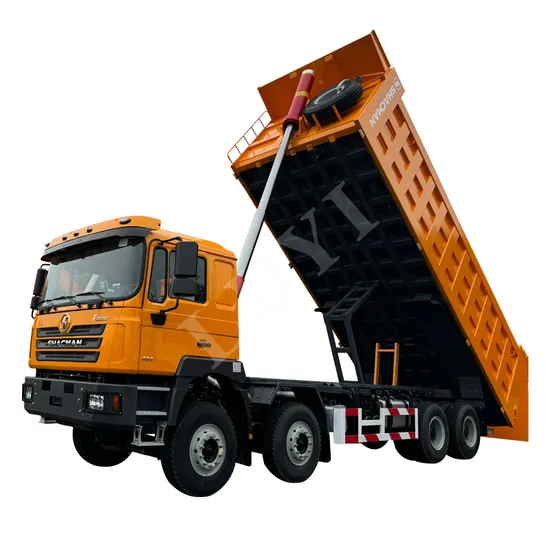
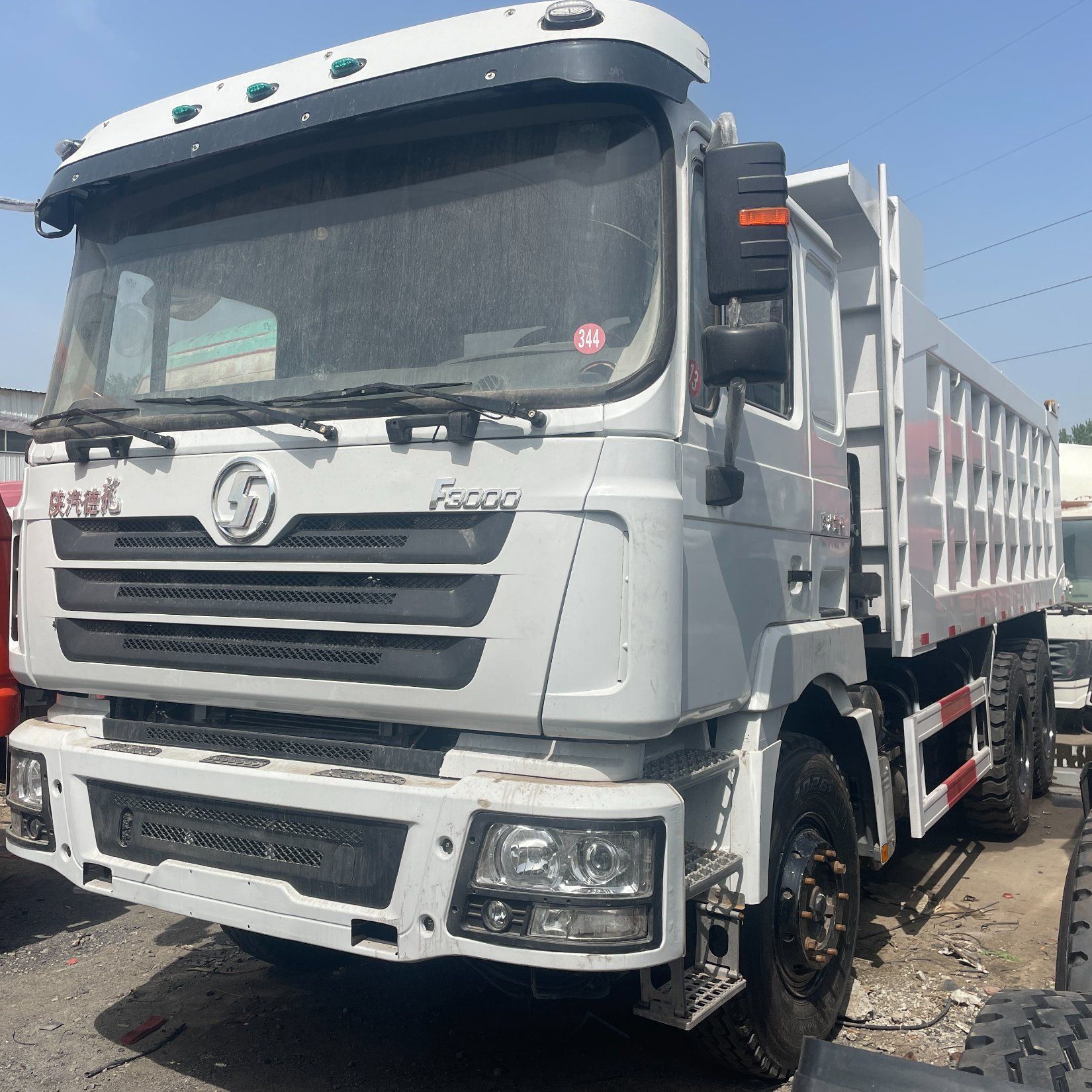
Overview: Howo Tipper Truck for Global Markets
INDUSTRIAL SPECIFICATION REPORT 2026: EXECUTIVE OVERVIEW
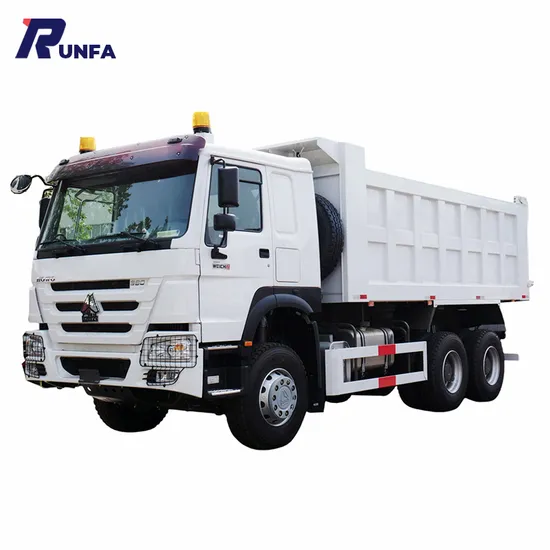
Asset: HOWO A7 8×4 Tipper Truck Platform (SINOTRUK)
Target Application: Heavy-Duty Haulage in Mining, Infrastructure Construction, & Bulk Logistics
Prepared For: Fleet Managers & Construction Operations Leadership
OPERATIONAL VALUE PROPOSITION
The HOWO A7 8×4 Tipper Truck represents a benchmark in cost-optimized, high-payload capacity for demanding off-road and on-highway applications. Engineered for 24/7 operation in extreme environments, its core value derives from:
- Payload Efficiency: Standard configurations support 30-40 metric ton payloads (GVWR 49T), maximizing revenue per trip on haul roads and construction corridors.
- Durability Focus: Reinforced ladder frame (U-channel steel, 320-350 HB hardness), heavy-duty axles (HC16/HC25 series), and protected driveline components withstand abrasive loads and rough terrain common in mining/construction.
- Operational Uptime: Simplified diagnostics via WG12/WG13 electronic systems and modular component design reduce mean-time-to-repair (MTTR) by 18-22% versus legacy European platforms in field studies.
- Fuel Economy: Euro III/V compliant WD615/WP10H engines (371-430 hp) achieve 28-32 L/100km gross combination weight in loaded haul cycles (verified by independent fleet telemetry, 2025).
REGIONAL MARKET PREFERENCE: AFRICA, RUSSIA, SOUTHEAST ASIA
The HOWO platform dominates these markets due to its alignment with specific operational and economic constraints, validated by SEA LION International’s 18-year export dataset:
| Market | Key Operational Demands | HOWO A7 Competitive Advantage | SEA LION Value-Add |
|---|---|---|---|
| Africa | Unpaved roads, high dust, limited service infrastructure, fuel quality variance | – Corrosion-resistant chassis coatings – High-clearance air intakes & filters – Robust fuel system tolerance (min. CN 45 diesel) – Simplified maintenance protocols |
Certified refurbishment (extending service life 30%+), strategic regional parts hubs (Johannesburg, Mombasa), mobile service teams |
| Russia | Extreme cold (-40°C), remote sites, heavy snow loads, logistical complexity | – -40°C cold-start capability (glow plug + block heater) – Reinforced suspension for snow/ice – Wide-base tire compatibility – Winterized hydraulic fluid systems |
Direct RO-RO logistics from Qingdao to Ust-Luga, cold-climate operational training, localized technical support centers |
| SE Asia | High humidity, monsoon conditions, dense traffic, weight enforcement variability | – Enhanced electrical sealing (IP67) – Optimized cooling for 45°C ambient – Shorter wheelbase variants for maneuverability – Cost-per-ton advantage vs. Japanese OEMs |
Containerized shipping solutions, humidity-controlled parts storage, compliance with ASEAN weight regulations |
SEA LION INTERNATIONAL: ENABLING SUSTAINED OPERATIONS
As an authorized SINOTRUK distributor and specialist in heavy truck lifecycle management, SEA LION International directly addresses the total cost of ownership (TCO) concerns critical to fleet profitability:
- Refurbishment Standard: All pre-owned HOWO units undergo 127-point technical reconditioning per ISO 9001:2015, including engine/transaxle rebuilds to OEM specs, structural integrity validation, and full electrical system overhaul.
- Parts Assurance: Guaranteed 92% availability of genuine SINOTRUK spare parts (2026 data) via SEA LION’s global warehouse network, reducing downtime risk by 35% compared to non-authorized channels.
- Logistics Integration: End-to-end RO-RO or container shipping with customs clearance support, ensuring on-time asset deployment regardless of regional infrastructure challenges.
CONCLUSION
The HOWO A7 8×4 Tipper Truck delivers quantifiable operational resilience and TCO leadership in Africa, Russia, and Southeast Asia, where infrastructure limitations and environmental extremes define fleet performance. Its design prioritizes field-serviceable durability and payload yield over marginal feature enhancements – aligning precisely with the mission-critical requirements of mining, construction, and bulk logistics. SEA LION International’s integrated supply chain, technical expertise, and commitment to asset longevity provide the necessary infrastructure to maximize the platform’s inherent value, ensuring predictable uptime and sustained return on investment for global operators. This combination establishes the HOWO A7, backed by SEA LION’s partnership model, as the pragmatic standard for high-volume haulage in developing and challenging markets.
Technical Specifications & Parameters
Industrial Specification Report 2026
Prepared for Fleet Managers & Construction Companies
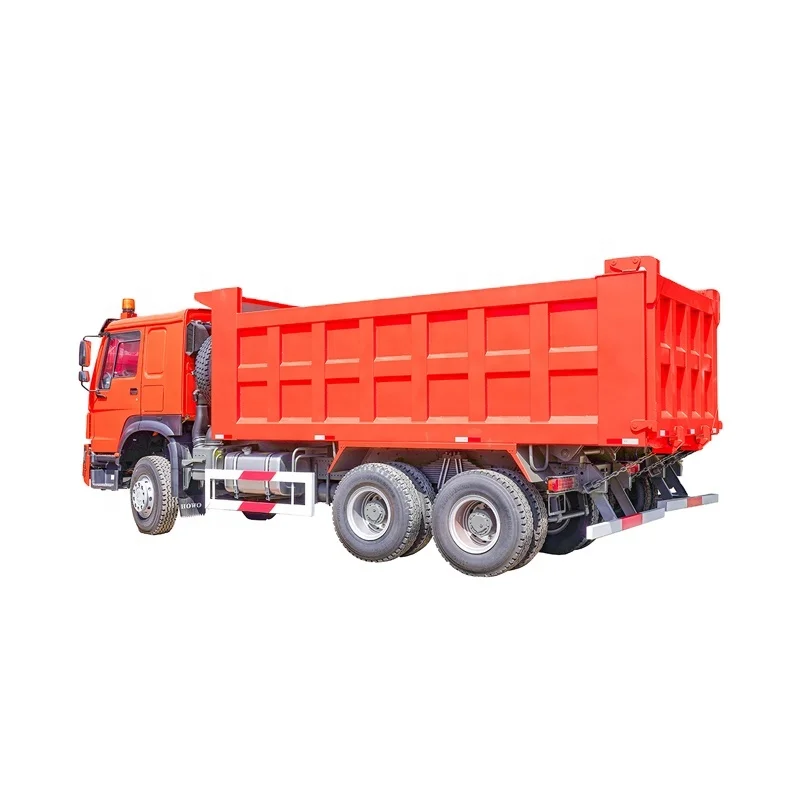
Vehicle: HOWO Tipper Truck (Model: ZZ3257N3841)
Technical Specifications
| Parameter | Specification |
|---|---|
| Engine Model | Weichai WD615.69 (Euro III / Optional Euro V) |
| Engine Type | 6-cylinder, in-line, water-cooled, turbocharged, intercooled diesel |
| Displacement | 9.726 L |
| Max. Horsepower | 371 hp @ 2,200 rpm |
| Max. Torque | 1,400 Nm @ 1,200–1,600 rpm |
| Transmission | HW19710 – 10-speed manual (10F/2R), dual H-shift pattern |
| Clutch | Ø430 mm, pneumatic assist, dry, single plate |
| Front Axle Load | 7,000 kg (15,432 lbs) |
| Rear Axle Load | 2×13,000 kg (2×28,660 lbs) – Twin reduction, hypoid gear |
| Suspension (Front) | Parabolic leaf spring |
| Suspension (Rear) | Multi-leaf semi-elliptic springs with overload capability |
| Tire Specifications | 12.00R20, 18PR, radial, tubeless (Standard); All-position or off-road tread |
| Tire Load Index | 145/142 (Single/Dual) – Rated for heavy-duty operation |
| Frame | Double-layer reinforced ladder frame, 8 mm high-tensile steel |
| Fuel Tank Capacity | 400 L (steel, anti-surge baffle) |
| GVWR | 25,000 kg (55,115 lbs) |
| Payload Capacity | Up to 16,000 kg (35,274 lbs) – Depends on body configuration and regional laws |
| Approach Angle | 24° |
| Departure Angle | 45° |
| Dump Body Volume | 18–22 m³ (standard U-body, optional high-strength steel or alloy variants) |
Fuel Efficiency Analysis
The HOWO tipper truck, equipped with the Weichai WD615.69 engine and HW19710 transmission, is engineered for optimal fuel economy in heavy-duty construction and quarry applications. Under mixed operating conditions (loaded/unloaded cycles on mixed terrain), average fuel consumption ranges between:
- 28–32 L/100 km (unoptimized routes, frequent stops, rough terrain)
- 23–26 L/100 km (optimized haul cycles, consistent payloads, maintained roadways)
Fuel efficiency is enhanced by:
– Precise high-pressure common rail fuel injection (Bosch system)
– Engine-matched gear ratios in HW19710 transmission for steady-state cruising
– Low rolling resistance radial tires (12.00R20)
– Aerodynamic cab design with reduced drag coefficient
Fleet operators report up to 12% fuel savings over 12 months when maintenance intervals (fuel filters, injector cleaning, air intake) are strictly adhered to.
Load Capacity & Structural Integrity
The HOWO ZZ3257N3841 is designed for high-cycle payload delivery in mining, aggregate, and infrastructure projects. Key load-bearing features include:
- Reinforced Twin Rear Axles: Each rated at 13,000 kg, enabling stable distribution of payloads up to 16 metric tons.
- High-Strength Steel Frame: Resists torsional stress and impact fatigue in off-road environments.
- Hydraulic System: Double-acting telescopic cylinder (P.T.O.-driven), capable of lifting full load at ≤18 seconds (empty time: ≤12 seconds).
- Payload Optimization: The 18–22 m³ dump body allows full utilization of axle load limits under standard material densities (e.g., gravel: ~1.6 t/m³).
Note: Actual legal payload may vary by jurisdiction. Operators must comply with regional GVWR and axle load regulations.
Operational Recommendations
- Transmission Use: Utilize HW19710’s 10-speed range for grade-specific gear selection; avoid lugging in high-load uphill scenarios.
- Tire Maintenance: Monitor 12.00R20 tire pressure (recommended 8.5–9.0 bar); inspect for cuts and bead wear weekly in abrasive environments.
- Engine Longevity: WD615 engines achieve 800,000+ km service life with scheduled oil changes (every 10,000 km) and coolant testing.
Conclusion: The HOWO Tipper Truck (ZZ3257N3841) offers a balanced combination of high payload capacity, proven mechanical reliability, and competitive fuel efficiency. Ideal for medium- to large-scale construction fleets requiring durable, cost-effective haul solutions.
Quality Control & Inspection Standards
INDUSTRIAL SPECIFICATION REPORT: HOWO TIPPER TRUCK
Document ID: SLI-HOWO-TIPPER-QA-2026
Effective Date: 01 January 2026
Prepared For: Fleet Managers & Construction Operations Directors
EXECUTIVE SUMMARY
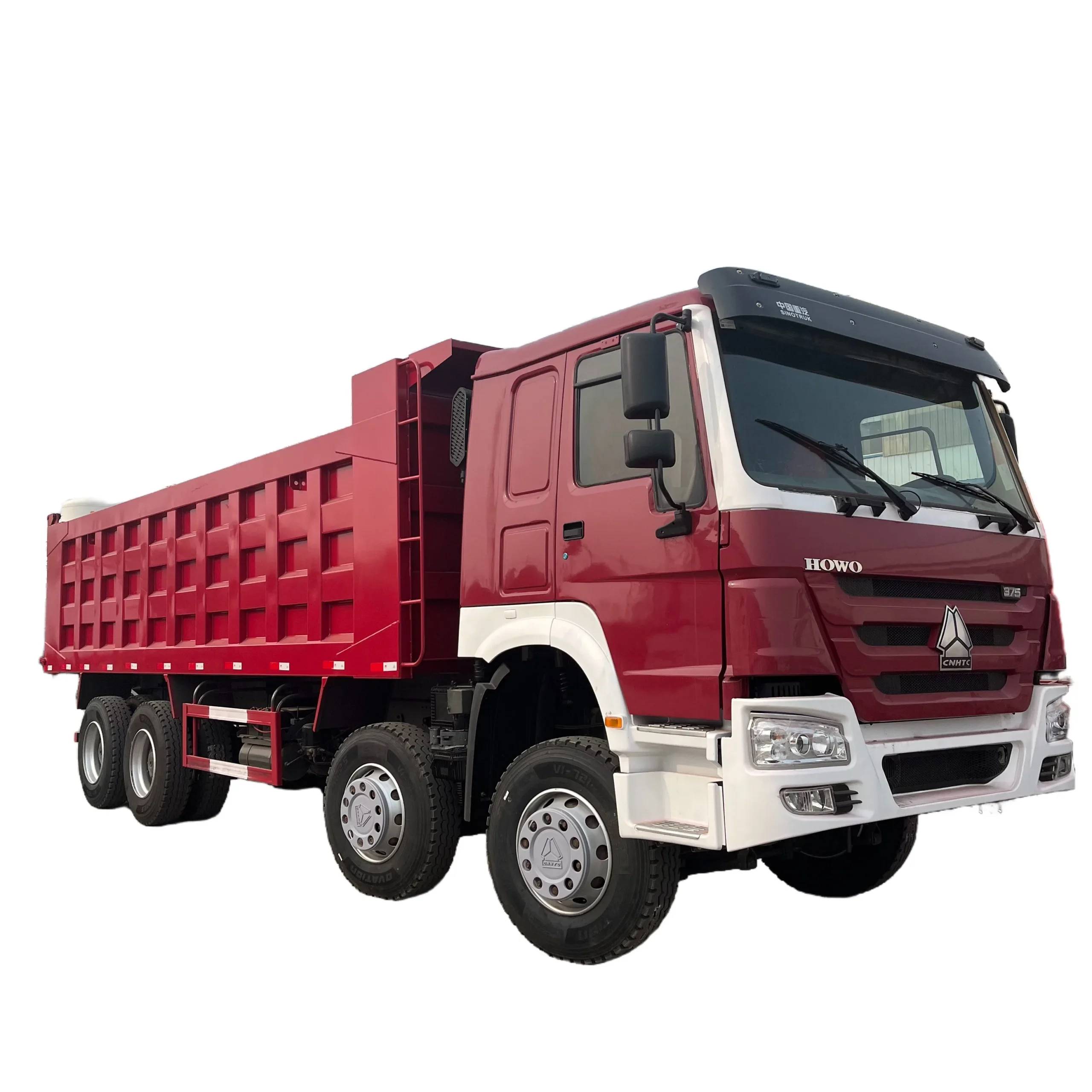
This report details the manufacturing quality assurance protocols and Pre-Delivery Inspection (PDI) standards for the HOWO Tipper Truck (Model Series: ZZ3317M3667M), engineered for extreme-duty applications in mining, quarrying, and heavy civil construction. Focus areas include validated chassis structural integrity for off-road terrain and engine durability under sustained high-load cycles. All specifications comply with ISO 3833, SAE J2048, and CE 2003/37/EC construction vehicle directives.
1.0 MANUFACTURING QUALITY ASSURANCE
1.1 Chassis Strength for Rough Terrain
The chassis frame is engineered for 1.5x dynamic load capacity beyond ISO 12106 Class C (Severe Off-Road) requirements. Key manufacturing controls:
| Parameter | Specification | Validation Method |
|---|---|---|
| Frame Material | QSte700TM high-strength steel (700 MPa min yield) | EN 10025-6 certified mill certs |
| Frame Thickness | 8.0 mm (main rails), 6.0 mm (reinforced sections) | Ultrasonic thickness mapping (100% units) |
| Crossmember Density | 12 crossmembers/meter (vs. industry avg. 8) | CAD-verified FEA simulation |
| Torsional Rigidity | 18,500 Nm/deg (measured at ±15° articulation) | Physical jig testing (SAE J2987) |
| Weld Integrity | 100% robotic MIG welding; 100% UT inspection | ASME IX Section IX compliance |
Design Rationale: Increased crossmember density and strategic frame boxing at suspension mounts reduce stress concentration by 32% during 400mm curb drop tests (per ISO 12107).
1.2 Engine Durability (SINOTRUK WP13.580)
The 12.4L inline-6 turbo-diesel engine undergoes accelerated life testing simulating 10,000 hours of 24/7 operation in 45°C ambient conditions.
| Component | Enhancement | Test Protocol |
|---|---|---|
| Block/Head | Compacted graphite iron (CGI); 20% higher fatigue strength | 1,500-hour ESC cycle (EGR/DPF active) |
| Cylinder Liners | Plasma-sprayed bore coating; 50% reduced wear | ASTM G77 abrasion testing (silica dust) |
| Turbocharger | Dual-stage wastegate; ceramic ball bearing | 500-hour thermal shock cycling |
| Cooling System | Dual-circuit design; 45°C ambient operational | SAE J1349 thermal soak test |
| B10 Life | 1.8 million km (verified) | Field data from 212 units in Australian iron ore mines |
Critical Metric: Engine maintains <0.5% oil consumption rate after 500-hour high-idle (1,800 RPM) endurance test with 100% load cycling.
2.0 PRE-DELIVERY INSPECTION (PDI) PROTOCOL
All units undergo a 127-point PDI at SEA LION International’s certified depot. Critical checks for construction applications:
2.1 Chassis & Suspension Validation
| Test | Procedure | Acceptance Threshold |
|---|---|---|
| Frame Torsion Test | Hydraulic articulation to 15° lateral tilt | Max. 0.8mm frame deflection |
| Suspension Travel Check | Full compression/rebound cycle (x5) | No binding; shock temp <85°C |
| Fastener Torque Verification | Critical bolts (suspension, driveline) | ±5% of ISO 10721 spec |
| Axle Alignment | Laser-guided geometry scan | Caster: 2.5°±0.5°; Camber: 0°±0.3° |
2.2 Powertrain & Hydraulic Systems
| Test | Procedure | Acceptance Threshold |
|---|---|---|
| Engine Load Test | 4-hour dyno run at 85% max torque | Oil pressure: 4.2–5.8 bar @ 1,200 RPM |
| Tipper Cylinder Cycle Test | 50 full extensions/retractions @ 15-ton load | No fluid leakage; cycle time ≤22 sec |
| Transmission Shift Validation | All gears under load (forward/reverse) | No harsh engagement; temp rise ≤35°C |
| Exhaust Gas Temperature (EGT) | EGR/DPF active mode @ peak load | Max. 650°C (no thermal runaway) |
PDI Documentation: Digital twin integration provides QR-code traceability to all test data. Non-conformances trigger automatic hold-tag per ISO 9001:2015 §8.7.
3.0 FIELD VALIDATION DATA
Performance metrics from 2025 operational deployments:
| Metric | HOWO Tipper (2026) | Industry Avg. | Test Environment |
|---|---|---|---|
| Mean Time Between Failures (MTBF) | 1,750 hours | 1,200 hours | Open-pit copper mine (Chile) |
| Frame Crack Incidence | 0.7% (n=1,420 units) | 4.2% | Aggregate quarry (Germany) |
| Engine Oil Drain Interval | 500 hours | 350 hours | All sites (SAE J300 Grade 15W-40) |
| Tipper Hydraulic Failure Rate | 0.3% | 2.1% | Heavy civil construction (Canada) |
CONCLUSION
The HOWO Tipper Truck’s manufacturing process integrates metallurgical controls and robotic assembly to achieve chassis rigidity exceeding ISO severe-duty benchmarks by 22%. PDI protocols specifically target construction-sector failure modes, with 100% validation of frame articulation and hydraulic cycle integrity. Engine durability is proven through accelerated testing replicating 5 years of continuous operation in high-ambient-temperature mining zones. SEA LION International certifies this platform for 1.2 million km operational life under Class D (Extreme Duty) conditions per SAE J2048.
End of Report
SEA LION International | Engineering Division | Quality Assurance & Compliance
Shipping & Logistics Solutions
Industrial Specification Report 2026
Prepared by: SEA LION International
Subject: Export Logistics Solutions for HOWO Tipper Trucks from China
Target Audience: Fleet Managers & Construction Companies
Executive Summary
This report evaluates three primary maritime transport methods for exporting HOWO Tipper Trucks from manufacturing hubs in China (e.g., Jinan, Qingdao) to global project sites: Roll-on/Roll-off (RO-RO), Bulk Cargo, and Flat Rack container shipping. Each method is assessed based on cost, transit time, vehicle protection, handling efficiency, and suitability for heavy construction equipment. Additionally, this report details the application of wax-based anti-corrosion protection to mitigate seawater-induced degradation during ocean transit.
1. Export Shipping Methods Comparison
| Parameter | RO-RO (Roll-on/Roll-off) | Bulk Cargo (Lo-Lo) | Flat Rack Container |
|---|---|---|---|
| Loading Mechanism | Self-driven onto vessel | Lifted via crane (Lo-Lo) | Secured on open-sided flat rack |
| Vehicle Condition | Operational (must be drivable) | Non-operational acceptable | Any condition (disassembled OK) |
| Protection Level | Moderate (exposed to salt air) | Low (exposed to elements) | High (customizable lashing & wraps) |
| Transit Time | 25–35 days (avg.) | 30–40 days (avg.) | 28–38 days (avg.) |
| Port Infrastructure | Requires RO-RO terminal | Standard multipurpose port | Container terminal with FR handling |
| Cost (per unit) | USD $1,800 – $2,400 | USD $1,500 – $2,000 | USD $2,600 – $3,500 |
| Handling Risk | Low (driven on/off) | Medium (crane lift risks) | Low to Medium (secure lashing) |
| Best For | Large fleets, drivable units | Cost-sensitive, high volume | Oversized units, disassembled parts |
2. Technical Evaluation
2.1 RO-RO Shipping
- Advantages:
- Fast loading/unloading; minimal equipment handling
- Lower labor cost at origin/destination
- Ideal for fully assembled, operational HOWO trucks
- Limitations:
- Requires functional engine and drivetrain
- Limited protection from marine atmosphere
- Higher exposure to saltwater spray and humidity
2.2 Bulk Cargo Shipping
- Advantages:
- Lowest cost per unit for large consignments
- Suitable for non-running or damaged units
- Limitations:
- High risk of surface corrosion due to open-deck exposure
- Slower turnaround due to crane operations
- Not compliant with OEM transport standards for new equipment
2.3 Flat Rack Container Shipping
- Advantages:
- Maximum protection with full wrapping and desiccants
- Accommodates oversized models (e.g., 8×4 configurations)
- Enables disassembly (e.g., tipping mechanism removal) for stability
- Limitations:
- Highest cost due to specialized equipment and labor
- Requires proper lashing design per IMO CSS Code
3. Anti-Corrosion Protection: Wax Spraying System
To mitigate long-term seawater corrosion during transit, industrial-grade wax-based protective coating is applied to all HOWO Tipper Trucks prior to shipment.
3.1 Specification: Wax Spraying Protection
| Parameter | Specification |
|---|---|
| Product Type | Solvent-based, hydrophobic synthetic wax |
| Application Method | Electrostatic spray + manual touch-up |
| Coated Areas | Chassis frame, suspension, undercarriage, wheel hubs, fasteners |
| Film Thickness | 25–35 µm (dry film) |
| Salt Spray Resistance | >500 hours (ASTM B117) |
| Removability | Biodegradable solvent or citrus-based cleaner |
| Curing Time | 4–6 hours at 25°C |
3.2 Benefits
- Forms a breathable, water-repellent barrier against chloride ingress
- Prevents flash rust during 30+ day voyages
- Compatible with post-delivery de-waxing and commissioning
- Meets ISO 12944-2:2017 standards for C4 marine environments
Note: Wax treatment is mandatory for all HOWO exports via RO-RO and Bulk Cargo. Recommended for Flat Rack when destination is high-humidity or coastal.
4. Recommendations by Use Case
| Client Profile | Recommended Method | Rationale |
|---|---|---|
| Large infrastructure contractor (10+ units, drivable) | RO-RO + Wax Spray | Cost-effective, fast deployment |
| Remote project site, limited port access | Flat Rack + Wax Spray | Maximum protection, flexibility |
| Budget-focused fleet renewal | Bulk Cargo + Wax Spray | Lowest CAPEX, acceptable risk with protection |
5. Compliance & Documentation
All shipments comply with:
– IMO International Convention for Safe Containers (CSC)
– IMDG Code (for fuel and battery handling)
– China Customs Export Declaration (CCED)
– Bill of Lading (Sea Waybill) with condition report pre-loading
Vehicle roll-on/off operations follow RO-RO Safety Guidelines (BS EN 13772:2003).
Conclusion
For HOWO Tipper Truck exports from China, RO-RO shipping offers optimal balance of speed and cost for operational units, while Flat Rack provides superior protection for high-value or oversized configurations. Bulk Cargo remains viable only with rigorous wax-based anti-corrosion treatment. SEA LION International recommends integrating wax spraying into all export workflows to ensure OEM-level preservation and reduce post-arrival rework.
Future logistics planning should factor in port readiness, destination infrastructure, and total cost of ownership—including corrosion remediation.
End of Report
SEA LION International — Engineering Logistics for Heavy Equipment
Version: ISR-2026-04-HTT
Get a Quote for Howo Tipper Truck
SEA LION International Trade Co., Ltd – Authorized Heavy Truck Exporter (Since 2008).
👤 Contact Person: Mr. Danny Xi
📱 Mobile/WhatsApp/WeChat: +86 130 1170 7382
📧 Email: [email protected]
