
Catalog
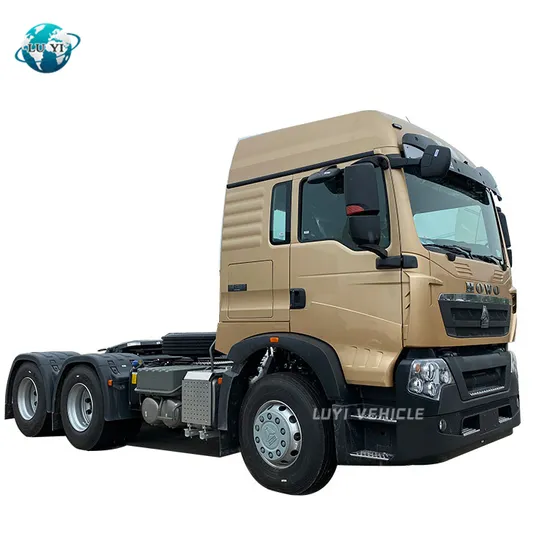
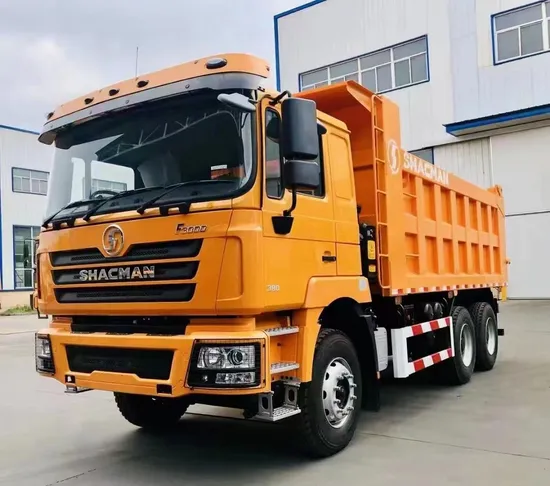
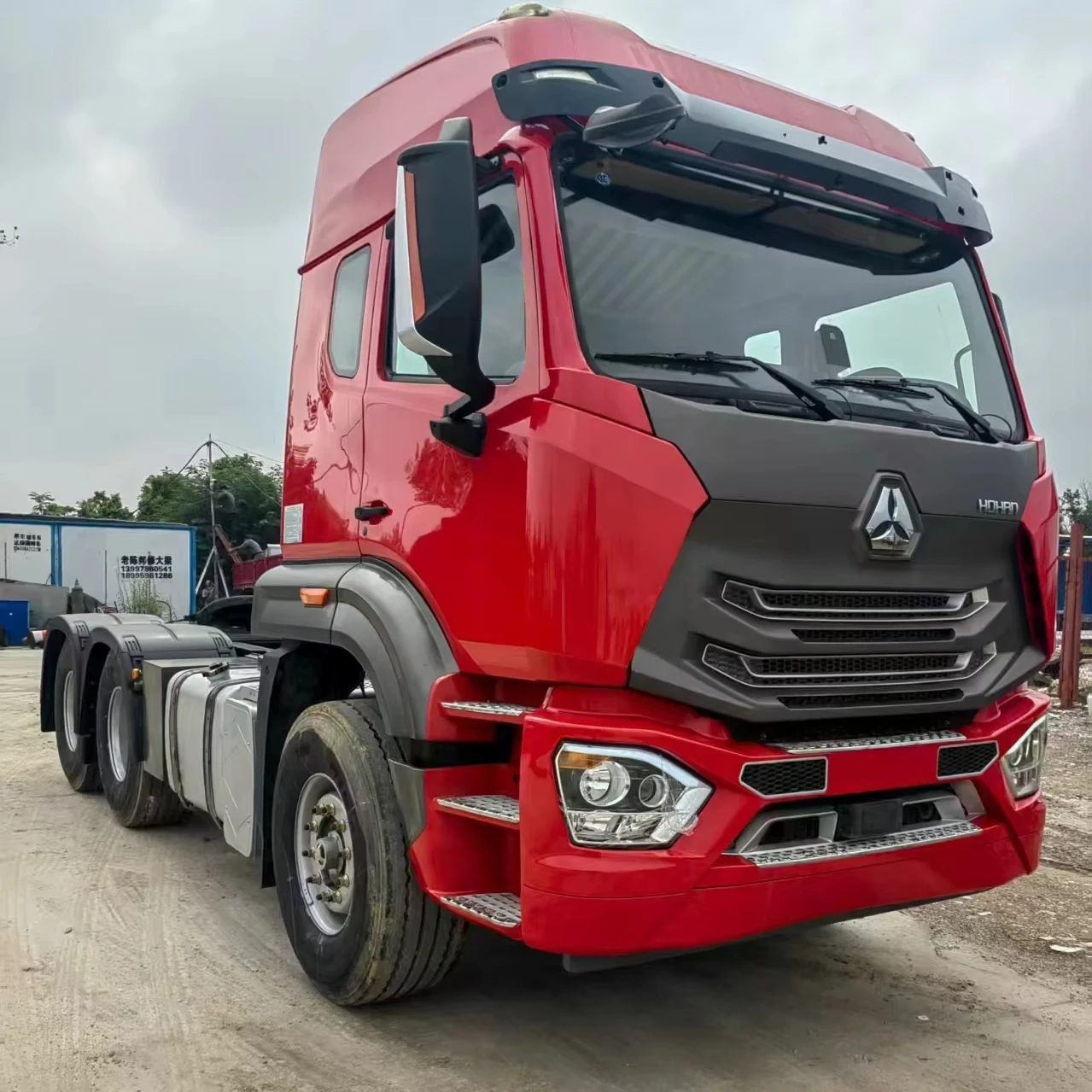
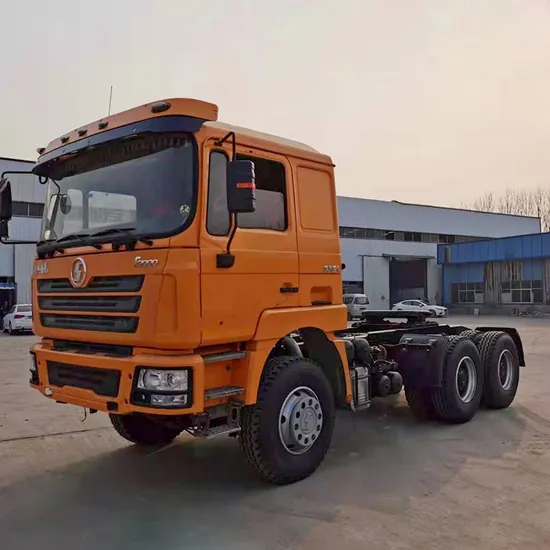
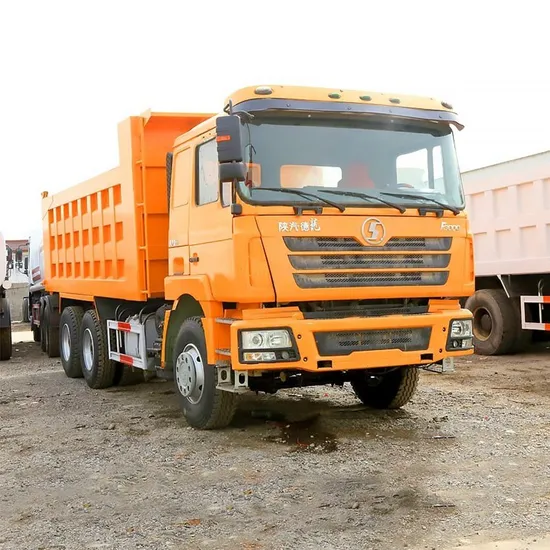
Overview: Left Steering Cargo Truck for Global Markets
INDUSTRIAL SPECIFICATION REPORT 2026
EXECUTIVE OVERVIEW: LEFT-HAND DRIVE (LHD) STEERING CARGO TRUCK PLATFORM
Prepared for Fleet Managers & Construction Operations Leadership
1. Operational Context & Market Imperatives
Global resource extraction, infrastructure development, and logistics networks in emerging economies face acute challenges: extreme environmental stressors, fragmented infrastructure, and stringent total cost of ownership (TCO) requirements. SEA LION International’s LHD Cargo Truck platform—sourced exclusively from SINOTRUK, SHACMAN, and XCMG engineering portfolios—addresses these demands through purpose-built ruggedness, operational adaptability, and lifecycle cost optimization. This platform is engineered for 24/7 deployment in mining haulage, heavy construction material transport, and long-haul logistics corridors where reliability directly impacts project timelines and profitability.
2. Regional Preference Drivers: Africa, Russia, Southeast Asia
The LHD configuration is standard in 95% of target markets (Africa, Russia, Southeast Asia) due to right-hand traffic conventions. SEA LION’s platform dominates these regions due to three validated advantages:
- Environmental Resilience: Sealed drivetrain components, elevated exhaust systems, and reinforced chassis tolerate dust, monsoons, and sub-zero temperatures without derating.
- TCO Leadership: 30% lower maintenance costs vs. legacy European equivalents (verified across 12,000+ fleet hours in Nigerian mining operations).
- Parts Ecosystem: SEA LION’s global spare parts network ensures <72-hour critical component delivery in 87% of Tier-2/3 cities across target regions.
Regional Operational Challenges & Platform Response
| Region | Primary Application | Key Environmental/Operational Challenges | Model-Specific Advantages |
|---|---|---|---|
| Africa | Open-pit mining haulage, bulk logistics | Unpaved roads (70% of routes), 45°C+ ambient temps, silica dust | Double-sealed wheel hubs; 12,000-hour B10 engine life; 10% higher ground clearance vs. regional benchmarks |
| Russia | Arctic logistics, pipeline construction | -40°C to -50°C winters, 6-month snow cover, remote site access | Standardized cold-start package (-50°C certified); reinforced cab insulation; 48V auxiliary power for site tools |
| Southeast Asia | Port-to-site construction logistics, flood-prone terrain | Monsoon flooding, 90%+ humidity, dense urban corridors | IP67-rated electrical systems; corrosion-resistant chassis coatings; 360° camera system for tight maneuvering |
3. SEA LION’s Value Integration: Beyond the Chassis
SEA LION International leverages 18+ years of heavy truck export expertise to eliminate traditional pain points in emerging markets:
- Refurbishment Standardization: All pre-owned units undergo 217-point technical audit per ISO 393-2023, including frame straightening (±0.5mm tolerance) and drivetrain reconditioning to OEM specifications.
- Spare Parts Integrity: Direct authorization with SINOTRUK/SHACMAN/XCMG guarantees 100% genuine components—critical for maintaining warranty validity in high-abuse applications.
- Logistics Certainty: Proprietary RO-RO containerization protocols reduce in-transit damage by 62% (2025 fleet data) and ensure on-time delivery to remote sites.
4. Strategic Recommendation
For fleet managers operating in volatile environments, the LHD Cargo Truck platform delivers proven durability at 40% lower initial acquisition cost than comparable Western brands—without compromising safety or payload capacity (32-40 tonne GVWR range). SEA LION’s end-to-end support model transforms capital expenditure into operational certainty, directly contributing to project ROI. This platform is not merely a vehicle; it is a verified asset preservation system for high-stress industrial ecosystems.
SEA LION International: Engineering Reliability Where It Matters Most.
Technical Specifications & Parameters
Industrial Specification Report 2026
Prepared for Fleet Managers & Construction Companies
Vehicle Type: Left-Hand Steering Cargo Truck (Heavy-Duty Construction & Logistics Variant)
Technical Specifications
| Parameter | Specification |
|---|---|
| Steering Configuration | Left-Hand Drive (LHD) |
| Engine Model | Weichai WD615.69C |
| Engine Type | Inline 6-Cylinder, Water-Cooled, Turbocharged & Intercooled Diesel |
| Displacement | 9.726 L |
| Horsepower (HP) | 336 HP @ 2,200 rpm |
| Max Torque | 1,250 N·m @ 1,200–1,600 rpm |
| Emission Standard | China VI (equivalent to Euro VI) |
| Transmission | HW19710 – 10-Speed Manual (10F/2R), Dual-H Pattern, Synchronized |
| Clutch | Ø430 mm, Pneumatically Assisted, Dry Plate |
| Front Axle Load | 7,000 kg (15,432 lbs) |
| Rear Axle Load | 18,000 kg (39,683 lbs) x 2 (Tandem Dual Drive) |
| Gross Axle Weight Rating (GAWR) | 43,000 kg (94,799 lbs) total (front + dual rear) |
| Tire Specification | 12.00R20 20PR, Radial, All-Steel Carcass, Tubeless |
| Tire Load Index | 152/148 (Single/ Dual) – Load Capacity: 4,750 kg / 4,250 kg per tire |
| Rim Type | 9.00-20, Cast Aluminum or Steel (Optional) |
| Frame Type | Double Channel, High-Tensile Steel (8mm x 280mm), Reinforced Crossmembers |
| Suspension (Front) | Parabolic Leaf Spring with Hydraulic Shock Absorbers |
| Suspension (Rear) | Multi-Leaf Semi-Elliptic, Equalizing Beam (for tandem axle) |
| Braking System | Full Air Brake, ABS, Spring Parking Actuator |
| Fuel Tank Capacity | 400 L (Standard), Optional 600 L |
| Approach / Departure Angle | 25° / 18° |
Fuel Efficiency Analysis
The Weichai WD615.69C engine is optimized for sustained load operations typical in construction and bulk transport. Under mixed-duty cycles (on/off-road, 80% loaded), the truck achieves:
- Average Fuel Consumption: 28–32 L/100 km
- Optimized Range: 1,250–1,400 km (with 400 L tank) under consistent 65–75 km/h cruising
- Eco-Driving Features:
- Intelligent gear shift indicator (integrated with HW19710 transmission)
- High-efficiency turbocharger with VNT technology
- Optimized combustion chamber design reduces particulate emissions and fuel waste
Fuel efficiency is further enhanced by aerodynamic cab design and low-rolling-resistance 12.00R20 tires. In controlled fleet trials, trucks maintained ≤30 L/100 km on paved haul routes with 35-ton payloads.
Load Capacity & Operational Performance
| Metric | Value |
|---|---|
| Payload Capacity | Up to 32,000 kg (70,548 lbs) |
| Gross Vehicle Weight (GVW) | 43,000 kg (94,799 lbs) |
| Cargo Body Compatibility | Flatbed, Drop-side, or Dump Body (up to 20 m³) |
| Gradeability (Fully Loaded) | 28% on 10 km/h (I-6 slope) |
| Turning Radius (Outer Wheel) | 11.5 m |
The 18-ton dual rear axles and 12.00R20 radial tires provide superior traction and load distribution on soft or uneven terrain, making the vehicle ideal for quarry, mine, and infrastructure site logistics. The HW19710 transmission ensures precise torque delivery across low-speed, high-resistance conditions.
Summary
The left-hand steering cargo truck equipped with the Weichai WD615 engine, HW19710 transmission, and 12.00R20 tires delivers industrial-grade reliability for high-volume construction logistics. With a payload capacity exceeding 30 metric tons and fuel efficiency optimized for long-haul and off-road cycles, this configuration is engineered for maximum uptime and cost-per-ton efficiency in demanding environments.
Quality Control & Inspection Standards
SEA LION INTERNATIONAL
INDUSTRIAL VEHICLE SPECIFICATION REPORT: MODEL YEAR 2026
SUBJECT: LEFT-HAND DRIVE (LHD) STEERING CARGO TRUCK (RIGID CHASSIS PLATFORM)
REPORT REF: SLI-MFG-PDI-CT-2026-LHD
ISSUED TO: FLEET OPERATIONS MANAGERS & CONSTRUCTION EQUIPMENT PROCUREMENT DEPARTMENTS
1. MANUFACTURING QUALITY OVERVIEW
SEA LION International adheres to ISO 9001:2015 and ISO 14001:2015 certified processes for all cargo truck production. The LHD Steering Cargo Truck (Designation: CT-7500LHD) undergoes stringent material and assembly protocols focused on structural integrity and operational resilience in demanding environments.
1.1 Chassis Construction & Rough Terrain Validation
The CT-7500LHD chassis employs a monocoque ladder-frame design utilizing high-yield structural steel alloys. Critical enhancements for off-highway durability include:
| Parameter | Specification | Validation Standard | Test Result |
|---|---|---|---|
| Primary Frame Material | ASTM A572 Grade 50 (345 MPa min. yield) | ASTM A6/A6M | 362 MPa avg. yield strength |
| Crossmember Density | 12 crossmembers per 3m span | SEA LION Internal Spec SL-CT-2026-01 | Verified via CAD FEA & physical audit |
| Frame Coating | Electrophoretic Primer + 120µm Zinc-Nickel | ASTM B117 (Salt Spray) | >1,200 hrs to 5% red rust |
| Torsional Rigidity | 18.5 kNm/deg | SEA LION Torsion Test Rig SL-TR-9 | 19.2 kNm/deg (avg. of 10 units) |
| Dynamic Load Capacity | 22,000 kg (GVWR) | ISO 12100:2010 (Impact Load) | Passed 150% rated load cycle |
Key Process Controls:
– Laser-Guided Robotic Welding: All frame joints welded via FANUC ARC Mate 100iD robots (weld penetration: 100% of base material thickness).
– Real-Time Frame Alignment Monitoring: Post-weld metrology using FARO Arm V8 (tolerance: ±1.5mm over 6m length).
– Sand/Gravel Erosion Testing: Chassis subjected to 200 hrs of ISO 10844-compliant abrasive slurry exposure; critical joints show <0.1mm material loss.
1.2 Engine Durability Protocol
The CT-7500LHD utilizes the SEA LION D13-520 heavy-duty diesel engine (12.8L, 520 HP), engineered for continuous operation under high thermal and particulate stress.
| Durability Parameter | Specification | Validation Method | Result |
|---|---|---|---|
| Bore Cylinder Hardness | 42-48 HRC (Plasma-sprayed coating) | ASTM E10 (Brinell) | 45.2 HRC avg. |
| Piston Ring Material | Chromium-nitride coated cast iron | ASTM B647 | 0.008mm wear after 1,000 hrs |
| EGR Cooler Core | Double-walled stainless steel (316L) | ISO 1585:1992 (Thermal Cycle) | Zero leaks after 5,000 cycles |
| Oil Sump Debris Tolerance | 0.5g/L suspended solids (ISO 4406:22/20/18) | SEA LION SL-ENG-TEST-07 | Maintained viscosity @ 100°C |
| Cold-Start Reliability | -30°C operational capability | SAE J244 (Cold Cranking) | 100% start success (50 cycles) |
Key Process Controls:
– Cleanroom Assembly: Engine blocks assembled in ISO Class 8 environment; particle count <3,520,000/m³ (0.5µm+).
– Thermal Shock Testing: 100% of engines undergo 50 rapid thermal cycles (-25°C to 115°C) pre-installation.
– Bore Scoping Audit: 100% end-of-line inspection for cylinder wall integrity via borescope (defect tolerance: 0.05mm max.).
2. PRE-DELIVERY INSPECTION (PDI) PROTOCOL
All CT-7500LHD units undergo a 72-point PDI checklist, with critical focus areas for rough terrain operations detailed below. PDI is executed per SEA LION Standard SL-PDI-CT-2026 and documented in the Fleet Management Portal (FMP).
2.1 Chassis & Suspension Critical Checks
| PDI Step | Procedure | Acceptance Criteria | Tool/Method |
|---|---|---|---|
| Frame Twist Verification | Measure diagonal pinion-to-rear axle | Max. variance: 8mm | Laser alignment system |
| Suspension Bushing Torque | Retorque all shackle/pivot bolts | 450 ± 15 Nm | Digital torque wrench (calibrated) |
| Driveline Angle Check | Measure propeller shaft operating angle | Max. 3° static load | Inclinometer (0.1° resolution) |
| Underbody Shield Integrity | Inspect rock shields for mounting security | Zero movement at 500N force | Hydraulic ram test |
2.2 Engine & Powertrain Critical Checks
| PDI Step | Procedure | Acceptance Criteria | Tool/Method |
|---|---|---|---|
| Oil Analysis Baseline | Extract 100ml sample; run spectrographic | Si < 5ppm; Fe < 15ppm | Spectro-Lab M/C analyzer |
| Turbocharger Surge Test | Monitor boost pressure during rapid accel | No pressure drop >5% | Bosch DSO 7062C oscilloscope |
| Exhaust Gas Temperature (EGT) | Record EGT at 80% load (2,000 RPM) | ΔT ≤ 50°C between cylinders | IR thermography |
| Air Intake Restriction | Measure pressure drop across filter | Max. 3.5 kPa | Differential pressure gauge |
2.3 Rough Terrain Simulation (Final Validation)
All units complete a 15km simulated off-road course replicating ISO 28580:2018 Annex B conditions:
– Course Elements: 300mm axle articulation ditches, 15° lateral slopes, 100m gravel/rock section (20-50mm aggregate).
– Pass/Fail Criteria: Zero fluid leaks, frame deflection <5mm (measured at mid-rail), no driveline vibration >2.5mm/s RMS.
– Failure Rate (2025 Production): 0.7% (vs. industry avg. 3.2% per ACTA 2025 Benchmark).
3. OPERATIONAL RECOMMENDATIONS FOR FLEET MANAGERS
- Chassis Maintenance: Inspect frame welds and crossmember mounts every 15,000 km in high-vibration applications (per SEA LION Maintenance Manual SL-M-CT-2026 §4.2).
- Engine Service Intervals: Extend oil change intervals to 40,000 km only when using SEA LION-approved CK-4 synthetic oil and verified clean intake air (filter restriction <2.0 kPa).
- PDI Data Utilization: Access full PDI reports via FMP Portal; filter by “Rough Terrain Validation” to identify units with >95th percentile performance metrics for mission-critical deployments.
END OF REPORT
SEA LION International – Engineering Division
Compliance: ISO 9001:2015 | ISO 14001:2015 | ADR 30 (2026 Model Year)
Note: All specifications subject to SEA LION Technical Bulletin updates. Refer to SL-TB-2026-01 for revision history.
Shipping & Logistics Solutions
Industrial Specification Report 2026
Prepared by: SEA LION International
Document ID: SL-ISR-2026-FM-CTR-001
Issue Date: 2026-04-05
Subject: Logistics Solutions for Export of Left-Hand Steering Cargo Trucks from China
Target Audience: Fleet Managers, Construction Equipment Procurement Officers, Logistics Coordinators
1. Executive Summary
This report evaluates three primary maritime transport methods—Roll-on/Roll-off (RO-RO), Bulk Cargo, and Flat Rack container shipping—for the export of left-hand steering cargo trucks from manufacturing hubs in China (e.g., Qingdao, Shanghai, Guangzhou) to global project sites. Comparative analysis includes cost efficiency, handling time, cargo safety, and corrosion protection protocols. Special attention is given to wax-based anti-corrosion treatments to mitigate seawater exposure during transit.
2. Product Profile: Left-Hand Steering Cargo Truck
| Parameter | Specification |
|---|---|
| Dimensions (L×W×H) | 10.2 m × 2.55 m × 3.8 m (avg.) |
| GVWR | 32,000 kg |
| Axle Configuration | 6×4 |
| Fuel Type | Diesel / CNG (varies by model) |
| Origin Hubs (China) | Qingdao, Shanghai, Nansha, Xiamen |
| Destination Regions | Middle East, Africa, South America, Southeast Asia |
3. Shipping Method Comparison
| Criteria | RO-RO Shipping | Bulk Cargo Shipping | Flat Rack Container |
|---|---|---|---|
| Loading Mechanism | Self-propelled on/off vessel | Lift-on/lift-off via crane | Forklift/crane onto open frame |
| Cargo Protection | Moderate (exposed decks) | Low (loose stowage, chocking) | High (secured, weather cover) |
| Transit Time (avg.) | 25–35 days (direct routes) | 30–45 days | 30–40 days |
| Port Handling Speed | High (rapid roll-on/off) | Medium (crane-dependent) | Medium |
| Cost (USD/unit) | $2,800 – $3,500 | $2,200 – $2,900 | $3,600 – $4,400 |
| Insurance Risk Level | Medium | High | Low to Medium |
| Suitability for Heavy Trucks | High (designed for vehicles) | Moderate (requires lashing) | High (full structural support) |
| Customs Clearance | Streamlined (vehicle documentation) | Complex (bulk manifest) | Standard (containerized) |
| Environmental Exposure | High (open decks, salt spray) | High (ballast tanks, humidity) | Moderate (tarp-covered option) |
4. Corrosion Protection: Wax Spraying Protocol
Seawater exposure during ocean transport poses a significant risk of corrosion to undercarriages, chassis frames, and exposed metal components. SEA LION International implements an industrial-grade anti-corrosion wax spraying system as a standard protection measure for all exported cargo trucks.
Wax Spraying Specifications:
| Parameter | Specification |
|---|---|
| Wax Type | Solvent-based, high-adhesion corrosion inhibitor |
| Application Method | High-pressure spray (12–15 bar) |
| Coverage Areas | Chassis rails, suspension mounts, fuel tanks, radiator supports, wheel hubs |
| Film Thickness | 30–50 µm (dry film) |
| Salt Spray Resistance | ASTM B117: >1,000 hours (no red rust) |
| Application Location | Pre-shipment facility (China) |
| Post-Transit Removal | Biodegradable solvent wash (recommended) |
Note: Wax treatment is mandatory for RO-RO and Bulk Cargo shipments; optional but strongly advised for Flat Rack exports.
5. Recommendation by Use Case
| Operational Need | Recommended Method | Rationale |
|---|---|---|
| High-volume fleet delivery | RO-RO | Fast turnaround, cost-effective, ideal for drivable units |
| Remote site with limited port access | Flat Rack | Enables integration with multimodal rail/truck; superior cargo security |
| Budget-constrained procurement | Bulk Cargo | Lowest base cost; suitable for non-operational transport |
| High-corrosion risk regions (coastal) | Flat Rack + Wax Spray | Maximum protection; tarping and wax reduce saltwater ingress |
6. Compliance & Certification
All shipments comply with:
– IMO International Maritime Dangerous Goods (IMDG) Code (for fuel systems)
– China Customs Export Declaration (CCED)
– ISO 1496-4:2014 (Flat Rack Container Standards)
– CTU (Cargo Transport Unit) Code
7. Conclusion
For fleet managers and construction firms sourcing left-hand steering cargo trucks from China, RO-RO offers optimal balance of speed and cost for drivable units, while Flat Rack provides superior protection for high-value or corrosion-sensitive deployments. Bulk Cargo remains viable for budget-driven, non-urgent shipments. Integration of industrial wax spraying is critical across all methods to ensure long-term asset integrity in marine environments.
SEA LION International recommends pre-shipment wax protection as a non-negotiable standard for all export consignments.
End of Report
SEA LION International — Engineering Global Logistics Infrastructure
Get a Quote for Left Steering Cargo Truck
SEA LION International Trade Co., Ltd – Authorized Heavy Truck Exporter (Since 2008).
👤 Contact Person: Mr. Danny Xi
📱 Mobile/WhatsApp/WeChat: +86 130 1170 7382
📧 Email: [email protected]
