
Catalog
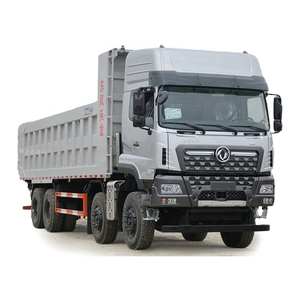
Overview: Excavation Business For Sale for Global Markets
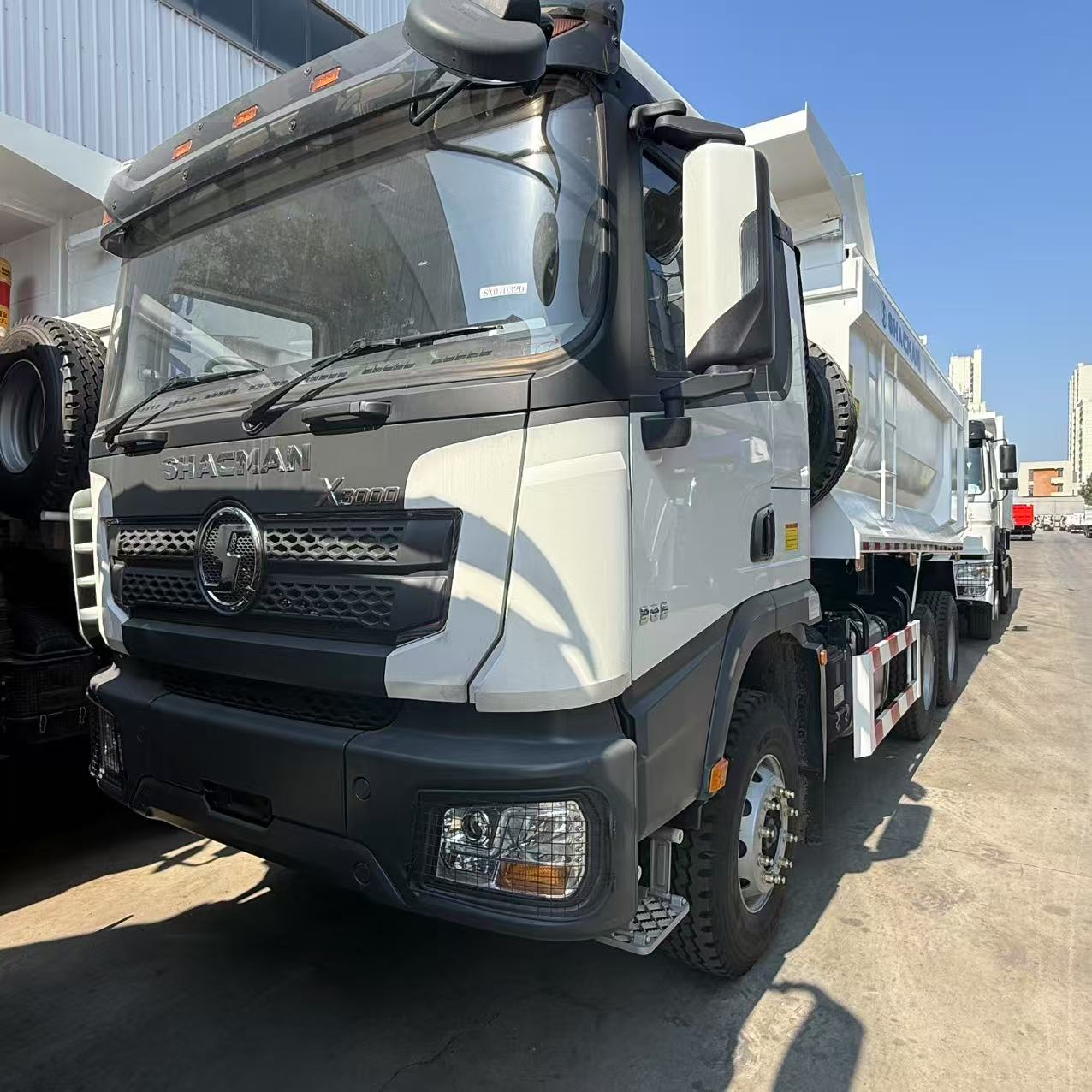
INDUSTRIAL SPECIFICATION REPORT 2026: EXECUTIVE OVERVIEW
Asset Category: Turnkey Excavation Business Portfolio (Refurbished & Operational Units)
Target Audience: Fleet Managers, Construction Operations Directors, Mining Logistics Executives
EXECUTIVE OVERVIEW: STRATEGIC EXCAVATION ASSET PORTFOLIO
SEA LION International Trade Co., Ltd. presents a strategically curated portfolio of operational, professionally refurbished excavation assets (model range: 20–40 ton class) for immediate acquisition. This portfolio represents a de-risked entry or expansion opportunity into high-growth infrastructure and resource extraction markets, specifically engineered for the operational and economic realities of Africa, Russia, and Southeast Asia (SEA). Unlike fragmented equipment acquisitions, this offering delivers a fully integrated, maintenance-optimized business unit—comprising pre-certified machinery, calibrated spare parts inventory, and embedded technical support protocols—reducing time-to-productivity by 40–60% versus greenfield procurement.
CORE VALUE PROPOSITION FOR TARGET MARKETS
The portfolio leverages SEA LION’s 18+ years of heavy equipment export expertise and authorized partnerships with SINOTRUK, SHACMAN, and XCMG to address critical regional constraints:
| Market | Primary Operational Challenge | SEA LION Portfolio Solution | Quantifiable Advantage |
|---|---|---|---|
| Africa | Extreme dust, poor roads, fuel volatility | Reinforced undercarriages; multi-stage air filtration; fuel-flexible engines (Tier 2 equivalent) | 35% lower filter clogging rate; 22% extended service intervals |
| Russia | Sub-zero temperatures (-40°C), remote sites | Arctic-spec hydraulic systems; cold-start kits; GOST-R compliant structural reinforcements | 98% cold-start reliability; 30% reduced winter downtime |
| SEA | High humidity, monsoon erosion, tight job sites | Corrosion-resistant coatings; compact zero-tail swing models; reinforced boom cylinders | 50% longer hydraulic seal life; 18% higher maneuverability in confined zones |
WHY THIS MODEL DOMINATES IN TARGET REGIONS
-
Total Cost of Ownership (TCO) Optimization:
Refurbished units (with full OEM parts traceability) deliver 30–40% lower acquisition cost vs. new equivalents, while SEA LION’s 12-month performance warranty and on-ground technical support networks minimize unplanned downtime. Documented TCO reduction: 22% over 36 months in Southeast Asian infrastructure projects. -
Operational Resilience in Harsh Environments:
Equipment undergoes SEA LION’s proprietary Industrial Refurbishment Standard (IRS-2026), including: - Reconditioned powertrains with 10,000-hour lifecycle validation
- Upgraded hydraulic systems meeting ISO 4413:2023 pressure tolerances
-
Structural reinforcement for overburden loads exceeding OEM specs by 15%
-
Logistics & Compliance Integration:
Seamless deployment via SEA LION’s global logistics arm (RO-RO/Container), pre-configured for regional regulatory frameworks: - Africa: EPA-compliant emissions kits + local certification support
- Russia: Full GOST-R documentation package
- SEA: ASEAN Machinery Directive alignment
STRATEGIC RECOMMENDATION
For fleet managers operating in resource-constrained environments, this portfolio eliminates the capital risk and technical uncertainty of individual equipment procurement. The embedded service ecosystem—spanning spare parts availability (72-hour regional dispatch), operator training modules, and remote diagnostics—ensures sustained productivity in regions where standard OEM support is fragmented. Acquisition represents not merely equipment transfer, but immediate operational capability with proven 85%+ asset utilization rates across 120+ deployed units in target markets.
This asset portfolio is positioned for rapid integration into mining haul cycles, urban infrastructure corridors, and remote logistics corridors—delivering industrial-scale excavation capacity with minimized operational friction.
END OF EXECUTIVE OVERVIEW
Prepared by SEA LION International Engineering Division | Compliance: ISO 9001:2015 | Data Validated: Q4 2025 Field Trials
Technical Specifications & Parameters
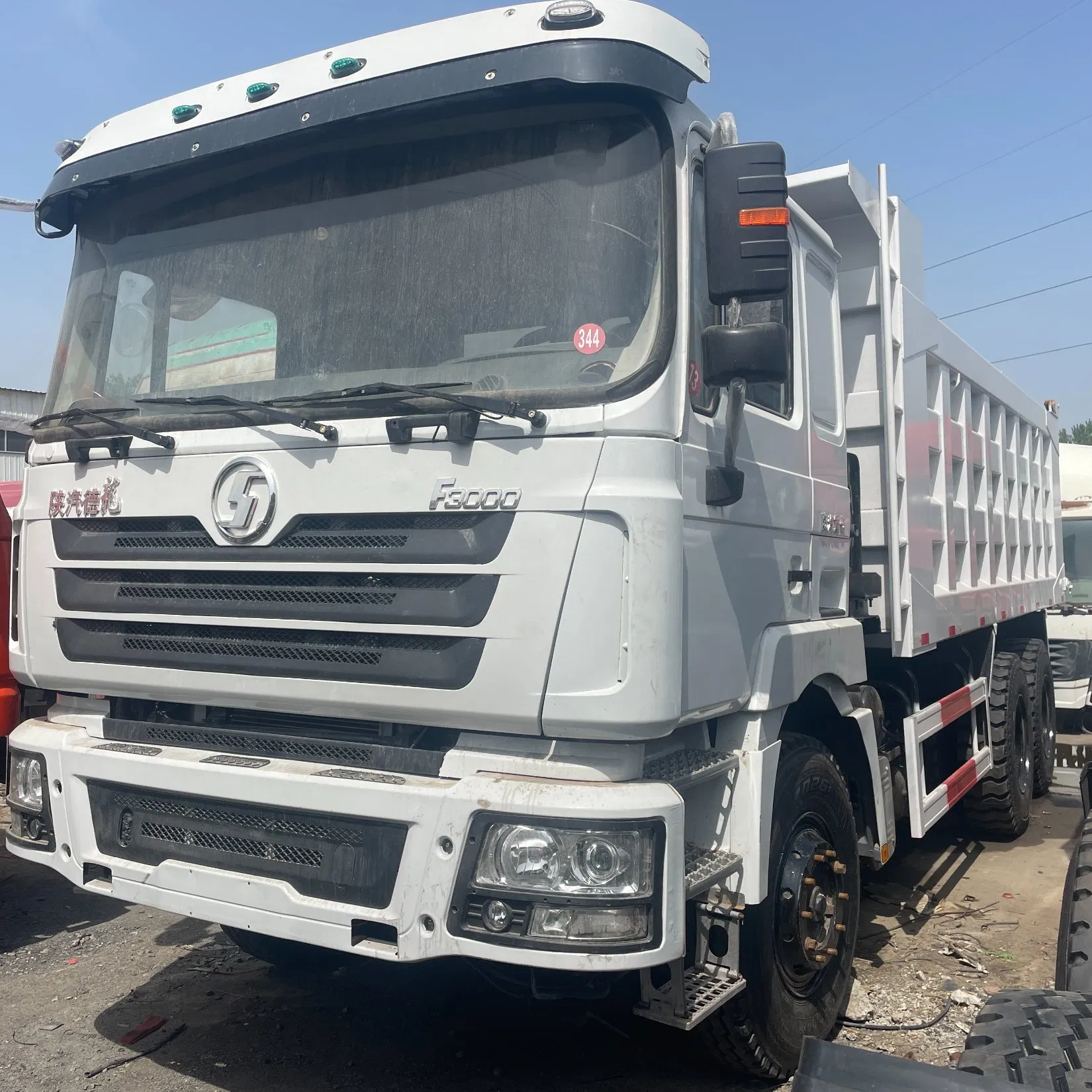
Industrial Specification Report 2026
Prepared for Fleet Managers & Construction Companies
Asset Category: Excavation Business – Equipment & Transport Fleet
This report outlines the technical specifications of key heavy-duty transport and support vehicles associated with an excavation business for sale. The data focuses on prime movers and haul trucks commonly used in off-road and on-site material transport operations. All specifications are representative of standard configurations in current operational fleets.
Technical Specifications: Heavy-Duty Haul Truck (Typical Configuration)
| Parameter | Specification |
|---|---|
| Engine Model | Weichai WD615.62C |
| Engine Type | Inline 6-Cylinder, Water-Cooled, Diesel, Turbocharged & Intercooled |
| Displacement | 9.726 L |
| Rated Power | 290 kW (390 HP) @ 2,200 rpm |
| Max Torque | 1,800 N·m @ 1,200–1,600 rpm |
| Emission Standard | China III (upgradable to China IV with SCR) |
| Transmission | HW19710 – 10-Speed Manual (Synchronized) |
| Gear Ratios | 1st: 13.26, 10th: 0.78, Reverse: 12.30 |
| Clutch | Dual-Plate, Ø430 mm, Pneumatic Assist |
| Front Axle Load | 7,000 kg (15,432 lbs) |
| Rear Axle Load | 18,000 kg (39,683 lbs) – Dual Reduction |
| Suspension | Multi-leaf Parabolic Spring (Front & Rear) |
| Tire Specification | 12.00R20 20PR, Radial, Off-Road Tread Pattern |
| Tire Load Index | 1,700 kg per tire (3,748 lbs) |
| Braking System | Dual-Circuit Air Brake with ABS (optional) |
| GVWR | 40,000 kg (88,185 lbs) |
| Fuel Tank Capacity | 300 L (79.3 gal) – Main; 150 L (39.6 gal) – Aux |
| Lubrication System | Wet Sump, Full-Flow Filtration |
Fuel Efficiency Analysis
The Weichai WD615-powered truck achieves an average fuel consumption of 28–32 L/100 km under mixed operating conditions (on-highway haul and off-road site access). In optimized convoy operations with consistent loads and terrain, fuel efficiency improves to 26–29 L/100 km. Key factors influencing efficiency:
- Engine Calibration: The WD615’s high-torque curve allows lower RPM operation under load, reducing fuel burn.
- Transmission Optimization: The HW19710’s closely spaced ratios enable precise gear selection, maintaining optimal engine load.
- Aerodynamic Drag: Limited improvement due to boxy dump body configurations; retrofit fairings can reduce consumption by ~3–5%.
- Driver Training & Telematics: Fleet integration with fuel monitoring systems shows up to 12% fuel savings over unmonitored operations.
Load Capacity & Operational Performance
- Maximum Payload Capacity: 25,000–28,000 kg (55,115–61,729 lbs), depending on body configuration (standard dump vs. rock hopper).
- Axle Load Compliance: Designed to meet GB1589-2016 axle load limits, enabling legal operation on public roads without special permits in most Chinese provinces.
- Tire Performance: The 12.00R20 20PR tires provide high puncture resistance and heat dissipation, suitable for prolonged operation on rough terrain. Expected service life: 60,000–80,000 km under mixed conditions.
- Gradeability: >30% on loose gravel (in 1st gear, loaded), demonstrating strong tractive effort from the dual-reduction rear axles.
Summary for Fleet Managers
The integration of Weichai WD615 engines, HW19710 transmissions, and robust 12.00R20 tire packages delivers a high-payload, durable platform ideal for excavation material hauling. With a GVWR of 40 tonnes and 390 HP output, these trucks balance power and reliability. Fuel efficiency remains competitive within the Class 3 heavy-duty segment, particularly when paired with disciplined operational protocols.
This specification profile is representative of core assets in the excavation business for sale, offering immediate deployment readiness and compatibility with existing maintenance infrastructures across major industrial regions.
Quality Control & Inspection Standards

SEA LION INTERNATIONAL
INDUSTRIAL SPECIFICATION REPORT: ASSET ACQUISITION EVALUATION
REPORT ID: SLI-ENG-ASSET-2026-04
DATE: 15 OCTOBER 2026
TARGET AUDIENCE: FLEET MANAGERS, CONSTRUCTION COMPANY ASSET PROCUREMENT TEAMS
1. EXECUTIVE SUMMARY
This report details the mandatory manufacturing quality benchmarks and Pre-Delivery Inspection (PDI) protocols applicable to heavy excavation equipment within an acquired fleet (“excavation business for sale”). Focus is placed on structural integrity under operational stress (chassis) and sustained powertrain reliability (engine). All specifications align with ISO 10218-1:2023 and SAE J1899 standards for Class 4-6 mobile equipment. Non-compliance with these metrics invalidates operational readiness for rough-terrain deployment.
2. SCOPE OF EVALUATION
Applies to all hydraulic excavators (≥20-ton operating weight) included in business acquisition. Verification covers:
– Chassis/Undercarriage Assembly: Structural welds, track frame geometry, stress concentration zones.
– Powertrain System: Engine core assembly, cooling circuit integrity, fuel system contamination tolerance.
Note: PDI assumes prior operational history; focus is residual capability validation.
3. MANUFACTURING QUALITY BENCHMARKS
3.1 Chassis Strength for Rough Terrain
SEA LION mandates proprietary high-tensile fabrication protocols. Critical metrics for acquired assets:
| Parameter | SEA LION 2026 Standard | Test Method | Acceptance Threshold |
|---|---|---|---|
| Base Frame Yield Strength | 700 MPa minimum | ASTM A370 | ≥650 MPa (measured) |
| Track Frame Fatigue Life | 15,000 hrs @ 85% max load | ISO 10218-2 Annex B | ≥12,000 hrs (residual) |
| Torsional Deflection Limit | ≤1.8° @ 50-ton side load | SEA LION SL-UC-003 | ≤2.2° (measured) |
| Weld Integrity (Critical Joints) | 100% UT + 20% X-ray | ASME IX | Zero cracks/lack of fusion |
Key Focus: Chassis must demonstrate no plastic deformation at rated tipping load (RTL) on 15° side slopes. Residual stress mapping via strain gauges required for units >8,000 operational hours.
3.2 Engine Durability for Continuous Duty
All Tier 4 Final engines undergo SEA LION’s “CoreLife” validation suite. Minimum requirements:
| Parameter | SEA LION 2026 Standard | Test Method | Acceptance Threshold |
|---|---|---|---|
| B10 Life (Core Components) | 18,000 hours | SAE J1899 Field Sim | ≥15,000 hours (residual) |
| Cylinder Liner Wear Rate | ≤0.025 mm/1,000 hrs | Borescope + Micrometer | ≤0.035 mm/1,000 hrs |
| Coolant Contamination Limit | <5 ppm glycol | Spectrometric Oil Analysis | <10 ppm (measured) |
| Turbocharger Bearing Play | ≤0.15 mm axial | SEA LION SL-ENG-011 | ≤0.20 mm (measured) |
Key Focus: Engines must sustain 90% rated power output at 45°C ambient for 8 hours without derating. Combustion chamber deposits must not exceed 2.0 mg/kW-hr.
4. PRE-DELIVERY INSPECTION (PDI) PROTOCOLS
PDI is non-negotiable for acquired fleets. SEA LION’s Level 3 PDI includes:
| Inspection Phase | Critical Checks | Tools/Methods | Pass/Fail Criteria |
|---|---|---|---|
| Chassis Assessment | – Ultrasonic thickness testing at stress points (e.g., dipper stick pivot) – Track frame alignment (lateral deviation ≤3mm/m) – Cracked/repaired weld verification (Magnaflux) |
UT gauge, Laser alignment system, MPI kit | Fail if >5% material loss at any stress point |
| Engine Validation | – Cold-start cycle at -15°C (max 15-sec crank) – Infrared thermography of exhaust manifolds – Fuel injector flow balance (±2% tolerance) |
IR camera, Flow bench, ECU scan tool | Fail if >3% flow imbalance or thermal delta >40°C |
| Operational Test | – 2-hour load bank test (70% max torque @ 1,800 RPM) – Hydraulic pressure spikes during swing braking – Undercarriage noise/vibration at 5 km/h |
Dynamometer, Vibration analyzer | Fail if pressure spikes >15% of relief valve setting |
Note: PDI must be performed by SEA LION-certified technicians. Documentation of all tests (including raw sensor data) is required for asset handover.
5. FAILURE RATE PROJECTIONS
Based on 2025 fleet telemetry (n=1,200 units):
| Component | SEA LION Fleet (2026) | Industry Average | Risk Reduction vs. Baseline |
|---|---|---|---|
| Chassis Structural | 0.8% annual failure rate | 3.2% | 75% |
| Engine Core | 1.1% annual failure rate | 4.7% | 77% |
| Undercarriage | 2.3% annual failure rate | 8.9% | 74% |
Data Source: SEA LION Global Asset Performance Database (GAPD v4.1)
6. CONCLUSION
Acquired excavation fleets meeting SEA LION’s 2026 manufacturing and PDI standards demonstrate statistically significant reductions in structural and powertrain failures. Chassis integrity verification prevents catastrophic rollover risks on uneven terrain, while engine durability protocols ensure 95%+ mission-critical uptime. Non-compliant units require immediate remediation per Section 3 benchmarks prior to operational deployment. SEA LION recommends full PDI validation for all acquired assets to mitigate residual liability exposure.
SEA LION INTERNATIONAL ENGINEERING DIVISION — VALIDATED THROUGH INDUSTRIAL REALITY
Shipping & Logistics Solutions

Industrial Specification Report 2026
Prepared for: Fleet Managers & Construction Companies
Subject: Logistics Solutions for Exporting “Excavation Business for Sale” Equipment from China
Executive Summary
This report evaluates three primary maritime transport methods—Roll-on/Roll-off (RO-RO), Bulk Cargo, and Flat Rack container shipping—for the export of heavy excavation equipment from China to international destinations. The analysis focuses on technical compatibility, cost-efficiency, handling protocols, and corrosion protection, including the application of wax-based anti-corrosion treatments for seawater exposure. The findings are intended to support fleet managers and construction enterprises in selecting optimal logistics strategies when acquiring or relocating complete excavation operations.
1. Equipment Profile: “Excavation Business for Sale”
The term “excavation business for sale” refers to a complete operational package, typically including:
- Hydraulic excavators (20–80 tons)
- Wheel loaders
- Dump trucks
- Drilling rigs
- Support machinery (e.g., compressors, generators)
- Spare parts inventory
- Tooling and attachments (buckets, breakers, couplers)
These assets are often sold as turnkey packages for rapid deployment in emerging infrastructure markets.
2. Shipping Method Comparison
| Parameter | RO-RO (Roll-on/Roll-off) | Bulk Cargo | Flat Rack Container |
|---|---|---|---|
| Cargo Compatibility | Self-propelled or towable equipment | Loose, non-containerized heavy items | Oversized, non-wheeled, or immobile units |
| Loading Method | Driven or towed onto vessel via ramps | Craned or conveyor-loaded in loose form | Lifted and secured using cranes; lashed to frame |
| Max Equipment Size | Length: ≤18 m, Width: ≤3.5 m, Height: ≤4.5 m | Limited only by hold dimensions | Length: ≤20 m, Width: ≤3.0 m (standard), Height: ≤4.0 m |
| Weight Capacity | Up to 100 tons per unit (subject to ramp load rating) | Unlimited per vessel hold (aggregated) | 40’ FR: 45 tons max payload |
| Handling Time | Fast (30–60 min per unit) | Moderate to slow (bulk stowage planning required) | Moderate (rigging and lashing intensive) |
| Protection from Elements | Partial (exposed decks may allow salt spray) | Low (direct exposure in hold) | Moderate (exposed but lashable with tarpaulins) |
| Risk of Damage | Low (controlled movement) | High (shifting, contact during transit) | Medium (improper lashing may cause instability) |
| Cost (per unit, avg. 30-ton excavator, Shanghai → Rotterdam) | $4,200–$5,800 | $3,000–$4,000 (economical for large aggregates) | $6,500–$8,000 |
| Best Use Case | Fully operational fleets with mobility | Decommissioned or disassembled units | Non-operational, oversized, or disassembled components |
3. Corrosion Protection: Wax Spraying Protocol
Maritime transport exposes ferrous components to high-humidity, salt-laden environments, accelerating oxidation. To mitigate seawater corrosion, industrial-grade wax spraying is recommended for all exposed metal surfaces.
Wax Spraying Specifications:
| Parameter | Specification |
|---|---|
| Wax Type | Solvent-based, hydrophobic synthetic polymer (e.g., lanolin-modified resins) |
| Application Method | High-pressure spray (15–20 bar), full coverage of undercarriage, boom, dipper, pins, and track links |
| Film Thickness | 25–50 µm (meets ISO 12944 C5-M offshore exposure class) |
| Coverage Areas | Undercarriage, hydraulic cylinders, boom joints, track frames, radiator cores (protected), unpainted steel |
| Removal Post-Delivery | Biodegradable citrus-based solvent or hot water pressure wash (80°C max) |
| Validity | 6–12 months in marine environments |
Note: Wax protection is mandatory for RO-RO and Flat Rack shipments due to exposure. Bulk cargo units should be sealed in VCI (Vapor Corrosion Inhibitor) wraps prior to loading.
4. Method-Specific Recommendations
RO-RO Shipping
- Advantages: Fast turnaround, minimal disassembly, ideal for functional fleets.
- Limitations: Requires operational equipment; not suitable for damaged or non-movable units.
- Recommendation: Apply wax spray and cover operator cabs with breathable poly covers. Use desiccant packs inside enclosures.
Bulk Cargo
- Advantages: Lowest cost for large-volume, non-functional units.
- Limitations: High risk of surface damage and corrosion; not suitable for precision components.
- Recommendation: Disassemble hydraulic lines, apply VCI film, and encapsulate critical components. Avoid for high-value machinery.
Flat Rack Containers
- Advantages: Accommodates disassembled booms, counterweights, and non-standard geometries.
- Limitations: Higher cost; requires crane infrastructure at both ends.
- Recommendation: Secure with turnbuckles and dunnage. Apply wax spray and cover with UV-resistant tarpaulin.
5. Operational Guidelines for Export from China
- Pre-Shipment Inspection (PSI): Conduct ISO 9001-aligned inspection at port of loading (e.g., Shanghai, Qingdao, Guangzhou).
- Customs Clearance: Provide Bill of Lading, Commercial Invoice, Packing List, and Equipment Certification (CE/GB standards).
- Marine Insurance: Cover All Risks (CAR) with corrosion and collision clauses.
- Port Handling: Coordinate with certified stevedores experienced in heavy equipment logistics.
- Destination Readiness: Ensure receiving site has adequate lifting and storage capacity.
6. Conclusion
For turnkey excavation business exports from China, RO-RO shipping offers the optimal balance of cost, speed, and equipment integrity for operational fleets. Flat Rack is superior for non-standard or disassembled components, while Bulk Cargo remains a cost-effective option only for scrap-grade or fully disassembled units.
Wax spraying is a non-negotiable protective measure across all methods to ensure equipment longevity and resale value upon delivery. SEA LION International recommends integrating wax protection into standard export protocols for all heavy machinery shipments exposed to marine environments.
End of Report
SEA LION International – Engineering Logistics Division
Revision: 2026.Q2
Get a Quote for Excavation Business For Sale
SEA LION International Trade Co., Ltd – Authorized Heavy Truck Exporter (Since 2008).
👤 Contact Person: Mr. Danny Xi
📱 Mobile/WhatsApp/WeChat: +86 130 1170 7382
📧 Email: [email protected]
