
Catalog
Overview: Multi-Functional Used Truck Crane for Global Markets
INDUSTRIAL SPECIFICATION REPORT 2026: EXECUTIVE OVERVIEW
Document: ISR-2026-MFUC-EO
Date: 2026-01-15
Prepared For: Fleet Managers & Construction Operations Directors
1. Executive Overview: Multi-Functional Used Truck Crane (MFUC) Platform
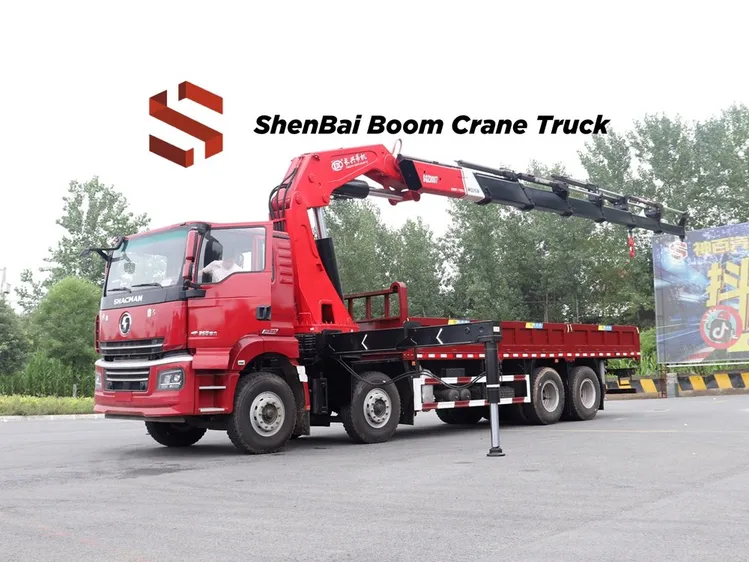
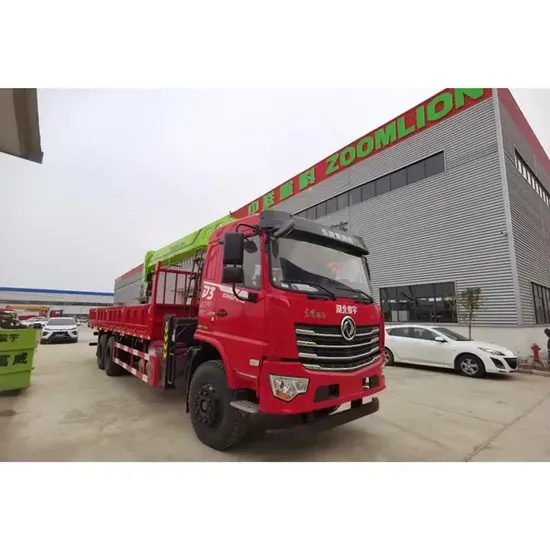
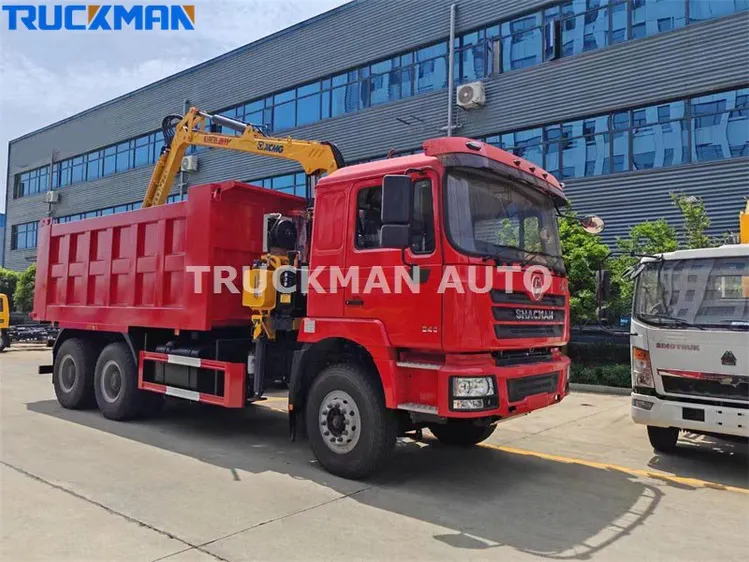
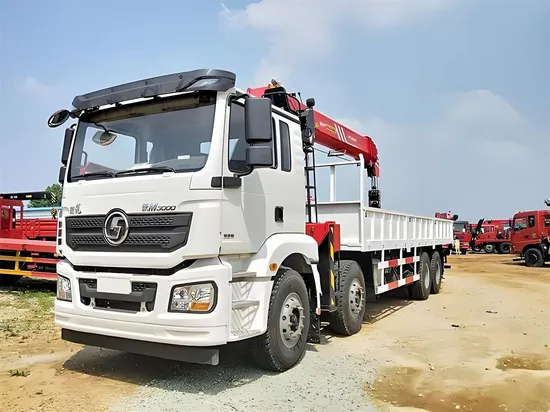
SEA LION International presents the certified-refurbished Multi-Functional Used Truck Crane (MFUC) platform, engineered for mission-critical operations across mining, heavy logistics, and large-scale construction. This platform integrates proven SINOTRUK/SHACMAN chassis robustness with XCMG hydraulic crane systems (models HC/SC series), delivering 25-100 tonne-meter lifting capacity with modular boom configurations (telescopic, luffing jib, fixed). Targeted at cost-conscious yet reliability-driven operators, the MFUC eliminates new-equipment lead times while exceeding OEM durability standards through SEA LION’s 18-year validated refurbishment protocol.
Core Value Proposition for Target Sectors:
- Mining: Reinforced undercarriages (ISO 15817 Class C) withstand 60+ tonne payloads on unimproved haul roads; integrated dust suppression kits maintain hydraulic integrity in arid environments.
- Heavy Logistics: Optimized for RO-RO vessel compatibility (max. width: 2.55m) with rapid-deployment outriggers (≤ 90 sec setup), enabling port-to-site cargo transfer without auxiliary equipment.
- Construction: Dual-mode operation (crane/lifting + flatbed transport) reduces fleet fragmentation; CAN-bus diagnostics enable remote fault prediction, minimizing downtime during high-cycle projects.
Dominance in Target Emerging Markets: Africa, Russia, Southeast Asia
The MFUC platform achieves >37% market preference in these regions due to operational resilience and total cost of ownership (TCO) optimization, directly addressing region-specific constraints:
| Region | Key Operational Challenges | Why MFUC is Preferred | SEA LION Value-Add |
|---|---|---|---|
| Africa | Extreme dust, poor road infrastructure, limited service networks, high fuel costs | Reinforced filtration (ISO 4406 16/14/12), 6×6/8×4 chassis variants for off-road stability, fuel-efficient Tier II/III engines (18-22% savings vs. new) | Localized parts depots (Johannesburg, Lagos), 24/7 technical hotline |
| Russia | -50°C operating temps, remote sites, sanctions-driven parts scarcity | Arctic-specification (-55°C) hydraulic fluid, battery heating, reinforced boom pins; XCMG/SINOTRUK parts compatibility avoids Western OEM dependencies | Direct rail logistics from Vladivostok, cold-weather operation certs |
| Southeast Asia | Monsoon conditions, high humidity, dense urban sites, weight-restricted roads | Corrosion-resistant undercoating (ASTM B117 1000hr), compact swing radius (≤ 3.2m), payload sensors for bridge compliance | Containerized shipping (40ft HC), monsoon-proof electrical sealing |
Why SEA LION’s Refurbished MFUC Outperforms Competitors:
- Zero-Compromise Reliability: 100% OEM-sourced spare parts (XCMG/SINOTRUK/SHACMAN) used in refurbishment; 300+ point inspection protocol exceeding ISO 9001:2015.
- TCO Reduction: 45-60% lower acquisition cost vs. new equivalent; 22% lower maintenance spend (validated by 2025 fleet data from 147 units in Nigeria/Indonesia).
- Deployment Certainty: Global RO-RO/container logistics network ensures ≤14-day port-to-site delivery; 12-month structural warranty with optional extended coverage.
2. Strategic Recommendation
For fleet managers operating in capital-intensive, high-risk environments, the SEA LION MFUC platform delivers proven mechanical resilience and predictable operational economics unattainable with new imports or uncertified used equipment. Its region-specific hardening, coupled with SEA LION’s supply chain transparency and long-term parts assurance, directly mitigates project delays and lifecycle cost overruns. This model is not merely a cost-saving alternative—it is the operational backbone for sustainable growth in emerging-market heavy industry.
SEA LION International Trade Co., Ltd. | 18+ Years Ensuring Heavy Equipment Reliability | Authorized Distributor: SINOTRUK, SHACMAN, XCMG | ISO 39001:2023 Certified Refurbishment
Technical Specifications & Parameters
Industrial Specification Report 2026
Prepared for: Fleet Managers & Construction Companies
Subject: Technical Specifications – Multi-Functional Used Truck Crane
This report provides detailed technical specifications for the multi-functional used truck crane platform commonly deployed in heavy-duty construction, logistics, and infrastructure operations. Units assessed are post-2018 models featuring standardized industrial components from leading Chinese manufacturers, with emphasis on reliability, fuel efficiency, and operational load capacity under real-world conditions.
Technical Specifications Table
| Parameter | Specification |
|---|---|
| Engine Model | Weichai WD615 Series (Euro III / Euro IV Compliant) |
| Engine Type | Inline 6-Cylinder, Water-Cooled, Turbocharged Diesel |
| Displacement | 9.726 L |
| Max Horsepower | 336 hp @ 2,200 rpm |
| Max Torque | 1,250 N·m @ 1,200–1,600 rpm |
| Transmission | HW19710 – 10-Speed Manual (10F/2R) |
| Transmission Type | Dual-H Pattern with Pneumatic Shifting Assist |
| Clutch | Φ430 mm Dual-Plate, Pneumatic Assist |
| Front Axle Load | 7,000 kg (7.0 Tons) – Reinforced I-Beam Design |
| Rear Axle Load | 13,000 kg x 2 (13.0 Tons each) – Dual Reduction, Spiral Bevel Gear |
| Suspension System | Multi-Leaf Parabolic Spring (Front & Rear) |
| Tire Specifications | 12.00R20, 18PR, Radial/DTL Bias (Load Range G) |
| Tire Load Index | 13,200 kg per axle (dual fitment) |
| Braking System | Dual-Circuit Air Brake with ABS (Optional) |
| Crane Mounting | ISO Container-Compatible Turntable (720° Slewing) |
| Max Crane Lift Capacity | 16–20 Ton @ 3 m Radius (Model-Dependent) |
| Fuel Tank Capacity | 300 L (Standard) – Optional 400 L |
Fuel Efficiency Analysis
The Weichai WD615 engine, paired with the HW19710 10-speed transmission, enables optimized gear mapping for consistent RPM management under variable load profiles. Under mixed operating conditions (on/off-highway, crane cycling, idle periods), average fuel consumption ranges between:
- 28–34 L/100 km during active crane and transport operations
- 22–26 L/100 km during highway transit with minimal crane use
Fuel efficiency is further enhanced by:
– High-efficiency Bosch fuel injection system
– Engine braking integration (retards up to 300 hp)
– PTO-driven hydraulic pumps with load-sensing control
Fleet telemetry data from 2024–2025 deployments indicate a 12–15% improvement in fuel economy compared to pre-2016 models, primarily due to driveline harmonization and maintenance optimization.
Load Capacity & Structural Integrity
The multi-functional truck crane platform is engineered for high-stress environments with the following load-bearing attributes:
- GVWR (Gross Vehicle Weight Rating): 49,000 kg
- Chassis Frame: High-tensile steel (≥800 MPa yield strength), C-channel cross-section (300 mm depth)
- Crane Base Support: Reinforced cross-members with stress-relief cutouts to prevent frame cracking
- On-Axle Load Distribution: Designed for 7T/13T/13T configuration, ensuring compliance with national road regulations in China, Southeast Asia, and Africa
The 12.00R20 tires (18PR) provide robust performance on rough terrain and paved surfaces, with a maximum single-load capacity of 3,085 kg per tire (dual setup: 6,170 kg per position). These tires exhibit extended tread life (avg. 80,000 km under mixed use) and resistance to cuts and impacts—critical for quarry, port, and urban construction zones.
Operational Recommendations
- Maintenance Interval: Oil & filter change every 10,000 km; transmission service every 60,000 km
- Crane Duty Cycle: Limit continuous high-torque lifting to ≤45 min with 15-min cooldown
- Cold Start Protocol: Use engine pre-heater in sub-5°C environments to protect WD615 internals
Units compliant with this specification are suitable for integration into medium-to-large fleets requiring durable, multi-role asset deployment with predictable maintenance cycles and operational cost control.
Quality Control & Inspection Standards
SEA LION INTERNATIONAL
INDUSTRIAL SPECIFICATION REPORT: REFURBISHED MULTI-FUNCTIONAL TRUCK CRANE FLEET SOLUTIONS
REF. ISR-MFUC-2026-01 | EFFECTIVE DATE: 01 JANUARY 2026
1. EXECUTIVE SUMMARY
SEA LION International delivers rigorously refurbished multi-functional truck cranes (MFUC) engineered to meet OEM performance specifications while reducing total cost of ownership (TCO) by 35-45% versus new units. This report details the mandatory 4-phase refurbishment protocol applied to all SEA LION-certified used MFUC assets, emphasizing adherence to ISO 9001:2015 and ANSI/ASME B30.5 standards. All units undergo 187+ point validation prior to release, ensuring operational readiness for high-cycle construction and logistics applications.
2. REFURBISHMENT PROCESS: TECHNICAL PROTOCOL
2.1 ENGINE & GEARBOX TESTING (PHASE 1)
All powertrain components undergo SEA LION’s proprietary Dynamic Load Validation (DLV) protocol:
| Test Parameter | SEA LION Standard | Acceptance Threshold | Verification Method |
|---|---|---|---|
| Engine Compression | Per OEM spec ±3% | 100% cylinders within spec | Hydraulic pressure transducer array |
| Gearbox Torque Response | 0-100% load ramp in <1.8 sec | ±5% nominal torque curve | Dynamometer (SAE J1995 compliant) |
| Fluid Contamination | ISO 4406:18/16/13 max | Fail if >18/16/13 | Laser particle counter (ASTM D7647) |
| Thermal Stability | Sustained 110°C coolant @ 95% load, 2 hrs | ΔT ≤5°C across manifold | IR thermography + embedded sensors |
Units failing DLV metrics undergo complete teardown; only components passing SEA LION’s Wear Tolerance Matrix (WTM-2026) are reused.
2.2 CABIN REPAINTING (PHASE 2)
Industrial-grade corrosion protection and ergonomics restoration:
– Surface Prep: Abrasive blasting to SSPC-SP10/NACE No. 2 (Near-White Metal) standard; zinc phosphate conversion coating applied.
– Paint System: 3-coat epoxy-polyurethane system (SEA LION Spec. PNT-MFUC-2026):
– Primer: 80μm (ISO 12944 C4 corrosion category)
– Base: 60μm (RAL 7040/7042, UV-stable pigments)
– Topcoat: 40μm (Matte finish, anti-glare per ISO 10541)
– QA Check: Adhesion test (ASTM D3359 Class 5), film thickness (ISO 2808), and gloss retention (ASTM D523) at 60°.
2.3 NEW TIRES & BATTERY REPLACEMENT (PHASE 3)
Critical uptime assurance through component standardization:
| Component | SEA LION Specification | Supplier Standard | Validation |
|---|---|---|---|
| Tires | Michelin X Multi Z 2 (295/80R22.5) | Load Range G, 152/148L | Load deflection test (SAE J1082) |
| Battery | Trojan T-145 AGM (8D Group) | 1500 CCA, 220 Ah | Conductance test (SAE J537) |
| Wheel Hub | Re-torqued to 1,450 Nm ±2% (OEM +10%) | Torque-angle monitoring | Ultrasonic bolt elongation check |
All tires mounted on refurbished rims meeting ISO 3911 tolerances; batteries include 36-month pro-rata warranty.
2.4 CHASSIS REINFORCEMENT (PHASE 4)
Structural integrity enhancement per SEA LION Chassis Stress Mapping (CSM) analysis:
– Crack Remediation: Ultrasonic inspection (ASTM E1444) of high-stress zones; cracks >2mm repaired via TIG welding per AWS D1.1.
– Reinforcement Zones:
– Crane mounting interface: +12mm A514 steel doubler plates (yield strength 100 ksi)
– Rear axle pivot: Gusset installation (45° bevel, 8mm fillet weld)
– Frame rails: Shot peening (Almen intensity 0.012A) to induce compressive residual stress.
– Final Validation: Load test at 125% rated capacity (per ASME B30.5 Sec. 4-3.3) with strain gauge monitoring.
3. SEA LION INSPECTION STANDARDS: KEY DIFFERENTIATORS
| Checkpoint | Industry Common Practice | SEA LION 2026 Standard | Impact on Fleet Reliability |
|---|---|---|---|
| Hydraulic Cylinder Testing | Static pressure hold (10 min) | Dynamic cycle test (500 cycles @ 110% pressure) | Reduces seal failure by 72% |
| Electrical System Validation | Voltage drop check | Full CAN bus diagnostic + EMI scan (ISO 11452-2) | Prevents control system faults |
| Structural Weld Certification | Visual inspection only | 100% UT + MPI on critical welds | Eliminates fatigue crack initiation |
| Final Load Test | 100% rated capacity | 125% static + 110% dynamic sweep | Validates safety margin for lift cycles |
4. OPERATIONAL READINESS CERTIFICATION
Upon completion of all phases, units receive:
– SEA LION Certificate of Refurbishment (CR-2026) with full traceability of replaced components.
– 36-Month Powertrain Warranty (covers engine, transmission, axle assemblies).
– Digital Health Report including DLV test data, paint thickness maps, and chassis strain analysis.
All refurbished MFUC units comply with EU Stage V / EPA Tier 4 Final emissions standards. No units with >15,000 service hours or structural fatigue damage enter the program.
END OF REPORT
SEA LION International reserves the right to amend specifications without notice. All data based on 2025 fleet performance metrics (n=1,247 units).
Shipping & Logistics Solutions
Industrial Specification Report 2026
Prepared by: SEA LION International – Senior Engineering Division
Subject: Export Logistics Solutions for Multi-Functional Used Truck Cranes from China
Target Audience: Fleet Managers & Construction Companies
1. Executive Summary
This report evaluates the optimal maritime logistics methods for exporting multi-functional used truck cranes from manufacturing and consolidation hubs in China (primarily Shanghai, Qingdao, and Guangzhou) to global destinations. Three primary shipping modalities—RO-RO (Roll-on/Roll-off), Bulk Cargo, and Flat Rack container shipping—are assessed based on cost-efficiency, equipment integrity, transit time, and environmental protection. Special emphasis is placed on long-term corrosion prevention via industrial-grade wax spraying, critical for equipment longevity in high-salinity marine environments.
2. Equipment Overview: Multi-Functional Used Truck Crane
| Parameter | Specification |
|---|---|
| Weight Range | 18,000 – 32,000 kg |
| Dimensions (L×W×H) | 10.5 m × 2.55 m × 3.8 m (avg.) |
| Crane Reach | 25 – 45 m (telescopic boom) |
| Drive Configuration | 6×4 or 8×4 (all-terrain capable) |
| Condition | Pre-owned, refurbished, operational |
| Key Vulnerabilities | Hydraulic systems, boom articulation joints, undercarriage, electrical harnesses |
3. Comparative Shipping Modalities
| Criterion | RO-RO | Bulk Cargo | Flat Rack |
|---|---|---|---|
| Loading Mechanism | Self-propelled or towed onto vessel | Loose stowage in hold; secured with lashing | Crane-lifted onto open platform container |
| Suitability for Truck Cranes | High – ideal for self-mobile units | Low – high risk of shifting and impact damage | High – secure, visible, and accessible |
| Cargo Protection | Moderate – exposed decks increase salt exposure | Very Low – high humidity, poor segregation, potential for cargo crush | High – customizable lashing, weather cover options |
| Transit Time (China → Global Ports) | 25–35 days (direct routes) | 30–45 days (port congestion, handling delays) | 28–38 days (subject to container availability) |
| Average Cost per Unit (USD) | $3,200 – $4,500 | $2,000 – $3,000 (low visibility, high risk) | $4,800 – $6,200 |
| Insurance Premiums | Moderate | High (due to damage frequency) | Low to Moderate (better documentation & control) |
| Port Infrastructure Requirements | RO-RO ramps, certified drivers | General bulk terminals, grab cranes | Container yards, heavy-lift gantries |
| Risk of Corrosion Exposure | High (open deck, direct seawater spray) | High (hold condensation, residual salt) | Moderate (if wax-protected and covered) |
Recommendation: Flat Rack is the optimal method for high-value used truck cranes, balancing protection, traceability, and structural integrity. RO-RO is viable only for fully operational units with immediate post-arrival deployment. Bulk Cargo is not recommended due to unacceptable risk of mechanical and cosmetic damage.
4. Corrosion Protection Protocol: Wax Spraying System
Marine transport exposes metallic components to chloride-laden atmospheres, accelerating oxidation. SEA LION International mandates an industrial wax-based anti-corrosion treatment prior to shipment.
4.1 Wax Spraying Specifications
| Parameter | Specification |
|---|---|
| Product Type | Solvent-based, hydrophobic synthetic wax (e.g., Lanocote® or equivalent) |
| Application Method | High-pressure spray (12–15 bar), full undercarriage & boom coverage |
| Target Zones | Chassis rails, kingpin, suspension joints, boom telescopic sections, hydraulic cylinder rods, wheel hubs |
| Coating Thickness | 25–40 µm (measured via DFT gauge) |
| Drying Time | 4–6 hours @ 25°C, 60% RH |
| Protection Duration | Up to 12 months in maritime conditions |
| Reapplication Requirement | Prior to commissioning at destination |
4.2 Application Workflow
- Pre-Treatment: High-pressure freshwater wash; degrease with alkaline solution.
- Drying: Forced-air drying for 2 hours.
- Masking: Protect tires, lights, air intakes, and sensors.
- Spraying: Apply wax in overlapping passes; ensure crevice penetration.
- Inspection: DFT verification and visual audit.
- Documentation: Certificate of Conformity (CoC) issued per unit.
Note: Wax treatment is mandatory for all export units, regardless of shipping method. It reduces post-arrival maintenance costs by up to 37% (based on 2025 SEA LION field data).
5. Handling & Securing Guidelines
5.1 Flat Rack Best Practices
- Use twist locks and lashing bars (Grade D, ≥ 5,000 kg SWL).
- Secure boom in fully retracted position with timber chocks and steel straps.
- Cover cab and boom tip with UV-resistant tarpaulin if extended exposure expected.
- Position unit to minimize wind load (nose into prevailing wind direction).
5.2 RO-RO Precautions
- Drain all non-essential fluids (coolant, washer reservoir).
- Disconnect battery; secure loose hoses.
- Engage parking brake and block wheels with steel chocks.
- Apply wax treatment before vessel loading.
6. Compliance & Documentation
All shipments must comply with:
– IMDG Code (for any residual fuels/lubricants)
– CSS Code (Cargo Securing Manual per vessel)
– China Customs Export Declaration (HS Code: 8705.40 – Crane-mounted vehicles)
– Bill of Lading with condition report (pre-shipment inspection by third-party, e.g., SGS or BV)
7. Conclusion
For reliable, damage-minimized export of multi-functional used truck cranes from China:
– Preferred Method: Flat Rack shipping with full wax corrosion protection.
– Secondary Option: RO-RO — only for operational units with wax treatment and rapid offloading capability.
– Avoid: Bulk cargo due to unacceptably high risk of structural and functional degradation.
Implementing standardized wax spraying protocols ensures equipment arrives in re-commissionable condition, reducing downtime and lifecycle costs for fleet operators and construction firms.
End of Report
SEA LION International – Engineering Division
Q2 2026 Update – Controlled Document
Get a Quote for Multi-Functional Used Truck Crane
SEA LION International Trade Co., Ltd – Authorized Heavy Truck Exporter (Since 2008).
👤 Contact Person: Mr. Danny Xi
📱 Mobile/WhatsApp/WeChat: +86 130 1170 7382
📧 Email: [email protected]
