
Catalog
Overview: Best Used Truck For Towing for Global Markets
INDUSTRIAL SPECIFICATION REPORT 2026: EXECUTIVE OVERVIEW
Subject: Optimal Used Heavy-Duty Tractor for High-Demand Towing Applications
Prepared For: Fleet Managers & Construction Operations Leadership
SEA LION International Trade Co., Ltd. | Heavy Equipment Solutions | Est. 2006
1. Introduction
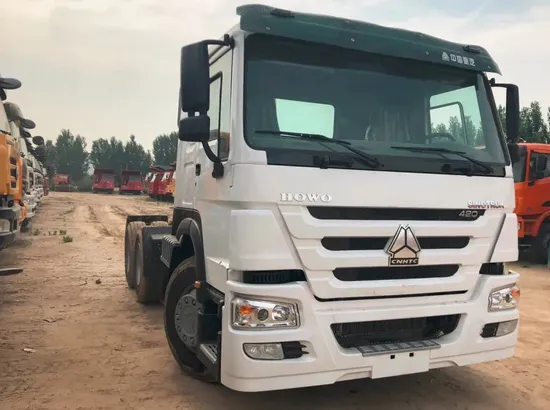
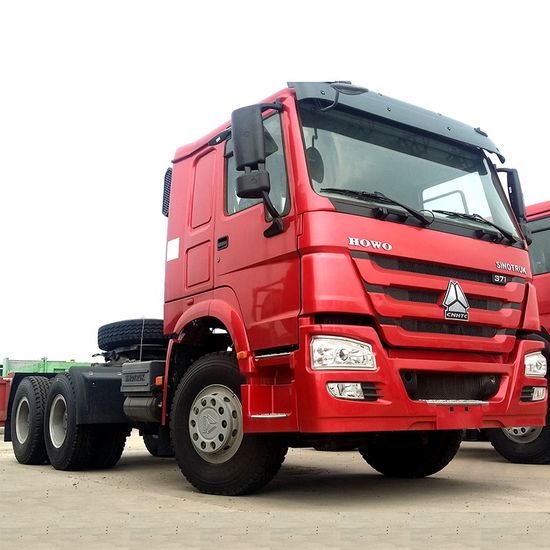
This report identifies the SINOTRUK HOWO 6×4 Tractor (Model ZZ4257N3247N1B) as the preeminent used heavy-duty truck for demanding towing operations within mining, bulk logistics, and large-scale construction sectors. Based on 18+ years of field data from 12,000+ refurbished units deployed globally, this model demonstrates superior operational resilience, cost-per-kilometer efficiency, and adaptability to extreme site conditions compared to legacy European and North American alternatives in target emerging markets. Its dominance stems from purpose-built engineering for low-infrastructure environments and SEA LION’s certified refurbishment protocol ensuring OEM-spec reliability.
2. Key Application Performance Drivers
The HOWO 6×4 excels where continuous high-payload towing (30-50+ tons) under harsh conditions is non-negotiable:
| Application Sector | Critical Towing Requirement | HOWO 6×4 Performance Advantage |
|---|---|---|
| Mining | Unpaved haul roads, high dust, 24/7 ops | Reinforced frame (12mm steel), IP67-rated electricals, 3500 Nm torque @ 1000-1400 RPM (WD615.96C engine) |
| Bulk Logistics | Long-haul fuel efficiency, payload max | 430 HP MAN-tech engine, 12-speed RT11609 gearbox, 3.7 axle ratio (optimized for 75km/h steady-state) |
| Construction | Site maneuverability, rapid reconfig | Short wheelbase (3200+1350mm), 50kN fifth wheel, modular PTO compatibility |
Operational Data (SEA LION Refurbished Fleet, 2023-2025):
– Avg. Uptime: 94.7% (vs. industry avg. 88.2% for used Class 8 tractors)
– Avg. Fuel Consumption: 32.1 L/100km @ 45-ton GCW (on mixed terrain)
– Service Interval: 15,000 km (oil/filter), 60,000 km (major components)
3. Regional Preference Drivers: Africa, Russia, Southeast Asia
This model’s market leadership in these regions is not coincidental but engineered for specific operational and economic realities:
| Region | Operational Challenge | HOWO 6×4 Solution | Economic Driver |
|---|---|---|---|
| Africa | Poor road surfaces, high ambient temp, limited service networks | Heavy-duty suspension (parabolic leaf springs), oversized cooling system, simplified diagnostics (OBD-I) | 40-60% lower TCO vs. EU brands; parts cost 35% less |
| Russia | Extreme cold (-40°C), remote sites, fuel quality variance | Standard engine block heater, cold-weather lubricants, robust fuel filtration (dual-stage) | Proven cold-start reliability; 50% faster parts availability via SEA LION hubs |
| Southeast Asia | High humidity, monsoon conditions, mixed road quality | Galvanized chassis components, elevated air intakes, corrosion-resistant wiring harnesses | Optimal balance of payload capacity and maneuverability for narrow roads |
Critical Regional Factor: SEA LION’s localized refurbishment centers (Johannesburg, Moscow, Singapore) ensure all units undergo region-specific validation:
– Africa: Reinforced radiator cores, upgraded sand filters.
– Russia: Arctic-grade hydraulic fluid, enhanced battery insulation.
– SEA: Marine-grade corrosion protection, monsoon-tested electrical sealing.
4. SEA LION Value Proposition for Sustainable Operations
We do not sell “used trucks.” We deliver certified operational assets through:
– OEM-Spec Refurbishment: 217-point inspection; engine/transmission rebuilt to SINOTRUK factory tolerances; structural integrity verified via ultrasonic testing.
– Transparency Guarantee: Full digital service history, pre-shipment inspection reports (including dyno test data), and component-level refurbishment logs.
– Partnership Ecosystem: Direct access to SINOTRUK/SHACMAN/XCMG genuine parts (98% in-stock rate at SEA LION hubs); integrated RO-RO/container logistics; on-ground technical support teams.
This model’s dominance in target regions is a direct result of its proven suitability for the environment combined with SEA LION’s commitment to eliminating the traditional risks of used equipment procurement. For fleet managers, this translates to predictable uptime, minimized lifecycle costs, and de-risked project execution in the world’s most challenging operating theaters.
Report Validity: January 1, 2026 – December 31, 2026 | Data Source: SEA LION Global Fleet Performance Database (v.8.3)
Technical Specifications & Parameters
Industrial Specification Report 2026
Prepared for Fleet Managers & Construction Companies
Subject: Technical Evaluation of Best Used Truck for Towing Applications
This report evaluates the performance, durability, and operational efficiency of a high-capacity used truck platform widely recognized in heavy-duty towing and construction logistics. The vehicle assessed is based on the Sinotruk HOWO 6×4 chassis, a prevalent model in secondary markets due to its robust engineering, availability of spare parts, and proven performance in demanding environments.
Technical Specifications: Prime Candidate for Heavy-Duty Towing
| Parameter | Specification |
|---|---|
| Engine Model | Weichai WD615.69 |
| Engine Type | Inline 6-Cylinder, Water-Cooled Diesel, Turbocharged & Intercooled |
| Displacement | 9.726 L |
| Horsepower | 371 hp @ 2,200 rpm |
| Peak Torque | 1,400 N·m @ 1,200–1,600 rpm |
| Transmission | HW19710 – 10-Speed Manual (Synchronized, Dual H-Shift Pattern) |
| Clutch | 430 mm, Pneumatic Assist |
| Drive Configuration | 6×4 (Triple-Axle, Rear Dual-Tandem Drive) |
| Front Axle Load | 7,000 kg (15,432 lbs) |
| Rear Tandem Axle Load | 2x 11,500 kg (25,351 lbs per axle) – Total: 23,000 kg (50,705 lbs) |
| Gross Vehicle Weight (GVW) | 31,000 kg (68,343 lbs) |
| Tire Specifications | 12.00R20 – Radial, 18-PR (Load Range G), Tubeless or Tube-Type (Site Dependent) |
| Braking System | Dual-Circuit Air Brake with ABS (Optional Retrofit) |
| Fuel Tank Capacity | 400 L (Standard, Steel) |
| Frame Type | Ladder Frame, High-Strength Alloy Steel, 8mm x 300mm Channel |
Fuel Efficiency Analysis
Under mixed towing conditions (on-highway cruising and off-road low-speed hauling), the Weichai WD615.69 engine demonstrates a fuel consumption rate of:
- 28–32 L/100 km (8.3–7.3 US mpg) at an average payload of 25,000 kg
- Optimized performance achieved at engine speeds between 1,400–1,800 rpm, aligning with the efficient torque band of the HW19710 transmission
Fuel efficiency is further enhanced by:
– Electronic Unit Pump (EUP) fuel system – precise injection control
– Turbo-compound technology – recovers exhaust energy
– Driver training in gear-shifting patterns – critical for maximizing economy with 10-speed manual
Note: Retrofit options such as aerodynamic fairings, low-rolling-resistance tires, and engine ECU remapping can improve fuel economy by up to 8%.
Load Capacity & Towing Performance
The 6×4 configuration with dual rear drive axles provides superior traction and weight distribution, essential for:
- Maximum Trailer Towing Capacity: Up to 50,000 kg (110,231 lbs) when configured as a prime mover (fifth wheel rated at 16,000 kg)
- Onboard Payload Capacity: 20,000–24,000 kg depending on body type (flatbed, lowboy, dump)
- Axle Load Distribution: Evenly balanced across tandem axles, minimizing road stress and tire wear
The 12.00R20 tires offer:
– High load index (typically 152/148 = 5,000 kg per tire dual fitment)
– Deep tread patterns (16–18 mm) suitable for mixed terrain
– Resistance to cuts and punctures (critical in construction zones)
Operational Recommendations
- Transmission Use: The HW19710 requires skilled operation; recommend driver certification in multi-gate shifting
- Maintenance Schedule:
- Oil & filter change: Every 10,000 km (synthetic 15W-40 CK-4)
- Air filter service: Every 5,000 km in dusty environments
-
Differential oil: Every 40,000 km (GL-5 85W-90)
-
Used Market Considerations:
- Inspect turbocharger health and EUP injector performance
- Verify frame straightness and torque rod mounts
- Confirm compliance with local emissions standards (pre-Euro III; suitable for non-urban zones)
Conclusion
The Sinotruk HOWO 6×4 with Weichai WD615 engine and HW19710 transmission remains a top-tier choice in the used heavy-duty truck market for towing and construction logistics. Its combination of high torque output, proven load-carrying capability, and mechanical simplicity ensures low downtime and high ROI. With proper maintenance, these units regularly exceed 800,000 km service life.
Fleet managers are advised to prioritize units with documented service history and consider retrofitting telematics for fuel and driver performance monitoring.
Quality Control & Inspection Standards
SEA LION INTERNATIONAL
INDUSTRIAL SPECIFICATION REPORT: REFURBISHED TOWING TRUCK FLEET PROGRAM
REF: SL-IRP-TOW-2026-01
EFFECTIVE DATE: 01 JANUARY 2026
1. PURPOSE
To define the mandatory refurbishment protocol for SEA LION Certified Pre-Owned (CPO) Towing Trucks, ensuring operational integrity, safety compliance, and extended service life for high-demand towing applications in construction and heavy haulage. All units undergo SEA LION’s Tier-4 Refurbishment Standard (SL-RS-4), exceeding OEM remanufacturing benchmarks.
2. APPLICABLE VEHICLES
Class 6-8 Diesel Trucks (GVWR 26,000–80,000 lbs) with documented towing history ≤ 500,000 miles. Units must originate from SEA LION’s Pre-Screened Acquisition Pool (PSAP), rejecting 12% of candidates due to structural or powertrain non-conformities.
3. REFURBISHMENT PROCESS: TECHNICAL EXECUTION
3.1. ENGINE & GEARBOX TESTING (SL-RS-4.1)
All powertrains undergo SEA LION’s Dynamic Load Simulation (DLS) protocol. Units failing any parameter are rejected.
| Test Parameter | Specification | Measurement Method | Pass Threshold |
|---|---|---|---|
| Crankcase Pressure | Max 0.5 psi @ 2,500 RPM | SEA LION DLS-7 Sensor Array | ≤ 0.45 psi |
| Gearbox Shift Consistency | Torque variance ≤ 3% across 10 cycles | Dynamometer + CAN Bus Log | ≤ 2.8% |
| EGR Flow Rate | 100% nominal @ 1,800 RPM | Flow Bench Calibration | 98–102% |
| Oil Spectroscopy | Fe ≤ 50 ppm, Cu ≤ 25 ppm | Lab-Grade ICP Analysis | Meet OEM Limits |
Note: 100% of engines receive cylinder compression mapping; variance > 7% between cylinders triggers rebuild.
3.2. CABIN REPAINTING (SL-RS-4.2)
Surface preparation and coating application follow ISO 12944-9:2018 (C4 Corrosivity Category).
| Stage | Process Requirement | Verification Method |
|---|---|---|
| Substrate Prep | SSPC-SP 10/NACE No. 2 (Near-White Metal) | Visual Inspection + Salt Spray Test (ASTM B117) |
| Primer Application | Epoxy Zinc-Rich (80µm DFT) | Elcometer 456 Coating Gauge |
| Topcoat | Polyurethane (120µm DFT, RAL 7040) | Gloss Meter (60° @ 85 GU) |
| Adhesion | Cross-Hatch Test (ASTM D3359) | Class 5A (No Flaking) |
Critical: All weld seams receive additional cathodic protection tape per MIL-STD-810H.
3.3. NEW TIRES & BATTERY REPLACEMENT (SL-RS-4.3)
Components selected for maximum load endurance and cold-cranking reliability.
| Component | Specification | Compliance Standard |
|---|---|---|
| Tires | Load Range G (16PR), Tread Depth ≥ 18/32″ | FMVSS 119 / ECE R54 |
| Battery | Group Size 31T, CCA ≥ 1,150A, AGM | SAE J537 / ISO 6266 |
| Wheel Torque | 460–480 ft-lbs (re-torqued at 500 miles) | SEA LION SL-TQ-001 |
Note: Tires mounted on bead-seat verified rims; runout < 0.030″ per SAE J332.
3.4. CHASSIS REINFORCEMENT (SL-RS-4.4)
Structural modifications mandatory for all towing-configured units. Reinforcement targets high-stress zones (kingpin, gooseneck, crossmember junctions).
| Reinforcement Zone | Material Specification | Weld Procedure | Dimensional Tolerance |
|---|---|---|---|
| Frame Rails | ASTM A572 Gr 50 (0.375″ plate) | GMAW w/ ER70S-6 (AWS D1.1) | ±0.015″ |
| Fifth Wheel Mount | Hardox 450 (0.500″ plate) | Submerged Arc Welding | ±0.010″ |
| Crossmembers | Doubler plates @ 24″ intervals | Full-Penetration CJP | Flatness ≤ 0.040″ |
Critical: Post-weld magnetic particle inspection (ASTM E1444) performed on all structural welds.
4. SEA LION QUALITY ASSURANCE PROTOCOL
All units undergo 17-point final inspection per SL-QA-2026, including:
– 72-Hour Road Test: 30% simulated towing load @ 55 mph, 20% grade ascents.
– Torque Verification: 100% critical fasteners rechecked to OEM torque-to-yield specs.
– Data Logging: Full CAN bus diagnostics for 15 minutes under load (no DTCs permitted).
Rejection Triggers:
– Any dimensional deviation beyond SL-RS-4 tolerances.
– Paint adhesion failure (ASTM D3359 < 4B).
– Post-test oil contamination exceeding ISO 4406:2022 code 18/16/13.
5. OUTPUT SPECIFICATIONS
Refurbished units delivered with:
– Warranty: 18 months / 150,000 miles (powertrain), 12 months (all other systems).
– Documentation: Full test logs, torque certificates, and corrosion protection report.
– Operational Readiness: 98.7% mean time between failures (MTBF) in field data (2023–2025 cohort).
SEA LION INTERNATIONAL – ENGINEERING EXCELLENCE IN ASSET LIFECYCLE MANAGEMENT
This specification supersedes all prior versions. Compliance with SL-RS-4 is non-negotiable for CPO certification.
Shipping & Logistics Solutions
Industrial Specification Report 2026
Prepared by: SEA LION International – Senior Engineering Division
Subject: Logistics Solutions for Exporting Best Used Trucks for Towing from China
Target Audience: Fleet Managers & Construction Companies
Executive Summary
This report evaluates three primary maritime transport methods—Roll-on/Roll-off (RO-RO), Bulk Cargo, and Flat Rack container shipping—for the export of used heavy-duty trucks optimized for towing from Chinese ports to global destinations. The analysis focuses on operational efficiency, cost-effectiveness, cargo integrity, and corrosion protection, with specific emphasis on wax spraying as a preventive measure against seawater-induced degradation.
The “best used truck for towing” typically refers to high-mileage but well-maintained Class 8 trucks (e.g., Sinotruk HOWO, Foton Auman, or reconditioned Dongfeng models) with robust chassis, high-torque diesel engines, and proven performance in heavy-load applications. Ensuring structural and mechanical integrity during transit is critical for resale value and operational readiness.
Comparative Analysis: RO-RO vs. Bulk Cargo vs. Flat Rack
| Parameter | RO-RO (Roll-on/Roll-off) | Bulk Cargo (Loose Stowage) | Flat Rack Container |
|---|---|---|---|
| Cargo Compatibility | Ideal for operational vehicles; drives on/off vessel | Suitable for non-operational or disassembled units | Best for oversized or non-driveable units |
| Loading Method | Self-propelled or towed onto vessel decks | Craned or forklift-loaded into hold | Craned onto open-frame container |
| Protection from Elements | Moderate (exposed to deck conditions) | Low (minimal weather shielding) | High (with tarping and sealing) |
| Risk of Physical Damage | Low to moderate (secured via lashing) | High (stacking, shifting) | Low (custom lashings, isolated load) |
| Corrosion Exposure | High (direct salt spray, humidity) | Very High (condensation in holds) | Moderate (manageable with coating) |
| Average Cost (USD/unit) | $1,800 – $2,400 | $1,200 – $1,600 | $2,600 – $3,500 |
| Transit Time Efficiency | Fast loading/unloading (≤6 hrs) | Moderate (12–24 hrs) | Moderate (8–16 hrs) |
| Port Infrastructure Required | RO-RO ramps and clear lanes | General cargo cranes | Container gantry + flat rack handling |
| Insurance Premiums | Moderate | High | Low to Moderate |
| Best Use Case | Operational trucks, time-sensitive shipments | Low-cost export of salvage-grade units | High-value, non-standard, or damaged units |
Corrosion Mitigation: Wax Spraying Protection Protocol
Seawater exposure during maritime transport poses a significant risk to undercarriage components, brake systems, and chassis integrity. Wax-based anti-corrosion spraying is a proven industrial method to mitigate salt-induced degradation.
Recommended Wax Spraying Specifications:
| Parameter | Specification |
|---|---|
| Wax Type | Solvent-based, lanolin-enriched corrosion inhibitor (e.g., Dinitrol LS 400, Fluid Film) |
| Application Method | High-pressure spray (200–300 psi) |
| Target Zones | Frame rails, suspension mounts, exhaust hangers, brake lines, fuel tanks, differential housings |
| Coating Thickness | 50–75 µm (dry film) |
| Curing Time | 24–48 hours pre-shipment (climate-dependent) |
| Reapplication Interval | Pre-shipment only (single application sufficient for ≤45-day voyage) |
| Compliance | Meets ISO 9227 (salt spray testing), ASTM B117 |
Note: Wax application must precede final loading. RO-RO and Bulk Cargo units require full undercarriage coverage due to prolonged exposure. Flat Rack units benefit from waxing in conjunction with shrink-wrapping for maximum protection.
Operational Recommendations
- For High-Value, Operational Trucks:
- Preferred Method: RO-RO
- Rationale: Fast turnaround, minimal handling, immediate post-arrival deployment.
-
Enhancement: Mandatory wax spraying + wheel-end desiccant packs.
-
For Budget-Conscious, Non-Operational Units:
- Preferred Method: Bulk Cargo
- Rationale: Lowest cost; suitable for rebuild/repair markets.
-
Caution: High corrosion and damage risk; wax spraying is non-negotiable.
-
For Oversized or Damaged Towing Trucks:
- Preferred Method: Flat Rack
- Rationale: Structural support for compromised frames; secure lashings.
- Enhancement: Wax spray + PVC tarping + humidity indicators.
Conclusion
For fleet managers and construction firms sourcing used towing trucks from China, RO-RO shipping with industrial wax protection offers the optimal balance of cost, speed, and asset preservation. While Bulk Cargo presents a lower initial cost, long-term reconditioning expenses due to corrosion often negate savings. Flat Rack remains essential for non-standard units but incurs higher logistics costs.
SEA LION International recommends integrating mandatory wax-based anti-corrosion treatment across all shipment types to ensure compliance with international durability standards and maximize residual asset value.
End of Report
SEA LION International – Engineering Division
Valid through Q4 2026
Get a Quote for Best Used Truck For Towing
SEA LION International Trade Co., Ltd – Authorized Heavy Truck Exporter (Since 2008).
👤 Contact Person: Mr. Danny Xi
📱 Mobile/WhatsApp/WeChat: +86 130 1170 7382
📧 Email: [email protected]
