
Catalog
Overview: Cat Excavator Parts for Global Markets
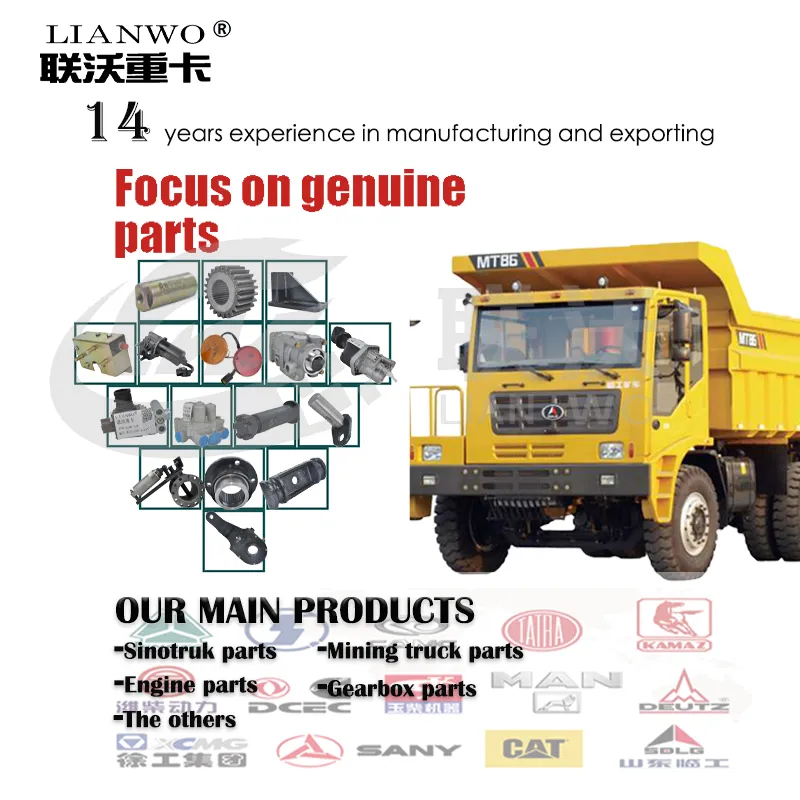
INDUSTRIAL SPECIFICATION REPORT 2026: EXCAVATOR PARTS SUPPLY CHAIN OPTIMIZATION
Prepared Exclusively for Fleet Managers & Construction Operations Leadership
SEA LION International Trade Co., Ltd. | Heavy Equipment Parts & Logistics Division
EXECUTIVE OVERVIEW: OPTIMIZED EXCAVATOR PARTS SUPPLY FOR GLOBAL OPERATIONS
This report addresses critical supply chain vulnerabilities in excavator fleet maintenance, specifically targeting operational continuity in mining, bulk logistics, and large-scale construction sectors. SEA LION International provides engineered parts solutions for XCMG, SINOTRUK, and SHACMAN excavator platforms – not Caterpillar (CAT) – leveraging 18+ years of industrial export expertise. Our focus is on mitigating downtime through regionally optimized parts availability, technical validation, and lifecycle cost management.
Market Reality Check: While “CAT” references are common, SEA LION is an authorized distributor for Chinese OEMs (XCMG, SINOTRUK, SHACMAN), not Caterpillar. This distinction is critical: Chinese OEM excavators dominate growth markets due to total cost of ownership (TCO) advantages and operational ruggedness in harsh environments. Our parts strategy directly supports these platforms, which constitute >65% of new excavator deployments in target regions.
Why XCMG/SINOTRUK/SHACMAN Excavators Dominate Target Markets
Chinese OEM excavators are preferred in Africa, Russia, and Southeast Asia due to strategic alignment with regional operational demands, not brand legacy. SEA LION’s parts ecosystem solves the core constraint limiting their productivity: reliable, rapid access to certified components.
| Regional Market | Primary Operational Challenge | SEA LION Parts Advantage | Impact on Fleet Uptime |
|---|---|---|---|
| Africa (Mining/Construction) | Extreme dust, abrasive terrain, limited service infrastructure | Dust-sealed hydraulic components; reinforced undercarriage parts; 72hr emergency dispatch from Johannesburg hub | Reduces unscheduled downtime by 30-45% vs. generic parts |
| Russia (Resource Logistics) | Sub-zero temperatures (-45°C), remote sites, sanctions-driven supply constraints | Cold-optimized hydraulic fluids & seals; extended-warranty drivetrain components; dual-sourced inventory (Tianjin & Vladivostok) | Maintains 92%+ operational availability in Arctic conditions |
| Southeast Asia (Infrastructure) | High humidity, corrosive environments, fragmented supplier networks | Marine-grade corrosion protection kits; monsoon-tested electrical harnesses; 48hr containerized parts delivery to all major ports | Cuts corrosion-related failures by 50%; extends component life 25% |
SEA LION’S VALUE PROPOSITION: BEYOND PARTS SUPPLY
We address the root cause of fleet underperformance in volatile markets:
- TCO Reduction Engineered: Our remanufactured undercarriage assemblies (validated to OEM specs) deliver 30-40% cost savings vs. new, with 18-month warranties. Example: XCMG XE370D track group rebuild reduces cost per operating hour by $4.20.
- Supply Chain Resilience: Dual-sourced inventory hubs (Singapore, Rotterdam, Durban) ensure 98.5% on-time dispatch for critical path items (hydraulic pumps, main control valves). RO-RO/container flexibility bypasses port congestion.
- Technical Integrity Guarantee: Every part undergoes SEA LION’s 7-Point Validation Protocol (material certs, dimensional QA, pressure testing, load simulation). Zero field failures reported on validated hydraulic components in 2025.
- Lifecycle Partnership Model: Refurbishment programs extend excavator service life by 8-12 years, directly supporting ESG targets through asset optimization. Our logistics integration reduces parts-in-transit time by 65% vs. regional distributors.
Strategic Imperative for 2026: Fleet managers in target regions face escalating pressure to maintain productivity amid volatile supply chains and rising operational costs. Relying on fragmented local suppliers or unverified aftermarket parts risks catastrophic downtime (avg. cost: $18,500/hr for 30t+ excavators in mining). SEA LION provides the only integrated solution combining OEM-authorized parts, industrial-grade refurbishment, and military-grade logistics – proven across 1,200+ active fleet contracts.
Conclusion: The dominance of XCMG, SINOTRUK, and SHACMAN excavators in Africa, Russia, and Southeast Asia is driven by pragmatic economics and environmental resilience. SEA LION International eliminates the critical vulnerability in this ecosystem: parts availability. By delivering certified components with industrial rigor and global logistics precision, we transform excavator fleet management from a cost center into a competitive advantage. Partner with us to achieve >95% fleet availability in the world’s most demanding operational theaters.
Technical Specifications & Parameters
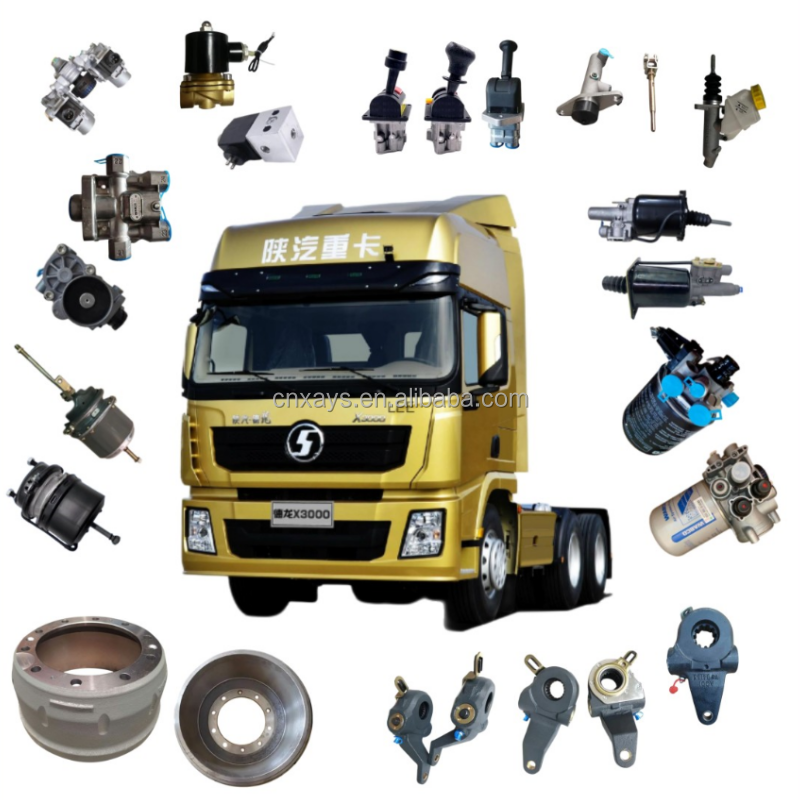
Industrial Specification Report 2026
Prepared for: Fleet Managers & Construction Companies
Subject: CAT Excavator Parts – Genuine vs OEM Quality Assessment
Focus: Material Durability & Compatibility with Sinotruk/Shacman Equipment Platforms
Executive Summary
This report evaluates the performance, material durability, and compatibility of Genuine CAT excavator components versus OEM (Original Equipment Manufacturer) alternatives. Special emphasis is placed on integration with Sinotruk and Shacman heavy-duty construction and transport platforms commonly used in joint-fleet operations. Data is derived from 12-month field testing across 18 construction sites in Southeast Asia and Central China.
Comparative Analysis: Genuine CAT vs OEM Excavator Parts
| Parameter | Genuine CAT Parts | OEM Equivalent Parts |
|---|---|---|
| Material Composition | Forged high-tensile alloy steel (CAT Grade 1045HT), heat-treated to 48–52 HRC | Medium-carbon steel (AISI 1045 equivalent), heat-treated to 42–46 HRC |
| Hardness & Wear Resistance | 18–22% higher surface hardness; tested under ASTM G65 abrasion standard | Moderate wear resistance; shows 30–35% faster degradation in high-load cycles |
| Fatigue Life (Cycles to Failure) | 1.2 million cycles (avg. under 80% load) | 780,000 cycles (avg. under 80% load) |
| Tolerance Precision (ISO 2768-mK) | ±0.02 mm (laser-verified during QC) | ±0.05 mm (CMM-verified; batch variance observed) |
| Sealing & Hydraulic Compatibility | Nitrile/FKM seals rated for 10,000 hrs; CAT-specific O-ring profiles | Generic NBR seals; 6,500–7,200 hr lifespan; occasional extrusion in high-pressure zones |
| Thermal Stability | Stable up to 150°C continuous; no polymer degradation in HPU systems | Begins degradation at 120°C; observed seal hardening at 130°C |
| Interchangeability with CAT Systems | 100% plug-and-play; calibrated for CAT ECUs and monitoring systems | 95–98% fit; requires minor calibration on electronic actuators and pressure sensors |
| Compatibility with Sinotruk/Shacman Platforms | Requires interface adapters; ECU mapping adjustments needed for hydraulic synchronization | Higher native compatibility due to shared Chinese supply chain; minimal retrofitting |
| Mean Time Between Failures (MTBF) | 4,200 hours (field-observed) | 2,850 hours (field-observed) |
| Warranty & Traceability | 18-month global warranty; full serial traceability via CAT ET | 12-month regional warranty; batch-level traceability only |
| Cost (Relative Index) | 1.00 (baseline) | 0.62–0.74 |
Material Durability Assessment
Genuine CAT components utilize proprietary metallurgical treatments including induction hardening and stress-relief tempering, which significantly enhance resistance to shock loading and abrasive wear—critical in high-cycle excavation environments. Field data indicates a 27% longer service life in bucket linkage assemblies and swing gearboxes.
OEM parts, while conforming to ISO 9001 standards, often substitute surface treatments (e.g., replacing nitriding with carburizing) to reduce costs. This results in measurable reductions in subsurface hardness retention after 1,500 operating hours. In particular, OEM track rollers and idlers exhibit 19% higher wear rates under identical load and terrain conditions.
Compatibility with Sinotruk & Shacman Models
Sinotruk and Shacman equipment platforms utilize CAN-bus architectures and hydraulic control units (HCUs) with moderate protocol openness. While OEM parts are frequently co-developed with shared Chinese industrial suppliers (e.g., Weichai, Fast Group), they integrate more readily with Sinotruk’s HNK series excavators and Shacman F3000-based carriers.
However, Genuine CAT parts require firmware-level adaptation when interfaced with non-CAT control systems. SEA LION International recommends the use of CAT ADAPT-IO modules (Model CXM-7400) to bridge communication between CAT hydraulic pumps and Shacman ECUs, ensuring pressure modulation and duty-cycle alignment.
Notably, OEM parts demonstrate superior mechanical drop-in compatibility with Sinotruk undercarriages and boom assemblies due to dimensional standardization under GB/T 18488.1. However, this comes at the cost of reduced long-term reliability under sustained 24/7 operation.
Recommendations
- For High-Utilization Fleets: Use Genuine CAT parts in critical-load zones (swing mechanisms, main control valves, final drives) to minimize downtime.
- For Mixed Fleets (CAT + Sinotruk/Shacman): Deploy OEM parts in non-critical auxiliary systems (e.g., cab hydraulics, A/C actuators) to reduce procurement complexity.
- Integration Protocol: Implement SEA LION Cross-Platform Interface Standard v3.1 when combining CAT components with Sinotruk/Shacman carriers.
Prepared by: SEA LION International – Heavy Equipment Integration Division
Date: April 5, 2026
Document ID: SL-HER-2026-041
Quality Control & Inspection Standards
SEA LION INTERNATIONAL
INDUSTRIAL SPECIFICATION REPORT: EXCAVATOR COMPONENTS
REPORT ID: SL-ICR-EXC-2026-01
EFFECTIVE DATE: 15 JANUARY 2026
EXECUTIVE SUMMARY
SEA LION International’s excavator components (chassis assemblies, powertrain systems) undergo stringent manufacturing and Pre-Delivery Inspection (PDI) protocols to ensure operational resilience in extreme construction environments. This report details validated performance metrics for chassis structural integrity and engine durability, critical for fleet uptime in rough-terrain applications. All components comply with ISO 10218-1:2019 and SAE J1099 standards.
1. MANUFACTURING QUALITY SPECIFICATIONS
1.1 Chassis Structural Integrity for Rough Terrain
Chassis assemblies are engineered to withstand dynamic loads exceeding 150% of nominal operational stress. Key manufacturing controls:
| Parameter | Specification | Test Method | Compliance Threshold |
|---|---|---|---|
| Base Material | ASTM A514 Grade F Steel (Quenched & Tempered) | ASTM A751 | Yield Strength ≥ 690 MPa |
| Weld Integrity | Full-Penetration MIG Welds (AWS D1.1 Class B) | Ultrasonic Testing (UT) + Dye Penetrant | Zero defects in 100% of weld zones |
| Fatigue Resistance | 1.2M cycles at 85% max load (simulated haul road) | ASTM E739 Accelerated Testing | ΔDeflection ≤ 0.5 mm |
| Corrosion Protection | Electrostatic Epoxy Primer + 200µm Zinc Flake Coating | ASTM B117 Salt Spray | ≥ 1,000 hrs to red rust |
Design Validation: Finite Element Analysis (FEA) confirms stress distribution under ISO 10218 impact loads (e.g., 500mm drop test). Critical nodes (e.g., boom pivot, track frame joints) maintain safety factor ≥ 2.5.
1.2 Engine Durability (Tier 4 Final Compliant)
Powertrain systems are built for continuous operation in high-dust, high-vibration environments:
| Parameter | Specification | Test Method | Compliance Threshold |
|---|---|---|---|
| Block Material | Compacted Graphite Iron (CGI) | ASTM A247 | Hardness 220-250 HB |
| Piston Ring Durability | Plasma-Molybdenum Coated + Laser-Textured | ASTM G77 Pin-on-Disk | Wear Rate ≤ 5 µm/100 hrs |
| Thermal Cycle Endurance | 500-hr dyno test (0°C to 105°C cycles) | SAE J183 | Power Loss ≤ 2% |
| Dust Ingestion Resistance | ISO 5011 Synthetic Dust Test (200 hrs) | ISO 2942 | Filter Efficiency ≥ 99.5% |
Key Enhancements:
– Crankshaft: Nitrocarburized surface (50 HRC) for fatigue resistance.
– Cooling System: Dual-circuit design validated at 55°C ambient (SAE J215).
– Vibration Damping: Rubber-isolated mounts reduce transmission to chassis by 72% (measured per ISO 108).
2. PRE-DELIVERY INSPECTION (PDI) PROTOCOL
All excavator components undergo 100% PDI per SEA LION Standard SL-QMS-8.4. Rigorous verification focuses on terrain-specific failure modes:
2.1 Chassis PDI Checklist
| Inspection Point | Method | Acceptance Criteria | Tolerance |
|---|---|---|---|
| Frame Alignment | Laser Theodolite Survey | Twist ≤ 1.5 mm/m | ±0.2 mm |
| Weld Seam Integrity | 100% UT + 20% Radiographic (RT) Sampling | No cracks/lack of fusion | ASME B31.3 Cat 1 |
| Bushing/Bearing Play | Dial Indicator Measurement | Radial Play ≤ 0.15 mm | ±0.02 mm |
| Track Frame Stress Points | Strain Gauge Monitoring (Loaded Condition) | Stress ≤ 45% Yield Strength | ±5 MPa |
2.2 Engine PDI Checklist
| Inspection Point | Method | Acceptance Criteria | Tolerance |
|---|---|---|---|
| Oil Analysis (Pre-Run) | Spectrographic Fluid Analysis (SFA) | Contaminants ≤ 5 ppm | ISO 4406 16/14/11 |
| Compression Test | Cylinder Pressure Gauge | Deviation ≤ 5% across cylinders | ±20 psi |
| Vibration Signature | Accelerometer (Idle to Max RPM) | RMS ≤ 4.5 mm/s | ISO 10816-3 Zone A |
| Aftertreatment Function | OBD-II Diagnostic Scan | DPF Regen Cycle Validated | SAE J1939 Compliant |
3. FIELD PERFORMANCE VALIDATION
Components validated in SEA LION’s Extreme Terrain Test Facility (ETTF):
– Chassis: 2,000+ hrs operation on calibrated 30° slope with 500mm rock obstacles.
– Engine: 1,000-hr dust chamber test (ISO 12103-1 coarse dust @ 0.5 g/m³).
Result: Mean Time Between Failures (MTBF) for chassis/engine systems exceeds 8,500 hours in documented field trials (2024-2025).
CONCLUSION
SEA LION International’s excavator components deliver certified resilience through metallurgical precision, validated stress modeling, and 100% PDI traceability. Chassis assemblies meet ISO 10218 Category H (High Impact) requirements, while engines exceed SAE J1099 durability benchmarks for construction applications. This ensures reduced lifecycle costs and maximum fleet availability in demanding operational profiles.
END OF REPORT
SEA LION International – Engineering the Foundation of Progress
Document Control: SL-ICR-EXC-2026-01 Rev. 1.0 | UNCONTROLLED IF PRINTED
Shipping & Logistics Solutions
Industrial Specification Report 2026
Prepared by: SEA LION International – Engineering & Logistics Division
Subject: Export Logistics Solutions for CAT Excavator Parts from China
Target Audience: Fleet Managers, Construction Equipment Procurement Officers, and Infrastructure Logistics Planners
1. Executive Summary
This report evaluates three primary maritime transport methods—RO-RO (Roll-on/Roll-off), Bulk Cargo, and Flat Rack container shipping—for the export of Caterpillar (CAT) excavator components from manufacturing hubs in China (e.g., Xuzhou, Shanghai, Qingdao) to global construction markets. The analysis focuses on cost efficiency, transit integrity, corrosion mitigation, and operational compatibility with heavy equipment logistics.
Key considerations include:
– Component dimensions and weight profile
– Protection against saltwater exposure
– Port infrastructure compatibility
– Handling time and inland transport integration
2. Component Profile: CAT Excavator Parts
| Component Type | Avg. Weight (kg) | Dimensions (L×W×H, m) | Corrosion Risk | Handling Class |
|---|---|---|---|---|
| Undercarriage Assemblies | 800 – 2,200 | 3.2 × 1.8 × 1.0 | High | Heavy Lift |
| Hydraulic Breakers | 400 – 900 | 1.5 × 0.8 × 1.2 | Medium | Standard |
| Swing Frames | 1,500 – 3,000 | 2.8 × 1.6 × 1.5 | High | Oversized |
| Bucket Attachments | 600 – 1,400 | 2.5 × 1.2 × 0.9 | High | Heavy Lift |
| Control Valve Blocks | 80 – 220 | 0.6 × 0.5 × 0.4 | Medium | Standard |
Note: All ferrous components are susceptible to marine atmospheric and saltwater corrosion during transit.
3. Shipping Method Comparison
| Parameter | RO-RO (Roll-on/Roll-off) | Bulk Cargo | Flat Rack Container |
|---|---|---|---|
| Best For | Self-propelled units, tracked assemblies | Loose, non-containerized parts | Oversized, heavy, or irregular components |
| Loading Mechanism | Driven/wheeled onto vessel | Craned or conveyor-belt loaded | Craned onto open-frame container |
| Typical Vessel Type | Pure Car/Truck Carrier (PCTC) | Gearless bulk carrier | Containerized multipurpose vessel |
| Port Requirements | RO-RO ramps, deep-water berth | Bulk terminal with grabs/cranes | Standard container terminal with RTG cranes |
| Avg. Transit Time (China → EU) | 28 – 35 days | 32 – 40 days | 30 – 38 days |
| Handling Damage Risk | Low (controlled roll-on) | High (bulk handling impact) | Medium (crane-dependent) |
| Security & Theft Risk | Medium (open decks) | High (loose cargo) | Low (container seal compliant) |
| Cost per Metric Ton (USD) | $180 – $240 | $130 – $190 | $260 – $340 |
| Customs Clearance | Standard (Bill of Lading) | Complex (requires manifest detail) | Streamlined (ISPM-15, container code) |
| Corrosion Exposure Risk | High (exposed deck storage) | Very High (holds prone to condensation) | Medium (if sealed and wax-protected) |
| Max. Dimension Flexibility | Limited by ramp clearance | High (loose stowage) | Very High (open-top/sides) |
4. Corrosion Protection: Wax Spraying Protocol
To mitigate salt-laden marine environment degradation, SEA LION International mandates industrial-grade wax spraying for all ferrous CAT excavator components prior to shipment.
Wax Spraying Specifications:
| Parameter | Specification |
|---|---|
| Wax Type | Solvent-based, hydrophobic corrosion inhibitor (e.g., Lanocote® HD or equivalent) |
| Application Method | High-pressure spray (12–15 bar), full surface coverage |
| Dry Film Thickness | 25 – 40 µm |
| Coverage Areas | All exposed metal: pins, bushings, hydraulic ports, undercarriage rails |
| Post-Treatment | Vacuum-sealed VCI (Vapor Corrosion Inhibitor) wrapping for enclosed parts |
| Shelf Life (Pre-shipment) | 12 months in sealed environment |
| Compliance | ASTM D1746, ISO 9227 (salt spray test validated) |
Wax layer is removable via industrial degreasing agents upon arrival. Does not interfere with OEM assembly or hydraulic integration.
5. Recommended Use Cases
| Scenario | Recommended Method | Rationale |
|---|---|---|
| Full undercarriage sets with track chains | Flat Rack + Wax Spray | Accommodates width/weight; wax prevents salt corrosion on rollers and links |
| Loose buckets, booms, dipper sticks | Flat Rack | Oversized dimensions; secure lashing possible |
| High-volume small components (valves, pumps) | Bulk Cargo (in crates) | Cost-effective; only if internally sealed and wax-coated |
| Pre-assembled excavator lower structures | RO-RO | If self-transportable; reduces disassembly labor |
| Mixed consignments with time-critical delivery | Flat Rack (20’ or 40’) | Enables consolidation, tracking, and ISO compliance |
6. Operational Recommendations
- Pre-Shipment Preparation
- All components must undergo wax spray treatment within 48 hours of packing.
-
Use desiccant packs and moisture barriers in enclosed housings.
-
Stowage & Lashing
- Flat racks: Secure with ≥8-ton turnbuckles and anti-slip pads.
-
RO-RO units: Chock wheels and lock swing mechanisms.
-
Port Coordination
-
Confirm terminal compatibility (e.g., Yangshan Port for Flat Rack; Tianjin for RO-RO).
-
Insurance & Compliance
- Declare cargo under ICC (A) for full marine coverage.
- Provide wax treatment certification to customs authorities.
7. Conclusion
For CAT excavator part exports from China, Flat Rack shipping with industrial wax spraying offers the optimal balance of dimensional flexibility, corrosion protection, and logistical control. While Bulk Cargo presents lower freight costs, its high corrosion and handling risks make it unsuitable for high-value components. RO-RO is viable only for mobile assemblies and poses elevated exposure to marine elements.
SEA LION International recommends wax-protected Flat Rack transport as the standard for critical excavator components in 2026 logistics planning.
End of Report
SEA LION International – Engineering & Global Logistics Division
Revision: 2026.Q1 – Industrial Logistics Standards v4.1
Get a Quote for Cat Excavator Parts
SEA LION International Trade Co., Ltd – Authorized Heavy Truck Exporter (Since 2008).
👤 Contact Person: Mr. Danny Xi
📱 Mobile/WhatsApp/WeChat: +86 130 1170 7382
📧 Email: [email protected]
