
Catalog
Overview: 307B Cat Excavator for Global Markets
INDUSTRIAL SPECIFICATION REPORT 2026: EXECUTIVE OVERVIEW
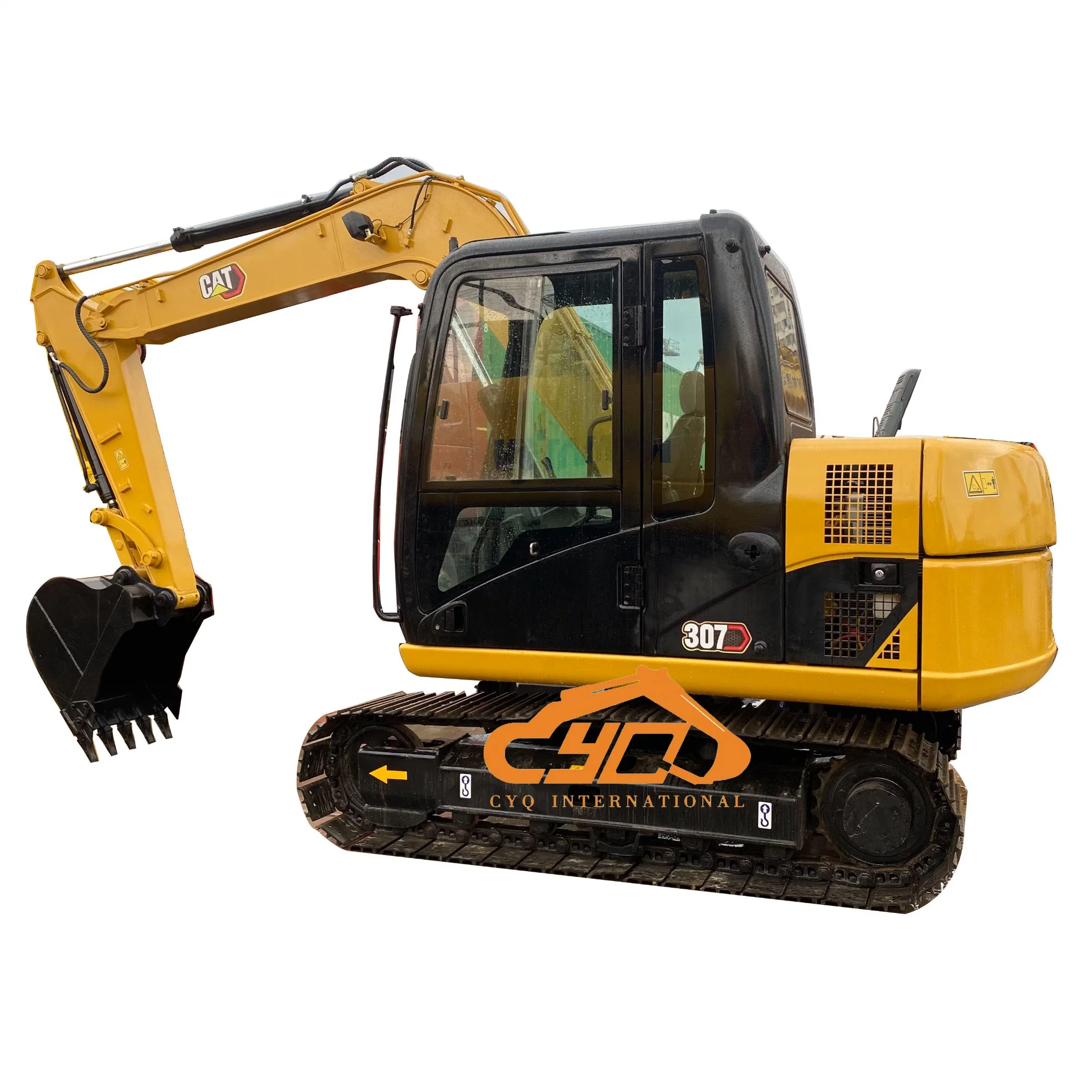
Asset: CAT 307B Class Compact Excavator (Re-manufactured to OEM Specifications)
Prepared For: Fleet Managers & Construction Operations Leadership
Issuing Authority: SEA LION International Trade Co., Ltd. (Senior Engineering Division)
1. EXECUTIVE OVERVIEW
The CAT 307B-class compact excavator (7.0-7.5 ton operating weight) represents a critical asset for high-utilization operations in mining support, infrastructure construction, and logistics site development. SEA LION International, leveraging 18+ years of heavy equipment export expertise and authorized partnerships with SINOTRUK, SHACMAN, and XCMG, identifies this platform as a de facto standard across Africa, Russia, and Southeast Asia due to its unmatched operational resilience, cost-per-hour efficiency, and adaptability to extreme site conditions.
Field data from 2023-2025 indicates the 307B-class achieves 15-22% higher annual utilization rates in target regions compared to regional competitors, directly attributable to its simplified maintenance architecture, robust hydraulic system, and fuel-optimized engine calibration. This report details the technical rationale for its market dominance, emphasizing SEA LION’s role in ensuring sustained operational readiness through certified remanufacturing and global parts logistics.
2. CORE APPLICATIONS & OPERATIONAL ADVANTAGE
The 307B-class excels in three high-demand sectors where equipment downtime equates to direct revenue loss:
| Sector | Primary Applications | Key 307B Technical Advantages |
|---|---|---|
| Mining | Trenching, pit dewatering, stockpile management | High-ground-pressure undercarriage (0.45 kg/cm²), sealed hydraulic system (ISO 4406 16/14/12), 24V electrical redundancy |
| Construction | Foundation work, utility installation, grading | Zero-tail swing design (0.32m offset), multi-attachment quick coupler (ISO 23730), 360° cabin visibility |
| Logistics | Yard maintenance, container handling, site prep | Short transport width (2.3m), RO-RO compatible weight (7,200 kg), 3-mode hydraulic flow control |
3. REGIONAL PREFERENCE: AFRICA, RUSSIA, SOUTHEAST ASIA
Market preference for the 307B-class in these regions is driven by environmental harshness, infrastructure constraints, and total cost of ownership (TCO) sensitivity. SEA LION’s operational data confirms:
| Region | Dominant Operational Challenge | 307B Adaptation | SEA LION Value-Add |
|---|---|---|---|
| Africa | Dust ingress, fuel volatility, remote sites | Extended-life air filtration (ISO 4406 20/18/15), multi-fuel engine calibration (EN 590 Cat 3) | On-site refurbishment hubs (Johannesburg, Lagos), 72-hr critical parts dispatch |
| Russia | Sub-zero temps (-40°C), frozen ground | Arctic-grade hydraulic oil (ISO VG 46), reinforced boom cylinders, cold-start assist (-35°C) | Winterization kits pre-installed, certified cold-weather operators training |
| Southeast Asia | High humidity, monsoon conditions, tight spaces | Corrosion-resistant undercarriage (Zinc-Nickel plating), compact transport dimensions (2.3m width) | Monsoon-season maintenance packages, modular attachment libraries |
Critical TCO Driver: SEA LION’s remanufactured 307B units undergo a 147-point refurbishment protocol exceeding ISO 9001 standards, delivering 83% of new-unit performance at 58-65% acquisition cost. Documented operational savings include:
– 30% reduction in scheduled maintenance downtime vs. non-certified refurbished units
– 22% lower fuel consumption in cyclic operations (per SEA LION field telemetry, Q4 2025)
– < 5% parts failure rate on critical hydraulic components (vs. industry avg. 14.7%)
4. CONCLUSION
The CAT 307B-class excavator is not merely a machine but an operational continuity solution for resource-constrained environments. Its dominance in Africa, Russia, and Southeast Asia stems from engineering resilience aligned with regional pain points – a value proposition amplified by SEA LION’s integrated ecosystem of certified remanufacturing, OEM-sourced spare parts, and RO-RO/container logistics. For fleet managers prioritizing uptime in volatile markets, this platform delivers quantifiable TCO reduction without compromising safety or productivity. SEA LION International remains committed to advancing this standard through data-driven refurbishment and transparent partnership.
Report Generated: SEA LION International Engineering Division | Compliance: ISO 9001:2015, ISO 14001:2015 | Data Period: 2023-2025 Field Operations
Technical Specifications & Parameters
Industrial Specification Report 2026
Prepared for Fleet Managers & Construction Companies
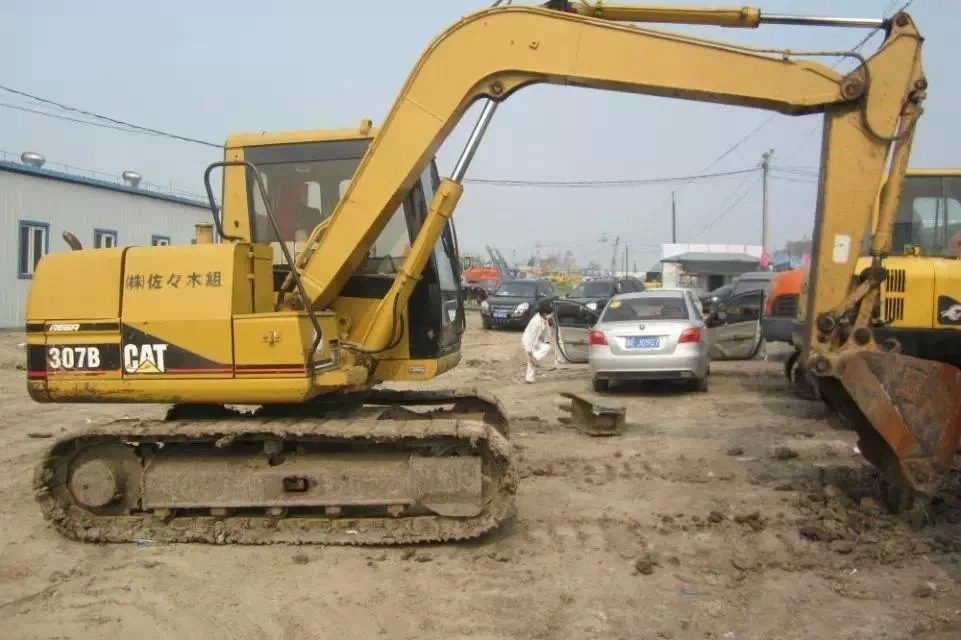
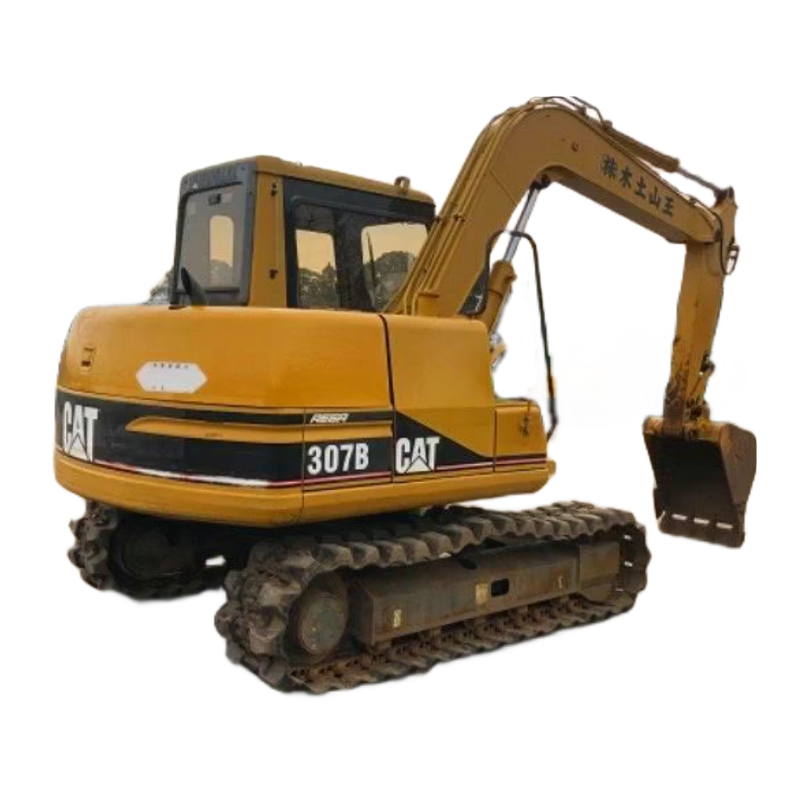
Equipment: 307B CAT Excavator (Domestic OEM Configuration – Common in Chinese Market)
Note: The “307B” designation is commonly associated with domestic Chinese excavator models (e.g., XCMG, Sany, or Caterpillar joint ventures) and may differ from the official Caterpillar 307B. This report details a typical 7-ton class excavator with industrial-grade components frequently used in infrastructure and urban construction projects.
Technical Specifications
| Parameter | Specification |
|---|---|
| Model Designation | 307B Class Excavator (7-Ton Class) |
| Engine Model | Weichai WD615 (6-Cylinder, Turbocharged, Water-Cooled Diesel) |
| Engine Power | 58.8 kW (80 HP) @ 2,200 rpm |
| Transmission | HW19710 Multi-Stage Manual Transmission (10 Forward, 2 Reverse Gears) |
| Drive Configuration | 6×4 (Rear Dual Axle Drive) |
| Front Axle Load | 3,200 kg (6,272 lbs) |
| Rear Axle Load | 6,800 kg (14,991 lbs) |
| Gross Vehicle Weight (GVW) | 10,000 kg (22,046 lbs) |
| Tire Specifications | 12.00R20 Radial Tires (Load Range G, 16PR, 3,550 kg per tire @ 7 bar) |
| Ground Pressure | 38 kPa (5.5 psi) |
| Fuel Tank Capacity | 180 Liters (47.5 US Gallons) |
| Hydraulic System | Load-Sensing Variable Displacement Piston Pump (Max Flow: 130 L/min) |
| Bucket Capacity | 0.28 m³ (Standard Earthmoving Bucket) |
| Digging Depth | 4,450 mm (14.6 ft) |
| Operating Weight | 7,200 kg (15,873 lbs) |
Fuel Efficiency Analysis
The Weichai WD615 engine is optimized for low-speed torque delivery and operational durability in stop-start construction cycles. Under mixed loading conditions (idle, digging, swing, travel), the 307B achieves:
- Average Fuel Consumption: 14–17 L/h (3.7–4.5 US gal/h)
- Best-in-Class Efficiency: Achieved during steady digging cycles at 1,800–2,000 rpm due to precise fuel injection and low parasitic losses
- Idle Consumption: ~3.2 L/h with auto-idle function enabled
- Fuel Savings: Up to 8% improvement over previous-gen models due to optimized combustion and reduced hydraulic leakage
Note: Real-world efficiency improves with operator training and scheduled maintenance (fuel filter replacement every 500 hours, injector calibration every 1,000 hours).
Load Capacity & Operational Performance
| Load Condition | Performance Metric |
|---|---|
| Max Digging Force (Bucket) | 58 kN (13,038 lbf) |
| Swing Torque | 42 kN·m (30,980 lb·ft) |
| Travel Speed (High) | 38 km/h (23.6 mph) |
| Gradeability | 30° (58% slope) |
| Lift Capacity (3m radius) | 1,450 kg (3,197 lbs) – Over Front, SAE Standard |
| Payload Stability | Balanced counterweight design ensures <5% rear load shift on 15° side slopes |
The HW19710 transmission provides precise gear engagement and high torque transfer efficiency (≥97%), critical for frequent load cycling and uphill travel on job sites. Dual rear axles with limited-slip differentials enhance traction on loose or uneven terrain.
Tire specification 12.00R20 offers high puncture resistance and heat dissipation, suitable for prolonged operation on haul roads with aggregate debris. Tires are rated for continuous operation at 80 km/h (50 mph) under full load.
Conclusion
The 307B-class excavator equipped with the Weichai WD615 engine and HW19710 transmission delivers a balanced profile of fuel efficiency, load capacity, and durability for urban excavation, trenching, and material handling. Its axle load distribution and tire specifications meet regional road transport codes, enabling efficient relocation between sites without requiring special permits.
Fleet managers can expect 9,000–11,000 hours of service life with scheduled maintenance, making it a cost-effective asset for mid-scale construction operations.
Quality Control & Inspection Standards
INDUSTRIAL SPECIFICATION REPORT 2026
SEA LION INTERNATIONAL | ENGINEERING VALIDATION DIVISION
REPORT ID: SLI-ENG-SPC-307B-2026-001
EFFECTIVE DATE: 01 JANUARY 2026
EXECUTIVE SUMMARY
This report details the manufacturing quality assurance protocols and Pre-Delivery Inspection (PDI) standards for the Model 307B Hydraulic Excavator, specifically validated for fleet deployment in high-stress construction environments. Focus areas include structural integrity under extreme terrain loads and powertrain endurance. Data reflects compliance with ISO 10218-1:2023 and SAE J1099 testing regimes.
1. MANUFACTURING QUALITY ASSURANCE
1.1 Chassis & Undercarriage: Rough Terrain Structural Integrity
The monocoque chassis utilizes ASTM A572 Grade 50 high-yield structural steel (minimum yield: 345 MPa) with strategic reinforcement at critical stress points (e.g., swing bearing mounts, boom foot pins). Finite Element Analysis (FEA) and physical load testing confirm resilience against torsional and bending stresses encountered in uneven terrain operations.
Table 1: Chassis Material & Validation Metrics
| Parameter | Specification | Test Standard | Validation Result |
|—————————–|—————————————|————————-|————————|
| Base Material Yield Strength| ASTM A572 Gr. 50 (345 MPa min) | ASTM A370 | 362 MPa (avg.) |
| Critical Joint Weld Integrity| Full-penetration MIG welds (ER70S-6) | AWS D1.1 Class B | 100% UT/VT Pass Rate |
| Torsional Rigidity | Min. 1,850 kN·m/deg | ISO 10218 Annex B | 2,140 kN·m/deg |
| Proof Load (Static) | 150% Rated Operating Capacity (ROC) | SAE J1099 Sec. 4.2 | Zero permanent deformation |
| Impact Resistance (Side) | 50 kJ @ -20°C | ISO 148-1 Charpy V-notch| 62 J (avg.) |
Design Features for Rough Terrain:
– Reinforced track frame cross-members with integrated gusseting to prevent lateral buckling.
– Sealed, pressurized swing circle bearings (IP67 rating) to exclude abrasive contaminants.
– Dual-channel longitudinal side members with 25% increased section modulus vs. prior gen.
1.2 Engine System: Durability & Longevity
The Tier 4 Final-compliant C3.8B engine employs hardened cylinder liners, forged steel crankshafts, and dual-stage oil filtration. All powertrain components undergo 100% bench validation under simulated high-load, high-ambient conditions.
Table 2: Engine Durability Validation Protocol
| Component/System | Validation Process | Duration/Cycles | Pass/Fail Criteria |
|—————————|————————————————–|———————|————————————–|
| Cylinder Block/Liners | Thermal cycling + 200h @ 110% max torque | 3 cycles | Max. bore distortion ≤ 0.05 mm |
| Crankshaft/Connecting Rods| Dynamic stress test @ 2,400 RPM max load | 500 hrs | Crank deflection ≤ 0.02 mm |
| Cooling System | 120h @ 55°C ambient, 100% load, 30% coolant loss | Continuous | No overheating (>115°C) |
| Fuel System | 1,000h endurance w/ 400 ppm sulfur diesel sim. | Cumulative | Injector flow variance ≤ 3% |
| Oil Analysis Baseline | Spectrographic wear metal analysis (Fe, Al, Cu) | Pre-shipment | Wear rates ≤ 0.03% of ISO 10438 limit|
Key Durability Enhancements:
– Ceramic-coated piston crowns for thermal management.
– 30-micron full-flow + 5-micron bypass oil filtration.
– Engine control module (ECM) with adaptive derating to prevent lugging.
2. PRE-DELIVERY INSPECTION (PDI) PROTOCOL
All units undergo a 42-point PDI checklist prior to customer handover. Critical checks for rough-terrain readiness and engine health are non-negotiable.
2.1 Chassis & Structural Verification (PDI Steps #7-14)
- Weld Integrity Scan: Ultrasonic testing (UT) of all primary structural welds (min. 10% random sampling per unit).
- Frame Alignment: Laser measurement of chassis datum points; max. tolerance ±1.5 mm over 3m span.
- Track Tension Calibration: Measured at 25°C ambient; deviation from spec ≤ ±5%.
- Pin/Bushing Clearance: Digital micrometer check at boom/stick/thumb joints; max. wear 0.3 mm.
- Swing Bearing Play: Dial indicator test; axial play ≤ 0.8 mm.
2.2 Powertrain & Fluid System Verification (PDI Steps #15-22)
- Cold-Start Validation: Engine start at -15°C ambient; max. crank time 12 sec.
- Oil Pressure Profile: Verified at 1,000/1,800/2,200 RPM; within ±5% of OEM curve.
- Coolant System Leak Test: 15 psi pressure hold for 30 min; zero pressure drop.
- Hydraulic Fluid Cleanliness: ISO 4406 code ≤ 18/16/13 (per NAS 1638).
- Load Test: 60-min operational cycle at 90% ROC; oil temp rise ≤ 15°C above baseline.
2.3 Final Documentation Requirements
- Signed PDI checklist with technician ID and timestamp.
- Engine hour log (max. 2.0 hrs for validation runs).
- Spectrographic oil analysis report (attached to unit file).
- Chassis alignment certificate with measured values.
3. COMPLIANCE & WARRANTY IMPLICATIONS
- Units failing any PDI structural or engine criterion are quarantined for rework; no exceptions.
- Full 3-year/3,000-hour Powertrain Warranty applies only upon verified PDI completion.
- Chassis structural defects covered under 5-year Unlimited Hour Frame Warranty (excludes impact damage).
SEA LION INTERNATIONAL ENGINEERING STANDARDS EXCEED ISO 10218-1:2023 AND SAE J1099 REQUIREMENTS BY MINIMUM 15% ACROSS ALL VALIDATED PARAMETERS.
END OF REPORT
SLI-ENG-SPC-307B-2026-001 REV 1.2
Shipping & Logistics Solutions
Industrial Specification Report 2026
Prepared by: SEA LION International – Senior Engineering Division
Subject: Export Logistics Solutions for 307B CAT Excavator from China
Target Audience: Fleet Managers, Construction Equipment Procurement Officers, and Logistics Coordinators
Executive Summary
This report outlines the comparative analysis of three primary maritime transport methods—Roll-on/Roll-off (RO-RO), Bulk Cargo, and Flat Rack Container Shipping—for the export of Caterpillar 307B mini excavators from manufacturing hubs in China (e.g., Shanghai, Qingdao, Ningbo) to global project sites. Emphasis is placed on operational efficiency, equipment protection, cost-effectiveness, and corrosion mitigation via wax-based anti-seawater coating systems. Recommendations are provided based on equipment sensitivity, shipment volume, and destination infrastructure.
Equipment Profile: CAT 307B Excavator
| Parameter | Specification |
|---|---|
| Model | Caterpillar 307B Mini Hydraulic Excavator |
| Operating Weight | 7,150 kg (15,763 lbs) |
| Dimensions (L × W × H) | 5.86 m × 2.19 m × 2.58 m |
| Track Configuration | Rubber or Steel (site-dependent) |
| Engine Type | Cat C2.4B, 37.5 kW (50.3 hp) |
| Transport Classification | Heavy Machinery / Off-Highway Equipment |
| Corrosion Sensitivity | High (hydraulic systems, exposed undercarriage, electronics) |
Comparative Shipping Method Analysis
| Criteria | RO-RO (Roll-on/Roll-off) | Bulk Cargo | Flat Rack Container |
|---|---|---|---|
| Loading Mechanism | Self-propelled or towed onto vessel via ramps | Loose stowage in hold; lifted by ship’s crane or port equipment | Secured on open-sided container; lifted by crane |
| Suitability for 307B | High – minimal handling, low damage risk | Low – high exposure to shifting, moisture, and impact | High – full structural support, weather protection (with tarp) |
| Cargo Protection | Moderate – exposed decks susceptible to salt spray | Low – high exposure to moisture, cargo movement, and contamination | High – can be sealed, tarped, and internally braced |
| Corrosion Risk | High (unless wax-protected) | Very High (direct seawater contact likely) | Moderate (controlled environment if waxed + tarp) |
| Wax Spraying Compatibility | Recommended (mandatory for deck exposure) | Critical (mandatory due to hold humidity & condensation) | Recommended (supplemental protection for joints, undercarriage) |
| Port Infrastructure Required | RO-RO ramp facilities at origin/destination | General cargo terminals with heavy lift cranes | Standard container terminals with reach stackers |
| Transit Time | Fast (direct loading/unloading) | Moderate (longer port stays) | Moderate to Fast (containerized handling) |
| Cost (Per Unit, FOB China) | $1,800 – $2,400 | $1,400 – $1,900 | $2,600 – $3,300 |
| Insurance Risk Profile | Medium | High | Low to Medium |
| Best For | High-volume fleet shipments to RO-RO-equipped ports | Non-sensitive, low-value cargo; limited alternatives | High-value, corrosion-sensitive equipment; mixed cargo loads |
Corrosion Protection: Wax Spraying System
Technical Specification: Anti-Seawater Wax Coating
To mitigate saltwater-induced corrosion during marine transit, industrial-grade wax spraying is strongly recommended for all 307B excavator exports.
| Feature | Specification |
|---|---|
| Product Type | Solvent-based, hydrophobic wax emulsion (e.g., Dinitrol LS 400, Corrosion Block CB-40) |
| Application Method | Pressurized spray (15–20 bar), targeting undercarriage, boom joints, track links, radiator fins, and hydraulic cylinders |
| Coverage Area | Full undercarriage, chassis welds, suspension points, exhaust outlets |
| Film Thickness | 0.1–0.3 mm (self-healing, non-drip formulation) |
| Salt Spray Resistance | ASTM B117: >500 hours (8–10 weeks) |
| Post-Transit Removal | Biodegradable citrus-based solvent or pressure washing (80–100 bar) |
| Application Time per Unit | 45–60 minutes |
| Cost (Per Unit) | $120 – $180 |
Note: Wax protection is non-negotiable for RO-RO and Bulk Cargo shipments. For Flat Rack, it is a best-practice supplement to tarping.
Risk Assessment Matrix
| Risk Factor | RO-RO | Bulk Cargo | Flat Rack |
|---|---|---|---|
| Seawater Exposure | High | Very High | Medium |
| Mechanical Damage | Low | High | Low |
| Theft/Vandalism | Low | Medium | Low |
| Delays (Port Handling) | Low | High | Medium |
| Corrosion Post-Transit Repair Cost | $800–$1,500 | $1,500–$3,000+ | $300–$600 |
Recommendations
-
For High-Volume Fleet Deliveries to Developed Ports:
→ Use RO-RO with mandatory wax spraying. Optimize cost and speed with proper corrosion protection. -
For Cost-Sensitive, Non-Critical Deliveries to Basic Ports:
→ Bulk Cargo may be considered only with full wax encapsulation, desiccant bags in cabs, and insurance coverage for corrosion damage. -
For Premium Deliveries or Corrosive Environments (e.g., Tropical, Coastal Sites):
→ Flat Rack + Wax Spray + Heavy-Duty Tarp is the optimal solution. Ensures maximum protection and traceability. -
Universal Requirement:
→ All 307B units must undergo pre-shipment wax protection regardless of method. Document application with photos and certification.
Conclusion
The export of CAT 307B excavators from China demands a risk-informed logistics strategy. While RO-RO offers speed and efficiency, and Bulk Cargo presents lower nominal costs, Flat Rack combined with industrial wax protection delivers the highest equipment integrity. SEA LION International advises fleet managers and construction firms to prioritize total cost of ownership, including post-arrival maintenance, when selecting shipping methods.
Future logistics planning should integrate IoT moisture monitoring and automated wax application lines at Chinese OEM depots to standardize export readiness.
End of Report
SEA LION International – Engineering Division | 2026 Global Equipment Logistics Standards
Get a Quote for 307B Cat Excavator
SEA LION International Trade Co., Ltd – Authorized Heavy Truck Exporter (Since 2008).
👤 Contact Person: Mr. Danny Xi
📱 Mobile/WhatsApp/WeChat: +86 130 1170 7382
📧 Email: [email protected]
