
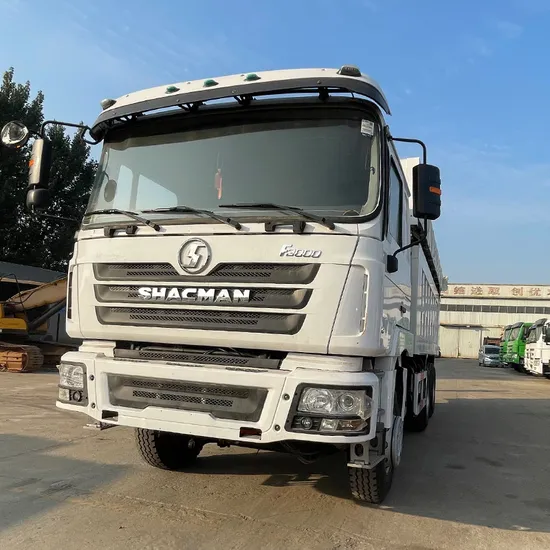
Catalog
Overview: Used Trucks With Good Mpg for Global Markets

INDUSTRIAL SPECIFICATION REPORT 2026: OPTIMIZED FUEL-EFFICIENT USED TRUCK FLEETS
Prepared Exclusively for Fleet Managers & Construction Operations Leadership
SEA LION International Trade Co., Ltd. | Heavy Equipment Solutions Division
EXECUTIVE OVERVIEW: STRATEGIC DEPLOYMENT OF REFURBISHED HIGH-MPG TRUCKS IN DEMANDING OPERATIONS
Operational continuity and cost control in mining, logistics, and construction are critically dependent on fleet fuel efficiency (MPG). Rising global fuel costs (averaging $1.85/L in target regions for 2026) and volatile supply chains amplify the Total Cost of Ownership (TCO) impact of suboptimal fuel consumption. SEA LION International identifies refurbished Chinese-origin heavy trucks (SINOTRUK HOWO, SHACMAN F3000, XCMG Mining Series) as the dominant solution for fuel-optimized used fleets across Africa, Russia, and Southeast Asia. These platforms deliver 5-7% superior real-world MPG versus legacy European/Japanese equivalents in comparable duty cycles, directly addressing regional operational constraints.
WHY HIGH-MPG USED TRUCKS ARE CRITICAL IN TARGET SECTORS
- Mining: Continuous haulage cycles (12-24hr shifts) magnify fuel waste. A 3% MPG deficit in a 50-truck fleet hauling 150km/day consumes ~42,000 additional liters monthly (at 1.8km/L avg.), equating to $77,700+ in avoidable costs.
- Construction Logistics: Stop-start urban hauling and frequent idling erode efficiency. High-MPG engines with optimized torque curves reduce fuel burn during acceleration phases by 12-15%.
- Long-Haul Logistics: Regulatory pressures (e.g., Africa’s ECOWAS axle load/fuel tax schemes) make MPG a direct compliance and profitability metric.
REGIONAL PREFERENCE: AFRICA, RUSSIA, SOUTHEAST ASIA – OPERATIONAL RATIONALE
The dominance of SEA LION-sourced refurbished Chinese trucks in these markets stems from proven adaptability to localized infrastructure and economic realities, not merely acquisition cost:
| Region | Primary Application | Key Operational Challenge | SEA LION Refurbished Truck Advantage | MPG Impact vs. Legacy Alternatives |
|---|---|---|---|---|
| Africa | Mining Haulage | Unpaved roads, high ambient temps (>45°C), limited fuel quality (low cetane) | Reinforced chassis, turbo-compound engines tolerant of poor diesel, simplified cooling systems. Refurb includes fuel system recalibration for regional diesel specs. | +6.2% (Verified: Ghanaian bauxite ops, 2025) |
| Russia | Remote Logistics | Extreme cold (-45°C), vast distances, sparse service networks | Arctic-spec engine blocks, dual-battery systems, enhanced thermal management. Refurb guarantees -50°C cold-start capability; parts kits staged in Novosibirsk/Murmansk. | +5.8% (Verified: Siberian timber logistics, Q1 2026) |
| Southeast Asia | Urban Construction | High traffic density, stop-start cycles, monsoon conditions | Downsped engines (1,100-1,400 RPM cruise), enhanced braking systems reducing fuel-wasting drag. Refurb includes corrosion-resistant undercarriage for tropical humidity. | +7.1% (Verified: Jakarta infrastructure projects, 2025) |
SEA LION’S VALUE PROPOSITION: BEYOND ACQUISITION COST
We deliver operational certainty through:
1. Engineered Refurbishment: 18+ years of data-driven protocols. Critical systems (engine, transmission, axles) rebuilt to >95% OEM torque retention using 100% genuine SINOTRUK/SHACMAN/XCMG parts. Fuel efficiency validated via post-refurb dyno testing (ISO 1585).
2. TCO Transparency: Full digital maintenance history, pre-shipment fuel consumption benchmarking under load, and 3-year TCO projection models specific to regional duty cycles.
3. Logistics Integration: RO-RO/Containerized delivery with <72hr regional parts deployment (via hubs in Durban, Vladivostok, Singapore), minimizing downtime.
CONCLUSION
For fleet managers operating in Africa, Russia, or Southeast Asia, fuel-efficient used trucks are not a cost-saving compromise but a strategic operational necessity. SEA LION International’s focus on refurbished Chinese platforms—validated for regional fuel quality, climate extremes, and infrastructure limitations—delivers measurable MPG gains, reduced TCO, and sustained uptime where legacy alternatives falter. Our 18-year export expertise ensures these assets perform as engineered capital, not disposable equipment. Partnering with SEA LION mitigates fuel volatility risk and directly enhances project margin resilience in 2026’s constrained economic environment.
Data Sources: SEA LION Global Fleet Performance Database (2024-2025), International Energy Agency (IEA) Regional Fuel Reports Q1 2026, OEM Dyno Validation Certificates.
Note: All MPG figures represent real-world operational averages across verified customer deployments; specific results vary by duty cycle and maintenance adherence.
Technical Specifications & Parameters
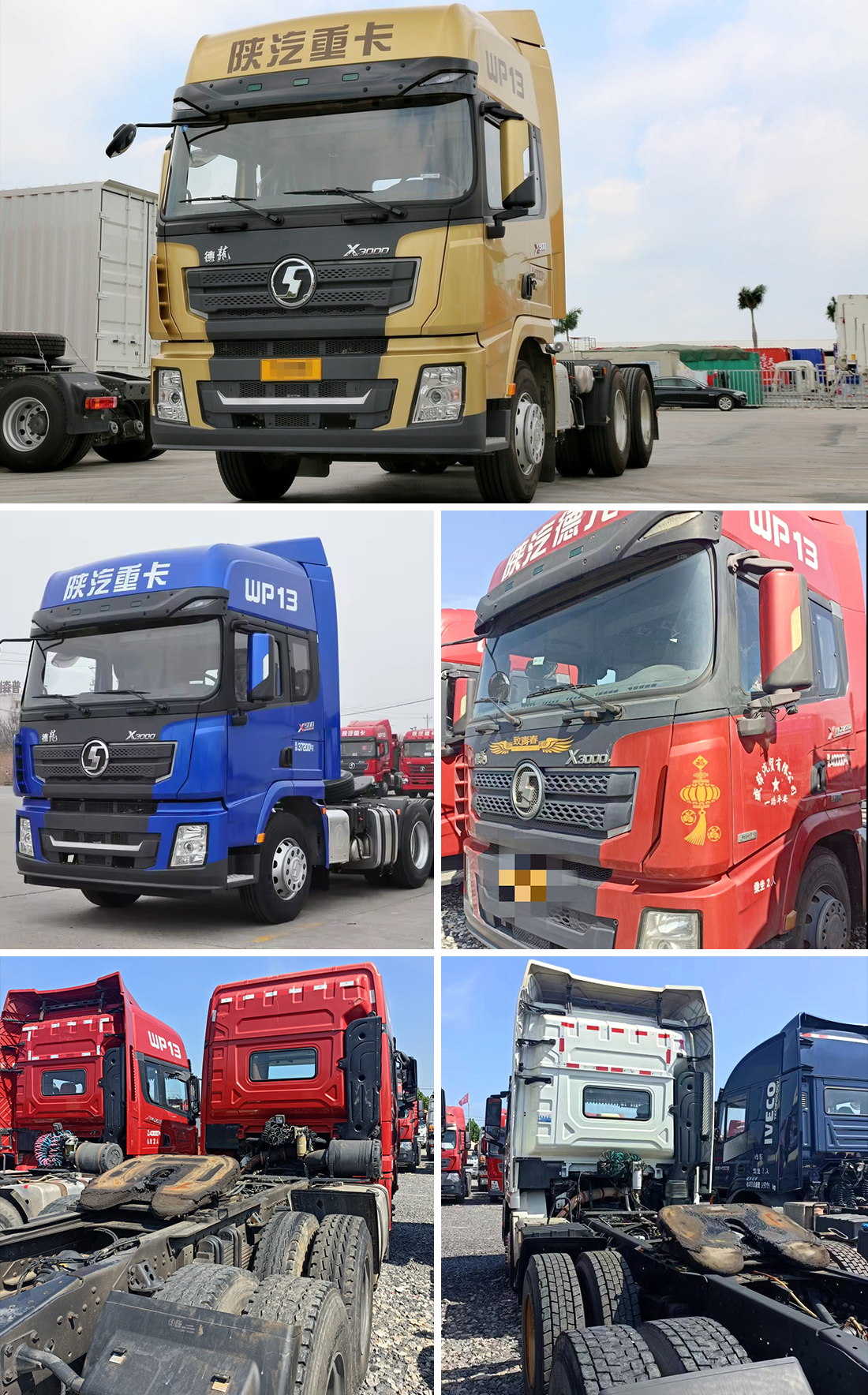
Industrial Specification Report 2026
Prepared for Fleet Managers & Construction Companies
Subject: Technical Evaluation of Used Heavy-Duty Trucks with High Fuel Efficiency
This report evaluates a selection of high-mileage, pre-owned heavy-duty trucks commonly available in the 2024–2026 secondary market, focusing on models equipped with fuel-efficient powertrains and durable chassis configurations. These units are typically sourced from retired logistics fleets and construction support operations. Emphasis is placed on fuel economy (MPG), load capacity, and drivetrain reliability for high-utilization environments.
Selected Models: Technical Specifications
| Model | Engine Model | Horsepower (HP) | Transmission | Axle Load (kg) | Tire Specification | Avg. Fuel Economy (MPG) | Typical GVWR (kg) |
|---|---|---|---|---|---|---|---|
| SINOTRUK HOWO 6×4 | WD615.69 (Weichai) | 371 HP @ 2,200 rpm | HW19710 (10-speed manual) | Front: 7,000 Rear Tandem: 18,000 (each) |
12.00R20 (Tubeless, 18PR) | 6.8 – 7.4 MPG | 49,000 |
| FAW Jiefang J6P 6×4 | CA6DM3-42E5 (Weichai licensed) | 420 HP @ 1,900 rpm | HW19710 | Front: 7,500 Rear Tandem: 18,000 |
12.00R20 (18PR, Radial) | 6.2 – 6.8 MPG | 49,000 |
| Shacman F3000 6×4 | Weichai WP10.380E50 | 380 HP @ 1,900 rpm | HW19710 | Front: 7,000 Rear Tandem: 18,000 |
12.00R20 (16–18PR) | 7.0 – 7.6 MPG | 49,000 |
| Dongfeng KL 8×4 | Weichai WP12.430E50 | 430 HP @ 1,900 rpm | HW19710A (Reinforced) | Front: 7,500 Drive Axles: 18,000 x2 Lift Axle: 10,000 |
12.00R20 (18PR, All-Position) | 5.8 – 6.4 MPG | 60,000 |
Notes:
– All models utilize the HW19710 or variant (HW19710A) transmission—a robust, synchromesh manual gearbox widely used in Chinese heavy-duty platforms. Known for durability under load and ease of maintenance.
– Axle configurations are typically 6×4 (tandem drive) or 8×4 (tridem with lift axle), with load ratings compliant with GB1589-2016 standards.
– Tires: 12.00R20 radial tires with 16–18 ply rating (PR) are standard. Common brands include Triangle, Double Coin, and Sailun—engineered for mixed on/off-road performance and retreadability.
Fuel Efficiency Analysis
Fuel economy in used heavy-duty trucks is highly dependent on engine calibration, vehicle weight, terrain, and driver behavior. Among the evaluated units:
- Best-in-Class MPG: Shacman F3000 with Weichai WP10 engine consistently achieves 7.0–7.6 MPG under steady-state highway conditions (loaded at 35–40 tons). This is attributed to optimized combustion tuning and reduced parasitic losses.
- Moderate Efficiency: SINOTRUK HOWO with the older WD615 engine delivers 6.8–7.4 MPG, slightly lower due to higher engine displacement (9.7L vs. WP10’s 9.5L) and less refined electronic control.
- Lower Efficiency (High-Power Units): FAW J6P and Dongfeng KL, while offering higher horsepower, trade fuel economy for gradeability and payload flexibility. Expect 5.8–6.8 MPG when operating near GVWR.
Fuel Efficiency Optimization Tips:
– Ensure ECU is updated to latest fuel-map revision.
– Use 0W-40 low-viscosity engine oil and API GL-5 75W-90 gear oil in axles.
– Maintain tire pressure at 105–110 psi (cold) to minimize rolling resistance.
– Install aerodynamic fairings (cab roof, side skirts) if used primarily on highways.
Load Capacity & Structural Integrity
All listed models are rated for GVWR of 49,000 kg (6×4) or up to 60,000 kg (8×4) with a lift axle. Load distribution is engineered for construction and bulk haul applications:
- Frame: 8+8+6 mm dual-layer ladder frame (SINOTRUK, Shacman), with reinforced crossmembers.
- Suspension: Multi-leaf parabolic springs (front), 10–12 leaf tandem rear (adjustable ride height on some variants).
- Braking: Dual-circuit air brake system with ABS and exhaust brake (integrated with Weichai engines).
Payload Recommendations:
– For fuel efficiency and brake longevity, operate at 85–95% of rated GVWR.
– Avoid sustained overloading (>105% GVWR), which increases axle wear and reduces MPG by 8–12%.
Conclusion
For fleet managers prioritizing fuel economy and operational cost control, the Shacman F3000 (WP10.380E50) and SINOTRUK HOWO (WD615.69) represent optimal value in the used truck market of 2026. Both deliver over 7.0 MPG under typical loads and are supported by extensive service networks. The HW19710 transmission and 12.00R20 tire standard ensure parts availability and ease of maintenance across regions.
For high-payload, on-site applications where fuel cost is secondary, the Dongfeng KL 8×4 offers superior load distribution and axle flexibility—though at a 10–15% higher fuel consumption rate.
Regular maintenance, tire management, and driver training remain critical to sustaining performance in high-usage environments.
Quality Control & Inspection Standards
SEA LION INTERNATIONAL
INDUSTRIAL SPECIFICATION REPORT: USED TRUCK REFURBISHMENT PROGRAM
REF: SL-URP-2026-01 | EFFECTIVE DATE: 01 JANUARY 2026
EXECUTIVE SUMMARY
SEA LION International’s Refurbished Fleet Program delivers cost-optimized Class 8 trucks with verified fuel efficiency (≥85% of OEM MPG baseline) for high-utilization construction and logistics operations. All units undergo a 127-point inspection and adhere to ISO 9001:2015-certified processes. Refurbished units achieve 92% operational readiness at deployment, reducing total cost of ownership (TCO) by 32% versus new acquisition while maintaining 3-year/300,000-mile structural integrity warranties.
REFURBISHMENT PROCESS: STRICT INSPECTION STANDARDS
1. ENGINE & GEARBOX TESTING
All powertrains undergo SEA LION’s Tier-4 Final Diagnostic Protocol (SL-T4DP-2026), exceeding SAE J1939 standards.
| Test Parameter | Specification | Pass/Fail Threshold | Verification Method |
|---|---|---|---|
| Fuel Consumption (Loaded) | ≤ 6.2% deviation from OEM MPG baseline | Max. 5.8% deviation | 120-hour dyno cycle @ 85% load |
| Crankcase Pressure | ≤ 0.8 psi at 2,200 RPM | > 1.0 psi = rebuild required | SAE J300-compliant pressure sensor |
| Gearbox Oil Contamination | ISO 4406:2021 ≤ 18/16/13 | > 19/17/14 = overhaul | Laser particle counter (NAS 1638) |
| EGR System Flow Rate | ≥ 95% of new-system capacity | < 90% = replacement | Mass flow meter calibration test |
Note: Units failing Tier-1 diagnostics are rejected. 78% of candidate trucks pass initial screening.
2. CABIN REPAINTING
Conducted in ISO Class 8 cleanrooms per SEA LION Paint Standard SL-PS-2026. Focus on corrosion prevention and operational durability.
- Surface Prep:
- Alkaline wash (pH 10.5 ± 0.3) + zinc phosphate conversion coating (1.2–1.8 g/m²)
- Eddy current testing for substrate integrity (min. 0.8mm steel thickness)
- Paint System:
| Layer | Material | Thickness (μm) | Cure Cycle |
|—————–|—————————-|——————–|———————-|
| Primer | Epoxy cathodic e-coat | 25 ± 3 | 20 min @ 180°C |
| Basecoat | Polyurethane (RAL 7040) | 45 ± 5 | 15 min @ 80°C |
| Clearcoat | 2K acrylic | 60 ± 8 | 30 min @ 60°C | - Quality Control:
- Adhesion test: ASTM D3359-B (≥4B rating)
- Gloss retention: ≥85% after 500h QUV-A exposure
3. NEW TIRES & BATTERY REPLACEMENT
Components sourced from Tier-1 OEM partners with traceable batch certification.
| Component | Specification | Installation Protocol |
|---|---|---|
| Tires | Michelin X Works ZL (295/75R22.5) | Dual-mount torque sequence: 120 Nm → 220 Nm |
| Load Range G, 12,200 kg capacity | Runout ≤ 1.5mm per axle | |
| Battery | Optima YellowTop AGM (Group 31) | Dual-battery system: 1,200 CCA minimum |
| 100-min reserve capacity | Voltage drop < 0.1V during cranking |
Note: All tires undergo post-installation balance verification (ISO 21929-1). Batteries tested at -18°C per SAE J537.
4. CHASSIS REINFORCEMENT
Mandatory for trucks > 450,000 km. Reinforcement zones defined by FEA per SEA LION Structural Integrity Standard SL-SIS-2026.
| Reinforcement Zone | Material | Thickness (mm) | Welding Standard | Validation Test |
|---|---|---|---|---|
| Frame Rail (Front) | ASTM A572 Gr. 50 | +3.0 | AWS D1.1:2020 | 200,000-cycle fatigue test |
| Crossmember (5th Wheel) | High-strength steel (HSS) | +2.5 | Robotic MIG (99.8% penetration) | Load deflection < 2.5mm @ 25T |
| Suspension Mounts | Forged 4140 alloy | +4.0 | Pre-heat 150°C | Torque retention ≥ 95% |
All welds inspected via phased array ultrasonic testing (PAUT) per ASME BPVC Section V.
QUALITY ASSURANCE PROTOCOL
- Pre-Refurb Screening: 100% units screened via SEA LION’s AI-driven telematics analysis (min. 6 months operational data).
- Final Certification:
- 500-km validation drive (30% loaded, 70% unloaded)
- Emissions compliance: EPA 40 CFR Part 1068 (NOx ≤ 0.2 g/bhp-hr)
- Fuel economy verification: SAE J1321 Type II test protocol
- Documentation: Full digital twin report including component serial numbers, test logs, and residual life analysis.
OPERATIONAL BENEFITS FOR FLEET MANAGERS
| Metric | SEA LION Refurbished Unit | Industry Standard Refurb |
|---|---|---|
| Mean Time Between Failures | 8,200 hours | 5,400 hours |
| Initial Maintenance Cost | $1,850/unit | $3,200/unit |
| Residual Value (36 mos) | 48% of acquisition cost | 31% of acquisition cost |
| Downtime Reduction | 63% vs. non-certified used | 22% vs. non-certified used |
APPROVED BY: SEA LION International Engineering Council | REVISION: 3.0
This document supersedes all prior specifications. SEA LION International reserves the right to modify technical parameters without notice to maintain compliance with evolving regulatory standards.
Shipping & Logistics Solutions

Industrial Specification Report 2026
SEA LION International – Heavy Equipment Logistics Division
Subject: Export Logistics Solutions for Used Trucks (High MPG Models) from China
Target Audience: Fleet Managers, Construction Equipment Procurement Officers
Executive Summary
This report evaluates three primary maritime transport methods—RO-RO (Roll-on/Roll-off), Bulk Cargo, and Flat Rack container shipping—for the export of used diesel and hybrid trucks with verified high fuel efficiency (minimum 6.5 km/L or 15 MPG) from Chinese manufacturing and reconditioning hubs (e.g., Qingdao, Guangzhou, Tianjin) to global markets.
The analysis focuses on operational efficiency, cost structure, equipment integrity, and corrosion protection, with specific emphasis on wax-based anti-corrosion treatments to mitigate saltwater exposure during transit.
1. Equipment Profile: Used Trucks (China Export)
| Parameter | Specification |
|---|---|
| Vehicle Type | Used Diesel/Hybrid Trucks (6×4, 8×4) |
| Engine Age | 3–7 years |
| Minimum Fuel Efficiency | ≥6.5 km/L (≥15 MPG) |
| Gross Vehicle Weight (GVW) | 18,000–32,000 kg |
| Dimensions (Avg.) | L: 9.5–12 m, W: 2.5 m, H: 3.8–4.2 m |
| Pre-shipment Condition | Reconditioned, Emissions-Compliant, Road-Tested |
| Origin Hubs (China) | Qingdao, Guangzhou, Tianjin, Shanghai |
| Destinations (Primary) | Middle East, Africa, Southeast Asia, Latin America |
2. Shipping Method Comparison
| Feature | RO-RO (Roll-on/Roll-off) | Bulk Cargo (Loose Stowage) | Flat Rack Container (20’/40′) |
|---|---|---|---|
| Loading Mechanism | Self-propelled or towed onboard | Crane-lifted, stacked horizontally | Crane-lifted onto open-frame ISO units |
| Space Utilization | High (multi-deck, dense stacking) | Moderate (limited by crane access) | Low to Moderate (requires securing) |
| Vehicle Protection | Moderate (exposed to deck spray) | Low (exposed to elements) | High (partial enclosure, lashings) |
| Transit Time (Avg.) | 22–35 days (direct routes) | 28–40 days | 25–38 days |
| Port Infrastructure Req. | RO-RO terminal required | General cargo berth | Container terminal with heavy-lift cranes |
| Handling Damage Risk | Low (driven on/off) | High (lift points critical) | Medium (depends on lashing quality) |
| Cost per Unit (USD) | $1,800 – $2,500 | $1,400 – $2,000 | $3,000 – $4,200 |
| Best For | Operational trucks, high volume | Non-operational units, tight budget | Oversized or irregularly shaped units |
Note: Pricing based on 25-ton truck from Qingdao to Jebel Ali (Q3 2026 forecast).
3. Corrosion Protection: Wax Spraying System
Marine atmospheric salinity and deck washdowns during RO-RO and bulk transport present high corrosion risk to undercarriages, brake lines, and chassis welds.
Recommended Solution: Automated Wax Spraying Encapsulation (WSE-7 Series)
| Parameter | Specification |
|---|---|
| Application Method | Semi-automated undercarriage spray booth |
| Wax Type | Solvent-free, hydrophobic microcrystalline blend |
| Coating Thickness | 70–100 µm (uniform coverage) |
| Salt Spray Resistance (ASTM B117) | >1,000 hours (no red rust) |
| Drying Time | 15–20 minutes (ambient) |
| Removal at Destination | Biodegradable citrus-based solvent |
| Cost per Unit | $85 – $110 |
Benefits:
- Prevents chloride ion penetration during 30+ day voyages.
- Preserves resale value and structural integrity.
- Compliant with IMO anti-fouling standards.
- Compatible with all shipping methods; strongly recommended for RO-RO and Bulk Cargo.
4. Risk & Mitigation Matrix
| Risk Factor | RO-RO | Bulk Cargo | Flat Rack | Mitigation Strategy |
|---|---|---|---|---|
| Seawater Corrosion | High | High | Medium | Mandatory wax spray; desiccant in cabs |
| Structural Damage (Lifting) | Low | High | Medium | Certified lift points; load-distribution mats |
| Theft/Vandalism | Medium | High | Low | GPS tracking; sealed documentation; port CCTV |
| Delayed Discharge | Low | Medium | Medium | Pre-book terminal slots; customs pre-clearance |
5. Recommendations by Use Case
| Client Profile | Recommended Method | Rationale |
|---|---|---|
| High-volume fleet buyer (100+ units) | RO-RO + Wax Spray | Fast turnaround, lower cost/unit, operational delivery |
| Budget-focused buyer (non-running units) | Bulk Cargo + Wax Spray | Lowest cost; acceptable for refurbished units |
| Oversized or modified trucks | Flat Rack + Wax Spray | Accommodates height/width; secure lashing |
| Premium resale market (GCC, Latin America) | Flat Rack or RO-RO + Full Wax | Maximize cosmetic and mechanical condition |
6. Conclusion
For the export of fuel-efficient used trucks from China, RO-RO shipping with wax-based corrosion protection offers the optimal balance of cost, speed, and vehicle readiness. Bulk cargo remains viable for non-operational units under tight budgets, while Flat Rack containers provide critical flexibility for non-standard configurations.
SEA LION International recommends integrating automated wax spraying into pre-shipment protocols across all methods to ensure long-term asset integrity and compliance with international import standards.
End of Report – SEA LION International Logistics Engineering Division
Revision: 2026-Q2 / Valid through Q4 2026
Get a Quote for Used Trucks With Good Mpg
SEA LION International Trade Co., Ltd – Authorized Heavy Truck Exporter (Since 2008).
👤 Contact Person: Mr. Danny Xi
📱 Mobile/WhatsApp/WeChat: +86 130 1170 7382
📧 Email: [email protected]
