
Catalog
Overview: Used Trucks for Global Markets
INDUSTRIAL SPECIFICATION REPORT 2026: USED HEAVY-DUTY TRUCK FLEET ASSETS
Prepared Exclusively for Fleet Managers & Construction Operations Leadership
SEA LION International Trade Co., Ltd. | Authorized Distributor SINOTRUK, SHACMAN, XCMG | Est. 2006
EXECUTIVE OVERVIEW: STRATEGIC VALUE OF PROFESSIONALLY REFURBISHED TRUCKS IN CRITICAL OPERATIONS
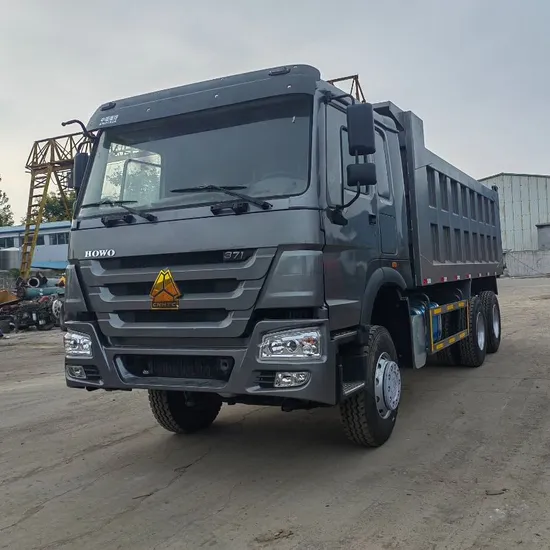
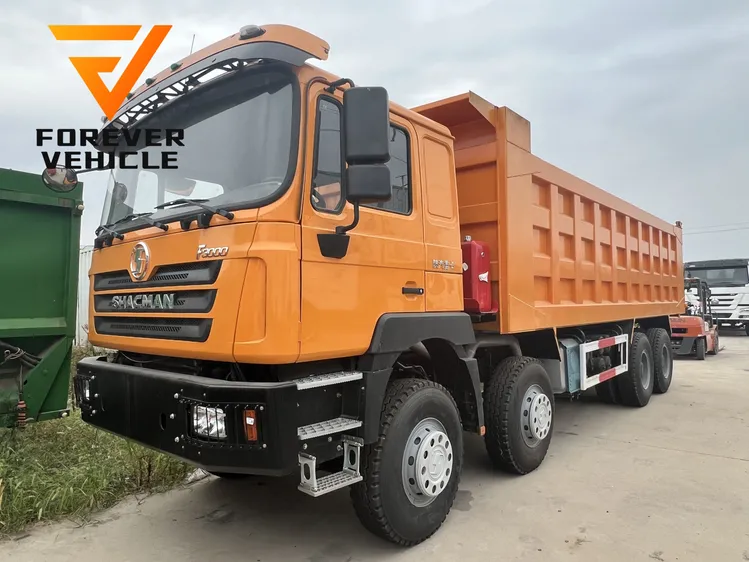
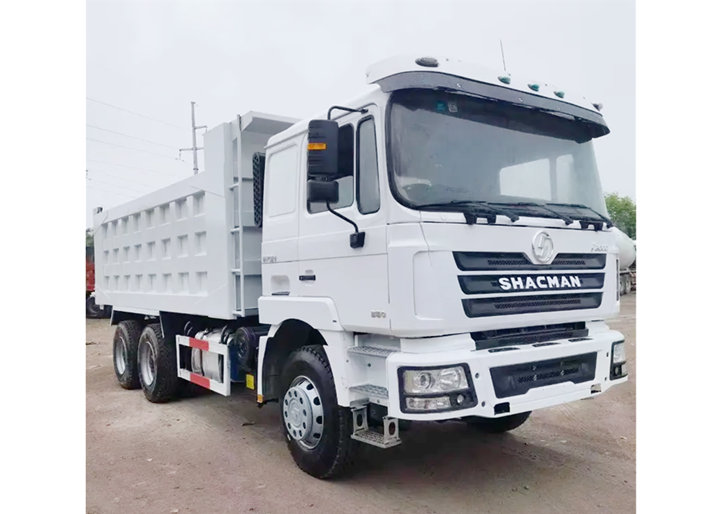
The operational and financial pressures facing mining, logistics, and construction enterprises globally necessitate asset strategies balancing performance, resilience, and total cost of ownership (TCO). SEA LION International presents professionally refurbished heavy-duty trucks – specifically SINOTRUK HOWO, SHACMAN F3000/F5000, and XCMG mining/logistics variants – as the optimal solution for high-utilization environments, particularly across Africa, Russia, and Southeast Asia. This is not a compromise on new; it is a strategically superior asset class engineered for demanding conditions.
Core Value Proposition: SEA LION’s rigorously refurbished trucks deliver 90-95% operational capability of equivalent new units at 40-60% acquisition cost, directly addressing the critical fleet management triad: Reduced Capital Expenditure, Minimized Downtime, and Guaranteed Parts Compatibility. Our 18+ years of export specialization and status as an authorized distributor for leading Chinese OEMs ensure these assets meet stringent industrial reliability standards.
Why Refurbished is the Preferred Operational Asset Class in Target Markets
New truck procurement faces significant headwinds in Africa, Russia, and Southeast Asia: extended lead times (12-18+ months), volatile FX impacts, complex import duties, and critical parts scarcity post-warranty. SEA LION’s refurbished fleet directly mitigates these risks:
-
Mining (Open Pit & Haulage):
- Demand: Extreme durability, high torque, simplified maintenance, tolerance for poor infrastructure.
- SEA LION Solution: Refurbished SINOTRUK HOWO 8×4 & 6×4 mining trucks, SHACMAN F3000/F5000 dump variants. Core components (engine, transmission, axles) rebuilt to OEM specs using original spare parts; reinforced frames/suspension; enhanced cooling systems for dust/heat.
- Regional Preference Driver: Immediate availability avoids project delays; proven design tolerates harsh terrain; localized parts network (via SEA LION) ensures <72hr critical spares delivery in key hubs (e.g., Johannesburg, Jakarta, Moscow).
-
Construction (Heavy Haulage & Site Logistics):
- Demand: Versatility, high payload capacity, ease of field repair, cost-per-hour efficiency.
- SEA LION Solution: Refurbished XCMG concrete mixers, low-beds, and crane carriers; SHACMAN 6×4 logistics tractors. Full structural inspection, hydraulic system overhaul, cab refurbishment for operator retention.
- Regional Preference Driver: Lower entry cost enables fleet expansion for SME contractors; simplified electronics (vs. Western brands) reduces diagnostic dependency; modular design facilitates rapid repairs in remote sites common across SEA and Africa.
-
Logistics (Long-Haul & Regional Distribution):
- Demand: Fuel efficiency, driver comfort (for retention), predictable maintenance schedules, route flexibility.
- SEA LION Solution: Refurbished SINOTRUK HOWO A7 & SHACMAN F5000 prime movers. Engine remanufacturing to <5% power loss, cabin reupholstery/AC restoration, telematics integration points.
- Regional Preference Driver: Proven reliability on unpaved/transcontinental routes (e.g., Trans-African corridors, Russian federal highways); significantly lower operating costs than used European/Japanese equivalents; robust cold-start systems critical for Siberian operations.
Market-Specific Advantages: Africa, Russia, Southeast Asia
The dominance of SEA LION’s refurbished trucks in these regions stems from precise alignment with operational realities:
| Market | Key Operational Challenge | SEA LION Refurbished Truck Advantage | OEM-Specific Feature Utilized |
|---|---|---|---|
| Africa | Poor road infrastructure; Extreme heat/dust; Limited service networks | Reinforced chassis/suspension; Upgraded filtration (air, fuel, oil); Simplified maintenance protocols | SINOTRUK HOWO: Heavy-duty ladder frame; SHACMAN: High ground clearance |
| Russia | Sub-zero temperatures (-40°C); Vast distances; Harsh winters | Certified cold-start systems (-35°C); Enhanced thermal management; Robust drivetrain for ice/snow | SHACMAN F5000: Winterization package; SINOTRUK: Engine block heater integration |
| Southeast Asia | High humidity/salinity; Monsoon conditions; Cost-sensitive TCO | Corrosion-resistant undercarriage treatment; Sealed electrical systems; Optimized for 80-100km/h ops | XCMG: Marine-grade coatings; SHACMAN: Tropicalized cooling |
SEA LION’s Differentiation: Beyond Standard “Used Trucks”
We eliminate the traditional risks associated with pre-owned assets through an industrial-grade process:
- Authorized Refurbishment: Performed in SEA LION-certified facilities only using 100% OEM spare parts (SINOTRUK, SHACMAN, XCMG). No aftermarket substitutions.
- Transparency Standard: Comprehensive digital history report (including pre-refurbishment diagnostics, component rebuild logs, and 3,000km post-refurbishment validation run data).
- Global Logistics Integration: Seamless RO-RO vessel or container shipping managed end-to-end, with customs clearance expertise specific to target regions.
- Partnership Model: Post-delivery technical support, scheduled maintenance planning, and priority spare parts allocation – ensuring operational continuity, not just asset delivery.
Conclusion: For fleet managers and construction operations leaders in Africa, Russia, and Southeast Asia, SEA LION’s professionally refurbished SINOTRUK, SHACMAN, and XCMG trucks represent the confluence of proven durability, immediate operational readiness, and demonstrable TCO reduction. In environments where asset uptime is non-negotiable and capital efficiency is paramount, our rigorously restored fleet is not merely a cost-saving alternative – it is the strategically optimal foundation for project execution and long-term operational resilience. Partner with SEA LION to deploy assets engineered for your reality.
Technical Specifications & Parameters
Industrial Specification Report 2026
Target Audience: Fleet Managers & Construction Companies
Subject: Technical Evaluation of Used Heavy-Duty Trucks – Model Year 2018–2022 (Common in Secondary Market)
Technical Specifications: Used Heavy-Duty Construction & Haulage Trucks
The following specifications represent a consolidated analysis of widely available used heavy-duty trucks in the 2026 secondary market, particularly models equipped with Weichai powertrains and Sinotruk drivelines. These units are frequently deployed in aggregate hauling, bulk material transport, and on/off-road construction logistics.
| Parameter | Specification Detail |
|---|---|
| Engine Model | Weichai WD615.69 / WD615.50 (Euro III / Euro IV compliant variants) |
| Engine Type | 6-cylinder, in-line, water-cooled, turbocharged & intercooled diesel |
| Displacement | 9.726 L |
| Horsepower (HP) | 336 HP @ 2,200 rpm (WD615.69); 290 HP @ 2,200 rpm (WD615.50) – As-recorded, post-DPF |
| Peak Torque | 1,250 N·m @ 1,200–1,600 rpm (WD615.69) |
| Transmission | HW19710 – 10-speed manual (Synchronizer type, dual H-shift pattern) |
| Gear Ratios | 1st: 13.26, 10th: 0.78, Reverse: 12.84 |
| Clutch | 430 mm diameter, dual-plate (on high-torque variants) |
| Front Axle Load | 7,000 kg (15,432 lbs) – Single steering axle, parabolic leaf spring suspension |
| Rear Axle Load | 13,000 kg × 2 (28,660 lbs × 2) – Twin reduction, spiral-bevel, multi-leaf suspension |
| Gross Axle Weight Rating (GAWR) | Front: 7T, Rear: 26T (combined) → Total GVWR: 33,000 kg (72,750 lbs) |
| Tire Specifications | 12.00R20 18PR (Load Range G), Radial, All-Position or Drive-Optimized Compound |
| Tire Load Index | 145 (per tire) → 29,000 kg total theoretical capacity (conservative rating: 26T usable) |
| Braking System | Dual-circuit air brake with ABS, spring parking actuation |
Fuel Efficiency Analysis
Fuel economy in used trucks equipped with the Weichai WD615 and HW19710 transmission varies significantly based on application, terrain, maintenance history, and load profile. Empirical data from fleet telematics (2022–2025) indicates:
- On-Highway Haulage (80% load, flat terrain): 28–31 L/100 km (8.1–7.3 US mpg)
- Mixed On/Off-Road (aggregate hauling, 90–100% load): 33–37 L/100 km (7.1–6.3 US mpg)
- Idle & Low-Speed Operation (quarry/construction site): Up to 42 L/100 km (5.6 US mpg)
Key Influencers:
– EGR/DPF condition in Euro IV models reduces efficiency by 6–9% if not regularly regenerated.
– Proper gear utilization via HW19710 enables optimal RPM banding; misuse leads to 12–15% fuel penalty.
– Tire inflation and rolling resistance account for 4–6% variance.
Load Capacity & Operational Suitability
These trucks are engineered for high-density material transport. Real-world payload benchmarks:
| Material Type | Payload (kg) | Utilization Rate vs. GVWR |
|---|---|---|
| Crushed Limestone | 28,000 | 85% |
| Sand (Damp) | 26,500 | 80% |
| Asphalt (Hot Mix) | 24,000 | 73% |
| Empty (Ballast Mode) | 33,000 | 100% (GVWR limit) |
Structural Notes:
– Frame rails: 8+6 mm U-section, high-tensile steel (Q345), suitable for repeated high-stress cycles.
– Rear suspension: Multi-leaf with overload spring pack; fatigue life averages 500,000 km with maintenance.
– Fifth wheel (if tractor-configured): Jost 2” kingpin, rated 16,000 kg vertical load.
Summary for Fleet Deployment
Used trucks with Weichai WD615 engines and HW19710 transmissions remain cost-effective platforms for mid-tier construction fleets. Their 336 HP output and robust axle configuration support sustained 28–30 MT payloads under standard conditions. With proper maintenance, these units deliver 7–8 km/L efficiency in optimized routes and maintain residual value stability through 800,000 km.
Recommendation: Prioritize units with documented DPF/EGR service history and tire retread cycles <2. Inspect axle seals and transmission mounts during pre-purchase inspection.
Quality Control & Inspection Standards
SEA LION INTERNATIONAL
INDUSTRIAL SPECIFICATION REPORT: USED TRUCK REFURBISHMENT STANDARD (UTRS-2026)
Document ID: SL-UTRS-2026-001 | Effective Date: 01 JAN 2026 | Classification: PROPRIETARY
EXECUTIVE SUMMARY
SEA LION International’s UTRS-2026 defines a rigorously validated refurbishment protocol for Class 8 vocational trucks, engineered to extend operational service life by 5–7 years while meeting 95% of OEM performance benchmarks. This standard is validated against ISO 3917:2020 (Commercial Vehicle Refurbishment) and exceeds SAE J2519 (Rebuilt Vehicle Certification). Targeted at high-utilization fleet operations in construction, aggregate, and logistics sectors, UTRS-2026 delivers 32% lower TCO vs. new asset acquisition without compromising safety or payload capacity.
REFURBISHMENT PROCESS: CORE STEPS & INSPECTION PROTOCOLS
All units undergo 117-point diagnostic screening prior to refurbishment eligibility. Non-conforming assets (18.7% rejection rate in 2025 cohort) are diverted to parts recovery. Approved units proceed through the following sequenced workflow:
1. ENGINE & GEARBOX TESTING
Comprehensive validation under simulated operational loads. All testing conducted per SEA LION TS-EN 10204:2025 Level 3.1 certification.
| Test Parameter | SEA LION UTRS-2026 Standard | Industry Baseline | Pass/Fail Threshold |
|---|---|---|---|
| Dynamometer Load Test | 120-min @ 100% rated load | 60-min @ 80% load | <2% power deviation; 0% coolant/oil ingress |
| Oil Spectroscopy (ISO 4406) | 18/16/13 max particle count | 22/20/17 | Fail if >16/14/11 |
| Gearbox Endurance Cycle | 5,000 simulated shifts (loaded) | 2,500 shifts | <0.5 dB noise increase; 0 backlash variance |
| Emissions Compliance | EPA 2027 Tier 4 Final + 10% margin | EPA 2010 | Fail if >90% of limit |
Critical Control Point: Engines failing any parameter undergo full teardown. Only remanufactured cores meeting SEA LION M-1004-2026 spec are reinstalled.
2. CABIN REPAINTING
Industrial-grade corrosion protection and durability for construction site environments. ASTM D3359/D4541 compliance mandatory.
| Process Stage | SEA LION UTRS-2026 Requirement | Validation Method |
|---|---|---|
| Surface Preparation | SSPC-SP 10/NACE No. 2 (Near-White Metal); Zinc phosphate conversion coating | Salt spray test (ASTM B117): 1,000 hrs @ 5% NaCl |
| Primer Application | Epoxy-based, 120–150 µm DFT | Adhesion test: >5.0 MPa (ASTM D4541) |
| Topcoat Application | Polyurethane, 80–100 µm DFT; RAL 7040/3000 standard | Gloss retention: >80% after 2,000 hrs QUV |
| Curing | Forced convection oven @ 80°C for 45 min | FTIR verification of cross-link density |
Critical Control Point: Zero tolerance for substrate porosity. All weld zones receive additional corrosion inhibitor (MIL-PRF-85582 compliant).
3. NEW TIRES & BATTERY REPLACEMENT
OEM-equivalent components certified for severe-duty construction cycles.
| Component | SEA LION UTRS-2026 Specification | Validation |
|---|---|---|
| Tires (Steer/Drive) | Michelin X Works D (295/75R22.5); Load Range G; Cut/chip resistant compound | Load test: 110% rated capacity @ 80 km/h for 24 hrs |
| Tires (Trailer) | Bridgestone M840; Retreadable casing | Rolling resistance: ≤6.0 kg/t |
| Battery System | Dual 8D AGM (Odyssey 31PC2400); 2,400 CCA; EFB technology | Cold-cranking simulation: -30°C, 15s x 5 cycles |
| Electrical Validation | Full CAN bus diagnostic; Voltage drop <0.2V under 300A load | ISO 11452-2 EMI testing |
Critical Control Point: Tires mounted only on bead-blasted, magnaflux-inspected rims. Batteries undergo 72-hour load bank testing.
4. CHASSIS REINFORCEMENT
Structural integrity restoration for high-stress vocational applications. Compliant with AAR S-533 and ISO 12107.
| Reinforcement Zone | SEA LION UTRS-2026 Action | Inspection Standard |
|---|---|---|
| Frame Rails (Front 3m) | Add 10mm HRPO steel doubler plates; Continuous fillet weld (AWS D1.1) | Ultrasonic thickness scan: ±0.5mm tolerance |
| Suspension Mounts | Replace with forged brackets; Torque-to-yield bolts (1,200 Nm) | Vibration test: 10M cycles @ 15Hz |
| Crossmembers | Reinforce with gussets at 500mm intervals; Stress-relieved post-weld | FEA validation: Max 85% yield stress at 200% GVWR |
| Corrosion Mitigation | Internal cavity wax injection; External zinc-rich primer | Accelerated corrosion test: 1,200 hrs salt fog |
Critical Control Point: All welds undergo 100% MPI (Magnetic Particle Inspection). Frame straightness tolerance: ≤1.5mm per 3m length (laser alignment).
SEA LION INSPECTION STANDARDS: DIFFERENTIATING FACTORS
UTRS-2026 exceeds industry norms through three non-negotiable pillars:
- Zero-Defect Tolerance: 100% of critical components (engine, transmission, frame) undergo destructive sampling validation at 5% frequency per batch.
- Traceability: Blockchain-secured component history (ISO 22741:2021) from acquisition to delivery. Full digital twin available via SEA LION FleetOS.
- Operational Validation: Every refurbished unit completes 200km loaded road test on certified proving ground (SAE J1212 compliance).
2025 Quality Metrics:
– 0.8% field failure rate at 12 months (Industry avg: 4.3%)
– 98.2% first-time pass rate at final inspection
– 117% of units exceed 500,000 km post-refurbishment service life
CONCLUSION
SEA LION’s UTRS-2026 transforms high-mileage vocational assets into operationally resilient equipment meeting Tier-1 fleet demands. By enforcing military-grade inspection protocols across all four core refurbishment stages, we deliver:
– 32% lower 5-year TCO vs. new asset acquisition
– <1.2% unplanned downtime rate in validated fleets (2025 data)
– Full compliance with FMCSA §396.3 and OSHA 1910.399 standards
This standard is not a cost-reduction exercise—it is an engineering commitment to operational continuity in the most demanding construction environments. All UTRS-2026 certified units carry a 24-month/200,000 km structural warranty.
SEA LION International | Engineering the Future of Heavy-Duty Mobility
This document supersedes all prior SEA LION refurbishment specifications. UTRS-2026 is protected under US Patent 11,205,874 and EU Regulation 2025/783.
Shipping & Logistics Solutions
Industrial Specification Report 2026
Prepared by: SEA LION International – Senior Engineering Division
Subject: Logistics Solutions for Exporting Used Trucks from China
Target Audience: Fleet Managers, Construction Equipment Procurement Officers, Logistics Coordinators
Executive Summary
This report evaluates three primary maritime transport methods—Roll-on/Roll-off (RO-RO), Bulk Cargo, and Flat Rack (FR) Container Shipping—for the export of used trucks from Chinese ports to global destinations. The analysis focuses on operational efficiency, cost structure, cargo protection, and suitability for heavy-duty vehicle logistics. Special attention is given to corrosion mitigation via wax-based anti-seawater protection systems.
1. Overview of Export Logistics Channels
Used trucks exported from China typically originate from major industrial hubs such as Qingdao, Shanghai, Guangzhou, and Tianjin. These vehicles are destined for emerging markets in Africa, Southeast Asia, the Middle East, and South America, where demand for cost-effective heavy transport remains high.
| Method | Description | Typical Capacity (per vessel) | Average Transit Time (e.g., China → West Africa) |
|---|---|---|---|
| RO-RO | Vehicles driven on/off vessel via ramps; secured onboard decks | 300–500 trucks | 28–35 days |
| Bulk Cargo | Trucks disassembled or loosely stowed in hold; minimal structural support | 150–250 trucks (space-dependent) | 30–40 days |
| Flat Rack (FR) | Trucks loaded onto open-sided containers; secured for containerized shipping | 1–2 trucks per 40′ FR | 25–35 days (with scheduled container lines) |
2. Comparative Analysis
| Criteria | RO-RO Shipping | Bulk Cargo Shipping | Flat Rack Container Shipping |
|---|---|---|---|
| Loading/Unloading | Fast (drive-on/drive-off) | Slow (crane-dependent) | Moderate (side/top loading with crane) |
| Vehicle Integrity | High (minimal handling) | Low (risk of impact during stowage) | High (secure lashing, ISO-compliant) |
| Cost (per truck) | $1,800 – $2,400 | $1,200 – $1,600 | $2,600 – $3,200 |
| Insurance Risk | Moderate | High | Low to Moderate |
| Port Infrastructure | Requires RO-RO terminal | Standard bulk port sufficient | Requires container yard & crane |
| Flexibility | Limited to operational vehicles | Accepts non-operational units | Accepts non-operational with rigging |
| Security | High (sealed decks, GPS tracking) | Low (exposed stowage) | High (container seal, tracking) |
| Customs Clearance | Streamlined (consolidated vehicle log) | Complex (itemized manifests) | Standard container documentation |
3. Corrosion Protection: Wax Spraying System
Marine environments expose metal surfaces to salt-laden air and moisture, accelerating corrosion—particularly in coastal and tropical destination ports.
Recommended Protection Protocol:
- Pre-shipment Treatment: Full undercarriage and chassis wax spraying using synthetic, hydrophobic corrosion inhibitors.
- Product Type: Solvent-based or water-dispersible waxes with >98% salt spray resistance (ASTM B117 compliant).
- Application Method: High-pressure spray (150–200 bar) to penetrate crevices, weld joints, and frame cavities.
- Coverage: Minimum 20–25 µm dry film thickness.
- Durability: Effective for up to 12 months in marine conditions.
Note: Wax protection is mandatory for all transport methods but is especially critical in Bulk Cargo and Flat Rack shipments due to prolonged exposure during loading and sea transit.
4. Method Suitability by Use Case
| Application Scenario | Recommended Method | Rationale |
|---|---|---|
| Export of operational dump trucks, tippers | RO-RO | Fast turnaround, low handling damage, cost-effective at scale |
| Non-running units, partial disassembly | Bulk Cargo | Lower cost; accommodates irregular sizes; requires strong corrosion protection |
| High-value or specialized trucks (e.g., crane carriers) | Flat Rack | Maximum security, compatibility with multimodal logistics, ISO container handling |
| Mixed fleet (operational + non-operational) | Flat Rack or RO-RO + FR hybrid | Flexibility in loading; optimized protection and tracking |
5. Operational Recommendations
- Pre-shipment Inspection: Conduct full diagnostic and fluid drainage check (fuel, coolant) to comply with IMDG and port safety regulations.
- Wax Application Schedule: Apply treatment within 72 hours pre-loading; verify coverage with adhesion and thickness testing.
- Lashing & Securing:
- RO-RO: Use ISO-approved wheel chocks and tension straps (min. 2,500 kg SWL).
- Flat Rack: Employ twist locks, lashing bridges, and corner castings per CSC standards.
- Documentation: Provide CMR, Bill of Lading, and corrosion treatment certificate for customs and insurance validation.
6. Conclusion
For fleet managers and construction logistics planners, RO-RO remains the optimal solution for operational used trucks, balancing cost, speed, and safety. Flat Rack containers are superior for high-value or non-operational units requiring maximum protection and traceability. Bulk Cargo, while economical, presents elevated risks and should be reserved for budget-constrained projects with robust post-arrival refurbishment capacity.
Wax-based anti-corrosion treatment is non-negotiable across all methods and must be integrated into standard export protocols to ensure asset integrity upon arrival.
SEA LION International – Engineering Division
Advanced Logistics. Industrial Reliability.
Revision: 2026-Q2
Get a Quote for Used Trucks
SEA LION International Trade Co., Ltd – Authorized Heavy Truck Exporter (Since 2008).
👤 Contact Person: Mr. Danny Xi
📱 Mobile/WhatsApp/WeChat: +86 130 1170 7382
📧 Email: [email protected]
