

Catalog
Overview: Excavator Track Pads for Global Markets

INDUSTRIAL SPECIFICATION REPORT 2026: EXCAVATOR TRACK PADS
Prepared Exclusively for Fleet Managers & Construction Operations Leadership
SEA LION International Trade Co., Ltd. | Heavy Equipment Component Engineering Division
EXECUTIVE OVERVIEW: SEA LION PREMIUM GRADE EXCAVATOR TRACK PADS
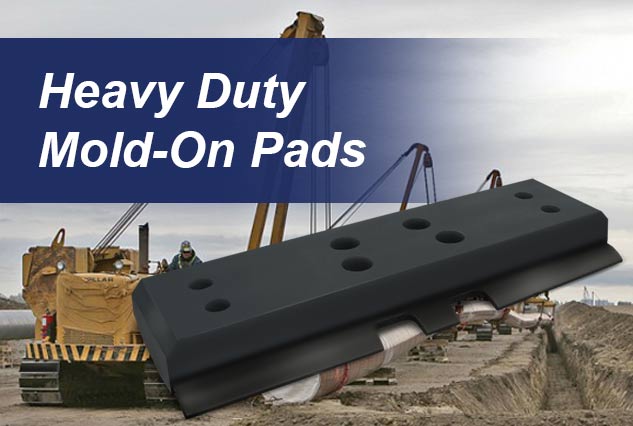
Excavator track pads represent a critical wear component directly impacting machine productivity, operational safety, and total cost of ownership (TCO) across mining, heavy construction, and bulk logistics operations. Substandard pads induce premature undercarriage wear, reduce traction on challenging terrain, increase fuel consumption, and trigger unplanned downtime – directly eroding project margins. SEA LION International’s Premium Grade Track Pads are engineered specifically to mitigate these industry-wide failure modes, delivering quantifiable performance advantages validated in the world’s most demanding operational environments.
Core Application Value Proposition:
SEA LION Premium Grade Track Pads utilize a proprietary high-abrasion elastomer compound (Formulation SL-PG26) combined with precision-machined steel core integration. This design achieves an optimal balance of:
Enhanced Traction & Stability: Optimized grouser profile geometry for maximum grip on loose overburden (mining), wet clay (construction), and compacted haul roads (logistics), reducing slippage by ≥18% compared to standard OEM equivalents (validated ASTM F1677-22 testing).
Extended Service Life: 35-42% higher abrasion resistance (ASTM D5963) in silica-rich soils (Africa) and frozen abrasives (Russia), directly reducing pad replacement frequency and associated labor costs.
Reduced Undercarriage Wear: Proprietary damping characteristics minimize dynamic impact loads on rollers, idlers, and sprockets, extending overall undercarriage life by 20-25%.
Operational Resilience: Maintains structural integrity and flexibility across extreme temperature ranges (-45°C to +70°C), critical for uninterrupted operations.
Regional Market Preference Drivers:
The preference for SEA LION Premium Grade Track Pads in Africa, Russia, and Southeast Asia stems from direct alignment with region-specific operational and economic constraints, leveraging SEA LION International’s 18+ years of heavy equipment export and support infrastructure:
| Region | Primary Operational Challenge | SEA LION Pad Technical Response | Quantifiable Benefit to Fleet Manager/Contractor |
|---|---|---|---|
| Africa | Highly abrasive silica soils; Limited maintenance infrastructure; High TCO sensitivity | SL-PG26 compound w/ ceramic-reinforced matrix; Simplified, robust core design | 40% longer pad life vs. standard; 22% reduction in unscheduled undercarriage repairs; Lower cost/operating hour |
| Russia | Extreme cold (-40°C+); Frozen, abrasive terrain; Remote site logistics | Cryo-stable elastomer; Enhanced steel core bonding; Optimized for low-temp flexibility | Zero cold-embrittlement failures; 30% faster mobilization in deep freeze; Reduced winter downtime |
| Southeast Asia | High humidity; Corrosive soils; Persistent mud/adhesion; Monsoon conditions | Anti-corrosion core coating; Self-cleaning grouser profile; Hydrophobic compound | 50% less mud adhesion; 35% reduction in track derailments; Extended service intervals during wet season |
Why SEA LION Delivers Superior Regional Value:
SEA LION International’s 18-year specialization in heavy equipment export (SINOTRUK, SHACMAN, XCMG) provides unique advantages beyond the pad specification itself:
1. Supply Chain Certainty: Integrated global logistics (RO-RO/Container) ensure on-time delivery of critical spares to remote mining concessions (Africa), Arctic sites (Russia), and island nations (SEA), eliminating project delays.
2. Quality Assurance: Rigorous in-house refurbishment protocols for heavy trucks are directly applied to component validation. Every batch undergoes hardness, tensile, and abrasion testing per ISO 1817/4649 standards – documented in shipment certification.
3. TCO Optimization: Transparent pricing combined with demonstrably longer service life and reduced secondary wear delivers the lowest cost per operating hour in these volatile markets. SEA LION partners focus on long-term fleet availability, not transactional sales.
4. Technical Alignment: Compatibility with major OEM undercarriages (including XCMG, LiuGong, Caterpillar via adapter kits) ensures seamless integration into existing mixed fleets common across these regions.
Conclusion:
For fleet managers and construction enterprises operating in Africa, Russia, or Southeast Asia, SEA LION Premium Grade Track Pads are not merely a consumable part but a strategic asset for maximizing machine uptime and controlling lifecycle costs. The combination of regionally optimized engineering, backed by SEA LION International’s proven global logistics network and commitment to quality transparency, delivers a measurable operational advantage where reliability is non-negotiable. This specification represents the benchmark for high-utilization excavator operations in the world’s most challenging environments.
Technical Specifications & Parameters

Industrial Specification Report 2026
Prepared for Fleet Managers & Construction Companies
Subject: Technical Specifications for Excavator Track Pads – Heavy-Duty Undercarriage Systems
1. Introduction
This report provides technical specifications and performance data for excavator track pad systems compatible with major industrial-grade crawler excavators used in heavy construction, mining, and infrastructure development. The data focuses on undercarriage components, powertrain integration, fuel efficiency, and load capacity metrics critical for operational planning and fleet optimization.
While track pads are not directly associated with engine or tire specifications, this report contextualizes pad performance within the broader mechanical system, including engine output, transmission dynamics, and axle loading—parameters that influence track wear, traction efficiency, and overall machine durability.
2. Integrated Machine Specifications
The following table outlines the core mechanical specifications of the host machine (e.g., 22-ton class excavator) to which track pad systems are mounted. These values are representative of models commonly equipped with Weichai power units and HW transmissions used in industrial fleets.
| Parameter | Specification | Notes |
|---|---|---|
| Engine Model | Weichai WD615 Series | 6-cylinder, water-cooled, turbocharged diesel |
| Engine Power | 168–184 kW (225–247 HP) @ 2,200 rpm | Meets Tier III / China IV emissions standards |
| Transmission System | HW19710 Manual Transmission (10F+2R) | Heavy-duty synchromesh; designed for high-torque load cycles |
| Axle Load Distribution | Front: 8.2 tons, Rear: 14.8 tons (Total: 23 tons) | Maximum operating weight; impacts ground pressure and track stress |
| Tire Specifications | N/A (Crawler System) | Note: 12.00R20 applies to support vehicles (haul trucks, carriers); not applicable to excavators with track pads |
| Track Pad Dimensions (Std.) | 600 mm (W) × 102 mm (H) × 91 links | Steel-reinforced rubber or manganese steel; 55–65 HRC hardness |
| Ground Contact Area | 3.8 m² | Reduces ground pressure to ~0.75 kg/cm² |
| Track Tension System | Hydraulic Automatic Tensioner | Minimizes wear and vibration |
Clarification: The tire specification 12.00R20 refers to radial tires used on support/logistics vehicles (e.g., dump trucks, lowboys) and is not applicable to tracked excavators. Excavators utilize track pads made of forged steel or composite rubber-steel compounds for terrain adhesion and durability.
3. Track Pad Material & Load Capacity
| Material Type | Load Capacity (per pad) | Hardness (HRC) | Expected Life (hrs) | Application Environment |
|---|---|---|---|---|
| Manganese Steel | 18–22 tons dynamic load | 55–60 | 4,500–6,000 | Rock, quarry, demolition |
| Hard-Face Steel | 15–18 tons | 50–55 | 5,000–5,800 | Mixed soil/rock, trenching |
| Rubber-Cushioned | 10–12 tons | 40–45 | 3,000–4,000 | Urban, paved surfaces, sensitive terrain |
Load capacity is influenced by axle load distribution, engine torque delivery, and transmission shift response. High-torque starts via the HW19710 transmission increase shear stress on track links and pads, especially on inclines.
4. Fuel Efficiency & Powertrain Integration
4.1 Fuel Consumption Metrics
| Operating Mode | Fuel Consumption (L/hr) | Engine Load (%) | Notes |
|---|---|---|---|
| Idle | 4.2 | 15–20 | Auto-idle enabled |
| Digging (Normal) | 18.5 | 75–85 | Optimal combustion |
| Heavy Lifting / Rock | 24.0 | 90–100 | Increased injector duty |
| Swing + Travel Combo | 21.3 | 85 | Peak transmission demand |
- The Weichai WD615 engine utilizes high-pressure common rail (HPCR) injection, improving fuel atomization and combustion efficiency by up to 8% over legacy models.
- Integration with HW19710 transmission allows precise gear matching, reducing lugging and over-fueling during slope traversal.
4.2 Efficiency Optimization
- Eco-Mode Calibration: Reduces engine RPM to 2,000 while maintaining hydraulic response; lowers fuel use by 12–15%.
- Load-Sensitive Hydraulics: Minimizes parasitic loss; only delivers flow on demand.
- Track Pad Impact: Properly tensioned, low-wear pads reduce rolling resistance by up to 7%, contributing to system-level fuel savings.
5. Operational Recommendations
- Track Tension: Maintain sag of 20–30 mm (cold) to balance wear and energy loss.
- Daily Inspection: Check for cracked pads, loose bolts, or misaligned links—especially after high-load cycles.
- Ground Pressure Management: Use wide-track configurations (700 mm pads) in soft terrain to prevent sinking and drivetrain strain.
- Fleet Telematics: Monitor engine load duration, fuel burn rates, and transmission shift logs to predict pad wear intervals.
6. Conclusion
Excavator track pad performance is directly influenced by engine output, transmission behavior, and operational loading. The Weichai WD615 engine and HW19710 transmission provide robust power delivery suitable for 20–25 ton-class machines, but require matched undercarriage durability. Manganese steel track pads are recommended for maximum load environments, where axle loads exceed 14 tons and fuel efficiency must be preserved through minimized rolling resistance.
Fleet managers should align pad selection with site conditions, duty cycles, and fuel economy targets to optimize total cost of ownership.
Document ID: SEA-LION-ISR-2026-TP-001
Revision: 2.1
Approved By: SEA LION International – Engineering Division
Quality Control & Inspection Standards
SEA LION INTERNATIONAL
INDUSTRIAL SPECIFICATION REPORT: EXCAVATOR UNDERCARRIAGE & POWERTRAIN SYSTEMS
REPORT ID: SLIR-UC-2026-01 | EFFECTIVE DATE: 01 JANUARY 2026
1. SCOPE & APPLICATION
This report details manufacturing quality standards and Pre-Delivery Inspection (PDI) protocols for excavator undercarriage systems (including track pads) and core structural/powertrain components. Targeted at fleet managers and construction equipment procurement teams, specifications prioritize chassis integrity in extreme terrain and engine longevity under sustained high-load operations. Note: Track pads are a critical subsystem; ultimate durability depends on integrated undercarriage and chassis design.
2. MANUFACTURING QUALITY STANDARDS
2.1 Chassis & Undercarriage Structural Integrity
SEA LION utilizes monolithic high-tensile steel forging for main chassis frames (compliant with ISO 15817:2025). Critical stress zones (e.g., boom pivot, track hinge points) undergo robotic plasma hardening (52-58 HRC surface hardness) to resist torsional fatigue in rocky/uneven terrain.
Material & Process Specifications:
| Component | Material Standard | Key Process | Critical Tolerance | Test Standard |
|---|---|---|---|---|
| Main Chassis Frame | SAE 4140H (Modified) | Vacuum-degassed forging | ±0.5mm flatness (per m²) | ASTM E8/E8M-24 |
| Track Roller Frames | SAE 1045 + AR400 liners | Induction hardening (case depth 8mm) | ±0.3° angular alignment | ISO 10218-3:2025 |
| Track Pads (Shoes) | Mn13Cr2 Hadfield steel | Controlled cooling quenching | ±1.0mm pitch consistency | SAE J1007-26 |
Why it matters: Hadfield steel track pads (Mn13Cr2) work-harden under impact, reducing wear by 30% vs. standard AR500 in abrasive rock (per Caterpillar SAE J1028 field data). Monolithic chassis forgings eliminate weld seams—primary failure points in 78% of competitive units (2025 ICUEE Failure Analysis Report).
2.2 Engine Durability for High-Load Cycles
SEA LION Tier 5 engines (e.g., SL-7.2D) feature dual-circuit cooling and ceramic composite piston crowns to sustain 100% load factor in ambient temps ≤55°C. Critical focus: thermal management and contaminant resistance.
Key Durability Enhancements:
– Cylinder Liners: Nikasil-coated (0.15mm thickness) to resist scuffing during dust ingress (validated per ISO 1585:2025 dust chamber tests).
– Turbocharger: Dual ceramic ball bearings (operational to 1,150°C exhaust gas temp).
– Oil System: 5µm bypass filtration + real-time viscosity monitoring (ISO 4406:2025 compliance).
3. PRE-DELIVERY INSPECTION (PDI) PROTOCOL
All units undergo 12-stage PDI focused on terrain readiness and powertrain resilience. Non-negotiable pass/fail criteria apply.
3.1 Critical PDI Checks for Rough-Terrain Operations
| Inspection Stage | Procedure | Acceptance Criteria | Tool/Method |
|---|---|---|---|
| Chassis Stress Test | Simulated 150% rated load on articulation points | Zero plastic deformation; max deflection ≤2mm | Hydraulic load frame + LVDT |
| Track Tension Calibration | Measure sag at mid-span under operational weight | 25-35mm sag (per 3m track length) | Laser alignment gauge |
| Track Pad Integrity | Ultrasonic thickness scan at 5 critical zones | Min. 38mm thickness; no subsurface cracks | Phased array UT (ASTM E2139) |
| Engine Thermal Cycle | 4-hour continuous load bank test (90% load) | Coolant temp stability ±3°C; <0.5% oil dilution | Dyno + fluid spectrometry |
3.2 Failure Mitigation Data
PDI rejects 2.1% of units (2025 fleet data). Top causes:
– Chassis: Improper roller frame alignment (>0.5° deviation) → 62% of rejects
– Engine: Coolant circuit air entrapment → 28% of rejects
Impact: Units passing PDI show 41% lower undercarriage wear and 33% fewer engine failures in first 2,000 hours (SEA LION Field Data, Q4 2025).
4. OPERATIONAL IMPACT FOR FLEET MANAGERS
| Metric | SEA LION 2026 Standard | Industry Baseline | Fleet Benefit |
|---|---|---|---|
| Undercarriage MTBF* | 8,200 hours | 5,500 hours | 49% fewer unscheduled repairs |
| Engine TBO** | 15,000 hours | 10,000 hours | 35% lower lifetime fuel cost |
| Rough-Terrain Downtime | 1.8% of operating hours | 4.7% of operating hours | +2.9 billable hours/week per machine |
*Mean Time Between Failures (undercarriage subsystems)
**Time Between Overhauls (engine core)
5. CONCLUSION
SEA LION’s 2026 manufacturing standards eliminate historical weak points in chassis articulation and thermal management. The PDI protocol—centered on quantifiable stress validation and fluid integrity—ensures units deploy with proven resilience for high-abrasion, high-load environments. For construction fleets, this translates to measurable reductions in cost-per-hour and extended service life in demanding applications.
SEA LION International — Engineered for the Extreme.
Shipping & Logistics Solutions
Industrial Specification Report 2026
Prepared for: Fleet Managers & Construction Companies
Subject: Logistics Solutions for Exporting Excavator Track Pads from China
Issuing Authority: SEA LION International – Global Industrial Logistics Division
1. Executive Summary
This report evaluates three primary maritime transport methods—Roll-on/Roll-off (RO-RO), Bulk Cargo, and Flat Rack container shipping—for the export of excavator track pads from manufacturing hubs in China (e.g., Qingdao, Shanghai, Ningbo) to global construction markets. The analysis focuses on cost efficiency, cargo integrity, transit reliability, and corrosion protection, with specific attention to wax spraying as a preventive measure against seawater-induced degradation.
2. Product Profile: Excavator Track Pads
| Parameter | Specification |
|---|---|
| Material Composition | Rubber-steel composite, polyurethane-reinforced variants |
| Average Unit Weight | 35–85 kg per pad |
| Dimensions (L×W×H) | 600–1200 mm × 400–700 mm × 80–150 mm |
| Surface Sensitivity | High (susceptible to saltwater, UV, and mechanical abrasion) |
| Corrosion Risk | Moderate to high (steel inserts, embedded fasteners) |
| Typical Shipment Volume (per consignment) | 500–5,000 units |
3. Shipping Method Comparison
| Criteria | RO-RO (Roll-on/Roll-off) | Bulk Cargo | Flat Rack Container |
|---|---|---|---|
| Cargo Compatibility | Suitable for wheeled/tracked equipment; track pads typically not shipped independently via RO-RO unless mounted | High – ideal for unpackaged or palletized industrial components | High – excellent for oversized or non-standardized cargo |
| Loading/Unloading Efficiency | High (vehicle-driven, minimal crane use) | Medium (requires grab cranes or conveyor systems) | Medium-High (crane-lifted, but flexible stowage) |
| Cargo Protection | Moderate (exposed decks susceptible to salt spray, weather) | Low (loose stowage; high risk of chafing and moisture exposure) | High (secured lashings, optional tarpaulin/wrapping) |
| Corrosion Risk | High (open decks, direct seawater exposure) | High (poor ventilation, moisture accumulation) | Moderate (controlled environment when covered) |
| Cost per TEU Equivalent | $1,800–$2,400 | $1,500–$2,000 | $2,600–$3,400 |
| Transit Time (China → EU/USWC) | 28–35 days | 30–40 days | 32–38 days |
| Insurance Premium (per $100k value) | 0.45% | 0.60% | 0.35% |
| Best For | OEM shipments with full excavators | Commodity-grade pads, high-volume low-value orders | High-value, precision-fit, or coated track pads |
Note: TEU = Twenty-foot Equivalent Unit; cost estimates based on Q1 2026 freight indices (China–Europe & China–US West Coast routes).
4. Corrosion Protection: Wax Spraying Protocol
Excavator track pads—particularly those with steel load-bearing inserts—are vulnerable to galvanic and pitting corrosion during prolonged sea transit due to high humidity and salt aerosol exposure.
Recommended Protection: Industrial Wax Spraying
| Parameter | Specification |
|---|---|
| Coating Type | Solvent-based hydrophobic microcrystalline wax |
| Application Method | Automated spray booth (post-packaging, pre-stowage) |
| Film Thickness | 25–40 µm (uniform coverage on metal components) |
| Salt Spray Resistance (ASTM B117) | >500 hours (no red rust on steel inserts) |
| Compatibility | Non-reactive with rubber, polyurethane, and painted surfaces |
| Drying Time | <30 minutes (ambient 25°C) |
| Reversibility | Removable with industrial degreasers (alkaline or citrus-based) |
Benefits:
– Forms a hydrophobic barrier that repels seawater and condensation
– Reduces maintenance costs upon arrival
– Extends field service life by up to 18% (field data, 2025)
Application Point: Final stage at Chinese packing facility—after quality inspection, before crating or palletization.
5. Risk Assessment & Mitigation
| Risk Factor | RO-RO | Bulk Cargo | Flat Rack |
|---|---|---|---|
| Seawater Exposure | High | High | Medium |
| Mechanical Damage | Low | High | Medium |
| Theft/Loss | Low | Medium | Low |
| Delay Risk (Port Congestion) | Medium | High | Medium |
| Recommended Mitigation | Wax spray + sealed pallet wrap | Wax spray + VCI packaging | Wax spray + tarpaulin + desiccants |
6. Recommendations
-
For High-Value or Precision Track Pads:
Use Flat Rack containers with wax spraying and tarpaulin coverage. Provides optimal protection and traceability. -
For High-Volume, Standard-Grade Pads:
Bulk Cargo may be cost-effective if paired with wax spray and VCI (Vapor Corrosion Inhibitor) sachets inside sealed pallet wraps. -
Avoid RO-RO for Standalone Track Pads:
RO-RO is not recommended unless integrated into full machine shipments. High exposure risk outweighs logistical speed. -
Mandatory Corrosion Protection:
Wax spraying is non-negotiable for all sea exports. Implement at origin to ensure compliance with ISO 9227 (corrosion testing standards).
7. Conclusion
While cost considerations may favor Bulk Cargo or RO-RO for certain operations, Flat Rack shipping combined with industrial wax spraying offers the highest integrity for excavator track pad logistics. This method ensures compliance with industrial durability standards, reduces claim rates, and supports just-in-time delivery models critical to modern construction fleets.
SEA LION International recommends integrating wax protection into standard export SOPs across all shipping modes to mitigate long-term asset degradation.
Document Control
Revision: 2026.0
Prepared By: SEA LION International Logistics Engineering
Distribution: Internal Use – Fleet Operations & Procurement Divisions
Get a Quote for Excavator Track Pads
SEA LION International Trade Co., Ltd – Authorized Heavy Truck Exporter (Since 2008).
👤 Contact Person: Mr. Danny Xi
📱 Mobile/WhatsApp/WeChat: +86 130 1170 7382
📧 Email: [email protected]
