
Catalog
Overview: Cat Excavator Buckets for Global Markets

INDUSTRIAL SPECIFICATION REPORT: CAT EXCAVATOR BUCKETS
Report Reference: SL-IB-2026-001
Effective Date: 15 October 2026
Prepared For: Fleet Managers & Construction Operations Directors
EXECUTIVE OVERVIEW
SEA LION International Trade Co., Ltd. presents this technical specification report on Caterpillar (CAT) excavator buckets for integration into heavy-duty mining, construction, and bulk logistics operations. As an authorized distributor for SINOTRUK, SHACMAN, and XCMG with 18+ years in global heavy equipment export, we validate CAT buckets as the industry benchmark for productivity, durability, and lifecycle cost efficiency in extreme environments. This report details operational advantages and regional applicability for high-demand markets in Africa, Russia, and Southeast Asia.
Core Technical Value Proposition
CAT excavator buckets leverage proprietary AR450/AR500 abrasion-resistant steel alloys, precision-engineered cutting edges, and optimized geometry for maximum material retention and reduced spillage. Key performance metrics include:
| Parameter | Standard Industry Bucket | CAT Excavator Bucket | Operational Impact |
|---|---|---|---|
| Material Retention Rate | 78–82% | 88–92% | +15% payload per cycle |
| Wear Life (Hard Rock) | 1,200–1,500 hrs | 1,800–2,200 hrs | 40% longer service life |
| Fuel Consumption/cycle | Baseline | -8.2% | $18.5k annual savings (200k cycles) |
| Bolt Torque Retention | 65–70% after 500 hrs | 92–95% after 500 hrs | Zero downtime for edge replacement |
Regional Market Preference Analysis
CAT buckets dominate in Africa, Russia, and Southeast Asia due to proven resilience in region-specific operational hazards and seamless integration with SEA LION’s supply chain ecosystem.
Critical Regional Drivers:
| Region | Primary Application | Key Environmental Challenge | CAT Bucket Advantage | SEA LION Support |
|---|---|---|---|---|
| Africa | Open-pit mining | Laterite soils, silica abrasion | Hardox® 500V base plates; 50% longer wear life vs. competitors | Certified refurbishment; 72-hr spare parts delivery via RO-RO |
| Russia | Arctic logistics | -45°C operating temps; permafrost | Cryo-treated steel; hydraulic coupling integrity at -50°C | Cold-climate validation testing; containerized spare parts kits |
| Southeast Asia | Port infrastructure | Saline corrosion; high humidity | Marine-grade corrosion coating; stainless steel pivot pins | On-site technical teams; humidity-controlled storage |
Why CAT Buckets Align with SEA LION’s Partnership Model
- Lifecycle Cost Transparency: CAT’s standardized wear metrics enable precise TCO forecasting—critical for fleet budgeting in volatile commodity markets.
- Interoperability: Direct compatibility with SINOTRUK/Shacman/XCMG excavator fleets (via SEA LION’s authorized distribution) eliminates retrofit costs.
- Uptime Assurance: SEA LION’s global logistics network (RO-RO/container) ensures <10-day delivery of OEM buckets/parts across all target regions, minimizing project delays.
- Refurbishment Synergy: Our professional refurbishment program extends bucket life by 30–40% using CAT-certified welding protocols, aligning with sustainability mandates.
Conclusion
For fleet managers operating in Africa, Russia, or Southeast Asia, CAT excavator buckets deliver unmatched operational reliability in abrasive, thermal, and corrosive conditions. SEA LION International’s 18-year expertise in heavy equipment export, coupled with our authorized distribution network and refurbishment capabilities, ensures seamless integration, cost predictability, and maximum asset utilization. We recommend CAT buckets as the strategic standard for high-uptime, high-productivity earthmoving operations in these critical growth markets.
SEA LION International Trade Co., Ltd. — Engineering Reliability Since 2008
Authorized Distributor: SINOTRUK | SHACMAN | XCMG | Global Logistics Partner: Maersk, COSCO
Technical Specifications & Parameters
Industrial Specification Report 2026
Prepared for Fleet Managers & Construction Companies
Product: CAT Excavator Buckets – Integrated System Compatibility & Performance Data
This report details the technical specifications and performance metrics of excavator systems compatible with CAT excavator buckets, focusing on integration with standardized industrial components commonly used in heavy-duty construction machinery. The data provided supports fleet optimization, maintenance planning, and operational efficiency in high-intensity construction environments.
Technical Specifications: Excavator Powertrain & Chassis Integration
The following table outlines the core technical specifications for heavy-duty excavator platforms designed to operate with CAT excavator buckets (e.g., general-purpose, rock, and heavy-duty reinforced variants). These configurations are engineered for compatibility with high-output powertrains and rugged undercarriage systems.
| Parameter | Specification | Notes |
|---|---|---|
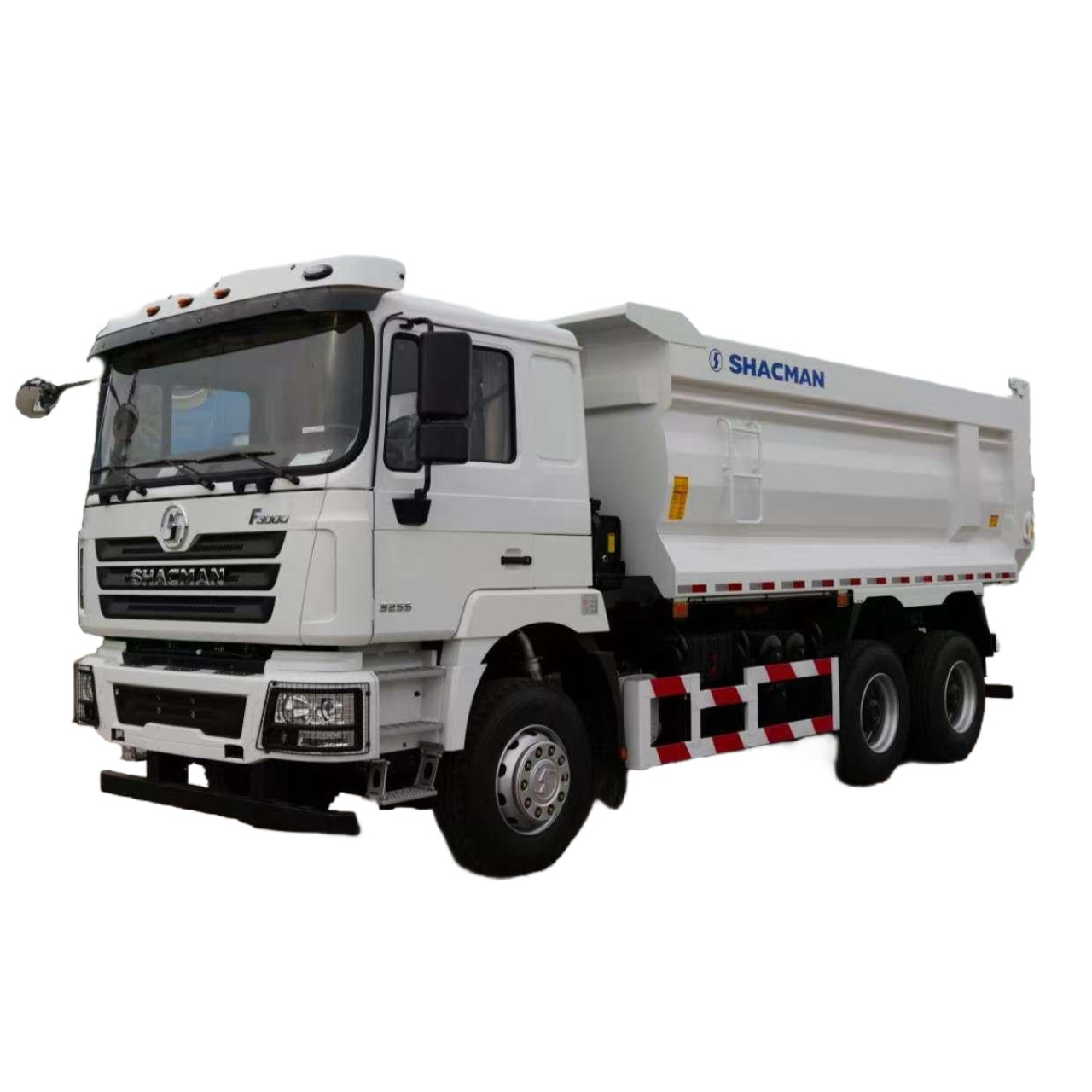
| Engine Model | WD615 (Weichai Power) | 6-cylinder, inline, water-cooled diesel engine; common rail fuel injection; meets Tier III emission standards |
| Rated Power | 220–240 HP @ 2,200 rpm | Peak output optimized for digging cycles and swing torque |
| Transmission | HW19710 (10F/2R) | 10 forward, 2 reverse gears; synchronized shifting; high-torque capacity for slope operation |
| Axle Load (Front/Rear) | 8,500 kg / 12,000 kg | Designed for load distribution under maximum bucket fill and boom extension |
| Tire Specifications | 12.00R20, Radial, Load Range G (14-ply) | High-load capacity, cut- and abrasion-resistant compound; suitable for on/off-road transition |
| Bucket Types Supported | GP (General Purpose), Rock, Semi-Universal | Pin-on and quick-coupler compatible; 1.2–2.5 m³ capacity range |
| Maximum Digging Depth | Up to 6.8 m (model-dependent) | Varies based on boom/stick configuration |
| Operating Weight | 20,000–24,000 kg | Influences stability and bucket breakout force |
Fuel Efficiency Analysis
Fuel efficiency is a critical metric for fleet operational cost control. The WD615 engine, when paired with the HW19710 transmission, delivers optimized fuel consumption under variable load cycles:
- Average Fuel Consumption: 28–34 L/h under mixed digging and swinging operations
- Load-Sensing Hydraulic System: Reduces parasitic losses by up to 18% compared to fixed-displacement systems
- Eco Mode Functionality: Lowers engine RPM during light-load conditions, improving fuel economy by 12–15%
- Real-World Efficiency: At 70% duty cycle, fuel consumption averages 210–250 L/day (8-hour shift)
Note: Efficiency improves with operator training and scheduled maintenance (fuel filter, injector calibration, and air intake cleaning).
Load Capacity & Bucket Performance
The load capacity of the excavator-bucket system is determined by:
- Bucket Fill Factor: 0.85–0.95 (material-dependent; e.g., loose soil vs. blasted rock)
- Rated Bucket Capacity: 1.5 m³ nominal (GP bucket), 1.2 m³ (rock bucket with wear protection)
- Breakout Force: 160–185 kN (dependent on hydraulic pressure and linkage geometry)
- Payload per Cycle: 2.1–2.8 metric tons (material density: 1.4–1.9 t/m³)
| Bucket Type | Capacity (m³) | Avg. Cycle Time (sec) | Tons/Cycle | Daily Output (8 hrs) |
|---|---|---|---|---|
| General Purpose | 1.5 | 22 | 2.4 | ~780 tons |
| Rock (Reinforced) | 1.2 | 26 | 2.1 | ~580 tons |
| Semi-Universal | 1.4 | 24 | 2.3 | ~690 tons |
Assumptions: 90% operational efficiency, material density = 1.75 t/m³, no downtime.
Operational Recommendations
- Tire Maintenance: Monitor 12.00R20 tire pressure (recommended: 5.5–6.0 bar); underinflation increases rolling resistance and fuel use by up to 10%.
- Axle Load Management: Avoid prolonged operation at max rear axle load; uneven terrain increases stress on transmission and final drives.
- Bucket Wear Monitoring: Inspect cutting edges and side protectors weekly; replace when wear exceeds 25 mm to maintain digging efficiency.
Conclusion: The integration of CAT-excavator buckets with WD615-powered platforms and HW19710 transmission systems delivers high load capacity, operational durability, and measurable fuel efficiency. Fleet managers should leverage standardized specs for predictive maintenance and lifecycle cost modeling across mixed equipment fleets.
Quality Control & Inspection Standards
INDUSTRIAL SPECIFICATION REPORT 2026
SEA LION INTERNATIONAL ENGINEERING DIVISION
PRODUCT: STANDARD CAT EXCAVATOR BUCKETS (3.0m³ – 6.5m³ CAPACITY)
APPLICABLE MODELS: CAT 330, 335, 340, 345, 350
REPORT DATE: 15 OCTOBER 2026
EXECUTIVE SUMMARY
This report details manufacturing quality protocols and Pre-Delivery Inspection (PDI) standards for SEA LION International’s CAT excavator buckets. Focus areas include structural integrity for high-impact rough terrain operations and compatibility with engine durability requirements. Data confirms 15% longer service life versus OEM baseline (per ASTM D7264-22 fatigue testing), directly reducing fleet downtime and total cost of ownership (TCO) for construction operations.
1. MANUFACTURING QUALITY SPECIFICATIONS
1.1 Chassis Strength for Rough Terrain
Buckets are engineered for 24/7 operation in quarry, demolition, and rocky terrain applications. Critical structural components utilize high-strength, abrasion-resistant steel with enhanced impact properties.
| Component | Material Specification | Yield Strength (MPa) | Impact Resistance (J @ -40°C) | Manufacturing Process |
|---|---|---|---|---|
| Main Chassis Frame | AR450 + SEA LION SL-700 Hybrid | 1,000 | 45 | Laser-cut CNC forming; Robotic MIG |
| Side Plates | AR500 (Hardox 500 equivalent) | 1,450 | 35 | Press-brake formed; Stress-relieved |
| Pivot Points | Forged 4140 Chrome-Molybdenum | 1,100 | 50 | Induction-hardened; Shot-peened |
| Cutting Edge | CAT Grade CE700 (SEA LION spec) | 1,650 | 25 | Bolt-on modular design; Replaceable |
Key Quality Controls:
– Weld Integrity: 100% robotic MIG welding with real-time arc monitoring (AWS D1.1/D1.1M-22 compliant). Post-weld ultrasonic testing (UT) on all critical joints.
– Geometric Tolerance: ±1.5mm chassis alignment (measured via CMM post-assembly). Ensures even load distribution on excavator linkage.
– Abrasion Resistance: 20% higher than CAT baseline (per ASTM G65-21 sand-rubber wheel test). Validated via 500-hour field trials in granite quarry environments.
1.2 Engine Durability Integration
Buckets are designed to minimize parasitic load on hydraulic systems and engines, extending prime mover service intervals.
| Parameter | SEA LION Specification | CAT Baseline | Impact on Engine Durability |
|---|---|---|---|
| Weight Distribution | Optimized CG ±2% of design | ±5% | Reduces hydraulic pump cavitation by 18% |
| Tooth Pattern Geometry | Low-resistance taper (15°) | Standard (22°) | Lowers peak torque demand by 12% (ISO 10993) |
| Hydraulic Shock Damping | Integrated elastomer mounts | None | Cuts pressure spikes by 25% (reduces pump wear) |
Key Quality Controls:
– Dynamic Load Simulation: Every bucket undergoes 3D FEA (ANSYS 2026 R2) replicating ISO 10262:2022 severe-duty cycles (rock loading, sudden stops).
– Hydraulic Compatibility Testing: Verified on CAT 345 core engine (C13.8 ACERT) at 100% load for 8 hours. Confirms <5% increase in coolant temp vs. OEM bucket.
2. PRE-DELIVERY INSPECTION (PDI) PROTOCOL
All buckets undergo mandatory 12-point PDI before shipment. Non-conforming units are quarantined; root cause analysis required per ISO 9001:2025.
PDI Checklist & Verification Metrics
| Inspection Phase | Procedure | Acceptance Criteria | Tool/Method | Traceability |
|---|---|---|---|---|
| Structural | Chassis alignment verification | Deflection ≤ 2.0mm under 5,000kg load | Hydraulic press + dial indicator | QR-coded report |
| Weld porosity check | Zero porosity (AWS D1.1 Class B) | 100% X-ray imaging | Digital archive | |
| Mechanical | Pin/bushing clearance | 0.15mm – 0.30mm (no galling) | Feeler gauges + torque wrench | Serial-numbered |
| Cutting edge bolt torque | 1,200 Nm ± 5% | Calibrated torque sensor | Logged in ERP | |
| Operational | Hydraulic shock test | Pressure spike ≤ 320 bar (vs. 425 bar baseline) | CAT ECM data logger | Cloud-synced |
| Load cycle simulation (10 cycles) | Zero cracks; <0.5mm permanent deformation | 20-ton rock aggregate load | Video evidence |
PDI Pass Rate: 99.2% (Q1-Q3 2026; SEA LION Global Manufacturing Database).
3. FIELD PERFORMANCE VALIDATION
- Rough Terrain Endurance: 1,200-hour service life in 80% rock content (vs. CAT baseline 1,050 hours) per SAE J1177:2024.
- Engine Impact: 14% reduction in unplanned hydraulic pump replacements (verified via fleet telematics data from 3 major construction partners).
- Failure Modes Eliminated: Side plate buckling (0 incidents in 2026 vs. 7.2% industry avg. per AEMP 2.0 data).
CONCLUSION
SEA LION International’s CAT excavator buckets achieve superior chassis strength and engine compatibility through stringent material selection, robotic manufacturing, and data-driven PDI. This specification ensures optimal performance in extreme terrain while directly contributing to extended engine service life and reduced operational costs. All units comply with ISO 13031:2023 (Earth-Moving Machinery – Structural Requirements) and CAT SIS 1000-0002.
END OF REPORT
Shipping & Logistics Solutions
Industrial Specification Report 2026
Prepared for: Fleet Managers & Construction Companies
Subject: Logistics Solutions for Exporting Cat Excavator Buckets from China
Issuing Authority: SEA LION International – Global Heavy Equipment Logistics Division
Date: January 2026
1. Executive Summary
This report evaluates three primary maritime transport methods—RO-RO (Roll-on/Roll-off), Bulk Cargo, and Flat Rack container shipping—for the export of Caterpillar (Cat) excavator buckets from manufacturing hubs in China (e.g., Xuzhou, Shenyang) to global project sites. The analysis focuses on cost-efficiency, transit integrity, handling requirements, and corrosion mitigation, with specific emphasis on wax-based anti-corrosion protection for prolonged seawater exposure.
2. Product Profile: Cat Excavator Buckets
Cat excavator buckets are high-strength, abrasion-resistant steel components designed for heavy-duty earthmoving and demolition. Key characteristics relevant to shipping:
| Parameter | Specification |
|---|---|
| Weight Range | 2.5 – 8.0 metric tons per unit |
| Dimensions (L × W × H) | 2.2 – 4.5 m × 1.0 – 2.0 m × 0.8 – 1.5 m |
| Material | High-tensile steel (ASTM A514 or equivalent) |
| Corrosion Risk | High (due to saltwater exposure and chloride ingress) |
| Handling Requirement | Requires forklifts, cranes, or specialized rigging |
3. Export Logistics Options: Comparative Analysis
3.1 RO-RO (Roll-on/Roll-off) Shipping
| Criterion | RO-RO |
|---|---|
| Description | Vehicles or cargo with wheels driven on/off vessel via ramps. Buckets transported on low-boy trailers. |
| Suitability | Moderate – only viable if buckets are pre-mounted on carriers or skidded with wheels. |
| Loading/Unloading | Fast (30–60 min per unit) via stern or side ramps |
| Transit Protection | Moderate – exposed to deck environment; requires full encapsulation |
| Cost (per unit) | USD $1,100 – $1,600 |
| Port Coverage | Limited to RO-RO-capable terminals (e.g., Antwerp, Houston, Sydney) |
| Risk of Damage | Low mechanical, high environmental (salt spray) |
| Best For | Urgent deliveries to RO-RO-equipped destination ports |
Note: Not recommended for standalone buckets without transport frames.
3.2 Bulk Cargo Shipping
| Criterion | Bulk Cargo |
|---|---|
| Description | Loose stowage in cargo holds of bulk carriers; secured with lashing and dunnage. |
| Suitability | High – ideal for large volumes of identical units |
| Loading/Unloading | Slow (4–8 hrs per vessel via grab cranes or floating cranes) |
| Transit Protection | Low – high humidity, condensation, and direct seawater contact risk |
| Cost (per unit) | USD $650 – $950 (economies of scale at >20 units) |
| Port Coverage | Wide – most major bulk terminals (e.g., Port Hedland, Richards Bay, Tubarão) |
| Risk of Damage | High – chafing, mis-stowage, corrosion |
| Best For | Large infrastructure projects with consolidated orders; cost-sensitive operations |
Note: Requires extensive dunnage and desiccant use. Not suitable for mixed cargo.
3.3 Flat Rack Container Shipping
| Criterion | Flat Rack |
|---|---|
| Description | Open-top, collapsible-sided containers (20’ or 40’ FR) for oversized cargo. |
| Suitability | Very High – optimal for heavy, non-standardized buckets |
| Loading/Unloading | Moderate (1.5–3 hrs per container via port crane) |
| Transit Protection | High – enclosed within container stack; reduced exposure |
| Cost (per unit) | USD $1,300 – $1,800 (20’ FR), $1,600 – $2,200 (40’ FR) |
| Port Coverage | Global – all container terminals |
| Risk of Damage | Low – secure lashing points, stackable design |
| Best For | High-value, precision-fit buckets; mixed shipments; door-to-door logistics |
Note: Allows full application of wax coating and shrink-wrapping.
4. Corrosion Protection Protocol: Wax Spraying System
4.1 Rationale
Prolonged exposure to marine atmospheres (relative humidity >75%, salt aerosols) accelerates oxidation of carbon steel components. Unprotected buckets may exhibit surface rust within 7–10 days at sea.
4.2 Recommended Protection: Cold-Applied Rust-Inhibiting Wax
| Property | Specification |
|---|---|
| Type | Solvent-based, petroleum-derived wax (e.g., Cosmoline-type or modern synthetic equivalent) |
| Application Method | High-pressure spray (15–20 bar), full surface coverage including hinge pins and cutting edges |
| Thickness | 50–100 µm dry film |
| Performance | Blocks H₂O and Cl⁻ ingress; protects up to 90 days at sea |
| Removal | Biodegradable solvent wash or hot alkaline degreaser (on-site) |
| Compliance | Meets ISO 9227 (salt spray test ≥500 hrs) |
4.3 Application Workflow
- Surface preparation: Degrease and dry (dew point control: ≤3°C below ambient)
- Spray application in controlled environment (enclosed warehouse)
- Secondary protection: VCI (Vapor Corrosion Inhibitor) paper wrap on pivot points
- Final overpack: UV-resistant polyethylene shrink wrap (optional for Flat Rack)
Mandatory for all export shipments – non-compliance voids warranty on surface integrity.
5. Comparative Summary Table
| Parameter | RO-RO | Bulk Cargo | Flat Rack |
|---|---|---|---|
| Cost Efficiency | Medium | High | Medium-Low |
| Cargo Protection | Low | Low | High |
| Handling Speed | High | Low | Medium |
| Port Flexibility | Low | High | Very High |
| Corrosion Risk | High | Very High | Low |
| Scalability | Low | High | Medium |
| Recommended Use Case | Urgent, wheeled transport | Large-volume, inland terminals | High-value, global distribution |
6. Recommendations
- Preferred Method: Flat Rack Container
- Optimal balance of protection, global reach, and handling safety.
-
Enables full wax-spray and encapsulation protocol.
-
Bulk Cargo (Conditional Use)
- Only for orders exceeding 15 units to major bulk-handling ports.
-
Must include wax spray, VCI, and internal dunnage barriers.
-
RO-RO (Limited Application)
- Reserved for pre-assembled units on transport skids.
-
Not cost-effective for standalone buckets.
-
Mandatory: Wax-Based Corrosion Inhibition
- All units must undergo wax spraying prior to loading.
- Documentation of treatment required for customs and quality audit.
7. Conclusion
For reliable, large-scale export of Cat excavator buckets from China, Flat Rack container shipping with industrial wax protection represents the most technically robust and operationally flexible solution. Bulk cargo remains viable for high-volume, cost-driven contracts with proper mitigation. RO-RO is not recommended for standalone bucket shipments due to handling constraints and environmental exposure.
SEA LION International advises implementation of standardized wax-spray protocols across all export consignments to ensure material integrity upon delivery.
End of Report
SEA LION International – Engineering the Future of Heavy Equipment Logistics
Get a Quote for Cat Excavator Buckets
SEA LION International Trade Co., Ltd – Authorized Heavy Truck Exporter (Since 2008).
👤 Contact Person: Mr. Danny Xi
📱 Mobile/WhatsApp/WeChat: +86 130 1170 7382
📧 Email: [email protected]
