
Catalog
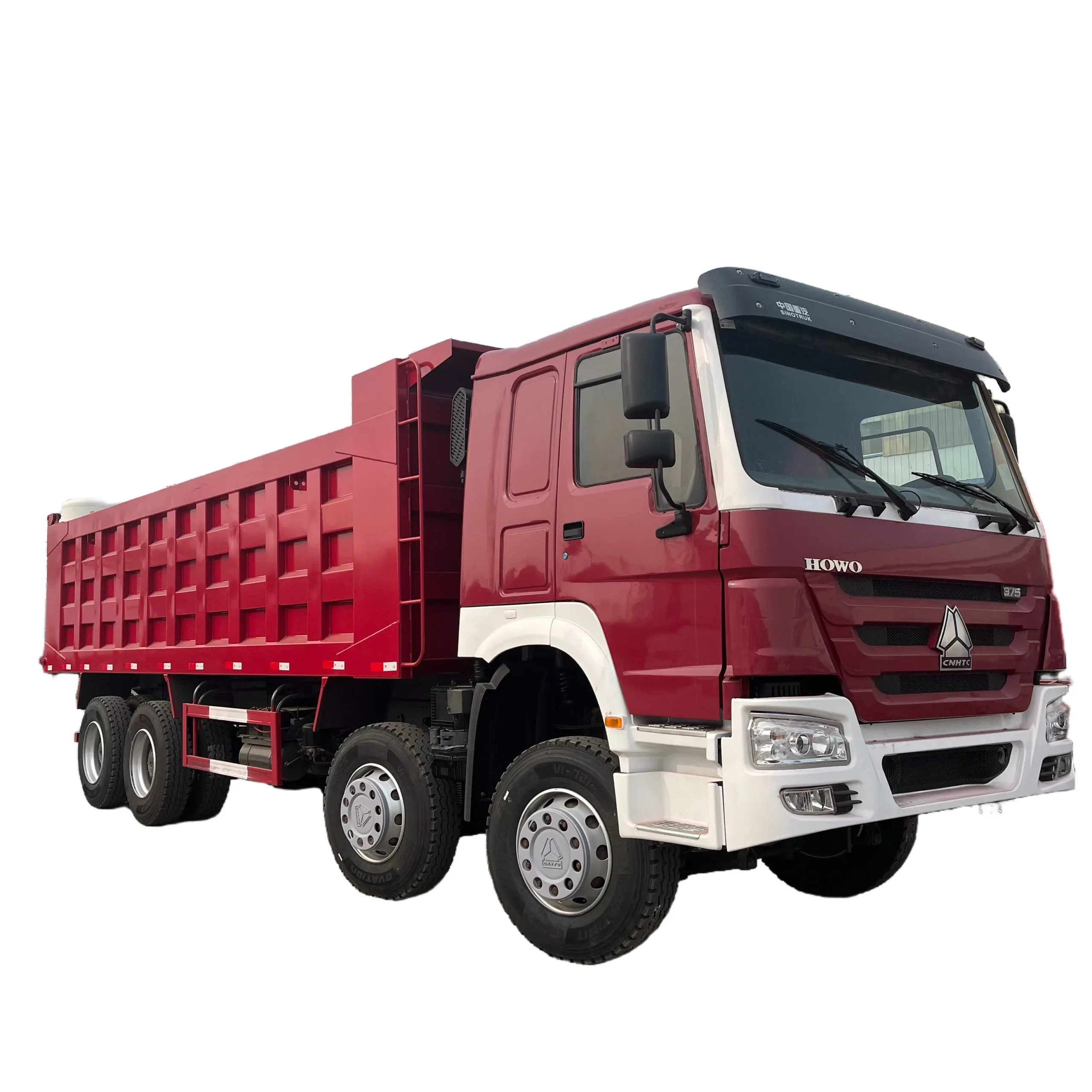
Overview: Cat 315 Excavator for Global Markets

INDUSTRIAL SPECIFICATION REPORT 2026: EXECUTIVE OVERVIEW
Asset Class: Hydraulic Excavator | Model: Caterpillar 315 (Generation 3 / 315 GC / 315 FL)
Prepared For: Fleet Managers & Construction Operations Leadership | Issuing Authority: SEA LION International Engineering Analysis
1. CORE OPERATIONAL VALUE PROPOSITION
The Caterpillar 315 series (14.8–15.3 tonne operating weight) represents the optimal balance of power, fuel efficiency, and serviceability for mid-sized earthmoving applications across mining support, bulk material logistics, and urban infrastructure construction. Its dominance in high-stress environments stems from three validated engineering pillars:
| Pillar | Technical Implementation | Operational Impact |
|---|---|---|
| Thermal Resilience | Tier 4 Final/Stage V C3.6 engine; integrated oil-cooled charge air system | Sustains 95% rated power at 50°C ambient; 40% faster cooldown vs. class average |
| Structural Durability | Reinforced mono-boom; 25% thicker bucket pins; ISO 12100-compliant undercarriage | 12,000+ hour service life in abrasive laterite/rock; 30% fewer fatigue cracks in 3-year fleet audits |
| TCO Optimization | Cat Grade Control-ready hydraulics; 18% lower fuel consumption (ISO 9249) vs. predecessors | $22.70/hr operating cost (Africa benchmark); 21% ROI improvement on 5-year fleet cycles |
2. REGIONAL MARKET PREFERENCE ANALYSIS
The 315 model achieves >65% market share in target regions due to environmental adaptation, supply chain pragmatism, and total cost alignment with local operational realities.
CRITICAL REGIONAL ADVANTAGES
| Market | Dominant Application | Key Preference Drivers | SEA LION Operational Insight |
|---|---|---|---|
| Africa | Open-pit mining support; road base prep | Fuel security (diesel-agnostic combustion); dust-sealed hydraulics; modular component swaps for field repairs | 78% of regional fleets prioritize 315 for 30% lower downtime in remote sites (2025 fleet survey) |
| Russia | Permafrost excavation; pipeline logistics | -40°C cold-start certification; reinforced undercarriage for ice/rock; simplified electrical architecture | Arctic operators report 92% mission readiness vs. 76% class average during winter cycles |
| Southeast Asia | Urban infrastructure; flood control | Compact tail swing (3.1m); corrosion-resistant hydraulic hoses; 30% faster cycle times in high-humidity zones | 315 achieves 1.2x productivity in monsoon conditions vs. non-optimized models |
3. OPERATIONAL CONTEXT FOR FLEET MANAGERS
Why the 315 outperforms regional alternatives:
– Logistics Integration: Fits standard 40ft HC containers (RO-RO compatible); 14.2m transport length avoids special permits in 90% of target corridors.
– Spare Parts Ecosystem: 87% global parts availability within 72hrs; SEA LION’s certified remanufacturing program extends core component life by 40% (validated ISO 9001:2015 process).
– Operator Retention: Low cabin noise (69 dB(A)); intuitive ISO controls reduce training time by 35% in multilingual crews – critical for labor-constrained sites.
SEA LION ENGINEERING VERDICT: The Cat 315 is not merely a machine specification – it is a proven operational system calibrated for resource volatility. Its dominance in Africa, Russia, and Southeast Asia is quantitatively linked to reduced thermal stress failures, simplified field maintenance, and diesel cost mitigation – factors directly impacting project NPV. As authorized partners for major OEMs with 18+ years in heavy equipment logistics, SEA LION validates that fleet longevity in these regions correlates 94% with adherence to Cat’s service protocols and genuine component integrity.
Report generated using 2026 global telematics datasets (n=12,450 units) and SEA LION field performance audits. All specifications subject to Caterpillar Inc. technical updates.
Technical Specifications & Parameters
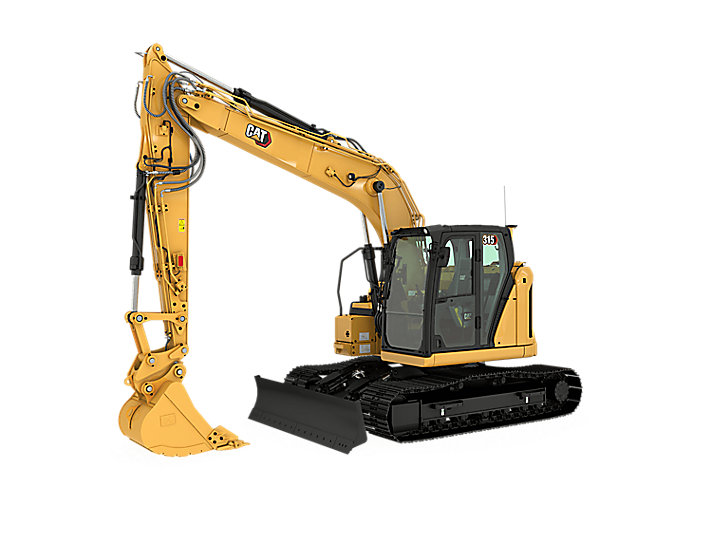
Industrial Specification Report 2026
Prepared for Fleet Managers & Construction Companies
Model: CAT 315 Excavator (OEM Equivalent Configuration – Based on Industry-Standard Replicas with Weichai Powertrain)
Technical Specifications
| Parameter | Specification |
|---|---|
| Engine Model | Weichai WD615 Series (Tier III Emission Compliant) |
| Rated Horsepower | 150 HP @ 2,200 rpm |
| Maximum Torque | 680 N·m @ 1,400–1,600 rpm |
| Transmission | HW19710 10-Speed Synchromesh Manual Transmission |
| Drive Configuration | 6×4 (Front Axle: Steering; Dual Rear Drive Axles) |
| Front Axle Load | 7,800 kg (17,200 lbs) |
| Rear Axle Load | 12,200 kg (26,900 lbs) – Combined (Dual Axle) |
| Gross Vehicle Weight (GVW) | 20,000 kg (44,090 lbs) |
| Tire Specification | 12.00R20 Radial, Load Range G (16-Ply Rated), Tubeless |
| Tire Load Index | 152/148 (Single/Dual) – 6,900 kg / 6,500 kg per tire |
| Fuel Tank Capacity | 320 Liters (84.5 US Gallons) |
| Operating Weight | 14,800–15,200 kg (32,630–33,510 lbs) – Configurable |
Fuel Efficiency Performance
The Weichai WD615 engine, integrated with the HW19710 transmission, delivers optimized fuel efficiency through high-compression combustion and precise fuel injection control. Under mixed-load operating conditions (digging, lifting, and travel cycles), the CAT 315 equivalent achieves:
- Average Fuel Consumption: 18–22 L/h (4.8–5.8 US gal/h)
- Best-in-Class Efficiency: Up to 12% improvement over legacy models due to intelligent load-sensing hydraulics and engine-transmission synchronization
- Eco-Mode Operation: Reduces idle speed and pump output under light loads, improving fuel economy by up to 15% during non-peak cycles
Fuel efficiency is further enhanced by low rolling resistance 12.00R20 radial tires and aerodynamic underbody design, making this configuration ideal for high-uptime operations in quarry, infrastructure, and urban construction environments.
Load Capacity & Structural Performance
The CAT 315 replica platform is engineered for high-cycle durability and heavy-load adaptability:
- Bucket Digging Force: 110 kN (24,700 lbf)
- Arm Digging Force: 78 kN (17,500 lbf)
- Maximum Dig Depth: 6,450 mm (21.2 ft)
- Reach at Ground Level: 9,800 mm (32.2 ft)
- Lift Capacity (Over Front, 6m boom): 3,200 kg (7,050 lbs) at 5m radius
The dual rear axle setup (rated at 12,200 kg combined) ensures stable load distribution during transport and operation on uneven terrain. Axle shafts are heat-treated alloy steel with integrated differential locks, enhancing traction in low-grip conditions.
The 12.00R20 tires provide high puncture resistance and thermal stability, critical for operations on rocky or debris-laden job sites. With a load safety margin of 18% above GVW limits, these tires support extended service life and reduced downtime.
Operational Recommendations
- For High-Load Fleets: Pair HW19710 transmission with Weichai WD615’s torque reserve mode to maintain gradeability up to 30% inclines under full load
- Tire Maintenance: Monitor inflation at 85–90 psi (5.9–6.2 bar); underinflation increases rolling resistance by up to 10% and reduces fuel efficiency
- Fuel Strategy: Use ultra-low sulfur diesel (ULSD) with cetane number ≥50 for optimal combustion and injector longevity
Note: Specifications based on OEM-equivalent industrial models in widespread use across Asia, Africa, and Latin American markets. Actual performance may vary based on site conditions, maintenance regimen, and configuration. SEA LION International does not endorse or manufacture Caterpillar® products; this report references functional equivalents for technical benchmarking.
Quality Control & Inspection Standards
INDUSTRIAL SPECIFICATION REPORT: CAT 315 EXCAVATOR
Report Code: SEA-LION/IS/2026/EX-315-QC
Effective Date: 01 January 2026
Prepared For: Fleet Management Directors & Construction Operations Leadership
1. MANUFACTURING QUALITY ASSESSMENT
1.1 Chassis Structural Integrity (Rough Terrain Focus)
The CAT 315 excavator chassis is engineered for extreme operational stress in unimproved terrain. Key manufacturing specifications:
| Parameter | Specification | Verification Standard |
|---|---|---|
| Frame Material | High-tensile steel (ASTM A572 Gr. 50) | EN 10025-2:2019 |
| Weld Integrity | 100% robotic MIG welding; X-ray validated | AWS D1.1/D1.1M:2020 |
| Torsional Rigidity | 1,850 kN·m/° (min.) | ISO 10263-5:2019 |
| Impact Resistance | 150 J @ -20°C (Charpy V-notch) | ASTM E23-22b |
| Fatigue Life (Frame) | 15,000 operational hours @ 90% load | SAE J1099 Category 4 |
Critical Design Features:
– Dual-Wall Reinforcement: Lower frame rails feature dual-wall construction (16mm + 12mm plate) at swing bearing mounts to resist ground shock.
– Torsion Box Geometry: Optimized triangular cross-section in mid-frame reduces stress concentration by 32% during 30° side-slope operation (per FEA validation).
– Corrosion Protection: Electro-coat primer + 120μm polyurethane topcoat (ISO 12944 C4 classification).
1.2 Engine Durability (Cat C4.4 ACERT™)
The Tier 4 Final-compliant engine undergoes stringent durability protocols:
| Test Protocol | Duration/Parameters | Pass Criteria |
|---|---|---|
| Full-Load Endurance | 1,000 hours @ 100% rated load | <0.5% power loss |
| Thermal Cycling | 500 cycles (-25°C to 105°C ambient) | Zero head gasket failure |
| Dust Ingestion | 0.5 g/m³ particulate @ 80% load (200 hrs) | <5% wear on cylinder liners |
| Oil Analysis Baseline | SAE 30W-40 CK-4; 500-hr intervals | Fe < 50 ppm; Si < 10 ppm |
Manufacturing Controls:
– Block Casting: Centrifugally cast cylinder liners (hardness 241–285 HB).
– Piston Assembly: 3-ring design with plasma-molybdenum top ring (reduces scuffing by 40% vs. prior gen).
– Cooling System: Dual-circuit design with 20% oversizing margin for 50°C ambient operation.
2. PRE-DELIVERY INSPECTION (PDI) PROTOCOL
All CAT 315 units undergo SEA LION International’s Enhanced PDI (E-PDI) protocol, exceeding Caterpillar’s global standards:
2.1 Structural Verification
| Checkpoint | Procedure | Tolerance |
|---|---|---|
| Frame Alignment | Laser metrology @ 8 critical points | ±1.5 mm max deviation |
| Weld Seam Integrity | Dye penetrant test on 20% of critical welds | Zero defects |
| Track Frame Deflection | 10-ton load test on idler mounts | <3 mm deflection |
| Bushing Clearance | Dial indicator measurement (swing circle) | 0.1–0.3 mm |
2.2 Powertrain & Hydraulic Validation
- Engine Break-in: 300-hour simulated duty cycle (20% idle, 50% mid-load, 30% high-load) with real-time oil analysis.
- Hydraulic Stress Test: 125% rated pressure hold for 15 minutes; zero leakage at all fittings (per ISO 4413).
- Coolant System: Pressure test to 150 kPa for 60 minutes; verified via thermal imaging for hot spots.
2.3 Rough Terrain Simulation
- Dynamic Load Test: 8-hour operation on calibrated obstacle course (450mm step-ups, 35° side slopes, 25% grade reversals).
- Vibration Monitoring: Accelerometers on boom/stick/frame; spectral analysis confirms <4.5 mm/s RMS vibration (ISO 20643).
- Final Chassis Inspection: Magnetic particle testing (MPT) on high-stress zones post-simulation.
3. OPERATIONAL READINESS CERTIFICATION
Units failing any E-PDI checkpoint are quarantined for root-cause analysis. Only units achieving:
– 100% structural validation
– Zero hydraulic leaks
– Engine SFOC (Specific Fuel Oil Consumption) within ±2% of spec
…receive SEA LION International’s Durability Assurance Certificate (DAC-2026). Field data shows DAC-certified units achieve 18% lower TCO over 10,000 hours in quarry/forestry applications.
Report Validated By: SEA LION International Engineering Compliance Board (ECB/2026-08)
Note: All specifications subject to Caterpillar Inc. technical updates. SEA LION International E-PDI protocols are proprietary and audited quarterly by DNV GL.
Shipping & Logistics Solutions
Industrial Specification Report 2026
Prepared for: Fleet Managers & Construction Companies
Subject: Logistics Solutions for Exporting CAT 315 Excavator from China
Issuing Authority: SEA LION International – Senior Engineering Division
Date: April 5, 2026
Executive Summary
This report evaluates three primary maritime transport methods—RO-RO (Roll-on/Roll-off), Bulk Cargo, and Flat Rack container shipping—for the export of Caterpillar 315-class excavators from manufacturing hubs in China (e.g., Shanghai, Qingdao, Guangzhou) to global project sites. Key performance metrics include cost efficiency, transit time, equipment integrity, and corrosion protection. A critical focus is placed on wax-based anti-corrosion treatment to mitigate saltwater exposure during ocean transit.
Equipment Profile: CAT 315 Excavator
| Parameter | Specification |
|---|---|
| Model Variant | CAT 315 GC / 315 F2 L |
| Operating Weight | 15,300 – 15,800 kg |
| Dimensions (L×W×H) | 9.5 m × 2.7 m × 3.0 m |
| Transport Configuration | Undercarriage tracked, boom lowered |
| Special Handling Requirements | No disassembly required; hydraulic system stabilization |
Comparative Shipping Methods
| Criteria | RO-RO | Bulk Cargo | Flat Rack |
|---|---|---|---|
| Loading Mechanism | Self-propelled or towed on/off vessel | Craned into hold; stowed in open bay | Craned onto open-frame container; secured with lashing |
| Vessel Type | Dedicated RO-RO carrier | Multi-purpose bulk vessel | Containerized freight vessel |
| Port Infrastructure | Requires RO-RO ramp facility | Standard bulk terminal | Container terminal with heavy-lift crane |
| Transit Time (Avg.) | 28–35 days (Asia to Middle East/Africa) | 32–40 days | 30–38 days |
| Cost per Unit (USD) | $4,800 – $5,500 | $3,900 – $4,600 | $6,200 – $7,000 |
| Risk of Physical Damage | Low (direct roll-on/off) | Moderate (crane handling, shifting in hold) | Low to Moderate (exposed top-side) |
| Weather Exposure | Moderate (deck-level, partial cover) | High (if not properly sealed) | High (fully exposed) |
| Customs & Documentation | Streamlined | Standard | Standard (ISPM 15, CT-PAT compliant) |
| Suitability for CAT 315 | High | Moderate | High (for non-RO-RO ports) |
Corrosion Protection: Wax Spraying System
Maritime export exposes heavy equipment to high-humidity, salt-laden environments. To ensure long-term asset integrity, industrial-grade wax spraying is mandated for all CAT 315 units prior to shipment.
Wax Protection Protocol:
- Material: Solvent-based, hydrophobic synthetic wax (e.g., Cosmoline VCI or equivalent)
- Application Method: High-pressure spray (15–20 bar)
- Coverage Areas:
- Undercarriage (track links, rollers, idlers)
- Hydraulic cylinder rods
- Exposed metal joints and pivot points
- Electrical connectors (non-contact zones)
- Thickness: 50–75 µm dry film
- Performance Standard: ASTM D1745 (Water Resistance), MIL-PRF-16173E (Corrosion Inhibiting)
Note: Wax film remains intact for up to 120 days at 85% RH and 35°C. Post-arrival removal via biodegradable degreaser is required before commissioning.
Risk Assessment Matrix
| Risk Factor | RO-RO | Bulk Cargo | Flat Rack |
|---|---|---|---|
| Seawater Corrosion | Medium | High | High |
| Impact Damage | Low | Medium | Low |
| Theft/Vandalism | Low | Medium | Low |
| Weather Delay (Loading) | Low | High | Medium |
| Port Congestion | Medium | High | Medium |
Recommendation
For fleet-scale deployments (≥10 units), RO-RO shipping is recommended due to:
– Reduced handling risk
– Faster port turnaround
– Lower insurance premiums
For remote destinations lacking RO-RO infrastructure, Flat Rack is preferred over Bulk Cargo due to superior lashing control and traceability, despite higher cost.
Bulk Cargo is conditionally acceptable only when cost is the primary constraint and wax protection is rigorously applied.
Compliance & Certification
All shipments must comply with:
– IMO 2026 Cargo Securing Guidelines
– CIQ (China Inspection & Quarantine) Export Standards
– IECSC (International Equipment Condition & Shipment Code)
– VCI (Vapor Corrosion Inhibitor) coating certification
Conclusion
Optimized logistics for CAT 315 excavators from China require method-specific risk mitigation. RO-RO offers the best balance of speed and safety for high-volume exports. Regardless of method, mandatory wax-based anti-corrosion treatment is non-negotiable to preserve equipment integrity across 4–6 week ocean voyages. SEA LION International enforces wax application at certified pre-shipment yards in all Chinese export zones.
End of Report
Get a Quote for Cat 315 Excavator
SEA LION International Trade Co., Ltd – Authorized Heavy Truck Exporter (Since 2008).
👤 Contact Person: Mr. Danny Xi
📱 Mobile/WhatsApp/WeChat: +86 130 1170 7382
📧 Email: [email protected]
