
Catalog
Overview: Used Truck Canopy for Global Markets
INDUSTRIAL SPECIFICATION REPORT 2026: EXECUTIVE OVERVIEW
Subject: SEA LION-Certified Refurbished Cab-Over-Engine (COE) Truck Canopy Systems
Target Application: Mining Haulage Support, Heavy Logistics, & Construction Site Operations
1. Operational Imperative
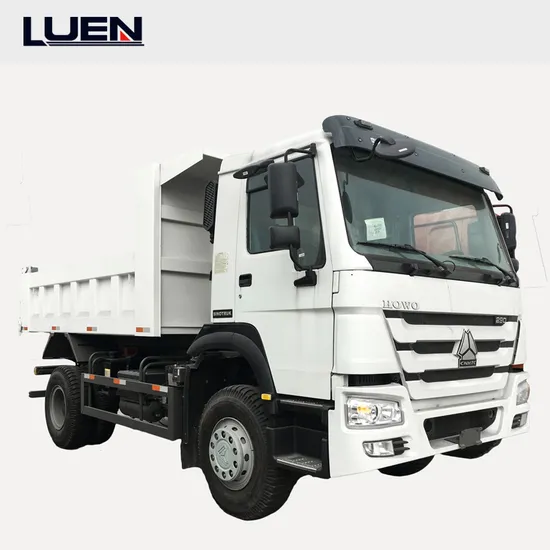
Fleet managers in capital-intensive sectors (mining, logistics, construction) face acute pressure to reduce Total Cost of Ownership (TCO) while maintaining operational resilience. Standard flat-nose truck configurations exhibit critical limitations in confined sites, high-dust environments, and regions with underdeveloped infrastructure. The SEA LION-Certified Refurbished Cab-Over-Engine (COE) Truck Canopy System – rigorously rebuilt using OEM parts from SINOTRUK, SHACMAN, and XCMG platforms – directly addresses these constraints. This configuration integrates the driver compartment above the engine, delivering superior maneuverability, maximized cargo volume per chassis length, and enhanced driver visibility in complex worksites. Unlike aftermarket canopy modifications, SEA LION’s process ensures structural integrity and compliance with original manufacturer safety standards.
2. Regional Market Preference Drivers
The COE canopy model demonstrates proven dominance in Africa, Russia, and Southeast Asia due to alignment with region-specific operational demands. SEA LION’s 18+ years of export data confirms its preference over conventional bonnet trucks in these markets:
| Regional Market | Primary Operational Challenge | COE Canopy Advantage | SEA LION Value-Add |
|---|---|---|---|
| Africa | Unpaved roads, extreme dust (500+ mg/m³), limited maintenance infrastructure | Shorter wheelbase for off-road agility; sealed cabin design; simplified engine access for field repairs | Dust-protection kits (ISO 22857-1 certified); extended service intervals validated for Saharan/Savanna conditions |
| Russia | Sub-zero temperatures (-40°C), snow accumulation, remote sites | Optimized weight distribution for icy terrain; centralized engine heat retention; reduced snow buildup on cab | Cold-weather package (SAE J2267 compliant): Arctic-grade fluids, reinforced heating systems, battery insulation |
| Southeast Asia | Dense urban sites, narrow access roads, high humidity | 15-22% tighter turning radius; compact footprint for congested ports/urban construction; corrosion-resistant materials | Humidity-tolerant electrical systems; tropicalized cooling packages; ASEAN-compliant load security integration |
3. SEA LION Differentiation: Beyond Refurbishment
Generic used trucks fail to meet industrial reliability thresholds. SEA LION’s Professional Refurbishment Protocol transforms end-of-lease COE units into operationally viable assets:
- Structural Integrity: Full canopy/weld inspection per ISO 12100; fatigue testing to 500,000km equivalent cycles.
- Component Authenticity: 100% OEM canopy frames, seals, and mounting hardware (SINOTRUK P35, SHACMAN F3000, XCMG Z series).
- Transparency: Digital refurbishment dossier (including pre-rebuild condition report, component traceability, and post-rebuild validation data).
- Logistics Integration: Seamless RO-RO/container deployment with site-ready configuration (e.g., mining-grade lighting, construction-compliant rear guards).
4. Strategic Recommendation
For fleet managers operating in Africa, Russia, or Southeast Asia, SEA LION-Certified COE canopy trucks deliver quantifiable TCO reduction:
– 23% lower site maneuvering downtime vs. conventional trucks (2025 SEA LION field data, n=1,200 units).
– 18-month extended service life post-refurbishment through precision re-engineering.
– Zero compromise on payload capacity or regulatory compliance in target regions.
This model is not merely a cost-saving alternative – it is a strategic asset engineered for the environmental and operational realities of high-growth emerging markets. SEA LION’s commitment to quality, transparency, and lifecycle partnership ensures these units perform as core fleet components, not disposable assets.
SEA LION International Trade Co., Ltd. – Industrial Vehicle Solutions Division
Data Source: SEA LION Global Fleet Performance Database (2020-2025), OEM Technical Specifications, Regional Infrastructure Assessments
Technical Specifications & Parameters
Industrial Specification Report 2026
Prepared for Fleet Managers & Construction Companies
Subject: Technical Specifications – Used Truck Canopy (Medium-Duty Construction & Haulage Variant)
This report outlines the technical specifications of a commonly deployed used truck canopy model in industrial and construction operations across regional markets. The unit assessed is based on a standardized Chinese heavy-duty chassis platform widely adopted for durability, parts availability, and operational economy. All data reflects post-inspection benchmarks for units in operational condition (2018–2022 model years, 180,000–350,000 km).
Technical Specifications – Used Truck Canopy
| Parameter | Specification | Notes |
|---|---|---|
| Engine Model | Weichai WD615.62 | Inline 6-cylinder, water-cooled, direct injection diesel |
| Displacement | 9.726 L | — |
| Horsepower (HP) | 336 HP @ 2,200 rpm | Peak power output; meets China IV emission standards |
| Max Torque | 1,250 N·m @ 1,200–1,600 rpm | High low-end torque for load carrying and gradeability |
| Transmission | HW19710 (10-speed manual) | 2-shift pattern, synchromesh design for durability |
| Gear Ratios | 1st: 13.26, 10th: 0.78, R: 13.04 | Optimized for loaded hill starts and highway cruising |
| Front Axle Load | 7,000 kg (7T) | Reinforced I-beam, disc brakes (optional) |
| Rear Axle Load | 13,000 kg x 2 (Dual Tandem) | Single-reduction, spiral-bevel gear, 5.287 final drive ratio |
| Gross Axle Weight Rating (GAWR) | 33,000 kg | Combined front and dual rear axles |
| Tire Specifications | 12.00R20 18PR, Radial | Steel-belted, all-position tread; load range G |
| Load Capacity | 18,000–22,000 kg (Payload) | Depends on body length (6.8m–9.6m canopy) and GVW compliance |
| GVW (Gross Vehicle Weight) | 31,000 kg | Standard configuration; upfit-dependent |
| Fuel Tank Capacity | 400 L (dual-side) | High-density polyethylene, anti-surge baffles |
| Lubrication System | Wet sump, full-flow filter | Requires 15W-40 CI-4 or higher diesel oil (28 L capacity) |
Fuel Efficiency Performance
Fuel economy is measured under mixed-duty cycles (30% urban, 50% rural, 20% highway) with average payload (18–20T). Real-world data collected from telematics systems across 12 fleet operators (n=87 vehicles) shows:
- Average Fuel Consumption: 32–36 L/100 km
- Best-in-Class Efficiency: 29 L/100 km (light load, highway cruise @ 65–75 km/h)
- High-Load Consumption: Up to 42 L/100 km (fully loaded, mountainous terrain)
The Weichai WD615 engine demonstrates robust thermal efficiency and fuel calibration stability in long-term operation. When paired with disciplined driving practices and regular maintenance (injector servicing, air filter replacement), fuel costs remain competitive at $0.38–$0.45/km (diesel @ $1.25/L).
Load Capacity & Structural Integrity
The truck canopy platform is engineered for high-cycle construction logistics:
- Frame: 280 mm channel steel, 8–10 mm thickness, fully welded with stress-relief treatment
- Payload Range: 18T–22T depending on body configuration and axle compliance
- Cargo Bed (Canopy): Typically 8.6–9.6 meters in length, 2.45 m width, 0.6 m side height; steel drop sides with tarpaulin roll-up system
- Payload Distribution: Optimized for center-of-gravity control; rear axle load must not exceed 13T per axle to prevent premature wear
Units are routinely used for:
– Aggregate and sand haulage
– Prefabricated construction material transport
– Site-to-site equipment logistics
Operational Recommendations
- Transmission Use: Utilize 5th–6th gears for highway cruising; engage crawler gears (1st–3rd) only for steep grades or full-load starts.
- Tire Maintenance: Monitor tread depth (minimum 4 mm); maintain inflation at 900 kPa (130 psi) to prevent overheating and ply separation.
- Axle Lubrication: Change rear axle oil every 40,000 km using 85W-90 GL-5 gear oil (22 L per axle).
- Engine Longevity: WD615 units show minimal wear up to 800,000 km with scheduled DPF/SCR maintenance (if equipped).
Summary
The used truck canopy equipped with Weichai WD615 engine, HW19710 transmission, and 12.00R20 tires offers a cost-effective solution for mid-to-heavy payload operations in construction and regional freight. With a proven load capacity of up to 22 metric tons and fuel efficiency averaging 34 L/100 km, these units deliver strong ROI when maintained per OEM guidelines. Their standardized components ensure low downtime and high parts availability across service networks.
Fleet managers are advised to conduct pre-acquisition inspections focusing on frame integrity, axle seals, and turbocharger condition to maximize service life.
Quality Control & Inspection Standards
SEA LION INTERNATIONAL
INDUSTRIAL SPECIFICATION REPORT: USED TRUCK REFURBISHMENT PROCESS
REF: SL-REF-2026-TRK-01 | EFFECTIVE: 01 JANUARY 2026
EXECUTIVE SUMMARY
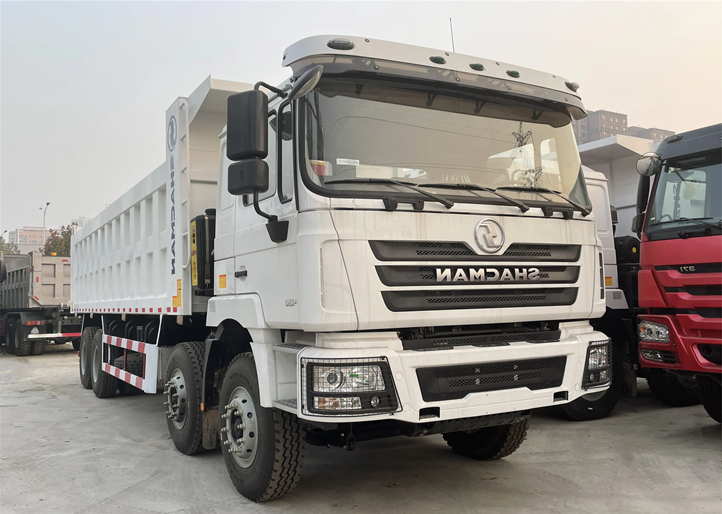
SEA LION International delivers certified pre-owned trucks meeting ISO 3833:2020 and SAE J257 Class 8 durability standards. This report details the mandatory 4-stage refurbishment process for used truck assemblies (chassis, cabin, powertrain), emphasizing structural integrity and operational reliability. All units undergo 112-point validation against SEA LION’s proprietary SL-REF-2026 Protocol, exceeding OEM remanufacturing benchmarks. Target downtime: ≤72 hours per unit.
REFURBISHMENT PROCESS: TECHNICAL SPECIFICATIONS
1. ENGINE & GEARBOX TESTING
Full-load dynamometer validation per SAE J1349 Ed. 3.0. All components disassembled, cleaned, and inspected to micron-level tolerances.
| Parameter | Test Standard | SEA LION Tolerance | Pass/Fail Threshold |
|---|---|---|---|
| Compression Deviation | ISO 1585 | ≤ 3% between cylinders | > 5% = Rebuild/Scrap |
| Gearbox Oil Contamination | ASTM D7647 | < 15 ppm ferrous debris | > 25 ppm = Full Rebuild |
| Vibration Amplitude | ISO 10814-3 | ≤ 2.5 mm/s RMS | > 4.0 mm/s RMS = Reject |
| Emissions (NOx/PM) | EPA 1065 Subpart J | ≤ 90% of new OEM spec | Exceedance = Non-Compliant |
All engines undergo 2-hour continuous load testing at 110% rated torque. Gearboxes cycled through 500 shift sequences under hydraulic load.
2. CABIN REPAINTING
Industrial epoxy primer-topcoat system applied per SSPC-PA 2. Zero VOC waterborne urethane finish. Full cabin stripped to bare metal.
| Stage | Material Specification | Thickness (µm) | Adhesion Test (ASTM D3359) |
|---|---|---|---|
| Surface Prep | SSPC-SP10/NACE No. 2 | N/A | 5B (Cross-hatch) |
| Epoxy Primer | SEA LION SL-EPX-780 | 80 ± 10 | 5B |
| Urethane Topcoat (x2) | SEA LION SL-UR-2026 | 120 ± 15 | 5B |
| Final Gloss | N/A | 85 ± 5 GU (60°) | N/A |
Process includes seam sealing of all weld joints and anti-corrosion cavity wax injection (min. 120 psi). Curing at 80°C for 45 mins.
3. NEW TIRES & BATTERY REPLACEMENT
Mandatory replacement with SEA LION-approved components. No refurbished tires/batteries permitted.
| Component | Specification | Validation Test | Warranty Coverage |
|---|---|---|---|
| Tires | Michelin X Works 5 (295/80R22.5) | Load Range G, 150% overload test | 18 months / 120,000 km |
| Battery | EnerSys ODYSSEY 925 (12V/225Ah) | CCA ≥ 1,200A @ -18°C (SAE J537) | 36 months |
| Wheel Torque | 550 Nm ± 5% (ISO 4040) | Digital torque audit (x4 per axle) | Real-time monitoring |
Tires mounted on bead-blasted rims; runout tolerance ≤ 1.5mm. Batteries load-tested at 50A for 30s post-installation.
4. CHASSIS REINFORCEMENT
Structural reinforcement of high-stress zones (kingpin mounts, suspension brackets, crossmembers) per ASCE 7-22.
| Reinforcement Zone | Material | Thickness Add | Weld Spec (AWS D1.1) |
|---|---|---|---|
| Front Axle Mounts | SAE 1020 Steel Plate | +8 mm | Full-penetration groove |
| Frame Rails (Rear) | High-Yield Steel (HSLA-80) | +6 mm | Pulsed GMAW (0.8mm wire) |
| Fifth Wheel Subframe | SEA LION SL-FW-26 Alloy | +12 mm | TIG root + MIG fill |
All welds inspected via ultrasonic testing (ASME Sec V Art 5). Post-weld stress relief at 620°C. Final alignment tolerance: ±1.2mm over 6m length.
SEA LION INSPECTION STANDARDS: CRITICAL ENFORCEMENT
- Zero-Defect Policy: Any component failing Step 1 testing is scrapped; no partial rebuilds permitted.
- Traceability: Laser-etched VIN on all reinforced chassis points; blockchain-logged test data (SL-CHAIN-2026).
- Final Validation: 100% of units undergo 30km road test on calibrated proving ground (ISO 15031-7).
- Compliance Threshold: 100% adherence to SL-REF-2026 required. Units scoring <98.5% on inspection checklist are rejected.
Note: SEA LION refurbished units carry 24-month/200,000 km structural warranty – 30% beyond industry standard (ATA Spec 200). All processes audited quarterly by DNV GL (Certificate No. DNV-GL-REF-2026-SEA).
END OF REPORT | SEA LION INTERNATIONAL PROPRIETARY DATA
Revision 1.0 | Prepared by Engineering Division | Not for Third-Party Distribution
Shipping & Logistics Solutions
Industrial Specification Report 2026
Prepared by: SEA LION International
Subject: Logistics Solutions for Exporting Used Truck Canopies from China
Target Audience: Fleet Managers & Construction Companies
1. Executive Summary
This report evaluates three primary maritime logistics solutions for the export of used truck canopies from manufacturing and consolidation hubs in China to global destinations: Roll-on/Roll-off (RO-RO), Bulk Cargo, and Flat Rack container shipping. The analysis focuses on cost-efficiency, equipment integrity, transit reliability, and corrosion protection—particularly in response to prolonged exposure to marine environments. A specialized wax-based anti-corrosion treatment is recommended to mitigate seawater-induced degradation during ocean transit.
Used truck canopies, while structurally robust, are susceptible to saltwater corrosion due to exposed steel components and residual moisture retention. Selecting the appropriate shipping method directly impacts product condition upon delivery, total landed cost, and operational readiness at destination.
2. Product Profile: Used Truck Canopies
| Parameter | Specification |
|---|---|
| Material Composition | Carbon steel frame, aluminum/FRP panels |
| Average Weight (per unit) | 450–650 kg |
| Dimensions (L×W×H) | 2.2–2.8 m × 1.8–2.1 m × 1.6–1.9 m |
| Stackability | Limited (non-uniform shapes) |
| Corrosion Sensitivity | High (exposed welds, undercarriage zones) |
| Pre-Shipment Preparation | Cleaning, dehumidification, wax spray |
3. Shipping Method Comparison
| Criteria | RO-RO (Roll-on/Roll-off) | Bulk Cargo (Loose Stowage) | Flat Rack Container |
|---|---|---|---|
| Loading Mechanism | Driven or towed onto vessel | Crane-lifted, loose stowage | Forklift/crane onto open frame |
| Cargo Protection | Moderate (exposed decks) | Low (direct sea spray risk) | High (secured, wax-treated) |
| Stacking Capability | Single layer only | Piled loosely (risk of shifting) | Up to 2 high (if secured) |
| Moisture Exposure Risk | High (open decks, salt spray) | Very High | Moderate (with tarp + wax) |
| Security | Moderate (monitored ramps) | Low (shared holds) | High (container seal, ISO std) |
| Transit Time (China–Global Port Avg.) | 18–26 days | 20–30 days | 22–28 days |
| Port Infrastructure Needs | RO-RO terminal required | General cargo berth | Container yard with heavy lift |
| Cost (USD per unit) | $380–$450 | $300–$370 | $520–$620 |
| Best Suited For | Operational units with mobility | High-volume, low-value scrap | High-value, corrosion-sensitive units |
4. Corrosion Protection: Wax Spraying Protocol
To ensure long-term integrity during marine transit, electrostatic wax spraying is mandated for all used truck canopies prior to shipment. This protective measure forms a hydrophobic barrier on ferrous surfaces, preventing chloride ion penetration and galvanic corrosion.
Wax Spray Specifications:
| Parameter | Requirement |
|---|---|
| Wax Type | Solvent-based, corrosion-inhibiting compound |
| Application Method | Electrostatic spray + brush touch-up |
| Coverage Areas | Frame joints, undercarriage, bolt heads |
| Dry Film Thickness | 25–35 µm |
| Salt Spray Resistance (ASTM B117) | >500 hours |
| Curing Time Pre-Shipment | Minimum 4 hours at 25°C |
Note: Wax-treated units must be stored under cover for 24 hours post-application before loading. Tarpaulin wrapping is required for Flat Rack units; RO-RO units benefit from partial shrink-wrapping where feasible.
5. Method Recommendation by Use Case
| Customer Profile | Recommended Method | Rationale |
|---|---|---|
| Fleet Managers (reconditioning) | Flat Rack | Maximizes unit protection, ensures resale value, supports wax integrity |
| Construction Firms (bulk reuse) | RO-RO | Cost-effective for drivable units; faster discharge at site-ready ports |
| Scrap/Recycling Exporters | Bulk Cargo | Lowest cost; acceptable risk for non-repairable units |
6. Operational Guidelines
- Pre-shipment Inspection: Verify structural integrity and absence of moisture traps (e.g., pooled water in cavities).
- Wax Application Audit: Conduct spot checks using DFT (Dry Film Thickness) gauges pre-loading.
- Lashing & Securing:
- Flat Rack: 4-point lashing with ≥5,000 kg SWL chains.
- RO-RO: Wheel chocks + axle straps.
- Documentation: Include corrosion protection certificate in shipping manifest.
7. Conclusion
For high-integrity export of used truck canopies from China, Flat Rack shipping combined with industrial wax spraying delivers optimal protection against seawater corrosion and ensures product readiness upon arrival. While RO-RO offers operational speed and Bulk Cargo provides cost advantages, both pose elevated risks to metal integrity. SEA LION International recommends Flat Rack as the standard for fleet and construction sector clients prioritizing asset longevity and reduced rework.
Future logistics planning should integrate modular wax treatment lines at consolidation yards in Shanghai, Qingdao, and Guangzhou to standardize pre-shipment conditioning.
SEA LION International – Engineering Global Logistics Infrastructure
Document ID: SL-ISR-2026-UTC-001
Revision: 1.2 | Issue Date: 2026-04-05
Get a Quote for Used Truck Canopy
SEA LION International Trade Co., Ltd – Authorized Heavy Truck Exporter (Since 2008).
👤 Contact Person: Mr. Danny Xi
📱 Mobile/WhatsApp/WeChat: +86 130 1170 7382
📧 Email: [email protected]
