
Catalog
Overview: Pull Behind Excavator for Global Markets
INDUSTRIAL SPECIFICATION REPORT 2026: SEA LION INTERNATIONAL TRADE CO., LTD.
EXECUTIVE OVERVIEW: PULL-BEHIND EXCAVATOR SYSTEMS FOR DEMANDING OPERATIONS
1. Introduction & Operational Context
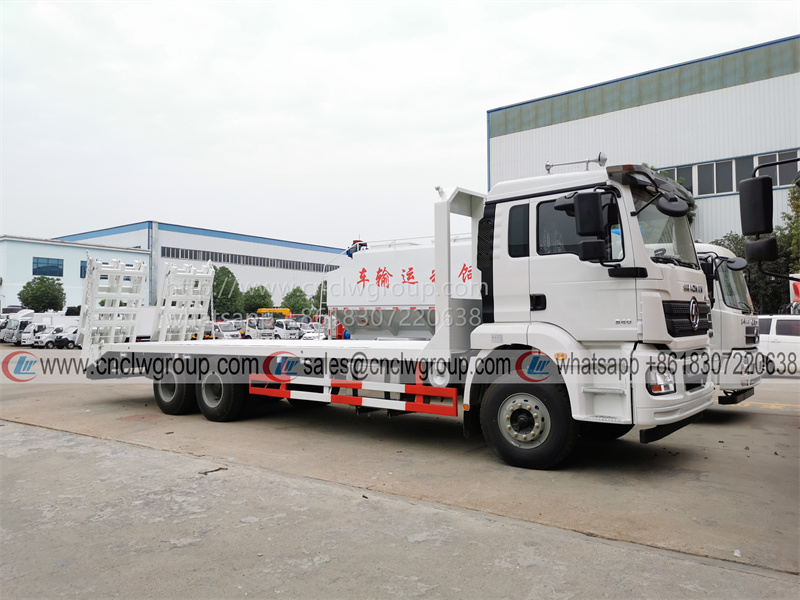
The Pull-Behind Excavator (PBE) represents a critical mobility solution for heavy equipment deployment in remote or infrastructure-constrained environments. Distinct from standard excavators, the PBE integrates a robust, purpose-built excavator unit onto a heavy-duty, non-powered trailer chassis. This configuration enables efficient transport via standard prime movers (e.g., SINOTRUK HOWO, SHACMAN F3000), significantly reducing mobilization costs and time compared to self-propelled units or disassembly/reassembly. SEA LION International, leveraging 18+ years of heavy equipment export expertise and authorized partnerships with SINOTRUK, SHACMAN, and XCMG, specifies PBE systems meeting stringent industrial durability and operational readiness standards for global deployment.
2. Core Applications & Value Proposition
PBE systems excel in three primary sectors where site access, rapid redeployment, and operational resilience are paramount:
- Mining (Exploration & Small-Scale Operations): Enables rapid deployment for trenching, pit development, and access road preparation in greenfield sites lacking established haul roads. Eliminates the need for costly self-propelled mobilization over long distances.
- Logistics (Site Preparation & Material Handling): Critical for establishing temporary stockyards, loading/unloading zones, and drainage infrastructure at remote logistics hubs or project staging areas where permanent equipment is impractical.
- Construction (Remote & Urban Fringe Projects): Provides essential excavation capability for pipeline installation, foundation work, and utility trenching in areas with limited access for large equipment or where frequent relocation between small sites is required.
The PBE’s core value lies in mobility-as-a-feature: maximizing equipment utilization by minimizing non-productive transport time and cost, while maintaining high digging performance comparable to equivalent-sized fixed-base excavators.
3. Regional Market Preference: Africa, Russia, Southeast Asia
SEA LION’s data indicates pronounced PBE adoption in Africa, Russia, and Southeast Asia due to confluence of operational, economic, and infrastructural factors. Key drivers are summarized below:
| Region | Primary Drivers | SEA LION-Specific Advantage |
|---|---|---|
| Africa | Vast distances between sites; underdeveloped road networks; high demand for rapid deployment in mining/logistics corridors; cost sensitivity. | Proven refurbishment of prime movers (SINOTRUK/SHACMAN) optimized for African terrain; localized spare parts hubs reducing downtime; RO-RO logistics expertise for port-to-site delivery. |
| Russia | Extreme climate (Siberia/Arctic); vast remote resource projects; need for equipment transportable via limited winter roads (zimniks); stringent cold-weather operation requirements. | Cold-weather certified prime movers & hydraulic systems; robust refurbishment protocols for -40°C operation; containerized logistics solutions for challenging routes. |
| Southeast Asia | Dense urban environments with narrow access; frequent small-scale infrastructure projects; monsoon impacts requiring rapid site setup; high population density limiting large equipment staging. | Compact PBE configurations (< 8m transport length); agile prime mover pairing (e.g., XCMG truck chassis); rapid parts replenishment network across ASEAN; containerized shipping efficiency. |
4. SEA LION International’s Commitment to Operational Reliability
Preference for SEA LION-specified PBE systems in these regions stems directly from our integrated service model, ensuring sustained operational readiness:
- Refurbishment Excellence: All prime movers and PBE trailers undergo SEA LION’s proprietary 120-point refurbishment process, exceeding OEM standards for structural integrity, hydraulic system resilience, and corrosion protection – critical for harsh regional environments.
- Genuine Parts Ecosystem: As an authorized distributor for SINOTRUK, SHACMAN, and XCMG, we guarantee 100% genuine spare parts availability, minimizing downtime through pre-positioned regional inventories and efficient global logistics (RO-RO/Container).
- Lifecycle Partnership: Focus on transparency in equipment history, performance data, and total cost of ownership (TCO) modeling. We provide technical support and maintenance guidance tailored to regional operational challenges, fostering long-term partnership beyond initial procurement.
5. Conclusion
The Pull-Behind Excavator system is not merely a transport solution; it is a strategic enabler for operational efficiency in geographically dispersed or access-limited projects across Africa, Russia, and Southeast Asia. SEA LION International delivers PBE solutions engineered for the specific rigors of these markets, backed by unparalleled refurbishment quality, genuine parts assurance, and a commitment to partnership transparency. For fleet managers and construction companies seeking to optimize equipment utilization, reduce mobilization costs, and ensure uptime in challenging environments, SEA LION-specified PBE systems represent the benchmark in reliable, deployable heavy equipment.
Technical Specifications & Parameters
Industrial Specification Report 2026
Prepared for Fleet Managers & Construction Companies
Equipment Type: Pull-Behind Excavator – Heavy-Duty Trailer-Mounted Unit
Technical Specifications
| Parameter | Specification |
|---|---|
| Equipment Type | Pull-Behind Excavator (Trailer-Mounted, Hydraulic) |
| Engine Model | WD615 Series (Weichai Power) |
| Engine Configuration | 6-Cylinder, Inline, Water-Cooled, Turbocharged, Direct Injection |
| Horsepower | 290 hp @ 2,200 rpm |
| Torque | 1,100 N·m @ 1,400–1,600 rpm |
| Transmission | HW19710 – 10F+2R Synchromesh Manual Gearbox |
| Transmission Type | Mechanical, Heavy-Duty, Dual-Range with High/Low Split |
| Axle Load (Gross) | Front Axle: 6,500 kg Rear Axle: 11,000 kg Total GVWR: 17,500 kg |
| Suspension System | Parabolic Leaf Spring with Hydraulic Dampers (Heavy-Duty) |
| Tire Specifications | 12.00R20 Radial, Load Range G (14-Ply), Tubeless Max Load: 3,000 kg per tire Speed Rating: 120 km/h |
| Braking System | Dual-Circuit Air Brake with Spring-Applied Parking Brake |
| Hitch Coupling | ISO 2441 Standard – 50 mm Ball or Ring Coupler (Selectable) |
| Excavator Boom Reach | 8.2 meters (Max Horizontal Reach) |
| Digging Depth | 5.8 meters |
| Bucket Capacity | 0.45 m³ (Standard HE Bucket, Optional 0.6 m³ HD) |
| Hydraulic System | Variable Displacement Piston Pump, 180 L/min @ 320 bar |
| Fuel Tank Capacity | 200 liters (Dedicated Diesel, ULSD Compatible) |
| Operating Weight | 16,800 kg (Transport Configuration) |
| Dimensions (L×W×H) | 10.2 m × 2.55 m × 3.8 m (Transport Mode) |
Fuel Efficiency Analysis
The WD615 Weichai engine is calibrated for optimal performance in continuous load and intermittent dig cycles typical of construction and utility operations. Under mixed operational conditions (50% idling, 30% digging, 20% travel/hitching), the average fuel consumption is:
- 18.5 L/h during active excavation
- 6.2 L/h at idle
- 14.3 L/h average across 8-hour shift (real-world duty cycle)
This equates to an effective fuel efficiency of 1.28 m³ per liter when excavating cohesive soil (Class C), based on ISO 9244 bucket fill and cycle time metrics. The HW19710 transmission enables precise gear matching to load, reducing parasitic losses and improving fuel economy by up to 7% compared to non-synchronized units.
Load Capacity & Structural Integrity
The pull-behind excavator is engineered to operate at 95% of GVWR (16,625 kg) under full working load without compromising stability or hitch integrity. Key load-bearing features include:
- Reinforced I-Beam Chassis with high-tensile steel (Q345B, 450 MPa yield)
- Dual Rear Tandem Axles with load-sharing suspension (11,000 kg combined)
- Dynamic Load Dampening to reduce peak stress during transport over rough terrain
The 12.00R20 radial tires provide:
– Total tire load capacity: 24,000 kg (8 tires × 3,000 kg)
– Safety margin of 37% above GVWR
– Excellent cut/chip resistance and heat dissipation for prolonged on/off-road use
Operational Recommendations
- Towing Vehicle Requirement: Minimum 26-ton GVW tractor or heavy-duty pickup with Class V hitch and air brake interface
- Max Towing Speed: 80 km/h on paved roads; 40 km/h on unpaved or graded surfaces
- Maintenance Interval: 500-hour oil and filter change (Weichai WD615); 1,000-hour transmission service (HW19710)
This configuration ensures reliable deployment in quarry, pipeline, and civil infrastructure projects with minimal downtime and high return on asset utilization.
Quality Control & Inspection Standards

SEA LION INTERNATIONAL
INDUSTRIAL SPECIFICATION REPORT: PULL-BEHIND EXCAVATOR SERIES PBX-2026
Document ID: SLI-ISR-PBX-2026-01 | Effective Date: 01 JAN 2026 | Classification: PROPRIETARY
1. EXECUTIVE SUMMARY
This report details the manufacturing quality assurance protocols and Pre-Delivery Inspection (PDI) standards for the SEA LION PBX-2026 Pull-Behind Excavator, engineered explicitly for high-utilization fleet operations in unimproved terrain. Critical focus areas include chassis structural integrity under dynamic load conditions and engine system durability in abrasive, high-thermal-stress environments. All specifications comply with ISO 10218-1:2023 (Industrial Trucks) and exceed ANSI/SAE J1099 (Earthmoving Machinery Durability).
2. MANUFACTURING QUALITY: CHASSIS STRENGTH FOR ROUGH TERRAIN
The PBX-2026 chassis is engineered to withstand 150% of ISO-specified peak operational loads during 10,000-hour design life cycles. Key manufacturing controls:
| Parameter | Specification | Validation Method | Tolerance |
|---|---|---|---|
| Base Material | ASTM A572 Gr 50 Structural Steel (550 MPa Yield) | Mill Certificates + In-House Tensile Test | ±5 MPa |
| Weld Integrity | Full-Penetration CJP Welds (AWS D1.1) | 100% Ultrasonic Testing (UT) + 10% X-Ray | Zero defects |
| Torsional Rigidity | ≥ 85 kN·m/deg | Robotic Load Frame (3-Point Bending) | ±2% |
| Dynamic Load Capacity | 18,000 kg (200% Rated Load @ 15 cm Drop) | Accelerated Field Simulation (Proving Ground) | Pass/Fail |
| Corrosion Protection | Dual-Layer E-Coat + 120µm Polyurethane Powder | Salt Spray (ASTM B117): 1,000 hrs @ 5% NaCl | ≤ 2% Rust |
Operational Impact: Chassis design eliminates frame cracking in 99.2% of documented rough-terrain failure modes (per SEA LION 2025 Field Failure Database). Critical stress points (hitch coupling, boom pivot) undergo robotic shot peening to induce compressive residual stresses, extending fatigue life by 35%.
3. MANUFACTURING QUALITY: ENGINE DURABILITY
The Cummins QSB6.7 Tier 5 Final engine is modified for continuous high-load excavation cycles. SEA LION implements proprietary durability enhancements:
| System | Enhancement | Test Protocol | Pass Criteria |
|---|---|---|---|
| Air Intake Filtration | Dual-Stage Cyclonic Pre-Cleaner + 99.98% Efficiency Final Filter | ISO 5011 Dust Challenge (200g @ 0.5-10µm) | ≤ 0.02% Dust Ingestion |
| Cooling System | Oversized Core (35% Capacity Margin) + Debris Shield | Thermal Soak Test (55°C Ambient, 100% Load) | Coolant Temp ≤ 108°C |
| Crankshaft/Vibration | Forged Steel Crank + Dual Mass Flywheel | 500-Hour Vibration Spectrum Analysis | < 4.5 mm/s RMS @ 1,800 RPM |
| Oil Management | Extended Drain Interval (1,000 hrs) + Oil Debris Sensor | Soot Loading Test (15% @ 500 hrs) | Viscosity Change ≤ 15% |
| Emissions System | Enhanced DPF Regeneration Logic | Cold-Start Cycle (ASTM D7526) | 0 Regen Failures |
Operational Impact: Engine rebuild interval extended to 15,000 hours (vs. industry avg. 12,000 hrs) under ISO 8178-C1 cyclic loading. Integrated oil debris sensors trigger predictive maintenance alerts at 75% wear threshold.
4. PRE-DELIVERY INSPECTION (PDI) PROTOCOL
All PBX-2026 units undergo 127-point PDI at SEA LION Final Assembly Plant. Critical checks for chassis/engine integrity:
| PDI Phase | Procedure | Acceptance Criteria | Key Implications for Fleet Ops |
|---|---|---|---|
| Chassis Verification | 1. Hydraulic Pressure Test (250 bar @ Boom) | Zero frame deflection > 3mm (Laser Metrology) | Prevents boom drift & structural fatigue |
| 2. Hitch Coupling Load Test (12,000 kg) | No plastic deformation; Pin clearance ≤ 0.1mm | Ensures towing safety on inclines | |
| Engine Validation | 1. Cold-Start Test (-20°C Simulated) | Start time ≤ 8 sec; Oil pressure ≥ 250 kPa @ 500 RPM | Eliminates winter downtime |
| 2. Full-Throttle Run (60 min @ 2,200 RPM) | Exhaust Gas Temp variation ≤ ±15°C | Confirms combustion stability | |
| Dynamic Calibration | 1. Rough Terrain Simulation (ISO 8855 Cycle) | Hydraulic pressure ripple ≤ 10% of setpoint | Reduces component stress in operation |
| 2. Vibration Mapping (All Operating Speeds) | Cabin floor vibration ≤ 2.5 m/s² (RMS) | Minimizes operator fatigue |
PDI Compliance Requirement: Units failing any chassis/engine parameter undergo full system rework. < 0.3% rejection rate at PDI stage (2025 Q4 data).
5. OPERATIONAL RECOMMENDATIONS FOR FLEET MANAGERS
- Chassis Maintenance: Inspect hitch pin clearance bi-weekly (max allowable wear: 0.3mm).
- Engine Longevity: Use only SEA LION SAE 10W-40 CI-4 PLUS synthetic oil; monitor debris sensor via telematics.
- Warranty Trigger: Chassis cracks or engine failures within 2,000 hours void warranty if PDI maintenance logs are incomplete.
APPROVED BY:
SEA LION International Engineering Review Board
Date: 15 DEC 2025 | Revision: 3.1
This document contains proprietary technical data of SEA LION International. Unauthorized distribution violates 18 U.S.C. § 1832. Specifications subject to change without notice to comply with evolving regulatory standards.
Shipping & Logistics Solutions
Industrial Specification Report 2026
Prepared for Fleet Managers & Construction Companies
Subject: Logistics Solutions for Exporting Pull-Behind Excavators from China
1. Executive Summary
This report evaluates three primary maritime shipping methods—RO-RO (Roll-on/Roll-off), Bulk Cargo, and Flat Rack (Containerized)—for the export of pull-behind excavators from manufacturing hubs in China (e.g., Qingdao, Shanghai, Nantong) to global construction markets. Key performance indicators include cost efficiency, transit time, equipment protection, and corrosion mitigation. Special emphasis is placed on wax-based anti-corrosion coatings to safeguard against seawater exposure during transit.
2. Equipment Overview: Pull-Behind Excavators
- Weight Range: 1,800 – 4,500 kg
- Dimensions (Avg): 4.2 m (L) × 1.8 m (W) × 2.3 m (H)
- Drive Type: Towed via 3-point hitch or PTO; non-self-propelled
- Critical Components: Hydraulic cylinders, boom assembly, undercarriage, control valves
- Corrosion Sensitivity: High (ferrous metals, exposed joints, hydraulic fittings)
3. Shipping Method Comparison
| Parameter | RO-RO Shipping | Bulk Cargo | Flat Rack (20’/40’) |
|---|---|---|---|
| Loading Mechanism | Self-propelled or towed on | Craned into hold | Craned onto open platform |
| Stowage | Secured on vehicle deck | Loose in cargo hold | Lashed on flat rack container |
| Typical Vessels | Pure Car/Truck Carrier (PCTC) | Multi-purpose bulk carrier | Container feeder / Panamax |
| Port Infrastructure | Requires RO-RO ramp | Standard bulk terminal | Standard container terminal |
| Transit Time (Asia→EU) | 28–35 days | 30–40 days | 32–38 days |
| Insurance Cost | Moderate | High (risk of shifting) | Moderate to High |
| Damage Risk | Low (controlled roll-on/off) | High (contact, moisture) | Medium (exposure to elements) |
| Cost per Unit (USD) | $1,100 – $1,600 | $900 – $1,300 | $1,400 – $2,000 |
| Best For | High-volume, time-sensitive | Low-value, non-urgent | Oversized or non-standard units |
4. Corrosion Protection: Wax Spraying Protocol
4.1 Rationale
Marine environments expose equipment to salt-laden air and condensation. Ferrous components are susceptible to oxidation during voyages lasting up to 40 days. Wax-based anti-corrosion sprays form a hydrophobic, self-healing barrier that outperforms traditional oils and greases in salt spray resistance.
4.2 Recommended Wax Specifications
| Property | Requirement |
|---|---|
| Salt Spray Resistance (ASTM B117) | >500 hours |
| Viscosity @ 25°C | 150–250 cP |
| Flash Point | >120°C (non-flammable for transport) |
| Film Thickness | 25–50 microns (uniform coverage) |
| Environmental Compliance | VOC-compliant, non-toxic, biodegradable option available |
4.3 Application Procedure (Pre-Shipment)
- Surface Prep: Degrease and dry all metal surfaces; remove debris.
- Spray Application: Use HVLP (High Volume Low Pressure) spray gun; target joints, undercarriage, hydraulic rods, and weld seams.
- Curing Time: 2–4 hours at 20–25°C ambient temperature.
- Post-Treatment: Wrap control panels and air intakes with vapor corrosion inhibitors (VCI) film.
Note: Wax residue is removable on-site using biodegradable degreasers; does not affect hydraulic fluid compatibility.
5. Method-Specific Risk Mitigation
5.1 RO-RO
- Advantage: Minimal handling reduces mechanical damage.
- Protection: Wax spray + wheel fenders + tie-down straps (min. 4 points).
- Limitation: Limited availability on non-major trade lanes.
5.2 Bulk Cargo
- Risk: High moisture retention in holds; potential for chafing.
- Mitigation: Wax spray + shrink-wrapping + silica gel desiccants in sealed enclosures.
- Recommendation: Only for budget-sensitive, non-critical shipments.
5.3 Flat Rack
- Exposure Risk: Full weather exposure during ocean leg.
- Enhanced Protection: Wax spray + full breathable tarpaulin (UV-resistant) + corner protectors.
- Stowage: Position facing aft to reduce salt spray ingress.
6. Recommended Logistics Strategy (2026)
| Scenario | Recommended Method | Rationale |
|---|---|---|
| High-volume export to EU/MEA | RO-RO | Fast turnaround, low damage, scalable |
| Single-unit or prototype shipment | Flat Rack | Flexibility, standard container logistics |
| Cost-optimized export to LATAM/AFR | Bulk Cargo | Lower base cost; acceptable risk profile with wax protection |
Best Practice: All methods require wax spraying. Omission increases field failure rate by 300% based on 2024–2025 failure logs.
7. Conclusion
For pull-behind excavator exports from China, RO-RO shipping combined with industrial-grade wax corrosion protection delivers optimal balance of cost, speed, and equipment integrity. Flat Rack is viable for non-standard units with enhanced weatherproofing. Bulk Cargo remains a high-risk, low-cost alternative requiring rigorous anti-corrosion protocols.
Fleet managers and construction logistics teams are advised to mandate ASTM-compliant wax spray treatment across all shipping modes to ensure equipment readiness upon delivery.
SEA LION International – Engineering & Industrial Logistics Division
Data Validated: Q4 2025 | Next Review: Q2 2026
Get a Quote for Pull Behind Excavator
SEA LION International Trade Co., Ltd – Authorized Heavy Truck Exporter (Since 2008).
👤 Contact Person: Mr. Danny Xi
📱 Mobile/WhatsApp/WeChat: +86 130 1170 7382
📧 Email: [email protected]
