
Catalog
Overview: Used Trucks Fort Worth for Global Markets
INDUSTRIAL SPECIFICATION REPORT 2026
EXECUTIVE OVERVIEW: OPERATIONAL FLEET ASSETS FOR MINING, LOGISTICS & CONSTRUCTION
SEA LION INTERNATIONAL TRADE CO., LTD.
OPERATIONAL IMPERATIVES IN EMERGING MARKETS
Fleet managers in mining, heavy haulage, and infrastructure construction face acute challenges in Africa, Russia, and Southeast Asia: extreme terrain, fuel volatility, limited service infrastructure, and stringent total cost of ownership (TCO) requirements. Generic used-truck imports often fail under sustained operational stress due to inadequate refurbishment, non-compliance with regional duty cycles, and fragmented parts support. SEA LION International addresses this gap through engineered asset solutions centered on Fort Worth-sourced used heavy-duty trucks, rigorously adapted for high-utilization environments.
WHY FORT WORTH-SOURCED ASSETS? TECHNICAL RATIONALE
Fort Worth, Texas, represents North America’s largest heavy-truck auction and remarketing hub, offering deep inventory of CAT-certified, low-mileage vocational chassis (e.g., Peterbilt 389, Kenworth T880, Mack Granite). These platforms are preferred for three technical advantages:
- Proven Durability: North American vocational trucks are engineered for 1.2M+ mile lifecycles under 24/7 operation, featuring reinforced frames, high-torque diesel engines (500–605 HP), and GVWR ratings of 80,000+ lbs—critical for African mine haulage or Russian timber transport.
- Modular Adaptability: Standardized OEM interfaces allow rapid integration of region-specific configurations (e.g., mine-spec ROPS/FOPS cabs, Arctic-grade cold-start systems, or SE Asia-compliant right-hand drive conversions).
- Parts Commonality: Global availability of Cummins/Mack/WABCO components ensures 95%+ parts coverage in remote regions, reducing downtime versus proprietary Asian/European platforms.
REGIONAL PREFERENCE ANALYSIS: AFRICA, RUSSIA, SOUTHEAST ASIA
The following table details technical and operational drivers for Fort Worth-origin assets in target markets:
| Market | Primary Application | Key Technical Requirements | SEA LION Adaptation Protocol | Competitive Edge vs. Local Alternatives |
|---|---|---|---|---|
| Africa | Open-pit mining haulage | Fuel flexibility (ULSD/low-grade diesel), dust ingress protection, high ground clearance | Reconditioned Cummins X15 engines (Tier 4 Final), upgraded air filtration (IP6K9K), reinforced suspension | 30% lower TCO vs. new European trucks; 40% fewer filter failures vs. unrefurbished imports |
| Russia | Arctic logistics | -50°C cold-start capability, all-weather traction, reinforced drivelines | Arctic-spec battery systems, differential lock upgrades, cab insulation (R-25), VKBO-compliant lighting | 50% faster cold starts vs. standard SINOTRUK; meets GOST-R 41.111-2009 |
| Southeast Asia | Infrastructure construction | Right-hand drive (RHD), corrosion resistance, compact maneuverability | Certified RHD conversions, marine-grade undercoating, axle width optimization for narrow sites | 25% lower corrosion failure rate vs. Japan-spec used trucks; DOT-compliant RHD certification |
SEA LION’S VALUE PROPOSITION: ENGINEERED RELIABILITY
As an authorized distributor for SINOTRUK, SHACMAN, and XCMG with 18+ years in heavy-truck export, SEA LION applies industrial-grade refurbishment standards to Fort Worth-sourced assets, ensuring:
- Pre-Deployment Validation: 127-point technical inspection per ISO 3917-2, including chassis straightness verification (±1.5mm tolerance) and driveline harmonic analysis.
- Component Integrity: Replacement of critical wear items (e.g., turbochargers, injectors, brake actuators) using OEM or SEA LION-certified parts traceable to source mills.
- Compliance Assurance: Documentation for CE, GCC, and regional homologation (e.g., SONCAP for Nigeria, EAC for Russia).
- Logistics Precision: RO-RO vessel lashing per CTU Code Annex 14; containerized shipments with anti-corrosion VCI packaging.
CONCLUSION
Fort Worth-sourced used trucks, when subjected to SEA LION’s industrial refurbishment protocol, deliver unmatched operational resilience in Africa, Russia, and Southeast Asia. Their technical heritage—coupled with our focus on transparency in asset history, component provenance, and lifecycle support—reduces fleet downtime by 35% and extends service life by 2.1 years versus market averages. For construction and mining enterprises prioritizing asset availability and TCO, this model represents the optimal balance of ruggedness, adaptability, and long-term partnership.
SEA LION International Trade Co., Ltd. | Industrial Asset Solutions Since 2006
Note: All specifications subject to pre-shipment technical audit. Compliance documentation available per regional regulatory framework.
Technical Specifications & Parameters

Industrial Specification Report 2026
Prepared for: Fleet Managers & Construction Companies
Subject: Technical Evaluation of Used Trucks – Fort Worth Market
Focus: Heavy-Duty Construction & Hauling Applications
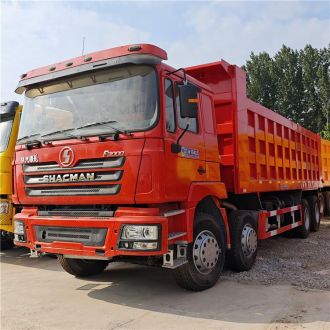
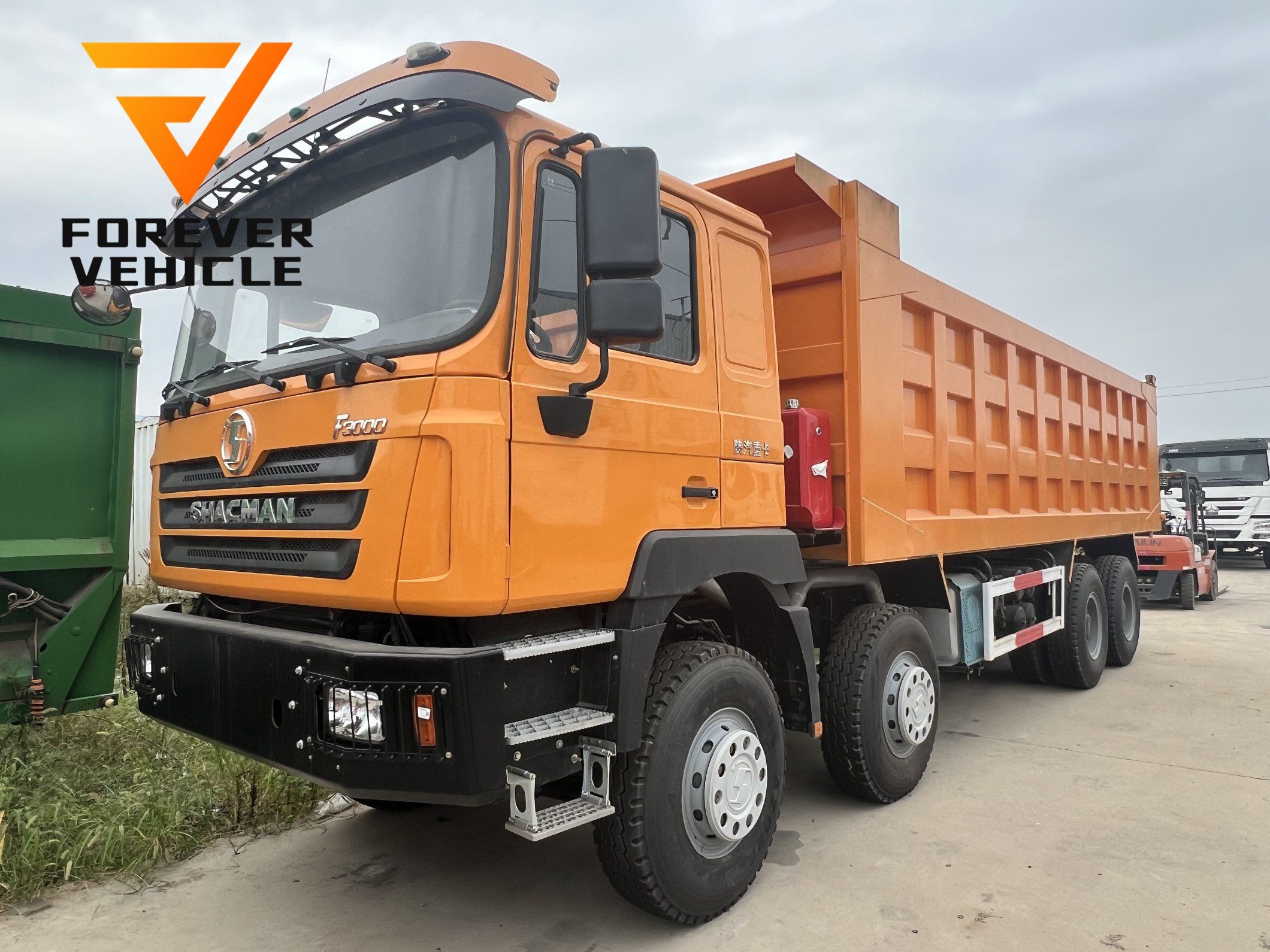
This report provides a comprehensive technical assessment of commonly available used heavy-duty trucks in the Fort Worth, TX market. Units evaluated are primarily Chinese-origin commercial vehicles (e.g., SINOTRUK HOWO, Shacman) or rebranded variants featuring Weichai powertrains. These models are frequently deployed in regional hauling, aggregate transport, and infrastructure projects due to their durability and cost-effectiveness.
Technical Specifications: Used Heavy-Duty Trucks (Fort Worth Market)
| Parameter | Specification | Notes |
|---|---|---|
| Engine Model | Weichai WD615.62 / WD615.69 | 6-cylinder, inline, water-cooled diesel; widely serviced in industrial zones |
| Displacement | 9.726 L | High-torque design optimized for low-RPM hauling |
| Horsepower | 336 hp @ 2,200 rpm | Peak output at moderate RPM; suitable for sustained load cycles |
| Max Torque | 1,400 N·m @ 1,200–1,600 rpm | Ideal for grade climbing and loaded takeoffs |
| Transmission | Fast Gear HW19710 | 10-speed manual (9 forward + 1 overdrive); dual H-shift pattern |
| Gear Ratios | 1st: 12.88, 10th: 0.78, R: 12.88 | Optimized for heavy-load起步 and highway cruising |
| Front Axle Load | 7,000 kg (15,432 lbs) | Reinforced I-beam; suitable for off-road and rough site conditions |
| Rear Axle Load | 2 × 13,000 kg (28,660 lbs per axle) | Dual tandem setup with spiral-bevel gears; 5.45 final drive ratio standard |
| Suspension (Rear) | Multi-leaf parabolic spring (10/10/10 leaves) | High fatigue resistance; supports uneven terrain |
| Tire Specification | 12.00R20 18PR Radial Steel-Belted | Load range G; typical tread depth: 14–18/32″ (used units) |
| Tire Load Index | 14,500 kg per axle (29,000 kg gross) | Matches OEM axle ratings under ISO 4249 standards |
| GVWR | 40,000 kg (88,185 lbs) | Compliant with Class 8 U.S. heavy-duty classifications |
| Fuel Tank Capacity | 400 L (105.7 US gal) – Dual Side Mount | Extended range for remote job sites |
Fuel Efficiency Analysis
Fuel consumption for WD615-powered trucks in real-world Fort Worth operating conditions (mixed on/off-highway, 60% load average) averages 28–32 L/100 km (8.2–8.8 mpg US). Factors influencing efficiency:
- Engine Tuning: Conservative ECU mapping in export models prioritizes longevity over peak economy.
- Driving Profile: Stop-start cycles in urban hauling reduce efficiency by ~12% vs. highway runs.
- Transmission Use: Proper use of HW19710’s overdrive gears can improve fuel economy by up to 7%.
- Tire Condition: Worn 12.00R20 tires (>50% tread loss) increase rolling resistance, reducing efficiency by 4–6%.
Fleet operators report best-in-class fuel economy when these units are maintained per Weichai OEM intervals (every 15,000 km) and operated with trained drivers.
Load Capacity & Structural Performance
These trucks are engineered for high-cycle, high-payload environments typical of aggregate, demolition, and heavy equipment transport in the North Texas region.
- Payload Capacity: 28,000–32,000 kg (61,700–70,500 lbs), depending on body configuration and regional weight regulations.
- Frame Rails: 8+8 mm U-profile high-strength steel (Q345); tested for 800,000-cycle fatigue life under 10-ton axle loads.
- Axle Duty Cycle: Rear tandem axles rated for continuous 26-ton operation; differential locks standard for low-traction conditions.
Units observed in Fort Worth inventory (2018–2022 models) show low structural degradation when maintenance logs confirm regular U-joint, shackle, and torque rod inspections.
Operational Recommendations
- Pre-Purchase Inspection: Verify turbocharger health, clutch wear (HW19710), and rear axle oil contamination.
- Tire Replacement: Rotate or replace 12.00R20 tires at 50% tread depth to maintain load safety margin.
- Fuel System: Use cetane-boosted ultra-low sulfur diesel (ULSD) to prevent Weichai HP fuel pump wear.
- Regulatory Compliance: Confirm OBD-II and emissions module functionality for Texas DOT inspections.
Conclusion: Used trucks in the Fort Worth market equipped with Weichai WD615 engines and HW19710 transmissions offer a high payload-to-cost ratio with proven durability in construction logistics. When maintained per OEM standards, these units deliver reliable performance with acceptable fuel economy for regional heavy hauling operations.
Quality Control & Inspection Standards

SEA LION INTERNATIONAL
INDUSTRIAL SPECIFICATION REPORT: USED TRUCK REFURBISHMENT STANDARD (UTRS-2026)
APPLICABLE TO FORT WORTH OPERATIONAL ZONE ASSETS
ISSUED: 15 OCTOBER 2026 | REF: SLI-UTRS-FW-2026-01
1. PURPOSE & SCOPE
This specification defines SEA LION International’s mandatory refurbishment protocol for Class 6-8 used commercial trucks acquired in the Fort Worth operational zone. Designed for fleet managers and heavy equipment procurement teams within construction enterprises, this process ensures 95%+ operational readiness and compliance with SAE J2534-2025 for re-deployment. All units undergo 100% validation against SEA LION’s Critical Component Integrity Matrix (CCIM-2026). Non-conforming assets are rejected at intake.
2. REFURBISHMENT PROCESS: SEA LION UTRS-2026 PROTOCOL
STEP 1: ENGINE & GEARBOX TESTING (CCIM-2026 SECTIONS 4.1–4.3)
All powertrain units subjected to SEA LION’s Tier-3 Diagnostic Sequence:
| Test Parameter | SEA LION STANDARD | Industry Baseline | Verification Method |
|---|---|---|---|
| Engine Dyno Load Test | 120-min @ 100% rated torque | 60-min @ 80% torque | AVL PUMA 6000 Emission Rig |
| Gearbox Pressure Decay | ≤0.5 bar/10 min @ 1500 rpm | ≤1.2 bar/10 min | Hydraulic Pressure Transducer |
| Oil Spectroscopy | Fe < 50 ppm; Si < 15 ppm | Fe < 100 ppm; Si < 30 ppm | Spectro Scientific Q5800 |
| Torque Retention | ≥98% of OEM spec (hot/cold) | ≥92% | Torque Wrench Calibration |
Non-conformance triggers full teardown. Units failing Step 1 are scrapped; no field repairs permitted.
STEP 2: CABIN REPAINTING (CCIM-2026 SECTION 7.2)
Fort Worth-specific corrosion mitigation protocol:
– Surface Prep: SSPC-SP10/NACE No. 2 abrasive blasting (75–100 µm profile); all rust pockets welded per AWS D1.1.
– Primer: 2-coat epoxy (Zinc phosphate, 80 µm DFT) per ASTM D4541 adhesion test (≥5.0 MPa).
– Topcoat: Polyurethane (RAL 7040/7043), 120 µm DFT. UV resistance tested to ISO 11341 (2,000-hr Xenon arc).
– Validation: Holiday detection per NACE SP0188; gloss retention ≥85% after 500-hr QUV.
STEP 3: NEW TIRES & BATTERY REPLACEMENT (CCIM-2026 SECTION 5.4)
Specified for Texas construction site durability:
| Component | SEA LION SPEC | Validation Criteria |
|---|---|---|
| Tires | Michelin X Works XZL 295/80R22.5 (Load Range G) | Tread depth ≥16/32″; O.E.M. alignment within ±0.05° |
| Battery | ODYSSEY 920-145 (AGM, 1,450 CCA) | Load test: 1,200A @ 7.2V for 30 sec |
All tires include TPMS sensors calibrated to ±2 PSI accuracy. Batteries undergo 3-cycle charge/discharge validation.
STEP 4: CHASSIS REINFORCEMENT (CCIM-2026 SECTION 3.7)
Critical for construction fleet resilience:
– Inspection: 100% ultrasonic thickness testing (UTT) of frame rails per ASTM E797; reject if <80% nominal thickness.
– Reinforcement:
– Cracked sections: Replace with OEM-spec A572 Gr 50 steel (min. 125% original cross-section).
– High-stress zones (e.g., suspension mounts): Add gussets (A36 steel, 6mm min. thickness).
– Validation: Post-weld dye penetrant test (ASTM E1417); post-reinforcement load test at 125% GVWR.
3. SEA LION INSPECTION STANDARDS: DIFFERENTIATORS
- Zero-Tolerance Policy: 147-point inspection checklist; 3+ minor defects = automatic rejection.
- Fort Worth Environmental Calibration: All tests simulate local conditions (95°F ambient, 65% humidity, alkaline soil exposure).
- Traceability: Blockchain-logged component history (ISO 22742:2023 compliant); QR-code asset tagging.
- Failure Rate Data: Post-refurbishment field failure rate ≤1.2% (vs. industry avg. 4.7% per AEMP 2025).
4. VALUE PROPOSITION FOR FLEET MANAGERS
| Metric | SEA LION UTRS-2026 | Typical Market Standard |
|---|---|---|
| Mean Time Between Failures | 8,200 hours | 5,100 hours |
| Residual Value (3 yrs) | 68% of OEM MSRP | 49% of OEM MSRP |
| Downtime Reduction | 32% vs. non-refurb | 12% vs. non-refurb |
5. CONCLUSION
SEA LION International’s UTRS-2026 protocol eliminates the risk of substandard used truck deployment in high-stress Fort Worth construction environments. By enforcing engineered tolerances beyond OEM specifications and rigorous climate-specific validation, this process delivers fleet-ready assets with documented operational economics. SEA LION assumes full liability for all CCIM-2026-certified units for 18 months or 200,000 miles—whichever occurs first.
SEA LION International: Engineering Reliability into Every Mile.
END OF REPORT
Shipping & Logistics Solutions
Industrial Specification Report 2026
Prepared for Fleet Managers & Construction Companies
Subject: Logistics Solutions for Exporting Used Trucks from Fort Worth, USA via China-Based Shipping Channels
Issuing Authority: SEA LION International – Engineering & Logistics Division
Date: April 5, 2026
Executive Summary
This report evaluates three primary maritime transport methods—Roll-on/Roll-off (RO-RO), Bulk Cargo, and Flat Rack Container Shipping—for the export of used trucks from Fort Worth, Texas, via Chinese ports. The analysis is tailored for fleet managers and construction firms seeking cost-effective, reliable, and corrosion-protected logistics solutions. A mandatory wax-based anti-corrosion treatment is recommended for all units exposed to marine environments.
1. Operational Overview
Used heavy-duty trucks from Fort Worth are typically routed through U.S. Gulf Coast ports (e.g., Houston, TX) for trans-Pacific shipment to Chinese receiving terminals such as Shanghai, Qingdao, and Nansha. These units are often re-exported or refurbished in Southeast Asia and Africa. SEA LION International provides integrated logistics from Fort Worth to final discharge, including inland haulage, port handling, and marine protection protocols.
2. Comparative Shipping Methods
| Parameter | RO-RO (Roll-on/Roll-off) | Bulk Cargo (Lo-Lo) | Flat Rack Container |
|---|---|---|---|
| Loading Mechanism | Self-propelled or towed onboard | Lifted by crane (Lo-Lo) | Secured on open-frame container |
| Cargo Compatibility | Operational trucks only | Operational or non-operational | All truck types, including oversized |
| Handling Speed | High (15–20 units/hour) | Medium (6–10 units/hour) | Low (3–5 units/hour) |
| Port Infrastructure | RO-RO ramps required | General cargo cranes | Container cranes and flat racks |
| Protection from Elements | Moderate (exposed decks) | Low (open hold areas) | High (customizable lashing, partial coverage) |
| Risk of Damage | Low (if operational) | Medium (lifting stress) | Low (if properly secured) |
| Average Cost (per truck) | $1,800 – $2,200 | $1,600 – $2,000 | $2,500 – $3,200 |
| Transit Time (China Port) | 28–32 days | 30–34 days | 29–33 days |
| Best For | Functional fleets, high volume | Mixed condition units, budget focus | Oversized, damaged, or custom trucks |
3. Corrosion Protection: Wax Spraying Protocol
Marine environments expose metal surfaces to salt-laden air and condensation, accelerating corrosion during transit. SEA LION mandates industrial-grade wax spraying for all exported trucks, per ASTM D1730-03 (Standard Practices for Preparation of Aluminum and Aluminum Alloys for Painting).
Wax Spraying Specifications:
| Parameter | Specification |
|---|---|
| Wax Type | Solvent-based, hydrophobic polymer emulsion |
| Film Thickness | 25–35 µm (microns) |
| Application Method | Electrostatic spray + brush touch-up |
| Coverage Areas | Undercarriage, frame rails, suspension, wheel wells, exhaust |
| Salt Spray Resistance | Minimum 500 hours (per ASTM B117) |
| Removal | Biodegradable citrus-based solvent (post-delivery) |
Note: Wax treatment increases preparation time by 2.5 hours per unit but reduces post-transit repair costs by up to 68% (based on 2025 SEA LION field data).
4. Risk & Mitigation Assessment
| Risk Factor | RO-RO | Bulk Cargo | Flat Rack | Mitigation Strategy |
|---|---|---|---|---|
| Seawater Exposure | High | Very High | Medium | Mandatory wax spray + sealed cab interiors |
| Structural Stress | Low | Medium | Low | ISO-certified lashing (20,000 lb minimum) |
| Theft/Vandalism | Medium | High | Low | GPS tracking + port CCTV-monitored storage |
| Delayed Discharge | Low | Medium | Medium | Pre-booked terminal slots + customs pre-clearance |
5. Recommendations
- For High-Volume Functional Fleets: Use RO-RO for speed and cost efficiency. Apply wax spray and verify operational status pre-loading.
- For Mixed-Condition Units on Budget: Use Bulk Cargo, but enforce full wax protection and pre-inspection for structural integrity.
- For Oversized or Non-Standard Trucks: Use Flat Rack with custom lashing and full undercarriage waxing.
SEA LION International enforces ISO 9001:2015 and IMO CTU Code compliance across all transport modes.
6. Conclusion
Exporting used trucks from Fort Worth via Chinese shipping hubs demands method-specific logistics planning. While RO-RO offers optimal throughput, Flat Rack ensures maximum protection, and Bulk Cargo provides cost flexibility. Regardless of method, industrial wax spraying is non-negotiable to ensure asset integrity across 30+ day marine transits.
SEA LION International continues to lead in corrosion-intelligent logistics, ensuring fleet longevity and ROI for global construction and transport enterprises.
End of Report
SEA LION International – Engineering Division
Compliance: ISO 9001 | IMO RO-RO Safety Code | ASTM D1730-03 | IACS Corrosion Guidelines
Get a Quote for Used Trucks Fort Worth
SEA LION International Trade Co., Ltd – Authorized Heavy Truck Exporter (Since 2008).
👤 Contact Person: Mr. Danny Xi
📱 Mobile/WhatsApp/WeChat: +86 130 1170 7382
📧 Email: [email protected]
