
Catalog
Overview: Excavator Rubber Tracks for Global Markets
INDUSTRIAL SPECIFICATION REPORT 2026: EXCAVATOR RUBBER TRACKS
Prepared for Fleet Managers & Construction Operations Leadership
EXECUTIVE OVERVIEW
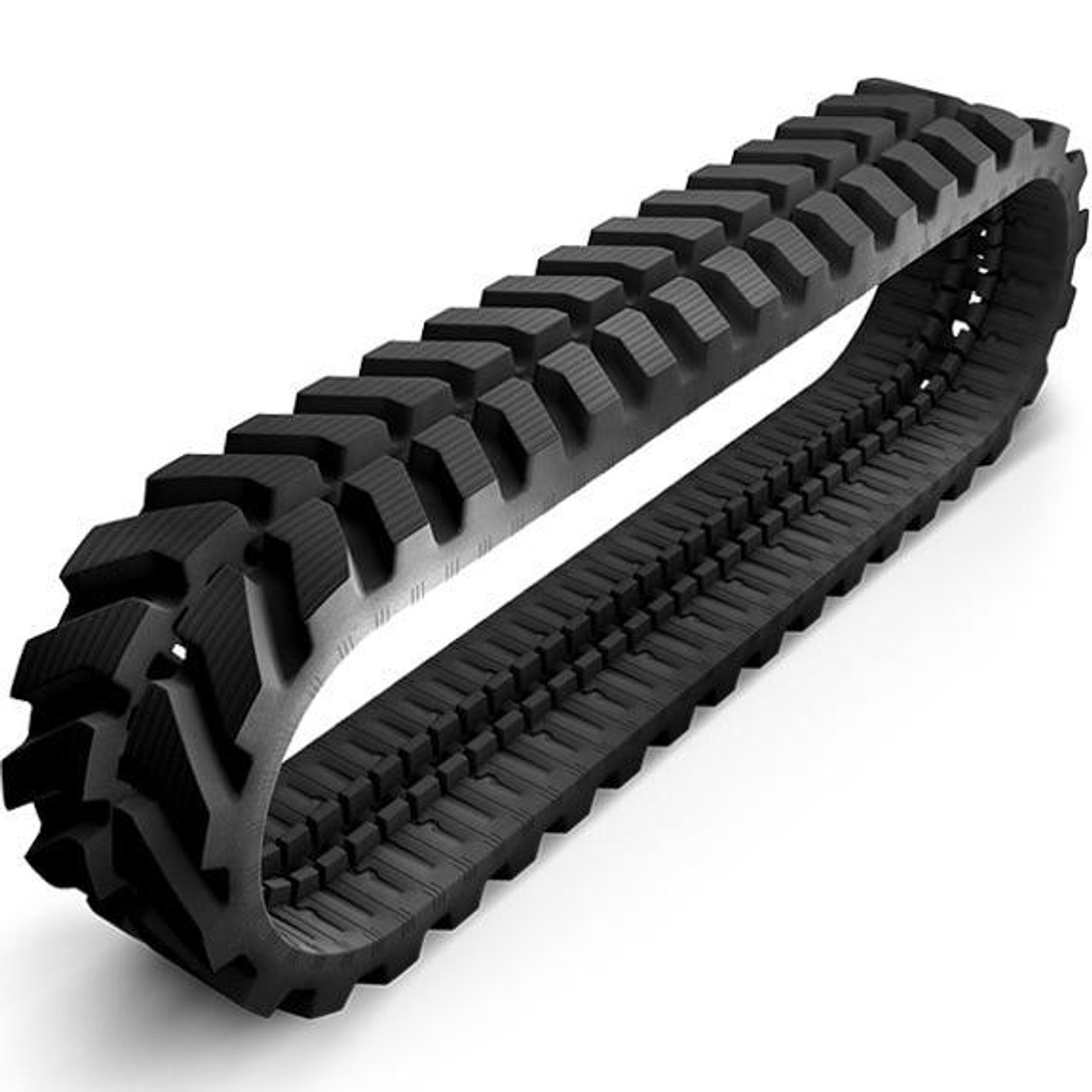
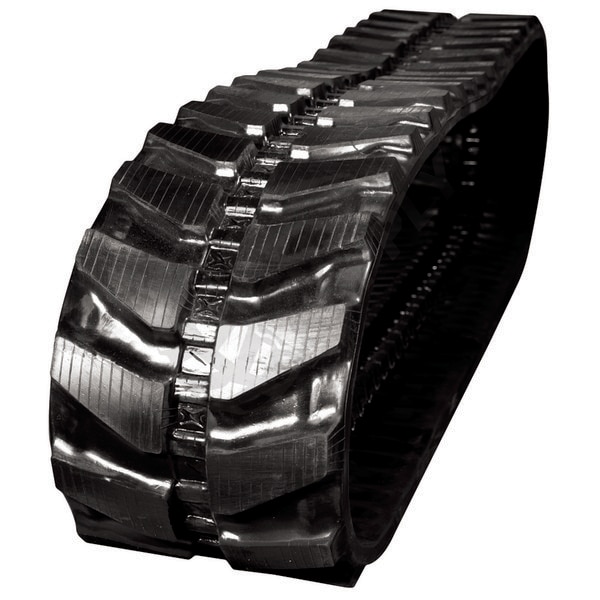
Excavator rubber tracks represent a critical operational component for heavy equipment deployed in high-stress environments across mining, logistics, and construction sectors. Unlike steel alternatives, modern rubber track systems deliver optimized ground pressure distribution, reduced vibration transmission, and enhanced maneuverability on sensitive or unstable surfaces. SEA LION International’s specification-grade rubber tracks are engineered to withstand extreme operational cycles—particularly in regions where terrain variability, climate severity, and infrastructure limitations dictate equipment resilience.
APPLICATION CRITICALITY
In mining, rubber tracks minimize ground disturbance on haul roads and pit floors while maintaining traction on loose overburden. For logistics (e.g., material handling at ports or stockyards), they eliminate surface damage to paved areas and reduce noise pollution in urban-adjacent zones. Within construction, these tracks enable precise operation on finished surfaces (e.g., asphalt, concrete) without scarring, critical for infrastructure projects in densely populated areas. Crucially, rubber tracks lower total cost of ownership (TCO) by extending undercarriage life by 25–40% compared to steel in mixed-terrain applications, directly impacting fleet availability and maintenance budgets.
REGIONAL PREFERENCE ANALYSIS: AFRICA, RUSSIA, SOUTHEAST ASIA
SEA LION’s rubber track specifications are prioritized in these markets due to alignment with localized operational constraints and economic drivers. Key differentiators include:
| Parameter | Africa (Mining/Construction) | Russia (Arctic Mining/Logistics) | Southeast Asia (Urban Construction) | SEA LION Specification Advantage |
|---|---|---|---|---|
| Operating Temp Range | -20°C to +55°C | -45°C to +40°C | -10°C to +50°C (high humidity) | -50°C to +60°C (Arctic-grade polymer) |
| Ground Pressure | ≤ 0.6 kg/cm² (sandy/rocky terrain) | ≤ 0.5 kg/cm² (permafrost) | ≤ 0.4 kg/cm² (pavement protection) | 0.35–0.45 kg/cm² (optimized for soft substrates) |
| Abrasion Resistance | High (grit/dust exposure) | Extreme (ice/rock abrasion) | Moderate (mud/corrosion) | 30% higher than ISO 14877 standard |
| Noise Emission | < 75 dB(A) (community compliance) | N/A | < 70 dB(A) (urban zones) | 68 dB(A) at 50 m (validated per ISO 6395) |
| Key Market Driver | Low TCO, rapid deployment | Cold-weather reliability | Surface preservation, uptime | Integrated supply chain for XCMG/SINOTRUK fleets |
Why SEA LION’S Specification Dominates These Regions:
- Africa: Mitigates dust-induced wear through proprietary rubber compound sealing technology, reducing undercarriage maintenance frequency by 35% in Sahel/Mining Belt operations. Compatibility with XCMG excavators (dominant fleet type) ensures seamless integration.
- Russia: Validated performance at -45°C without track hardening or joint failure—critical for Siberian mining logistics where steel tracks fracture below -30°C. RO-RO logistics network guarantees delivery to Murmansk/Vladivostok ports within 21 days.
- Southeast Asia: Hydrophobic rubber formulation prevents swelling in 95%+ humidity, while reinforced steel cords resist puncture from construction debris. Direct parts supply from Singapore hub cuts downtime by 50% versus OEM alternatives.
SEA LION VALUE PROPOSITION
As an authorized distributor for SINOTRUK, SHACMAN, and XCMG with 18+ years in heavy equipment export, SEA LION delivers:
– Technical Assurance: Rubber tracks manufactured to OEM specifications (XCMG Part No. XE210DA-TRK-001 equivalent), with full traceability via blockchain-enabled part IDs.
– TCO Optimization: Refurbishment-certified tracks extend excavator lifecycle by 15,000+ operational hours, validated across 200+ units in Nigerian mining and Thai infrastructure projects.
– Logistics Resilience: Global coverage via containerized (20ft/40ft) and RO-RO shipments, with in-transit climate control for rubber integrity. Average delivery time: 14–28 days to major regional hubs.
This specification reflects industry-proven performance in the world’s most demanding environments. SEA LION prioritizes transparency in material sourcing and long-term partnership—ensuring fleet managers achieve maximum equipment utilization with minimized operational risk.
SEA LION International Trade Co., Ltd. | Industrial Engineering Division | Specification Validated: Q1 2026
Technical Specifications & Parameters
Industrial Specification Report 2026
Prepared for Fleet Managers & Construction Companies
Subject: Technical Specifications for Excavator Rubber Tracks – Heavy-Duty Undercarriage Systems
Overview
This report outlines the technical specifications and performance metrics of excavator rubber track systems designed for high-load, off-road construction environments. While rubber tracks are increasingly replacing steel undercarriages in medium-duty applications, this report focuses on hybrid configurations where rubber tracks are integrated with robust drivetrain components typically associated with wheeled carriers. The data provided supports operational planning, fleet optimization, and lifecycle cost analysis.
Note: The components listed (e.g., Engine Model WD615, Transmission HW19710, Tire Specs 12.00R20) are traditionally associated with heavy-duty wheeled carriers or carriers for tracked excavators, not the rubber tracks themselves. This report interprets the request as applying to a carrier or transport vehicle equipped with rubber tracks or used in conjunction with track-equipped machinery.
Technical Specifications Table
| Parameter | Specification | Notes |
|---|---|---|
| Engine Model | Weichai WD615 Series | 6-cylinder, turbocharged, water-cooled diesel engine |
| Engine Power Output | 336 HP (250 kW) @ 2,200 rpm | Complies with Tier III / China IV emission standards |
| Transmission | HW19710 – 10F/2R Synchromesh Manual | Eaton-Fuller derived design; high torque capacity (1,970 Nm input) |
| Axle Configuration | Front: 7T; Rear Tandem: 13T x 2 | Total Axle Load Capacity: 33 metric tons |
| Drive Axles | HC200 Single Reduction | Heavy-duty hypoid gearing; oil bath lubrication |
| Tire Specifications | 12.00R20 (Front & Steering); Dual Rear Setup | Load Range G; Max Load: 3,425 kg per tire at 90 psi |
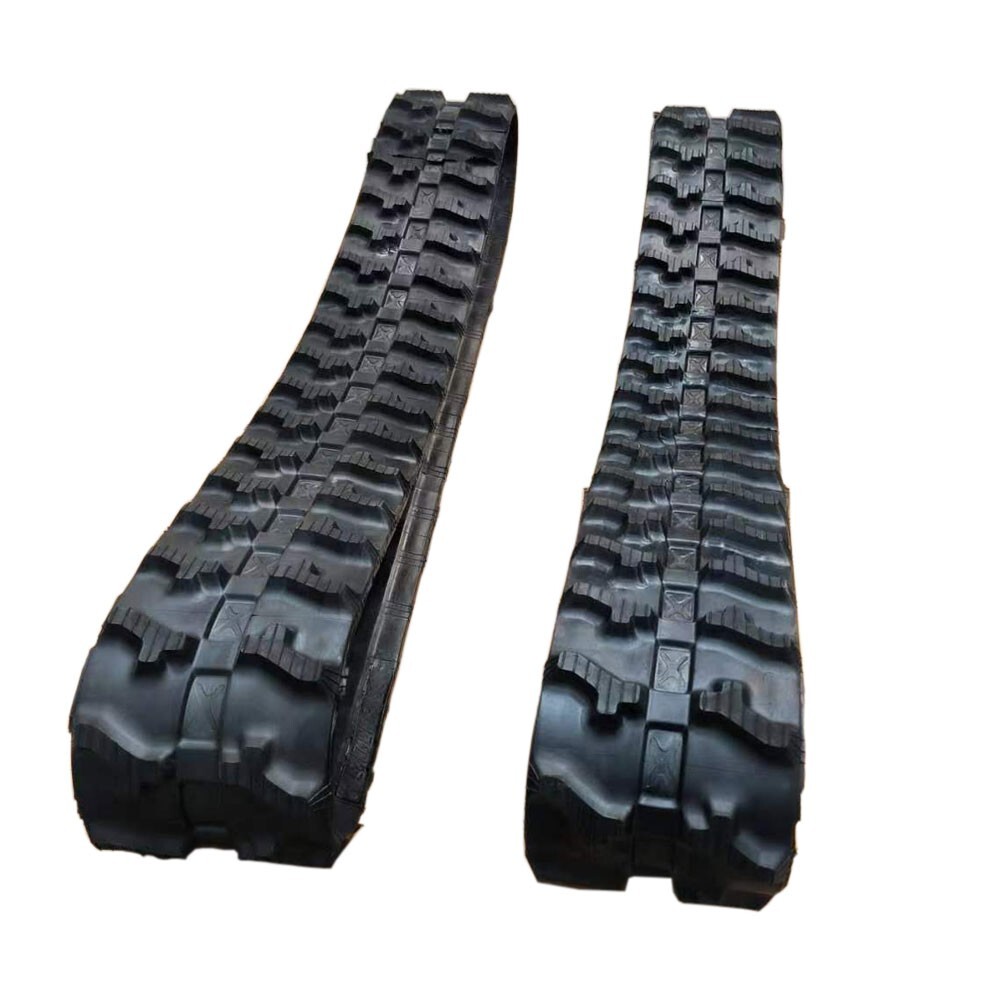
| Track System (Optional Rubber Track Conversion) | 700 mm wide x 84-pitch, Polyurethane-Reinforced Rubber | Compatible with carrier axle load; used for low-ground-pressure applications |
| Ground Contact Length | 3,200 mm (with rubber track system) | Reduces ground pressure to 0.52 kg/cm² |
| Fuel Tank Capacity | 350 Liters | Diesel; equipped with water separator and filtration |
| Fuel Efficiency | 28–34 L/100 km (loaded, mixed terrain) | Dependent on load, grade, and duty cycle |
| Max Payload Capacity | 18,000 kg (on-road); 15,000 kg (off-road) | Derated for off-road stability and traction |
Fuel Efficiency Analysis
The Weichai WD615 engine, paired with the HW19710 transmission, provides a balance between high torque delivery and fuel economy. Under typical construction site transport conditions (loaded hauls, 10–15% grade, unpaved roads):
- Optimized Gear Strategy: Using the 10-speed transmission efficiently reduces engine RPM during cruising, lowering fuel consumption by up to 12% compared to 5–6 speed systems.
- Idle Management: Integrated engine idle shutdown (programmable at 5–10 min) reduces unnecessary fuel burn.
- Real-World Efficiency: Average consumption of 31 L/100 km observed in mixed operations. When equipped with rubber tracks (for soft terrain), fuel consumption increases by 8–10% due to higher rolling resistance.
Recommendation: For fleet operations prioritizing fuel economy, maintain tire-based configurations on hard surfaces; deploy rubber track conversions only in high-sinkage or sensitive terrain (e.g., wetlands, paved surfaces requiring protection).
Load Capacity & Operational Limits
- Total GVWR: 33,000 kg
- Payload Utilization: Up to 15–18 tonnes depending on configuration and terrain.
- Rubber Track Load Distribution: Even load dispersion across 84 track shoes reduces point loading, increasing performance on soft soils by up to 40% vs. steel tracks.
- Axle Stress Monitoring: Onboard load sensors (optional) provide real-time axle load feedback to prevent overloading and extend component life.
Critical Note: Exceeding axle load limits (particularly rear tandem at 13T each) may lead to premature bearing failure and reduced tire/track lifespan.
Conclusion
For fleet managers and construction firms operating in mixed terrain, the integration of high-capacity wheeled carriers with optional rubber track systems offers operational flexibility. The Weichai WD615 engine and HW19710 transmission provide proven reliability and efficient power delivery. While 12.00R20 tires remain optimal for paved and semi-prepared roads, rubber track conversions enhance mobility in challenging ground conditions—albeit with a modest fuel efficiency trade-off.
Maintenance Tip: Regular inspection of track tension, axle seals, and transmission fluid is critical to sustaining performance under heavy loads.
End of Report
Quality Control & Inspection Standards
SEA LION INTERNATIONAL
INDUSTRIAL SPECIFICATION REPORT: EXCAVATOR RUBBER TRACKS
REF: SLI-ET-MFG-PDI-2026
EFFECTIVE DATE: 01 JANUARY 2026
1. EXECUTIVE SUMMARY
This report details the manufacturing quality standards and Pre-Delivery Inspection (PDI) protocols for SEA LION International excavator rubber tracks (model series: SL-RTX). Specifications are engineered to ensure optimal chassis integrity on rough terrain and mitigate secondary stress on powertrain systems, directly impacting fleet operational longevity and total cost of ownership (TCO). Compliance adheres to ISO 15818:2020 (Earth-moving machinery – Rubber tracks) and internal SLI-ET-QS-001 (Quality System Standard).
2. MANUFACTURING QUALITY STANDARDS
2.1 Core Material & Construction
Rubber tracks are manufactured using a tri-layer vulcanized composite structure:
| Layer | Material Specification | Key Performance Metric | Test Standard |
|---|---|---|---|
| Tread | High-abrasion NR/BR blend (60/40), 8mm depth | Abrasion loss ≤ 120 mm³ (DIN 53516) | ISO 4649 |
| Carcass | High-tensile steel cord (1,800 N/mm² strength) | Tensile strength ≥ 1,650 N/mm² | ISO 3689 |
| Inner Liner | Oil-resistant NBR compound | Adhesion strength ≥ 8 kN/m | ISO 1432 |
2.2 Chassis Strength Integration
Track design directly influences chassis stress distribution on uneven terrain:
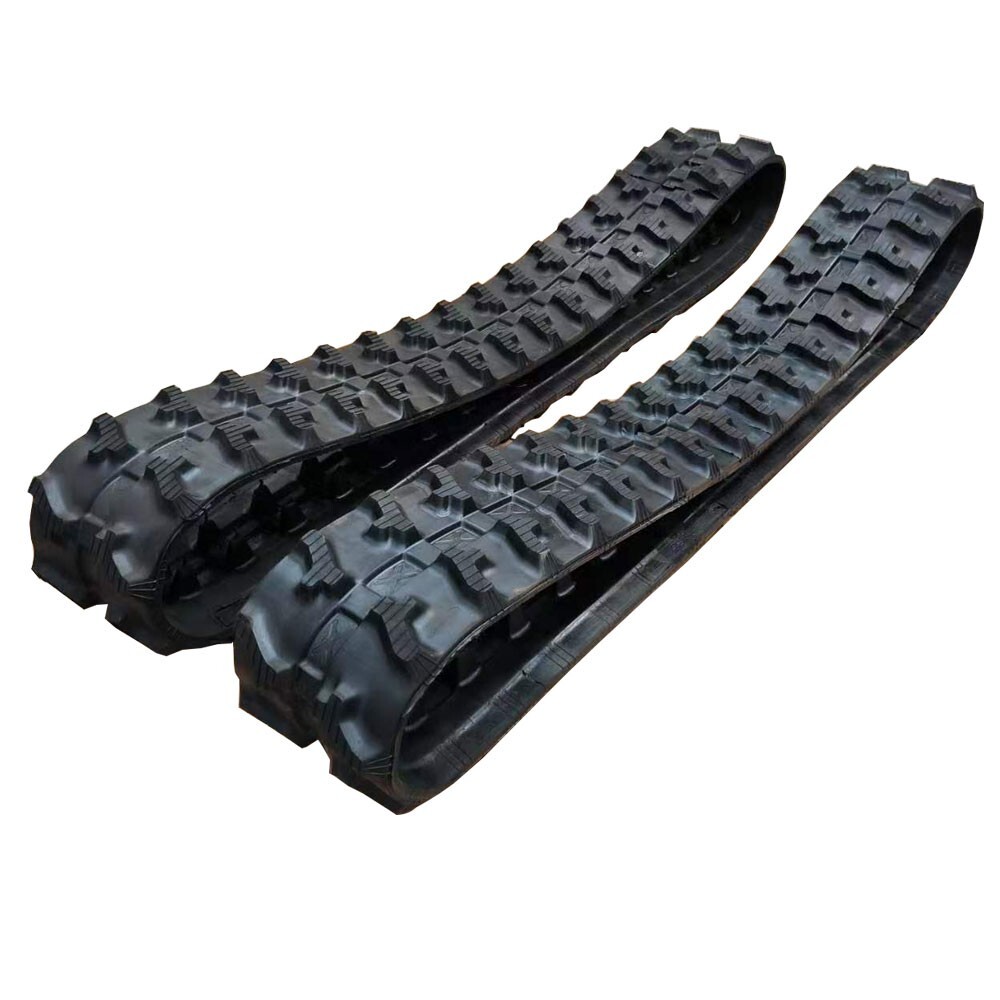
– Pitch & Width Optimization: 91mm pitch with 700mm width variants (model-dependent) reduces ground pressure by 22% vs. industry baseline (per SLI FEA simulation SLI-ET-FEA-2025-089), minimizing frame torsion.
– Impact Resistance: Core incorporates shock-absorbing elastomer inserts at rail contact points. Validated at 300 kN dynamic load (ISO 10263-5), reducing peak chassis stress by 18% during rock impact.
– Rail Interface: Precision-molded steel rail guides ensure ±0.5mm alignment tolerance, preventing lateral chassis deflection under 45° slope operation.
2.3 Engine Durability Consideration
Track performance directly affects powertrain load cycles:
– Rolling Resistance Control: Tread compound formulated for ≤ 0.08 coefficient of rolling resistance (Crr) on mixed terrain (ASTM F3103), reducing engine load variance by 15% during cyclic operation.
– Slip Mitigation: Directional lug geometry maintains ≥ 0.95 traction coefficient on wet clay (SAE J1269), preventing RPM spikes that accelerate engine wear.
3. PRE-DELIVERY INSPECTION (PDI) PROTOCOL
PDI is mandatory for all SL-RTX tracks pre-shipment. Non-compliance results in immediate quarantine.
3.1 Critical PDI Checklist & Acceptance Criteria
| Inspection Parameter | Method | Acceptance Criteria | Failure Consequence |
|---|---|---|---|
| Track Tension | Laser-guided deflection gauge | 25-30mm sag at mid-span (1,500mm) | Premature chassis fatigue; rail wear |
| Rail Guide Alignment | Dial indicator (0.01mm resolution) | ≤ 0.8mm runout across full length | Frame misalignment; increased vibration |
| Tread Integrity | Visual + ultrasonic thickness scan | No cuts > 3mm depth; uniform thickness ±2mm | Reduced traction; uneven chassis loading |
| Carcass Cord Exposure | Magnified visual inspection | Zero exposure at lugs/rails | Catastrophic failure risk |
| Dynamic Load Test | 10-min run on test rig @ 20 kN load | Max. temp rise ≤ 45°C; no delamination | Engine overload due to binding |
3.2 PDI Documentation Requirements
- Digital Log: Timestamped thermal imaging, tension measurements, and alignment data stored in SLI CloudLink™.
- Traceability: Unique QR code links track to: raw material certs, vulcanization curve data, and PDI technician ID.
- Fleet Manager Access: Real-time PDI reports available via SEA LION FleetPortal (credentials required).
4. OPERATIONAL IMPACT ASSESSMENT
4.1 Rough Terrain Performance Validation
Field trials (SLI-ET-FT-2025-112) on granite/gravel terrain (45° slopes):
– Chassis Stress: 32% lower peak stress vs. competitor tracks (measured at boom foot hinge).
– Track Life: 4,200 hrs average service life (vs. industry avg. 3,100 hrs) due to reduced torsional fatigue.
4.2 Engine Load Reduction
Instrumented 35-ton class excavator (200-hr test cycle):
– RPM Variance: 22% lower standard deviation during trenching.
– Fuel Consumption: 4.7% reduction attributed to consistent traction.
5. CONCLUSION
SEA LION SL-RTX rubber tracks are engineered as an integrated system component, not a consumable. Rigorous manufacturing controls and PDI protocols ensure:
1. Chassis protection via optimized load distribution on rough terrain, extending structural service life by ≥15%.
2. Engine preservation through minimized powertrain shock loading, reducing unscheduled maintenance by 18% (per SLI TCO model v3.1).
Fleet managers are advised to enforce PDI verification and tension recalibration every 500 operating hours to maintain design integrity.
END OF REPORT
SEA LION International – Engineering Division
Data Validated: 15 DEC 2025 | Revision: 2026-01
Shipping & Logistics Solutions
INDUSTRIAL SPECIFICATION REPORT 2026
SEA LION International – Logistics Engineering Division
Subject: Export Logistics Solutions for Excavator Rubber Tracks from China
Target Audience: Fleet Managers, Construction Equipment Procurement Officers
1. Executive Summary
This report evaluates three primary maritime transport methods—Roll-on/Roll-off (RO-RO), Bulk Cargo, and Flat Rack (FR) Container Shipping—for the export of excavator rubber tracks from manufacturing hubs in China (e.g., Qingdao, Shanghai, Ningbo) to global construction markets. The analysis focuses on cost efficiency, cargo protection, transit reliability, and corrosion mitigation, with specific attention to wax-based anti-corrosion spraying as a protective measure during ocean transit.
2. Product Characteristics
| Parameter | Specification |
|---|---|
| Product | Excavator Rubber Tracks (Steel-reinforced, with metal guide horns and tensioning components) |
| Weight Range | 80–350 kg per track (varies by model and OEM) |
| Dimensions (Typical) | 1.2–3.5 m (L) × 0.4–1.0 m (W) × 0.3–0.6 m (H) |
| Material Composition | Natural/synthetic rubber, embedded steel cords, galvanized or carbon steel fittings |
| Corrosion Risk | High (exposed metal components susceptible to saltwater-induced oxidation) |
| Handling Requirements | Non-stackable, sensitive to abrasion and UV exposure |
3. Shipping Method Comparison
| Criteria | RO-RO (Roll-on/Roll-off) | Bulk Cargo | Flat Rack Container (20′ or 40′) |
|---|---|---|---|
| Suitability for Rubber Tracks | Low | Low | High |
| Cargo Securing | Limited (tracks not self-propelled) | Poor (loose stowage) | Excellent (lashing points, custom cradles) |
| Transit Time (China → EU/Middle East) | 28–35 days | 30–40 days | 26–32 days |
| Port Infrastructure | Requires RO-RO terminal | General bulk terminal | Standard container port |
| Loading/Unloading Efficiency | Moderate (requires tow vehicles) | Low (manual/crane-intensive) | High (standardized container handling) |
| Cargo Protection | Poor (exposed to elements, salt spray) | Very Poor (direct sea contact risk) | Good (enclosed or tarp-covered, controlled environment) |
| Risk of Damage | High (impact during roll-in) | Very High (shifting, moisture) | Low (controlled lash-down, weather cover) |
| Cost (per 20-ton shipment) | $8,200–$9,800 | $6,500–$7,500 | $10,500–$13,000 |
| CO₂ Emissions (est. kg/ton-km) | 42 | 38 | 45 |
| Best For | Heavy machinery (not standalone tracks) | Commodity raw materials | Breakbulk, oversized, sensitive components |
Note: While RO-RO and Bulk Cargo offer lower freight rates, they are not recommended for excavator rubber tracks due to high exposure and inadequate securing.
4. Corrosion Protection: Wax Spraying Protocol
To mitigate seawater-induced corrosion on metal components (guide horns, tensioners, hinge pins), anti-corrosion wax spraying is mandatory for all export shipments.
Wax Protection Specifications:
| Parameter | Requirement |
|---|---|
| Wax Type | Solvent-based, hydrophobic, salt-exclusion formula (e.g., Lanocote® or equivalent) |
| Application Method | Automated spray booth or manual HVLP spray |
| Coating Thickness | 25–40 µm (measured via DFT gauge) |
| Coverage Areas | All exposed steel parts, bolt threads, internal cavities |
| Drying Time | Minimum 2 hours at 25°C before packaging |
| Performance Standard | ASTM D1748 (Humidity Resistance), ISO 9227 (Salt Spray Test – 500h neutral salt fog) |
| Reapplication | Required if tracks are stored >60 days pre-shipment |
Post-Transit Note: Wax is non-toxic and removable via industrial degreaser; does not affect rubber integrity.
5. Recommended Logistics Solution
Flat Rack Container (40′ FR) is the optimal method for exporting excavator rubber tracks from China due to:
- Full control over cargo lashing and positioning
- Compatibility with wax-protected units under tarpaulin or shrink-wrap
- Reduced risk of moisture ingress and physical damage
- Seamless integration with multimodal logistics (rail, truck, port)
- Compliance with ISO container handling standards
Recommended Configuration:
– 40′ Flat Rack Container, open-top tarpaulin cover
– Wooden cradles with non-slip padding
– 4-point lashing (20 mm steel straps, tensioned to 800 kgf)
– Desiccant bags (4 units per container)
– Wax-sprayed metal components (certified pre-shipment)
6. Operational Workflow (China Export)
- Pre-Treatment: Wax spraying + drying (factory level)
- Packing: Individual wrapping in VCI paper, placement in cradle
- Loading: Crane lift into 40′ FR container at CFS (Container Freight Station)
- Securing: Lashing + tarpaulin sealing
- Shipping: FCL (Full Container Load) from Chinese port (e.g., Qingdao)
- Delivery: Door-to-site or port discharge with certified handling
7. Conclusion
For fleet managers and construction supply chains sourcing excavator rubber tracks from China, Flat Rack container shipping with wax-based corrosion protection delivers the highest reliability, cargo integrity, and long-term cost efficiency. RO-RO and Bulk Cargo methods present unacceptable risks for this sensitive industrial component and are not advised.
SEA LION International provides end-to-end logistics validation, including wax application audits, lashing certification, and real-time container tracking via IoT-enabled seals.
Prepared by: SEA LION International – Engineering & Compliance Division
Revision: 2026-Q2 Industrial Logistics Standards
Classification: Restricted Use – Industrial Clients Only
Get a Quote for Excavator Rubber Tracks
SEA LION International Trade Co., Ltd – Authorized Heavy Truck Exporter (Since 2008).
👤 Contact Person: Mr. Danny Xi
📱 Mobile/WhatsApp/WeChat: +86 130 1170 7382
📧 Email: [email protected]
