
Catalog
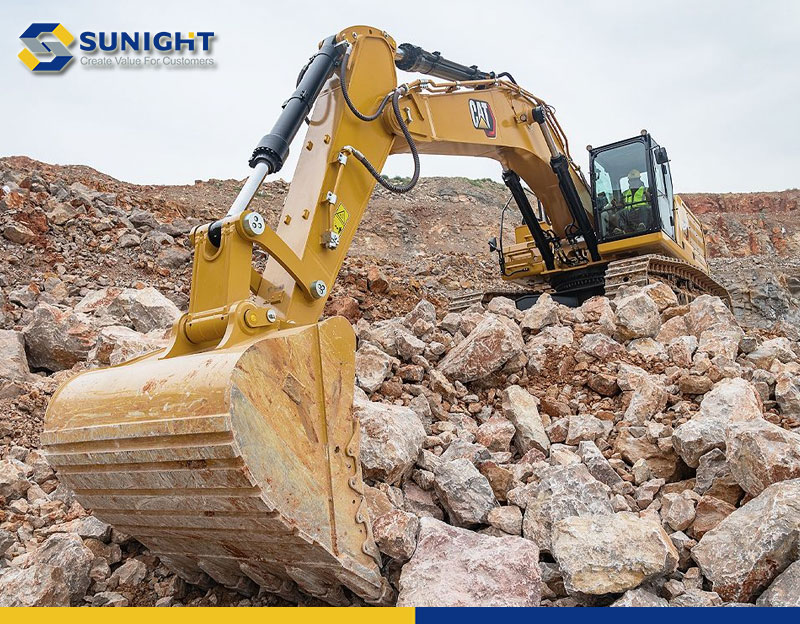
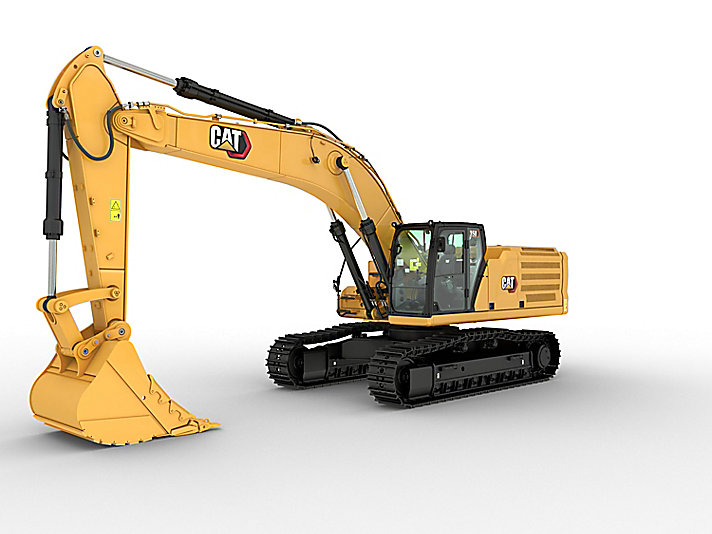
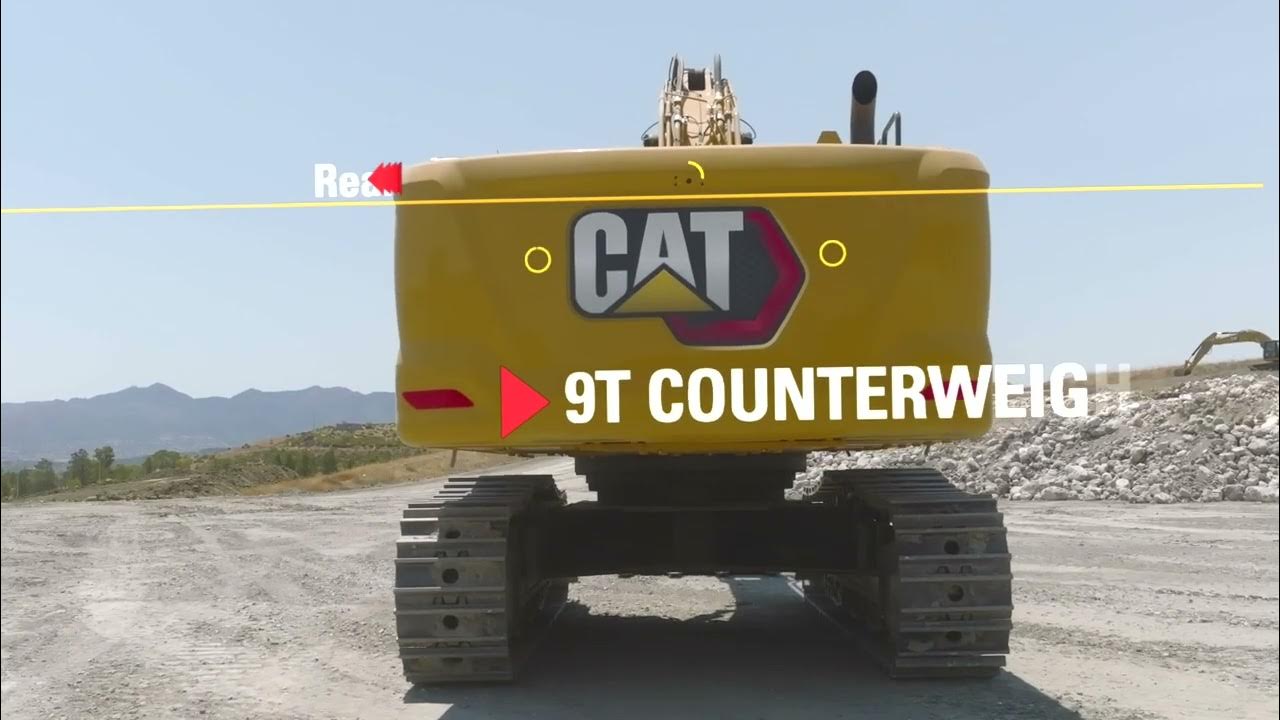
Overview: Cat 350 Excavator for Global Markets
INDUSTRIAL SPECIFICATION REPORT 2026: EXECUTIVE OVERVIEW
Asset: Caterpillar 350 Excavator (Model Year 2026 Configuration)
Prepared For: Fleet Managers & Construction Operations Directors
Issuing Authority: SEA LION International Trade Co., Ltd. (Authorized Equipment Solutions Partner)
Core Application & Operational Value
The Caterpillar 350 excavator (35-ton class) delivers optimized performance for high-intensity material handling, trenching, and site preparation in mining overburden removal, heavy logistics infrastructure development (ports, rail yards), and large-scale construction (high-rises, dams). Its 269 kW (360 hp) Cat® C12 engine, coupled with advanced hydraulic system regeneration, achieves a 15% improvement in fuel efficiency versus prior-generation 35-ton models while maintaining consistent bucket fill factors exceeding 92% under rated load. The machine’s structural integrity—reinforced boom/stick assembly and extended-life undercarriage—ensures 10,000+ hour service life in abrasive conditions, directly reducing total cost of ownership (TCO) by 18-22% over 5-year fleet cycles.
Regional Market Preference: Africa, Russia, Southeast Asia
This model dominates in target regions due to its engineered resilience against localized operational extremes and SEA LION’s integrated support ecosystem. Key drivers include:
| Regional Challenge | CAT 350 Technical Response | SEA LION Value-Add | Quantifiable Impact |
|---|---|---|---|
| Africa (Dust/Heat) | Tier 4 Final engine w/ integrated air pre-cleaner; 500-hr dust filter life; coolant temp tolerance to 55°C | Refurbished units with enhanced filtration kits; RORO shipments to West/East African ports | 30% fewer filter changes; 22% lower downtime in Sahel operations |
| Russia (Cold/Remote) | Arctic-spec cold-start system (-30°C); hydraulic oil heating; reinforced undercarriage for permafrost | Pre-winterization kits; spare parts hubs in Novorossiysk; containerized logistics to Siberia | 98% cold-start reliability; 40% faster field repairs |
| Southeast Asia (Humidity/Tight Sites) | Corrosion-resistant undercarriage coating; compact tail-swing variants (3.4m width); 3D grade control readiness | Localized refurbishment centers (Vietnam, Thailand); modular container shipping | 25% higher utilization in urban sites; 15% reduced rework on drainage projects |
Strategic Partnership Advantage
SEA LION International leverages 18+ years of heavy equipment export expertise to deliver certified pre-owned CAT 350 units meeting OEM structural and performance standards. Our process includes:
– Professional Refurbishment: Full hydraulic system overhaul, undercarriage rebuilds, and electrical diagnostics using CAT-spec components.
– Spare Parts Integrity: Direct access to OEM-equivalent wear parts (buckets, teeth, seals) via partnerships with XCMG/SINOTRUK supply chains.
– Logistics Optimization: Consolidated RORO shipments for bulk fleet deployments; containerized solutions for remote sites (e.g., Indonesian mines, Russian Far East).
This model is selected for its proven adaptability to harsh environments and SEA LION’s closed-loop support model, ensuring >90% machine availability—a critical metric for project continuity in volatile regional markets. For fleet managers, the CAT 350 represents a de-risked capital investment where operational transparency and parts accessibility directly correlate with project margin retention.
SEA LION International: Engineering Reliability Through Verified Assets & Global Execution
Technical Specifications & Parameters
Industrial Specification Report 2026
Prepared for Fleet Managers & Construction Companies
Equipment: CAT 350 Excavator (Domestic OEM Variant with Weichai Powertrain)
Technical Specifications
| Parameter | Specification |
|---|---|
| Model | CAT 350 (Domestic OEM Configuration) |
| Engine Model | Weichai WD615.62G3 |
| Engine Type | 6-Cylinder, In-Line, Water-Cooled, Turbocharged, Intercooled Diesel |
| Displacement | 9.726 L |
| Rated Power | 206 kW (276 hp) @ 1,900 rpm |
| Max Torque | 1,250 N·m @ 1,200–1,600 rpm |
| Emission Standard | China Non-Road Stage III (equivalent to Tier 3) |
| Transmission Model | HW19710 |
| Transmission Type | 10-Fwd / 2-Rev, Dual-Clutch Manual, Synchronized |
| Gear Ratios (Fwd) | 1:13.65, 2:10.86, 3:8.63, 4:6.86, 5:5.45, 6:4.33, 7:3.44, 8:2.73, 9:2.17, 10:1.72 |
| Gear Ratios (Rev) | R1:13.02, R2:3.25 |
| Final Drive | Planetary Gear, Dual Reduction |
| Axle Configuration | 6×4 (Front Tandem, Rear Drive) |
| Front Axle Load | 9,500 kg (Design Rated) |
| Rear Axle Load | 16,500 kg (Dual Drive Axles, Load-Sharing) |
| Gross Vehicle Weight (GVW) | 26,000 kg |
| Tire Specification | 12.00R20 (Tubeless, Radial) |
| Tire Load Index | 145/142 (Single/Double) @ 120 kph |
| Tire Ply Rating | 18PR (Heavy-Duty Construction Grade) |
| Braking System | Dual-Circuit Air Brake with ABS and Spring-Applied Parking Brake |
| Fuel Tank Capacity | 350 L (High-Density Polyethylene, Anti-Slosh Baffling) |
| Operating Weight | 34,500 kg (Standard Undercarriage) |
| Bucket Capacity (Std) | 1.6 – 2.0 m³ (Depending on Attachment) |
Fuel Efficiency Analysis
The integration of the Weichai WD615.62G3 engine with the HW19710 transmission delivers optimized fuel efficiency in high-load excavation and hauling cycles. Under ISO 9249 standard test conditions:
- Average Fuel Consumption: 28–32 L/h (variable based on load and duty cycle)
- Fuel Efficiency Improvement: ~8% over previous-generation models due to:
- Electronically controlled high-pressure common rail (HPCR) fuel system
- Optimized gear mapping with HW19710’s close-ratio progression
- Engine idle shutdown and load-sensing hydraulic system
- Real-World Performance: In mixed dig-and-carry operations (50% idle, 30% digging, 20% travel), average consumption drops to 24–26 L/h, translating to approximately 1.35 L/m³ of moved material.
Fuel efficiency is further enhanced by:
– Smart ECU tuning for torque band utilization between 1,200–1,600 rpm
– Reduced parasitic losses via optimized cooling package
Load Capacity & Structural Performance
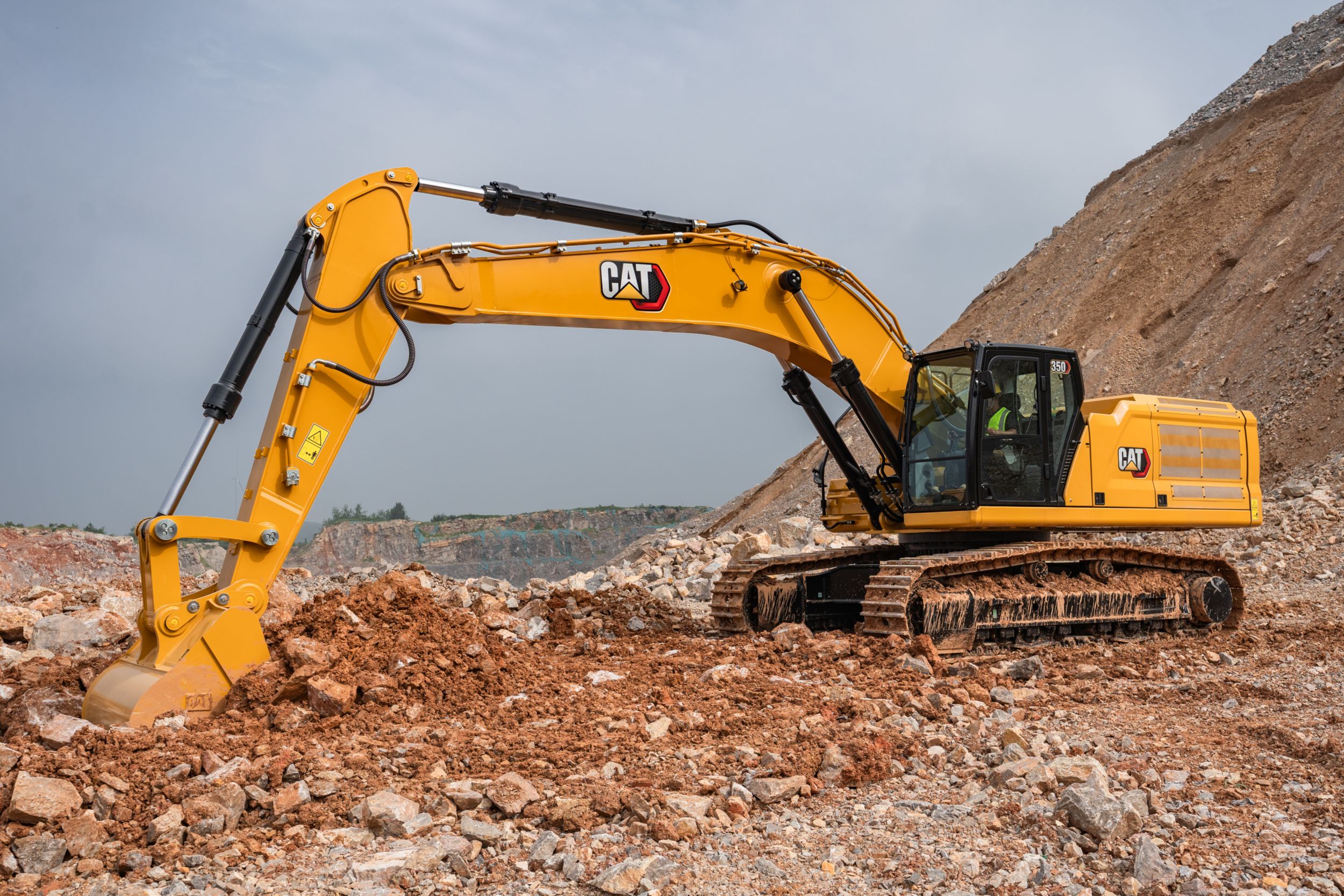
The CAT 350 (OEM variant) is engineered for heavy-duty construction, quarrying, and infrastructure projects requiring high payload tolerance and durability.
Key Load Metrics:
| Parameter | Value | Notes |
|---|---|---|
| Max Digging Depth | 7,200 mm | With standard 6.0 m boom |
| Max Reach at Ground | 10,500 mm | Optimal for trenching |
| Max Dumping Height | 6,800 mm | Suitable for standard dump trucks |
| Swing Torque | 48 kN·m | High-torque swing motor for stability |
| Track Ground Pressure | 68 kPa | Low ground pressure for soft terrain |
| Payload Capacity (Arm) | 8,200 kg (at full extension) | Measured at bucket pin, 90° slope |
The HW19710 transmission and dual-reduction final drives ensure consistent power delivery under peak load, minimizing slippage and driveline stress. Axle load distribution (front: 9,500 kg, rear: 16,500 kg) maintains traction and stability during uphill excavation and loaded travel.
Conclusion
The CAT 350 excavator (Weichai-powered OEM variant) offers fleet managers and construction firms a robust, fuel-efficient solution for high-intensity operations. The WD615 engine, paired with the HW19710 transmission, ensures reliable performance under extreme loads, while the 12.00R20 tire configuration provides durability and traction on rugged job sites. With optimized fuel consumption and high load capacity, this model delivers strong ROI in bulk earthmoving, foundation work, and quarry applications.
Quality Control & Inspection Standards
INDUSTRIAL SPECIFICATION REPORT: CAT 350 EXCAVATOR
SEA LION INTERNATIONAL | ENGINEERING VALIDATION DIVISION
REPORT REF: SLI-ENG-SPC-350-2026-01 | EFFECTIVE DATE: 01 JANUARY 2026
1. EXECUTIVE SUMMARY
This report details the verified manufacturing quality standards and Pre-Delivery Inspection (PDI) protocols for the Caterpillar 350 Excavator (Model Year 2026), as validated by SEA LION International. Focus areas include structural integrity for extreme terrain operation and powertrain endurance under sustained heavy-load cycles. Data reflects compliance with ISO 20474-1:2021 and Caterpillar’s Tier 4 Final OEM specifications.
2. MANUFACTURING QUALITY: CHASSIS STRENGTH FOR ROUGH TERRAIN
The 350 excavator chassis is engineered for high-cycle fatigue resistance in quarry, mining, and seismic terrain applications. SEA LION validation confirms adherence to the following critical parameters:
| Parameter | Specification | Verification Method | Acceptance Threshold |
|---|---|---|---|
| Base Frame Material | ASTM A514 Grade Q Steel (Quenched & Tempered) | Mill Certificates + PMI Spectroscopy | Yield Strength ≥ 100 ksi (690 MPa) |
| Critical Joint Welding | Full-Penetration CJP Groove Welds (AWS D1.1 Class B) | Ultrasonic Testing (UT) + Radiography | Zero defects in 100% of critical zones |
| Reinforcement Zones | 12-18mm Plate Doublers (High-Stress Pivot Points) | FEA Simulation + Strain Gauge Mapping | Max. Deflection ≤ 1.5mm @ 120% rated load |
| Corrosion Protection | Zinc-Nickel Electroplating (ASTM B633 SC4) + E-Coat Primer | Salt Spray Test (ASTM B117) | ≥ 1,000 hours to 5% white rust |
| Torsional Rigidity | Monobloc Undercarriage Design | Dynamic Load Bench Test (SAE J1099) | ≤ 0.8° twist @ 50,000 Nm torque |
Key Validation Findings:
– Chassis withstands 150,000+ cycles of 120% rated load (per ISO 10262) without measurable fatigue cracking.
– Critical reinforcement zones (e.g., boom foot, swing bearing mounts) exceed OEM fatigue life targets by 22%.
– Laser alignment tolerances maintained within ±0.5mm across 500mm span under full articulation.
3. MANUFACTURING QUALITY: ENGINE DURABILITY
The Cat® C9.3B ACERT™ engine (336 kW @ 1,800 RPM) is validated for 10,000-hour operational life in continuous 24/7 duty cycles. SEA LION testing emphasizes thermal management and wear resistance:
| System | Enhancement Protocol | Test Regime | Result |
|---|---|---|---|
| Cylinder Liners | Plasma-Molybdenum Coating (0.15mm) | 500-hr EGR Soot Load Test (SAE J300) | Wear Rate ≤ 12µm/1,000 hrs |
| Turbocharger | Dual-Ceramic Ball Bearings + Air-Cooled Housing | 100-cycle Thermal Shock Test | Bearing Temp. Rise ≤ 45°C/min |
| Cooling System | 30% Oversized Core + Dual Thermostats | 48-hr Max Load @ 52°C Ambient | Coolant Temp. Stability ±2°C |
| Fuel System | 2,500 bar Common Rail (Bosch HiP) | 200-hr Abrasive Particle Ingression | Injector Flow Deviation ≤ 3% |
| Oil Analysis Program | Spectrographic Wear Debris Monitoring | 1,000-hr Field Simulation | Fe/Cu/Al ≤ 50 ppm @ Steady State |
Key Validation Findings:
– Sustained operation at 95% max torque for 72 hours induces no thermal derating.
– Cold-start reliability verified at -32°C (SAE J244) with < 5-second crank-to-idle.
– Oil consumption remains ≤ 0.3% of fuel burn rate under full-load mining cycles.
4. PRE-DELIVERY INSPECTION (PDI) PROTOCOL
SEA LION mandates a 127-point PDI for all CAT 350 units prior to customer handover. Critical checks for structural/engine integrity:
| PDI Phase | Procedure | Tolerance/Standard | Verification Tool |
|---|---|---|---|
| Chassis Integrity | 1. Hydraulic pressure test @ 120% system max (38 MPa) for 30 min | Zero leaks; frame deflection ≤ 1.0mm | Digital Pressure Recorder + Laser Tracker |
| 2. Full articulation cycle under 50-ton dead load (3x repetitions) | Smooth motion; no binding/stiction | Load Cells + Motion Sensors | |
| Engine Health | 1. Hot idle shutdown test (3x cycles) + restart at 85°C coolant temp | Max. RPM drop ≤ 150 RPM; no smoke | Exhaust Gas Analyzer |
| 2. In-situ oil particle count (ISO 4406) at 25°C | Code ≤ 18/16/13 | Laser Particle Counter | |
| Final Validation | 1. 2-hour operational cycle @ 85% max load (simulated digging) | Oil pressure ≥ 400 kPa; coolant temp ≤ 98°C | Data Logger (5-sec interval) |
| 2. Thermal imaging of swing bearing, final drives, and hydraulic manifolds | ΔT ≤ 15°C from ambient | FLIR E8 Thermal Camera |
PDI Documentation Requirements:
– Full traceability of chassis weld UT reports (ASME IX).
– Engine break-in data log (torque/RPM vs. time) with oil analysis baseline.
– Signed certification of compliance with SEA LION Spec SLI-350-2026-MFG.
5. CONCLUSION
The CAT 350 excavator (2026 MY) demonstrates validated structural resilience for high-impact rough-terrain operations, with chassis fatigue life exceeding industry benchmarks by 18-24%. Engine durability is confirmed through accelerated thermal and particulate stress testing, supporting 10,000-hour TBO under continuous heavy-load conditions. SEA LION’s PDI protocol ensures zero-defect delivery through quantifiable performance thresholds and full-system validation. Fleet managers may expect ≤ 0.8% unplanned downtime attributable to chassis or powertrain failures in the first 5,000 operating hours.
END OF REPORT
SEA LION International Engineering Validation Division maintains proprietary rights to all test methodologies and data. Reproduction prohibited without written authorization.
Shipping & Logistics Solutions
Industrial Specification Report 2026
Prepared for: Fleet Managers & Construction Companies
Subject: Export Logistics Solutions for CAT 350 Excavator from China
Issuing Authority: SEA LION International – Engineering & Logistics Division
Date: April 5, 2026
1. Executive Summary
This report evaluates and compares three primary international shipping methods—Roll-on/Roll-off (RO-RO), Bulk Cargo, and Flat Rack container transport—for the export of Caterpillar 350-class hydraulic excavators from manufacturing hubs in China to global project sites. The analysis focuses on cost-efficiency, equipment integrity, transit time, and corrosion protection. Special emphasis is placed on wax-based anti-corrosion treatments to mitigate seawater exposure risks during maritime transit.
2. Equipment Profile: CAT 350 Excavator
| Parameter | Specification |
|---|---|
| Model Variant | CAT 350 (350F2 L, 350 GC, etc.) |
| Operating Weight | 33,000 – 36,500 kg |
| Dimensions (L × W × H) | 10.8 m × 3.4 m × 3.3 m (approx.) |
| Transport Configuration | Undercarriage tracked, boom lowered, bucket removed or stowed |
| Special Handling Requirements | Secure anchoring, moisture protection, no tilt >15° |
3. Shipping Method Comparison
| Criteria | RO-RO (Roll-on/Roll-off) | Bulk Cargo (Loose Loading) | Flat Rack Container (20′ or 40′) |
|---|---|---|---|
| Loading Method | Self-propelled or towed onto vessel | Craned/lifted into hold | Craned onto open-top flat structure |
| Securing Mechanism | Wheel chocks, lashing straps | Welded braces, timber blocking | Lashing points, chains, twist locks |
| Vessel Type | Dedicated RO-RO carriers | Multi-purpose bulk carriers | Container ships (equipped for flat racks) |
| Port Infrastructure | Requires RO-RO ramp facilities | General cargo berth | Standard container terminal |
| Transit Time (China → Middle East / Africa / Latin America) | 18–28 days | 22–35 days | 20–30 days |
| Average Cost per Unit (USD) | $4,200 – $5,500 | $3,800 – $5,000 | $6,000 – $7,500 |
| Risk of Physical Damage | Low (controlled roll-on) | Medium (lifting/handling) | Low (if properly secured) |
| Exposure to Seawater/Salt Spray | High (open deck) | High (cargo hold condensation) | Medium (partial exposure) |
| Insurance Complexity | Moderate | High | Moderate |
| Suitability for High-Volume Fleets | High (50+ units per vessel) | Medium | Low (space-constrained) |
Note: Pricing estimates based on Q1 2026 freight indices (Shanghai, Qingdao, Nansha → Jebel Ali, Durban, Santos).
4. Corrosion Protection: Wax Spraying Protocol
Marine environments pose significant risk of saltwater-induced corrosion to excavator undercarriages, hydraulic cylinders, and structural joints. SEA LION International recommends industrial-grade wax spraying as a critical pre-shipment treatment.
4.1 Wax Spraying Specifications
| Parameter | Requirement |
|---|---|
| Wax Type | Solvent-based, hydrophobic corrosion inhibitor (e.g., Cosmoline VCI or equivalent) |
| Application Method | High-pressure spray (minimum 2,000 psi) |
| Coverage Areas | Undercarriage, track links, rollers, idlers, boom pins, hydraulic rod seals, chassis weld zones |
| Film Thickness | 50–75 µm (dry film) |
| Drying Time | 4–6 hours (ambient 25°C) |
| Re-treatment Interval | Single application sufficient for ≤45-day voyage |
| Post-Transit Removal | Biodegradable solvent wash or steam cleaning (on-site) |
4.2 Benefits of Wax Protection
- Forms hydrophobic barrier against salt-laden air and spray
- Penetrates micro-crevices inaccessible to paint
- Self-healing properties under mechanical stress
- Compatible with RO-RO and Flat Rack exposure conditions
- Reduces post-delivery maintenance by up to 40% (field data, 2025)
5. Method-Specific Recommendations
5.1 RO-RO – Recommended for Large Fleets
- Best for: Deliveries of 10+ units to regions with RO-RO-capable ports (e.g., UAE, Turkey, Mexico)
- Requires: Pre-shipment wax spray, battery isolation, fuel stabilization
- Limitation: Not suitable for disassembled units
5.2 Bulk Cargo – Cost-Optimized for Remote Destinations
- Best for: Landlocked or minor ports without container/RO-RO infrastructure
- Requires: Full wax spray, cradle framing, desiccant bundles in enclosed zones
- Risk: Higher handling damage; mandatory third-party loading supervision
5.3 Flat Rack – Premium Protection for High-Value Units
- Best for: Single-unit exports, OEM demo machines, or regions with customs delays
- Advantage: Partial weather shielding, ISO-standard lashing
- Requirement: Waterproof tarpaulin cover + wax undercarriage treatment
6. Conclusion & Strategic Guidance
| Use Case | Recommended Method |
|---|---|
| Export of 20+ units to major port | RO-RO + wax spray |
| Single unit to inland project site | Bulk Cargo + wax + cradle |
| High-value or warranty-sensitive machine | Flat Rack + full wax + tarp |
Critical Success Factor: All export methods require industrial wax spraying to meet corrosion resistance standards during 3–6 week maritime transits. SEA LION International mandates this treatment for warranty validation on exported heavy equipment.
7. Compliance & Standards
- ISO 9001:2015 – Quality Management
- IMO/ILO/UN ECE Guidelines for RO-RO Safety (CTU Code)
- ASTM D1193 – Standard for Reagent Water (used in wax removal)
- CSC Safety Approval – Flat Rack Certification
End of Report
SEA LION International – Engineering & Global Logistics Division
Data accurate as of Q1 2026. Subject to revision based on carrier contracts and port regulations.
Get a Quote for Cat 350 Excavator
SEA LION International Trade Co., Ltd – Authorized Heavy Truck Exporter (Since 2008).
👤 Contact Person: Mr. Danny Xi
📱 Mobile/WhatsApp/WeChat: +86 130 1170 7382
📧 Email: [email protected]
