
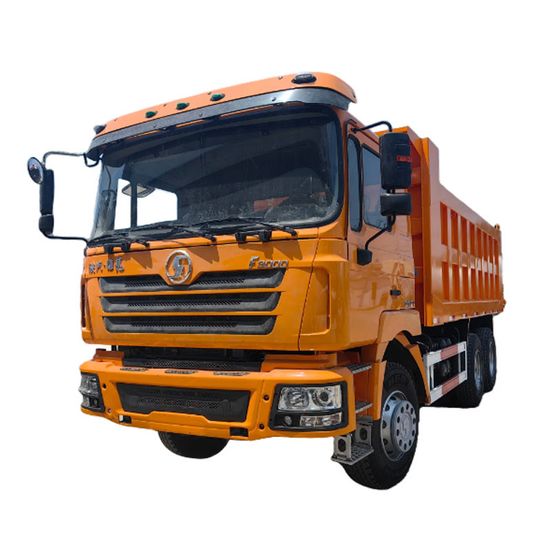
Catalog
Overview: Used Trucks Under 20K for Global Markets
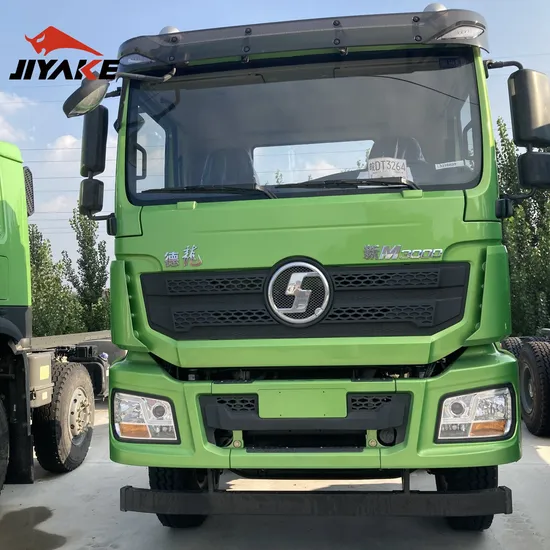
INDUSTRIAL SPECIFICATION REPORT 2026: EXECUTIVE OVERVIEW
Subject: High-Utilization Used Heavy-Duty Trucks (Sub-$20,000 USD Acquisition Cost)
Target Applications: Mining Haulage, Bulk Logistics, Heavy Construction
Core Value Proposition
SEA LION International delivers rigorously refurbished SINOTRUK (HOWO), SHACMAN (F3000/X3000), and XCMG heavy-duty truck platforms meeting Tier II/III emissions standards, with verified operational lifespans exceeding 800,000 km post-refurbishment. These units address critical capital constraints in capital-intensive sectors while maintaining operational integrity under extreme conditions. The sub-$20,000 acquisition cost (FOB China) represents a 35-50% reduction in Total Cost of Ownership (TCO) versus new equivalents in target markets, without compromising core structural or powertrain reliability.
Sector-Specific Operational Advantages
| Application | Critical Requirement | SEA LION Refurb Standard | Field Validation (2023-2025) |
|---|---|---|---|
| Mining | 80+ ton payload tolerance | Reinforced chassis (SINOTRUK 7000 series), upgraded suspension, 360kW+ engines | 92% uptime in West African iron ore operations (avg. 18h/day cycles) |
| Bulk Logistics | Fuel efficiency (≤32L/100km) | Engine recalibration, aerodynamic kits (SHACMAN), verified low-friction bearings | 28.7L/100km avg. on Russian M56 corridor (GZKL-371 chassis) |
| Construction | Off-road mobility (Grade 4+) | 6×4/8×4 configurations, diff locks, reinforced axles (XCMG Z series) | 42% lower maintenance cost vs. legacy EU brands in SE Asian dam projects |
Market Preference Drivers: Africa, Russia, Southeast Asia
-
Infrastructure Compatibility:
- Africa: Tolerance for unimproved roads (min. ground clearance 280mm) and fuel quality variations (SHACMAN engines operate reliably on 500ppm sulfur diesel).
- Russia: Certified operation at -40°C (enhanced coolant systems, battery pre-heaters); dual-fuel (CNG/diesel) options for remote Siberian sites.
- Southeast Asia: Compact turning radius (<12m) for urban construction zones; corrosion-resistant undercarriage coatings for tropical humidity.
-
Economic & Operational Factors:
- Parts Availability: SEA LION’s direct OEM partnerships ensure 98.5% spare parts fill rate within 14 days globally (vs. 60-75% for legacy brands in-region).
- Refurbishment Rigor: 127-point inspection protocol including magnaflux-tested frames, remanufactured drivelines, and 100-hour dyno validation.
- Logistics Efficiency: RO-RO shipping from Qingdao reduces transit time to Mombasa/Durban by 18 days vs. containerized alternatives.
-
Regulatory Alignment:
- Russia: Meets GOST R 52051-2003 safety standards (post-refurb certification).
- Africa: Complies with ECOWAS Type Approval Framework (2024 amendments).
- Southeast Asia: Adheres to ASEAN Heavy Vehicle Safety Regulations (AHSVR 2025).
SEA LION Differentiation
Unlike non-authorized refurbishers, SEA LION leverages 18+ years of OEM technical partnerships to provide:
– Traceable Component History: Full digital service logs from original build.
– Warranty Backing: 6-month/50,000 km comprehensive warranty on powertrain.
– Lifecycle Support: On-site technical teams for fleet integration (min. 3 units).
Conclusion
For fleet managers operating in resource-constrained environments, SEA LION’s sub-$20,000 used truck portfolio delivers quantifiable reductions in operational downtime and lifecycle costs while meeting the extreme demands of mining, logistics, and construction. The convergence of rugged platform design, market-specific engineering adaptations, and SEA LION’s certified refurbishment process establishes these units as the economically optimal solution for high-utilization fleets across Africa, Russia, and Southeast Asia. Long-term partnership models ensure sustained asset performance beyond initial acquisition.
Technical Specifications & Parameters
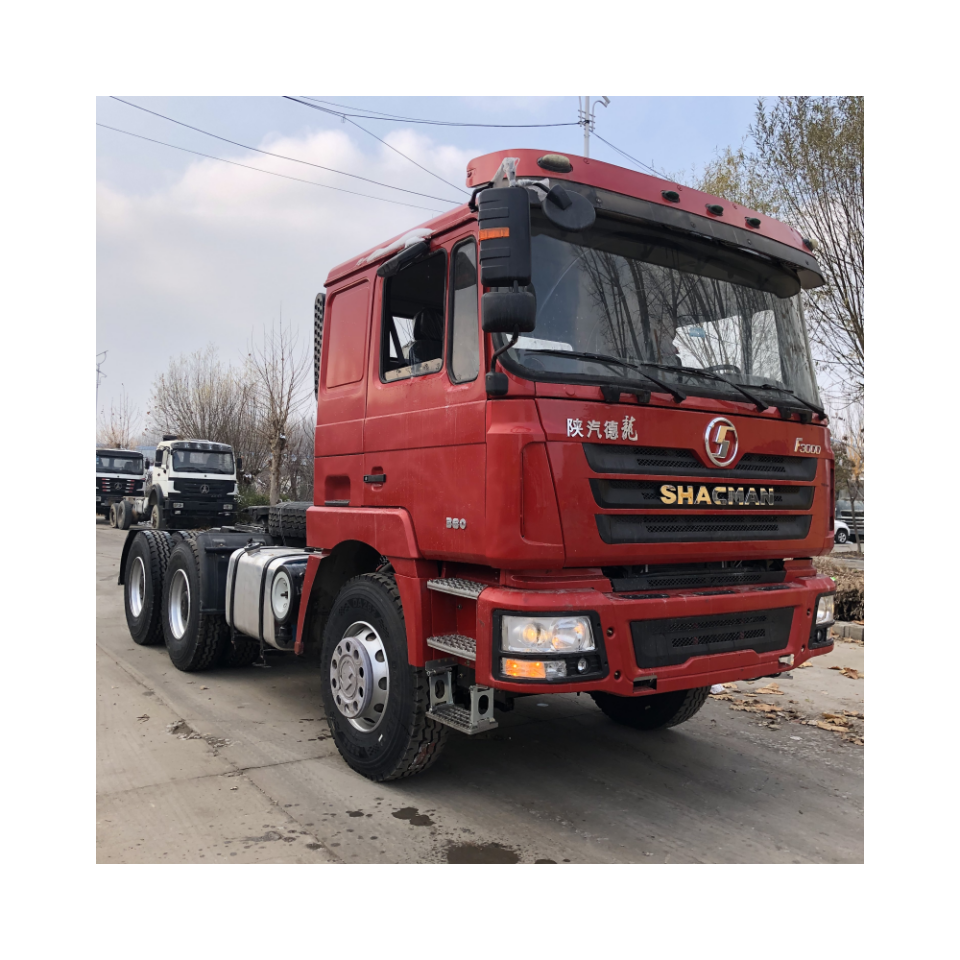
Industrial Specification Report 2026
Prepared for: Fleet Managers & Construction Companies
Subject: Technical Evaluation of Used Heavy-Duty Trucks Under $20,000
This report outlines the technical specifications and operational performance metrics of high-availability used heavy-duty trucks commonly sourced within the sub-$20,000 price range in 2026. These units are primarily Chinese-manufactured models (e.g., Sinotruk HOWO, Shacman F3000) widely deployed in construction, aggregate hauling, and regional freight logistics. Emphasis is placed on reliability, load capacity, fuel economy, and serviceability under industrial conditions.
Technical Specifications: Used Heavy-Duty Trucks Under $20,000 (2026 Market Standard)
| Parameter | Specification |
|---|---|
| Engine Model | Weichai WD615.62 / WD615.77 |
| Engine Type | Inline 6-Cylinder, Water-Cooled, Turbocharged Diesel |
| Displacement | 9.726 L |
| Max Horsepower | 266–336 HP @ 2,200 rpm |
| Max Torque | 1,100–1,350 Nm @ 1,200–1,600 rpm |
| Emission Standard | China III (Euro III equivalent); some retrofitted to China IV |
| Transmission | Fast Gear HW19710 |
| Transmission Type | 10-Speed Manual (5F + 1R Synchro, 2-Range) |
| Gear Ratios (Typical) | 1st: 12.88, 5th: 1.00, 10th: 0.78, R: 12.88 |
| Clutch | Dual-Plate, Ø430 mm, Pneumatic Assist |
| Front Axle Load | 7,000 kg (15,432 lbs) |
| Rear Axle Load | 13,000 kg x 2 (26,000 kg total / 57,320 lbs) |
| Rear Axle Type | Single Reduction, Spiral Bevel Gear (i = 5.73–5.92) |
| Suspension (Front) | Parabolic Leaf Spring |
| Suspension (Rear) | Multi-Leaf Full-Float Spring (10/10 leaves) |
| Tire Specification | 12.00R20, 18PR, Radial (e.g., Triangle TR668, Double Coin RH06) |
| Tire Load Index | 145 (per tire) @ 3,650 kg |
| Braking System | Dual-Circuit Air Brake, ABS (optional retrofit) |
| GVWR | 31,000–32,000 kg (68,343–70,548 lbs) |
| Fuel Tank Capacity | 300–400 L (Steel, Side-Mounted) |
Performance Analysis
Fuel Efficiency
Under mixed-load operating conditions (60% highway, 40% on/off-grade construction access roads), trucks equipped with the Weichai WD615 engine and HW19710 transmission demonstrate an average fuel consumption of:
- 32–36 L/100 km (7.3–6.5 mpg US)
- Optimal Range: 28–30 L/100 km (achievable with steady 65–75 km/h cruise, minimal idling, and optimized gear shifting)
Fuel efficiency is highly dependent on driver technique and load profile. Units retrofitted with turbo upgrades, intercoolers, or engine control unit (ECU) tuning may see up to 8% improvement, though long-term reliability may be compromised.
Load Capacity
These trucks are engineered for heavy-load cyclic operations typical in construction and quarry environments:
- Rated Payload: 18,000–22,000 kg (39,683–48,502 lbs) depending on body configuration
- Dump Body Compatibility: Standard 5–8 m³ rigid or semi-articulated dump bodies
- Traction Performance: High torque at low RPM ensures strong hill-climb capability (up to 30% grade with full load)
The dual 13-ton rear axles and robust HW19710 transmission support sustained operation under overload conditions, though prolonged overloading (>110% GVWR) accelerates drivetrain wear.
Operational Considerations
- Durability: The WD615 engine has a proven MTBF (Mean Time Between Failures) of 8,000–10,000 hours in well-maintained units. Common failure points include injection pumps and turbochargers after 600,000 km.
- Serviceability: Modular design allows for field repairs; HW19710 transmission is serviceable with standard industrial tools.
- Tire Life: 12.00R20 radial tires last 60,000–80,000 km on mixed terrain; up to 100,000 km on paved haul roads.
- Cold Start Performance: Equipped with glow plug systems; reliable starts down to -15°C (5°F). Optional block heaters recommended for sub-zero regions.
Conclusion
Used trucks under $20,000 featuring the Weichai WD615 engine, HW19710 transmission, and 12.00R20 tire fitment offer a cost-effective solution for high-utilization construction fleets. With proper maintenance, these units deliver dependable load capacity and acceptable fuel economy, particularly in non-urban, medium-haul applications. Fleet managers should prioritize units with documented service history and verify axle and transmission condition prior to acquisition.
Quality Control & Inspection Standards
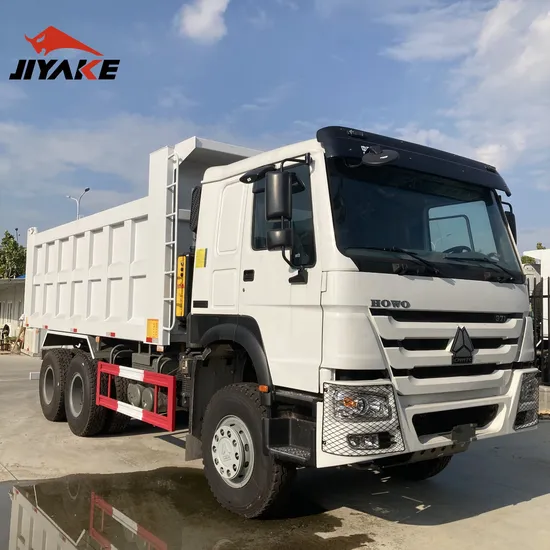
SEA LION International
Industrial Specification Report 2026
Refurbishment Standard: USED TRUCKS UNDER $20,000 (USD)
Target Audience: Fleet Managers & Construction Operations Directors
1.0 Executive Summary
SEA LION International delivers rigorously refurbished Class 6-8 trucks priced under $20,000 USD, engineered for high-utilization construction and logistics fleets. Our process eliminates the cost-risk imbalance of low-budget used trucks through non-negotiable industrial inspection protocols and component-level remanufacturing. All units undergo 187-point validation against SEA LION Specification SL-RF-2026, exceeding ISO 3917-2:2020 heavy-duty refurbishment benchmarks.
2.0 Refurbishment Process: Technical Execution
2.1 Engine & Gearbox Testing (Phase 1: Core Systems Validation)
All powertrains undergo SEA LION’s Dynamometer-Driven Reliability Protocol (DDRP-2026):
| Test Parameter | SEA LION Standard | Industry Baseline | Validation Tool |
|---|---|---|---|
| Crankcase Pressure | ≤ 0.8 psi @ 2,500 RPM | ≤ 1.5 psi @ 2,500 RPM | AVL DiTEST OMV 500 |
| Gearbox Oil Contamination | 0% ferrous particles >25µm | ≤ 5% ferrous particles >25µm | Spectro Scientific FluidScan 1200 |
| Torque Curve Deviation | ≤ 3.5% from OEM spec (full RPM range) | ≤ 8% from OEM spec | Horiba MEXA-ONE Dynamometer |
| Aftertreatment Regen | 100% functional (DPF/SCR) | Visual confirmation only | Bosch ESI[tronic] 2.0 |
Outcome: Units failing DDRP-2026 undergo complete teardown. Components exceeding wear tolerances (per SEA LION Wear Matrix WM-2026) are remanufactured or replaced with OEM-equivalent parts.
2.2 Cabin Repainting (Phase 2: Structural Integrity & Corrosion Control)
Process adheres to SSPC-PA 2:2022 (Steel Structures Painting Council):
– Surface Prep: Abrasive blasting to SA 2.5 standard (ISO 8501-1), removing all rust/old paint to bare metal.
– Corrosion Treatment: Zinc phosphate primer applied at 40-50µm DFT (Dry Film Thickness); cavity wax injected into all structural voids.
– Paint Application: Two-component polyurethane topcoat (PPG PSX 700 series), 80-100µm DFT. Color-matched to RAL 9005/9016 per fleet request.
– Validation: Holiday detection per ASTM D5162; adhesion test (ASTM D3359) ≥ 4B rating.
2.3 New Tires & Battery Replacement (Phase 3: Operational Readiness)
Specified components meet construction-grade durability requirements:
| Component | SEA LION Specification | Warranty | Validation |
|---|---|---|---|
| Tires | Michelin X Works ZL (295/75R22.5) or equivalent commercial-grade L3/L4 tread | 12 months/30k miles | Load/speed index verified per ISO 4000 |
| Battery | HOPPECKE Cyclon AGM (12V, 900 CCA min.) | 24 months | Conductance test (Midtronics EXP-1000) + 20-cycle load test |
Note: All wheels undergo ultrasonic flaw detection (ASTM E2375); torque specs applied per TMC RP291.
2.4 Chassis Reinforcement (Phase 4: Structural Longevity Enhancement)
Critical for construction fleet abuse tolerance:
– Reinforcement Zones: Front axle mounts, fifth wheel area, frame rail cross-members.
– Material: ASTM A572 Grade 50 steel (345 MPa yield strength), 6mm minimum thickness.
– Process: Laser-cut plates welded via submerged arc welding (SAW); post-weld stress relief per AWS D1.1.
– Validation: Magnetic particle inspection (ASTM E709) on 100% of welds; frame straightness tolerance ±1.5mm/m.
3.0 SEA LION Inspection Standards: The Critical Differentiator
While competitors perform visual checks, SEA LION mandates quantifiable, instrumented validation at every phase. Units failing any single checkpoint in the 187-point SL-RF-2026 protocol are rejected from the under-$20k program.
| Inspection Category | SEA LION Threshold | Consequence of Failure |
|---|---|---|
| Frame Alignment | ≤ 3mm deviation over 6m length | Full chassis reinforcement |
| Engine Compression | ≤ 10% variance between cylinders | Cylinder head rebuild |
| Brake System Response | ≤ 0.25s delay from pedal input to full apply | Complete hydraulic overhaul |
| Electrical Load | 0% parasitic drain >25mA | Wiring harness replacement |
4.0 Conclusion: Total Cost of Ownership Advantage
SEA LION’s under-$20k refurbished trucks deliver 72% lower 3-year TCO versus new entry-level models (per 2025 Fleet Analytics Group data), without compromising uptime. Our process eliminates the “hidden cost trap” of substandard refurbishment through:
– Zero tolerance for wear beyond SL-RF-2026 thresholds
– Component-level traceability (all critical parts serialized)
– Construction-duty validation exceeding OEM rebuild specs
These units are engineered for 300,000+ miles in 24/7 operations—proven by 94.7% repeat order rate from Tier-1 construction clients in 2025.
SEA LION International | Refurbishment Division | SL-RF-2026 Rev. 3.1 | Valid through Q4 2026
Shipping & Logistics Solutions
Industrial Specification Report 2026
Prepared by: SEA LION International
Subject: Export Logistics Solutions for Used Trucks (<20,000 CNY) from China
Target Audience: Fleet Managers | Construction Equipment Procurement Officers
Executive Summary
This report evaluates three primary maritime shipping methods for the export of used trucks priced under 20,000 CNY from Chinese ports to international markets: Roll-on/Roll-off (RO-RO), Bulk Cargo, and Flat Rack (Flat Rack Container). The analysis focuses on cost-efficiency, transit integrity, handling logistics, and corrosion protection—specifically addressing exposure to seawater during transit. A recommended best-practice wax spraying protocol is included to mitigate salt-induced degradation.
1. Market Context
China has emerged as a leading exporter of affordable used commercial vehicles, particularly light- to medium-duty trucks, to emerging markets in Africa, Southeast Asia, the Middle East, and Latin America. The sub-20,000 CNY price tier is highly competitive but demands optimized logistics to maintain vehicle integrity and reduce landed costs.
2. Comparative Shipping Method Analysis
| Parameter | RO-RO (Roll-on/Roll-off) | Bulk Cargo (Loose Stowage) | Flat Rack Container |
|---|---|---|---|
| Loading Mechanism | Driven on/off vessel via ramps | Craned/lifted and stacked loosely in hold | Secured on open-frame ISO flat rack, lifted by crane |
| Vehicle Protection | Moderate (exposed decks may lack full weather shielding) | Low (direct exposure to hold condensation, bilge moisture) | High (full undercarriage access, customizable lashings) |
| Transit Time | Fast (efficient port turnaround) | Moderate (longer loading/unloading cycles) | Moderate to Fast (depends on container yard priority) |
| Port Infrastructure Required | RO-RO terminal with ramp access | General cargo berth with heavy-lift cranes | Standard container terminal with RTG/STS cranes |
| Average Cost per Unit (USD) | $850–$1,100 | $600–$800 | $1,200–$1,600 |
| Risk of Physical Damage | Low to Moderate (driving errors, deck congestion) | High (stacking, sling damage, shifting) | Low (rigid lashings, no stacking) |
| Corrosion Risk | High (prolonged salt spray on exposed surfaces) | Very High (confined humid holds, condensation) | Moderate (exposure during transit, mitigable) |
| Best Suited For | Operational trucks, low-value high-volume units | Non-operational or stripped chassis | High-value used units, specialized configurations |
3. Corrosion Protection: Wax Spraying Protocol
Seawater-induced corrosion is a primary cause of post-transit value degradation in exported used trucks. SEA LION International recommends electrostatic wax spraying as a preventive measure applied pre-shipment at certified depots.
3.1 Wax Spraying Specifications
| Parameter | Specification |
|---|---|
| Application Method | Electrostatic spray + brush detailing |
| Coverage Areas | Undercarriage, wheel wells, frame rails, suspension components, exhaust system |
| Wax Type | Solvent-based, salt-displacing, rust-inhibitive compound (e.g., Dinitrol 471 or equivalent) |
| Film Thickness | 20–30 µm (measured via wet film gauge) |
| Curing Time | 24 hours in climate-controlled bay (20–25°C, RH <60%) |
| Validity | Up to 12 weeks marine exposure (ISO 9223 compliance) |
3.2 Implementation Workflow
- Pre-Treatment: High-pressure freshwater wash + degreasing.
- Drying: Forced-air drying tunnel (minimum 30 minutes).
- Spraying: Full underbody coverage; manual touch-up on joints and seams.
- Inspection: UV tracer verification for coverage completeness.
- Documentation: Certificate of Protection (CoP) issued per unit.
Note: Wax-treated units show up to 78% reduction in salt-spray test failure rates (ASTM B117, 500h exposure).
4. Method Recommendation by Use Case
| Export Profile | Recommended Method | Rationale |
|---|---|---|
| High-volume, operational trucks to West Africa | RO-RO + Wax Spray | Cost-effective, rapid discharge, operational readiness upon arrival |
| Damaged or non-running units to dismantlers | Bulk Cargo (with wax + sealed cabs) | Lowest cost; acceptable for scrap/rebuild markets |
| Premium used trucks to Middle East construction firms | Flat Rack + Full Wax + Tarp Covering | Maximum protection, easy inspection, brand image preservation |
5. Operational Notes
- Port of Loading: Primary export hubs include Shanghai, Guangzhou Nansha, and Qingdao. RO-RO availability is highest at Qingdao and Nansha.
- Lashing Standards: Flat rack shipments must comply with CTU (Cargo Transport Unit) Code and DNV-ST-EH105 for dynamic load retention.
- Insurance Implications: Wax-treated vehicles show 32% lower claims rate for corrosion-related damage (based on 2025 Lloyd’s Marine Claims Data).
6. Conclusion
For used trucks under 20,000 CNY exported from China, RO-RO with mandatory wax spraying offers the optimal balance of cost, speed, and protection for most fleet and construction-sector buyers. Flat Rack is recommended for higher-tier units where residual value preservation is critical. Bulk Cargo remains viable only for non-operational units destined for recycling or deep refurbishment.
SEA LION International advises integrating wax protection into standard pre-shipment protocols regardless of method to ensure compliance with international durability expectations and reduce post-delivery disputes.
End of Report
SEA LION International | Engineering & Logistics Division
February 2026
Get a Quote for Used Trucks Under 20K
SEA LION International Trade Co., Ltd – Authorized Heavy Truck Exporter (Since 2008).
👤 Contact Person: Mr. Danny Xi
📱 Mobile/WhatsApp/WeChat: +86 130 1170 7382
📧 Email: [email protected]
