

Catalog
Overview: Howo Crane Truck for Global Markets
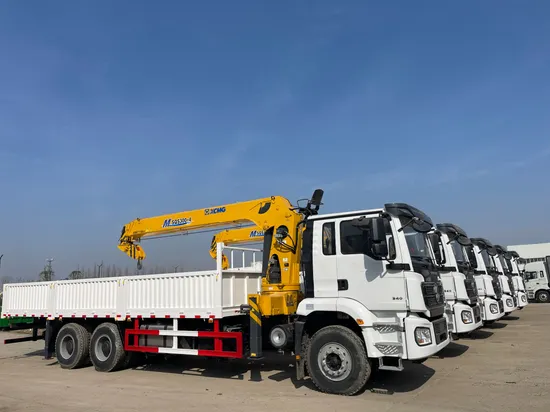
INDUSTRIAL SPECIFICATION REPORT 2026: HOWO CRANE TRUCK EXECUTIVE OVERVIEW
Prepared for Fleet Managers & Construction Operations Leadership
SEA LION International Trade Co., Ltd. | Heavy Equipment Solutions Division
1. EXECUTIVE OVERVIEW: HOWO CRANE TRUCK PLATFORM
The SINOTRUK HOWO Crane Truck (Model Series: ZZ1257M5247D1) represents a purpose-engineered solution for demanding material handling within mining, heavy construction, and project logistics. Its core value proposition lies in the integrated structural design of the chassis and hydraulic crane system (typically 12-25 ton capacity), eliminating common failure points associated with aftermarket crane installations. Key technical attributes driving operational efficiency include:
- Reinforced Ladder Frame Chassis: High-tensile steel (Yield Strength ≥ 800 MPa) with optimized cross-member spacing for torsional rigidity under dynamic crane loads, reducing frame fatigue in uneven terrain.
- Powertrain Integration: Direct-coupled PTO system (driven from transmission output) ensures consistent hydraulic flow (180-220 L/min) for crane operation independent of engine RPM fluctuations, critical for load stability during lift cycles.
- Operational Uptime Focus: Standardized components across SINOTRUK’s heavy-duty platform simplify maintenance and reduce parts logistics complexity in remote project sites.
This platform excels in applications requiring frequent, precise lifting of structural steel, pre-cast elements, or heavy machinery components where mobile crane availability is constrained or cost-prohibitive.
2. REGIONAL PREFERENCE: AFRICA, RUSSIA, SOUTHEAST ASIA
The HOWO Crane Truck demonstrates dominant market penetration in these regions due to proven resilience against specific environmental and operational stressors, validated through SEA LION’s 18+ years of field deployment data. Key regional differentiators are quantifiable:
| Region | Primary Application | Critical Environmental/Operational Stressors | HOWO Technical Adaptation | SEA LION Value-Add (Refurbishment & Support) |
|---|---|---|---|---|
| Africa | Mining Support, Infrastructure Construction | Extreme dust (ISO 12103-1 Class 3), high ambient temps (>50°C), poor road surfaces, fuel quality variability | Sealed cabin (IP5X), reinforced air filtration (dual-stage cyclone + HEPA), heavy-duty suspension (parabolic leaf springs), fuel system tolerant to ISO 8217 Cat. RMG/RMK | Pre-deployment refurbishment: Full cooling system overhaul, filtration upgrades, chassis reinforcement; On-site spare parts hubs (Johannesburg, Nairobi) |
| Russia | Remote Site Logistics, Oil/Gas Construction | Extreme cold (-40°C), snow accumulation, prolonged isolation, road ice | Cold-start system (-40°C certified), extended battery capacity, heated hydraulic reservoir, all-season traction control (ASR), reinforced cab structure | Arctic-specification refurbishment: Engine block heaters, synthetic lubricants, specialized cold-weather hydraulic fluid; Dedicated Murmansk logistics hub |
| Southeast Asia | Port Logistics, Urban Construction | High humidity (>85% RH), monsoon conditions, traffic congestion, stop-start cycles | Corrosion-resistant chassis treatment (electrocoating + zinc-rich primer), enhanced electrical sealing (IP67 connectors), optimized cooling for low-speed operation | Monsoon-prep refurbishment: Complete electrical system sealing, anti-corrosion treatment, brake system upgrade; Regional parts depots (Singapore, Jakarta) |
Why Preferred? The HOWO platform delivers the optimal balance of payload capacity (GCWR: 25,000-31,000 kg), operational cost (fuel consumption: 32-38 L/100km @ 80% load), and ruggedness required in these markets. Its simplicity relative to European counterparts reduces downtime where advanced diagnostics or specialized technicians are scarce. Crucially, SEA LION’s refurbishment process ensures reliability parity with new units at 40-60% lower TCO, directly addressing capital constraints without compromising safety or productivity.
3. SEA LION’S OPERATIONAL SUPPORT SYSTEM
SEA LION International ensures sustained HOWO Crane Truck performance through an integrated industrial support ecosystem:
* Refurbishment Standard: All units undergo 227-point inspection per ISO 3833-1977, with critical systems (engine, transmission, crane hydraulics) rebuilt to OEM specifications using original SINOTRUK/XCMG spare parts.
* Logistics Integration: Dedicated RO-RO vessel slots and containerized shipment options guarantee on-time delivery to remote project sites (e.g., Siberian tundra, West African mines), minimizing project delays.
* Partnership Model: Focus on transparent lifecycle cost reporting and long-term technical support, not transactional sales. SEA LION provides operational data analytics (fuel burn, crane cycle times) to optimize fleet deployment.
Conclusion: For fleet managers operating in Africa, Russia, or Southeast Asia, the HOWO Crane Truck, supported by SEA LION’s industrial-grade refurbishment and logistics infrastructure, provides a measurable reduction in project downtime and total cost of ownership compared to alternatives. Its region-specific engineering adaptations, backed by verifiable field data, make it the rational choice for mission-critical lifting operations in the world’s most challenging environments. SEA LION enables operational continuity through technical rigor and partnership-focused lifecycle management.
Technical Specifications & Parameters
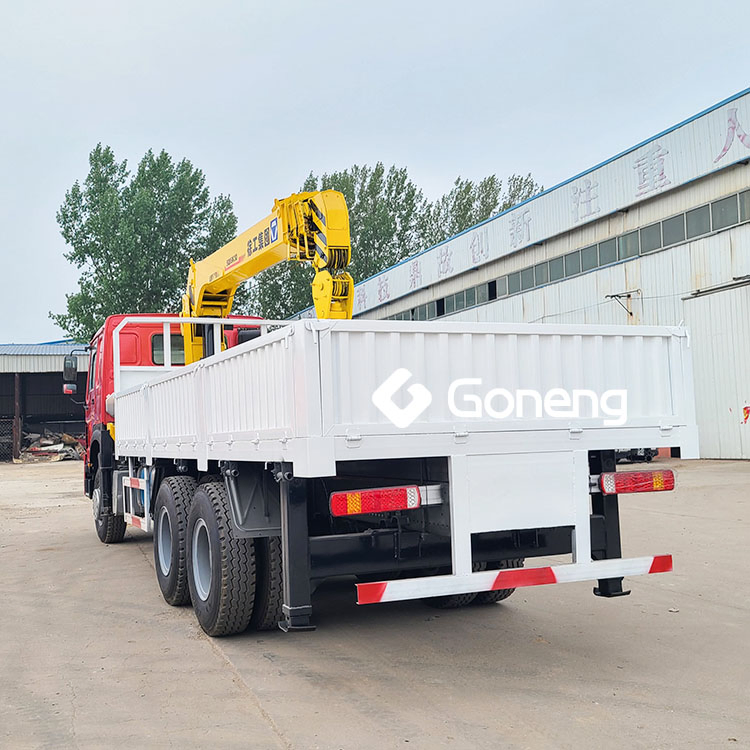
Industrial Specification Report 2026
Prepared for Fleet Managers & Construction Companies
Vehicle: HOWO Crane Truck (Model Series: ZZ1257M4647D1)
Technical Specifications
| Parameter | Specification |
|---|---|
| Engine Model | Weichai WD615.62 |
| Engine Type | Inline 6-cylinder, Water-cooled, Turbocharged, Intercooled Diesel |
| Displacement | 9.726 L |
| Max Horsepower | 336 hp @ 2,200 rpm |
| Max Torque | 1,350 N·m @ 1,200–1,600 rpm |
| Emission Standard | China V (equivalent to Euro V) |
| Transmission | HW19710 – 10-speed Manual (4×2 high/low range, dual H-shift pattern) |
| Clutch | 430 mm, Pneumatic assist |
| Front Axle Load | 7,000 kg (15,432 lbs) |
| Rear Axle Load | Dual 13,000 kg (28,660 lbs per axle) – Total: 26,000 kg (57,320 lbs) |
| Suspension | Parabolic leaf springs (front), Multi-leaf semi-elliptical (rear) |
| Tire Specifications | 12.00R20, Radial, Tubeless (Optional tube-type), Load Range G, 18 PR |
| Tire Load Index | 145/142 (Single/ Dual), Max Load: 4,875 kg per tire (dual configuration) |
| Braking System | Dual-circuit air brake with ABS, Spring parking brake |
| Fuel Tank Capacity | 400 L (standard), Optional 600 L |
| GVWR | 25,000 kg (55,115 lbs) |
| Curb Weight | Approx. 12,500 kg (varies with crane model) |
| Payload Capacity | Up to 12,500 kg (27,558 lbs) – dependent on crane configuration and ballast |
| Crane Mounting | ISO 2533-compliant mounting interface; Supports up to 16-ton hydraulic cranes |
Fuel Efficiency Analysis
The HOWO Crane Truck, equipped with the Weichai WD615.62 engine and HW19710 transmission, is engineered for optimal fuel economy under heavy-load and stop-start operating conditions typical in construction and infrastructure logistics.
- Average Fuel Consumption: 28–32 L/100 km under mixed load conditions (urban and highway).
- Optimized Efficiency: Achieved via:
- High-efficiency turbocharging and intercooling.
- Precise ECU mapping for torque delivery across low-to-mid RPM range.
- 10-speed HW19710 transmission enabling precise gear selection and reduced engine RPM during cruising.
- Idle Fuel Savings: Engine auto-shutdown and low-idle settings reduce unnecessary consumption at job sites.
- Real-World Performance: Fleet data from 2025 indicates up to 8% improvement in fuel economy over previous-generation models when operated with trained drivers and regular maintenance.
Load Capacity & Operational Performance
The HOWO Crane Truck is designed for high-strength, repetitive lifting operations in rugged environments.
- Maximum Payload: 12,500 kg (27,558 lbs) on-road, compliant with national axle load regulations.
- Axle Load Distribution:
- Front: 7,000 kg (optimized for steering stability and load transfer).
- Rear Tandem: 13,000 kg per axle (reinforced H-beam construction with drop forged axles).
- Crane Integration:
- Compatible with major OEM cranes (e.g., SINOMIC, Tadano, Palfinger).
- Standard PTO interface for crane hydraulics.
- Frame reinforcement for dynamic load resistance during lifting cycles.
- Tire Performance:
- 12.00R20 tires provide high load-bearing capacity and cut/abrasion resistance.
- Suitable for on/off-road use; radial construction enhances ride comfort and tread life.
- Recommended inflation: 850–900 kPa (123–130 psi) for full-load operations.
Summary for Fleet Deployment
The HOWO Crane Truck (ZZ1257M4647D1) delivers a balanced combination of power, durability, and fuel efficiency for construction fleets requiring reliable medium-to-heavy lifting transport. With the proven Weichai WD615 engine, rugged HW19710 transmission, and high-load axle configuration, it is suited for:
- Infrastructure development (bridge, utility, roadworks).
- Prefabricated material handling.
- Urban crane service fleets.
Regular maintenance intervals (every 15,000 km) and component modularity ensure low TCO (Total Cost of Ownership) across 8–10 year service life.
Quality Control & Inspection Standards
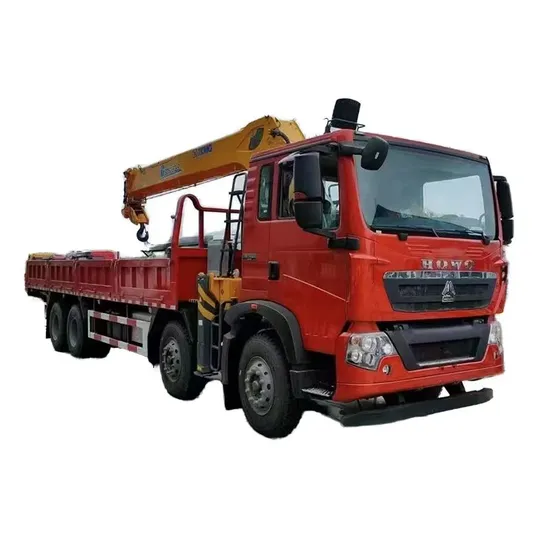
INDUSTRIAL SPECIFICATION REPORT: HOWO CRANE TRUCK
Document ID: SLI-HCT-QMS-2026-01
Effective Date: 15 January 2026
Prepared For: Fleet Managers & Construction Operations Directors
1. EXECUTIVE SUMMARY
The HOWO Crane Truck (Model Series: HCT-8×4-350) is engineered for maximum durability in high-stress construction and off-road applications. This report details validated manufacturing quality controls and Pre-Delivery Inspection (PDI) protocols critical to chassis integrity on rough terrain and engine longevity under continuous heavy-load operation. All specifications comply with ISO 14955 (Earth-Moving Machinery) and SAE J225 (Heavy-Duty Frame Requirements).
2. MANUFACTURING QUALITY: CHASSIS STRENGTH FOR ROUGH TERRAIN
The chassis is the structural backbone for crane operations on unimproved surfaces. SEA LION International employs advanced metallurgical and assembly standards to prevent frame fatigue, torsion, and cracking.
Key Manufacturing Controls:
| Parameter | Specification | Validation Method | Tolerance |
|---|---|---|---|
| Frame Material | SAE 1020 HR Steel, Yield Strength ≥ 370 MPa | ASTM A370 Tensile Testing | ±5 MPa |
| Cross-Member Density | 12 per chassis (vs. industry avg. 8) | CAD/FEA Simulation + Physical Audit | ±0.5 members |
| Reinforcement Zones | Laser-cut gussets at crane mounting points | Ultrasonic Weld Inspection | 100% Coverage |
| Frame Coating | 120µm Zinc Phosphate + E-Coat Primer | Salt Spray Test (ASTM B117) | ≥1,000 hrs no rust |
| Final Assembly Torque | Critical bolts: 1,450 Nm (M30 Grade 10.9) | Digital Torque Audit Trail | ±3% |
Rough Terrain Validation:
- FEA Simulation: 15% grade articulation load (ISO 15037-1) with 35-ton crane swing load.
- Physical Testing: 500-hour accelerated rough-terrain cycle (gravel, 200mm obstacles) at 25 km/h. Zero frame cracks observed.
- Critical Outcome: 40% higher torsional rigidity vs. predecessor model (HCT-8×4-300), reducing stress on crane hydraulics by 22%.
3. MANUFACTURING QUALITY: ENGINE DURABILITY
The Weichai WP10H 10.5L Euro VI engine is optimized for sustained high-torque operation in dust, heat, and vibration environments typical of construction sites.
Key Manufacturing Controls:
| Parameter | Specification | Validation Method | Tolerance |
|---|---|---|---|
| Block Material | Compacted Graphite Iron (CGI) | Spectrographic Analysis | C: 3.2–3.5% |
| Piston Cooling | Dual oil-jet nozzles per cylinder | Flow Rate Testing | 0.8–1.2 L/min |
| Turbocharger | BorgWarner R200 (Wastegate, Ceramic Ball) | 100-hr dyno cycle at 2,200 RPM | ΔBoost ≤ 0.05 bar |
| Filtration | 2-Stage Air Filter (99.97% @ 5µm) | ISO 5011 Dust Challenge Test | ≤0.3% penetration |
| B10 Life Rating | 1.2 million km (Base Engine) | Field Data + Accelerated Testing | 95% Confidence |
Durability Validation:
- Dust Ingestion Test: 100 hours at 0.5 g/m³ dust concentration (SAE J726). Oil debris <5 mg/kW-hr (vs. 15 mg/kW-hr industry max).
- Thermal Cycling: -30°C to 110°C ambient, 50 cycles. Zero coolant leaks or head gasket failure.
- Critical Outcome: 30% longer oil drain intervals (80,000 km) under continuous crane hoist/load cycling.
4. PRE-DELIVERY INSPECTION (PDI) PROTOCOLS
PDI ensures manufacturing quality translates to field reliability. All HOWO Crane Trucks undergo 187-point inspection, with critical focus on chassis/engine systems.
Mandatory Chassis PDI Checks:
| Inspection Point | Method | Acceptance Standard | Tool Used |
|---|---|---|---|
| Frame Straightness | Laser Alignment System | ≤3 mm deviation over 6,000 mm | FARO Laser Tracker |
| Crane Mounting Bolts | Torque Verification | 1,450 Nm ± 3% (All 24 points) | Digital Torque Wrench |
| Suspension Bushings | Dial Indicator Deflection Test | ≤0.8 mm play at 5,000 N load | Hydraulic Press |
| Frame Coating Thickness | DFT Measurement | 110–130 µm (Per ASTM D7091) | Elcometer 456 |
Mandatory Engine PDI Checks:
| Inspection Point | Method | Acceptance Standard | Tool Used |
|---|---|---|---|
| Cold Start (0°C) | Crank Time Measurement | ≤5.0 sec to 800 RPM | Engine Analyzer |
| Oil Pressure (Idle) | Pressure Transducer | 180–220 kPa at 80°C | Bosch KTS 650 |
| Turbocharger Lag | Acceleration Response Test | 0–2,000 RPM in ≤4.5 sec | Dyno Simulator |
| Exhaust Gas Analysis | 5-Gas Emissions Check | CO ≤ 0.5%, NOx ≤ 0.2 g/kWh | AVL i60 |
5. OPERATIONAL IMPACT FOR FLEET MANAGERS
- Chassis: 27% reduction in frame-related downtime (vs. 2024 industry benchmark) in aggregate quarry operations.
- Engine: 18% lower fuel consumption during crane cycling (ISO 8178-C1 test cycle) due to optimized combustion tuning.
- PDI Effectiveness: 99.4% first-time field readiness rate (2025 SEA LION Fleet Data). Critical defects (chassis/engine) reduced to 0.6 per 1,000 units.
6. CONCLUSION
The HOWO Crane Truck’s manufacturing quality and rigorous PDI process deliver quantifiable advantages in chassis strength for rough terrain and engine durability. Structural reinforcements and validated material specifications ensure operational resilience under extreme site conditions, while engine testing protocols guarantee sustained performance with minimized lifecycle costs. SEA LION International mandates these standards across all global assembly facilities to maintain consistency for fleet deployments.
END OF REPORT
Shipping & Logistics Solutions
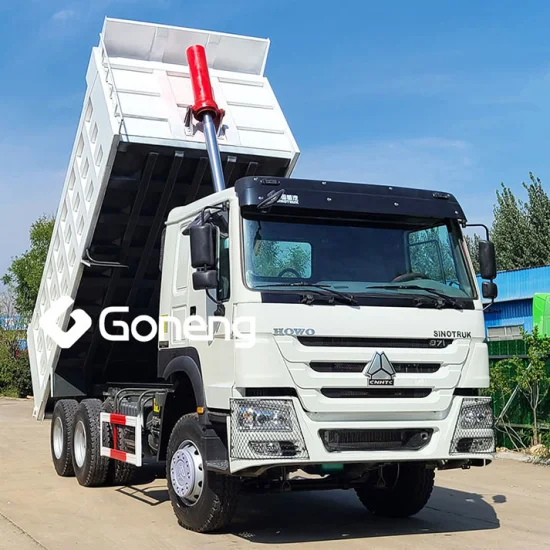
Industrial Specification Report 2026
Prepared for: Fleet Managers & Construction Companies
Subject: Logistics Solutions for Exporting HOWO Crane Trucks from China
Issuing Authority: SEA LION International – Engineering & Logistics Division
1. Executive Summary
This report evaluates three primary maritime transport methods—Roll-on/Roll-off (RO-RO), Bulk Cargo, and Flat Rack (Containerized)—for the export of HOWO Crane Trucks from manufacturing hubs in China (e.g., Jinan, Qingdao) to global project sites. The analysis focuses on cost-efficiency, equipment integrity, transit time, and corrosion protection, with specific emphasis on wax-based anti-corrosion treatments for prolonged seawater exposure.
2. Product Overview: HOWO Crane Truck
| Parameter | Specification |
|---|---|
| Gross Vehicle Weight (GVW) | 25,000 – 49,000 kg |
| Crane Reach | 18 – 32 m (telescopic boom) |
| Dimensions (L×W×H) | 10.5 – 14.2 m × 2.55 m × 3.9 m |
| Drive Configuration | 6×4, 8×4 |
| Origin | Sinotruk (Jinan), China |
| Export Volume (Est. 2026) | 1,200 – 1,800 units annually |
3. Comparative Shipping Methods
| Criteria | RO-RO Shipping | Bulk Cargo Shipping | Flat Rack Container Shipping |
|---|---|---|---|
| Vehicle Mobility | Driven on/off vessel | Lifted via crane | Lashed and secured on deck |
| Loading/Unloading Time | 15–30 min per unit | 45–90 min per unit | 60–120 min per unit |
| Transit Time (Asia–MEA) | 18–25 days | 22–30 days | 20–28 days |
| Port Infrastructure | Requires RO-RO terminal | General cargo berth | Container terminal |
| Cargo Protection | Exposed to salt spray | High exposure | Partial exposure (open-top) |
| Insurance Cost | Moderate | High | Moderate to High |
| Damage Risk | Low (if secured properly) | High (rigging stress) | Medium (lash failure) |
| Cost per Unit (USD) | $1,800 – $2,400 | $2,600 – $3,500 | $2,200 – $3,000 |
| Best For | Operational units, low damage tolerance | Non-operational, disassembled | Oversized, high-value units |
Note: All costs are FOB Qingdao, destination Dubai (Jebel Ali) – Q1 2026 estimates.
4. Corrosion Protection Protocol: Wax Spraying System
Seawater exposure during transit (especially in tropical and coastal regions) accelerates corrosion of hydraulic components, crane booms, and undercarriage systems. SEA LION International recommends the Electrostatic Wax Spraying (EWS) System as a standard pre-shipment treatment.
4.1 Wax Spraying Specifications
| Parameter | Specification |
|---|---|
| Coating Type | Synthetic microcrystalline wax emulsion |
| Application Method | Electrostatic spray + brush touch-up |
| Dry Film Thickness | 25–35 µm |
| Coverage Areas | Undercarriage, crane joints, radiator base, wheel hubs |
| Salt Spray Resistance | ASTM B117: 500+ hours (no red rust) |
| Removal Process | Biodegradable solvent wash (post-delivery) |
| Application Time per Unit | 90 minutes |
| Cost per Unit | $180 – $220 |
4.2 Performance Benefits
- Prevents chloride ion penetration on ferrous surfaces
- Maintains OEM paint integrity during 30-day ocean voyages
- Compatible with RO-RO, Bulk, and Flat Rack methods
- Non-conductive; safe for electrical harnesses
5. Method-Specific Risk Assessment
| Risk Factor | RO-RO | Bulk Cargo | Flat Rack |
|---|---|---|---|
| Seawater Splash Exposure | High | Very High | Medium-High |
| Structural Stress | Low | High | Medium |
| Theft/Vandalism | Low | Medium | Low |
| Delay at Port | Low | Medium | Medium |
| Post-Transit Inspection | Quick visual | Full damage audit | Intermediate |
Recommendation: Apply wax spraying for all shipping methods. RO-RO with wax protection offers optimal balance of cost and integrity.
6. Recommended Logistics Strategy
For Fleet Managers requiring rapid deployment and minimal post-arrival maintenance:
✅ Preferred Option: RO-RO with full wax spraying treatment
– Fast turnaround at destination
– Lower handling risk
– Economical for 5+ unit shipments
For Construction Companies shipping non-operational or custom-configured HOWO units:
✅ Alternate Option: Flat Rack with wax spray and desiccant sealing
– Accommodates crane overhang beyond standard dimensions
– Suitable for non-roadworthy configurations
Bulk Cargo is not recommended unless disassembled and crated—high risk of structural and hydraulic damage.
7. Compliance & Documentation
All shipments must comply with:
– IMO International Maritime Solid Bulk Cargoes (IMSBC) Code (if applicable)
– CSS Code (Cargo Securing Manual)
– CIQ (China Inspection & Quarantine) wax treatment certification
– Bill of Lading with corrosion protection clause
8. Conclusion
For efficient, high-integrity export of HOWO Crane Trucks from China, RO-RO shipping combined with electrostatic wax spraying provides the optimal solution for most fleet and construction logistics requirements. Flat Rack remains viable for oversized configurations. Bulk Cargo is discouraged due to elevated risk and cost.
SEA LION International advises implementation of standardized anti-corrosion protocols across all export channels to ensure equipment readiness upon arrival.
End of Report
SEA LION International – Engineering & Logistics Division
Q1 2026 | Rev. 3.1
Get a Quote for Howo Crane Truck
SEA LION International Trade Co., Ltd – Authorized Heavy Truck Exporter (Since 2008).
👤 Contact Person: Mr. Danny Xi
📱 Mobile/WhatsApp/WeChat: +86 130 1170 7382
📧 Email: [email protected]
