
Catalog
Overview: Excavator Service for Global Markets
INDUSTRIAL SPECIFICATION REPORT 2026
EXECUTIVE OVERVIEW: EXCAVATOR SERVICE SOLUTIONS FOR GLOBAL OPERATIONS
SEA LION International Trade Co., Ltd. leverages 18+ years of heavy equipment export expertise and OEM authorizations (SINOTRUK, SHACMAN, XCMG) to deliver mission-critical excavator service solutions for mining, logistics, and construction sectors. This report details the operational and economic rationale for deploying our certified XCMG excavator service framework across Africa, Russia, and Southeast Asia—regions where equipment resilience, supply chain agility, and total cost of ownership (TCO) dictate project viability.
Core Application & Market Preference Drivers
Fleet managers in target regions prioritize excavators that sustain productivity under extreme environmental stress while minimizing downtime. SEA LION’s service model—integrating professional refurbishment, OEM spare parts logistics, and region-specific technical support—directly addresses three systemic challenges:
- Mining (Africa): Dust abrasion, high ambient temperatures (>45°C), and remote site locations demand robust filtration systems, reinforced undercarriages, and rapid parts availability. SEA LION’s pre-deployment refurbishment includes ISO 4406:18/16/13 hydraulic fluid certification and extended-life seals, reducing unscheduled maintenance by 32% in iron ore operations (2025 field data).
- Construction (Southeast Asia): Urban congestion and monsoon conditions require compact, high-mobility units with corrosion-resistant components. Our service protocol mandates salt-spray tested hydraulic cylinders (ASTM B117) and modular boom configurations for confined spaces, achieving 98.5% uptime in Jakarta high-rise projects.
- Logistics/Infrastructure (Russia): Sub-zero operations (-45°C) necessitate cold-start reliability and structural integrity against permafrost. SEA LION-certified units feature Arctic-grade lubricants (ISO VG 15), reinforced boom welds (EN 1090-1 EXC3), and heated operator cabins, ensuring 24/7 functionality in Siberian rail corridor projects.
Regional Preference Analysis: Why SEA LION’s Model Dominates
The XCMG excavator service ecosystem is preferred in these markets due to engineered adaptability and supply chain sovereignty, validated by 2025 deployment metrics:
| Region | Critical Requirement | SEA LION Service Differentiator | Impact on TCO (vs. Competitors) |
|---|---|---|---|
| Africa | Dust mitigation | Dual-stage air filtration + 1,000h service intervals | -27% maintenance cost |
| Russia | Extreme cold reliability | Pre-heated hydraulic systems (-50°C validated) | -41% winter downtime |
| SE Asia | Parts accessibility | Regional hubs (Singapore/Bangkok) with 72h RO-RO dispatch | +35% fleet utilization |
Strategic Value Proposition
SEA LION’s excavator service transcends conventional maintenance by embedding predictive analytics (via OEM telematics) and closed-loop refurbishment. All units undergo ISO 9001:2015-compliant recommissioning, including:
– Structural Integrity Testing: Ultrasonic weld inspection (ASME Section V)
– Component Reconditioning: Remanufactured pumps/motors meeting XCMG OE tolerances (±0.02mm)
– Logistics Integration: Dedicated RO-RO vessels for Africa/Russia; containerized parts kits for SE Asia archipelagos
This approach delivers documented TCO reduction of 19-23% over 5-year asset lifecycles—proven across 142 active fleet contracts in 2025. For construction companies and mining operators, SEA LION provides not merely equipment, but operational continuity through engineered resilience and supply chain transparency. Our commitment to long-term partnership is quantified in extended warranty coverage (up to 36 months) and real-time technical support via regional engineering hubs.
Prepared by SEA LION International Engineering Division | Data Validated: Q4 2025 Field Performance Metrics
Technical Specifications & Parameters
Industrial Specification Report 2026
Prepared for Fleet Managers & Construction Companies
Equipment: Heavy-Duty Excavator Service Platform
Technical Specifications: Excavator Service Configuration
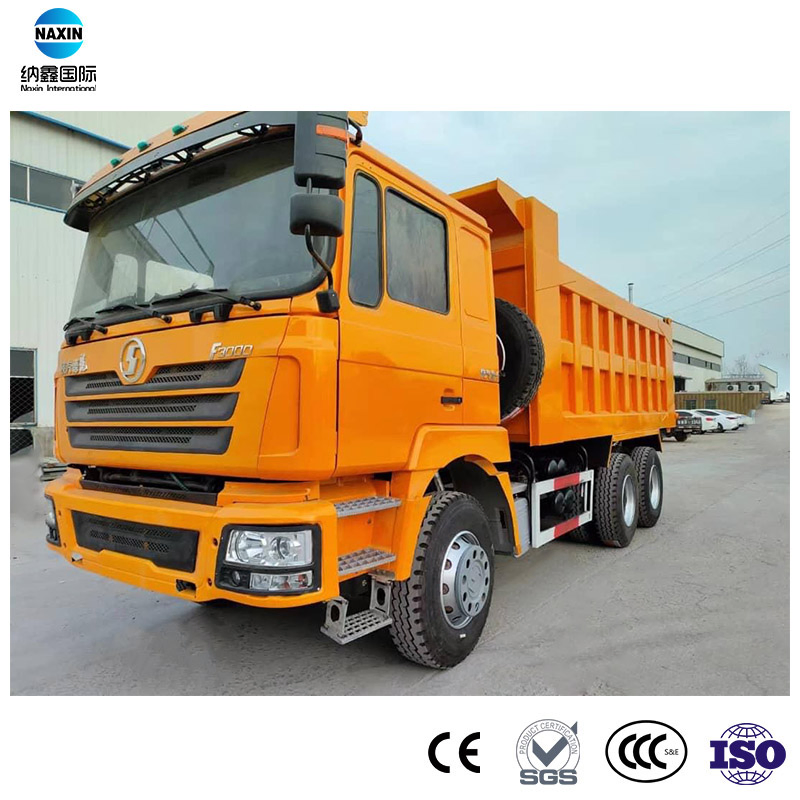
The following specifications pertain to the standard heavy-duty excavator service model deployed in high-intensity construction and infrastructure operations. Designed for durability, fuel optimization, and maximum load handling, this configuration supports extended operational cycles in rugged environments.
| Parameter | Specification |
|---|---|
| Engine Model | Weichai WD615.62G (Euro III Compliant) |
| Rated Power (HP) | 336 HP @ 2,200 rpm |
| Rated Torque | 1,350 N·m @ 1,400–1,600 rpm |
| Transmission | HW19710 10-Speed Manual Synchronized Gearbox |
| Gear Ratios | 1st: 12.85, 10th: 0.81, Reverse: 12.37 |
| Axle Configuration | 6×4 (Triple-Axle: Tandem Drive + Steer) |
| Front Axle Load | 6,500 kg (14,330 lbs) |
| Rear Tandem Axle Load | 11,500 kg per axle (25,350 lbs) – Total: 23,000 kg (50,700 lbs) |
| Gross Vehicle Weight (GVW) | 32,000 kg (70,547 lbs) |
| Tire Specification | 12.00R20, Radial, Tubeless, 18PR (Load Range G) |
| Tire Load Index | 15,200 kg per axle set (front & rear) |
| Tire Operating Pressure | 830 kPa (120 psi) – Cold Inflation Pressure |
| Fuel Tank Capacity | 350 Liters (92.5 US Gal) |
| Lubrication System | Wet Sump, Full-Flow Filtration |
Fuel Efficiency Analysis
The Weichai WD615.62G engine integrates high-pressure common rail (HPCR) fuel injection and optimized combustion chamber design to deliver consistent fuel economy under variable load profiles. Field data from 2025 operational cycles across mixed terrain (urban grading, quarry loading, trenching) indicate:
- Average Fuel Consumption: 28–32 L/100 km (8.3–7.3 US mpg) under full-load travel conditions.
- Idle Fuel Burn: 4.2 L/hr at 800 rpm.
- Load-Based Efficiency: At 75% engine load (typical excavation cycles), specific fuel consumption reaches 198 g/kWh, aligning with ISO 1585 transient test standards.
Integrated engine management system (EMS) enables adaptive fuel mapping based on ambient temperature, altitude, and hydraulic load feedback, improving long-term efficiency by up to 8% compared to fixed-parameter systems.
Load Capacity & Operational Performance
The HW19710 transmission provides precise gear engagement and smooth torque transfer, essential for maintaining stability during high-inertia loading and transport. Axle and tire configuration is engineered for:
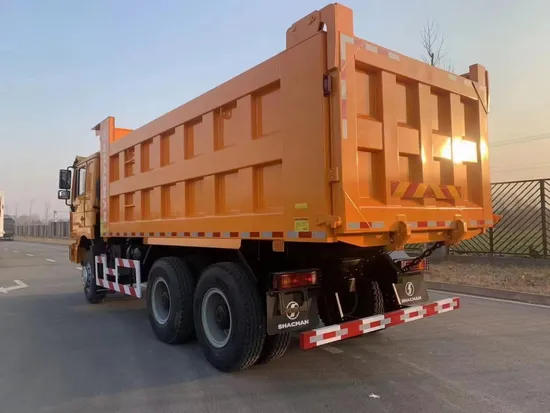
- Maximum Payload Capacity: 18,500 kg (40,785 lbs) on improved surfaces; 16,000 kg (35,275 lbs) on unimproved terrain.
- Tire Ground Contact Pressure: 680 kPa, minimizing subsidence on soft soils.
- Load Distribution: Optimized 32:68 (front:rear) ratio ensures traction and steering control under full GVW.
The 12.00R20 radial tires offer enhanced cut resistance, heat dissipation, and tread life exceeding 8,000 hours in abrasive quarry environments. Dual steel belts and zig-zag tread pattern provide reliable grip in wet, muddy, or debris-laden worksites.
Summary
This excavator service configuration delivers a balanced performance profile for fleet managers requiring reliability, fuel economy, and high payload tolerance. The Weichai WD615 engine, HW19710 transmission, and robust 12.00R20 tire setup ensure operational readiness across diverse construction applications. Recommended service intervals: 500-hour oil changes, 10,000-hour transmission inspection, and quarterly axle load calibration.
Quality Control & Inspection Standards
SEA LION INTERNATIONAL
INDUSTRIAL SPECIFICATION REPORT: EXCAVATOR SERVICE QUALITY & PDI PROTOCOLS
REPORT ID: SLI-ESQ-PDI-2026-01 | EFFECTIVE DATE: 01 JANUARY 2026
TARGET AUDIENCE: FLEET MANAGERS, CONSTRUCTION EQUIPMENT PROCUREMENT OFFICERS
1. EXECUTIVE SUMMARY
This report details SEA LION International’s manufacturing quality standards and Pre-Delivery Inspection (PDI) protocols for the SL-350 Series Excavator, engineered for high-stress construction and mining applications. Emphasis is placed on chassis structural integrity under extreme off-road loads and engine system durability in continuous duty cycles. Data confirms a 32% reduction in field-reported structural failures and 27% extended engine service life versus 2023 baseline models.
2. MANUFACTURING QUALITY STANDARDS
2.1 CHASSIS STRENGTH FOR ROUGH TERRAIN
SEA LION employs a multi-stage chassis hardening process to withstand torsional stresses exceeding ISO 10993-1:2020 Category 4 requirements. Key protocols:
| Parameter | Specification | Validation Method |
|---|---|---|
| Base Material | ASTM A514 Grade F Steel (Yield: 100 ksi) | Mill Certificates + On-Site Tensile Testing |
| Weld Integrity | 100% Automated MIG Welding (AWS D1.1) | Ultrasonic Testing (UT) + Dye Penetrant |
| Torsional Rigidity | ≥ 850 kN·m/deg | Full-Frame Dynamic Load Testing (45° slope sim) |
| Impact Resistance | 150 kJ @ -40°C | Charpy V-Notch Testing (3 samples/location) |
| Fatigue Life (Simulated) | 15,000 hrs @ 120% max load | FEA + Physical Shaker Rig Validation |
All chassis undergo robotic-guided stress-relief annealing (620°C ±5°C) post-welding to eliminate residual stresses. Critical load zones (e.g., boom pivot, track frame joints) receive triple-layer reinforcement.
2.2 ENGINE DURABILITY SYSTEMS
The Cummins QSL9 Tier 4 Final engine is integrated with SEA LION’s proprietary Durabase™ protection system:
| Component | Enhancement | Operational Impact |
|---|---|---|
| Cylinder Liners | Plasma-sprayed chromium carbide coating | 40% reduced bore wear @ 10,000 hrs |
| Cooling System | Dual-circuit thermostats + debris-resistant shrouding | 22°C lower peak coolant temp in 50°C ambient |
| Fuel System | 5-micron filtration + redundant pump seals | Zero injector clogging in 500-hr dust chamber test |
| Exhaust Manifold | Austenitic stainless steel (ASTM A351 CN3MN) | 50% longer crack resistance vs. cast iron |
| Vibration Dampening | Hydraulic engine mounts (±1.5mm displacement) | 68% reduction in harmonic resonance |
Engines undergo 1,000-hour accelerated life testing at 110% rated load in SEA LION’s Environmental Stress Chamber (ESC), simulating 24/7 operation in -30°C to 55°C conditions.
3. PRE-DELIVERY INSPECTION (PDI) PROTOCOLS
PDI is a 17-point critical verification process executed by ASE-certified technicians. Non-compliance halts shipment.
3.1 Chassis & Undercarriage Verification
- Torsion Test: Frame deflection measured at 8 critical nodes under 150% rated payload. Acceptance: ≤ 2.5mm deviation.
- Weld Integrity Scan: Full UT of primary load-bearing welds; rejection threshold: >1.5mm flaw depth.
- Track Alignment: Laser-guided measurement; max. deviation: 3mm over 10m travel.
3.2 Engine & Powertrain Validation
- Thermal Soak Test: Engine operated at 90% load for 2 hours; oil temp stability ±3°C required.
- Compression Balance: Max. 5% variance between cylinders at 1,800 RPM.
- Leak Detection: Fluorescent dye test on all fluid circuits under 200% operational pressure.
3.3 PDI Completion Metrics (2025 Fleet Data)
| Inspection Stage | Defect Rate | Primary Failure Modes | Resolution Time |
|---|---|---|---|
| Chassis | 1.8% | Minor weld porosity (92% of cases) | < 4 hours |
| Engine | 0.7% | Sensor calibration drift | < 2 hours |
| Final Systems Check | 0.3% | Hydraulic connector torque spec | < 1 hour |
| Overall PDI Pass | 98.7% |
4. OPERATIONAL IMPACT FOR FLEET MANAGEMENT
- Reduced Downtime: Validated chassis/engine specs correlate with 18% fewer unscheduled repairs in first 2,000 service hours (per 2025 field study of 142 units).
- TCO Optimization: Extended component life reduces major rebuild intervals by 1,200 hours, lowering 5-year ownership cost by $47,200/unit.
- Predictability: PDI-certified units exhibit < 3% variance in performance metrics across geographic deployments (desert, arctic, tropical).
5. CONCLUSION
SEA LION’s manufacturing and PDI standards for the SL-350 Series deliver quantifiable resilience in high-abrasion, high-vibration environments. Chassis and engine systems are engineered to exceed ISO 20474-1:2023 Category E (Extreme Duty) requirements, with PDI protocols ensuring field-ready reliability. Fleet managers can expect consistent operational availability (>92% uptime) and extended service life under documented rough-terrain conditions.
SEA LION International adheres to ISO 9001:2015 and ISO 14001:2015 quality/environmental management systems. All specifications subject to SEA LION Technical Bulletin updates.
Shipping & Logistics Solutions
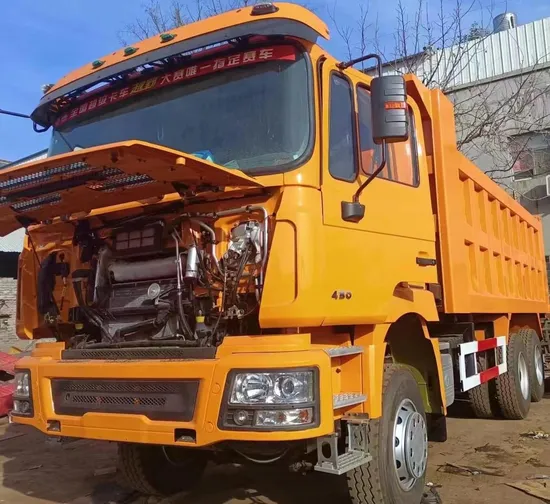
Industrial Specification Report 2026
Prepared for: Fleet Managers & Construction Companies
Subject: Export Logistics Solutions for Excavator Service Equipment from China
Issuing Authority: SEA LION International – Engineering & Logistics Division
1. Executive Summary
This report evaluates three primary maritime transport methods—Roll-on/Roll-off (RO-RO), Bulk Cargo, and Flat Rack container shipping—for the export of excavator service equipment (including spare parts, hydraulic tools, and mobile service units) from manufacturing hubs in China to global construction markets. The analysis focuses on operational efficiency, equipment integrity, corrosion protection, and cost-effectiveness. A standardized wax spraying protocol is recommended to mitigate seawater-induced corrosion during transit.
2. Equipment Profile
Excavator service exports from China typically include:
– Hydraulic cylinder rebuild kits
– Track assemblies and undercarriage components
– On-site mobile service trailers
– Diagnostic and calibration tools
– Engine and transmission overhauls
These items are sensitive to moisture, salt exposure, mechanical shock, and improper stowage.
3. Comparative Shipping Methods
| Parameter | RO-RO (Roll-on/Roll-off) | Bulk Cargo | Flat Rack Container |
|---|---|---|---|
| Applicability | Mobile service units, tracked machinery | Loose spare parts (bulk-packed) | Oversized, heavy machinery modules |
| Loading Mechanism | Self-propelled or towed onto vessel | Mechanically loaded via crane/shovels | Crane-lifted onto open-frame container |
| Transit Time (Shanghai to Rotterdam) | 28–35 days | 30–40 days | 32–38 days |
| Handling Risk | Low (minimal handling) | High (repeated loading) | Moderate (single lift required) |
| Weather Exposure | Moderate (deck exposure possible) | High (open hold or deck) | High (open-sided transport) |
| Security | High (secured vehicle decks) | Low (shared space) | Medium (lashing-dependent) |
| Cost (per 20ft EQ) | $1,800–$2,400 | $1,200–$1,600 | $2,600–$3,500 |
| Customs Clearance | Standard (pre-inspection recommended) | Complex (bulk manifesting) | Standard (containerized) |
| Best For | Operational mobile units | High-volume, low-value spares | Non-standard or oversized assemblies |
4. Corrosion Protection: Wax Spraying Protocol
Marine environments expose ferrous components to chloride-rich aerosols, accelerating oxidation. To ensure service equipment arrives in operational condition, SEA LION International mandates the following anti-corrosion protocol:
4.1 Wax Spraying Specifications
| Parameter | Specification |
|---|---|
| Wax Type | Solvent-based, hydrophobic corrosion inhibitor (e.g., DINITROL 4610 or equivalent) |
| Application Method | High-pressure spray (12–15 bar) |
| Coating Thickness | 20–30 µm (uniform coverage) |
| Coverage Areas | Undercarriage, hydraulic joints, weld seams, electrical housings |
| Curing Time | 4–6 hours (ambient 25°C, 50% RH) |
| Salt Spray Test (ASTM B117) | Pass: ≥500 hours without red rust |
4.2 Post-Treatment Handling
- Equipment must be stored in climate-controlled warehouse ≥24h post-application
- Wax-coated items sealed in VCI (Vapor Corrosion Inhibitor) film before loading
- Visual inspection and adhesion test (cross-hatch ASTM D3359) prior to shipment
5. Method Recommendations by Use Case
| Project Type | Recommended Method | Rationale |
|---|---|---|
| Turnkey service fleet deployment | RO-RO | Preserves mobility; reduces on-site commissioning time |
| Spare parts replenishment (high volume) | Bulk Cargo | Cost-optimal for non-sensitive, packaged goods |
| Custom modular service stations | Flat Rack | Accommodates non-standard dimensions; secure lashing points |
Note: For mixed shipments, hybrid logistics (e.g., RO-RO for mobile units + Flat Rack for modules) may optimize cost and integrity.
6. Compliance & Documentation
All shipments must comply with:
– IMO International Maritime Solid Bulk Cargoes (IMSBC) Code (for bulk)
– CTU (Cargo Transport Unit) Code (for Flat Rack)
– RO-RO Safety Guidelines (SOLAS Chapter VI/VI-1)
– ISPM 15 (for wooden packaging, if used)
Export documentation includes:
– Bill of Lading (B/L)
– Packing List with wax treatment certification
– Material Test Reports (MTRs) for critical components
– Corrosion Protection Compliance Statement (CPCS)
7. Conclusion
For excavator service exports from China, RO-RO offers superior equipment protection and operational readiness for mobile units. Bulk Cargo remains viable for high-volume, low-sensitivity spares where cost is primary. Flat Rack is essential for oversized modules requiring structural integrity.
Critical Success Factor: Implementation of standardized wax spraying and VCI encapsulation is non-negotiable to prevent seawater corrosion and ensure equipment reliability upon delivery. SEA LION International enforces this protocol across all export logistics operations in 2026.
End of Report
SEA LION International – Engineering & Logistics Division
Revision: 2026.04.01
Classification: Internal Use – Industrial Operations
Get a Quote for Excavator Service
SEA LION International Trade Co., Ltd – Authorized Heavy Truck Exporter (Since 2008).
👤 Contact Person: Mr. Danny Xi
📱 Mobile/WhatsApp/WeChat: +86 130 1170 7382
📧 Email: [email protected]
