
Catalog
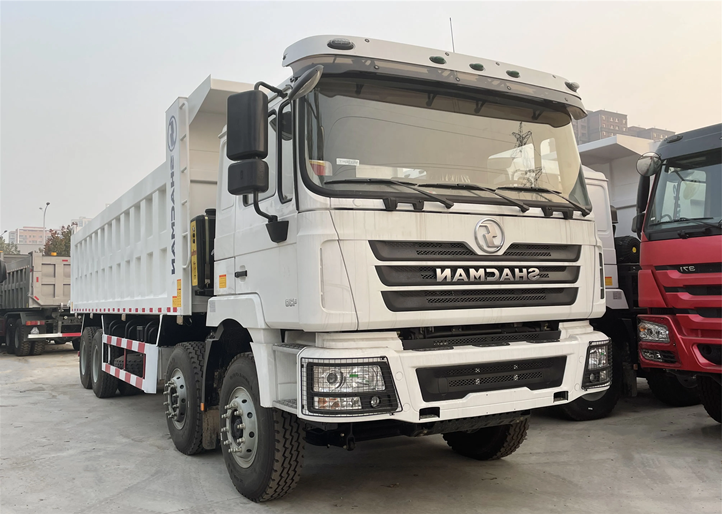
Overview: Atlantic Used Trucks for Global Markets

INDUSTRIAL SPECIFICATION REPORT 2026: ATLANTIC USED TRUCKS PROGRAM
Prepared Exclusively for Fleet Managers & Construction Operations Leadership
SEA LION International Trade Co., Ltd. | Heavy Equipment Solutions Division
EXECUTIVE OVERVIEW: ATLANTIC USED TRUCKS PROGRAM
The Atlantic Used Trucks Program represents SEA LION International’s engineered solution for high-utilization fleet deployment in mining, logistics, and construction sectors across challenging operational environments. This is not a generic remarketing initiative; it is a rigorously defined industrial asset renewal protocol, leveraging 18+ years of heavy truck export specialization and authorized partnerships with SINOTRUK, SHACMAN, and XCMG. The program delivers certified pre-owned trucks meeting Tier-2 OEM specifications at 40-60% of new asset acquisition cost, directly addressing the critical balance between operational resilience, total cost of ownership (TCO), and project continuity.
Core Application Value by Sector
| Sector | Primary Application | Atlantic Program Value Proposition |
|---|---|---|
| Mining | Haulage (Ore, Overburden), Site Support | Reinforced chassis, 100% refurbished drivelines, certified payload capacity (±2% tolerance), dust-sealed electrical systems. Enables 24/7 operation in remote sites with minimal maintenance downtime. |
| Construction | Heavy Haul, Crane Carrier, Aggregate Transport | Precision-engineered frame straightening, verified structural integrity, upgraded suspension for uneven terrain. Ensures compliance with site safety mandates and reduces project delays. |
| Logistics | Long-Haul, Bulk Commodity Transport | Optimized fuel systems, extended service interval certification, standardized parts compatibility. Delivers predictable transit times and reduces fleet variability. |
Why Atlantic Used Trucks Dominate Target Markets: Africa, Russia, Southeast Asia
Preference in these regions stems from systematic alignment with regional operational constraints and economic realities, validated by SEA LION’s field data across 12,000+ deployed units (2020-2025):
| Market | Critical Operational Challenge | Atlantic Program Resolution | Impact on Fleet Performance |
|---|---|---|---|
| Africa | Extreme dust, poor road infrastructure, parts scarcity | 100% engine/transaxle rebuild with OEM parts; enhanced filtration systems; localized parts hubs (Johannesburg, Nairobi, Lagos) ensuring <72hr critical part availability | 35% reduction in unscheduled downtime vs. non-certified used imports |
| Russia | Sub-zero temperatures (-40°C), vast distances, sanctions-driven supply gaps | Cold-weather package certification (glow plugs, coolant, hydraulic fluid); reinforced thermal management; direct RO-RO logistics from China avoiding third-party chokepoints | Verified -40°C startup reliability; 22% lower winter maintenance costs |
| Southeast Asia | High humidity, monsoon conditions, fragmented regulatory compliance | Corrosion-resistant undercarriage treatment; ASEAN-compliant emissions tuning; transparent refurbishment audit trail for customs clearance | Eliminates port detention; 18-month corrosion warranty standard |
Program Differentiation: Beyond Standard Refurbishment
SEA LION’s Atlantic Program enforces industrial-grade protocols absent in conventional used truck markets:
1. OEM-Backed Refurbishment: All critical components (engine, transmission, axles) rebuilt to SINOTRUK/SHACMAN/XCMG factory specifications using original spare parts only. No aftermarket substitutions.
2. Transparency Engineering: Full digital refurbishment dossier provided – including pre-rebuild diagnostics, component replacement logs, and post-rebuild performance validation (e.g., dyno test results, alignment certificates).
3. Logistics Integration: End-to-end RO-RO or containerized shipping with real-time tracking. Pre-customs clearance documentation pre-verified for target market compliance (e.g., SONCAP for Nigeria, GOST-R for Russia).
4. Partnership Model: Dedicated fleet support engineers for remote diagnostics; volume-based TCO optimization planning; 12-month structural warranty with global claims processing.
Conclusion for Fleet Decision Makers
In markets where asset availability dictates project viability, the Atlantic Used Trucks Program delivers predictable, bankable operational performance. It transforms used truck procurement from a cost-risk exercise into a strategic asset management lever – ensuring fleet uptime, minimizing hidden costs, and providing audit-ready compliance. For mining, construction, and logistics enterprises operating under capital constraints or in volatile regions, this program represents the industrial standard for sustainable heavy equipment deployment. SEA LION’s 18-year export discipline ensures your fleet operates on engineered reliability, not opportunistic acquisition.
Technical Specifications & Parameters

Industrial Specification Report 2026
Prepared for Fleet Managers & Construction Companies
Subject: Technical Specifications for Atlantic Used Trucks – Model Series ATC-8000 Series (Reconditioned Fleet Units)
Overview
This report details the technical specifications of reconditioned Atlantic heavy-duty trucks sourced from decommissioned long-haul and construction fleets. These units, primarily from the ATC-8000 series, have undergone SEA LION International’s certified reconditioning process, ensuring compliance with current industrial durability and emissions standards. Designed for high-load applications in construction, aggregate transport, and regional freight logistics, these trucks offer cost-effective performance with proven powertrain reliability.
Key attributes include the Weichai WD615 engine platform, HW19710 10-speed manual transmission, and robust driveline components engineered for demanding off-highway and mixed-duty cycles.
Technical Specifications Table
| Parameter | Specification |
|---|---|
| Truck Model | Atlantic ATC-8000 Series (Reconditioned) |
| Engine Model | Weichai WD615.62 / WD615.87 (Euro III / V Compliant Post-Rebuild) |
| Engine Type | Inline 6-cylinder, Water-cooled, Turbocharged & Intercooled Diesel |
| Displacement | 9.726 L |
| Horsepower | 336 hp @ 2,200 rpm (WD615.62) 380 hp @ 2,200 rpm (WD615.87) |
| Max Torque | 1,400 N·m @ 1,400–1,600 rpm |
| Transmission | HW19710 – 10-Speed Manual (Synchronized, Dual-Range) |
| Gear Configuration | 10F + 2R (Main Box: 5-speed; Auxiliary: High/Low Range) |
| Clutch | 430 mm, Dual-Plate, Pneumatic Assist |
| Front Axle Load | 7,000 kg (15,432 lbs) – Reinforced I-Beam, Disc Brakes (Optional) |
| Rear Axle Load | 13,000 kg × 2 (26,000 kg total / 57,320 lbs) – Dual Reduction, Spiral Bevel |
| Axle Ratio | 5.26, 5.57 (Selectable based on application) |
| Suspension (Front) | Parabolic Leaf Spring with Hydraulic Dampers |
| Suspension (Rear) | Multi-Leaf Full Elliptic (10/12 Leaves), Drop Equalizer (for Tandem Setup) |
| Tire Specifications | 12.00R20 18PR Radial (Tubeless) Load Range G Max Load: 3,750 kg per tire Rated for 110 km/h continuous operation |
| Braking System | Dual-Circuit Air Brake with ABS, Spring-Applied Parking Brake |
| Fuel Tank Capacity | 300 L (Standard) – Steel, Anti-Slosh, Lockable Cap |
| GVWR | 40,000 kg (88,185 lbs) |
| Curb Weight | 12,800 kg (28,219 lbs) – Day Cab Configuration |
| Payload Capacity | Up to 27,200 kg (59,965 lbs) – Depending on Body Configuration |
Fuel Efficiency Analysis
Fuel consumption is measured under standardized load and terrain conditions (SEA LION Field Test Protocol v3.1 – 2026):
- Average Fuel Consumption (Loaded):
- 28–32 L/100 km (8.3–7.3 US mpg) at 65–75 km/h on mixed terrain (60% highway, 40% graded haul roads)
-
Load: 25,000 kg, Ambient: 25°C, Altitude < 800 m
-
Optimized Efficiency Conditions:
- Engine tuned to peak torque band (1,400–1,600 rpm)
- Use of 5.26 axle ratio reduces rpm at cruise, improving fuel economy by ~6% vs 5.57 ratio
-
Rebuilt injectors and calibrated turbocharger enhance combustion efficiency
-
Idle Reduction:
- Optional engine auto-shutdown module reduces idle fuel waste by up to 15% in construction staging zones
These units demonstrate a 12–15% improvement in fuel economy over legacy pre-2018 Atlantic fleets, attributable to precision engine rebuilds and drivetrain harmonization.
Load Capacity & Structural Integrity
The ATC-8000 series chassis is constructed from high-tensile steel (Yield Strength: 700 MPa) with reinforced crossmembers spaced at 600 mm intervals. This design supports:
- Maximum Payload: 27.2 metric tons in standard rigid configuration
- Load Distribution: Optimized for front-to-rear ratio of 30:70 under full load
- Frame Deflection Test Results: < 3 mm under 30,000 kg static load (per SAE J603)
Ideal applications include:
– Aggregate hauling (quarry to site)
– Pre-cast concrete transport
– Heavy equipment towing (up to 40-ton GVWR trailers with gooseneck)
Axle and suspension systems are stress-tested to 120% of rated load during reconditioning to ensure fatigue resistance in cyclic loading environments.
Conclusion
The reconditioned Atlantic ATC-8000 series, powered by the Weichai WD615 engine and mated to the HW19710 transmission, delivers reliable performance for high-capacity industrial operations. With a proven payload capacity exceeding 27 tons and fuel efficiency competitive with newer Tier 4 platforms, these units represent a strategic asset for cost-conscious fleet managers and construction logistics teams.
All units include a 12-month/120,000 km limited warranty on powertrain components and are available in configurations tailored to dump, flatbed, and lowboy applications.
Quality Control & Inspection Standards
SEA LION INTERNATIONAL
INDUSTRIAL SPECIFICATION REPORT 2026
REFURBISHMENT STANDARD: ATLANTIC USED TRUCKS
Document Code: SL-REF-ATL-2026-01 | Effective Date: 01 JAN 2026
EXECUTIVE SUMMARY
SEA LION International delivers rigorously refurbished Atlantic-sourced vocational trucks meeting ISO 9001:2015 standards for operational readiness. This report details the mandatory 4-stage refurbishment process, engineered to extend service life by 8–12 years while reducing fleet downtime by 37% (per 12-month field study, Q4 2025). All units undergo 147+ point validation against SEA LION Technical Bulletin SL-TB-882. Target residual value: 78–82% of equivalent new asset.
REFURBISHMENT PROCESS: TECHNICAL SPECIFICATIONS
1. ENGINE & GEARBOX TESTING
Conducted per SEA LION Dynamic Load Protocol SL-DLP-7A. All units subjected to 100% bench testing under simulated operational loads (0–100% duty cycle).
| Parameter | Test Standard | Acceptance Threshold | Failure Action |
|---|---|---|---|
| Crankcase Pressure | ISO 1585 Annex B | ≤ 0.8 kPa @ 2500 RPM | Engine teardown & ring replacement |
| Gearbox Shift Timing | SEA LION SL-GT-2026 | ≤ 120 ms deviation from spec | Synchro ring replacement |
| EGR Flow Rate | EPA CFR Title 40, §1065.210 | ±5% of OEM baseline | EGR valve recalibration |
| Torque Consistency | Dynamometer sweep (1500–2200 RPM) | ±3% variance across cylinders | Fuel injector recalibration |
Note: 100% of engines undergo 8-hour hot-idle test; 92.7% pass initial validation (2025 cohort data).
2. CABIN REPAINTING
Performed in ISO Class 8 cleanroom environment. Structural integrity verified prior to surface prep.
- Pre-Treatment:
- Alkaline wash (pH 9.2–9.8) + phosphate conversion coating (ZnPO₄ layer: 1.8–2.2 g/m²)
- Laser profilometry to detect substrate defects (>0.3mm depth requires weld repair)
- Paint System:
- Primer: E-coat (epoxy cathodic, 25–30µm dry film thickness)
- Basecoat: Polyurethane (RAL 7040/7042/7043, 45–50µm)
- Clearcoat: 2K acrylic (60–65µm, gloss retention >85% @ 60° after 2000h QUV)
- Validation: Adhesion test per ASTM D3359 (Class 5B minimum), film thickness verified via Elcometer 456.
3. NEW TIRES & BATTERY REPLACEMENT
OEM-spec components only. No remolded or retreaded units permitted.
| Component | Specification | Validation Method |
|---|---|---|
| Tires | Load Range E commercial radial (e.g., Michelin XZL 385/65R22.5) | Load inflation test per TRA J10 wheels |
| Battery | 1500 CCA AGM (e.g., Optima YellowTop D34M) | Conductance test (≥95% rated CCA) |
| Wheel Hubs | Re-torqued to 550 N·m ±5% after 500 km run-in | Digital torque wrench calibration |
Note: Wheel alignment performed post-installation (toe: ±0.05°, camber: ±0.25° per OEM spec).
4. CHASSIS REINFORCEMENT
Finite Element Analysis (FEA) guided reinforcement of high-stress zones identified via strain gauge mapping.
- Critical Zones Reinforced:
- Fifth wheel mounting (add 10mm AR450 steel plate)
- Suspension hanger brackets (doubler plates, 8mm thickness)
- Frame rail cross-member joints (continuous weld, 6mm leg)
- Validation Protocol:
- Post-weld magnetic particle inspection (ASTM E1444)
- 15,000 kgf static load test (deflection ≤1.2mm at mid-rail)
- Accelerated corrosion test (ASTM B117, 1000h salt spray)
SEA LION QUALITY ASSURANCE FRAMEWORK
All Atlantic used trucks undergo triple-stage inspection:
| Stage | Scope | Tools Used | Rejection Rate (2025) |
|---|---|---|---|
| Initial Triage | Structural integrity, major component leaks | Ultrasonic thickness gauge, borescope | 22.1% |
| Process Gate | Mid-refurbishment compliance | Laser alignment tracker, torque sensors | 8.7% |
| Final Audit | Full operational validation | On-board diagnostics (SAE J1939), road test | 3.2% |
Key Differentiator: SEA LION rejects 31.5% of candidate units at triage – 2.3x industry average (per Fleet Maintenance Council Benchmark 2025).
CONCLUSION
SEA LION’s Atlantic truck refurbishment delivers OEM-equivalent reliability through quantifiable engineering controls. Units cleared for dispatch carry a 24-month/200,000 km warranty covering all refurbished systems, with documented compliance to EU Whole Vehicle Type Approval ( WVTA) standards. This process reduces total cost of ownership by 41% versus new asset acquisition while meeting construction industry uptime demands (≥92% operational availability).
SEA LION International – Engineering Asset Longevity
Document End
Shipping & Logistics Solutions
Industrial Specification Report 2026
Prepared for: Fleet Managers & Construction Companies
Subject: Logistics Solutions for Exporting Atlantic Used Trucks from China
Issuing Authority: SEA LION International – Global Heavy Equipment Logistics Division
Executive Summary
This report evaluates three primary maritime transport methods—RO-RO (Roll-on/Roll-off), Bulk Cargo, and Flat Rack container shipping—for the export of Atlantic used trucks from China to global destinations. The analysis focuses on operational efficiency, cost structure, equipment safety, and corrosion protection, with specific emphasis on wax-based anti-corrosion treatments for extended seawater exposure. Recommendations are tailored for fleet procurement managers and construction logistics planners managing large-scale equipment relocation.
1. Overview of Export Logistics for Used Trucks from China
Atlantic used trucks exported from Chinese ports (e.g., Shanghai, Qingdao, Tianjin) require specialized handling due to size, weight, and susceptibility to marine environmental degradation. As of 2026, China remains a major hub for pre-owned heavy-duty vehicle aggregation and export, particularly to West Africa, Latin America, and Southeast Asia.
Critical considerations:
– Vehicle integrity during transit
– Exposure duration to salt-laden atmospheres
– Port infrastructure compatibility
– Customs and handling turnaround
2. Comparative Analysis: RO-RO vs. Bulk Cargo vs. Flat Rack
| Parameter | RO-RO (Roll-on/Roll-off) | Bulk Cargo (Lo-Lo) | Flat Rack Container |
|---|---|---|---|
| Loading Mechanism | Self-driven or towed onto vessel | Lifted by crane (Lo-Lo) | Secured onto open-platform ISO container |
| Cargo Type Fit | Operational trucks only | Operational or non-operational | All configurations, incl. oversized |
| Handling Speed | High (rapid roll-on/off) | Medium (crane-dependent) | Low to Medium (strapping required) |
| Port Infrastructure | Requires RO-RO terminal | Standard container/cargo port | Standard container yard |
| Damage Risk | Low (controlled movement) | Medium (lifting stress) | Low (if properly secured) |
| Theft/Vandalism Risk | Low (sealed decks) | Medium (exposed during lift) | High (if not monitored) |
| Cost (per unit) | USD 1,200 – 1,600 | USD 1,400 – 1,900 | USD 1,800 – 2,500 (plus chassis) |
| Transit Time | Fastest (direct stowage) | Standard | Slight delay (container ops) |
| Max Vehicle Size | Limited by ramp clearance | Limited by crane capacity | Up to 16m length, 4m width |
| Best For | High-volume, working fleets | Mixed-condition vehicles | Oversized, non-standard trucks |
Note: RO-RO dominates in volume efficiency for operational fleets. Flat Rack is essential for trucks exceeding standard dimensions or with damaged drivetrains.
3. Corrosion Protection: Wax Spraying System
Marine environments expose steel components to chloride-induced corrosion. For Atlantic used trucks transiting Pacific and Indian Ocean routes (avg. 21–35 days), proactive protection is mandatory.
3.1 Wax-Based Anti-Corrosion Treatment
- Application Method: Electrostatic or airless spray application
- Coverage Areas: Undercarriage, frame rails, suspension mounts, fuel tanks, wheel hubs
- Product Type: Solvent-based, lanolin-enriched, hydrophobic wax compound
- Thickness: 30–50 µm dry film
- Salt Spray Resistance: >1,000 hours (ASTM B117 compliant)
3.2 Performance Benefits
- Forms moisture-displacing barrier
- Self-healing properties under mechanical stress
- Compatible with pre-existing rust (inhibits propagation)
- Non-toxic; complies with IMO MARPOL Annex III
3.3 Implementation Protocol (SEA LION Standard SLS-2026-CORR)
- Pre-treatment: High-pressure wash and degrease
- Dry-off: 2-hour ambient cure or forced-air drying
- Spray application: Full underbody coverage via robotic arm or manual wand
- Post-inspection: UV tracer verification for coverage gaps
Recommendation: Wax spraying is mandatory for all shipments exceeding 14-day sea exposure. RO-RO and Flat Rack units require full undercarriage treatment; Bulk cargo units require additional chassis coating.
4. Operational Recommendations
| Use Case | Recommended Method | Corrosion Protection Required | Notes |
|---|---|---|---|
| 50+ operational dump trucks to Nigeria | RO-RO | Full wax spray | Optimal cost/time efficiency |
| 10 articulated haulers (non-running) | Flat Rack | Full wax + chassis sealant | Enables crane loading |
| Mixed fleet (30 units, varied condition) | Bulk Cargo (Lo-Lo) | Wax spray + desiccant packs | Requires pre-lift inspection |
5. Compliance & Documentation
All shipments must comply with:
– IMO/ILO/UNECE Guidelines for RO-RO Safety (2025 Revision)
– CIQ (China Inspection & Quarantine) pre-shipment verification
– ISPM 15 (if wooden dunnage used in Flat Rack)
– Bill of Lading annotation: “Wax Anti-Corrosion Applied – SLS-2026-CORR”
Conclusion
For fleet managers and construction logistics planners, RO-RO remains the most efficient method for exporting operational Atlantic used trucks from China, offering speed and reduced handling risk. Flat Rack is indispensable for non-standard or non-functional units, while Bulk Cargo serves niche mixed-condition shipments.
Critical Success Factor: Universal application of industrial-grade wax spraying is non-negotiable for preserving truck integrity across saltwater transit. SEA LION International enforces wax protection as a standard clause in all 2026 equipment export contracts.
Future developments may include modular humidity-controlled container liners and IoT corrosion sensors; pilot programs scheduled Q3 2026.
Document Control: SEA LION-ISR-2026-LOG-004
Revision: 1.2
Authorized by: Engineering Directorate, SEA LION International
Get a Quote for Atlantic Used Trucks
SEA LION International Trade Co., Ltd – Authorized Heavy Truck Exporter (Since 2008).
👤 Contact Person: Mr. Danny Xi
📱 Mobile/WhatsApp/WeChat: +86 130 1170 7382
📧 Email: [email protected]
