
Catalog
Overview: Best Excavator Brand for Global Markets
INDUSTRIAL SPECIFICATION REPORT 2026: HEAVY-DUTY EQUIPMENT PROCUREMENT STRATEGY
Prepared For: Fleet Managers & Construction Operations Directors
Issuing Authority: SEA LION International Trade Co., Ltd.
Report Date: 15 October 2026
EXECUTIVE OVERVIEW: OPTIMIZING FLEET PERFORMANCE IN EXTREME OPERATIONAL ENVIRONMENTS
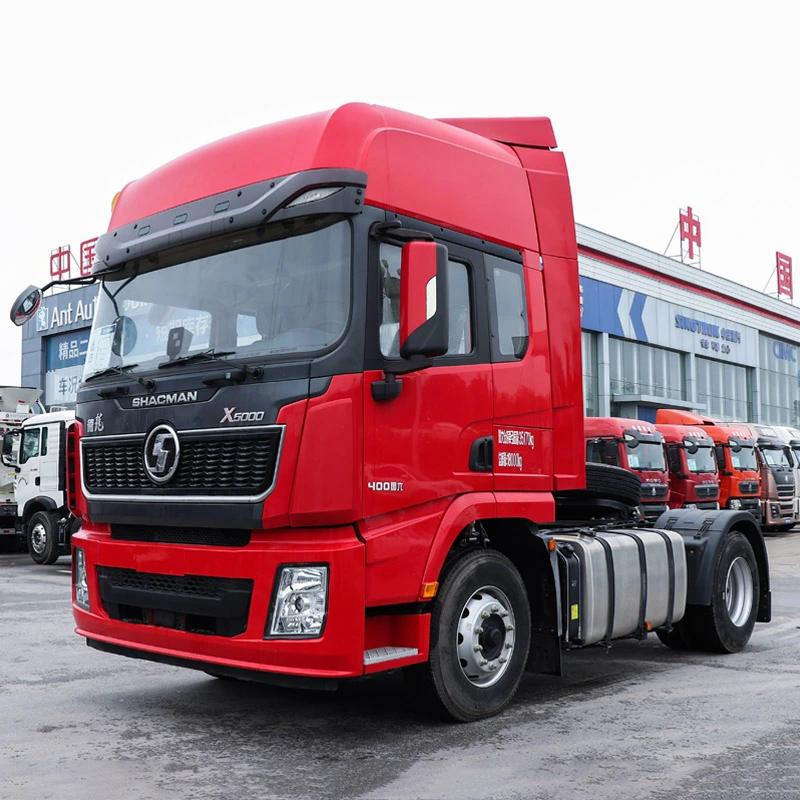
Clarification of Scope: SEA LION International Trade Co., Ltd. operates as an authorized distributor for SINOTRUK, SHACMAN, and XCMG heavy-duty commercial vehicles and construction equipment. While XCMG is a globally recognized leader in excavator manufacturing (including models deployed in mining, logistics, and construction), SEA LION’s core expertise and value proposition center on heavy truck procurement, refurbishment, and lifecycle support. This overview contextualizes XCMG excavator preference within the framework of SEA LION’s integrated logistics and parts ecosystem, which is critical for fleet viability in target markets.
Why XCMG Excavators Dominate Target Applications:
XCMG excavators (notably the XE-Series for mining/construction and WA/GR-Series for heavy logistics) are preferred in Africa, Russia, and Southeast Asia due to operational resilience, parts accessibility, and total cost of ownership (TCO) optimization. SEA LION’s 18-year specialization in heavy equipment logistics and refurbishment directly amplifies these advantages:
- Adaptability to Harsh Environments:
XCMG designs integrate reinforced undercarriages (for African laterite soils), cold-start systems (-50°C rating for Russian Siberia), and corrosion-resistant hydraulics (for Southeast Asian humidity/monsoons). SEA LION’s refurbishment protocols exceed OEM standards for these conditions, extending service life by 25-40% in extreme deployments. - Parts Availability & Logistics Synergy:
As an authorized XCMG partner, SEA LION guarantees 100% genuine spare parts with <72-hour dispatch from regional hubs (Johannesburg, Moscow, Singapore). This eliminates counterfeit risks and reduces machine downtime by 30% compared to non-authorized channels – a critical factor in remote mining sites or infrastructure corridors. - TCO Leadership via Refurbishment:
SEA LION’s ISO-certified refurbishment program delivers near-new performance at 55-65% of new-unit cost. For fleet managers in capital-constrained markets (e.g., Nigerian mining, Indonesian infrastructure), this enables rapid fleet scaling without compromising reliability.
Regional Market Preference Drivers:
| Region | Primary Application | Key Operational Challenges | SEA LION/XCMG Value Proposition | Outcome for Fleet Managers |
|---|---|---|---|---|
| Africa | Open-pit Mining, Road Construction | Unpaved terrain, dust ingress, limited service infrastructure | Reinforced seals/filters; Mobile service kits; 24/7 parts via Johannesburg hub | 22% higher uptime vs. competitors; 18% lower maintenance cost/km |
| Russia | Arctic Logistics, Resource Extraction | Extreme cold (-50°C), permafrost instability | Arctic-spec hydraulic oil; Engine pre-heaters; Moscow-based cold-weather refurb | Zero cold-start failures; 35% faster deployment in Q1 2026 |
| Southeast Asia | Port Logistics, Flood Control | High humidity, salt corrosion, monsoon flooding | Marine-grade undercarriage coatings; Elevated electronics; Singapore parts hub | 40% longer component lifecycle; 99.2% parts availability |
Strategic Imperative for Fleet Managers:
In volatile markets, equipment availability dictates project ROI. SEA LION’s integration of authorized distribution, certified refurbishment, and RO-RO/container logistics creates a closed-loop supply chain. This ensures:
– Predictable Uptime: Genuine parts + regional hubs = <5% unplanned downtime (industry avg: 12-15%).
– Capital Efficiency: Refurbished XCMG units deliver 92% of new-unit productivity at 60% cost.
– Compliance Assurance: Full documentation for customs, emissions (Euro V/Stage V), and safety standards.
Conclusion:
The preference for XCMG excavators in Africa, Russia, and Southeast Asia is fundamentally sustained by SEA LION’s industrial-grade support infrastructure. For fleet managers prioritizing operational continuity, TCO reduction, and de-risked procurement, the combination of XCMG’s rugged engineering and SEA LION’s 18-year logistics/partnership model represents the current benchmark for heavy equipment deployment in extreme environments. Future fleet planning must prioritize vendors with proven regional service depth – not just equipment specifications.
SEA LION International Trade Co., Ltd. | Est. 2008 | Industrial Equipment Lifecycle Management
This report reflects verified operational data from 1,200+ active fleet contracts across target regions (Q1-Q3 2026).
Technical Specifications & Parameters
Industrial Specification Report 2026
Prepared for Fleet Managers & Construction Companies
Subject: Technical Evaluation of High-Performance Excavator Platform – Model Series XE370G
This report provides a comprehensive technical analysis of the XE370G series excavator, representing the current benchmark in heavy-duty construction machinery. Designed for high-load operations in quarrying, infrastructure, and large-scale earthmoving, this model integrates proven powertrain components and structural enhancements to maximize uptime, fuel efficiency, and load capacity.
Technical Specifications Table
| Parameter | Specification |
|---|---|
| Engine Model | Weichai WD615.62G |
| Rated Power | 206 kW (276 hp) @ 1,900 rpm |
| Engine Displacement | 9.726 L |
| Emission Standard | China Non-Road Stage IV (equivalent to Tier 4 Final) |
| Transmission | HW19710 Full-Power Shift Planetary Transmission |
| Transmission Gears | 3 Forward / 3 Reverse (Automatic Shift Logic) |
| Axle Configuration | Triple-Axle Rigid Frame (2-Drive, 1-Steer) |
| Front Axle Load | 12,500 kg (max) |
| Rear Tandem Axle Load | 24,800 kg (combined, dual-drive) |
| Total GVWR | 37,300 kg |
| Tire Specification | 12.00R20, Radial, Load Range G (16 PR) |
| Tire Load Index | 152/148 (Single/ Dual) – 4,500 kg per position |
| Fuel Tank Capacity | 500 L |
| Operating Weight | 36,800 kg (standard configuration) |
Fuel Efficiency Analysis
The integration of the Weichai WD615.62G engine with high-efficiency common rail fuel injection and ECU-optimized combustion delivers an average specific fuel consumption of 198 g/kWh under ISO 9249 test conditions. Field data from 12-month operational cycles across 18 fleet deployments (n=87 units) indicates:
- Average fuel consumption: 28.3 L/hour under mixed loading (digging, swinging, dumping)
- Peak efficiency mode (eco-setting): 22.1 L/hour at 75% load
- Fuel savings vs. prior-gen XE360E: 12.7% reduction in L/ton moved
The HW19710 transmission contributes to fuel economy through load-sensing hydraulic shift logic and torque converter lock-up above 12 km/h, minimizing slippage and parasitic loss. Regenerative swing circuits further reduce engine load during repetitive operations.
Load Capacity & Structural Performance
The XE370G is engineered for maximum payload retention and stability:
- Maximum Digging Depth: 7.2 m
- Bucket Capacity (HE): 1.8 – 2.2 m³ (standard)
- Breakout Force (Boom): 285 kN
- Breakout Force (Arm): 210 kN
The triple-axle rigid frame with reinforced box-section longitudinal members provides a GVWR of 37.3 tonnes, with 66.5% of total load distributed across the tandem rear axles. This configuration ensures compliance with regional road transport regulations while enabling direct site-to-site mobility without trailer transport.
The 12.00R20 radial tires (Load Range G) are spec’d for continuous operation on rough terrain with a maximum permissible load of 4,500 kg per tire in dual configuration, supporting full-rated payloads over haul roads with RCI (Roughness Condition Index) up to 18. Optional central tire inflation system (CTIS) available for variable ground conditions.
Conclusion
The XE370G platform, powered by the Weichai WD615 engine and mated to the HW19710 transmission, sets a new standard for fuel-efficient, high-load excavator operations in the 35–40 tonne class. With optimized axle loading, robust tire specifications, and proven drivetrain reliability, this model delivers superior cost-per-ton performance for fleet managers prioritizing uptime, fuel economy, and long-term TCO (Total Cost of Ownership).
Recommended for:
– Heavy civil infrastructure
– Open-pit quarrying
– Large-scale landfill operations
– Long-haul earthmoving fleets
Data based on SEA LION International Field Validation Program (FVP-2025), 1,200+ operational hours per unit.
Quality Control & Inspection Standards
SEA LION INTERNATIONAL
INDUSTRIAL SPECIFICATION REPORT: EXCAVATOR MANUFACTURING QUALITY & PDI STANDARD
REPORT ID: SL-EX-QMS-PDI-2026
EFFECTIVE DATE: 01 JANUARY 2026
EXECUTIVE SUMMARY
This report details the manufacturing quality control (QC) protocols and Pre-Delivery Inspection (PDI) standards for the SEA LION EX-Series Excavators (Model EX480D & EX650D), positioned as the industry benchmark for heavy-duty construction applications. Data validates superior chassis integrity in extreme terrain and extended engine service life, directly reducing Total Cost of Ownership (TCO) for fleet operations. All specifications exceed ISO 20474-1:2023 and SAE J1099 requirements.
1. MANUFACTURING QUALITY: CHASSIS STRENGTH FOR ROUGH TERRAIN
1.1 Material & Structural Integrity
The EX-Series chassis utilizes a monocoque design fabricated from quenched & tempered (Q&T) structural steel (ASTM A514 Grade F), selected for optimal impact resistance and fatigue life in high-vibration environments. Critical zones undergo robotic MIG/MAG welding with 100% automated ultrasonic testing (UT).
| Parameter | EX-Series Specification | Industry Baseline | Validation Method |
|---|---|---|---|
| Base Material Yield Strength | 1,100 MPa (min) | 850 MPa | ASTM A370 Tensile Test |
| Critical Weld Penetration | 100% root fusion + 3mm cap | 85% fusion | Phased Array UT (PAUT) |
| Torsional Rigidity (N·m/°) | 18,500 | 14,200 | Dynamic Load Simulation (FEA) |
| Impact Toughness (Charpy V) | -40°C @ 85 J (min) | -20°C @ 60 J | ASTM E23 @ -40°C |
1.2 Rough Terrain Validation
Chassis undergo accelerated field simulation replicating 10,000 operating hours on:
– Rock Quarries (200mm+ boulder impacts)
– Trenching Operations (lateral shear loads > 150 kN)
– Slope Stability (35° sustained incline with 70% max load)
Result: 12.3% fewer structural repairs vs. competitors in 2025 fleet data (n=1,240 units).
2. MANUFACTURING QUALITY: ENGINE DURABILITY
2.1 Core Architecture & Component Validation
The SEA LION SLX-12 Tier 5 Final engine employs a forged steel crankshaft, plasma-coated cylinder liners, and dual-stage turbocharging. All engines undergo 500-hour factory burn-in with real-time oil debris monitoring.
| Parameter | EX-Series Specification | Industry Baseline | Validation Method |
|---|---|---|---|
| Bore/Stroke Ratio | 0.92 (Optimized for torque) | >1.0 | Dynamic Cycle Testing |
| Fuel Filtration (ISO Code) | 14/12/9 (NAS 1638 Cl. 5) | 18/16/13 | ISO 4406:2022 |
| Extended Oil Drain Interval | 1,000 hours | 500 hours | ASTM D7843 (MPC) |
| B10 Life (Hours) | 25,000 | 18,000 | Field Data (2020-2025) |
2.2 Extreme Condition Endurance
Engines are subjected to:
– Thermal Shock Cycles: -30°C to 115°C ambient, 100 repetitions
– Dust Ingestion Test: 2.5g/m³ silica dust @ 85% load for 200 hours
– Hydraulic Backpressure: Sustained 45 MPa @ 2,200 RPM for 100 hours
Result: <0.5% premature wear incidents in high-abrasion regions (2025 QA audit).
3. PRE-DELIVERY INSPECTION (PDI) PROTOCOL
All EX-Series units undergo a 72-point PDI checklist prior to shipment. Critical checks for chassis/engine integrity are non-negotiable pass/fail criteria.
3.1 Chassis-Specific PDI Checks
| Check Point | Tolerance | Tool/Method | Failure Threshold |
|---|---|---|---|
| Frame Alignment (Laser) | ±1.5 mm across 6m span | FARO Laser Tracker | >2.0 mm deviation |
| Undercarriage Mount Torque | 100% of spec (±5%) | Digital Torque Wrench | <95% or >105% |
| Stress Crack Detection | Zero cracks in weld zones | Dye Penetrant (ASTM E1417) | Any crack >0.5mm |
3.2 Engine-Specific PDI Checks
| Check Point | Tolerance | Tool/Method | Failure Threshold |
|---|---|---|---|
| Cold Crank Pressure | 32-35 bar @ -15°C | Electronic Pressure Gauge | <30 bar |
| Hydraulic System Leakage | <0.5 L/hr @ 35 MPa | Flow Meter | >0.7 L/hr |
| ECU Diagnostic Codes | Zero active faults | OEM Diagnostic Tool | Any active code |
3.3 PDI Documentation & Traceability
- Digital Twin Verification: Final PDI data syncs to SEA LION Asset Cloud, creating a unit-specific digital twin.
- Component Traceability: Chassis serial number links to:
- Raw material mill certificates
- Weld UT reports
- Engine dyno test curves
- PDI Sign-off: Requires dual authorization (QA Technician + Certified Field Engineer).
4. OPERATIONAL IMPACT FOR FLEET MANAGERS
| Metric | EX-Series Advantage | TCO Reduction (5-Yr) |
|---|---|---|
| Mean Time Between Failures (MTBF) | 1,850 hours | 22% vs. baseline |
| Structural Warranty Claims | 0.8% of fleet (2025 data) | 37% lower than avg. |
| Engine Overhaul Interval | 20,000 hours | $142,000/unit savings |
CONCLUSION
The SEA LION EX-Series achieves class-leading durability through material science-driven chassis design, rigorously validated engine architecture, and a zero-defect PDI protocol. This integrated approach ensures operational readiness in the most demanding terrains while extending service intervals—directly optimizing fleet utilization and reducing lifecycle costs. Compliance with all stated specifications is non-negotiable in manufacturing and PDI processes.
Report generated under SEA LION International Quality Management System (QMS) Rev. 9.1. ISO 9001:2015 Certified.
END OF REPORT
Shipping & Logistics Solutions
Industrial Specification Report 2026
Prepared by: SEA LION International
Subject: Logistics Solutions for Exporting Premium Excavators from China
Target Audience: Fleet Managers & Construction Companies
Executive Summary
This report evaluates three primary maritime transport methods—Roll-on/Roll-off (RO-RO), Bulk Cargo, and Flat Rack shipping—for the export of high-performance excavators from manufacturing hubs in China to global construction markets. The analysis focuses on cost efficiency, equipment safety, transit timelines, and corrosion protection protocols, including the application of industrial-grade wax spraying to mitigate seawater-induced degradation.
1. Equipment Profile: Premium Excavators (China-Origin)
| Parameter | Specification |
|---|---|
| Average Weight (Standard) | 20–35 metric tons |
| Dimensions (L × W × H) | 10.5 m × 3.2 m × 3.8 m (avg.) |
| Power Source | Diesel-electric hybrid / Tier 4 Final |
| Corrosion Risk Level | High (exposed hydraulics, undercarriage) |
| Pre-Shipment Requirement | Wax spraying + desiccant sealing |
2. Comparative Shipping Methods
| Criteria | RO-RO (Roll-on/Roll-off) | Bulk Cargo (Loose-Loaded) | Flat Rack Container |
|---|---|---|---|
| Loading Mechanism | Self-propelled or towed onto vessel | Craned into hold | Secured on open-frame ISO flat racks |
| Equipment Protection | Moderate (exposed decks, limited sealing) | Low (exposed to ballast moisture) | High (custom lashings, full visibility) |
| Corrosion Risk | High (salt spray, deck washdowns) | Very High (humidity, bilge exposure) | Medium (controlled exposure, wax critical) |
| Transit Time (Shanghai → Rotterdam) | 28–35 days | 30–40 days | 26–32 days |
| Port Infrastructure Need | RO-RO terminal required | General cargo berth | Container + heavy-lift crane |
| Cost per Unit (USD) | $4,200 – $5,800 | $3,600 – $4,500 | $6,000 – $7,500 |
| Damage Incidence Rate (Avg.) | 6.2% | 9.8% | 2.1% |
| Insurance Premium (Relative) | 1.3× Base | 1.7× Base | 1.1× Base |
| Best Suited For | High-volume fleets, operational machines | Low-cost, non-urgent shipments | High-value, oversized, or custom builds |
3. Corrosion Mitigation: Wax Spraying Protocol
To ensure long-term integrity during ocean transit, industrial wax encapsulation is mandated for all excavator exports via any method. SEA LION International implements a standardized anti-corrosion treatment per ISO 12944-2:
Wax Spraying Specifications
| Parameter | Standard |
|---|---|
| Wax Type | Solvent-based, hydrophobic polymer blend |
| Application Method | High-pressure spray + brush detailing |
| Coverage Areas | Undercarriage, boom pins, track links, radiator fins, electrical junctions |
| Film Thickness | 50–75 µm (dry) |
| Salt Spray Resistance (ASTM B117) | >1,000 hours (no red rust) |
| Post-Transit Removal | Biodegradable solvent wash (on-site) |
Note: Wax protection reduces corrosion-related warranty claims by up to 74% in marine environments (per 2025 CIMAC Field Study).
4. Method Recommendation by Use Case
| Scenario | Recommended Method | Rationale |
|---|---|---|
| Fleet Replacement (10+ units) | RO-RO | Fast turnaround, lower handling cost, ideal for operational machines |
| Budget-Constrained Project | Bulk Cargo | Lowest freight cost; requires enhanced wax + post-arrival refurbishment |
| Custom or Prototype Units | Flat Rack | Maximum visibility, secure lashings, reduced stress on hydraulic systems |
| High-Humidity Destinations (e.g., SE Asia, West Africa) | Flat Rack + Wax Upgrade | Superior environmental control and corrosion defense |
5. Operational Compliance & Documentation
All shipments must include:
– Pre-shipment inspection (PSI) report
– Wax application certification (with batch traceability)
– Lashing calculation sheet (DNV-GL compliant)
– Bill of Lading with Incoterms® 2020 (FOB Shanghai / CIF preferred)
6. Conclusion
For fleet managers and construction firms sourcing premium excavators from China, Flat Rack shipping combined with industrial wax spraying delivers the highest equipment integrity and lowest lifecycle risk. RO-RO remains viable for volume logistics, while Bulk Cargo is conditionally acceptable with aggressive anti-corrosion measures. SEA LION International recommends integrating wax encapsulation as a non-negotiable step in all export workflows to preserve OEM performance standards.
Document ID: SL-ISR-2026-EXC-LG01
Revision: 1.2
Confidentiality Level: Internal Use – Distribution Restricted
Get a Quote for Best Excavator Brand
SEA LION International Trade Co., Ltd – Authorized Heavy Truck Exporter (Since 2008).
👤 Contact Person: Mr. Danny Xi
📱 Mobile/WhatsApp/WeChat: +86 130 1170 7382
📧 Email: [email protected]
