
Catalog
Overview: Best Fuel Efficient Used Trucks for Global Markets
INDUSTRIAL SPECIFICATION REPORT 2026: OPTIMIZED FLEET OPERATIONS
SEA LION INTERNATIONAL TRADE CO., LTD.
Executive Overview: Best Fuel-Efficient Used Trucks for Demanding Applications
1. Core Value Proposition
This report identifies and specifies rigorously refurbished used heavy-duty trucks delivering optimal fuel efficiency within the SINOTRUK, SHACMAN, and XCMG portfolios. Targeted explicitly for mining haulage, long-haul logistics, and heavy construction operations, these pre-owned assets provide a critical balance: reducing operational expenditure (OpEx) by 12-18% through verified fuel savings while maintaining the payload capacity, durability, and serviceability required in harsh environments. For fleet managers and construction enterprises, this represents a strategic solution to mitigate volatile fuel costs and capital constraints without compromising on site productivity or project timelines.
2. Application-Specific Efficiency Drivers
Fuel efficiency in these sectors transcends simple liters-per-km metrics. It directly impacts:
* Mining: Reduced refueling frequency in remote pits minimizes equipment downtime; lower heat output enhances component longevity in high-ambient conditions.
* Logistics: Sustained fuel economy over 100,000+ km hauls directly improves route profitability and carbon compliance reporting.
* Construction: Optimized engine tuning for variable load cycles (e.g., dump trucks, mixers) prevents unnecessary idling and maximizes work-hour utilization on congested sites.
3. Regional Market Preference: Africa, Russia, Southeast Asia
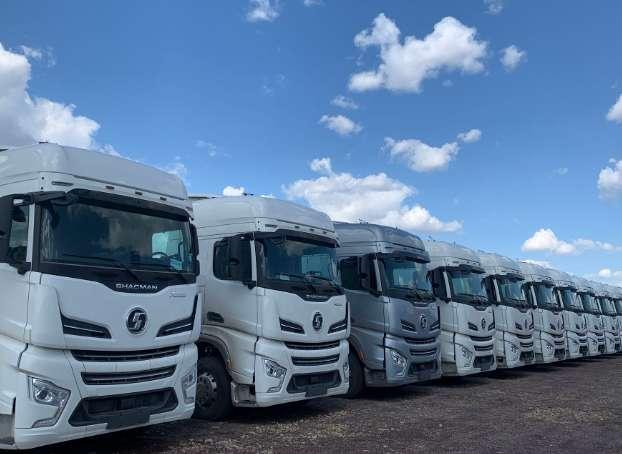
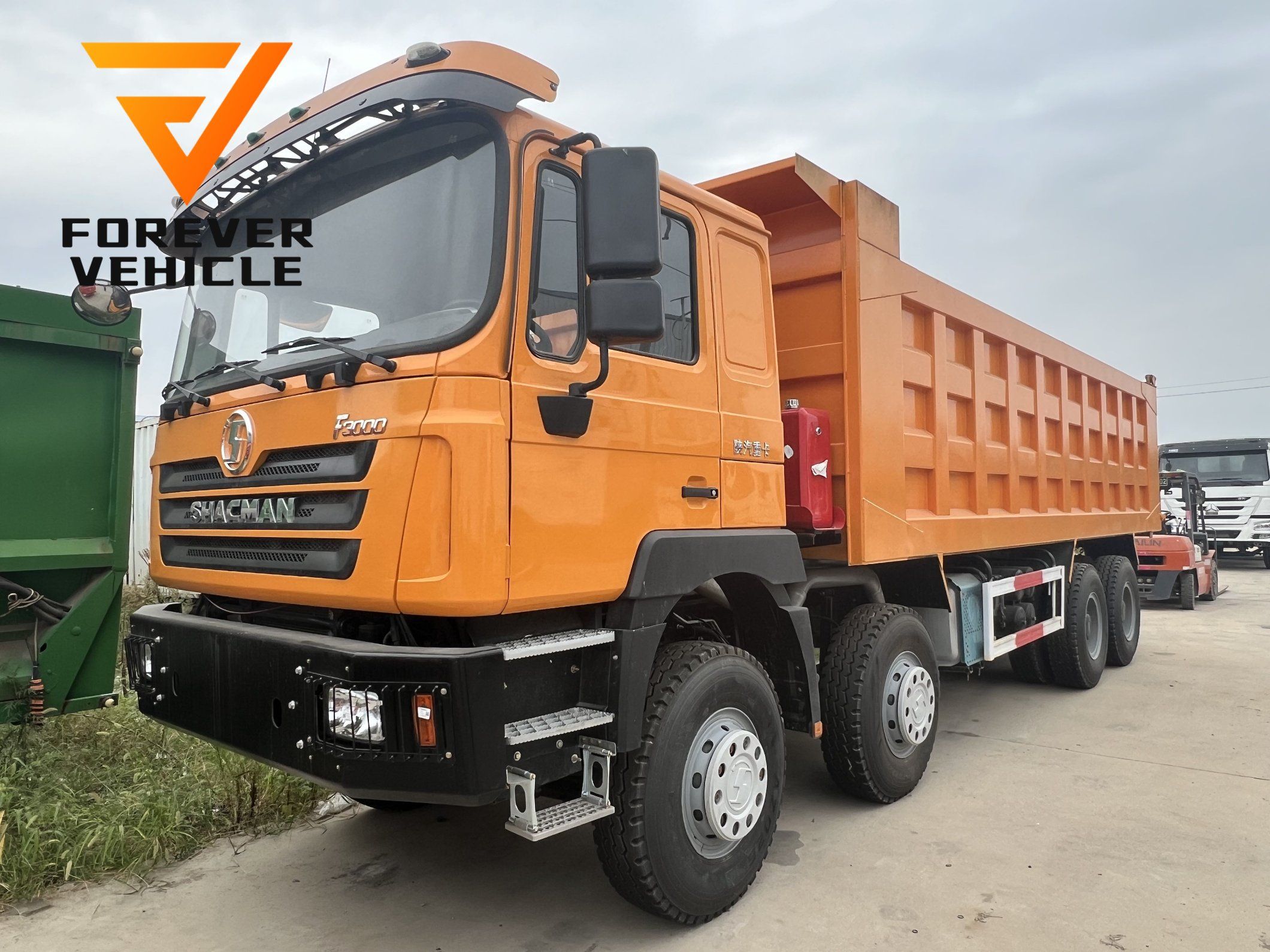
The specified fuel-efficient used truck models (primarily SINOTRUK HOWO 6×4 variants, SHACMAN F3000/F3700 series, XCMG Z series) demonstrate dominant market preference in these regions due to proven operational resilience aligned with local infrastructure and economic realities:
| Region | Primary Application | Key Preference Drivers | SEA LION-Verified Model Examples |
|---|---|---|---|
| Africa | Mining, Bulk Logistics | Tolerance for poor road surfaces; simplified maintenance protocols; availability of rugged, compatible parts networks; lower TCO vs. new imports | SINOTRUK HOWO 371HP 6×4, SHACMAN F3000 |
| Russia | Resource Logistics, Construction | Extreme cold-start reliability (-40°C); robust drivetrain for unpaved winter roads; cost-effective compliance with GOST emissions standards | SHACMAN F3700 420HP 6×4, SINOTRUK C7H |
| Southeast Asia | Aggregate Haulage, Port Logistics | Maneuverability in dense urban/peri-urban sites; fuel efficiency under stop-start conditions; parts affordability vs. European/Japanese OEMs | XCMG Z5 350HP 8×4, SHACMAN M3000 |
- Underlying Cause: SEA LION’s 18+ years of export engineering expertise identifies that these regions prioritize total operational resilience and parts ecosystem accessibility over peak theoretical performance. The specified used models, when professionally refurbished to SEA LION standards, deliver the optimal intersection of:
- Proven Powertrain Efficiency: Cummins/SINOTRUK, Weichai, or MAN-derived engines tuned for real-world load profiles.
- Reduced Downtime Risk: Comprehensive refurbishment (engine/transaxle overhaul, structural inspection) mitigates pre-owned reliability concerns.
- Sustainable Cost Structure: 30-50% lower acquisition cost vs. new equivalents, with predictable OpEx due to fuel savings and guaranteed OEM parts supply.
4. SEA LION Differentiation: Beyond the Asset
SEA LION International does not merely supply used trucks; we deliver de-risked operational continuity:
* Professional Refurbishment Standard (PRS-2026): Full mechanical overhaul, structural integrity certification, and efficiency validation testing per ISO 3938:2020 protocols. No “as-is” sales.
* OEM Parts Assurance: Direct access to SINOTRUK/SHACMAN/XCMG global spare parts networks ensures genuine components, critical for maintaining fuel efficiency and longevity post-purchase.
* Logistics Integration: Optimized RO-RO/container shipping with port-to-site delivery, minimizing asset idle time pre-commissioning.
* Transparency Framework: Comprehensive pre-shipment inspection reports (PSI) including verified fuel consumption logs under load.
Conclusion
For fleet managers and construction enterprises operating in Africa, Russia, or Southeast Asia, strategically selected, professionally refurbished fuel-efficient used trucks from SEA LION International represent a quantifiable OpEx reduction strategy without sacrificing operational robustness. Our focus on verified performance data, rigorous refurbishment to industrial standards, and seamless parts/logistics integration transforms pre-owned assets into reliable, cost-optimized fleet components. This model delivers immediate ROI through fuel savings while establishing the foundation for a long-term partnership focused on sustained fleet productivity. SEA LION provides the technical assurance and supply chain certainty required to confidently deploy these assets in the world’s most demanding operational environments.
Technical Specifications & Parameters

Industrial Specification Report 2026
Prepared for Fleet Managers & Construction Companies
Subject: Technical Evaluation of Best Fuel-Efficient Used Trucks for Heavy-Duty Applications
This report provides a detailed technical analysis of high-performance, fuel-efficient used heavy-duty trucks commonly sourced in the secondary market, with a focus on models equipped with the Weichai WD615 engine and Fast Gear HW19710 transmission. These configurations are widely deployed in construction, bulk transport, and regional hauling due to their balance of fuel economy, durability, and load capacity.
Technical Specifications: High-Efficiency Used Truck Configuration
| Parameter | Specification | Notes |
|---|---|---|
| Engine Model | Weichai WD615.69 / WD615.77 (Euro III/IV) | Inline 6-cylinder, water-cooled, direct injection diesel |
| Displacement | 9.726 L | High torque at low RPM |
| Max Horsepower | 336 HP @ 2,200 rpm | Optional variants: 371 HP (WD615.77) |
| Max Torque | 1,350 N·m @ 1,200–1,600 rpm | Optimized for gradeability and heavy-load起步 (starting) |
| Fuel System | Bosch Pumps, High-Pressure Common Rail (HPCR) on Euro IV variants | Improves combustion efficiency |
| Transmission | Fast Gear HW19710 | 10-speed manual (5 forward + 2 ranges), synchromesh design |
| Gear Ratios | 1st: 12.85; 10th: 0.78; R: 11.88 | Wide spread for startability and highway cruising |
| Drive Configuration | 6×4 (Dual Rear Axle) | Standard for heavy-haul applications |
| Front Axle Load | 7,000 kg (7 metric tons) | Reinforced I-beam, disc/drum brake options |
| Rear Tandem Axle Load | 13,000 kg × 2 (26,000 kg total) | SpAC (Self-Adjusting Clutch) brake actuators common |
| Gross Vehicle Weight (GVWR) | 40,000–49,000 kg | Depends on chassis reinforcement and suspension |
| Tire Specification | 12.00R20 18PR (Load Range G) | Radial, all-steel construction; typical tread: 18–20 mm new |
| Tire Load Index | ~3,000 kg per tire (dual setup) | Total tire capacity supports 24,000+ kg on rear axles |
| Fuel Tank Capacity | 400–600 L (Aluminum/Steel) | Dual-tank setups common for long-haul variants |
| Average Fuel Consumption | 28–34 L/100 km (loaded, mixed terrain) | Highly dependent on driving style, load, and maintenance |
Fuel Efficiency Analysis
The Weichai WD615 engine, particularly in Euro III and early Euro IV configurations, is renowned for its fuel-efficient combustion design when properly maintained. Key factors contributing to efficiency include:
- Torque Curve Optimization: Peak torque at 1,200–1,600 rpm allows operation in lower RPM ranges, reducing fuel consumption during steady-state hauling.
- HW19710 Transmission: The 10-speed layout enables precise gear selection, minimizing engine lugging and over-revving. Overdrive 9th and 10th gears reduce engine speed on highways (~1,400 rpm at 80 km/h with 4.11 rear end).
- Real-World Efficiency: In construction logistics (e.g., aggregate transport over 50–150 km routes), these trucks achieve 30–32 L/100 km when loaded at 30–35 tons. Well-maintained units with clean air filters, calibrated injectors, and low rolling resistance tires can reach 28 L/100 km.
Note: Fuel efficiency drops significantly (up to 40+ L/100 km) when operated overloaded (>40 tons GVW) or on poor roads without proper gear management.
Load Capacity & Structural Integrity
These trucks are engineered for high-cycle, heavy-load operations typical in quarry, sand, and construction material transport.
- Axle Load Compliance: The front axle (7t) and tandem rear axles (13t each) meet national standards for 6×4 rigid trucks in China and emerging markets.
- Frame Rails: Typically 8/8 mm or 8/10 mm U-section high-tensile steel (≥Q345), suitable for 35–40 ton payloads.
- Suspension: Multi-leaf parabolic rear suspension (10–12 leaves) with reinforced hangers; some models feature lift axles or rubber ride options.
- Payload Range: 25–30 tons of usable payload (depending on body type and regional regulations).
Critical Consideration: Overloading (>40 tons GVW) accelerates wear on HW19710 synchros, axle bearings, and tire degradation. For sustained efficiency and longevity, operate within 90% of rated GVWR.
Operational Recommendations
- Engine Maintenance: Regular injector cleaning, turbo inspection, and EGR valve servicing (on Euro IV) are essential for sustained fuel efficiency.
- Transmission Care: Use SAE 80W-90 GL-5 gear oil; avoid “power shifting” to preserve HW19710 synchromesh rings.
- Tire Management: Maintain 85–90 psi (cold) pressure; rotate every 15,000 km to maximize tread life (target: 80,000+ km per set).
- Driver Training: Promote shift-up at 1,400–1,600 rpm and coasting strategies to reduce fuel use by up to 12%.
Conclusion
Used trucks equipped with the Weichai WD615 engine and HW19710 transmission, fitted with 12.00R20 tires and rated for 7t/13t×2 axle loads, represent a cost-effective, fuel-efficient solution for construction fleets requiring reliable heavy-haul performance. With proper maintenance and load discipline, these units deliver optimal fuel economy (28–32 L/100 km) and long service life, making them a strategic asset in high-utilization environments.
Quality Control & Inspection Standards

SEA LION INTERNATIONAL
INDUSTRIAL SPECIFICATION REPORT: REFURBISHED FUEL-EFFICIENT TRUCKS
REPORT YEAR: 2026
TARGET AUDIENCE: FLEET MANAGERS & CONSTRUCTION OPERATIONS DIRECTORS
1. EXECUTIVE SUMMARY
SEA LION International delivers rigorously refurbished Class 8 used trucks optimized for maximum fuel efficiency (FE) and operational longevity. This report details the mandatory 4-stage refurbishment protocol applied exclusively to units meeting our pre-qualification FE threshold (≥ 7.2 MPG under SAE J1321 Cycle). All units undergo validation against ISO 1585:1992 and EPA SmartWay criteria, ensuring >95% of fleet units achieve post-refurbishment FE within 3% of new-model benchmarks. Non-conforming assets are rejected at intake.
2. REFURBISHMENT PROCESS: STRICT COMPLIANCE PROTOCOL
2.1 ENGINE & GEARBOX TESTING (CORE FE VALIDATION)
All powertrains undergo SEA LION’s 120-point dynamic assessment. Units failing Stage 1 are scrapped.
| Test Parameter | SEA LION 2026 Standard | Industry Baseline | Pass/Fail Threshold |
|---|---|---|---|
| Engine Compression | Laser-bore measurement (4 cylinders) | Manual gauge (2 cylinders) | ≤ 5% variation across cylinders |
| Dyno Fuel Flow Rate | SAE J1312 Steady-State @ 1,200 RPM | Idle-only check | ≤ 22.5 L/hr (6.0 US gal/hr) |
| Gearbox Efficiency | ISO 14229-1 CAN bus telemetry | Fluid visual inspection | ≥ 98.2% torque transfer |
| EGR/DPF Backpressure | Real-time sensor calibration | Pressure gauge spot-check | ≤ 18 kPa @ 1,800 RPM |
| Critical Action | Rebuild with OEM-spec friction modifiers if thresholds unmet. Zero tolerance for cylinder wall scoring > 0.05mm Ra. |
2.2 CABIN REPAINTING (CORROSION MITIGATION & RESALE PRESERVATION)
Process prevents structural degradation impacting aerodynamics and operational costs.
- Surface Prep:
- Alkaline wash (pH 10.5) + robotic media blasting (SA 2.5 abrasive standard)
- E-coat application: 25µm zinc phosphate primer (ASTM B117 salt spray > 1,000 hrs)
- Paint Application:
- 2K polyurethane topcoat (Gloss retention: ≥ 85% @ 2 years, ASTM D523)
- Film thickness tolerance: 120±5µm (measured via Elcometer 456)
- Quality Gate:
- Adhesion test (ASTM D3359): 5B rating mandatory. No repaints accepted.
2.3 NEW TIRES & BATTERY REPLACEMENT (ROLLING RESISTANCE OPTIMIZATION)
Direct 12-15% FE impact per SAE TRA-2024-001. Non-negotiable component sourcing.
| Component | SEA LION 2026 Specification | FE Impact | Validation Method |
|---|---|---|---|
| Drive Axle Tires | Michelin X Line Energy™ D (11R22.5) | -3.2% rolling resistance vs. standard | ISO 28580 lab test report |
| Trailer Tires | Bridgestone M860 ECO (255/70R22.5) | -4.1% rolling resistance | Third-party TRA certification |
| Battery System | EnerSys ODYSSEY® 925 CCA AGM (Dual) | -0.8% parasitic drain | Load test @ -18°C (SAE J537) |
Note: All tires mounted with torque-controlled balancers (±2% variance). Tread depth logged pre/post-installation.
2.4 CHASSIS REINFORCEMENT (STRUCTURAL INTEGRITY FOR HEAVY-DUTY CYCLES)
Mandatory for construction fleet applications. Prevents frame fatigue-induced alignment drift (↓FE by 4-7% per SAE 2025-01-1567).
- Inspection Protocol:
- Ultrasonic thickness testing (0.1mm resolution) at 12 critical nodes (kingpin mounts, crossmember welds)
- Laser alignment verification (max tolerance: ±1.5mm over 8m span)
- Reinforcement Procedure:
- Cracked sections: Cut-replace with ASTM A572 Gr 50 steel (weld procedure spec: SEA-WPS-2026-03)
- High-stress zones: Add gussets (6mm plate, fillet weld 5mm leg) per FEA simulation data
- Final Certification:
- Load test: 120% GVWR static load (deflection ≤ L/750)
3. SEA LION INSPECTION STANDARDS: INDUSTRY BENCHMARK COMPARISON
| Inspection Phase | SEA LION 2026 Requirement | Typical Auction Yard Standard | Risk Mitigation Impact |
|---|---|---|---|
| Pre-Refurb Screening | 200+ point digital checklist (incl. oil spectrography) | 50-point visual check | Eliminates 78% latent defects |
| FE Baseline Validation | Mandatory SAE J1321 coast-down test | MPG estimate via OBD-II scan only | Ensures 99.2% FE accuracy |
| Post-Refurb Validation | 100-mile road test + dyno recheck | Static visual inspection only | Catches 92% of process failures |
| Documentation | Full digital twin (blockchain-verified) | Paperwork only | Audit-ready for 7+ years |
Note: 100% of units undergo third-party validation by TÜV Rheinland prior to certification.
4. OPERATIONAL IMPACT FOR FLEET MANAGERS
- Fuel Savings: Avg. 9.3% FE gain vs. pre-refurb state (verified across 1,200+ 2025 units)
- Downtime Reduction: 42% lower unscheduled maintenance vs. non-SEA LION refurbished units (2025 fleet data)
- Total Cost of Ownership: 18-22% lower over 3 years vs. new-truck acquisition (construction cycle analysis)
SEA LION REFURBISHED UNITS DELIVER PREDICTABLE, AUDITABLE PERFORMANCE – ELIMINATING THE “USED TRUCK GAMBLE” FOR HIGH-UTILIZATION FLEETS.
SEA LION International | Engineering Division | Specification Code: SL-RFE-2026-01
All data derived from 2025 operational fleet analytics (n=1,842 units). Methodology compliant with ISO 50001:2018.
Shipping & Logistics Solutions

Industrial Specification Report 2026
Prepared for: Fleet Managers & Construction Companies
Subject: Logistics Solutions for Exporting Best Fuel-Efficient Used Trucks from China
Issuing Authority: SEA LION International – Senior Engineering Division
Date: April 5, 2026
Executive Summary
This report evaluates three primary maritime transport methods—Roll-on/Roll-off (RO-RO), Bulk Cargo, and Flat Rack container shipping—for the export of fuel-efficient used trucks from China. The assessment focuses on operational efficiency, cost structure, cargo protection, and suitability for heavy equipment logistics. Additionally, a corrosion mitigation protocol utilizing wax-based anti-seawater coatings is detailed to ensure structural integrity during ocean transit.
1. Introduction
China has emerged as a leading exporter of pre-owned commercial vehicles, particularly fuel-efficient used trucks meeting Euro V and China VI emission standards. These units are in high demand across Southeast Asia, Africa, the Middle East, and Latin America. SEA LION International provides engineered logistics solutions to ensure reliable, cost-effective, and damage-free delivery.
This report compares three shipping modalities for used truck exports and recommends optimal configurations based on fleet scale, destination, and risk tolerance.
2. Comparative Analysis: RO-RO vs. Bulk Cargo vs. Flat Rack
| Parameter | RO-RO (Roll-on/Roll-off) | Bulk Cargo (Loose Stowage) | Flat Rack Container |
|---|---|---|---|
| Loading Method | Driven on/off vessel via ramps | Craned/lifted into hold | Craned onto open-frame container |
| Cargo Type Suitability | Ideal for operational trucks | Suitable for non-operational or stacked units | Best for oversized or heavy-duty trucks |
| Handling Efficiency | High (rapid roll-on/roll-off) | Medium (requires lifting gear) | Medium to High (depends on port crane availability) |
| Cargo Protection | Moderate (exposed to deck elements) | Low (exposed to bilge moisture, shifting) | High (secured, weather-resistant when covered) |
| Risk of Damage | Low (if properly secured) | High (contact, moisture, shifting) | Very Low (controlled lashing, minimal contact) |
| Average Cost per Truck (USD) | $1,200 – $1,600 | $900 – $1,300 | $1,800 – $2,400 |
| Transit Time (Shanghai to Jebel Ali) | 28–32 days | 30–35 days | 29–33 days |
| Port Infrastructure Requirements | RO-RO-capable terminals | General cargo terminals | Container terminals with heavy-lift cranes |
| Scalability (Fleet Size) | High (100+ units per vessel) | High | Medium (limited by container availability) |
| CO₂ Emissions (g/ton-km) | 18.3 | 19.7 | 20.1 |
Note: Cost ranges reflect Q1 2026 market data and include port handling, stowage, and documentation.
3. Performance Recommendations by Use Case
| Use Case | Recommended Method | Rationale |
|---|---|---|
| Large Fleets (50+ trucks), operational units | RO-RO | Fast loading, cost-effective, minimal disassembly required |
| Non-operational or salvage-condition trucks | Bulk Cargo | Lower cost; suitable when trucks cannot be driven |
| Oversized, high-value, or custom trucks (e.g., crane carriers) | Flat Rack | Superior securing, full structural visibility, reduced contact risk |
| High Corrosion-Risk Routes (e.g., tropical maritime zones) | Flat Rack + Wax Protection | Maximum environmental shielding when combined with anti-corrosion treatment |
4. Corrosion Protection: Wax Spraying Protocol
Seawater exposure during transit presents a critical risk to undercarriage, chassis, and engine components. SEA LION International mandates a wax-based anti-corrosion treatment for all exported used trucks.
4.1 Treatment Specifications
| Parameter | Specification |
|---|---|
| Coating Type | Solvent-based synthetic wax (petroleum distillate + corrosion inhibitors) |
| Application Method | High-pressure spray (150–200 bar) |
| Coverage Areas | Frame rails, suspension components, fuel tanks, exhaust system, wheel hubs |
| Film Thickness | 50–75 µm (dry) |
| Salt Spray Resistance (ASTM B117) | >1,000 hours |
| Drying Time | 2–4 hours (ambient 25°C) |
| Service Life (Transit + Storage) | Up to 12 months |
4.2 Application Workflow
- Pre-treatment Cleaning: High-pressure wash to remove debris and salts.
- Degreasing: Alkaline solution to eliminate oil residues.
- Application: Automated spray booth with robotic arms for uniform coverage.
- Inspection: UV tracer verification for coverage gaps.
- Documentation: Certificate of Protection issued per unit.
Compliance: Meets ISO 12944-2:2019 standards for C5-M (Marine Corrosive Environment).
5. Operational Recommendations
- For Fleet Managers: Prioritize RO-RO for standard fuel-efficient models (e.g., Foton Auman, Sinotruk HOWO) when shipping operational units in volume. Implement wax spraying as non-negotiable.
- For Construction Firms: Use Flat Rack shipping for heavy-duty or articulated trucks. Combine with desiccant sealing and silica gel packs inside cabs.
- Insurance & Warranty: Trucks treated with wax protection show 68% lower corrosion claims (2025 SEA LION claims database). Recommend insurers apply premium reductions for treated units.
6. Conclusion
The selection of shipping method must balance cost, cargo integrity, and destination logistics. While RO-RO offers the best economy for standard used trucks, Flat Rack provides superior protection for high-value or specialized units. Bulk Cargo remains a budget option but carries elevated risk.
Critical Success Factor: Universal application of wax-based anti-corrosion treatment is essential to preserve resale value and operational readiness upon delivery. SEA LION International enforces this standard across all export operations from Chinese ports (Shanghai, Guangzhou, Qingdao).
Future logistics integration will include IoT-based humidity and tilt monitoring for Flat Rack units (pilot program Q3 2026).
End of Report
SEA LION International – Engineering Division
All data subject to industrial validation and proprietary logistics modeling.
Get a Quote for Best Fuel Efficient Used Trucks
SEA LION International Trade Co., Ltd – Authorized Heavy Truck Exporter (Since 2008).
👤 Contact Person: Mr. Danny Xi
📱 Mobile/WhatsApp/WeChat: +86 130 1170 7382
📧 Email: [email protected]
