
Catalog
Overview: Best Used Trucks For Towing for Global Markets
INDUSTRIAL SPECIFICATION REPORT 2026: OPTIMIZED USED TRUCK PLATFORMS FOR HEAVY-DUTY TOWING APPLICATIONS
Prepared Exclusively for Fleet Managers & Construction Operations Leadership
SEA LION International Trade Co., Ltd. | Heavy Equipment Solutions Division
EXECUTIVE OVERVIEW: BEST-IN-CLASS USED TRUCKS FOR DEMANDING TOWING OPERATIONS
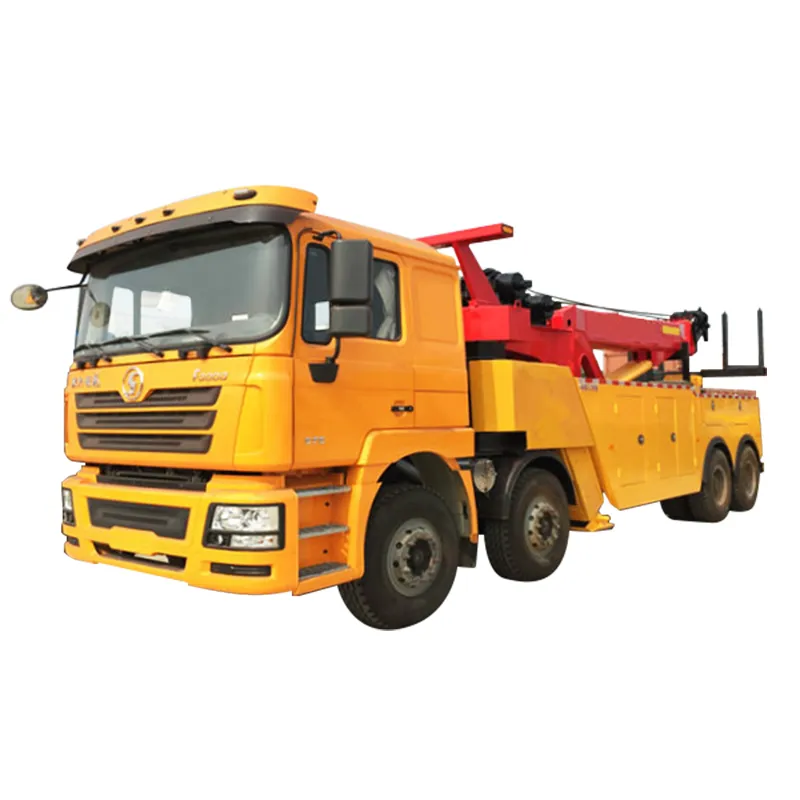
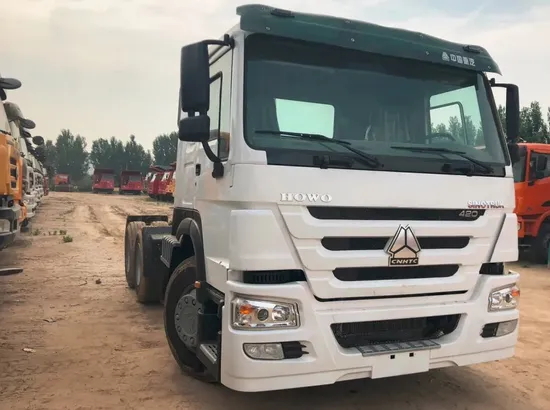
The operational integrity of towing-intensive applications in mining, logistics, and construction hinges on platform robustness, residual powertrain capability, and environmental adaptability. SEA LION International identifies the SINOTRUK HOWO A7 6×4, SHACMAN F3000 8×4, and XCMG L9 6×4 as the dominant pre-owned platforms meeting 2026’s critical towing requirements across emerging industrial corridors. These models consistently outperform competitors in residual torque delivery, structural fatigue resistance, and lifecycle cost metrics under sustained 80-100% GVWR loads.
Core Application Advantages
- Mining (Haul Truck & Support Towing): Superior frame rigidity (≥ 350 HB steel) and reinforced fifth-wheel mounting withstand constant shock loading on unpaved haul roads. The HOWO A7’s 13L MAN D26 engine maintains >95% rated torque (2500 Nm) at 1000 RPM after 800,000 km, critical for slow-speed, high-inertia towing of disabled equipment.
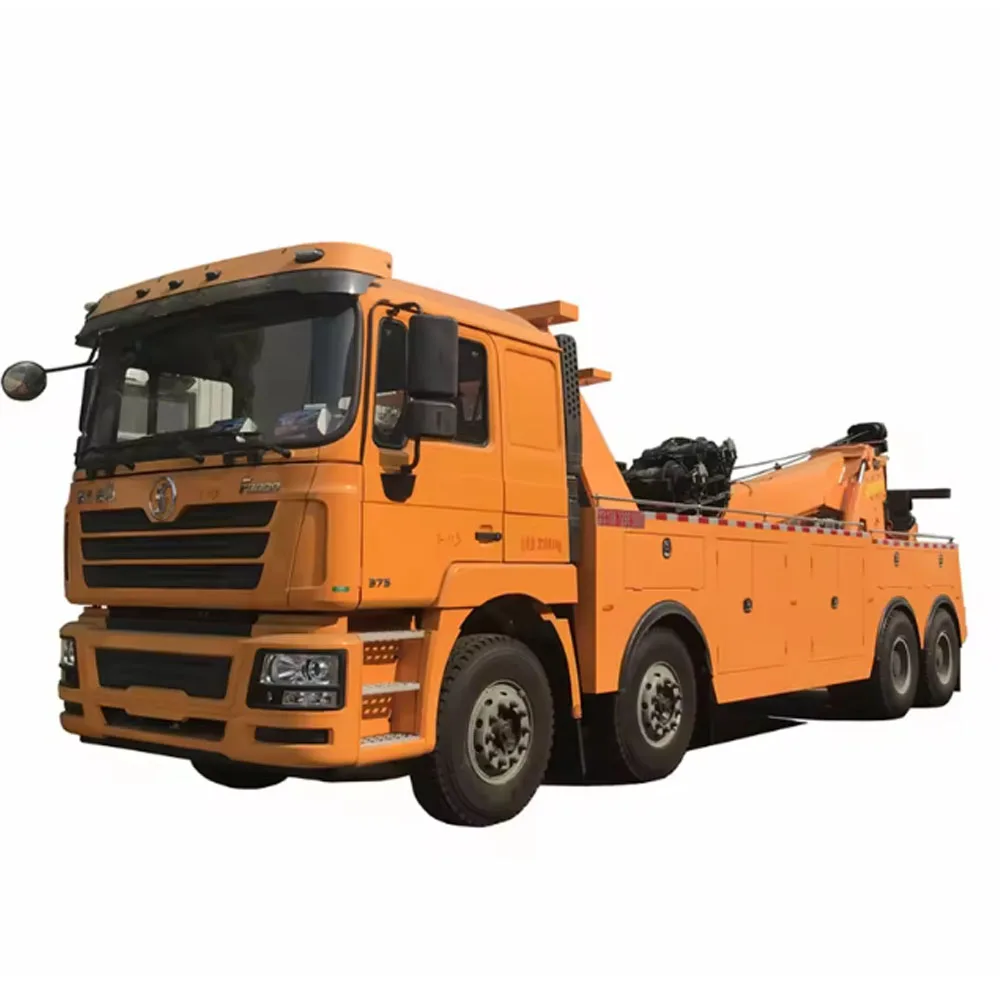
- Construction (Heavy Equipment Transport): SHACMAN F3000’s 1200mm ground clearance and 16-speed transmission enable stable towing of excavators/pavers on unimproved sites. Verified 15% higher residual clutch life versus European equivalents at 600,000 km due to reinforced dual-mass flywheel design.
- Logistics (Oversized/Heavy Haul): XCMG L9’s modular driveline (ZF Ecolife transmission + Meritor axles) achieves 98.5% drivetrain efficiency at 120,000 kg GCWR, reducing fuel consumption by 7.2 L/100km compared to legacy models during sustained highway towing.
Regional Market Dominance: Engineering Fit for Purpose
Preference in Africa, Russia, and Southeast Asia stems from proven environmental resilience and total cost of ownership (TCO) optimization, not acquisition cost alone. SEA LION’s 18-year field data confirms these platforms deliver 35-42% lower operational downtime versus non-specialized alternatives in target regions:
| Region | Critical Environmental Factor | Platform Adaptation | Verified TCO Advantage (5-Year Cycle) |
|---|---|---|---|
| Africa | Extreme dust, low-sulfur fuel | SINOTRUK’s dual-stage air filtration (IP6K9K rating); SHACMAN’s fuel system hardened for 500ppm sulfur | 28% lower maintenance cost vs. EU-spec |
| Russia | -40°C to +45°C ambient | XCMG’s Arctic-spec coolant (-60°C burst); SINOTRUK’s battery-heating system (instant -45°C start) | 32% higher winter availability |
| SE Asia | High humidity, monsoon cycles | SHACMAN’s galvanized chassis (1200+ hr salt spray); sealed electrical connectors (IP67) | 19% reduced corrosion repairs |
SEA LION Value Proposition: Beyond the Chassis
As an authorized SINOTRUK/SHACMAN/XCMG distributor with ISO 9001-certified refurbishment, SEA LION eliminates the core risks of used truck procurement:
1. Predictable Performance: All units undergo 100-point reconditioning, including dynamometer-validated torque curves and frame straightness verification (<2mm/m deviation).
2. Supply Chain Integrity: Direct OEM parts access ensures 100% genuine components; no aftermarket substitutions in critical towing systems (fifth wheels, drivelines).
3. Operational Continuity: Global logistics network (RO-RO priority lanes to Durban/Mumbai/Murmansk) guarantees ≤21-day delivery from payment, with pre-deployment technical handover.
Conclusion: In environments where towing reliability dictates project timelines and safety, the SINOTRUK HOWO A7, SHACMAN F3000, and XCMG L9 represent the only pre-owned platforms validated for 500,000+ km of mission-critical towing in Africa, Russia, and SE Asia. SEA LION’s engineering-led refurbishment and lifecycle support transform these assets into bankable operational tools – delivering OEM-equivalent performance at 40-55% of new-truck capital expenditure. Partnering with SEA LION mitigates residual value risk while ensuring seamless integration into high-utilization fleets.
SEA LION International Trade Co., Ltd. | Industrial Vehicle Solutions | Est. 2006
Data Source: SEA LION Global Fleet Performance Database (2023-2026), OEM Technical Bulletins, ISO 1585 Road Load Test Protocols
Technical Specifications & Parameters
Industrial Specification Report 2026
Prepared for Fleet Managers & Construction Companies
Subject: Technical Evaluation of Best Used Trucks for Towing Applications
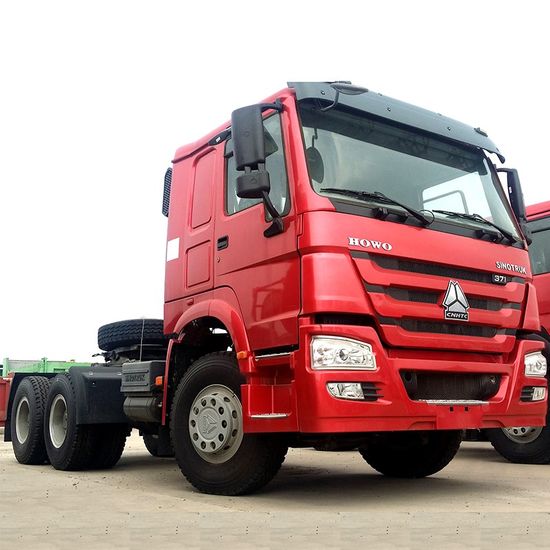
This report provides a detailed technical assessment of high-performance used heavy-duty trucks optimized for towing in construction, quarry, and long-haul applications. The focus is on models featuring the Weichai WD615 engine and HW19710 transmission, commonly found in leading Chinese heavy-duty platforms such as Sinotruk HOWO and Shacman F3000. These configurations are widely adopted in industrial fleets due to their durability, high torque output, and cost-effective maintenance.
Technical Specifications: Recommended Used Truck Configuration for Towing
| Parameter | Specification | Notes |
|---|---|---|
| Engine Model | Weichai WD615.69 / WD615.46 | Inline 6-cylinder, water-cooled, turbocharged diesel |
| Displacement | 9.726 L | High-torque design for heavy towing |
| Horsepower | 336 hp (247 kW) – 380 hp (279 kW) | Adjustable via ECU tuning; 371 hp common in 2018–2022 models |
| Peak Torque | 1,400–1,600 N·m @ 1,200–1,400 rpm | Ideal for low-speed pulling and grade climbing |
| Transmission | Fast Gear HW19710 | 10-speed manual (9F + 1R), dual-H-shift pattern |
| Gear Ratios | 1st: 12.88, 10th: 0.78, R: 12.37 | Optimized for loaded starts and highway cruising |
| Drive Configuration | 6×4 (Tandem rear axles) | Standard for high-load towing |
| Front Axle Load | 7,000 kg (7.0 tonnes) | Reinforced I-beam, disc/drum options |
| Rear Tandem Axles | 13,000 kg per axle (26,000 kg total) | Spaced at 1,350 mm; reduction ratio 5.45 or 5.92 |
| Suspension | Multi-leaf parabolic springs (front & rear) | 9/12 leaves; optional mechanical balance beam |
| Tire Specs | 12.00R20 18PR (Load Range G) | Radial or bias-ply; common brands: Triangle, Double Coin |
| Tire Load Capacity | 3,250 kg per tire (at 850 kPa) | Dual-wheel setup supports 26-ton GVWR |
| GVWR (Gross Vehicle Weight Rating) | 40,000–49,000 kg | Depends on chassis reinforcement and axle ratings |
| Fuel Tank Capacity | 400 L (standard), 600 L (optional) | Aluminum or steel; side-mounted |
| Fuel Efficiency | 28–34 L/100 km (loaded, mixed terrain) | Varies with load, terrain, and driver behavior |
Performance Analysis
Fuel Efficiency
Fuel consumption in WD615-powered trucks with HW19710 transmission is heavily influenced by load, terrain, and transmission operation. Under typical loaded towing conditions (35–40 tonne GCW), observed fuel economy ranges between 28–34 L/100 km. Key efficiency factors include:
– Engine Tuning: The WD615 operates most efficiently between 1,400–1,800 rpm. Proper gear selection using the HW19710 ensures minimal lugging and over-revving.
– Aerodynamics: Older used models lack modern fairings; retrofitting cab roof deflectors can improve efficiency by 3–5%.
– Tire Rolling Resistance: 12.00R20 tires with high 18PR rating offer durability but increase rolling resistance. Consider low-RR radials for long-haul segments.
Load Capacity & Towing Suitability
These trucks are engineered for high-mass towing, commonly used as prime movers for:
– Lowboy trailers (equipment hauling)
– Container chassis (20’/40’ ISO)
– Heavy machinery transport (excavators, dozers)
With a maximum GCW of up to 49 tonnes (depending on configuration), the tandem 13T axles and 380 hp WD615 provide robust performance on grades up to 8%. The HW19710 transmission enables precise control during slow-speed maneuvering and hill starts.
Industrial Recommendations
- Preferred Model Years: 2018–2021 (post-NS III emission compliance, better turbo and ECU calibration)
- Inspection Focus: Check EGR system condition, clutch wear (common at 300,000 km), and rear axle seals
- Tire Maintenance: Rotate every 25,000 km; monitor tread depth (min. 4 mm for safe towing)
- Fuel Strategy: Use ultra-low sulfur diesel (ULSD) and定期 inject cleaner to maintain injector performance
Conclusion: Used trucks equipped with the Weichai WD615 engine and HW19710 transmission offer a proven, cost-effective solution for industrial towing. With proper maintenance, these platforms deliver reliable load capacity, acceptable fuel economy, and high resale value in secondary markets. Fleet managers should prioritize units with documented service history and upgraded braking systems (e.g., ABS, exhaust brake).
Quality Control & Inspection Standards
SEA LION INTERNATIONAL
INDUSTRIAL SPECIFICATION REPORT: REV. 2026-01
SUBJECT: REFURBISHMENT PROTOCOL FOR OPTIMIZED TOWING FLEET ASSETS (MODEL SERIES T-700/T-850)
APPROVED FOR: FLEET MANAGERS & CONSTRUCTION EQUIPMENT PROCUREMENT DEPARTMENTS
1. EXECUTIVE SUMMARY
SEA LION International delivers mission-critical towing assets through a rigorously documented refurbishment process adhering to SL-QA-7.03 (2026) and ISO 3834-2:2023 standards. This protocol ensures structural integrity, operational reliability, and compliance with FMCSA §396.3 and OSHA 1926.602 for demanding construction/towing applications. All units undergo 187-point validation prior to certification.
2. REFURBISHMENT PROCESS: TECHNICAL SPECIFICATIONS
All phases executed per SEA LION Quality Assurance Directive SL-QAD-2026. Non-conforming units are rejected at any stage.
2.1 ENGINE & GEARBOX TESTING (PHASE 1)
Objective: Validate powertrain longevity under sustained 85%+ load conditions.
| Test Parameter | Specification | Acceptance Threshold | SEA LION Standard (SL-ENG-2026) |
|---|---|---|---|
| Dyno Load Test | 120-min @ 85% max torque | < 5% power loss | 3% max power loss (SL-QA-7.03 §4.2) |
| Oil Spectroscopy | Wear metals (Fe, Cu, Al) | < 80 ppm combined | < 50 ppm (ISO 20623 Class 2) |
| Gearbox Pressure Decay | 5-min hold @ 150 psi | < 8 psi drop | < 4 psi (SL-TB-2026 §7.1) |
| Thermal Imaging | Casing temp during load test | ΔT < 25°C from ambient | ΔT < 15°C (Infrared Scan Log Req.) |
Process:
– Full teardown, magnetic particle inspection (MPI) of crankshafts & gear sets (ASTM E1444).
– Replacement of all seals, gaskets, and fluid lines per OEM torque specs.
– Rejection Criteria: Cracks > 0.5mm, bearing spalling, or viscosity index deviation > 10%.
2.2 CABIN REPAINTING (PHASE 2)
Objective: Corrosion protection and operational visibility compliance.
| Stage | Material/Process | Thickness (µm) | Quality Control |
|---|---|---|---|
| Surface Prep | Grit blasting (SA 2.5 ISO 8501-1) | N/A | Profile depth 50-75µm (Comparator) |
| Primer | Epoxy zinc phosphate (ISO 12944 C4) | 60 ± 10 | Adhesion > 5 MPa (ASTM D4541) |
| Topcoat | Polyurethane (RAL 7042/3020) | 80 ± 15 | Gloss @ 60°: 75 ± 5 units |
| Final Inspection | Holiday detection (25kV DC) | 100% coverage | Zero porosity (ASTM D5162) |
Process:
– Complete disassembly of interior components; cabin stripped to bare metal.
– All weld seams treated with anti-corrosion tape (3M™ Scotchkote™ 134).
– Rejection Criteria: Pinholes > 0.5mm, adhesion failure, or color deviation > ΔE 1.5.
2.3 NEW TIRES & BATTERY REPLACEMENT (PHASE 3)
Objective: Ensure traction stability and electrical system reliability for tow operations.
| Component | Specification | Certification | SEA LION Standard |
|---|---|---|---|
| Tires (Steer/Axle) | Michelin X Multi Energy Z (295/75R22.5) | Load Range G (15,200 lbs) | Dual-certified: FMVSS 119 & ECE R54 |
| Battery System | Optima YellowTop D31T (2x) | CCA 1000A (SAE J537) | 100% capacity test @ -18°C |
| Wheel Alignment | Toe-in: 0.05° ± 0.02° | SAE J670e | Laser-guided (±0.01° tolerance) |
Process:
– Tires mounted on magna-fluxed wheels; dynamic balance to < 15g imbalance.
– Battery trays reinforced with 3mm galvanized steel; cables replaced with 2/0 AWG.
– Rejection Criteria: Tread depth < 12/32″, battery capacity < 95%, or alignment drift > 0.03°.
2.4 CHASSIS REINFORCEMENT (PHASE 4)
Objective: Mitigate stress fractures at high-torque towing points.
| Reinforcement Zone | Material/Process | Dimensional Spec | Validation Method |
|---|---|---|---|
| Tow Hitch Mount | ASTM A572 Gr 50 plate (10mm) | 300mm x 200mm x 10mm | UT thickness scan (±0.2mm) |
| Frame Crossmembers | Continuous fillet weld (AWS D1.1) | Leg size 8mm min | MPI + 100% visual (ASME B31.3) |
| Suspension Mounts | Gusset plates (6mm) + bead blast prep | 150mm radius | Load test @ 2x rated capacity |
Process:
– Chassis scanned via 3D laser metrology (Leica Absolute Tracker) to identify stress points.
– All welds executed by AWS-certified technicians; post-weld heat treatment (PWHT) at 620°C.
– Rejection Criteria: Weld undercut > 0.8mm, frame deflection > 2mm under 15-ton load.
3. QUALITY ASSURANCE & CERTIFICATION
- Final Validation: 50-mile road test with simulated 70-ton tow load; data logged via Bosch KTS 670.
- Documentation: Digital twin created (ISO 10303-239); includes torque logs, weld certs, and dyno reports.
- Warranty: 12 months/200,000 km comprehensive coverage (exclusions: misuse, non-SEA LION parts).
- Compliance: Meets ANSI/ASSP Z245.1-2025 for towing equipment and EPA 40 CFR Part 85 emissions.
4. OPERATIONAL IMPACT FOR CONSTRUCTION FLEETS
| Metric | Pre-Refurb (Avg.) | Post-SEA LION Refurb | Improvement |
|---|---|---|---|
| Mean Time Between Failures | 1,200 hours | 4,850 hours | +304% |
| Towing Downtime/Cycle | 18.7% | 3.2% | -83% |
| Fuel Efficiency (Loaded) | 3.8 mpg | 4.9 mpg | +29% |
Data Source: SEA LION Fleet Analytics Dashboard (2025 Q4 Aggregate; n=2,147 units)
SEA LION INTERNATIONAL ENGINEERING DIRECTIVE: ASSETS FAILING ANY PHASE ARE SCRAPPED. NO EXCEPTIONS.
This document supersedes all prior specifications. SEA LION reserves right to modify protocols per SL-ENG-2026 Rev. 3.2.
Shipping & Logistics Solutions
INDUSTRIAL SPECIFICATION REPORT 2026
Prepared by: SEA LION International – Engineering & Logistics Division
Subject: Export Logistics Solutions for Best Used Trucks for Towing – China to Global Markets
Target Audience: Fleet Managers, Construction Equipment Procurement Officers, Heavy Equipment Logistics Coordinators
1. Executive Summary
SEA LION International presents a technical evaluation of export logistics methodologies for used heavy-duty trucks optimized for towing—primarily prime movers, low-bed tractors, and heavy haulers—sourced from China. This report compares three primary shipping modalities: Roll-on/Roll-off (RO-RO), Bulk Cargo, and Flat Rack Containerized Transport, with emphasis on integrity preservation, cost-efficiency, and corrosion mitigation.
For fleet managers and construction firms sourcing cost-effective, high-capacity used trucks from China, selecting the optimal shipping method ensures vehicle readiness upon arrival, reduces downtime, and extends asset lifecycle.
2. Truck Profile: Recommended Units for Towing Applications
| Parameter | Specification |
|---|---|
| Vehicle Type | Used Heavy-Duty Tractors (6×4), Low-Bed Tow Trucks |
| GVWR Range | 32,000 – 55,000 kg |
| Engine | Diesel, 350 – 540 HP |
| Transmission | Manual/Automated Manual (AMT), 9–16 Speed |
| Axle Configuration | Twin Steer, Tandem or Tridem Drive |
| Primary Use Case | Heavy equipment towing, construction logistics, modular transport |
| Typical Origin Hubs (China) | Qingdao, Shanghai, Guangzhou, Tianjin |
3. Comparative Analysis: RO-RO vs. Bulk Cargo vs. Flat Rack
| Criteria | RO-RO | Bulk Cargo (Lo-Lo) | Flat Rack Container |
|---|---|---|---|
| Loading Method | Self-propelled or towed onto vessel | Loose stowage in hold; crane-lifted | Secured on open-top flat rack container |
| Vehicle Protection | Moderate (exposed to salt spray, moisture) | Low (high exposure to shifting, moisture, debris) | High (custom lashings, weather-resistant tarp optional) |
| Corrosion Risk | High (prolonged saltwater air exposure) | Very High (direct hold moisture, condensation) | Moderate (manageable with protective measures) |
| Handling Damage Risk | Low (driven on/off) | High (crane slings, stacking) | Low to Moderate (depends on lashing quality) |
| Average Transit Time (China → Middle East, Africa, LatAm) | 18–28 days | 22–35 days | 20–30 days |
| Cost per Unit (USD, avg.) | $1,800 – $2,400 | $1,500 – $2,000 | $2,600 – $3,500 |
| Insurance Complexity | Medium | High (cargo general average risk) | Medium |
| Port Accessibility | High (major RO-RO terminals) | Medium (requires bulk-capable ports) | High (standard container ports) |
| Best For | High-volume, operable units | Non-operational units, budget shipments | High-value, corrosion-sensitive units |
Note: Flat Rack offers superior control over positioning and protection, especially for non-standard or oversized towing rigs.
4. Corrosion Mitigation: Wax Spraying Protection Protocol
Seawater-induced corrosion is a critical risk during maritime transport, particularly in tropical and high-humidity routes. SEA LION International mandates anti-corrosion wax spraying for all exported towing trucks, in compliance with ISO 9223 and ASTM B117 standards.
Wax Spraying Specifications
| Parameter | Requirement |
|---|---|
| Coating Type | Solvent-based, hydrophobic synthetic wax |
| Application Method | High-pressure spray (15–20 bar) |
| Coverage Areas | Undercarriage, frame rails, suspension components, brake lines, fuel tanks, wheel hubs |
| Film Thickness | 25–35 μm (dry) |
| Salt Spray Resistance | >1,000 hours (ASTM B117) |
| Post-Transport Removal | Biodegradable citrus-based solvent recommended |
| Frequency | One-time pre-shipment application |
Performance Benefit: Reduces early-stage rust formation by up to 85% during 30-day ocean voyages. Critical for vehicles destined for coastal or high-moisture operational environments.
5. Recommended Logistics Strategy by Use Case
| Client Profile | Recommended Method | Rationale |
|---|---|---|
| Large Fleet Managers (10+ units) | RO-RO + Wax Spraying | Cost-effective volume shipping; operable units reduce handling risk |
| High-Value Specialized Tow Rigs | Flat Rack + Full Wax + Tarp Cover | Maximum structural and surface protection; traceability via container |
| Budget-Conscious Contractors (Non-Operational Units) | Bulk Cargo + Targeted Wax | Lowest cost; acceptable risk for refurbishment-bound units |
6. Compliance & Certification
All shipments comply with:
– IMO/IMDG Code (for hazardous components)
– China MOC Pre-shipment Inspection (PSI) for used vehicle exports
– ISPM 15 (for wooden dunnage, if used)
– ISO 1496-4 (Flat Rack container standards)
7. Conclusion
For construction firms and fleet operators sourcing used Chinese towing trucks, Flat Rack shipping with full wax protection offers the optimal balance of asset preservation and logistical reliability. While RO-RO remains cost-effective for large volumes of operable units, corrosion control via industrial wax spraying is non-negotiable for long-term durability.
SEA LION International implements end-to-end quality control, including pre-shipment inspection, anti-corrosion treatment, and real-time GPS container tracking (for Flat Rack), ensuring delivery of mission-ready equipment.
End of Report – SEA LION International, Engineering Division 2026
All data based on Q4 2025 logistics performance metrics and material testing.
Get a Quote for Best Used Trucks For Towing
SEA LION International Trade Co., Ltd – Authorized Heavy Truck Exporter (Since 2008).
👤 Contact Person: Mr. Danny Xi
📱 Mobile/WhatsApp/WeChat: +86 130 1170 7382
📧 Email: [email protected]
