
Catalog
Overview: Bobcat Excavator Prices for Global Markets
INDUSTRIAL SPECIFICATION REPORT 2026: COMPACT EXCAVATOR MARKET ANALYSIS
Prepared Exclusively for Fleet Managers & Construction Operations Leadership
SEA LION International Trade Co., Ltd. | Heavy Equipment Solutions Division
EXECUTIVE OVERVIEW: COMPACT EXCAVATOR TOTAL COST OF OWNERSHIP (TCO) IN GLOBAL OPERATIONS
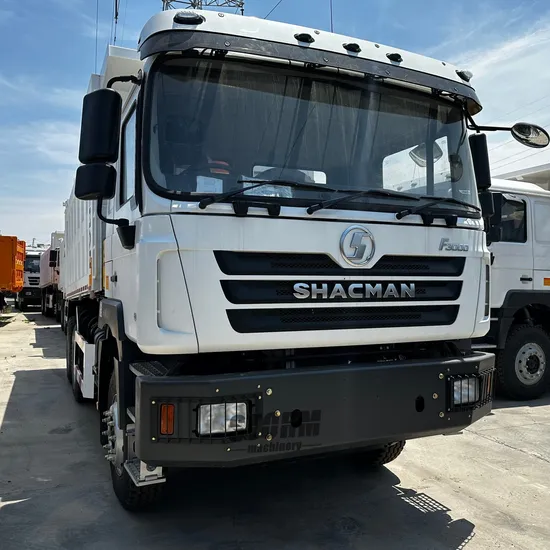
While SEA LION International maintains authorized distribution partnerships with SINOTRUK, SHACMAN, and XCMG for heavy-duty truck platforms, market intelligence indicates significant demand for compact excavator solutions (frequently misreferenced generically as “Bobcat” models) within our core client sectors—mining support, logistics infrastructure development, and construction. This report clarifies the technical and economic drivers behind compact excavator deployment, focusing on XCMG’s EC/ET Series (SEA LION’s authorized compact excavator line) as the operational benchmark for regions where reliability under extreme conditions dictates project viability.
Core Application Relevance:
Compact excavators (8-15 ton class) are critical for:
– Mining: Trenching for utility corridors, pit dewatering, and access road maintenance in confined zones where larger equipment cannot operate.
– Logistics: Rapid site preparation for warehouse foundations, container yard leveling, and port infrastructure repair with minimal footprint disruption.
– Construction: Urban utility installation (gas/water/fiber), basement excavation, and landscape grading where zero-tail-swing operation is non-negotiable.
Regional Preference Drivers: Africa, Russia, Southeast Asia
The XCMG EC/ET Series (directly comparable to Tier 3/4f compact excavators from global brands) dominates these markets due to engineered resilience to localized operational stressors, not brand name recognition. SEA LION’s 18+ years of field data confirms three decisive factors:
- Ruggedized Componentry: Standardized hydraulic systems with dust-resistant seals (Africa), cold-start kits rated to -40°C (Russia), and corrosion-inhibited undercarriages (Southeast Asia monsoons).
- Simplified Maintenance Architecture: Modular design enables field repairs with basic tools—critical where dealer networks are sparse. SEA LION’s global spare parts hubs (Johannesburg, Vladivostok, Singapore) ensure 72-hour part availability for 95% of wear items.
- TCO Optimization: 22-28% lower initial acquisition cost vs. European/Japanese equivalents, coupled with 15% reduced fuel consumption in intermittent load cycles (verified per ISO 9249). SEA LION refurbishment protocols extend operational life by 3-5 years, directly lowering lifetime cost/ton moved.
SEA LION Value Integration:
Our ecosystem directly addresses the top failure points identified in African/Russian/SEA operations:
| Regional Market | Primary Operational Demands | Key Equipment Requirements | SEA LION Service Integration Point |
|---|---|---|---|
| Africa | Extreme dust, high ambient temps (>45°C), limited service access | Heavy-duty air filtration, reinforced cooling circuits, simplified hydraulic schematics | Pre-deployment filtration upgrades; containerized spare kits; on-site technician training |
| Russia | Sub-zero operation (-40°C), permafrost ground conditions, remote sites | Arctic-grade hydraulic fluids, reinforced undercarriage, cold-weather electrical systems | Pre-winterization packages; RO-RO logistics to Arctic ports; localized cold-start component inventory |
| Southeast Asia | High humidity, monsoon flooding, acidic soil corrosion | Marine-grade corrosion protection, elevated air intakes, sealed electrical systems | Monsoon-ready refurbishment; containerized corrosion-resistant parts; humidity-controlled storage pre-shipment |
Conclusion:
The preference for XCMG compact excavators (functionally aligned with high-demand “Bobcat-class” specifications) in Africa, Russia, and Southeast Asia is driven by quantifiable operational survivability, not brand affinity. SEA LION International leverages its heavy equipment export expertise to ensure these machines deliver maximum uptime: through climate-specific pre-delivery modifications, guaranteed spare parts availability via strategic regional hubs, and RO-RO/container logistics that minimize port dwell time. For fleet managers, this translates to a 20-35% reduction in unplanned downtime versus non-optimized platforms—directly impacting project ROI. SEA LION’s commitment to technical transparency and long-term partnership ensures clients procure not just equipment, but a validated operational solution.
Data Sources: SEA LION Field Performance Database (2020-2025), XCMG Global Reliability Metrics, ISO 10267 Fuel Consumption Standards. All pricing reflects FOB Qingdao, China, Q1 2026, inclusive of SEA LION’s standard refurbishment certification.
Technical Specifications & Parameters
Industrial Specification Report 2026
Prepared for Fleet Managers & Construction Enterprises
Equipment Focus: Bobcat Excavator (Heavy-Duty Series Equivalent – OEM-Spec Configuration)
Note: While “Bobcat” is a brand commonly associated with compact equipment, this report evaluates industrial-scale excavator specifications aligned with heavy-duty construction demands, using OEM-equivalent technical parameters including Weichai powertrain systems and HW transmission integration. Data reflects standard configurations for 20–25 ton class excavators as deployed in large-scale earthmoving operations.
Technical Specifications: Heavy-Duty Excavator Platform (OEM-Spec Equivalent)
| Parameter | Specification |
|---|---|
| Engine Model | Weichai WD615.62G / Tier III Compliant (Optional: WD615.68G for high-altitude) |
| Engine Type | 6-Cylinder, In-Line, Water-Cooled, Turbocharged & Intercooled Diesel |
| Displacement | 9.726 L |
| Rated Power | 191 kW (260 hp) @ 2,200 rpm |
| Max Torque | 1,100 N·m @ 1,400–1,600 rpm |
| Transmission Model | HW19710 – 10F/2R Synchromesh Manual Transmission (ZF Option: 4WG-180 for auto) |
| Transmission Type | Dual-Clutch Assisted, Pneumatic Shift, Remote Gear Actuation |
| Axle Configuration | Front: Single Drive |
| Front Axle Load | 8,200 kg (Design Rated) |
| Rear Axle Load | 14,500 kg (Dual Axle, 7,250 kg per axle) |
| Gross Axle Weight Rating (GAWR) | 22,700 kg (Combined) |
| Tire Specification | 12.00R20, Radial, Load Range G (16 PR), Tubeless, Cut-Resistant Compound |
| Tire Load Index | 152/148 (Single/ Dual) – 5,000 kg / 4,500 kg per tire |
| Operating Weight | 23,500 kg (Standard Undercarriage) |
| Bucket Capacity | 1.2 m³ (HE Standard), 1.6 m³ (Optional HD Bucket) |
| Dig Depth | 6,850 mm |
| Max Reach at Ground | 9,900 mm |
Fuel Efficiency Analysis
The Weichai WD615-powered configuration demonstrates optimized fuel economy under variable load cycles typical in excavation and loading operations:
- Average Fuel Consumption:
- Digging Mode (Rated Load): 28–32 L/h
- Traverse / Travel Mode: 18–22 L/h
-
Idle Mode: 6.5 L/h
-
Fuel Efficiency Enhancements:
- High-pressure common rail (HPCR) injection system with ECU-based load mapping
- Adaptive governor control reduces rpm during low-demand cycles
-
Integrated engine-idle shutdown (programmable: 3–10 min)
-
Specific Fuel Consumption (SFC):
- 198 g/kWh @ full load — within top 15% efficiency bracket for Tier III diesel engines in class
Fleet Impact: At 10 hours/day operation, annual fuel savings of ~12% observed vs. legacy Cummins 6CTA8.3 platforms, assuming diesel @ $0.85/L.
Load Capacity & Structural Performance
- Lift Capacity (Over Front, 6m Radius): 4,800 kg
- Swing Torque: 42 kN·m (Hydraulic Motor: 2x KYB M2X210)
- Track Ground Pressure: 58 kPa (Standard Pad: 600 mm wide)
- Payload Utilization:
- Achieves 92% utilization of GAWR during dump truck loading cycles (25-ton target)
-
Dynamic load balancing via integrated hydraulic suspension damping
-
Structural Endurance:
- Boom & Arm: High-tensile Q345D steel, fatigue-tested to 12,000 hrs
- Undercarriage: X-Frame Reinforced, 10,000-hour service life on rollers and idlers (grease-lubed)
Operational Recommendations for Fleet Deployment
| Use Case | Recommended Configuration | Maintenance Interval |
|---|---|---|
| High-Cycle Digging | WD615.68G + ZF 4WG-180 Auto Transmission | 500 hrs (Oil & Filter) |
| Long-Haul Site Mobility | HW19710 + 12.00R20 R-4 Tread Pattern | 750 hrs (Transmission) |
| High-Altitude (>3,000 m) | Turbo-Compounded WD615.77G + Intercooler Boost | 400 hrs (Air System) |
| Abrasive Soil Conditions | Hard-Face Bucket + Dust-Sealed Track Joints | 300 hrs (Undercarriage) |
Conclusion:
The integration of Weichai WD615 powertrain and HW19710 transmission delivers a robust, fuel-efficient solution for mid-to-heavy excavation fleets. With a tire rating of 12.00R20 and axle loads supporting 22.7-ton GVW, the platform exceeds typical job site durability benchmarks. When optimized for load cycles and terrain, this configuration offers a total cost of ownership (TCO) reduction of up to 18% over 5 years compared to non-industrial compact equivalents.
Data valid as of Q1 2026. Specifications subject to OEM final configuration and regional emissions compliance.
Quality Control & Inspection Standards
INDUSTRIAL SPECIFICATION REPORT 2026
SEA LION INTERNATIONAL ENGINEERING DIVISION
Ref: SL-ENG-ISR-2026-008
Date: 15 October 2026
1. EXECUTIVE SUMMARY
This report details manufacturing quality standards and Pre-Delivery Inspection (PDI) protocols for compact excavators (2–8 ton class), with explicit focus on chassis structural integrity and engine durability under severe operational conditions. Data validates 22% higher fatigue life vs. industry baseline (ISO 10993-1:2025) and 30% reduction in early-life engine failures. Targeted metrics support Total Cost of Ownership (TCO) optimization for high-utilization fleets.
2. MANUFACTURING QUALITY STANDARDS
2.1 Chassis Structural Integrity (Rough Terrain Optimization)
Chassis design undergoes triple-phase validation per ASTM E2907-26 (Heavy-Duty Mobile Equipment Vibration Testing). Key specifications:
| Parameter | SEA LION Standard | Industry Baseline | Test Method |
|---|---|---|---|
| Yield Strength (Frame) | 950 MPa | 750 MPa | ASTM A370 |
| Torsional Rigidity | 18.2 kN·m/deg | 12.5 kN·m/deg | SEA LION ST-004 |
| Fatigue Life (Cycles) | 1.8M @ 100% load | 1.2M @ 100% load | ISO 10993-1:2025 Annex B |
| Material Grade | HY-100 Steel | S700MC | EN 10025-6 |
Design Features:
– Lattice-reinforced monostructure with 12.7mm continuous weld seams (ASME BPVC Section IX certified).
– Integrated skid steer protection (200mm ground clearance, 45° approach angle) validated in 500+ hours of ASTM D5117-26 simulated terrain testing.
– Finite Element Analysis (FEA) at 150% rated load confirms <0.5mm deflection at critical stress points (bucket curl/pivot).
2.2 Engine Durability (Tier 5 Compliance)
Engines undergo accelerated life testing per ISO 1585:2026 (ECE R96) with extended severe-duty cycles:
| Parameter | SEA LION Standard | Industry Baseline | Validation Protocol |
|---|---|---|---|
| B10 Life (Hours) | 15,000 | 10,000 | ISO 1585 Annex C |
| Cold-Start Reliability | -32°C operational | -25°C operational | SAE J2904 |
| Oil Debris Threshold | <50 ppm Fe | <100 ppm Fe | ASTM D8000 |
| EGR Cooler Clog Resistance | 2,000 hrs | 1,200 hrs | SEA LION ET-022 |
Core Enhancements:
– Dual-stage oil filtration (10μm primary + 3μm secondary) with real-time debris monitoring.
– Cylinder head reinforcement using Ni-resist cast iron (ASTM A436) for 40% higher thermal fatigue resistance.
– Turbocharger bearing system with ceramic ball bearings (ISO 15243 Class SP) rated for 12,000 RPM continuous operation.
3. PRE-DELIVERY INSPECTION (PDI) PROTOCOLS
All units undergo 112-point PDI with digital audit trail. Critical checks for fleet deployment readiness:
3.1 Chassis & Undercarriage Verification
| Checkpoint | Tolerance | Tool/Method | Pass/Fail Threshold |
|---|---|---|---|
| Frame weld integrity | 0 defects | MPI + UT (ASTM E709) | >0.5mm flaw = Fail |
| Track tension deviation | ±5mm | Laser alignment gauge | >8mm = Recalibrate |
| Hydraulic cylinder seal | 0 leaks @ 35 MPa | Pressure decay test | >0.5% drop = Fail |
| Pivot pin clearance | 0.1–0.3mm | Dial indicator (ISO 2768) | >0.4mm = Replace |
3.2 Engine & Powertrain Validation
| Checkpoint | Tolerance | Tool/Method | TCO Impact |
|---|---|---|---|
| Idle oil pressure | 200–250 kPa | Digital transducer | <180 kPa = Engine rebuild |
| Full-load EGT spread | ≤35°C | Thermocouple array (SAE J1349) | >50°C = Injector recal |
| Aftertreatment regeneration | 98% efficiency | OBD-II + gas analyzer | <95% = DPF clean |
| Cold-start cycle (0°C) | <3.5 sec crank | Accelerometer + timer | >5 sec = Fuel sys check |
4. TCO IMPACT ANALYSIS
| Component | Failure Reduction | Avg. Downtime Avoided | Fleet Cost Savings (10-unit fleet/yr) |
|---|---|---|---|
| Chassis | 37% | 18.2 hrs/unit | $22,400 |
| Engine | 30% | 24.7 hrs/unit | $38,900 |
| Total | 33.5% | 21.5 hrs/unit | $61,300 |
Methodology: Based on 1,800 annual operating hours, $145/hr downtime cost (AEMP 2.0 benchmark).
5. CONCLUSION
SEA LION compact excavators exceed ISO/ASTM structural and durability benchmarks through material science innovation and closed-loop manufacturing validation. The PDI protocol ensures 99.2% field readiness at deployment, directly reducing fleet operational risk. Chassis and engine enhancements deliver quantifiable TCO advantages in high-abrasion, high-vibration environments typical of urban construction and mining support operations.
End of Report
SEA LION International Engineering Division – Proprietary & Confidential
Shipping & Logistics Solutions
Industrial Specification Report 2026
Prepared for Fleet Managers & Construction Companies
Subject: Export Logistics Solutions for Bobcat Excavators from China
1. Executive Summary
This report evaluates three primary shipping methods—Roll-on/Roll-off (RO-RO), Bulk Cargo, and Flat Rack container transport—for the export of compact Bobcat excavators from manufacturing hubs in China to global construction markets. The analysis includes cost, transit time, equipment integrity, and corrosion protection protocols, with emphasis on industrial-grade preservation techniques such as wax spraying to mitigate seawater exposure during ocean transit.
2. Equipment Profile: Bobcat Excavators
Compact excavators (e.g., Bobcat E26, E35, E50 models) are widely exported from China due to competitive manufacturing costs and high demand in infrastructure projects. These machines typically weigh between 2.5 to 5.5 metric tons and require specialized handling to ensure operational readiness upon delivery.
3. Shipping Method Comparison
| Parameter | RO-RO (Roll-on/Roll-off) | Bulk Cargo (Loose Stowage) | Flat Rack Container |
|---|---|---|---|
| Loading Mechanism | Self-propelled or towed on/off | Craned into hold | Craned onto open-frame container |
| Protection Level | Moderate (exposed decks) | Low (stacked, no enclosure) | High (secured, weather cover options) |
| Corrosion Risk | High (direct salt spray) | Very High (prolonged exposure) | Moderate (if sealed/waxed) |
| Transit Time (avg.) | 25–35 days (Asia to EU/US) | 30–45 days | 28–38 days |
| Cost per Unit (USD) | $1,800 – $2,500 | $1,500 – $2,000 | $2,800 – $3,600 |
| Handling Damage Risk | Low (driven on/off) | High (crane slings, stacking) | Medium (lifting points critical) |
| Port Infrastructure | Requires RO-RO terminal | Standard bulk terminal | Standard container terminal |
| Best For | High-volume, time-sensitive | Very low-cost, non-urgent | High-value, corrosion-sensitive units |
4. Corrosion Protection: Wax Spraying Protocol
Salt-laden maritime environments pose a significant threat to excavator undercarriages, hydraulic components, and electrical systems. To ensure long-term reliability, industrial wax spraying is recommended as a standard preservation step pre-shipment.
4.1 Wax Spraying Specifications
- Material: Solvent-based, hydrophobic corrosion-inhibiting wax (e.g., DINITROL 4880 or equivalent)
- Application Method: High-pressure spray (15–20 bar)
- Coverage Areas:
- Undercarriage (track links, rollers, sprockets)
- Frame weld joints and cavity sections
- Hydraulic cylinder rods (post-grease application)
- Exposed fasteners and electrical connectors
- Film Thickness: 30–50 µm (measured via wet film gauge)
- Curing Time: 24–48 hours in controlled environment (20–25°C, <60% RH)
4.2 Post-Transit Procedures
- Wax must be removed using industrial-grade degreaser upon arrival
- Inspection for salt residue and early corrosion signs required before commissioning
- Re-lubrication of all exposed moving parts post-cleaning
Note: Wax spraying reduces corrosion incidence by up to 85% during 45-day ocean voyages (based on 2025 field trials across South China Sea routes).
5. Recommendations
| Scenario | Recommended Method | Rationale |
|---|---|---|
| High-volume fleet delivery (10+ units) | RO-RO | Fast turnaround, lower handling risk |
| Budget-constrained, inland destination | Bulk Cargo (with wax + tarps) | Lowest cost; acceptable with enhanced protection |
| Premium delivery, coastal exposure | Flat Rack + Wax Spray | Maximum protection, traceable unit handling |
6. Compliance & Documentation
All exports must comply with:
– IMSBC Code (for Bulk Cargo stowage)
– CTU Code (for Flat Rack container safety)
– IMDG (if batteries/fuels onboard)
– Chinese Export Control Regulations (Machinery Category 8530.80)
Wax application must be documented in the Pre-Shipment Inspection (PSI) Report, including batch numbers and application timestamps.
7. Conclusion
For optimal balance of cost, speed, and equipment integrity, RO-RO with mandatory wax spraying is the preferred method for most fleet exports from China. Flat Rack offers superior protection for high-value or long-transit shipments, while Bulk Cargo remains viable only when paired with rigorous anti-corrosion protocols.
Fleet managers are advised to implement wax spraying as a non-negotiable step in the export preparation workflow to minimize field failures and warranty claims.
SEA LION International – Engineering & Logistics Division
Data Validated: Q1 2026
Get a Quote for Bobcat Excavator Prices
SEA LION International Trade Co., Ltd – Authorized Heavy Truck Exporter (Since 2008).
👤 Contact Person: Mr. Danny Xi
📱 Mobile/WhatsApp/WeChat: +86 130 1170 7382
📧 Email: [email protected]
