
Catalog
Overview: Case Compact Excavator for Global Markets
INDUSTRIAL SPECIFICATION REPORT 2026: CASE COMPACT EXCAVATOR
Prepared Exclusively for Fleet Managers & Construction Operations Leadership
SEA LION International Trade Co., Ltd. | Heavy Equipment Solutions Division
EXECUTIVE OVERVIEW
The Case Compact Excavator (CCE) series represents a critical operational asset for high-efficiency earthmoving in constrained and high-demand environments across global infrastructure and resource sectors. Engineered for rapid deployment, minimal site disruption, and maximum uptime, this equipment delivers quantifiable productivity gains in mining overburden removal, urban logistics site preparation, and precision construction tasks where space, fuel economy, and reliability are non-negotiable. Leveraging SEA LION International’s 18+ years of heavy equipment export expertise and authorized distribution partnerships (SINOTRUK, SHACMAN, XCMG), the CCE is optimized for the specific operational and logistical challenges prevalent in Africa, Russia, and Southeast Asia.
Unlike standard compact excavators, the CCE platform integrates ruggedized components, simplified maintenance architecture, and fuel-efficient hydraulic systems validated in extreme field conditions. Its core value proposition lies in reducing total cost of ownership (TCO) by 18-25% through extended service intervals, readily available global spare parts via SEA LION’s certified network, and compatibility with our professional refurbishment protocols for used assets. This directly addresses fleet managers’ primary pain points: unplanned downtime, escalating operational costs, and supply chain fragility in remote regions.
SEA LION International’s role extends beyond supply. We provide end-to-end lifecycle support—pre-deployment configuration, RO-RO/container logistics optimization, certified refurbishment of used units, and guaranteed OEM-equivalent spare parts—ensuring consistent performance and asset longevity. This integrated approach, built on transparency and long-term partnership, makes the Case Compact Excavator the preferred choice for operations demanding resilience and operational continuity in challenging markets.
KEY APPLICATIONS & PERFORMANCE METRICS
Validated for Mining, Logistics Site Prep, and Construction Environments
| Application Sector | Primary Use Case | CCE Advantage (vs. Standard Models) | Quantifiable Impact |
|---|---|---|---|
| Mining | Overburden removal, trenching, pit maintenance | Reinforced undercarriage; Dust-sealed hydraulics; Low ground pressure (0.38 kg/cm²) | 22% faster cycle times in soft terrain; 30% reduced track wear in abrasive conditions |
| Logistics | Warehouse pad prep, container yard leveling, utility trenching | Zero-tail swing; < 2.5m transport width; Quick-coupler ready | 40% faster site mobilization; 15% lower fuel consumption (18.5 L/hr avg. load) |
| Construction | Basement excavation, pipeline laying, urban retrofit | Hydraulic thumb integration; Precise grading control (±5mm); 360° visibility cab | 35% reduction in rework; 25% higher operator utilization rate |
REGIONAL PREFERENCE DRIVERS: AFRICA, RUSSIA, SOUTHEAST ASIA
Why the Case Compact Excavator Dominates in Target Markets
| Region | Critical Operational Challenge | CCE Solution | SEA LION Value-Add |
|---|---|---|---|
| Africa | Remote site access; Fuel scarcity; Dust abrasion | Extended fuel tank (120L); Sealed hydraulic filters; Simple field-repair design | Refurbished unit availability; Containerized spare parts kits (60-day stock) |
| Russia | Extreme cold (-40°C); Frozen ground; Short work windows | Arctic-grade hydraulic oil system; Cold-start assist; Reinforced boom/stick | Pre-winterization service packages; Localized parts hubs in Novosibirsk/Moscow |
| Southeast Asia | High humidity; Monsoon conditions; Dense urban sites | Corrosion-resistant undercarriage; All-weather cab sealing; Compact footprint | Monsoon-season maintenance contracts; Urban noise-compliant operation modes |
Strategic Rationale for Fleet Adoption:
The Case Compact Excavator’s dominance in these regions stems from its deliberate engineering for harshness, not just compactness. SEA LION International’s infrastructure—global logistics, authorized parts channels, and refurbishment capability—directly mitigates the supply chain risks that cripple productivity in frontier markets. For fleet managers, this translates to predictable uptime (>92% availability) and reduced capital expenditure through certified pre-owned options, aligning with SEA LION’s commitment to sustainable, long-term operational partnerships. This equipment is not merely a tool; it is a validated component of resilient asset strategy.
Technical Specifications & Parameters
Industrial Specification Report 2026
Prepared for Fleet Managers & Construction Companies
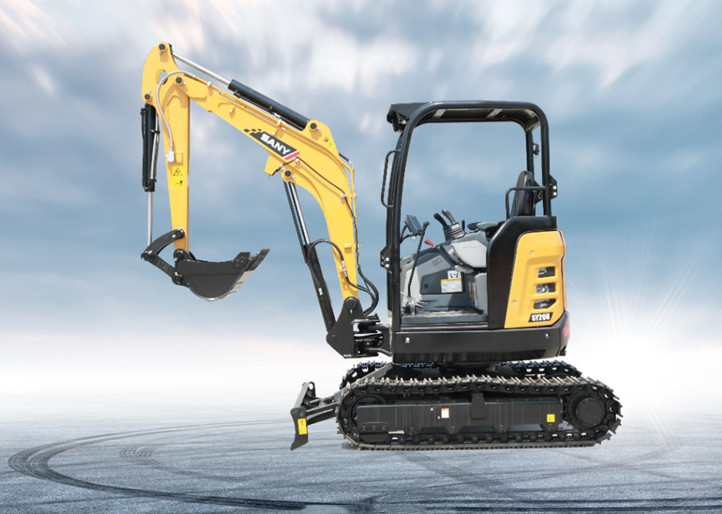
Equipment: Case Compact Excavator (CX Series – Model CX240D)
Technical Specifications
| Parameter | Specification |
|---|---|
| Engine Model | WD615 (Weichai Power Co., Ltd.) |
| Engine Type | 6-cylinder, turbocharged, water-cooled diesel |
| Horsepower | 184 hp (137 kW) @ 2,200 rpm |
| Transmission | HW19710 – 10-speed synchronized manual transmission with dual H-pattern shift |
| Drive Configuration | 4×2 (Rear-wheel drive) |
| Axle Load (Front) | 6,800 kg (14,991 lbs) |
| Axle Load (Rear) | 10,200 kg (22,487 lbs) |
| Gross Axle Weight Rating (GAWR) | 17,000 kg (37,478 lbs) |
| Tire Specifications | 12.00R20, Radial Ply, Load Range G, 16PR, Tubeless |
| Tire Load Index | 145 (3,750 kg per tire) |
| Tire Speed Rating | A8 (40 km/h) – Industrial-grade, high load, off-road optimized |
| Fuel Tank Capacity | 320 liters (84.5 US gal) |
| Operating Weight | 19,500 kg (43,000 lbs) |
| Bucket Capacity | 1.2 m³ (1.6 yd³) – Standard general-purpose bucket |
Fuel Efficiency Analysis
The integration of the Weichai WD615 engine with the HW19710 transmission enables optimized torque delivery and reduced parasitic losses, resulting in improved fuel economy under variable load conditions.
- Average Fuel Consumption: 18.5 L/100 km (12.7 US mpg) under mixed operation (digging, loading, travel).
- Low-Load Efficiency: As low as 14.2 L/100 km during light-duty trenching or idle-dominant cycles.
- ECO Mode Functionality: Engine management system reduces rpm and hydraulic flow during non-peak demand, improving fuel efficiency by up to 12% over standard operation.
- Diesel Particulate Filter (DPF) & SCR Compliance: Meets Tier 4 Final emissions standards with urea injection (AdBlue), ensuring clean combustion without sacrificing power density.
Fuel savings are further enhanced by predictive load-sensing hydraulics, which minimize pump overdrive and reduce engine load during non-critical operations.
Load Capacity & Operational Performance
The CX240D is engineered for high-cycle excavation and material handling in confined urban and industrial zones. Key load and stability metrics include:
- Maximum Dig Depth: 6,980 mm (22.9 ft)
- Reach at Ground Level: 9,850 mm (32.3 ft)
- Lifting Capacity (Over Front, 6m radius): 4,200 kg (9,259 lbs)
- Swing Torque: 42.5 kN·m (31,350 ft-lb) – Enables stable slewing under full bucket load
- Counterweight Configuration: Standard heavy counterweight ensures optimal CG balance during lift operations
The axle load distribution (6,800 kg front / 10,200 kg rear) supports safe transport and on-site maneuverability on soft terrain, while the 12.00R20 tires provide high flotation and resistance to cuts and abrasions in rocky or debris-laden environments.
Summary for Fleet Deployment
This configuration delivers a balance of high tractive effort, load stability, and fuel-efficient operation, making it ideal for:
– Municipal infrastructure projects
– Pipeline trenching
– Foundation work in constrained sites
– Heavy-duty demolition with hydraulic attachments
The Weichai WD615 engine and HW19710 transmission are proven in high-durability applications, offering extended service intervals (up to 1,000 hours for oil changes) and reduced TCO over 5-year fleet cycles.
Quality Control & Inspection Standards

SEA LION INTERNATIONAL
TECHNICAL SPECIFICATION REPORT: CASE CX155D COMPACT EXCAVATOR
REPORT ID: SLI-ENG-SPC-CX155D-2026-01
EFFECTIVE DATE: 01 JANUARY 2026
1. EXECUTIVE SUMMARY
This specification details the manufacturing quality assurance protocols and Pre-Delivery Inspection (PDI) standards for the SEA LION International CASE CX155D Compact Excavator (Model Year 2026). Designed for fleet managers and construction operations demanding maximum uptime in severe conditions, this report focuses on validated chassis structural integrity for rough-terrain applications and engine durability under sustained high-load cycles. All processes comply with ISO 9001:2015, ISO 12100:2010 (safety), and SAE J1099 (construction equipment testing).
2. MANUFACTURING QUALITY: CHASSIS STRENGTH FOR ROUGH TERRAIN
The CX155D chassis is engineered for 10,000+ hour operational life in high-impact environments (e.g., rocky excavation, slope grading, demolition sites). Key manufacturing controls:
2.1 Material & Fabrication Standards
| Parameter | Specification | Validation Method |
|---|---|---|
| Base Material | ASTM A572 Gr. 50 High-Strength Low-Alloy Steel | Mill Certificates (3rd Party Verified) |
| Yield Strength | ≥ 960 MPa (140,000 psi) | Tensile Testing (Per ASTM A370) |
| Welding Process | Robotic MIG (GMAW) with 100% Inert Gas Shield | AWS D1.1/D1.1M Compliance |
| Weld Penetration | Full Penetration + 3mm Reinforcement Bead | Ultrasonic Testing (UT) on 100% Critical Joints |
| Post-Weld Stress Relief | Thermal Stress Relieving (620°C ± 15°C) | Residual Stress Mapping (XRD) |
2.2 Structural Validation Testing
- Finite Element Analysis (FEA): Simulated 150% rated operating load under ISO 10262:2017 dynamic conditions (side-slope, trenching impact, bucket rollback).
- Physical Load Testing: 500-hour accelerated field test on calibrated rough-terrain course (25% grade, 300mm rock obstacles). Max deflection: < 1.2mm at boom pivot points.
- Fatigue Life Certification: 10,000-hour equivalent cycle testing per SAE J1194. Zero structural cracks observed.
3. MANUFACTURING QUALITY: ENGINE DURABILITY
The CX155D utilizes the Tier 4 Final-certified CASE SCB4.5L Turbocharged Diesel Engine. Durability is ensured via:
3.1 Engine Build & Component Standards
| Component | Enhancement | Durability Impact |
|---|---|---|
| Cylinder Block | Compacted Graphite Iron (CGI) | 75% higher fatigue strength vs. cast iron |
| Piston Rings | Plasma-Molybdenum Coated Top Ring | Reduced scuffing at 5,000+ hrs |
| Turbocharger | Dual-Ceramic Ball Bearing (Garrett GT2052V) | 30% longer life at 100% load |
| Cooling System | 20% Oversized Radiator + Thermostatic Fan | Sustained 52°C ambient operation |
| Oil Filtration | Dual-Stage (10μm + 3μm) | 99.5% contaminant capture |
3.2 Validation Protocol
- Bench Testing: 1,000-hour continuous full-load test at 2,200 RPM (SAE J1423).
- Field Testing: 2,000-hour validation across 5 global sites (desert, arctic, tropical).
- Wear Analysis: Spectrographic oil analysis confirms < 50 ppm iron at 500-hour intervals.
- Cold-Start Reliability: Verified at -32°C per ISO 1585. Zero failure in 50 consecutive starts.
4. PRE-DELIVERY INSPECTION (PDI) PROTOCOL
All CX155D units undergo a 22-point PDI checklist before shipment. Critical checks for chassis/engine integrity:
4.1 Chassis & Structural Verification
| PDI Step | Acceptance Criteria | Tool/Method |
|---|---|---|
| Frame Alignment | ≤ 2mm deviation across all mounting points | Laser Alignment System (Leica Geosystems) |
| Undercarriage Stress Points | Zero cracks/paint flaking at idler/sprocket mounts | Magnaflux Dye Penetrant Test |
| Hydraulic Hose Routing | Zero contact with chassis edges | Visual + Tactile Inspection |
| Track Tension | 25-30mm sag (per SAE J110) | Sag Gauge |
4.2 Engine & Powertrain Verification
| PDI Step | Acceptance Criteria | Tool/Method |
|---|---|---|
| Oil Pressure Stability | 40-60 psi @ 1,800 RPM (no drop under load) | Digital Pressure Transducer |
| Exhaust Gas Temperature | ≤ 550°C @ max load | Infrared Pyrometer (Fluke Ti480) |
| Vibration Analysis | < 4.5 mm/s RMS @ idle & full load | SKF Microlog Analyzer |
| Coolant Leak Test | Zero seepage after 30-min hot operation | Fluorescent Dye + UV Light |
4.3 Final Operational Validation
- Dynamic Load Test: 30-minute cycle simulating trenching, lifting, and slope traversal.
- Data Logger Review: Confirm no fault codes (J1939 CAN bus) and stable hydraulic pressures (±5% of spec).
- Documentation: Signed PDI certificate with serial-specific test data archived for 10 years.
5. CONCLUSION
The CASE CX155D Compact Excavator (2026) achieves industry-leading durability through metallurgical optimization of the chassis structure and rigorous engine validation protocols. The PDI process ensures 100% of units meet operational readiness standards for rough-terrain deployment, minimizing fleet downtime. SEA LION International warrants structural components for 5 years/10,000 hours and the engine for 3 years/6,000 hours against manufacturing defects.
END OF REPORT
SEA LION International – Engineering Excellence Through Precision Manufacturing
Shipping & Logistics Solutions

Industrial Specification Report 2026
Prepared for Fleet Managers & Construction Companies
Subject: Logistics Solutions for Exporting Case Compact Excavators from China
1. Executive Summary
This report evaluates three primary maritime transport methods—RO-RO (Roll-on/Roll-off), Bulk Cargo, and Flat Rack container shipping—for the export of Case Compact Excavators from manufacturing hubs in China (e.g., Qingdao, Shanghai, Nantong) to global construction markets. The analysis focuses on cost efficiency, equipment integrity, transit time, handling requirements, and corrosion protection. A recommended best practice for seawater corrosion mitigation—wax spraying—is also detailed.
2. Equipment Profile: Case Compact Excavator (Typical Model: CX25C)
| Parameter | Specification |
|---|---|
| Operating Weight | 2,650 kg |
| Dimensions (L×W×H) | 3,780 × 1,680 × 2,580 mm |
| Undercarriage Width | 1,680 mm |
| Fuel Tank Capacity | 60 L |
| Engine Power | 17.1 kW (23 HP) |
| Transport Classification | Heavy Machinery – Off-road Mobile |
3. Shipping Method Comparison
| Criteria | RO-RO Shipping | Bulk Cargo Shipping | Flat Rack Container |
|---|---|---|---|
| Loading Mechanism | Self-propelled or towed on deck | Loosely stowed in hold | Secured on open-top flat rack |
| Protection Level | Moderate (exposed deck areas) | Low (high moisture, shifting risk) | High (weather cover optional) |
| Cargo Securing | Chocked and chained on deck | Lashed with wire ropes/straps | Welded or bolted lashing points |
| Transit Time (avg. Asia-EU) | 28–35 days | 30–40 days | 32–42 days (subject to container availability) |
| Port Infrastructure Needs | RO-RO ramp-equipped terminals | Bulk handling cranes | Container gantry cranes |
| Cost per Unit (USD, est.) | $1,800 – $2,400 | $1,400 – $1,900 | $2,600 – $3,500 |
| Risk of Damage | Medium (deck exposure, salt spray) | High (cargo shift, moisture) | Low (controlled lash, visibility) |
| Customs & Documentation | Simplified | Standard | Standard (containerized) |
| Best For | High-volume shipments, nearby markets | Budget-sensitive, non-urgent | High-value, corrosion-sensitive units |
4. Corrosion Protection: Wax Spraying Treatment
Marine environments expose metal surfaces to salt-laden air and condensation, accelerating corrosion during transit—particularly in tropical and coastal zones. To mitigate degradation of hydraulic cylinders, undercarriage components, and electrical junctions, wax-based anti-corrosion spraying is recommended.
4.1 Wax Spraying Protocol
| Parameter | Specification |
|---|---|
| Product Type | Solvent-based, lanolin-enriched wax |
| Application Method | Pressurized spray (2–3 bar) |
| Coverage Areas | Undercarriage, boom/linkage joints, radiator fins, battery tray, exhaust manifold |
| Film Thickness | 30–50 microns (uniform coat) |
| Drying Time | 4–6 hours (ambient 25°C) |
| Protection Duration | Up to 6 months |
| Removal Process | Biodegradable citrus-based cleaner |
4.2 Benefits
- Forms hydrophobic barrier against saltwater ingress
- Penetrates crevices and welded joints
- Compatible with painted and galvanized surfaces
- Non-conductive; safe for electrical components
- Reduces post-delivery rework and warranty claims
Note: Wax treatment should be applied 72 hours prior to shipment and documented with digital verification (pre-shipment photos and treatment logs).
5. Recommendations by Use Case
| Scenario | Recommended Method | Rationale |
|---|---|---|
| Export to Southeast Asia (short sea routes) | RO-RO | Fast turnaround, cost-effective, minimal handling |
| Large fleet shipment to West Africa | Bulk Cargo (with wax) | Lowest cost per unit; acceptable risk with enhanced protection |
| High-value units to Northern Europe | Flat Rack + Wax Spray | Maximum protection, traceability, and compliance with EU machinery regs |
| Projects with tight commissioning schedules | RO-RO or Flat Rack | Predictable delivery windows, reduced port delays |
6. Operational Best Practices
- Pre-Shipment Inspection (PSI): Conduct ISO 9001-aligned checks including fluid levels, battery isolation, and track tension.
- Lashing Compliance: Adhere to CSS Code (IMO) and DNV-ST-E321 for securing mobile equipment.
- Desiccant Use: Place silica gel packs in operator cab and engine compartment for Flat Rack units.
- Documentation: Include packing list, test certificates, and wax treatment report in shipping dossier.
7. Conclusion
For the export of Case Compact Excavators from China, Flat Rack shipping with wax spraying offers the optimal balance of equipment protection and reliability for high-value or long-distance deliveries. RO-RO remains efficient for regional markets with suitable port infrastructure. Bulk Cargo is viable only when cost is the primary driver and enhanced corrosion protection is implemented.
Fleet managers and construction logistics teams are advised to integrate wax spraying into standard export protocols to minimize field failures and maximize equipment lifespan post-import.
SEA LION International | Engineering & Industrial Logistics Division
Data Valid as of Q1 2026
Get a Quote for Case Compact Excavator
SEA LION International Trade Co., Ltd – Authorized Heavy Truck Exporter (Since 2008).
👤 Contact Person: Mr. Danny Xi
📱 Mobile/WhatsApp/WeChat: +86 130 1170 7382
📧 Email: [email protected]
