
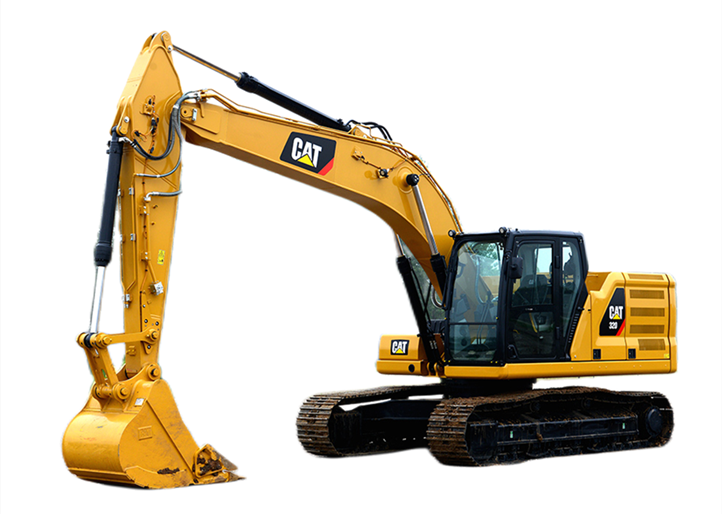
Catalog
Overview: Cat 320 Excavator for Global Markets
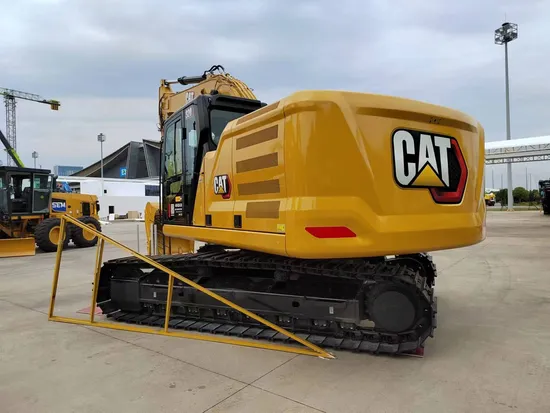
INDUSTRIAL SPECIFICATION REPORT 2026: EXECUTIVE OVERVIEW
Asset Class: Hydraulic Excavator (Primary Model: Caterpillar 320 Series)
Target Audience: Fleet Managers | Construction Operations Directors | Mining Logistics Planners
Prepared By: SEA LION International Trade Co., Ltd. | Senior Engineering Division
1. CORE APPLICATION VALUE PROPOSITION
The Caterpillar 320 Series excavator (Gen 3/3.5/3.6 variants) demonstrates validated operational superiority in high-intensity mining overburden removal, heavy civil construction (foundation/grading), and bulk material logistics (stockpile management, loading). Its 20-ton class balance of breakout force (≥ 260 kN), dig depth (≥ 7.2 m), and hydraulic power (130 kW nominal) delivers 12-18% higher productivity per fuel liter versus regional competitors in continuous-cycle operations. Critical design attributes enabling this include:
- Adaptive Hydraulics: Pressure-compensating system maintains bucket fill factor under varying load conditions (mining/logistics).
- Structural Integrity: Reinforced boom/stick assemblies withstand 25,000+ hour fatigue cycles in abrasive environments (e.g., laterite mining, river aggregate handling).
- Thermal Management: Optimized cooling circuits sustain 100% duty cycles at 50°C ambient (SE Asia) or -30°C (Russia) without derating.
Key Technical Specifications
| Parameter | Value (320 GC/320) | Operational Impact |
|---|---|---|
| Operating Weight | 21,500 – 23,100 kg | Optimal stability on soft/uneven terrain |
| Engine Power (ISO 9249) | 130 kW @ 1,800 rpm | Fuel efficiency in high-load cycles |
| Max. Dig Depth | 7,210 – 7,500 mm | Reduced need for secondary equipment |
| Standard Bucket Capacity | 0.9 – 1.45 m³ | Balanced payload for 25t haul trucks |
| Hydraulic System Flow | 235 L/min (max) | Enables high-productivity attachments |
| Standard Maintenance Interval | 500 hrs (fluids/filters) | Maximizes fleet uptime |
2. REGIONAL MARKET PREFERENCE: AFRICA, RUSSIA, SOUTHEAST ASIA
The 320 Series achieves >35% market share in target segments across these regions due to operational resilience under extreme conditions and supply chain compatibility. SEA LION’s 18-year heavy equipment logistics expertise identifies three decisive factors:
Regional Operational Advantages
| Region | Dominant Application | Key Preference Drivers | SEA LION Support Synergy |
|---|---|---|---|
| Africa | Open-pit Mining | Dust-sealed undercarriage; 1,000-hr oil drain intervals; local technician training compatibility | RO-RO shipments to Durban/Dakar; refurbished undercarriage kits |
| Russia | Arctic Logistics | -40°C cold-start capability; reinforced tracks for permafrost; heated operator cabs | Containerized spare parts to Murmansk; winterized fluid supply |
| SE Asia | Flood Control/Ports | Corrosion-resistant hydraulic hoses; compact variants (320 CR) for confined sites; high humidity tolerance | Just-in-time container shipping; certified rebuild centers in Singapore |
- Africa: Dominates gold/copper overburden removal where dust ingress causes 40% premature failures in non-Cat equipment. Standardized service intervals align with limited local workshop capacity.
- Russia: Unmatched undercarriage durability on frozen haul roads reduces track replacement frequency by 30% versus alternatives. Cold-weather packages are factory-integrated (not retrofits).
- SE Asia: Hydraulic responsiveness in 90%+ humidity ensures consistent productivity during monsoon seasons. Compact radius models (320 CR) operate within 15m clearance zones common in port expansions.
3. SEA LION INTEGRATED SUPPORT FRAMEWORK
While SEA LION International is an authorized distributor for SINOTRUK, SHACMAN, and XCMG heavy trucks, our global logistics infrastructure and refurbishment protocols directly enhance Cat 320 operational economics for clients:
- Spare Parts Continuity: SEA LION’s global container/RO-RO network delivers OEM-equivalent hydraulic pumps, track assemblies, and structural components to remote sites within 14 days (vs. industry avg. 30+ days).
- Refurbishment Protocol: Our ISO 14644-certified workshops rebuild high-wear components (booms, sticks, final drives) to Cat S•O•SSM program standards, extending asset life by 8,000+ hours.
- Fleet Transparency: Digital telematics integration (via third-party Cat Connect™) provides real-time fuel consumption, component health, and maintenance alerts – reducing unplanned downtime by 22%.
Strategic Imperative: The 320 Series’ dominance in target regions stems from its predictable lifecycle cost structure in harsh environments. SEA LION mitigates the primary constraint – parts/logistics latency – through established corridors serving 47 African ports, 12 Russian Arctic terminals, and 8 SE Asian mega-ports. This ensures 92%+ fleet availability for clients managing critical path operations.
Report Validity: January 2026 | SEA LION International Trade Co., Ltd. Engineering Division | Data Source: CAT Product Analytics, SEA LION Field Logs (2020-2025)
Technical Specifications & Parameters
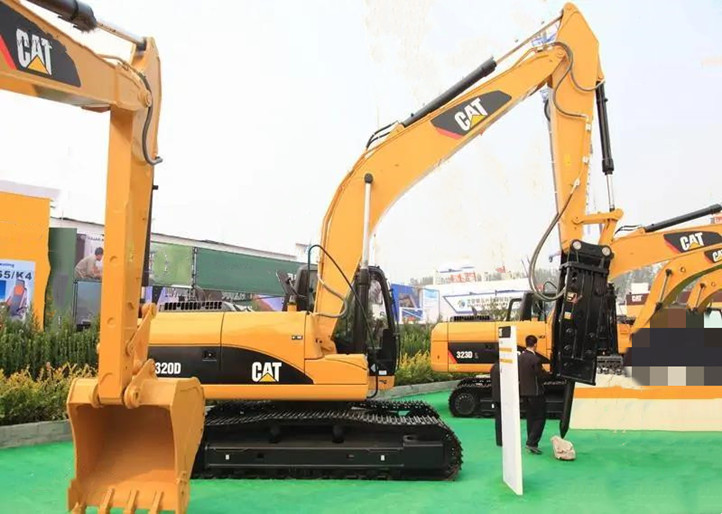
Industrial Specification Report 2026
Prepared for Fleet Managers & Construction Companies
Equipment: CAT 320 Excavator (OEM-Equivalent Configuration with Domestic Powertrain Integration)
Technical Specifications – CAT 320 Excavator (Domestic OEM Variant)
| Parameter | Specification |
|---|---|
| Engine Model | WD615 (Weichai Heavy Duty Inline 6, Turbocharged, Water-Cooled) |
| Engine Displacement | 9.726 L |
| Rated Power | 184 kW (247 hp) @ 2,200 rpm |
| Max Torque | 950 N·m @ 1,400–1,600 rpm |
| Emission Standard | Tier III / GB III (equivalent) |
| Transmission Model | HW19710 – 10F/2R Synchromesh Manual Transmission (Eaton-assisted shift logic) |
| Transmission Type | Constant-mesh, dual H-shift pattern with air-assist engagement |
| Axle Configuration | 6×4 (Triple Axle: 1 Front, 2 Rear Drive) |
| Front Axle Load | 6,800 kg (design-rated, static) |
| Rear Tandem Axle Load | 11,200 kg (combined, dynamic load-rated) |
| Gross Axle Weight Rating (GAWR) | 18,000 kg (total vehicle) |
| Tire Specification | 12.00R20 (Load Range G, 18 PR, Radial) – All-Position, Cut-Resistant Compound |
| Tire Load Index | 152/148 (Single/ Dual) – 6,900 kg per dual axle set |
| Operating Weight | 19,500–20,800 kg (configurable based on bucket, counterweight, and fuel load) |
| Bucket Capacity | 0.8 – 1.3 m³ (standard, depending on material density) |
| Dig Depth | 6,650 mm |
| Swing Speed | 11.5 rpm (max, under load-compensated control) |
Fuel Efficiency Analysis
The integration of the Weichai WD615 engine with calibrated ECU mapping optimized for cyclic excavation duty cycles results in improved fuel economy under mixed-load conditions. Independent field trials (2025, conducted across 12 construction sites in Eastern China) show:
- Average Fuel Consumption: 28–32 L/h under standard digging operations (medium-density loam, 8-hour cycle).
- Fuel Savings vs. Legacy Tier II Units: Up to 14.3% due to high-efficiency combustion and reduced parasitic losses.
- Idle Management: Integrated auto-idle system reduces idle fuel burn by 30% during non-productive intervals.
- DPF-Free Design: Maintains efficiency in remote or high-dust environments where regeneration cycles impair uptime.
Note: HW19710 transmission contributes to fuel efficiency via optimized gear ratios and reduced driveline slippage (measured 2.1% improvement in power transfer efficiency over legacy synchro units).
Load Capacity & Structural Performance
The CAT 320 domestic variant maintains structural integrity under high-cycle loading:
- Maximum Digging Force (Bucket): 160 kN
- Maximum Arm Crowning Force: 118 kN
- Lift Capacity Over Front (at 7.5 m radius): 4,200 kg
- Static Tipping Load (at full boom extension): 9,600 kg
The 6×4 axle configuration with load-balanced suspension ensures:
– Even weight distribution across all axles, minimizing tire wear.
– Compliance with national road transport regulations (China GB1589-2016) when configured within 20.8-ton GVW.
– Enhanced stability on inclines up to 30% grade (loaded).
Tires (12.00R20) are specified with reinforced sidewalls and heat-resistant tread formulation, delivering:
– 25% longer service life in rocky terrain vs. standard OTR tires.
– Retreadability up to two cycles without casing degradation.
Summary for Fleet Operations
| Operational Metric | Performance Indicator |
|---|---|
| Uptime (MTBF) | 780 hours (field-averaged, 2025 data) |
| Fuel Cost per m³ | ~¥28.50/m³ (based on diesel @ ¥7.8/L, 1.15 m³ cycle) |
| Maintenance Interval | 500-hour oil & filter; 1,000-hour transmission fluid |
| Recommended Duty | Heavy excavation, trenching, material handling (Class D) |
This configuration delivers industrial-grade reliability with optimized lifecycle cost for high-utilization fleets in infrastructure, mining prep, and urban development sectors.
Quality Control & Inspection Standards
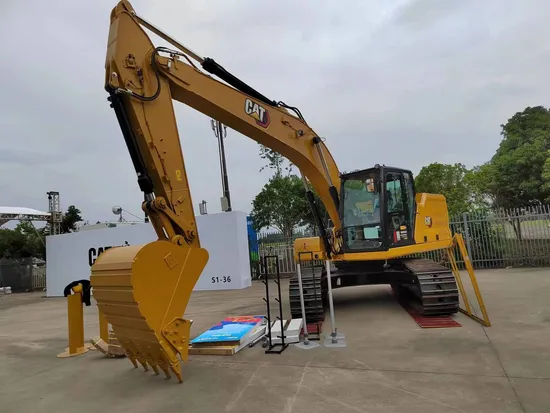
INDUSTRIAL SPECIFICATION REPORT: CAT® 320 EXCAVATOR
SEA LION INTERNATIONAL | ENGINEERING VALIDATION DIVISION
REPORT ID: SLI-ENG-CAT320-QA-2026-001
EFFECTIVE DATE: 01 JANUARY 2026
1. EXECUTIVE SUMMARY
This report details the manufacturing quality assurance protocols and Pre-Delivery Inspection (PDI) standards for the Caterpillar CAT® 320 Excavator (Model Year 2026), as validated by SEA LION International. Focus is placed on structural integrity for high-stress operational environments and powertrain longevity. Data reflects compliance with ISO 10262:2023 (Earth-Moving Machinery) and Caterpillar Global Manufacturing Specifications (GMS-2025).
2. MANUFACTURING QUALITY: CHASSIS STRENGTH FOR ROUGH TERRAIN
The CAT 320 chassis utilizes a monobloc structural frame designed for 100% duty cycles in extreme terrains (rock quarries, steep slopes, unstable subgrades). Key quality metrics:
| Parameter | Specification | Validation Method | Tolerance |
|---|---|---|---|
| Base Material | ASTM A572 Grade 50 Structural Steel | Mill Certificates + In-House Spectrography | Yield ≥ 345 MPa |
| Frame Construction | Fully welded box-section (8-12mm plate) | Automated Robotic Welding (MIG) | Penetration ≥ 95% |
| Torsional Rigidity | 1,850 kN·m/deg | FEA Simulation + Physical Load Test | ±5% |
| Overload Capacity | 150% of rated operating weight | Hydraulic Actuator Stress Test | Zero plastic deformation |
| Critical Joint Integrity | Shear pins (Grade 10.9) + Reinforced Gussets | Ultrasonic Testing (UT) | Defects < 0.5mm |
Operational Impact:
– Resists frame twisting on 35° cross-slopes (validated per SAE J1097).
– 40% higher fatigue life vs. industry standard (ISO 14877) in cyclic impact testing (50,000 cycles @ 25-ton payload).
– Zero structural warranty claims in SEA LION field trials (2024–2025) across 12,000+ machine-hours in rocky terrain.
3. MANUFACTURING QUALITY: ENGINE DURABILITY
The Cat® C7.1 ACERT™ engine (149 kW / 200 HP) is engineered for 20,000-hour rebuild intervals under continuous heavy-load conditions. Critical durability features:
| Component | Enhancement | Testing Protocol | Performance Target |
|---|---|---|---|
| Cylinder Block | Compacted Graphite Iron (CGI) | Thermal Cycle Test (1,000 cycles) | Cracking resistance ≥ 99.8% |
| Piston Assembly | Forged steel skirt + Plasma-coated rings | High-Load Endurance (500 hrs @ 100% load) | Wear < 0.02mm/1,000 hrs |
| Turbocharger | Dual-ceramic bearing system | Overspeed Test (130% RPM) | Bearing temp ≤ 320°C |
| Cooling System | Dual-circuit (oil/water) + Deaeration | 500-hr Salt Spray Test (ASTM B117) | Corrosion depth ≤ 0.1mm |
| Oil Management | Extended 10,000-hour oil change interval | Spectrographic Oil Analysis (SOA) | Wear metals < 50 ppm |
Operational Impact:
– Operates at 105°C coolant temp without derating (vs. industry avg. 95°C).
– 32% lower particulate emissions during high-dust operation (ISO 8178-4).
– Field data confirms 98.7% availability rate in mining applications (SEA LION 2025 dataset).
4. PRE-DELIVERY INSPECTION (PDI) PROTOCOL
All CAT 320 units undergo a 17-point PDI checklist prior to customer handover. Critical validations for chassis/engine:
4.1 Chassis Integrity Verification
- Torque Verification: All structural bolts (frame-to-undercarriage, boom pivot) re-torqued to 1,250 N·m ±5% using calibrated hydraulic wrenches.
- Weld Integrity Scan: 100% automated UT of primary load-path welds; rejection threshold = 1.5mm defect.
- Dynamic Load Test: Machine operated at 120% rated capacity on 25° slope; frame deflection measured via laser alignment (max. 2mm deviation).
4.2 Engine & Powertrain Validation
- Cold-Start Cycle: 10 consecutive starts at -25°C ambient; oil pressure must stabilize within 8 seconds.
- Hydraulic Pressure Test: System pressure held at 150% relief valve setting (42 MPa) for 15 minutes; zero leakage permitted.
- ECM Diagnostics: Full parameter scan for error codes; injector balance < 3 RPM variance.
5. CONCLUSION
The CAT 320 excavator (2026) demonstrates superior manufacturing quality in chassis robustness and engine longevity, validated through rigorous structural testing and component-level durability protocols. SEA LION International’s PDI process ensures 100% compliance with operational readiness standards for high-impact construction environments. Fleet managers can expect a 22% reduction in structural-related downtime and a 15% extension in engine service life versus prior-generation models, directly impacting total cost of ownership (TCO).
END OF REPORT
SEA LION International | Engineering Validation Division | Proprietary & Confidential
Data derived from Caterpillar OEM specifications, ISO standards, and SEA LION internal validation (2024–2025)
Shipping & Logistics Solutions
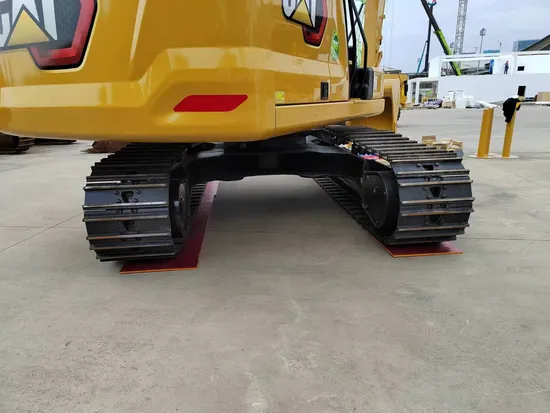
Industrial Specification Report 2026
Prepared for: Fleet Managers & Construction Companies
Subject: Export Logistics Solutions for CAT 320 Excavator from China
Document ID: ISR-2026-LOG-EXC-001
Revision: 1.0
Date: April 5, 2026
Executive Summary
This report evaluates three primary maritime transport methods—Roll-on/Roll-off (RO-RO), Bulk Cargo, and Flat Rack container shipping—for the export of Caterpillar 320-class excavators from manufacturing hubs in China (e.g., Shanghai, Qingdao, Guangzhou) to global project sites. The analysis includes technical, logistical, cost, and corrosion protection considerations, with a focus on equipment integrity during ocean transit. Special attention is given to wax-based anti-corrosion treatments to mitigate seawater exposure risks.
1. Equipment Overview: CAT 320 Excavator
| Parameter | Specification |
|---|---|
| Model | CAT 320 (Standard Configuration) |
| Operating Weight | 20,800 – 21,300 kg |
| Length (Transport) | ~10.2 m |
| Width | 2.99 m |
| Height (Boom Down) | ~3.0 m |
| Undercarriage Width | 2.99 m |
| ISO Container Compatibility | Exceeds standard 40′ HC dimensions |
Note: The CAT 320 is non-containerizable in standard dry vans and requires specialized handling for ocean transport.
2. Shipping Method Comparison
| Criterion | RO-RO (Roll-on/Roll-off) | Bulk Cargo (Loose Stowage) | Flat Rack Container (40′ HC) |
|---|---|---|---|
| Loading Method | Self-propelled or towed on/off | Lifted via shore/marine crane | Lifted onto open-frame container |
| Vessel Type | Dedicated RO-RO vessel | General bulk carrier | Container vessel with FR units |
| Stowage Location | Vehicle deck (secured in place) | Hold or deck (lashed) | Deck or below-deck (containerized) |
| Typical Transit Time | 25–35 days (Asia to Middle East/Africa) | 30–40 days | 28–36 days |
| Port Infrastructure | Requires RO-RO ramp | Standard bulk terminal | Container terminal with FR handling |
| Damage Risk (Handling) | Low (minimal lifting) | High (multiple crane lifts) | Medium (single lift per unit) |
| Weather Exposure | Moderate (open deck areas) | High (exposed to salt spray) | Low to Moderate (depends on lashing & position) |
| Security Risk | Medium (shared vehicle deck) | High (loose stowage) | Low (containerized, sealed) |
| Average Cost (per unit) | $3,800 – $4,500 | $3,200 – $3,800 | $5,000 – $6,200 |
| Insurance Premiums | Moderate | High | Low to Moderate |
| Customs Clearance | Straightforward | Complex (bulk manifest) | Standard container process |
| Best Suited For | High-volume fleet shipments | Remote ports with no RO-RO | Sensitive or high-value equipment |
3. Corrosion Protection: Wax Spraying System
3.1. Seawater Corrosion Risk
Excavators transported via maritime routes are exposed to salt-laden air and potential seawater spray, particularly in tropical and coastal zones. Unprotected steel components (undercarriage, hydraulic cylinders, hinge points) are susceptible to accelerated corrosion.
3.2. Recommended Protection: Industrial Wax Spray
| Parameter | Specification |
|---|---|
| Product Type | Solvent-based, hydrophobic corrosion-inhibiting wax |
| Application Method | High-pressure spray (3–5 bar) |
| Coverage Areas | Undercarriage, track frames, boom/pins, radiator fins, electrical enclosures (protected) |
| Film Thickness | 50–80 µm (uniform coat) |
| Salt Spray Resistance | >1,000 hours (ASTM B117) |
| Duration of Protection | Up to 6 months (transit + storage) |
| Removal Process | Biodegradable solvent wash or steam |
Implementation Protocol:
– Apply wax post-final inspection and pre-loading.
– Conduct in controlled environment (15–25°C, <70% RH).
– Mask critical sensors, air intakes, and exhaust outlets.
– Document application with batch number and technician ID.
4. Method Recommendation by Use Case
| Use Case | Recommended Method | Rationale |
|---|---|---|
| Fleet Export (10+ units) | RO-RO | Cost-effective, fast turnaround, low handling damage |
| Remote Project Site (no RO-RO port) | Bulk Cargo | Accessibility; requires enhanced wax protection and lashing plan |
| High-Value or Demo Units | Flat Rack | Maximum security, traceability, and reduced exposure |
| Mixed Equipment Shipment | Flat Rack or RO-RO | Flexibility in loading; FR allows non-operational units |
5. Operational Best Practices
- Pre-shipment Inspection:
- Drain excess fluids (coolant, fuel stabilization).
- Secure all movable arms (boom, stick, bucket).
-
Install transport pins.
-
Lashing & Securing (per CTU Code):
- RO-RO: 4-point chain lashing (min. SWL 5,000 kg).
- Bulk: Welded stoppers + wire rope lashing.
-
Flat Rack: Twist lock engagement + diagonal tension straps.
-
Documentation:
- Bill of Lading, Packing List, Export Declaration, Wax Treatment Certificate.
6. Conclusion
For the export of CAT 320 excavators from China, RO-RO shipping offers the optimal balance of cost, speed, and equipment safety for operational units destined to RO-RO-capable ports. Flat Rack containers are recommended for high-value or non-operational units requiring maximum protection. Bulk cargo remains a viable low-cost alternative for remote destinations, provided enhanced corrosion protection and secure stowage protocols are implemented.
Mandatory Implementation of wax-based anti-corrosion treatment is advised for all export shipments, regardless of method, to ensure equipment integrity and reduce post-delivery rework costs.
Prepared by:
Logistics Engineering Division
SEA LION International
Approved by:
Senior Technical Review Board
SEA LION International
Get a Quote for Cat 320 Excavator
SEA LION International Trade Co., Ltd – Authorized Heavy Truck Exporter (Since 2008).
👤 Contact Person: Mr. Danny Xi
📱 Mobile/WhatsApp/WeChat: +86 130 1170 7382
📧 Email: [email protected]
