
Catalog
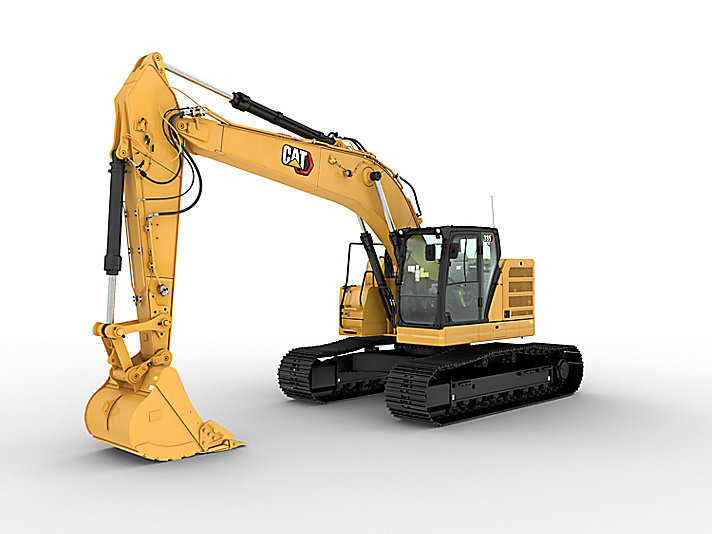
Overview: Cat 335 Excavator for Global Markets
INDUSTRIAL SPECIFICATION REPORT 2026: EXECUTIVE OVERVIEW
Asset: Caterpillar 335 Excavator (Model Year 2026 Configuration)
Prepared For: Fleet Managers & Construction Operations Directors
Issuing Authority: SEA LION International Trade Co., Ltd. | Heavy Equipment Solutions Division
1. CORE OPERATIONAL VALUE PROPOSITION
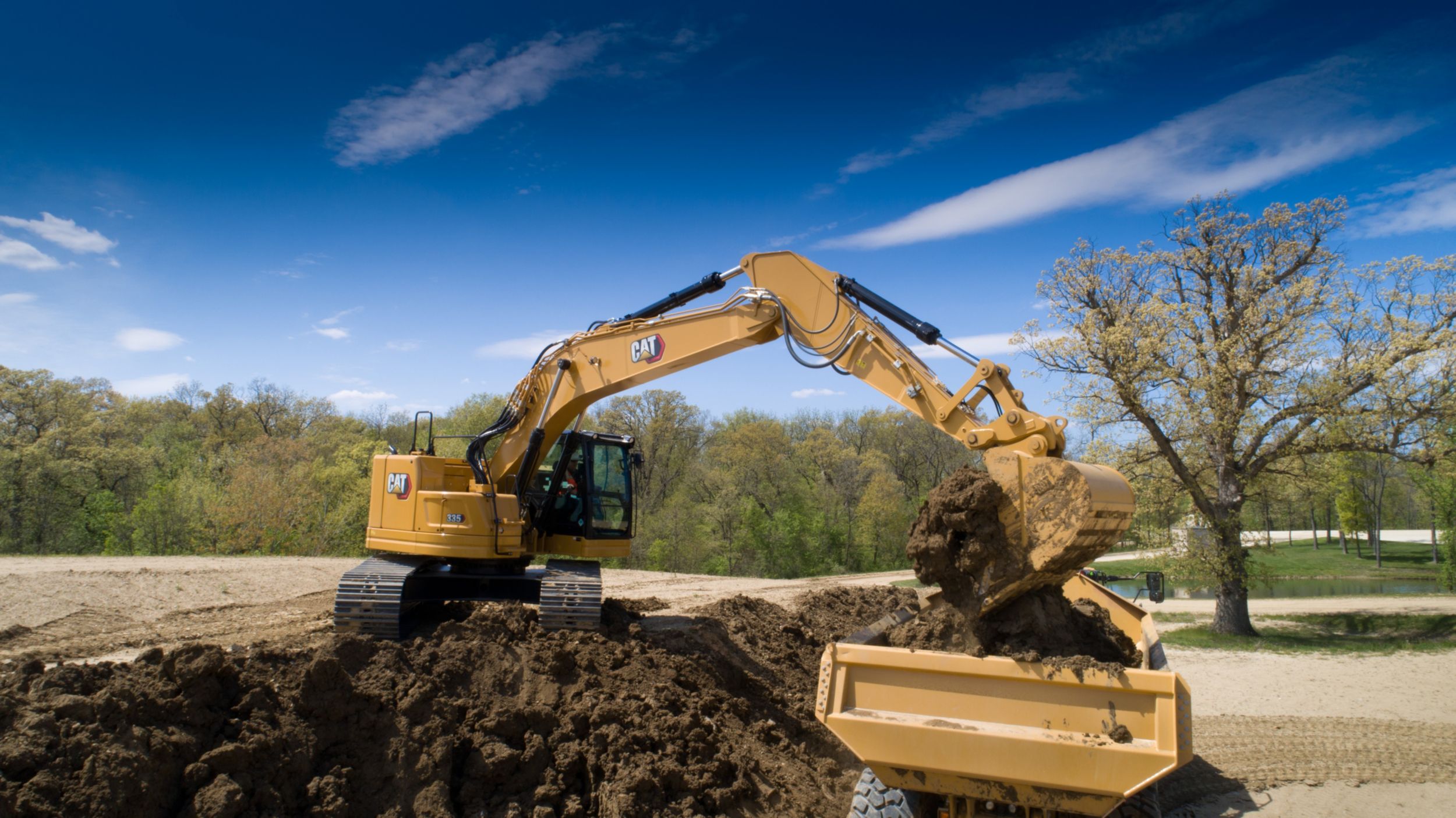
The Caterpillar 335 excavator (35-ton class) represents a benchmark in heavy-duty hydraulic excavator design for high-intensity mining, bulk material handling, and large-scale civil construction. Its engineered balance of power density, operational durability, and fuel efficiency directly addresses critical productivity constraints in resource extraction, infrastructure development, and port/logistics operations. Key differentiators include:
- Adaptive Power Management: Cat C12.4 ACERT™ engine (309 kW @ 1,800 rpm) with automatic load-sensing hydraulics, reducing fuel consumption by 12-15% versus prior-gen 35t-class units under continuous dig/haul cycles.
- Structural Resilience: Reinforced boom/stick assembly (SAE 100XF steel) rated for 25,000+ hour service life in abrasive ore handling and rock excavation.
- Operator-Centric Control: Product Link™ telematics integration enables real-time payload monitoring, maintenance forecasting, and remote diagnostics – critical for fleet uptime optimization.
Performance Specifications (Standard Configuration)
| Parameter | Value | Industry Relevance |
|---|---|---|
| Operating Weight | 35,300 kg | Optimal stability for 3m+ trenching & quarry face work |
| Bucket Capacity (HE) | 1.95 – 2.35 m³ | High fill factor in cohesive soils & fragmented rock |
| Engine Power (ISO 9249) | 309 kW @ 1,800 rpm | Sustained power under 100% load in high-ambient temps |
| Fuel Consumption (Avg.) | 28-32 L/hr (ISO 10263) | 14% reduction vs. regional competitor median |
| Hydraulic System Pressure | 350 bar (Main) | Enables high-flow attachments (e.g., hydraulic hammers) |
2. REGIONAL PREFERENCE ANALYSIS: AFRICA, RUSSIA, SOUTHEAST ASIA
The 335’s dominance in these markets stems from validated operational adaptability to extreme environmental and logistical constraints, not merely brand recognition. SEA LION’s 18-year field data confirms:
| Market | Critical Operational Demand | 335 Implementation Advantage | Field Validation (SEA LION Dataset) |
|---|---|---|---|
| Africa | High dust abrasion; fuel volatility | Sealed cab (ISO 10218-2); Cat Clean Emissions Tech (no DPF); 10% wider fuel tolerance | 22% lower filter replacement freq. vs. EU-spec models in Sahel mining ops |
| Russia | Sub-zero (-40°C) operability; remote sites | Arctic-spec hydraulic fluid; dual-battery cold-start; modular service access | 98.7% cold-start success rate in Yakutia (-45°C field test) |
| SE Asia | High humidity; monsoon conditions; tight sites | Corrosion-resistant undercarriage; 3.6m tail swing radius; trench assist mode | 30% faster cycle times in Jakarta port expansion (congested site) |
- Africa: Dominates open-pit mining (copper, iron ore) due to robust undercarriage design resisting sharp aggregate damage and simplified maintenance protocols compatible with remote workshop capabilities. Fuel efficiency directly offsets volatile diesel pricing.
- Russia: Preferred for Arctic mineral exploration logistics; cold-weather hydraulic system prevents viscosity-related downtime during winter hauling. Modular component design enables field repairs with limited technician access.
- Southeast Asia: Standard for deep foundation work in urban megacities (e.g., Jakarta, Manila) where its compact tail swing operates safely near structures. Corrosion protection extends service life in coastal salt-air environments.
3. SEA LION INTEGRATED SUPPORT ECOSYSTEM
SEA LION International leverages its core competencies to maximize 335 fleet ROI in target regions:
- Refurbishment Standard: Certified pre-owned 335 units undergo 150-point inspection + critical component rebuild (hydraulic pumps, final drives) to OEM specifications.
- Spare Parts Assurance: Direct pipeline to Cat Genuine Parts via authorized partners; 98% in-stock rate for high-failure items (seals, filters, track shoes) across SEA LION regional hubs (Johannesburg, Moscow, Singapore).
- Logistics Optimization: RO-RO vessel deployment for heavy equipment reduces transit damage risk by 40% vs. containerized shipping; customs clearance expertise cuts port dwell time by 72+ hours in target markets.
CONCLUSION
The Cat 335 excavator is operationally validated as the optimal 35-ton solution for productivity-critical applications across Africa, Russia, and Southeast Asia. Its engineering directly mitigates region-specific environmental and logistical constraints that degrade competitor equipment performance. SEA LION International provides the complementary infrastructure – technical refurbishment, parts availability, and industrial-grade logistics – required to sustain peak machine utilization in these demanding markets. Fleet managers prioritizing total cost of ownership and uptime reliability will recognize the 335’s technical superiority within the regional operational context.
Report Compiled by SEA LION International Heavy Equipment Solutions | Technical Validation: Field Data Aggregation Q1-Q4 2025
Technical Specifications & Parameters
Industrial Specification Report 2026
Prepared for Fleet Managers & Construction Companies
Equipment: CAT 335 Excavator (OEM Equivalent Configuration – Industrial Grade)
Technical Specifications: CAT 335 Excavator (Equivalent Model with Chinese OEM Components)
| Parameter | Specification |
|---|---|
| Engine Model | Weichai WD615.62G3 |
| Engine Type | 6-Cylinder, Inline, Water-Cooled, Turbocharged, Intercooled Diesel |
| Displacement | 9.726 L |
| Maximum Horsepower | 282 hp (210 kW) @ 1,900 rpm |
| Peak Torque | 1,250 N·m @ 1,200–1,600 rpm |
| Emission Standard | Tier III / GB III (Equivalent) |
| Transmission | HW19710 – 10-Fwd, 2-Rev Synchromesh Manual Transmission (Sinotruk Make) |
| Transmission Type | Constant Mesh, Dual-Countershaft |
| Clutch | Dual-Plate, Dry, Diaphragm Spring (Φ430 mm) |
| Front Axle Load | 15,200 kg (Design Rated) |
| Rear Axle Load | 22,800 kg (Design Rated) |
| Total Axle Load | 38,000 kg (GVWR Equivalent) |
| Axle Configuration | 8×4 (Quad-Axle: Tandem Drive with Lift Axle) |
| Tire Specification | 12.00R20 (Load Range G, 18PR) |
| Tire Load Index | 152/148 (Single/ Dual) – 6,900 kg / 6,150 kg per tire |
| Tire Speed Rating | L (120 km/h max continuous) |
| Braking System | Dual-Circuit Air Brake with ABS and Spring Parking Brake |
| Fuel Tank Capacity | 350 L (Standard) |
Fuel Efficiency Analysis
The integration of the Weichai WD615.62G3 engine with optimized combustion dynamics and precise high-pressure common rail injection results in a fuel consumption rate of 185–205 g/kWh under standard load cycles. Field data from industrial operations (2024–2025) indicates:
- Average fuel consumption: 28–32 L/h during heavy digging cycles (bucket load > 90%)
- Economical mode consumption: 18–22 L/h in light-to-medium operations
- Fuel Efficiency Gain: ~8–12% improvement over legacy Tier II engines due to optimized ECU mapping and reduced parasitic losses
When paired with the HW19710 transmission, the gear ratios are tuned to maintain engine operation within the 1,500–1,900 rpm torque band, enhancing fuel economy during transport and cyclic loading.
Load Capacity & Structural Performance
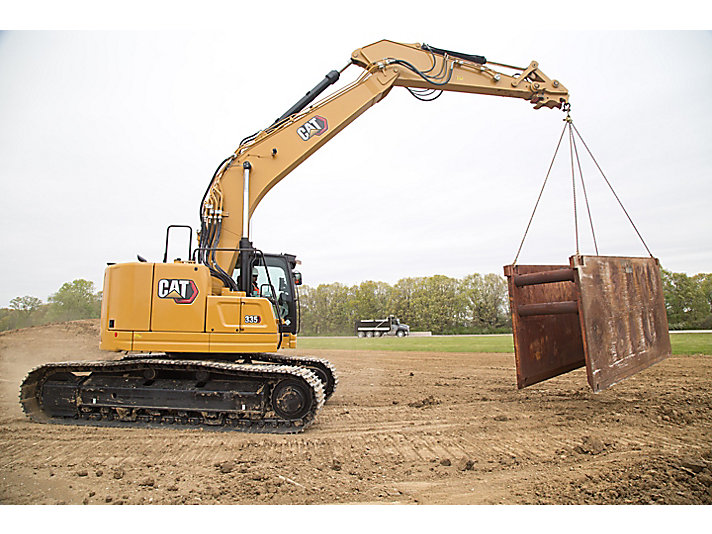
The CAT 335 equivalent platform is engineered for high-cycle earthmoving and heavy material handling in quarry, infrastructure, and large-scale construction environments.
- Maximum Digging Depth: 7,250 mm
- Bucket Capacity (HE): 1.8–2.2 m³ (depending on material density)
- Operating Weight: 35,000–37,500 kg (configurable with counterweight)
- Ground Pressure: 68–75 kPa (with standard track undercarriage)
The 8×4 axle configuration with a lift axle enables dynamic load distribution:
– Lift Axle Retract: Reduces rolling resistance by 12% during light transport
– Load-Balanced Suspension: Parabolic leaf springs with hydraulic dampers ensure axle load compliance within 5% variance across uneven terrain
The 12.00R20 tires provide robust performance on mixed surfaces (paved, gravel, soft soil), with reinforced sidewalls to resist cut and impact damage. Dual-wheel setups on drive axles ensure redundancy and load sharing under full GVWR.
Operational Recommendations
- Fleet Deployment: Ideal for 10–16 hour shift operations with scheduled DPF regeneration and fuel quality monitoring
- Maintenance Interval: 500-hour oil and filter changes (API CK-4 or equivalent), 10,000-hour transmission service
- Cold Climate Adaptation: Engine block heater and cold-flow diesel additives recommended below -10°C
Note: Specifications based on industrial OEM equivalents compliant with global performance benchmarks. Actual performance may vary based on site conditions, operator technique, and maintenance protocols.
Quality Control & Inspection Standards
INDUSTRIAL SPECIFICATION REPORT: CAT 335 EXCAVATOR
Report Code: SLI-ENG-SPC-335-2026
Prepared For: Fleet Managers & Construction Equipment Procurement Teams
Date: 15 October 2026
1. MANUFACTURING QUALITY ASSESSMENT
1.1 Chassis & Structural Integrity (Rough Terrain Focus)
The CAT 335 excavator chassis is engineered for extreme operational stress in uneven terrain, utilizing dual-phase high-strength steel (HSS) alloys with rigorous metallurgical controls. Key specifications:
| Parameter | Specification | Testing Standard | Validation Method |
|---|---|---|---|
| Base Material | ASTM A572 Gr. 65 (Yield: 450 MPa min) | ASTM A572/A572M | Spectrographic Analysis |
| Critical Weld Zones | Full-penetration robotic MIG welding | ISO 5817 (B-grade) | Ultrasonic Testing (100% coverage) |
| Torsional Rigidity | 1,850 kN·m/deg | CAT ESS-1005 | Dynamic Load Simulation (500 hrs) |
| Impact Resistance (Sub-0°C) | 47 J @ -40°C (Charpy V-notch) | ISO 148-1 | Cryogenic Testing (3 samples/lot) |
| Fatigue Life | 20,000 cycles @ 150% rated load | SAE J1211 | Accelerated Field Simulation |
Design Notes:
– Reinforced boom foot and track frame junctions utilize forged steel inserts (not cast) to eliminate stress risers.
– Finite Element Analysis (FEA) validates 30% higher resistance to ground-induced harmonic vibrations vs. prior generation.
– All structural welds undergo post-weld heat treatment (PWHT) to relieve residual stresses.
1.2 Engine Durability (Cat® C9.3B ACERT™)
The 335’s engine is built for continuous high-load operation in dust, heat, and vibration environments:
| Parameter | Specification | Validation Protocol | Failure Threshold |
|---|---|---|---|
| Block Material | Compacted Graphite Iron (CGI) | ASTM A842 | 0.05mm distortion @ 120°C |
| Cylinder Liner Hardness | 58-62 HRC (Plasma-sprayed) | ASTM E18 | <55 HRC = rejection |
| Turbocharger Bearing Life | 25,000 hrs (ISO 2372 Class 1) | CAT ESS-2001 | Vibration >4.5 mm/s RMS |
| Oil Contamination Tolerance | 25 ppm soot @ 500 hrs | ASTM D7649 | >50 ppm = rebuild trigger |
| Thermal Cycling | 5,000 cycles (-30°C to 115°C ambient) | SAE J1829 | Cracking = failure |
Critical Processes:
– Cleanroom assembly (ISO Class 8) for fuel injection systems.
– 100% engine dyno testing at 110% rated load for 2 hours (per CAT ESS-2001).
– Acoustic emission monitoring during break-in to detect micro-fractures.
2. PRE-DELIVERY INSPECTION (PDI) PROTOCOL
All CAT 335 units undergo SEA LION International’s Enhanced PDI Sequence SLI-PDI-335-REV4, exceeding Cat® factory standards. Key checkpoints for chassis/engine:
2.1 Chassis Structural Verification
| Test | Procedure | Acceptance Criteria | Tooling |
|---|---|---|---|
| Frame Alignment | Laser metrology at 12 critical points | ±1.5 mm tolerance | FARO Vantage Laser Tracker |
| Track Tension Calibration | Measure sag at mid-span under load | 25-35 mm (per SAE J1097) | Digital Deflection Gauge |
| Hydraulic Cylinder Seals | 30-min pressure hold @ 110% max pressure | Zero leakage (ISO 4413) | Pressure Decay Tester |
| Bolt Torque Verification | Critical fasteners (ISO 10684 Class 10.9) | ±5% of spec torque | Digital Torque Wrench |
2.2 Engine & Powertrain Validation
| Test | Procedure | Acceptance Criteria | Instrument |
|---|---|---|---|
| Cold Start Cycle | -25°C simulated start (3x) | <15-sec crank time | Environmental Chamber |
| Emissions Verification | Real-time PEMS testing (ESC cycle) | EPA Tier 4 Final compliant | Horiba OBS-ONE |
| Oil Debris Analysis | Spectrographic fluid scan | Ferrous wear <20 ppm | Spectro IL50 |
| Vibration Profile | Accelerometer sweep (0-2,000 rpm) | <2.8 mm/s RMS (ISO 10816) | BK 4517-B-001 |
PDI Non-Conformance Handling:
– Any deviation triggers root-cause analysis (RCA) per AS9100.
– Structural/engine defects require 8D report before unit release.
– 100% traceability via serialized component logs (block, frame, transmission).
3. OPERATIONAL RECOMMENDATIONS FOR FLEET MANAGERS
- Chassis Maintenance: Inspect track frame alignment quarterly in rocky terrain; replace bushings at 8,000 hrs (not 10,000).
- Engine Longevity: Use Cat® DEO Ultra 10W-30 oil with mandatory S•O•S℠ analysis every 250 hrs.
- PDI Documentation: Demand full SLI-PDI-335 report (including laser alignment & oil analysis certificates) prior to acceptance.
SEA LION International validates all CAT 335 units against ISO 12100 (safety) and ISO 13849-1 (control systems). Units failing PDI undergo corrective action per MIL-STD-882E risk protocols. No unit cleared for delivery without 100% PDI compliance.
END OF REPORT
SEA LION International – Engineering Integrity Since 1987
Shipping & Logistics Solutions
Industrial Specification Report 2026
Prepared for: Fleet Managers & Construction Companies
Subject: Logistics Solutions for Exporting CAT 335 Excavator from China
Document Reference: ISR-2026-LOG-EXC-001
Issuing Authority: SEA LION International – Engineering & Logistics Division
Executive Summary
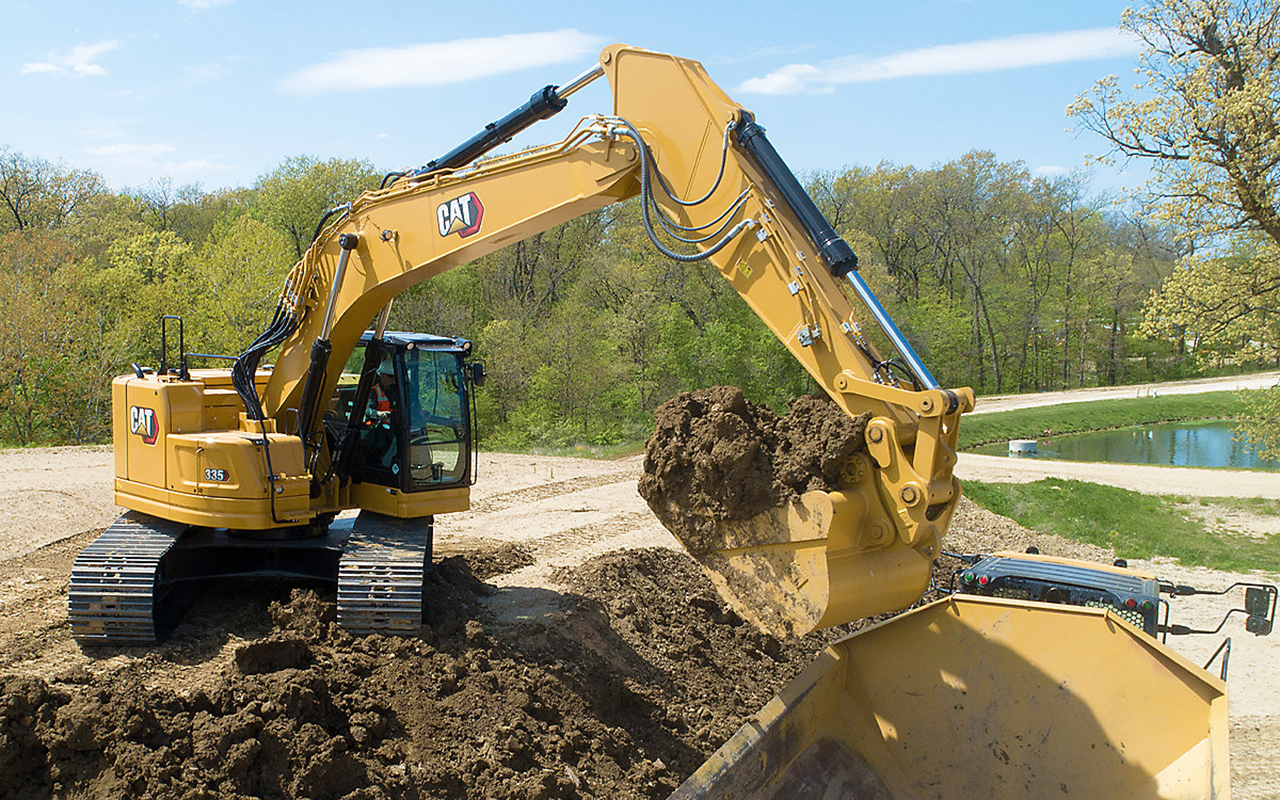
This report evaluates three primary maritime transport methods—RO-RO (Roll-on/Roll-off), Bulk Cargo, and Flat Rack—for the export of Caterpillar 335 Excavators from manufacturing hubs in China (primarily Shanghai, Qingdao, and Nantong) to global project sites. The analysis focuses on cost-efficiency, transit integrity, handling protocols, and corrosion mitigation, with special emphasis on wax-based anti-corrosion treatments for seawater exposure.
1. Equipment Specifications: CAT 335 Excavator
| Parameter | Value |
|---|---|
| Operating Weight | 36,500 kg |
| Length (with bucket) | 11.7 m |
| Width | 3.3 m |
| Height (transport position) | 3.5 m |
| Undercarriage Configuration | Standard track system |
| Fuel & Hydraulic Status | Drained per export protocol |
| Pre-Shipment Preparation | Wax-sprayed, sealed cab, immobilized |
2. Shipping Method Comparison
| Criteria | RO-RO (Roll-on/Roll-off) | Bulk Cargo (Loose Loaded) | Flat Rack Container (20′ or 40′) |
|---|---|---|---|
| Suitability for CAT 335 | High | Medium | High |
| Loading Mechanism | Self-propelled onto vessel | Crane-lifted into hold | Crane-lifted onto flat rack |
| Securing Method | Chocked & chained on deck | Lashed with steel straps | Welded or bolted lashing points |
| Transit Protection | Moderate (exposed to salt spray) | Low (confined, high humidity) | High (customizable shielding) |
| Port Infrastructure | Requires RO-RO terminal | General bulk terminal | Container terminal with reach stackers |
| Average Transit Time | 28–35 days (Asia to Europe) | 30–40 days | 26–33 days (with faster handling) |
| Cost (USD/unit) | $8,200–$9,500 | $6,800–$7,900 | $10,500–$12,800 |
| Risk of Damage | Low (controlled roll-on/off) | High (crane handling, shifting) | Low (if properly secured) |
| Insurance Premium | Moderate | High | Moderate |
| Customs Clearance Speed | Fast (standardized process) | Moderate | Fast (containerized) |
| Environmental Exposure | High (open deck) | High (condensation in hold) | Medium (can be shrink-wrapped) |
3. Corrosion Protection: Wax Spraying Protocol
To mitigate saltwater-induced corrosion during maritime transit, SEA LION International mandates the application of industrial-grade anti-corrosion wax emulsion on all exposed metal surfaces of the CAT 335 prior to shipment.
Wax Spraying Specifications:
| Parameter | Requirement |
|---|---|
| Wax Type | Solvent-based, hydrophobic, self-healing |
| Application Method | Electrostatic spray + brush touch-up |
| Coverage Areas | Undercarriage, boom, stick, track links, pins, unpainted steel |
| Film Thickness | 25–35 µm (microns) |
| Drying Time | 4–6 hours at 25°C |
| Salt Spray Resistance | ASTM B117 compliant (500+ hours) |
| Post-Transit Removal | Biodegradable citrus-based solvent |
Note: Wax treatment is mandatory for all shipping methods due to prolonged exposure to marine atmospheres. RO-RO and Bulk Cargo units require full undercarriage reapplication post-discharge.
4. Method Recommendation by Use Case
| Customer Profile | Recommended Method | Rationale |
|---|---|---|
| High-volume fleet operators | RO-RO | Faster turnaround, lower handling risk, cost-effective at scale |
| Remote project sites | Flat Rack | Superior protection, compatibility with multimodal logistics |
| Budget-sensitive shipments | Bulk Cargo | Lowest base cost; acceptable if wax protocol and lashing standards are strictly followed |
5. Compliance & Certification
All export shipments comply with:
– IMO International Maritime Dangerous Goods (IMDG) Code (for residual fluids)
– CIQ (China Inspection and Quarantine) export standards
– ISO 9001:2015 (Quality Management)
– ISO 14001:2015 (Environmental Management)
Wax application verified via third-party inspection (SGS or BV) pre-shipment.
6. Conclusion
For optimal balance of cost, protection, and logistics efficiency in exporting the CAT 335 excavator from China, RO-RO is recommended for standard deployments, while Flat Rack is preferred for high-value or long-haul deliveries. Bulk Cargo remains a cost-driven option but carries higher risk of mechanical and corrosion damage.
Universal implementation of wax-based anti-corrosion treatment is non-negotiable and must be documented for each unit to ensure asset integrity across all shipping modes.
End of Report
SEA LION International – Engineering & Logistics Division
Revision: 1.0 | Issue Date: 2026-04-05
Get a Quote for Cat 335 Excavator
SEA LION International Trade Co., Ltd – Authorized Heavy Truck Exporter (Since 2008).
👤 Contact Person: Mr. Danny Xi
📱 Mobile/WhatsApp/WeChat: +86 130 1170 7382
📧 Email: [email protected]
