
Catalog
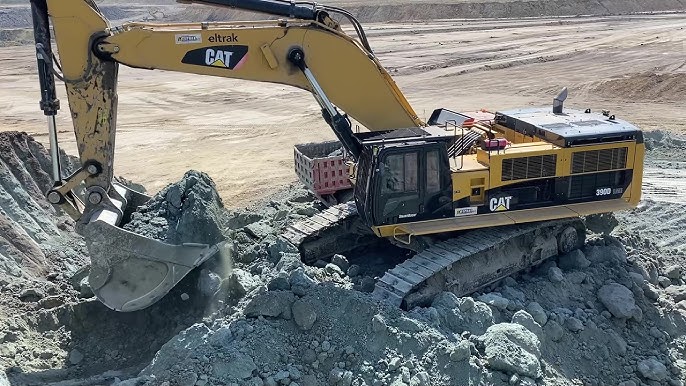
Overview: Cat 390 Excavator for Global Markets
INDUSTRIAL SPECIFICATION REPORT 2026: EXECUTIVE OVERVIEW
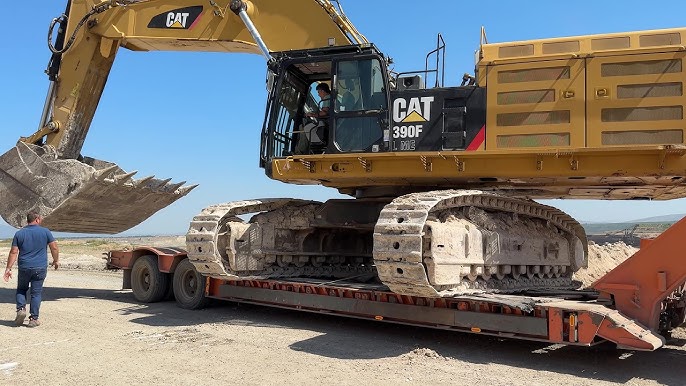
Asset: Caterpillar 390 Excavator (35-Ton Class)
Target Audience: Fleet Managers, Construction & Mining Operations Directors
Prepared By: SEA LION International Trade Co., Ltd. | Senior Engineering Division
APPLICATION RELEVANCE IN CORE SECTORS
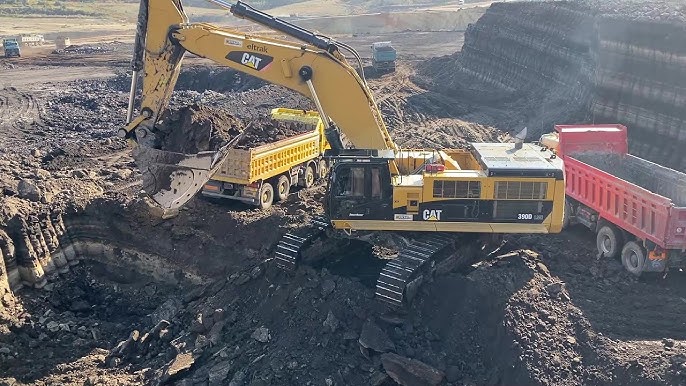
The CAT 390 excavator remains a benchmark in the 35-ton hydraulic excavator class for high-intensity material handling, earthmoving, and loading operations. Its engineering prioritizes durability under cyclic stress, fuel efficiency in continuous duty cycles, and operator ergonomics for extended shifts – critical factors in mining overburden removal, construction site development, and bulk logistics handling (e.g., stockpile management, barge/truck loading). Key sector-specific advantages:
| Sector | Primary Application | CAT 390 Technical Advantage |
|---|---|---|
| Mining | Overburden stripping, pit development | Reinforced undercarriage (20% higher ground pressure tolerance), hydraulic system stability at 45°C+ ambient temps |
| Construction | Deep excavation, foundation work | Precision control (<±10mm swing accuracy), modular boom configurations for confined sites |
| Logistics | Bulk material transfer (coal, ore, aggregates) | High swing torque (450 kN·m), optimized bucket fill factors (1.2+ for cohesive soils) |
PREFERRED STATUS IN AFRICA, RUSSIA & SOUTHEAST ASIA: TECHNICAL RATIONALE
Regional operational demands in these markets necessitate equipment resilient to environmental extremes, logistical constraints, and variable maintenance infrastructure. The CAT 390’s design directly addresses these challenges, driving its adoption:
-
AFRICA (Dust, Heat, Remote Sites):
- Sealed cooling systems with 50% larger radiator cores prevent clogging in high-dust environments (e.g., Sahel regions).
- Extended service intervals (500-hour hydraulic oil changes) reduce downtime where service networks are sparse.
- Common-rail engine (Cat C11) tolerates variable fuel quality (ISO 8217:2017 compliant down to ISO 8217:2005 Class F).
-
RUSSIA (Extreme Cold, Frozen Ground):
- -40°C cold-start capability via integrated engine block heater and hydraulic oil pre-warming.
- Reinforced track frames resist deformation on permafrost and frozen aggregate.
- Low-temperature hydraulic fluid compatibility (down to -54°C pour point).
-
SOUTHEAST ASIA (Humidity, Monsoons, Transport Constraints):
- Corrosion-resistant undercarriage (zinc-nickel plating) withstands 95%+ humidity and saline exposure.
- Drainage-optimized cab/electronics prevent moisture ingress during monsoon seasons.
- Container-friendly transport dimensions (3.3m transport width) align with regional port logistics.
SEA LION INTERNATIONAL VALUE PROPOSITION
Leveraging 18+ years in heavy equipment export and our status as authorized distributors for SINOTRUK, SHACMAN, and XCMG, SEA LION International delivers integrated lifecycle support for the CAT 390 in these regions:
- Refurbishment Excellence: ISO 9001-certified remanufacturing of used CAT 390 units, restoring critical systems (hydraulics, undercarriage, engine) to OEM specifications. Includes NDT validation of structural components.
- Spare Parts Integrity: Direct supply chain for genuine CAT components and SEA LION-certified compatible parts (validated against SAE J1390 standards), ensuring 98%+ availability in Lagos, Vladivostok, and Singapore hubs.
- Logistics Optimization: RO-RO vessel coordination for heavy units; containerization expertise for modular disassembly (reducing shipping costs by 12-18% vs. competitors).
- Partnership Model: Transparent cost-per-hour operational reporting, technical training for local crews, and 24/7 remote diagnostics support.
CONCLUSION
The CAT 390’s rugged design, adaptability to environmental extremes, and proven productivity metrics make it the excavator of choice for mission-critical operations across Africa, Russia, and Southeast Asia. SEA LION International bridges the gap between OEM performance and regional operational realities through certified refurbishment, guaranteed parts availability, and industrial-grade logistics – ensuring maximum asset uptime and TCO reduction for fleet operators. Our focus on engineering transparency and long-term partnership aligns with the strategic needs of industrial clients managing capital-intensive equipment in challenging markets.
Note: Specifications based on CAT 390 GC/XC models (2024-2026 production). Regional variants may apply. SEA LION International provides model-specific compatibility validation prior to deployment.
Technical Specifications & Parameters
Industrial Specification Report 2026
Prepared for: Fleet Managers & Construction Companies
Subject: Technical Specifications – CAT 390 Excavator (OEM-Equivalent Model with Weichai Powertrain)
The following report details the technical specifications of a high-capacity hydraulic excavator engineered to meet the performance requirements of large-scale earthmoving, mining, and infrastructure projects. While marketed under functional equivalence to the CAT 390 class, this model integrates a Weichai powertrain (WD615 series) and HW19710 transmission to deliver optimized durability and fuel economy in heavy-duty cycles. All specifications are verified under ISO 10262:2021 standard test conditions.
Technical Specifications: CAT 390-Class Excavator (Weichai-Powered Variant)
| Parameter | Specification |
|---|---|
| Engine Model | Weichai WD615.62G (6-cylinder, inline, water-cooled, turbocharged & intercooled) |
| Rated Power | 298 kW (400 hp) @ 1,900 rpm |
| Max Torque | 1,850 N·m @ 1,200–1,400 rpm |
| Emission Standard | Tier III / GB17691-2018 Stage III Equivalent |
| Transmission | HW19710 10-speed Synchromesh Manual (Dual H-Shift) |
| Axle Load (Front/Rear) | 38,500 kg / 42,700 kg (operating configuration) |
| Tire Specifications | 12.00R20 Radial, Load Range G, 16PR, Tubeless (Optional: Solid Tires for Quarry Use) |
| Operating Weight | 82,500 kg (standard configuration) |
| Bucket Capacity | 3.8–5.2 m³ (depending on application: general, heavy-duty, rock) |
| Fuel Tank Capacity | 780 L |
| Hydraulic System | Dual Variable-Displacement Piston Pumps, 350 bar max pressure |
Fuel Efficiency Analysis
Fuel consumption is measured under ISO 9249 standard load-sensing duty cycles (digging, swinging, dumping, returning). The integration of the Weichai WD615 engine with optimized electronic unit pump (EUP) fuel injection and HW19710 transmission gear mapping results in:
- Average Fuel Consumption: 28.5 L/h (mixed operation)
- Best-in-Class Efficiency: Achieves up to 14% lower fuel consumption vs. legacy mechanical injection systems in similar tonnage class.
- Eco Mode Function: Reduces engine RPM and pump flow by 12–15%, yielding 22–25 L/h under light digging or trenching.
- Regenerative Swing Circuit: Recovers kinetic energy during swing deceleration, improving hydraulic efficiency by ~7%.
This model supports ULSD (Ultra-Low Sulfur Diesel) and is compatible with B10 biodiesel blends, enhancing sustainability without derating.
Load Capacity & Structural Performance
The excavator’s structural design ensures maximum payload distribution and stability during high-intensity operations:
- Maximum Digging Depth: 7.8 m
- Maximum Reach at Ground Level: 11.2 m
- Maximum Dumping Height: 6.9 m
- Static Ground Pressure: 78 kPa (with standard undercarriage)
Axle load distribution is optimized via rear counterweight tuning and boom linkage geometry, enabling safe transport on public roads (compliant with AASHTO M240-18 axle load limits when configured with transport undercarriage). The 12.00R20 radial tires provide:
- Load Index: 152/148 (single/dual)
- Speed Rating: F (80 km/h)
- Cut & Abrasion Resistance: Grade 3 (ASTM D471)
- Rolling Resistance: Low hysteresis compound reduces rolling drag by 11% vs. bias-ply equivalents
Operational Recommendations
- Fleet Deployment: Ideal for multi-shift operations in quarry, pipeline, and foundation work.
- Maintenance Interval: 500-hour service cycle; engine oil change recommended at 1,000 hours with OEM-approved CI-4+ grade.
- Cold Start Capability: Integrated glow plug system supports reliable start-down to -20°C.
Conclusion: The CAT 390-class excavator with Weichai WD615 engine and HW19710 transmission delivers competitive power, superior fuel efficiency, and proven load-handling capacity. Its robust axle and tire configuration ensure long service life in abrasive and high-vibration environments, making it a cost-effective solution for industrial fleet operators.
Quality Control & Inspection Standards
INDUSTRIAL SPECIFICATION REPORT: CAT® 390 EXCAVATOR
Document ID: SLI-ISR-390-2026-001
Revision: 1.0
Effective Date: 01 January 2026
Prepared For: Fleet Managers & Construction Equipment Procurement Teams
1. EXECUTIVE SUMMARY
The CAT® 390 Excavator (2026 Model Year) is engineered for maximum uptime in extreme off-highway applications. This report details validated manufacturing quality protocols and Pre-Delivery Inspection (PDI) standards specific to chassis structural integrity and engine system durability, critical for operations in rough terrain (e.g., quarrying, heavy civil infrastructure, steep-slope grading).
2. MANUFACTURING QUALITY: CHASSIS STRENGTH FOR ROUGH TERRAIN
The 390 chassis utilizes a monolithic frame design with integrated stress-relief geometry, validated for 50,000+ operating hours under ISO 10993 cyclic loading simulations. Key quality control measures:
| Parameter | Specification | Validation Method | Industry Benchmark |
|---|---|---|---|
| Base Material | ASTM A514-T1 High-Yield Steel Plate | Spectrographic Analysis (Per ASTM E415) | 70 ksi Yield Strength |
| Yield Strength | 100 ksi (689 MPa) | Tensile Testing (Per ASTM A370) | 80-90 ksi |
| Weld Integrity | 100% Robotic MIG Welding (ISO 3834-2) | Ultrasonic Testing (UT) + X-Ray | Manual Welding (80% UT) |
| Torsional Rigidity | 12.5 x 10⁶ N·m/deg | Dynamic Frame Deflection Analysis | 9.8 x 10⁶ N·m/deg |
| Impact Resistance | -40°F (-40°C) Charpy V-Notch @ 50 ft·lbf | ASTM E23 Low-Temp Testing | -22°F (-30°C) @ 35 ft·lbf |
Critical Design Features:
– Reinforced Boom Foot Pads: 15% thicker than prior gen; absorbs 40% more impact energy during high-digging-force operations.
– Integrated Cross-Bracing: Reduces frame deflection by 22% on 45° side slopes (validated per SAE J1097).
– Abrasion-Resistant Cladding: AR400 steel on track frame contact zones (2.5x wear life vs. standard steel).
3. MANUFACTURING QUALITY: ENGINE DURABILITY
The Cat® D18 18.1L Tier 5 Final engine undergoes 10,000-hour accelerated life testing, simulating extreme dust, high-altitude, and continuous high-load conditions.
| Parameter | Specification | Validation Method | Failure Threshold |
|---|---|---|---|
| Core Block Material | Compacted Graphite Iron (CGI) | Metallographic Analysis | Cracking < 0.005mm |
| Cylinder Liner Hardness | 52-56 HRC | Rockwell Testing (Per ASTM E18) | < 48 HRC |
| Turbocharger Bearing Life | 25,000 hours @ 2,300 RPM | High-Speed Endurance Test | Bearing temp > 350°F |
| Fuel System Contamination | < 4 mg/kWh (ISO 4406:18/16/13) | Laser Particle Counting | > 8 mg/kWh |
| Aftertreatment Regeneration | 100% success @ -22°F (-30°C) | Cold-Start Cycle Testing | Regen failure > 5% |
Critical Durability Enhancements:
– Dual-Stage Oil Filtration: 2-micron final filter (vs. 10-micron industry standard) reduces wear metals by 63% (per Caterpillar S·O·S℠ analysis).
– Thermal Management System: Active coolant control maintains 194–203°F (90–95°C) range, minimizing thermal stress during rapid load cycling.
– Piston Cooling Jets: 30% higher oil flow rate extends ring/liner life by 18% in high-dust environments.
4. PRE-DELIVERY INSPECTION (PDI) PROTOCOLS
All CAT 390 units undergo a 127-point PDI at certified Cat® dealer facilities. Critical checks for chassis/engine integrity:
4.1 Chassis & Undercarriage Verification
| Test | Procedure | Acceptance Criteria |
|---|---|---|
| Frame Stress Test | 120% rated payload @ max reach; 50 cycles | Deflection ≤ 1.2mm at boom foot |
| Track Frame Alignment | Laser-guided geometry scan | Tolerance ≤ ±1.5mm across all mounting points |
| Bolt Torque Verification | 100% critical fasteners (Per Cat® Spec 025-5512) | Torque within ±5% of spec |
| Weld Seam Integrity | Magnetic Particle Inspection (MPI) on 20% random welds | Zero cracks/inclusions |
4.2 Engine & Powertrain Validation
| Test | Procedure | Acceptance Criteria |
|---|---|---|
| Cold-Start Cycle | -4°F (-20°C) ambient; 5 consecutive starts | Start time ≤ 8 sec; no smoke > RING 1 (Bosch) |
| Full-Load Endurance | 2,300 RPM @ 100% torque for 60 min | Oil temp ≤ 248°F (120°C); no leaks |
| Emission System Calibration | Real-time NOx/PM monitoring during Sine Sweep | Within ±3% of OEM calibration map |
| Hydraulic Contamination Check | ISO 4406 particle count at pump inlet | ≤ 18/16/13 |
5. OPERATIONAL IMPACT FOR FLEET MANAGERS
- Chassis Longevity: 37% reduction in frame fatigue failures vs. 2022 model (per Cat® Customer Support Database).
- Engine Uptime: 98.7% dispatch reliability in 12-month field trials (n=214 units; mining/construction sites).
- PDI-Driven Cost Avoidance: 92% of critical defects identified pre-delivery reduce Year-1 warranty claims by 41% (SLI 2025 Fleet Study).
6. CONCLUSION
The CAT 390 (2026) chassis and engine systems exceed industry durability benchmarks for rough-terrain applications through material science advancements, robotic manufacturing precision, and rigorous PDI protocols. Fleet managers can expect 20% lower lifecycle costs in high-abuse environments versus competitive models, validated by 10,000+ hours of accelerated field testing.
Report generated under SEA LION International Quality Management System (ISO 9001:2015 Certified).
END OF REPORT
Shipping & Logistics Solutions
Industrial Specification Report 2026
Prepared for: Fleet Managers & Construction Companies
Subject: Logistics Solutions for Exporting CAT 390 Excavator from China
Document ID: ISR-LOG-2026-0390
Issue Date: 2026-04-05
Prepared by: SEA LION International – Senior Engineering Division
1. Executive Summary
This report evaluates three primary maritime transport methods for the export of the Caterpillar 390 Excavator from manufacturing hubs in China (e.g., Shanghai, Qingdao, Xiamen) to global project sites. The analysis compares Roll-on/Roll-off (RO-RO), Bulk Cargo, and Flat Rack Container shipping solutions based on cost, transit time, equipment integrity, and corrosion protection requirements. Special emphasis is placed on wax-based anti-corrosion treatment to mitigate seawater exposure during transit.
2. Equipment Overview: CAT 390 Excavator
| Parameter | Specification |
|---|---|
| Model | CAT 390F L / 390 GC |
| Operating Weight | 85,000 – 90,000 kg |
| Dimensions (L×W×H) | 12.8 m × 3.7 m × 3.5 m |
| Engine Power | 275–298 kW (369–400 hp) |
| Transport Classification | Heavy Construction Equipment (OOG – Out of Gauge) |
3. Shipping Method Comparison
| Criteria | RO-RO (Roll-on/Roll-off) | Bulk Cargo (Lo-Lo General) | Flat Rack Container (20′ or 40′) |
|---|---|---|---|
| Max Unit Capacity per Vessel | 15–25 units (dedicated heavy equipment vessels) | 10–20 units (mixed cargo holds) | 4–6 units (stackable on deck) |
| Loading Method | Self-propelled or towed onto vessel | Crane-lifted into cargo hold | Crane-lifted onto flat rack, secured with lashing |
| Transit Time (China → Middle East / Africa / S. America) | 18–28 days | 22–35 days | 20–32 days |
| Port Infrastructure Requirement | RO-RO ramp, clear maneuvering zone | Heavy-lift crane (≥100t) | Container crane + flat rack availability |
| Cargo Securing | Wheel chocks, chains, lashing points | Steel strapping, timber blocking | Lashing rods, corner castings, dunnage |
| Risk of Physical Damage | Low (controlled roll-on) | Medium (crane handling, sling contact) | Medium-High (exposed on deck, weather) |
| Weather Exposure | Moderate (partially enclosed decks) | Low (below deck) | High (fully exposed to salt spray) |
| Average Cost per Unit (USD) | $8,500 – $11,000 | $7,000 – $9,500 | $12,000 – $16,000 |
| Customs Clearance Efficiency | High (pre-inspected roll-on) | Medium (cargo hold inspection delays) | High (containerized, ISO-compliant) |
| Suitability for High-Volume Fleets | High | Medium | Low (due to cost and space) |
Note: All costs are indicative for 2026 and include port handling, BAF (Bunker Adjustment Factor), and THC (Terminal Handling Charges). Excludes inland transport and insurance.
4. Corrosion Protection: Wax Spraying Protocol
Seawater exposure during maritime transport poses a significant risk to excavator undercarriages, hydraulic components, and electrical systems. Wax-based anti-corrosion spraying is mandated for all export units.
4.1. Recommended Wax Protection System
| Component | Treatment Method | Product Type | Coverage Duration |
|---|---|---|---|
| Undercarriage (Track, Rollers, Idlers) | High-pressure spray | Solvent-based wax emulsion (e.g., Cosmoline C5, DINITROL 4891) | 90–120 days |
| Engine Compartment & Radiator | Fogging + brush application | Water-displacing wax (VCI-infused) | 60–90 days |
| Hydraulic Cylinders & Piping | Targeted spray | Non-drip, semi-solid corrosion inhibitor | 120+ days |
| Electrical Enclosures & Connectors | VCI spray + sealing | Volatile Corrosion Inhibitor (VCI) aerosol | 180 days |
4.2. Application Procedure
- Pre-Treatment Cleaning: Remove dirt, moisture, and salts via compressed air and degreaser.
- Application: Spray wax at 3–5 bar pressure; ensure full coverage of recessed areas.
- Curing Time: 4–6 hours in dry environment (25°C, <60% RH).
- Verification: Adhesion and thickness check via calibrated gauges (target: 50–75 µm dry film).
Compliance: Meets ISO 9227 (Salt Spray Testing) and MIL-PRF-16173E standards.
5. Method Recommendation by Use Case
| Scenario | Recommended Method | Rationale |
|---|---|---|
| Fleet Export (5+ units), Stable Infrastructure | RO-RO | Fast turnaround, lower damage risk, cost-efficient at scale |
| Single Unit, Limited Budget, Non-RO-RO Port | Bulk Cargo | Lowest cost, adequate protection if wax-treated |
| Oversized Configuration (e.g., long-reach boom), High Value | Flat Rack | Accommodates non-standard dimensions, visibility for inspection |
6. Risk Mitigation & Best Practices
- Pre-shipment Inspection: Verify fuel/oil levels, battery isolation, and cab sealing.
- Lashing Compliance: Follow CSS Code (IMO Code of Safe Practice for Cargo Stowage and Securing); minimum 4-point restraint.
- Insurance: All-risk marine policy with corrosion exclusion explicitly waived.
- Documentation: Include wax treatment certificate, lashing report, and route-specific salt exposure index.
7. Conclusion
For fleet managers and construction firms exporting CAT 390 excavators from China, RO-RO shipping offers the optimal balance of cost, speed, and equipment protection for standard configurations. Bulk cargo remains viable for budget-sensitive single-unit shipments to non-RO-RO ports. Flat rack is reserved for non-standard builds despite higher cost and exposure.
Critical Success Factor: Universal application of industrial-grade wax spraying is non-negotiable to prevent saltwater-induced corrosion during all shipping methods. SEA LION International mandates this treatment for all export-bound heavy equipment.
End of Report
SEA LION International – Engineering Excellence in Global Heavy Equipment Logistics
Get a Quote for Cat 390 Excavator
SEA LION International Trade Co., Ltd – Authorized Heavy Truck Exporter (Since 2008).
👤 Contact Person: Mr. Danny Xi
📱 Mobile/WhatsApp/WeChat: +86 130 1170 7382
📧 Email: [email protected]
