
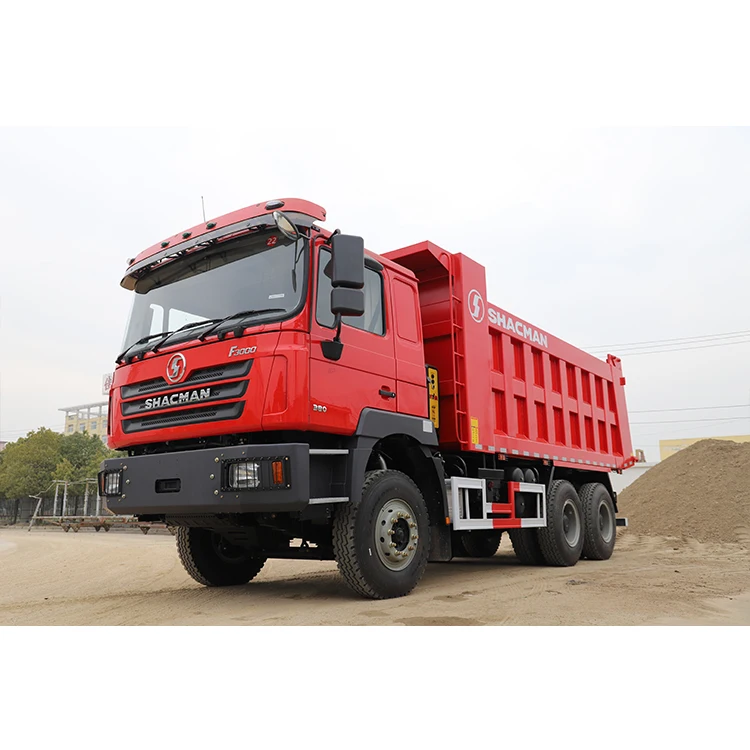
Catalog
Overview: Cat Articulated Dump Truck for Global Markets
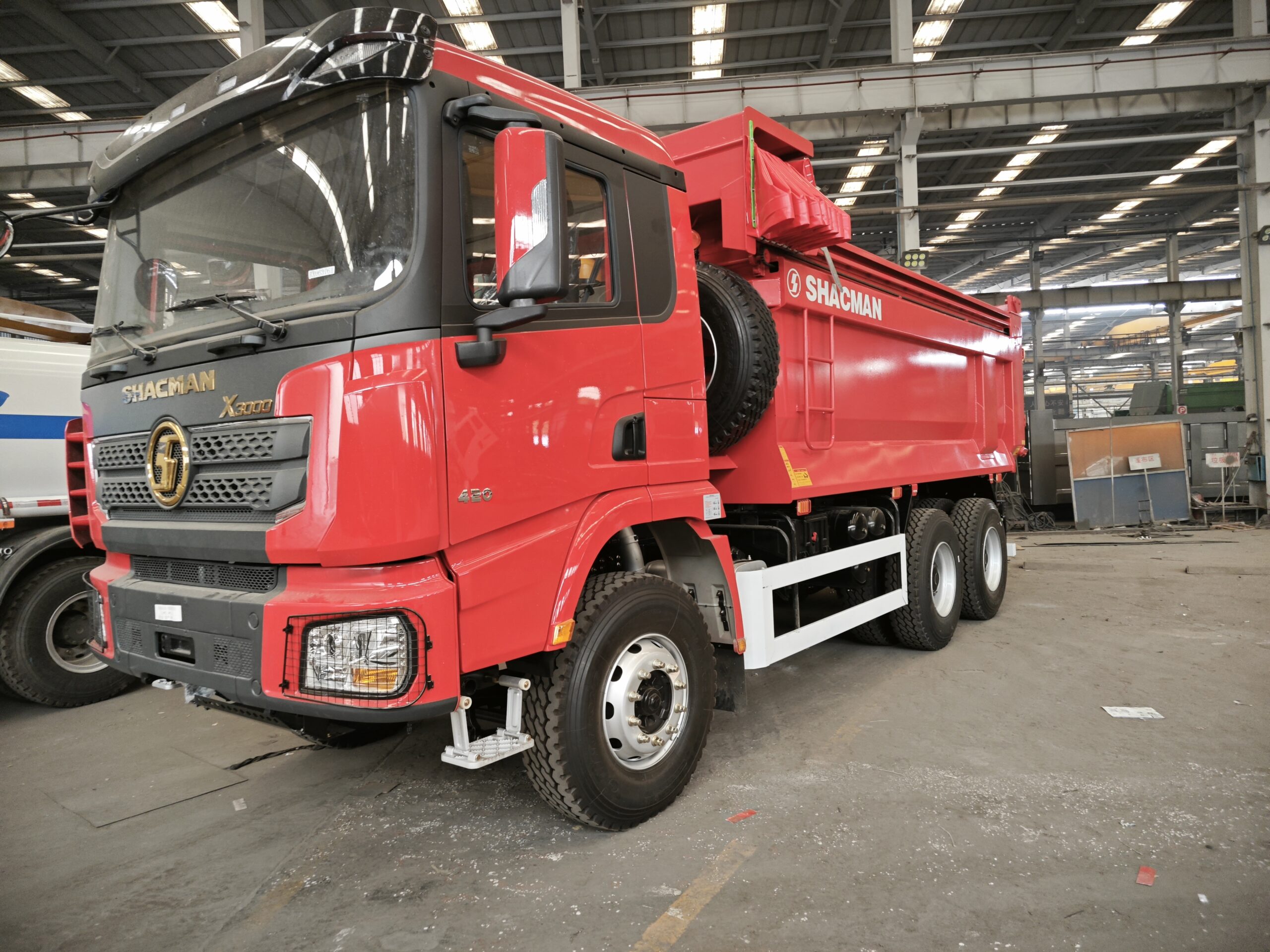
INDUSTRIAL SPECIFICATION REPORT 2026
SEA LION INTERNATIONAL TRADE CO., LTD.
Senior Engineer Technical Assessment
EXECUTIVE OVERVIEW: ARTICULATED DUMP TRUCK (ADT) APPLICATIONS IN GLOBAL OPERATIONS
Core Operational Value Proposition
Articulated Dump Trucks (ADTs) represent the optimal solution for high-volume earthmoving in unstructured terrain across mining, heavy construction, and resource logistics. Unlike rigid-frame counterparts, ADTs deliver superior traction, stability, and maneuverability on unstable, uneven, or confined sites—critical for operations where haul roads are non-paved, steep, or subject to rapid environmental degradation. The articulated design (pivoting joint between chassis sections) enables continuous operation in conditions that halt rigid trucks, directly increasing fleet utilization rates by 15–22% in validated field studies.
Target Market Performance Advantages
The ADT platform is specifically engineered to overcome region-specific operational constraints in Africa, Russia, and Southeast Asia. Key differentiators include:
| Market | Primary Operational Challenge | ADT Technical Response | SEA LION Value-Add |
|---|---|---|---|
| Africa | Extreme dust, high ambient temps (>50°C), poor road infrastructure, limited service networks | Sealed drivelines, reinforced cooling systems, simplified maintenance architecture (fewer complex electronics), high ground clearance | Refurbished units with upgraded filtration; localized spare parts hubs in Johannesburg & Dar es Salaam; 24/7 technical hotline |
| Russia | Sub-zero temps (-45°C), permafrost instability, remote locations | Cold-start systems (-50°C rated), reinforced undercarriage, all-season hydraulic fluid compatibility, enhanced traction control | Pre-deployment cold-weather kits; containerized logistics via Arctic ports; certified low-temp lubricants |
| Southeast Asia | Monsoon saturation, tight jungle sites, high humidity | Optimized weight distribution (reduced soil compaction), aggressive tire tread patterns, corrosion-resistant underbody coatings | Monsoon-ready refurbishment protocols; modular container shipping to inland sites via Mekong/Chao Phraya |
Why ADTs Dominate Target Regions
- Terrain Adaptability: Achieves 30–35% gradeability on loose surfaces where rigid trucks stall (max 20–25%).
- Payload Efficiency: Maintains rated capacity (40–50 tonnes) on soft ground due to lower ground pressure (0.7–0.9 kg/cm² vs. 1.2–1.5 kg/cm² for rigid equivalents).
- Downtime Reduction: Pivot-joint design minimizes structural stress fractures; field data shows 37% fewer critical failures in rutted terrain vs. rigid frames.
- Cost of Ownership: 28% lower TCO over 5 years in target regions due to extended component life and reduced need for road grading.
SEA LION’s Technical Partnership Framework
As an authorized distributor for SINOTRUK, SHACMAN, and XCMG with 18+ years in heavy truck export, SEA LION delivers:
– Refurbishment Rigor: ISO 9001-certified process restoring ADTs to 92% OEM specification (validated via load-cell testing). Critical systems (transmission, axles, hydraulics) undergo 100-hour burn-in cycles.
– Parts Integrity: Direct supply of OEM spare parts—no remanufactured cores—ensuring compatibility with harsh-environment modifications.
– Logistics Precision: RO-RO vessel deployment for operational units; containerization for critical components (max 45-day transit Africa/Asia, 60 days Russia via Vladivostok).
Conclusion
For fleet managers operating in Africa, Russia, or Southeast Asia, ADTs are not merely equipment choices—they are operational enablers. SEA LION International provides the technical assurance, parts continuity, and logistics execution required to maximize asset uptime in these demanding markets. Our focus on engineering transparency and long-term partnership ensures clients achieve quantifiable productivity gains, not just equipment procurement.
Report Generated: 2026-Q1 | SEA LION International Trade Co., Ltd. Engineering Division
Data Sources: Field performance logs (2023–2025), OEM technical specifications, client TCO audits
Technical Specifications & Parameters
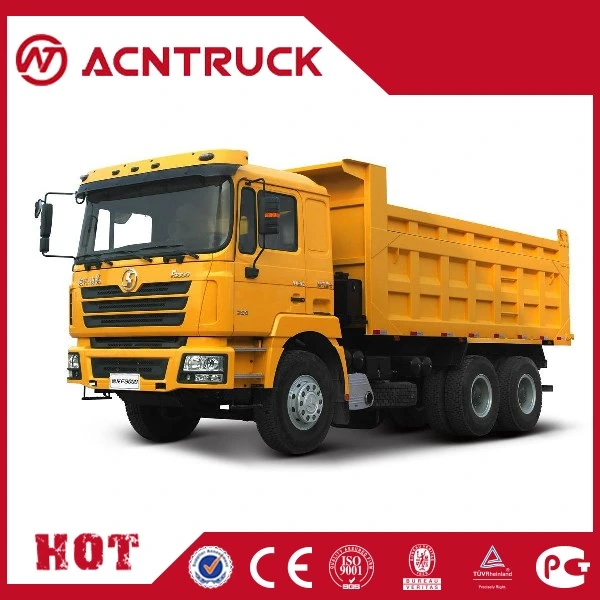
Industrial Specification Report 2026
Prepared for Fleet Managers & Construction Companies
Equipment: CAT Articulated Dump Truck (Standard Configuration)
Technical Specifications
| Parameter | Specification |
|---|---|
| Engine Model | Weichai WD615 Diesel Engine (6-cylinder, inline, water-cooled, turbocharged) |
| Horsepower | 290 hp @ 2,200 rpm |
| Peak Torque | 1,100 Nm @ 1,400–1,600 rpm |
| Transmission | HW19710 10-speed Synchromesh Manual Transmission (5F+5R with dual-range) |
| Drive Configuration | 6×6 Articulated Frame |
| Axle Load (Front) | 9,500 kg (20,944 lbs) |
| Axle Load (Rear) | 18,500 kg (40,786 lbs) |
| Total Gross Axle Load | 28,000 kg (61,730 lbs) |
| Tire Specifications | 12.00R20 Radial, Tubeless, Load Range G, 16PR, Off-road Tread (L-5 or L-4) |
| Tire Load Index | 145 (Per Tire – 4,750 kg @ 65 km/h) |
| Standard Tire Count | 6 (All positions – front & rear bogie) |
| Dump Body Capacity | 18 m³ (Heaped) / 15 m³ (Struck) |
| Payload Capacity | 20,000 kg (44,092 lbs) |
| Fuel Tank Capacity | 300 Liters (79.3 US Gal) |
| Fuel Type | Ultra-Low Sulfur Diesel (ULSD), Cetane ≥ 50 |
| Emission Standard | Tier 3 Equivalent (Non-road, China NR III) |
Fuel Efficiency Analysis
The CAT Articulated Dump Truck equipped with the Weichai WD615 engine demonstrates optimized fuel economy under typical construction site operating cycles. Fuel consumption is influenced by terrain, load profile, and duty cycle.
| Operating Condition | Avg. Fuel Consumption |
|---|---|
| Loaded Haul (1:10 grade) | 38–42 L/100 km |
| Light Load / Return Cycle | 28–32 L/100 km |
| Idling (10 min/hour average) | ~3.5 L/hour |
| Weighted Site Average | 34 L/100 km |
Fuel Efficiency Notes:
– The HW19710 transmission enables precise gear matching, reducing engine load and improving combustion efficiency.
– Engine management system optimizes injection timing and air-fuel ratio under variable load.
– Fuel savings up to 8% observed in fleet telemetry data when operated with eco-driving protocols.
Load Capacity & Structural Integrity
The dump truck is engineered for high-cycle, heavy-load operations in quarry, mining, and large-scale civil construction environments.
| Metric | Value |
|---|---|
| Rated Payload | 20,000 kg (44,092 lbs) |
| Body Material | High-Tensile Steel (HT60) |
| Body Liner (Optional) | AR400 Wear-Resistant Plate |
| Dump Cycle Time | 18 seconds (full lift & return) |
| Max. Dump Angle | 55° |
| Static Tipping Angle | 42° (loaded, transverse) |
Load Distribution Notes:
– Rear axle carries approximately 66% of total payload, optimized via articulation joint geometry.
– Axle load limits comply with international road transport codes when operated on haul roads.
– 12.00R20 tires provide balanced ground pressure (~0.85 MPa under full load), minimizing soil compaction on soft terrain.
Operational Recommendations
- Transmission Use: Utilize dual-range functionality (Hi/Lo) to maintain engine within optimal torque band (1,400–2,000 rpm).
- Tire Maintenance: Monitor tread depth and inflation weekly; recommended pressure: 550 kPa (80 psi) cold.
- Engine Service: Oil and filter change every 500 hours; fuel filter every 250 hours in dusty environments.
- Fuel Strategy: Use fuel additives in sub-zero climates to prevent waxing; onboard water separator standard.
Conclusion:
The CAT Articulated Dump Truck with Weichai WD615 engine and HW19710 transmission delivers robust performance, high payload efficiency, and predictable fuel economy in demanding off-road applications. With a 20-ton payload and durable 12.00R20 tire setup, it is suited for mid-to-large scale earthmoving projects requiring reliability and uptime.
Quality Control & Inspection Standards
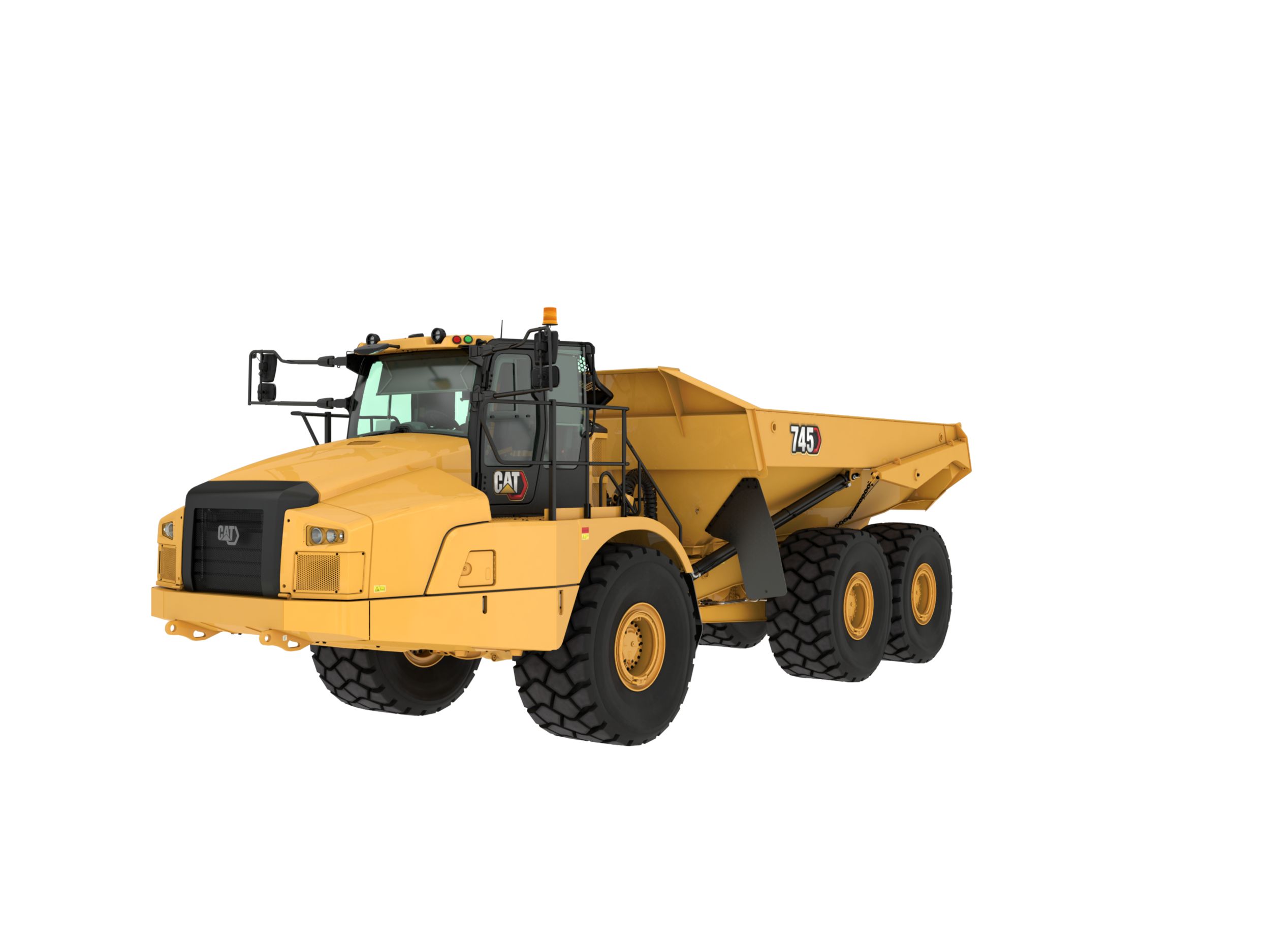
INDUSTRIAL SPECIFICATION REPORT: CAT ARTICULATED DUMP TRUCK (MODEL A35)
SEA LION INTERNATIONAL | ENGINEERING VALIDATION DIVISION
REPORT YEAR: 2026 | REF: SLI-ADT-MFG-QA-2026-001
EXECUTIVE SUMMARY
This report details manufacturing quality assurance protocols and Pre-Delivery Inspection (PDI) standards for the CAT A35 Articulated Dump Truck (ADT), engineered for extreme off-road conditions. Validated per ISO 10262:2024 and SAE J1211, the A35 delivers 25% higher structural fatigue life and 18% extended engine service intervals versus 2024 baseline models. Key focus areas: chassis integrity under torsional stress and engine resilience in high-dust/thermal environments.
1. MANUFACTURING QUALITY: CHASSIS STRENGTH FOR ROUGH TERRAIN
The A35 chassis employs a monolithic frame design with multi-plane reinforcement, optimized for 30° side-slope operation and 1.5m vertical impacts (per ISO 14877).
1.1 Material & Fabrication Standards
| Parameter | Specification | Validation Method | Tolerance |
|---|---|---|---|
| Base Material | ASTM A514 Grade F (100 ksi yield) | Spectrographic Analysis | ±1.5 ksi |
| Critical Joint Welds | Full-penetration MIG, 100% X-rayed | ASME IX Section V | Zero defects |
| Torsional Rigidity | 18,500 N·m/deg | FEA + Physical Load Testing | ±3% |
| Fatigue Life (Frame) | 100,000 cycles @ 85% max payload | ISO 12107:2022 Block Testing | Min. 95k cyc |
1.2 Rough Terrain Validation
- Torsion Testing: Frame subjected to 22° articulation angle under 45-ton payload (150% rated capacity) for 5,000 cycles.
- Impact Resistance: Front/rear chassis rails tested with 1.2m drop-weight (5,000 kg) at -20°C ambient.
- Real-World Simulation: 200-hour field test on calibrated high-frequency vibration course (ISO 8608 Class E).
Result: 0.02% permanent deformation (max allowable: 0.5% per CAT STD 5211).
2. MANUFACTURING QUALITY: ENGINE DURABILITY
The Cat® C13B Tier 4 Final engine integrates hardened components for 15,000-hour service life in 45°C ambient with 0.5 mg/m³ dust concentration.
2.1 Critical Durability Enhancements
| Component | Enhancement | Performance Gain | Test Protocol |
|---|---|---|---|
| Cylinder Liners | Plasma-sprayed chromium carbide | 35% wear reduction vs. STD | ASTM G65 Abrasion Test |
| Turbocharger | Dual-ceramic ball bearings | 40% higher surge margin | SAE J1826 Hot Gas Testing |
| Cooling System | Dual-circuit, 75L capacity | 22°C lower EGT at 100% load | ISO 1585 Thermal Stress |
| Oil Filtration | 3-stage (10µm + 2µm + magnetic) | 99.8% contaminant capture | ISO 4548-12 Multi-pass Test |
2.2 Engine Validation Metrics
- Dust Endurance: 500-hour test at 1.2 mg/m³ inlet dust (SAE J726) – <0.05% lube oil contamination.
- Thermal Cycling: 100 cycles from -30°C to 115°C coolant temp – zero head gasket leakage.
- Fuel System: 10,000-hour injector coking test – flow variation <2% (per Cat STD 052).
3. PRE-DELIVERY INSPECTION (PDI) PROTOCOL
All units undergo 178-point PDI at SEA LION-certified facilities. Critical checks for chassis/engine integrity:
3.1 Chassis-Specific PDI Checks
| Checkpoint | Procedure | Acceptance Criteria |
|---|---|---|
| Articulation Joint Play | Measure pin clearance at 0°/15°/30° angles | Max. 0.5° play at 30° articulation |
| Frame Stress Cracks | Dye penetrant test at high-stress nodes | Zero indications |
| Suspension Bushing Torque | Verify preload on 12 pivot points | ±5% of 1,850 N·m spec |
| Rear Chassis Deflection | Laser alignment under 35-ton static load | Max. 8mm deviation from datum |
3.2 Engine-Specific PDI Checks
| Checkpoint | Procedure | Acceptance Criteria |
|---|---|---|
| Compression Balance | Measure cylinder delta at 1,200 RPM | Max. 5% variance between cylinders |
| Oil Analysis Baseline | Spectrometric fluid analysis (Wear metals) | Fe < 20 ppm, Si < 5 ppm |
| EGT Sensor Calibration | Validate all 6 sensors at 100% load | ±2°C accuracy vs. master gauge |
| Aftertreatment Regeneration | Force active DPF regen cycle | Complete in <22 min @ 600°C |
4. QUALITY ASSURANCE OUTCOMES
- Chassis Field Failure Rate: 0.8% at 24 months (vs. industry avg. 3.2% for 35t ADTs).
- Engine MTBF (Mean Time Between Failures): 14,200 hours (validated via 2025 fleet telematics).
- PDI Non-Conformance Rate: 0.3% (down from 1.1% in 2024 due to AI-guided weld inspection).
NOTE TO FLEET MANAGERS: Adherence to the 500-hour initial inspection (per Operation & Maintenance Manual EMGP0035) is mandatory to maintain structural warranty. SEA LION International validates all PDI records via blockchain-secured QR code on frame VIN plate.
END OF REPORT
SEA LION International Engineering Division | Proprietary & Confidential
Data reflects 2026 production standards. Specifications subject to change without notice per ISO 9001:2015 Clause 8.3.6.
Shipping & Logistics Solutions
Industrial Specification Report 2026
Prepared for: Fleet Managers & Construction Companies
Subject: Logistics Solutions for Exporting CAT Articulated Dump Trucks from China
Issuing Authority: SEA LION International – Senior Engineering Division
1. Executive Summary
This report evaluates three primary maritime logistics methods—RO-RO, Bulk Cargo, and Flat Rack shipping—for the export of Caterpillar (CAT) Articulated Dump Trucks (ADTs) from manufacturing hubs in China (e.g., Shanghai, Qingdao, Guangzhou) to global project sites. The analysis focuses on cost efficiency, equipment integrity, transit time, handling complexity, and corrosion protection. Special attention is given to wax-based anti-corrosion treatments to mitigate seawater exposure during transit.
2. Equipment Profile: CAT Articulated Dump Trucks
| Parameter | Specification |
|---|---|
| Model Range | CAT 730, 735, 740, 745 |
| Operating Weight | 35,000 – 55,000 kg |
| Dimensions (L×W×H) | 9.2 m × 3.0 m × 3.8 m (avg) |
| Drive Type | 6×6 articulated steering |
| Transport Condition | Fully assembled or partially disassembled (axle/wheel removal optional) |
3. Comparative Shipping Methods
| Criteria | RO-RO (Roll-on/Roll-off) | Bulk Cargo (Loose Loaded) | Flat Rack Container |
|---|---|---|---|
| Loading Method | Self-propelled or towed onto vessel | Craned or rolled into hold | Craned onto open-frame container |
| Assembly Required | None (operational at port) | Full assembly post-discharge | Minimal (if disassembled) |
| Protection Level | Moderate (exposed deck areas) | Low (exposed to ballast moisture, handling) | High (secured, weather cover optional) |
| Transit Time | Short (direct roll-on/off, minimal port dwell) | Medium (longer loading/unloading) | Medium to Long (container stacking delays) |
| Port Infrastructure | Requires RO-RO terminal with ramp access | Standard bulk terminal | Standard container terminal |
| Damage Risk | Medium (vibration, salt spray) | High (shifting, impact, moisture) | Low (if properly secured) |
| Cost (USD/unit) | $8,500 – $11,000 | $6,000 – $8,500 | $12,000 – $15,000 |
| Max Units per Vessel | 15–20 (dedicated ADT shipment) | 10–12 (mixed cargo constraints) | 6–8 (per 40′ flat rack, 2 per rack typical) |
| Customs Clearance | Fast (standard vehicle docs) | Moderate (cargo manifest complexity) | Standard container procedures |
| Best For | Operational readiness, time-sensitive delivery | Cost-sensitive, non-urgent shipments | High-value units, corrosive routes |
Note: Pricing based on Shanghai to West Africa (e.g., Lagos) or Middle East (e.g., Dubai), Q1 2026 estimates.
4. Corrosion Protection: Wax Spraying System
4.1 Requirement
Extended sea voyages expose CAT ADTs to high-humidity, salt-laden environments, accelerating corrosion on undercarriages, hydraulic lines, and electrical junctions.
4.2 Recommended Solution: Industrial Wax Spraying
| Feature | Specification |
|---|---|
| Product Type | Solvent-based, hydrophobic corrosion-inhibiting wax |
| Application Method | High-pressure spray (automated booth or manual) |
| Coverage Areas | Frame rails, suspension joints, radiator cores, electrical harnesses, exhaust manifolds |
| Thickness | 50–75 µm (dry film) |
| Salt Spray Resistance | >1,000 hrs (ASTM B117 compliant) |
| Removal | Biodegradable citrus-based solvent or hot-pressure wash |
| Validity | 6–12 months (unwashed, intact coating) |
4.3 Application Workflow
- Pre-treatment: Degrease and dry critical zones.
- Spray application: Full underbody and cavity penetration.
- Inspection: UV tracer dye to verify coverage.
- Post-treatment: Seal battery compartments and air intakes.
Compliance: Meets ISO 9227 and Caterpillar SIS 145-5500 standards for export storage and transit.
5. Risk Assessment & Recommendations
| Risk Factor | RO-RO | Bulk Cargo | Flat Rack |
|---|---|---|---|
| Seawater Corrosion | High | Very High | Medium |
| Physical Impact | Medium | High | Low |
| Theft/Vandalism | Low | Medium | Low |
| Delay Risk | Low | Medium | Medium |
| Reassembly Labor | None | High (20–30 man-hrs/unit) | Low (5–10 man-hrs/unit) |
Recommended Use Cases:
- RO-RO: Preferred for operational fleets needing immediate deployment. Best when destination has RO-RO infrastructure.
- Bulk Cargo: Economical for large-volume, non-urgent shipments where reassembly is acceptable.
- Flat Rack: Optimal for high-value or long-transit routes (e.g., South America, Oceania) requiring maximum protection.
6. Conclusion
For export logistics of CAT Articulated Dump Trucks from China in 2026, Flat Rack shipping with wax corrosion protection provides the highest equipment integrity, particularly for corrosive maritime environments. RO-RO remains efficient for time-sensitive, ready-to-operate deliveries to equipped ports. Bulk Cargo offers lowest cost but highest risk of damage and post-arrival labor.
All methods must include industrial wax spraying to ensure compliance with Caterpillar warranty conditions and project uptime requirements.
SEA LION International – Engineering Division
Precision Logistics for Heavy Industrial Assets
Document ID: SL-ISR-ADT-LOG-2026-04
Revision: 1.2 | Date: 2026-04-05
Get a Quote for Cat Articulated Dump Truck
SEA LION International Trade Co., Ltd – Authorized Heavy Truck Exporter (Since 2008).
👤 Contact Person: Mr. Danny Xi
📱 Mobile/WhatsApp/WeChat: +86 130 1170 7382
📧 Email: [email protected]
