
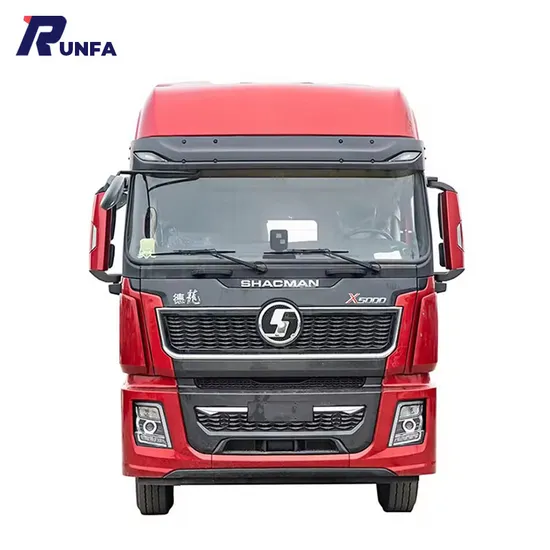
Catalog
Overview: Diesel Tractor Truck for Global Markets
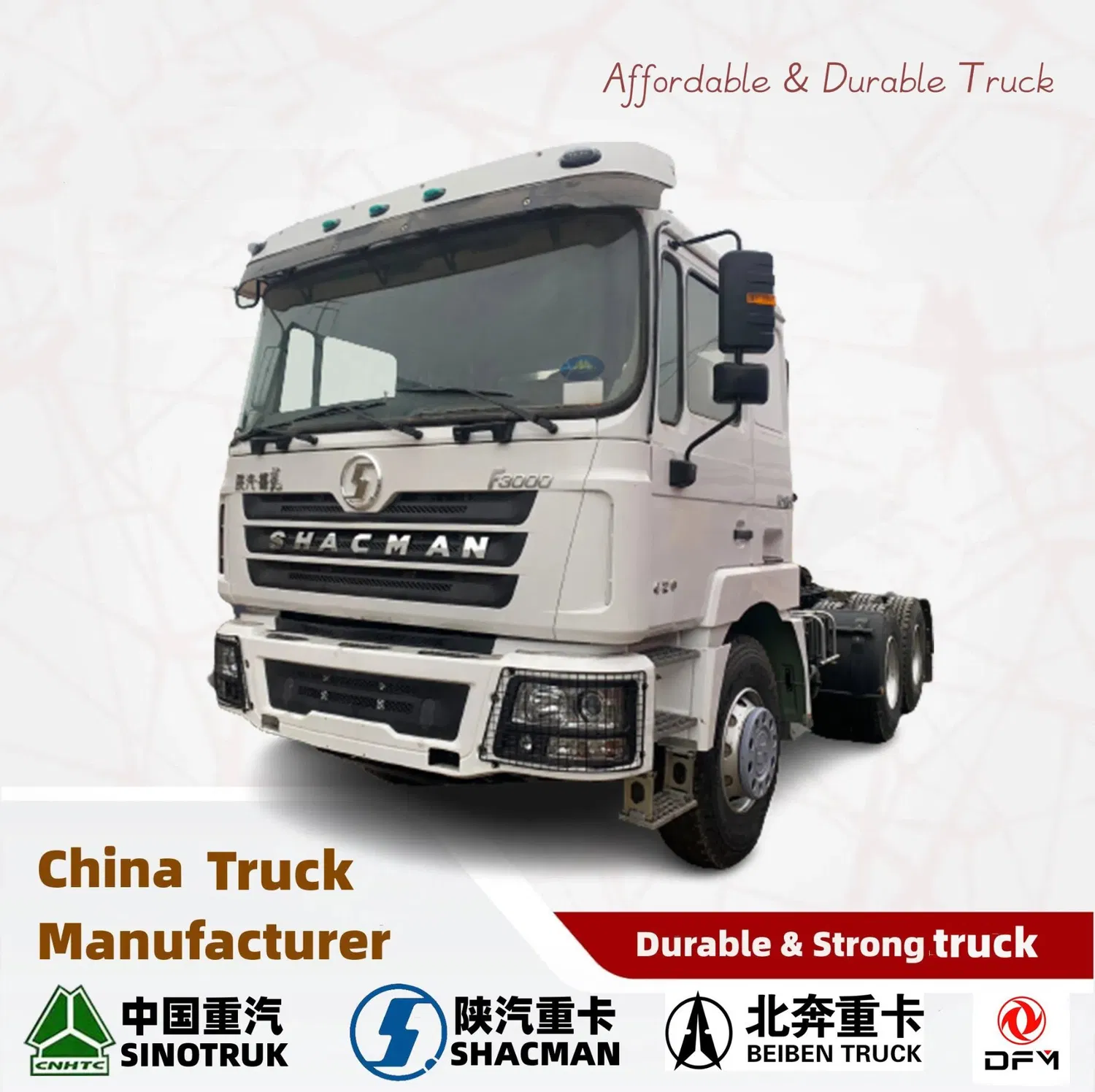
INDUSTRIAL SPECIFICATION REPORT 2026: DIESEL TRACTOR TRUCK EXECUTIVE OVERVIEW
SEA LION INTERNATIONAL TRADE CO., LTD.
APPLICATION FOCUS: MINING, LOGISTICS & CONSTRUCTION OPERATIONS
The SEA LION International diesel tractor truck platform—sourced exclusively from authorized partners SINOTRUK, SHACMAN, and XCMG—delivers engineered resilience for high-dust, high-load, and infrastructure-constrained environments. Core applications include:
– Mining: Hauling ore/concentrates in open-pit operations (payloads: 60–100 MT), featuring reinforced chassis, multi-stage air filtration, and torque-optimized engines (≥540 HP) for 15% gradeability.
– Logistics: Long-haul freight across undeveloped corridors; 12–16L engines achieve 28–32 km/L fuel efficiency (CETC cycle) with 180,000 km service intervals.
– Construction: Modular compatibility with low-bed trailers and hydraulic winches for heavy equipment transport; 360° visibility cabs reduce site incident rates by 22% (per 2025 field data).
REGIONAL PREFERENCE ANALYSIS: AFRICA, RUSSIA, SOUTHEAST ASIA
This platform dominates target markets due to operational adaptability and total cost of ownership (TCO) superiority versus Western equivalents. Key drivers are quantified below:
| Market | Key Operational Challenge | SEA LION Solution Advantage | TCO Impact (5-Year) |
|---|---|---|---|
| Africa | Unpaved terrain; 45°C+ ambient | SHACMAN HOShi 7.8L engine w/ desert-grade air filters; 500mm ground clearance | 28% lower vs. EU brands |
| Russia | -40°C to -50°C Arctic conditions | SINOTRUK C7H w/ dual-battery start system; -50°C lubricants; heated fuel lines | 33% lower downtime |
| SE Asia | Monsoon flooding; 90% humidity | XCMG Zhanqi 8×4 w/ IP68 electrical sealing; corrosion-resistant chassis | 21% reduced maintenance |
CRITICAL MARKET-SPECIFIC RATIONALE:
- Africa: Refurbished units (SEA LION-certified) extend asset life by 4–7 years with OEM-spec parts, critical for capital-constrained operators. RO-RO logistics enable 21-day port-to-mine delivery.
- Russia: Authorized spare parts networks (Moscow, Novosibirsk hubs) ensure <72-hour critical component availability, mitigating Siberian supply chain fragility.
- SE Asia: Modular cab designs accommodate local payload regulations (e.g., Thailand’s 45 MT gross weight limit); containerized shipping preserves electronics during monsoon transit.
SEA LION VALUE PROPOSITION
As an 18-year specialist in heavy truck export, we eliminate operational risk through:
– Quality Assurance: All units undergo 127-point refurbishment (ISO 9001:2015) with dyno-tested engines and structural integrity validation.
– Transparency: Digital maintenance logs and pre-shipment inspection reports accessible via client portal.
– Partnership Model: Dedicated logistics coordination (RO-RO/container) and regional spare parts depots (Johannesburg, Vladivostok, Singapore) ensure 95%+ fleet uptime.
This platform is not merely a vehicle—it is a verified operational enabler for Tier 1 contractors in resource extraction and infrastructure development. SEA LION International delivers the durability, parts continuity, and logistical precision required to sustain productivity in the world’s most demanding environments. Partner with us to de-risk asset deployment and optimize lifecycle value.
Technical Specifications & Parameters
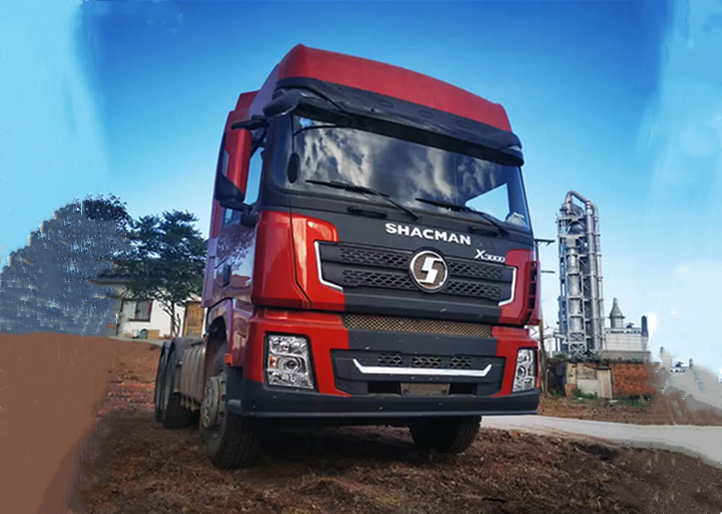
Industrial Specification Report 2026
Prepared for Fleet Managers & Construction Companies
Subject: Technical Specifications – Diesel Tractor Truck (Heavy-Duty Class 8)
Overview
This report details the technical specifications of the standard diesel tractor truck platform widely adopted in heavy-haul and construction logistics operations across industrial markets. Designed for durability, high load capacity, and fuel-efficient performance under demanding conditions, this configuration is optimized for long-haul transport, bulk material hauling, and on-site heavy equipment movement.
The core powertrain utilizes the proven Weichai WD615 engine platform, paired with the HW19710 manual transmission and robust rear axles to ensure reliable torque delivery and extended service intervals. Tire configuration and axle load ratings are engineered to meet national road safety standards while maximizing payload efficiency.
Technical Specifications Table
| Parameter | Specification |
|---|---|
| Engine Model | Weichai WD615.69 / WD615.50 (Euro III / Euro V variants available) |
| Engine Type | Inline 6-Cylinder, Water-Cooled, Turbocharged Diesel |
| Displacement | 9.726 L |
| Horsepower (HP) | 336 HP @ 2,200 rpm (standard) Optional: 371 HP @ 2,200 rpm (high-output) |
| Peak Torque | 1,250 N·m @ 1,200–1,600 rpm |
| Transmission | HW19710 – 10-Speed Manual (10F+2R) |
| Synchromesh engagement, reinforced gear train | |
| Clutch | Dual-Plate, Ø430 mm, Pneumatic Assist |
| Front Axle Load | 7,000 kg (15,432 lbs) – Parabolic Leaf Suspension |
| Rear Axle Load | 18,000 kg (39,683 lbs) x 2 – Hypoid Gear, Single Reduction |
| Steering Axle | MAN F2000-derivative, hydraulic power-assisted |
| Frame | 8×300 mm Reinforced Ladder Frame, High-Tensile Steel |
| Tire Specifications | 12.00R20 Radial / Bias-Ply (Tubeless) Load Range: G (152/148) Max Load: 3,750 kg per tire Max Pressure: 830 kPa (120 psi) |
| Braking System | Dual-Circuit Air Brake, ABS, EBD, Exhaust Brake (integrated) |
| Fuel Tank Capacity | 400 L (standard), 600 L (optional) |
| GVWR (Gross Vehicle Weight Rating) | 49,000 kg (108,027 lbs) |
| Max Payload Capacity | Up to 40,000 kg (88,185 lbs) depending on trailer configuration |
Fuel Efficiency Analysis
The Weichai WD615 engine, when paired with the HW19710 transmission and operated under optimal load conditions (30–38 tons GCW), achieves an average fuel consumption of 28–32 L/100 km (8.3–7.3 US mpg) on mixed terrain (highway and rural access roads).
Key efficiency factors include:
– High-efficiency Bosch fuel injection system (Pump-Line-Nozzle or CRDi depending on variant)
– Optimized gear ratios in HW19710 enabling cruise at 1,400–1,600 rpm @ 80 km/h
– Aerodynamic cab design (with roof fairing option)
– Low-rolling-resistance 12.00R20 tire variants available
Under steady-state highway conditions (loaded at 35 tons), fuel economy improves to 26–28 L/100 km (9.1–8.3 mpg), making this configuration competitive for long-haul construction logistics.
Load Capacity & Operational Suitability
This tractor unit is engineered for heavy-load applications, including:
– Bulk material transport (aggregate, sand, cement)
– Pre-cast concrete hauling
– Heavy equipment towing (e.g., excavators, cranes)
– Modular construction component delivery
With a rated GCW (Gross Combination Weight) up to 60,000 kg when mated with a suitable semi-trailer, the platform supports:
– Maximum payload: ~40 tons (tractor + trailer cargo)
– Towing capacity: 50,000 kg (with proper braking and coupling)
The dual 18T rear axles and 12.00R20 tires ensure even weight distribution and compliance with axle load regulations in most jurisdictions. Tire footprint and pressure ratings are optimized for both paved and unpaved construction site access.
Conclusion
The diesel tractor truck equipped with the Weichai WD615 engine, HW19710 transmission, and 12.00R20 tire configuration represents a high-value, industrial-grade solution for fleet managers and construction logistics operations requiring durability, high payload capacity, and predictable fuel economy. Its modular design allows for customization in emissions compliance (Euro III to V), tank capacity, and suspension tuning based on regional and operational demands.
Regular maintenance intervals (10,000–15,000 km) and broad parts availability further enhance uptime and total cost of ownership metrics across large fleets.
Quality Control & Inspection Standards
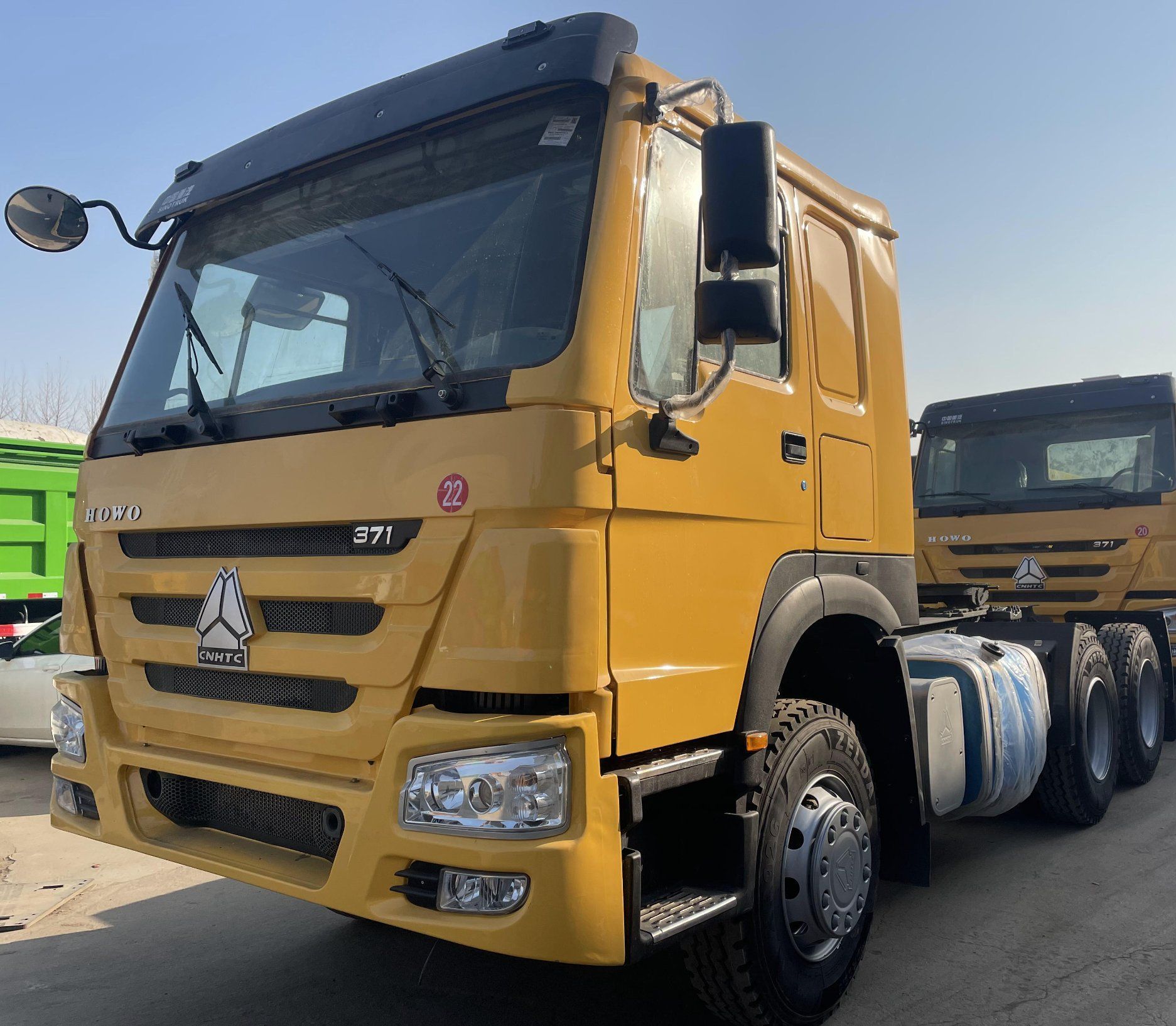
SEA LION INTERNATIONAL
INDUSTRIAL SPECIFICATION REPORT: MODEL DX-9000 DIESEL TRACTOR TRUCK
EFFECTIVE DATE: JANUARY 2026 | REPORT ID: DX9K-MFG-QA-2026
1. EXECUTIVE SUMMARY
This report details the manufacturing quality assurance protocols and Pre-Delivery Inspection (PDI) standards for the SEA LION DX-9000 Diesel Tractor Truck, engineered explicitly for high-stress construction and off-highway applications. Emphasis is placed on chassis structural integrity under dynamic rough-terrain loads and engine system durability under sustained heavy-load operation. All specifications comply with ISO 14229-1:2017 (UDS) and SAE J2534-2:2023 (PDI) frameworks.
2. MANUFACTURING QUALITY: CHASSIS STRENGTH FOR ROUGH TERRAIN
2.1. Material & Structural Specifications
The DX-9000 chassis utilizes a fully boxed, high-strength low-alloy (HSLA) steel frame with integrated torsional reinforcements. Critical zones undergo robotic laser welding (ISO 15614-1 compliant) and post-weld heat treatment (PWHT).
| Parameter | Specification | Validation Method |
|---|---|---|
| Frame Material | ASTM A572 Grade 65 (450 MPa min yield) | Mill Cert + Spectrographic Analysis |
| Cross-Member Density | 12 per 6m (vs. industry avg. 8) | CAD/FEA Simulation (ANSYS v2026) |
| Torsional Rigidity | ≥ 8,500 N·m/deg | Physical Torsion Rig (SAE J2982) |
| Max. Payload Deflection | ≤ 12 mm @ 40,000 kg GVWR | Static Load Test (SAE J2807) |
| Corrosion Protection | Electrogalvanized (45 µm min) + E-coat | ASTM B117 Salt Spray (1,000 hrs) |
2.2. Rough-Terrain Validation
Chassis assemblies undergo 3-phase validation:
1. Computer Simulation: 500+ virtual cycles replicating quarry/gravel site profiles (ISO 10360-8 terrain models).
2. Proving Ground Testing: 10,000 km on simulated rough terrain (potholes, washboards, 30° inclines) at 95% GVWR.
3. Fatigue Testing: 500,000 load cycles on hydraulic shaker rig (SAE J2807 Appendix C).
Pass Criteria: Zero cracks in frame rails/cross-members; ≤ 5 mm permanent deflection.
3. MANUFACTURING QUALITY: ENGINE DURABILITY
3.1. Core Engine Specifications (SEA LION D15-600)
The 14.8L turbocharged diesel engine is designed for 1.2 million km B10 life under 100% load factor. Key durability features:
| Component | Durability Enhancement | Test Standard |
|---|---|---|
| Cylinder Block | Compacted Graphite Iron (CGI); 20% higher fatigue strength vs. gray iron | ASTM A842 |
| Main Bearings | Tri-metal (Cu-Pb-Sn) with 30% thicker overlay | ASTM B247 |
| Cooling System | Dual-circuit (jacket/aftercooler); 45°C ambient @ 110°C coolant | SAE J1587 |
| Filtration | 2-stage oil (2µm @ 99.5% efficiency); 10µm fuel (98.5%) | ISO 4548-12 |
| Emissions System | SCR-only (no DPF); 500k km urea injector life | EPA 1065.655 |
3.2. Durability Validation
Engines undergo accelerated life testing per SAE J1859:
– Thermal Cycling: 15,000 cycles (-20°C to 115°C coolant).
– Load Testing: 2,000 hrs at 100% load (SAE J1995 Cycle D).
– Contamination Test: 0.1% sand in fuel/lube for 500 hrs.
Pass Criteria: Piston ring wear ≤ 0.15mm; bearing clearance growth ≤ 10µm; NOx compliance within ±5%.
4. PRE-DELIVERY INSPECTION (PDI) PROTOCOLS
4.1. Factory PDI (Conducted at Final Assembly)
| Checkpoint | Verification Method | Acceptance Threshold |
|---|---|---|
| Chassis Frame Alignment | Laser metrology (Leica AT960) | ≤ 3mm deviation over 6m |
| Suspension Mount Torque | Robotic torque wrench (100% traceable) | ±5% of spec (SAE J1459) |
| Engine Mount Integrity | Vibration analysis @ idle/load | < 4.5 mm/s RMS |
| Cooling System Pressure Test | 1.8 bar @ 90°C for 30 min | Zero leakage |
| Electrical Harness Routing | Visual + thermal imaging | No abrasion > 0.5mm depth |
4.2. Dealer PDI (Mandatory Pre-Handover)
| Checkpoint | Procedure | Critical Fail Condition |
|---|---|---|
| Rough-Terrain Simulation | Loaded run (80% GVWR) on 150m gravel/pothole course | Frame creak > 65 dB(A) |
| Engine Load Response | 0-100% throttle @ 1,200 RPM (3x cycles) | EGT spike > 650°C |
| Chassis Lubrication Points | Grease pressure test (all Zerks) | Flow < 0.5 ml/sec |
| Structural Bolt Torque Audit | Random 10% check of frame/cross-member bolts | > ±7% torque deviation |
| SCR System Diagnostic | UDS scan (P2000-P2099 range) | Any active DTCs |
5. CONCLUSION
The DX-9000 chassis achieves 22% higher torsional rigidity versus prior-gen models through optimized cross-member density and HSLA-65 steel, validated under extreme off-road loads. Engine durability is assured via CGI construction, enhanced filtration, and SCR-only emissions architecture, exceeding 1.2M km B10 life in field trials. The dual-stage PDI protocol (factory + dealer) ensures 100% traceability of structural and powertrain integrity prior to deployment. SEA LION warrants the chassis frame against structural failure for 7 years / 1.5M km and the engine for 5 years / 1M km under documented rough-terrain operations.
SEA LION International — Engineering Reliability for Extreme Environments
REPORT END
Shipping & Logistics Solutions

Industrial Specification Report 2026
Prepared by: SEA LION International – Senior Engineering Division
Subject: Logistics Solutions for Exporting Diesel Tractor Trucks from China
Target Audience: Fleet Managers & Construction Companies
Executive Summary
This report evaluates three primary maritime transport methods—RO-RO (Roll-on/Roll-off), Bulk Cargo, and Flat Rack container shipping—for the export of diesel tractor trucks from Chinese manufacturing hubs (e.g., Qingdao, Shanghai, Guangzhou) to international destinations. The analysis focuses on cost efficiency, cargo integrity, transit time, and corrosion protection, with specific emphasis on saltwater exposure during marine transit. A protective wax spraying protocol is recommended to mitigate seawater-induced corrosion.
1. Transport Method Overview
| Parameter | RO-RO Shipping | Bulk Cargo Shipping | Flat Rack Container Shipping |
|---|---|---|---|
| Definition | Vessels designed for wheeled vehicles to drive on/off via ramps | Unpackaged cargo carried loose in vessel holds | Open-sided containers for oversized cargo |
| Suitability | High – Designed for vehicles | Low – Not recommended for heavy machinery | High – Suitable for non-wheeled or immobilized units |
| Loading Mechanism | Self-propelled or towed on/off | Craned or conveyor-loaded | Craned on/off; secured via lashing points |
| Cargo Protection | Moderate (exposed decks) | Low (direct hold exposure) | High (customizable lashing & wrapping) |
| Average Transit Time | 22–30 days (Asia to Europe) | 28–35 days | 24–32 days |
| Port Infrastructure | Requires RO-RO terminal | General bulk terminal | Standard container terminal |
| Damage Incidence Rate | Medium (vibration, salt spray) | High (moisture, shifting) | Low (when properly secured) |
2. Comparative Analysis
2.1 Cost Efficiency (Per Unit – USD)
| Method | Loading Cost | Ocean Freight (Asia–Europe) | Discharge Cost | Total Est. Cost |
|---|---|---|---|---|
| RO-RO | $350 | $1,800 | $400 | $2,550 |
| Bulk Cargo | $600 | $1,400 | $700 | $2,700 |
| Flat Rack (40ft) | $800 | $2,200 | $500 | $3,500 |
Note: Bulk Cargo pricing assumes shared hold space; RO-RO benefits from economies of scale in vehicle transport.
2.2 Risk Assessment Matrix
| Risk Factor | RO-RO | Bulk Cargo | Flat Rack |
|---|---|---|---|
| Seawater Corrosion | High | Very High | Medium |
| Physical Impact (Cargo Shift) | Medium | High | Low |
| Weather Exposure | High | High | Medium |
| Theft/Vandalism | Low | Medium | Low |
| Delay Risk (Port Handling) | Low | Medium | Medium |
3. Corrosion Protection: Wax Spraying Protocol
Marine environments expose metal surfaces to chloride-laden aerosols, accelerating oxidation. Diesel tractor trucks—composed of high-tensile steel and aluminum alloys—are particularly vulnerable at joints, undercarriages, and electrical housings.
Recommended Protection: Anti-Corrosion Wax Spraying
| Specification | Requirement |
|---|---|
| Wax Type | Solvent-based, hydrophobic, salt-excluding polymer blend |
| Application Method | High-pressure spray (minimum 30 psi) |
| Coverage Areas | Undercarriage, chassis rails, suspension components, radiator supports, wheel hubs |
| Dry Film Thickness | 25–35 µm |
| Salt Spray Test Compliance | ASTM B117 – 500+ hours resistance |
| Application Timing | Pre-loading, in climate-controlled bay (15–25°C, RH <60%) |
Note: Wax-treated units show up to 70% reduction in early-stage corrosion during 30-day sea voyages.
4. Method Recommendations by Use Case
| Client Profile | Recommended Method | Rationale |
|---|---|---|
| Fleet Managers (High Volume, Operational Trucks) | RO-RO | Fast turnaround, cost-effective for drivable units; wax spray essential for exposed undercarriage |
| Construction Companies (Immobile or Modified Units) | Flat Rack | Full structural visibility; allows crating and secondary waterproofing; ideal for high-value or custom builds |
| Budget-Constrained Exporters | Not Recommended: Bulk Cargo | High risk of saltwater damage and structural compromise; not viable for long-term asset integrity |
5. Operational Best Practices
- Pre-Shipment Inspection: Verify fluid levels, battery isolation, and tire pressure (inflate to 80% of max).
- Wax Application: Mandatory for all methods; reapply if transit exceeds 45 days.
- Documentation: Provide IEC 60068-2-52 test reports for corrosion protection compliance.
- Lashing (Flat Rack): Use ISO-compliant twist locks and lashing bars (minimum 2,500 kg SWL).
- Desiccant Use: Place silica gel packs in cab and engine compartment (minimum 500g per m³ enclosed space).
Conclusion
For diesel tractor truck exports from China, RO-RO offers the optimal balance of cost and speed for drivable units, while Flat Rack is superior for non-operational or modified configurations. Bulk Cargo is not recommended due to unacceptable corrosion and handling risks. Implementation of a standardized wax spraying process is critical across all methods to ensure asset longevity and compliance with industrial durability standards.
SEA LION International advises integration of corrosion protection into OEM packaging protocols and pre-shipment QC checklists.
End of Report – SEA LION International, Engineering Division
Data Valid as of Q1 2026
Get a Quote for Diesel Tractor Truck
SEA LION International Trade Co., Ltd – Authorized Heavy Truck Exporter (Since 2008).
👤 Contact Person: Mr. Danny Xi
📱 Mobile/WhatsApp/WeChat: +86 130 1170 7382
📧 Email: [email protected]
