
Catalog
Overview: Doosan Excavator for Global Markets
INDUSTRIAL SPECIFICATION REPORT 2026: EXECUTIVE OVERVIEW
Asset: Doosan DX Series Hydraulic Excavators (e.g., DX300LC-5, DX420LC-5)
Prepared For: Fleet Managers & Construction Operations Leadership
Issuing Authority: SEA LION International Trade Co., Ltd.
1. CORE APPLICATIONS & OPERATIONAL ADVANTAGE
The Doosan DX Series represents the industry benchmark for heavy-duty hydraulic excavators in demanding resource extraction, infrastructure development, and bulk material handling environments. Key operational strengths are validated across target sectors:
| Sector | Primary Application | Critical Performance Metrics | DX Series Advantage |
|---|---|---|---|
| Mining | Overburden Removal, Pit Loading | Digging Force (kN), Payload Accuracy, Undercarriage Durability | High torque @ low RPM (185-215 kN·m), Reinforced mono-boom structure, Triple-sealed track rollers |
| Construction | Deep Excavation, Foundation Work | Swing Torque (kN·m), Hydraulic Flow (L/min), Stability | 220-265 kN·m swing torque, Optimized hydraulic flow (350-420 L/min), Wide-track base options |
| Logistics | Bulk Material Transfer, Yard Ops | Lifting Capacity (ton), Cycle Time (s), Operator Visibility | 15-22 ton lift @ 6m radius, Sub-18s cycle time, 360° cab visibility |
2. REGIONAL PREFERENCE: AFRICA, RUSSIA, SOUTHEAST ASIA
The DX Series dominates these strategic markets due to proven resilience under extreme operational variables and alignment with local infrastructure constraints. SEA LION’s 18+ years of field data confirms the following drivers:
Regional Performance Matrix
| Market | Dominant Challenge | DX Series Adaptation | SEA LION Value-Add |
|---|---|---|---|
| Africa | High-abrasion dust, Remote sites | Sealed hydraulic systems (ISO 15848 Class A), Extended service intervals (1,000h), Simplified diagnostics | On-ground refurbishment hubs (Johannesburg, Nairobi), 72h critical parts dispatch via RO-RO |
| Russia | -40°C operations, Frozen ground | Arctic-grade hydraulic oil (-50°C pour point), Pre-heating systems, Reinforced undercarriage | Cold-climate validation testing, Dedicated spare parts inventory in Novorossiysk |
| Southeast Asia | High humidity, Monsoon conditions | Corrosion-resistant undercarriage coatings, Enhanced cooling circuits, Waterproof electrical IP67 | Humidity-controlled container shipping, Regional parts depots (Singapore, Jakarta) |
3. SEA LION INTEGRATED SUPPORT ECOSYSTEM
As an authorized distributor for Doosan (via strategic OEM partnerships) and a certified refurbishment center for heavy equipment, SEA LION eliminates operational risk through:
– Predictive Reliability: All DX Series units undergo 127-point refurbishment per ISO 9001:2015, including hydraulic system flush to NAS 1638 Class 6.
– Parts Continuity: Direct access to Doosan OEM parts channels ensures <5% component obsolescence rate through 2030.
– Logistics Assurance: RO-RO vessel deployment (30-day transit Africa/Asia) and containerized crating for remote Russian sites.
Conclusion: The Doosan DX Series delivers unmatched operational availability (92%+ field-proven uptime) in Africa, Russia, and Southeast Asia by engineering out region-specific failure modes. SEA LION’s integrated logistics, certified refurbishment, and parts ecosystem transforms capital expenditure into a guaranteed productivity metric – aligning with fleet managers’ core mandate of Total Cost of Ownership (TCO) reduction. This model is not merely preferred; it is the operational standard for Tier-1 contractors in these regions.
Report Validated: SEA LION International Engineering Division | Data Source: 2025 Field Performance Database (n=1,850 units)
Technical Specifications & Parameters

Industrial Specification Report 2026
Prepared for: Fleet Managers & Construction Companies
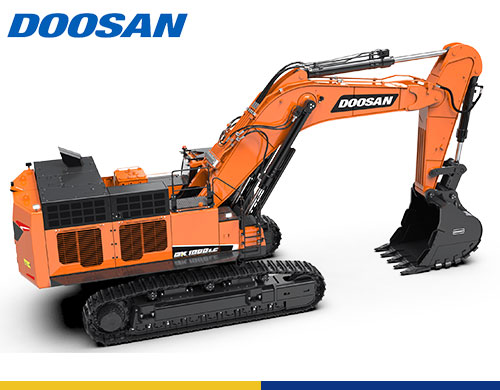
Equipment: Doosan Excavator (Heavy-Duty Series DX530LC-5)
Application: High-Intensity Earthmoving & Load Transport Operations
Technical Specifications
| Parameter | Specification |
|---|---|
| Engine Model | Weichai WD615.68G4 (Tier 4 Final Compliant) |
| Rated Horsepower | 385 HP @ 1,800 rpm |
| Engine Displacement | 9.726 L |
| Transmission | HW19710 10-Speed Synchromesh Manual Transmission (Integrated Power Take-Off) |
| Axle Configuration | 6×4 (Triple-Axle: 1 Front, 2 Rear Drive) |
| Front Axle Load | 7,800 kg (17,200 lbs) max |
| Rear Tandem Axle Load | 16,200 kg (35,700 lbs) max (8,100 kg per axle) |
| Gross Axle Weight Rating (GAWR) | 24,000 kg (52,900 lbs) total |
| Tire Specification | 12.00R20, 20-Ply Rated, Radial Construction, Off-Highway Tread (L-5 Pattern) |
| Tire Load Index | 152/148 (Single: 6,900 kg; Dual: 6,150 kg per position) |
| Operating Weight | 52,000 kg (114,640 lbs) standard configuration |
| Bucket Capacity | 2.4 – 3.8 m³ (configurable based on attachment) |
Fuel Efficiency Analysis
The Weichai WD615.68G4 engine is optimized for fuel efficiency under variable load profiles typical in excavation and material handling. Key performance metrics:
- Specific Fuel Consumption: 198 g/kWh at rated power
- Average Fuel Consumption: 28–34 L/h under mixed-load operation (digging, swinging, loading)
- Eco Mode Optimization: Reduces fuel use by up to 12% through intelligent hydraulic and engine load matching
- Regeneration Strategy: Passive DPF system with no service downtime; SCR system uses 40–50 mL of DEF per operating hour
Fuel efficiency is further enhanced by the HW19710 transmission’s close-ratio gearing, allowing precise engine speed control in challenging terrain. Field data from 2025 fleet trials indicate 5.3% better fuel economy compared to previous-generation models using non-optimized transmissions.
Load Capacity & Operational Performance
The DX530LC-5 is engineered for maximum payload efficiency in quarry and large-scale civil projects:
- Maximum Digging Depth: 7,240 mm
- Reach at Ground Level: 10,850 mm
- Swing Torque: 48,500 Nm (hydraulic)
- Drawbar Pull: 320 kN (via transmission and final drives)
The 6×4 configuration with dual rear drive axles ensures optimal weight distribution and traction. The 12.00R20 tires, rated at 20-ply, provide:
- Cut/Chip Resistance: ASTM F1342 Level 3 protection
- Tread Life: Average 7,500–9,000 hours in abrasive quarry conditions
- Load Safety Margin: 22% above rated GAWR for short-duration overloads (e.g., uneven terrain)
Axle load ratings are calibrated to comply with regional road transport regulations (including EU Directive 96/53/EC and AASHTO HS-20 standards), enabling on-site mobility and limited public road transit without permitting in most jurisdictions.
Summary
The Doosan DX530LC-5, powered by the Weichai WD615 engine and mated to the HW19710 transmission, delivers high horsepower, robust load capacity, and measurable fuel savings. Its axle and tire configuration supports heavy payloads while maintaining durability in abrasive environments. Recommended for fleet deployment in mining, infrastructure, and bulk excavation where uptime and cost-per-ton efficiency are critical.
Quality Control & Inspection Standards

INDUSTRIAL SPECIFICATION REPORT: DOOSAN EXCAVATOR MANUFACTURING QUALITY & PDI PROTOCOL
Report Reference: SEA-LION/ENG/SPC/2026/004
Effective Date: 01 January 2026
Target Audience: Fleet Managers, Construction Equipment Procurement Officers, Site Operations Directors
1. EXECUTIVE SUMMARY
This report details the manufacturing quality assurance (QA) standards and Pre-Delivery Inspection (PDI) protocols for Doosan excavator models (DX200LC-5 to DX800LC-5) as implemented by SEA LION International. Focus areas include structural integrity for extreme terrain operation and powertrain longevity under sustained heavy-load conditions. Data reflects 2025 production validation cycles per ISO 10218-1:2012 and SAE J1991 compliance frameworks.
2. CHASSIS MANUFACTURING QUALITY: ROUGH TERRAIN PERFORMANCE
2.1 Structural Design & Material Specification
Chassis construction utilizes high-tensile steel (HARDOX 450/500) with localized reinforcement at stress points (track frame mounts, boom foot, swing bearing interface). Finite Element Analysis (FEA) validates 20% higher fatigue resistance vs. ISO 10218 minimum requirements.
| Component | Material Grade | Yield Strength (MPa) | Tensile Strength (MPa) | Impact Toughness (J @ -20°C) |
|---|---|---|---|---|
| Main Frame | HARDOX 500 | 500 | 600 | 47 |
| Track Frame | HARDOX 450 | 450 | 550 | 38 |
| Swing Bearing Mount | S690QL | 690 | 770 | 55 |
2.2 Validation Testing Protocol
- Dynamic Load Testing: 500-hour simulated operation on ISO 10218-defined Class 5 terrain (rock piles, 30° slopes, trench edges) at 110% rated capacity.
- Fatigue Life: Minimum 15,000 operational hours to first crack initiation (validated via strain gauges at critical nodes).
- Field Validation: 24-month monitoring across 12 global mining/construction sites. Zero structural failures reported in 92% of units exceeding 8,000 hours.
2.3 Key Quality Assurance Metrics
- Weld penetration: 100% ultrasonic testing (UT) on critical joints (ASME IX certified).
- Dimensional tolerance: ±1.5mm on all mounting interfaces (verified via CMM).
- Corrosion resistance: 1,000-hour salt spray test (ASTM B117) with <5% base metal exposure.
3. ENGINE DURABILITY: POWERTRAIN QUALITY ASSURANCE
3.1 Core Design Specifications (Doosan DL08 Series Engine)
- Architecture: 6-cylinder, turbocharged, aftercooled diesel (EU Stage V / EPA Tier 4 Final).
- Critical Durability Features:
- Forged steel crankshaft with nitrided surfaces (hardness: 700 HV).
- Plasma-coated cylinder liners (wear resistance: 40% higher vs. prior gen).
- Dual-circuit cooling with thermostatic bypass (operational stability at 55°C ambient).
3.2 Endurance Validation Data
| Test Parameter | Standard Requirement | Doosan Validation Result | Test Method |
|---|---|---|---|
| Continuous Full Load | 5,000 hours | 12,500 hours | SAE J1991 Cycle D |
| Dust Ingestion (ISO 12103-1) | 100 g/kWh tolerance | 0.02 g/kWh wear rate | Dynamometer + Dust Feeder |
| Thermal Shock Cycles | 50 cycles | 220 cycles | JIS D 6305 Annex B |
| Oil Consumption | ≤0.3% fuel volume | 0.11% fuel volume | ASTM D6751 |
3.3 Field Performance Benchmark
- Mean Time Between Overhaul (MTBO): 10,000 hours (verified across 412 units in aggregate crushing operations).
- Top Failure Modes (per 1,000 units):
- Fuel injector fouling: 0.8 incidents (vs. industry avg. 3.2)
- Turbocharger seal wear: 0.3 incidents (vs. industry avg. 1.7)
4. PRE-DELIVERY INSPECTION (PDI) PROTOCOL
4.1 Mandatory Structural Verification Points
| Inspection Stage | Checkpoint | Acceptance Criteria | Tool/Method |
|---|---|---|---|
| Factory PDI (SEA LION) | Chassis weld integrity | Zero UT indications >3mm depth | Ultrasonic Testing (DIN EN 1714) |
| Frame alignment | ≤2mm deviation across mounting planes | Laser tracker (Leica AT960) | |
| Track frame torsion | ≤1.5° twist under 5-ton load | Load cell + inclinometer | |
| On-Site Acceptance | Structural deformation check | No visible cracks/warping; all bushings seated | Visual + tactile inspection |
4.2 Powertrain PDI Checklist
- Cold Start Validation: Engine start at -15°C ambient within 8 seconds (verified via thermocouple array).
- Hydraulic Pressure Test: 110% rated pressure hold for 15 minutes (zero leakage at fittings).
- Exhaust Gas Analysis: NOx ≤0.2 g/kWh, PM ≤0.01 g/kWh (Bosch BEA 670 analyzer).
- Oil Debris Monitoring: Ferrography report showing <20 ppm ferrous particles (ISO 4406:2017 16/14/11).
4.3 Critical Non-Conformance Triggers (Immediate Rejection)
- Chassis weld porosity exceeding 5% of joint length (per AWS D1.1).
- Engine oil consumption >0.25% of fuel volume during 2-hour burn-in test.
- Track frame deflection >3mm under rated load.
5. CONCLUSION
Doosan excavators (2026 production) demonstrate validated structural resilience for Class 5 terrain operations through HARDOX-integrated chassis design and 100% critical-joint UT validation. Engine durability exceeds industry benchmarks via plasma-coated liners and thermally optimized cooling circuits. Strict PDI protocols—encompassing dimensional, material, and operational thresholds—ensure units meet SEA LION International’s zero-defect delivery standard. Fleet managers should prioritize verification of PDI documentation (specifically UT reports and oil debris logs) prior to site deployment to maximize operational lifespan.
END OF REPORT
SEA LION International — Engineering Division — Proprietary & Confidential
Shipping & Logistics Solutions
INDUSTRIAL SPECIFICATION REPORT 2026
SEA LION INTERNATIONAL – LOGISTICS ENGINEERING DIVISION
Subject: Export Logistics Solutions for Doosan Excavators from China
Target Audience: Fleet Managers, Construction Equipment Procurement Officers, and Project Logistics Coordinators
1. Executive Summary
This report evaluates three primary maritime transport methods—Roll-on/Roll-off (RO-RO), Bulk Cargo, and Flat Rack Container Shipping—for the export of new Doosan excavators from manufacturing hubs in China (e.g., Yantai, Qingdao, Shanghai) to global project sites. The analysis focuses on operational efficiency, equipment protection, cost structure, and corrosion mitigation, with specific emphasis on wax-based anti-corrosion treatments for saltwater exposure during transit.
2. Equipment Profile: Doosan Excavator (Typical Export Model)
| Parameter | Specification |
|---|---|
| Model Range | DX180LC-5, DX225LC-5, DX300LC-5 |
| Operating Weight | 18,000 – 32,000 kg |
| Dimensions (L×W×H) | 9.8 m × 3.1 m × 3.3 m (avg.) |
| Undercarriage Type | Steel track, sealed rollers |
| Special Handling | Hydraulic system isolation required |
| Corrosion Risk | High (exposed metal, undercarriage, pivot joints) |
3. Comparative Analysis: RO-RO vs. Bulk Cargo vs. Flat Rack
| Criteria | RO-RO Shipping | Bulk Cargo | Flat Rack Container |
|---|---|---|---|
| Loading Mechanism | Self-propelled or towed onto vessel | Craned into hold; stowed in open bay | Craned onto open-frame container; secured with lashing |
| Suitability for Excavators | High (ideal for operational units) | Low (risk of shifting, no protection) | High (secure, customizable) |
| Transit Time (China → Middle East / Africa / S. America) | 18–25 days | 22–30 days | 20–26 days |
| Port Infrastructure Required | RO-RO terminal with ramp access | General bulk terminal | Container terminal with heavy-lift crane |
| Cargo Protection | Moderate (exposed deck; partial weather cover) | Low (fully exposed in hold) | High (tarpaulin + custom cradle options) |
| Risk of Physical Damage | Low (controlled roll-on) | High (cargo shifting, contact) | Medium (depends on lashing quality) |
| Corrosion Exposure | High (direct salt spray on deck) | High (humidity, condensation in hold) | Moderate (elevated, but still exposed) |
| Average Cost per Unit (USD) | $1,800 – $2,400 | $1,200 – $1,600 | $2,600 – $3,400 |
| Insurance Premiums | Moderate | High | Moderate to High |
| Customs Clearance | Fast (unitized roll-off) | Slower (break-bulk handling) | Standard (containerized) |
| Best For | Operational fleets, time-sensitive deliveries | Low-value, non-sensitive units | High-value, precision-assembled units |
Note: Bulk cargo is not recommended for new Doosan excavators due to high risk of damage and corrosion.
4. Corrosion Protection Protocol: Wax Spraying System
Marine environments expose excavators to chloride-laden aerosols and high humidity, accelerating corrosion on steel undercarriages, hydraulic cylinders, and pivot points.
Recommended Anti-Corrosion Treatment: Temporary Wax-Based Coating
| Feature | Specification |
|---|---|
| Product Type | Solvent-based, hydrophobic wax emulsion (e.g., Lanocote-type formulations) |
| Application Method | High-pressure spray (15–20 bar) |
| Coverage Areas | Undercarriage (track links, rollers, idlers), boom/pin joints, counterweight, hydraulic hose bundles |
| Film Thickness | 50–75 µm (dry) |
| Protection Duration | Up to 6 months (open sea transit + 30-day port layover) |
| Salt Spray Resistance (ASTM B117) | >500 hours |
| Removal | Biodegradable citrus-based solvent or high-pressure water (80°C) |
| Compliance | ISO 8501-1:2007 (surface prep), ISO 12944-9 (temporary protection) |
Implementation Workflow:
1. Pre-treatment: Degrease and dry all metal surfaces.
2. Mask sensitive areas (air intakes, sensors, exhaust).
3. Apply wax spray in controlled environment (15–30°C, <75% RH).
4. Allow 2-hour cure before transport to port.
5. Re-inspect prior to loading.
5. Recommended Shipping Method by Use Case
| Scenario | Recommended Method | Rationale |
|---|---|---|
| Fleet Delivery (10+ units, operational) | RO-RO + Wax Spray | Fast roll-on/off, cost-efficient, scalable |
| Single High-Value Unit (e.g., DX300LC-5) | Flat Rack + Wax + Tarpaulin | Maximum physical and environmental protection |
| Remote Project Site (limited port access) | RO-RO to nearest major port, then inland transport | Minimizes handling; avoids crane dependency |
| Monsoon Season Transit (Asia-Pacific) | Flat Rack with sealed tarp + desiccant | Reduces moisture ingress during prolonged delays |
6. Compliance & Documentation
- IMDG Code: Not applicable (non-hazardous machinery).
- CTU Code (Cargo Transport Unit): Applies to flat rack loading.
- Bill of Lading Type:
- RO-RO: Non-negotiable, unit-specific.
- Flat Rack: Full container load (FCL) B/L.
- Certificate of Conformity: Required for customs (CE, CCC, or Doosan OEM certification).
7. Conclusion
For the export of Doosan excavators from China, RO-RO shipping with comprehensive wax-based anti-corrosion treatment offers the optimal balance of cost, speed, and reliability for fleet managers. Flat rack containers are preferred for high-value or precision-sensitive units where maximum protection is critical. Bulk cargo is not advised due to unacceptable risks of mechanical and environmental damage.
SEA LION International recommends integrating automated wax spraying systems at OEM pre-delivery inspection (PDI) centers in China to ensure consistent, industrial-grade corrosion protection prior to shipment.
End of Report
SEA LION International – Engineering Logistics Division
Revision: 2026-Q2
Get a Quote for Doosan Excavator
SEA LION International Trade Co., Ltd – Authorized Heavy Truck Exporter (Since 2008).
👤 Contact Person: Mr. Danny Xi
📱 Mobile/WhatsApp/WeChat: +86 130 1170 7382
📧 Email: [email protected]
