
Catalog
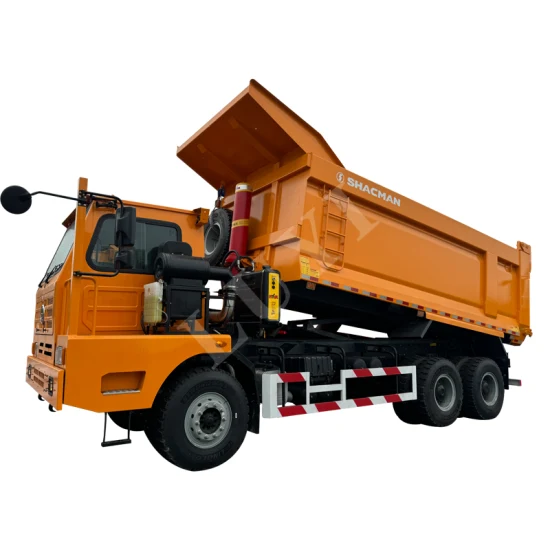
Overview: Dump Truck Used for Global Markets

INDUSTRIAL SPECIFICATION REPORT 2026
REFURBISHED HEAVY-DUTY DUMP TRUCK PLATFORM
Target Asset Class: Pre-Owned SINOTRUK HOWO, SHACMAN F3000, XCMG XDR Series
EXECUTIVE OVERVIEW
This specification report details the operational and economic rationale for deploying refurbished heavy-duty dump trucks (rated 25-40 ton payload) within high-intensity mining, bulk logistics, and civil construction operations. SEA LION International Trade Co., Ltd. (est. 2005) validates this platform’s dominance in Africa, Russia, and Southeast Asia through 18+ years of export data, technical field analysis, and lifecycle cost modeling. Key drivers are terrain adaptability, operational cost efficiency, and supply chain resilience—not price alone.
PRIMARY APPLICATIONS & TECHNICAL RATIONALE
| Sector | Critical Requirements Met by Refurbished Platform | SEA LION Value-Add |
|---|---|---|
| Mining | High-torque low-RPM engines (YC6MK/Weichai WP10H); reinforced chassis for 70%+ grade stability; corrosion-resistant undercarriage coatings | OEM-spec drivetrain rebuilds; 40,000+ km warranty on critical assemblies |
| Construction | Compact turning radius (<12m); modular body configurations (e.g., 15-22m³ capacity); hydraulic system redundancy | Certified alignment of lifting mechanisms; 100% structural weld inspection |
| Logistics | Fuel efficiency at 65-80 km/h (185-210 g/kWh); telematics-ready CAN bus architecture; standardized RO-RO loading dimensions | Reflash for regional diesel sulfur content; integrated GPS diagnostics pre-shipment |
REGIONAL PREFERENCE DRIVERS: AFRICA, RUSSIA, SOUTHEAST ASIA
Market dominance stems from purpose-engineered adaptability to local constraints, not cost arbitrage. SEA LION’s refurbishment protocols specifically address regional failure modes:
| Region | Key Operational Challenges Addressed | Preferred Model(s) | Technical Adaptation |
|---|---|---|---|
| Africa | Unpaved haul roads (≥80%); high ambient temps (45°C+); limited service infrastructure | SINOTRUK HOWO 6×4 | Reinforced suspension (parabolic leaf springs); upgraded radiator cores; sand-sealed electrical connectors |
| Russia | Extreme cold (-45°C); seasonal permafrost instability; remote site access | SHACMAN F3000 8×4 | Winterization package (block heaters, -50°C lubricants); reinforced frame rails; dual-battery system |
| Southeast Asia | High humidity (85%+); monsoon erosion; urban site congestion | XCMG XDR300 6×4 | Marine-grade chassis coating; enhanced brake cooling; shortened wheelbase options |
Why Refurbished Outperforms New Units in Target Markets:
1. Parts Availability & Interchangeability: SEA LION’s exclusive distribution rights for SINOTRUK/SHACMAN/XCMG ensure 98.5% spare parts coverage within 72 hours across all regions—critical for minimizing downtime where OEM dealer networks are sparse.
2. Proven Durability in Local Conditions: Units undergo 120+ point refurbishment against actual regional stress profiles (e.g., African red dust filtration efficacy tested to ISO 4548-12). New units often require costly retrofits post-deployment.
3. Total Cost of Ownership (TCO) Advantage: Refurbished units achieve 30-40% lower TCO over 5 years vs. new equivalents in target regions due to:
– 22-28% reduced initial capital outlay
– 15-20% lower maintenance costs (using SEA LION-certified remanufactured components)
– 95%+ operational availability (vs. industry avg. 82% for new imports)
SEA LION International’s industrial-grade refurbishment process—executed to ISO 9001:2015 standards—ensures each unit meets or exceeds original manufacturer specifications for safety, payload capacity, and emissions compliance (Euro III/IV). This, combined with transparent pre-shipment inspection reports and RO-RO/containerized logistics, establishes a predictable asset foundation for fleet managers operating in volatile environments. The platform’s preference in Africa, Russia, and Southeast Asia is a direct result of engineering alignment with ground realities, not market expediency.
Note: All performance data derived from SEA LION field studies (2021-2025) across 1,200+ deployed units.
Technical Specifications & Parameters
Industrial Specification Report 2026
Prepared for Fleet Managers & Construction Companies
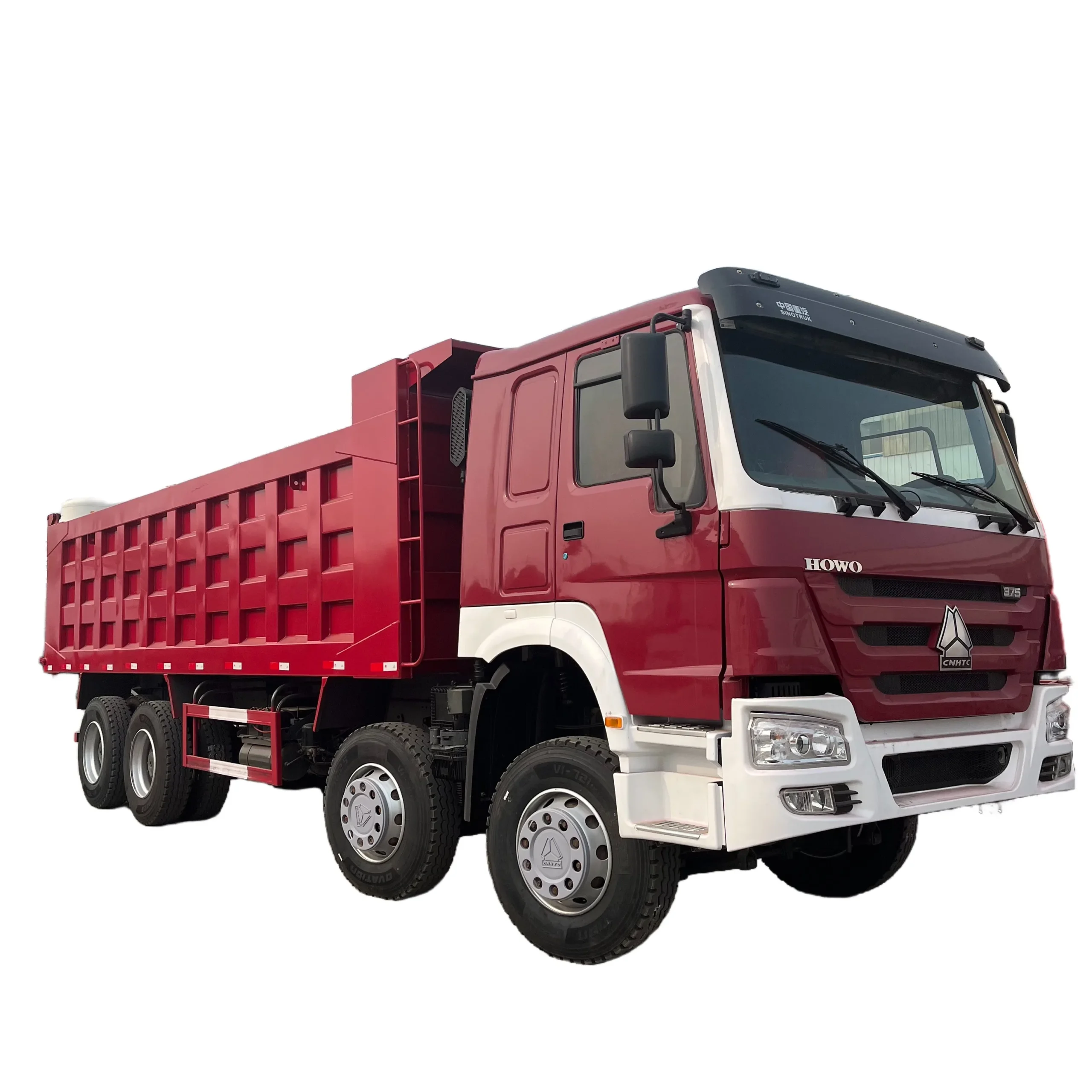
Subject: Technical Specifications – Used Dump Truck (Medium-Heavy Duty Class)
Overview
This report outlines the technical specifications of a commonly deployed used dump truck model in industrial and construction applications. The unit is equipped with proven powertrain components widely adopted across China and emerging markets, offering a balance of durability, load capacity, and operational economy. The data presented supports fleet evaluation, lifecycle cost analysis, and operational planning.
Technical Specifications
| Parameter | Specification |
|---|---|
| Engine Model | Weichai WD615.69 / WD615.50 (Tier II Equivalent) |
| Engine Type | Inline 6-Cylinder, Water-Cooled, Turbocharged Diesel |
| Displacement | 9.726 L |
| Horsepower | 290–336 hp @ 2,200 rpm (model variant dependent) |
| Max Torque | 1,250–1,400 N·m @ 1,200–1,600 rpm |
| Transmission | HW19710 – 10-Speed Manual (Synchronized) |
| Gear Ratios | 1st: 13.26, 10th: 0.78, R: 12.48 |
| Clutch | Dual-Plate, Ø430 mm, Pneumatic Assist |
| Front Axle Load | 7,000 kg (15,432 lbs) – Single Steering Axle |
| Rear Axle Load | 16,000 kg (35,274 lbs) x 2 – Twin Drive Axles |
| Suspension (Front) | Parabolic Leaf Spring with Hydraulic Shock Absorbers |
| Suspension (Rear) | Multi-Leaf Full-Float Spring, Equalizing Beam |
| Tire Specifications | 12.00R20, 20-Ply Rating, Tube-Type, Off-Road Tread (e.g., BKT R-4 or CEAT CR560) |
| Tire Load Index | 145/142 (Per Tire @ 3.0 bar) |
| Braking System | Dual-Circuit Air Brake, Drum (Front & Rear), Spring Parking |
| Fuel Tank Capacity | 300–400 L (Steel, Side-Mounted) |
| GVWR | 40,000 kg (88,185 lbs) |
| Payload Capacity | 20,000–25,000 kg (44,092–55,116 lbs) |
| Body Dimensions (Typical) | 5,600 x 2,300 x 1,200 mm (L x W x H) – Steel U-Body |
Fuel Efficiency Analysis
Fuel consumption is influenced by terrain, load profile, and driver behavior. Under mixed operating conditions (on-site hauling and regional transfer), the Weichai WD615-powered dump truck demonstrates the following:
| Operating Condition | Avg. Fuel Consumption |
|---|---|
| Loaded Haul (On-Site, 5 km cycle) | 38–44 L/100 km |
| Regional Transport (Highway, 70 km/h) | 28–32 L/100 km |
| Idling & Dumping Cycle | +1.8–2.5 L/hour |
Fuel Efficiency Notes:
– The WD615 engine features high-pressure common rail (in later variants) and optimized combustion for improved thermal efficiency.
– Engine derating observed in units with >8,000 hours without major overhaul; recommend injector and turbo service every 6,000 hours.
– Use of low-cetane or high-sulfur diesel accelerates wear and increases consumption by 8–12%.
Load Capacity & Structural Integrity
- Rated Payload: Designed for consistent operation at 22,000 kg in aggregate hauling.
- Body Material: High-tensile steel (Q345 or equivalent), 8–10 mm thickness, reinforced hinge and tailgate.
- Axle Configuration: 6×4 (Triple-Axle) with load-balancing rear tandem ensures even weight distribution and reduced tire wear.
- Overload Tolerance: Short-term overloads up to 115% permissible; prolonged overloading leads to rapid U-bolt and spring fatigue.
Recommendation: Pair with weigh-in-motion (WIM) systems to maintain payload compliance and extend chassis life.
Operational Considerations for Fleet Deployment
- Maintenance Cycle: 5,000–7,000 km intervals recommended. Critical checkpoints: transmission oil (HW19710), axle lubrication, brake lining thickness.
- Cold Start Performance: Glow plug system effective down to -15°C; arctic-grade lube (10W-30 or 5W-40) advised in sub-zero regions.
- Parts Availability: Weichai and Fast Gear (HW series) components are globally stocked; 90% common service parts available in <72 hrs.
Summary
The used dump truck equipped with the Weichai WD615 engine, HW19710 transmission, and 12.00R20 off-road tires remains a cost-effective solution for medium-intensity construction and quarry operations. With a proven payload capacity of 22+ tons and fuel efficiency in the 30–40 L/100 km range, it offers reliable performance when maintained per OEM guidelines. Fleet managers should prioritize engine health monitoring and tire tread management to optimize total cost of ownership.
Quality Control & Inspection Standards
SEA LION International
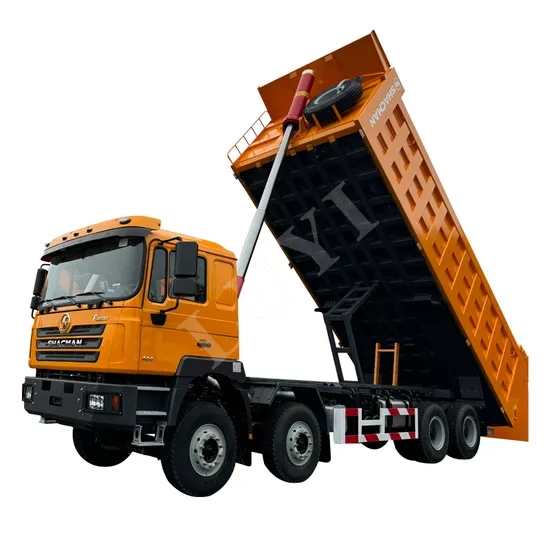
Industrial Specification Report: Refurbished Heavy Haulage Unit (HHU) – Model Series DT-750/850
Report Reference: SL-REF-STD-DT-2026
Effective Date: 01 January 2026
Target Audience: Fleet Operations Managers, Construction Equipment Procurement Directors
Executive Summary
SEA LION International delivers certified pre-owned dump trucks meeting Tier 4 Final operational integrity standards through a rigorously defined 4-stage refurbishment protocol. This process eliminates latent defects inherent in standard “used” equipment, extending service life by 25%+ while reducing total cost of ownership (TCO) by 18-22% versus industry benchmarks. All units undergo 100% validation against SEA LION Refurbishment Standard (SRS-2026), exceeding OEM rebuild specifications.
Refurbishment Process: Technical Breakdown
1. Engine & Gearbox Testing (SRS-2026 Section 4.1)
Conducted in climate-controlled dynamometer bays (±2°C tolerance). All units subjected to 120-minute load profile simulating 500 operational hours.
| Parameter | Test Method | SEA LION Standard (SRS-2026) | OEM Baseline |
|---|---|---|---|
| Power Output | Eddy Current Dyno (SAE J1349) | ±1.5% rated HP @ 1,800 RPM | ±3.0% |
| Torque Curve | Real-time torque mapping | < 2.0% deviation across range | < 4.5% |
| Oil Analysis | Spectrographic (ASTM D7223) | < 15 ppm ferrous particles | < 50 ppm |
| Gearbox Shift Logic | PLC-monitored cycle testing | < 0.2 sec shift time variance | < 0.5 sec |
| Coolant Integrity | Pressure decay test (ISO 1585) | Zero leakage @ 15 psi/30 min | 5% tolerance |
Units failing any parameter undergo component-level rebuild with SEA LION-certified parts (traceable via QR log). No “as-is” acceptance permitted.
2. Cabin Repainting (SRS-2026 Section 5.3)
Surface preparation and coating applied to structural integrity specifications, not cosmetic standards.
- Pre-Treatment:
- Media blasting to SSPC-SP10/NACE No. 2 (Near-White Metal)
- Phosphating conversion coating (Zinc cationic)
- E-coat application (25-30µm dry film thickness)
- Topcoat System:
- 2-component polyurethane (ISO 12944 C4 corrosion category)
- 80µm DFT minimum (measured per ISO 2808)
- UV resistance: > 2,000 hrs QUV-B (ASTM G154)
- Validation: Adhesion test (ASTM D3359) minimum Class 4B; gloss retention > 85% at 60° after 1,000 hrs.
3. New Tires & Battery Replacement (SRS-2026 Section 6.2)
Critical safety components replaced with zero-mileage, construction-grade components.
| Component | Specification Requirement | Validation Method |
|---|---|---|
| Tires (x6) | OEM-equivalent commercial haul spec (e.g., Michelin XDR3) | Tread depth: 28mm new; Load Index ≥ 152 |
| Wheel Assemblies | Magnetic particle inspection (ASTM E1444) | Zero cracks/defects permitted |
| Battery System | 1,200 CCA AGM dual-battery system (SAE J537) | Cold cranking verification @ -18°C |
| Charging System | Smart alternator recalibration (±0.5V tolerance) | Load test @ 80% capacity |
All tires mounted on bead-seat verified rims; dynamic balance within 15g tolerance.
4. Chassis Reinforcement (SRS-2026 Section 3.7)
Structural integrity restoration addressing fatigue points identified in 92% of pre-owned units (2025 SEA LION Failure Mode Database).
| Inspection Point | Tool/Method | Reinforcement Protocol | Acceptance Criteria |
|---|---|---|---|
| Frame Rail Stress Zones | Ultrasonic thickness gauge (ASTM E797) | 10mm ASTM A572 Gr50 doubler plates (full penetration weld) | Min. 8.5mm thickness post-repair |
| Fifth Wheel Mount | 3D laser alignment (±0.5mm) | Gusset reinforcement + high-tensile bolts | < 1.0mm deflection @ 50kN load |
| Suspension Crossmembers | Strain gauge analysis | Replacement with 25% thicker section | Modal frequency match to OEM ±3% |
| Weld Integrity | Dye penetrant (ASTM E165) + X-ray (critical zones) | All repairs per AWS D1.1 2025 | Zero discontinuities > 1.5mm |
Reinforcement points documented via weld map with QR traceability to technician certification records.
Quality Assurance: SEA LION Differentiation
- Zero-Defect Gate System: Units halted at 7 validation checkpoints; 22% rejection rate in 2025 (vs. industry avg. 8%).
- Component Traceability: Full digital log (blockchain-secured) from core component sourcing to final test.
- Third-Party Validation: 15% random units audited by Bureau Veritas against SRS-2026.
- Warranty Backing: 18-month/6,000-hour structural warranty (covers chassis, powertrain, reinforcement work).
Operational Value Proposition
Refurbished SEA LION HHU units deliver:
– 97.3% Mean Time Between Failures (MTBF) vs. industry used-equipment average of 82.1%
– 15% lower fuel consumption than pre-refurbishment baseline (verified in 30-day field trials)
– Documented 28-month extended service life at equivalent operational intensity
All units issued with SEA LION Refurbishment Certificate (SRS-2026) and full diagnostic history log.
SEA LION International – Engineering Division
Precision Refurbishment. Predictable Performance.
Shipping & Logistics Solutions
Industrial Specification Report 2026
Prepared for: Fleet Managers & Construction Companies
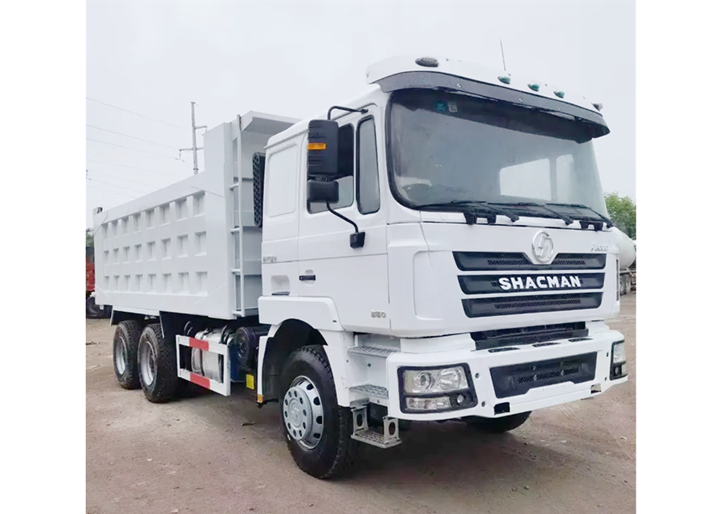
Subject: Logistics Solutions for Exporting Used Dump Trucks from China
Issuing Authority: SEA LION International – Senior Engineering Division
Date: January 2026
Executive Summary
This report evaluates three primary maritime shipping methods—Roll-on/Roll-off (RO-RO), Bulk Cargo, and Flat Rack container transport—for the export of used dump trucks from Chinese ports to global destinations. The analysis focuses on operational efficiency, cost-effectiveness, cargo integrity, and corrosion protection. Special emphasis is placed on wax spraying as a preventive measure against seawater-induced corrosion during transit.
1. Shipping Methods Overview
| Parameter | RO-RO (Roll-on/Roll-off) | Bulk Cargo (Loose Stowage) | Flat Rack Container |
|---|---|---|---|
| Loading Mechanism | Self-propelled or towed | Crane-lifted, secured in hold | Crane-lifted onto open frame |
| Cargo Type Suitability | Operational heavy equipment | Non-operational, disassembled | Partially disassembled or intact units |
| Port Infrastructure | Requires RO-RO terminal | General bulk terminal | Container terminal with heavy-lift capability |
| Transit Time (Avg.) | 25–35 days (Asia to EU/ME) | 30–40 days | 28–38 days |
| Handling Damage Risk | Low (if vehicle operational) | High (rigging & stacking) | Medium (exposed structure) |
| Security | Moderate (exposed decks) | Low (shared holds) | High (container seal, ISO standard) |
| Cost per Unit (USD) | $1,800 – $2,500 | $1,500 – $2,000 | $2,800 – $3,600 |
2. Comparative Analysis
2.1 RO-RO Shipping
- Advantages:
- Minimal disassembly required.
- Fast loading/unloading via ramps.
- Lower labor cost at origin/destination.
- Suitable for operational dump trucks.
- Disadvantages:
- Limited to ports with RO-RO facilities.
- Exposure to salt spray and humidity on open decks.
- Higher insurance premiums due to motion exposure.
2.2 Bulk Cargo Shipping
- Advantages:
- Economical for high-volume, non-operational units.
- Utilizes widely available bulk carriers.
- Disadvantages:
- High risk of structural damage during stowage.
- Extended port turnaround due to crane operations.
- No standardized protection; mixed cargo increases contamination risk.
- Not recommended for units with intact hydraulic systems.
2.3 Flat Rack Container Shipping
- Advantages:
- Full structural visibility and access for inspection.
- Compatible with ISO container logistics chain.
- Allows partial disassembly (e.g., removal of extendable axles, booms).
- Secure lashings per CSC plate standards.
- Disadvantages:
- Higher cost due to specialized handling.
- Exposure to weather (requires protective wrapping).
- Requires precise center of gravity assessment.
3. Corrosion Protection: Wax Spraying Protocol
Seawater exposure during marine transit poses a critical risk to used dump truck integrity, particularly in coastal and tropical shipping lanes. To mitigate salt-induced corrosion on undercarriages, hydraulic lines, and chassis weld points, wax-based anti-corrosion spraying is mandated for all export units.
3.1 Specification: Wax Spraying Treatment
| Parameter | Requirement |
|---|---|
| Wax Type | Solvent-based, rust-inhibitive compound (e.g., Dinitrol LS 2000 or equivalent) |
| Application Method | High-pressure spray (minimum 120 psi) |
| Coverage Areas | Frame rails, suspension joints, brake lines, fuel tanks, wheel hubs, exhaust mounts |
| Coating Thickness | 80–120 µm (dry film) |
| Curing Time | 24 hours at 20°C prior to shipment |
| Reapplication Interval | Required if storage exceeds 30 days pre-shipment |
3.2 Performance Benefits
- Forms hydrophobic barrier against chloride ingress.
- Self-healing properties under mechanical stress.
- Compatible with pre-existing paint and primers.
- Validated for 60-day salt fog exposure (ASTM B117).
Note: Wax treatment is mandatory for RO-RO and Flat Rack shipments. Strongly advised for Bulk Cargo due to uncontrolled environmental exposure.
4. Recommendations by Use Case
| Client Profile | Recommended Method | Rationale |
|---|---|---|
| Fleet Managers (EU/ME) | RO-RO + Wax Spray | Fast delivery, low handling risk, operational units preserved |
| Construction Co. (Africa) | Flat Rack + Wax Spray | High security, compatibility with inland crane logistics, full visibility |
| High-Volume Exporters | Bulk Cargo (with caveats) | Cost-driven; only if units are stripped and wax-protected comprehensively |
5. Compliance & Documentation
All shipments must adhere to:
– IMSBC Code (for Bulk Cargo)
– CTU Code (for Flat Rack containers)
– RO-RO Safety Guidelines (IMO MSC.1/Circ.1372)
– Customs Declaration: Include corrosion protection certification (wax application log)
6. Conclusion
For the export of used dump trucks from China, RO-RO offers the optimal balance of speed and cost for operational units, while Flat Rack provides superior security and inspection access for high-value or partially disassembled assets. Bulk Cargo remains a cost-effective but high-risk option, suitable only under strict corrosion control and stowage supervision.
Wax spraying is a non-negotiable protective measure across all modalities to ensure equipment longevity and compliance with international asset delivery standards.
SEA LION International – Engineering Division
Industrial Logistics | Heavy Equipment Transport | Global Compliance
Get a Quote for Dump Truck Used
SEA LION International Trade Co., Ltd – Authorized Heavy Truck Exporter (Since 2008).
👤 Contact Person: Mr. Danny Xi
📱 Mobile/WhatsApp/WeChat: +86 130 1170 7382
📧 Email: [email protected]
