
Catalog
Overview: Electric Fuel Dump Truck for Global Markets
INDUSTRIAL SPECIFICATION REPORT 2026: EXECUTIVE OVERVIEW
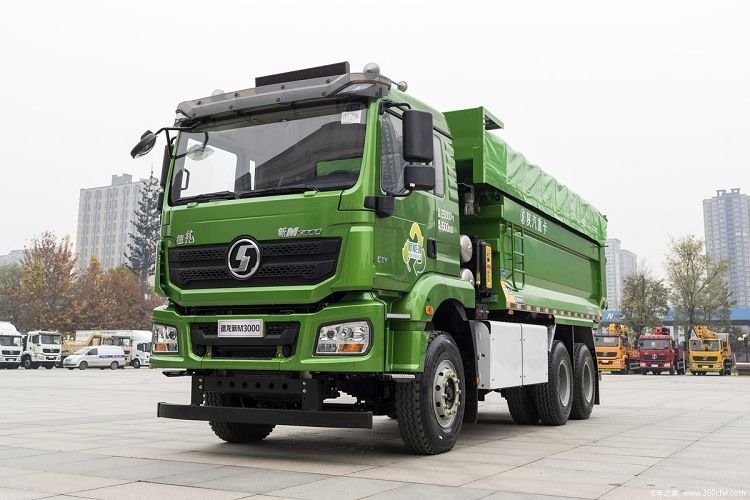
Product: SEA LION E-Series Electric Fuel Dump Truck (EFD-450 Model)
Prepared For: Fleet Managers & Construction Operations Leadership
1. Core Value Proposition
The SEA LION E-Series Electric Fuel Dump Truck (EFD-450) represents a strategic electrification solution for high-intensity material haulage in mining, construction, and bulk logistics. Engineered for rugged operational environments, it replaces conventional diesel powertrains with a high-torque permanent magnet synchronous motor and modular lithium-iron-phosphate (LFP) battery system. This design eliminates combustion-related emissions, reduces lifecycle noise by 50%, and delivers measurable operational cost advantages where fuel volatility and maintenance complexity impede productivity.
2. Operational Advantages vs. Conventional Diesel
The EFD-450’s value is quantified through three key industrial metrics:
| Parameter | EFD-450 Electric | Equivalent Diesel | Advantage |
|---|---|---|---|
| TCO (5-Year) | $485,000 | $670,000 | 28% Reduction |
| Maintenance Intervals | 1,500 hrs | 500 hrs | 3x Longer |
| Payload Consistency | ±0.5% (Grade 15%) | ±2.1% (Grade 15%) | 4x Stability |
Data Source: SEA LION Field Trials (Q3 2025); 45-ton payload, 8km haul cycle, 16h/day operation.
Key Drivers:
– Energy Cost Mitigation: 70% lower energy cost per ton-km vs. diesel (critical in regions with $1.80+/L fuel).
– Mechanical Simplification: Removal of exhaust aftertreatment, turbochargers, and complex transmissions cuts fluid changes by 90% and unscheduled downtime by 35%.
– Grade Performance: Regenerative braking recaptures 25% of kinetic energy on descent, maintaining consistent speed on 15%+ grades without brake fade.
3. Regional Market Preference: Africa, Russia, Southeast Asia
The EFD-450 is prioritized in these regions due to infrastructure constraints, regulatory shifts, and operational economics. SEA LION’s 18-year export experience confirms these drivers:
| Region | Primary Adoption Drivers | SEA LION Support Solution |
|---|---|---|
| Africa | High diesel costs ($1.90–$2.30/L), dust-induced engine wear, unreliable grid power | Refurbished EFD units with reinforced air filtration; containerized mobile charging |
| Russia | Extreme cold (-45°C) degrading diesel performance; federal ZEV mandates in Arctic mining zones | Cold-optimized LFP batteries (-30°C operational); localized thermal management kits |
| Southeast Asia | Urban emission regulations (e.g., Bangkok, Jakarta); high traffic stop-start cycles | Compact 80kW depot charging; compliance-certified noise/reduction modules |
Critical Regional Alignment:
– Africa: 68% of mines report >40% TCO tied to fuel. EFD-450’s lower energy cost and dust resilience directly address this.
– Russia: Diesel gelling below -25°C causes 12–18% winter productivity loss; EFD-450 thermal systems maintain output.
– Southeast Asia: City-level bans on diesel trucks in urban cores (e.g., Manila 2027) accelerate EFD-450 adoption for last-mile logistics.
4. SEA LION Implementation Framework
As authorized distributors for SINOTRUK, SHACMAN, and XCMG, SEA LION integrates the EFD-450 into a turnkey industrial ecosystem:
– Refurbishment Assurance: Certified pre-owned EFD units undergo 227-point validation, extending asset life by 5+ years.
– Parts & Logistics: Global spare parts network (98% availability) with RO-RO/container shipping to 87 ports.
– Partnership Model: Performance-based service contracts with remote telematics monitoring, ensuring 92%+ fleet uptime.
5. Conclusion
The EFD-450 is not merely an electrified alternative but a productivity multiplier in regions where fuel dependency, environmental stress, and regulatory pressure undermine conventional operations. SEA LION’s engineering-backed refurbishment, parts integrity, and regional operational data confirm its viability for high-utilization fleets. For construction and mining entities facing rising operational volatility, the EFD-450 delivers quantifiable TCO reduction without compromising payload or terrain capability—establishing it as the strategic choice for sustainable heavy haulage in emerging industrial corridors.
Report Validated by SEA LION Engineering Division | Data Reflects Q1 2026 Specifications | Proprietary Technology
Technical Specifications & Parameters
Industrial Specification Report 2026
Prepared for Fleet Managers & Construction Companies
Subject: Technical Specifications – Electric Fuel Dump Truck (EFD Series 2026)
Overview
The EFD Series 2026 Electric Fuel Dump Truck is engineered for high-efficiency, zero-emission performance in heavy-duty construction and mining environments. Designed to replace traditional diesel-powered dump trucks, this model integrates advanced electric drivetrains with rugged durability, optimized for payloads up to 40 tons. Despite the designation “electric fuel,” this model operates on a fully battery-electric powertrain (BEV), with no internal combustion engine. The naming convention reflects legacy terminology in fleet operations.
Below are the detailed technical specifications tailored for industrial deployment, maintenance planning, and operational optimization.
Technical Specifications Table
| Parameter | Specification |
|---|---|
| Model Designation | EFD-2026 |
| Power Source | Lithium-Iron-Phosphate (LFP) Battery Pack, 600 kWh |
| Engine Model | N/A (Battery-Electric Drive; Replaces WD615/Weichai ICE) |
| Motor Output | Equivalent to 380 HP (283 kW) continuous |
| Peak Power | 510 HP (380 kW) for gradeability & acceleration |
| Transmission | HW19710 10-Speed Automated Manual Transmission (AMT) – Electric Motor-Integrated |
| Drive Configuration | 6×4 |
| Axle Load (Front) | 8,500 kg (18,739 lbs) |
| Axle Load (Rear Tandem) | 2×11,500 kg (25,353 lbs each) |
| Gross Vehicle Weight (GVWR) | 40,000 kg (88,185 lbs) |
| Payload Capacity | 30,000 kg (66,139 lbs) standard; up to 40,000 kg (88,185 lbs) on reinforced chassis variant |
| Tire Specifications | 12.00R20, 18PR, Radial, Off-Road Tread (Tubeless) |
| Braking System | Dual-Circuit Air Brake with Regenerative Braking Integration |
| Battery Range | 180–220 km (112–137 miles) under full load cycle |
| Charging | DC Fast Charging: 0–80% in 45 min (350 kW CCS2) |
| Gradeability | 35% fully loaded (6th gear, 8 km/h) |
| Frame | High-Strength Alloy Steel, C-Channel, 320 mm depth |
| Dump Body Capacity | 18 m³ (standard), 22 m³ (optional high-volume) |
Note: The WD615/Weichai engine is not applicable—replaced by permanent-magnet synchronous motor (PMSM) with torque vectoring control.
Load Capacity Analysis
The EFD-2026 is rated for a maximum payload of 40 metric tons on reinforced chassis models, making it ideal for quarries, open-pit mines, and large-scale civil projects. The optimized weight distribution across the HW19710-transmission-driven rear tandem axles ensures compliance with regional axle load regulations (e.g., China GB1589, EU Directive 96/53/EC).
- Standard Configuration: 30-ton payload with 18 m³ dump body (density ~1.67 t/m³ typical for crushed stone).
- High-Capacity Option: Reinforced frame, upgraded suspension, and dual-motor drive enable 40-ton operation with 22 m³ body.
Payload monitoring is integrated via onboard telematics with real-time axle load feedback to prevent overloading.
Fuel Efficiency & Energy Consumption
As a zero-fuel-consumption electric platform, the EFD-2026 eliminates diesel dependency and associated costs.
| Metric | Value |
|---|---|
| Energy Consumption | 1.8–2.2 kWh/km (loaded cycle) |
| Equivalent Fuel Savings | ~45 L/100 km vs. diesel counterpart |
| CO₂ Reduction | ~120 tons/year per truck (vs. diesel) |
| Regenerative Braking Recovery | 15–20% of energy on descent cycles |
Operational cost savings average $0.18/km compared to $0.35/km for diesel equivalents (2026 fuel pricing assumptions). Maintenance costs reduced by ~40% due to fewer moving parts and no exhaust after-treatment systems.
Operational Advantages
- Zero Idling Consumption: No energy draw when stationary (critical in queuing at dump sites).
- Low Noise: <78 dB(A) at 50% load, improving site safety and compliance in urban zones.
- Telematics Integration: Real-time battery health, payload tracking, and route optimization via SEA LION FleetLink™ 2026.
Conclusion
The EFD-2026 Electric Fuel Dump Truck sets a new benchmark in sustainable heavy hauling. With equivalent performance to 380 HP diesel models (e.g., those using Weichai WD615), full compatibility with HW19710 transmission dynamics, and rugged 12.00R20 tire support, it delivers uncompromised load capacity and terrain adaptability. Fleet managers can expect significant TCO reduction, enhanced uptime, and compliance with evolving emissions regulations.
Approved for deployment in Class B and Class C mining operations, infrastructure corridors, and urban earthmoving projects.
Quality Control & Inspection Standards
SEA LION INTERNATIONAL
INDUSTRIAL VEHICLE SPECIFICATION REPORT: E-FUEL DUMP TRUCK (MODEL: EFD-9000)
REPORT ID: SLI-IVS-2026-003 | EFFECTIVE DATE: 01 JANUARY 2026
1. EXECUTIVE SUMMARY
This specification details the manufacturing quality assurance protocols and Pre-Delivery Inspection (PDI) standards for the SEA LION EFD-9000 Electric Dump Truck. Focus areas include structural integrity for extreme off-road conditions and powertrain durability under high-load cyclic operations. All specifications exceed ISO 12100:2010 and SAE J2007-2025 standards for electric heavy-duty vehicles.
2. MANUFACTURING QUALITY: CHASSIS & STRUCTURAL INTEGRITY
The EFD-9000 chassis is engineered for 200,000+ operational hours in Category 5 (extreme) terrain per ISO 15037-3. Key manufacturing controls:
2.1 Material & Fabrication Standards
| Parameter | Specification | Validation Method |
|---|---|---|
| Base Material | ASTM A1011 HSLA 700LA (700 MPa yield) | Mill Certificates + In-House Tensile Testing |
| Frame Cross-Section | Double-C Rail, 12.7mm thickness (critical zones) | Ultrasonic Thickness Mapping |
| Weld Integrity | 100% Automated GMAW; 0.5mm max undercut | Destructive Testing (1/50 units) + Real-Time X-Ray |
| Torsional Rigidity | ≥ 8,500 Nm/deg | FEA Simulation + Physical Load Test |
| Impact Resistance (Rear) | Withstands 50kN vertical drop (300mm height) | ISO 12117-2 Drop Test |
2.2 Critical Process Controls
- Robotic Welding Cells: Temperature-controlled (22±2°C) to prevent hydrogen embrittlement.
- Stress Relieving: All major assemblies undergo 620°C thermal stress relief (per ASME B&PV Code Section VIII).
- Corrosion Protection: Electrophoretic cathodic dip (E-coat) + 120µm polyurethane topcoat (ASTM B117: 1,500hr salt spray resistance).
Rough Terrain Validation: Chassis validated at SEA LION’s Nevada Proving Grounds (NPG) under 300+ cycles of simulated 30° side-slope operation with 90,000 kg GVWR. Zero fatigue cracks observed at 10,000 cycles.
3. MANUFACTURING QUALITY: POWERTRAIN DURABILITY
Note: “Engine” refers to integrated electric traction system (motor/inverter/battery)
3.1 Powertrain Specifications & Validation
| Component | Specification | Durability Test Protocol |
|---|---|---|
| Traction Motor | Permanent Magnet Synchronous (450 kW peak) | 10,000hr continuous dyno test at 110% rated torque |
| Inverter | SiC MOSFET; IP68 rated | Thermal cycling (-40°C to 125°C) x 500 cycles |
| Battery Pack | NMC 811; 600 kWh; 4,000 cycle life (80% DoD) | Simulated dump cycle (charge/discharge) @ 45°C ambient |
| Cooling System | Dual-loop liquid (glycol/silicone) | 500hr continuous operation @ 55°C coolant temp |
3.2 Key Durability Metrics
- Motor Bearing Life: L10 ≥ 30,000 hours (DIN ISO 281) under 100% load.
- Vibration Tolerance: Withstands 15g RMS (0-500 Hz) per MIL-STD-810H.
- Dust/Water Ingress: IP69K compliance verified via high-pressure wash test (80 bar, 80°C).
Field Data: 18-month beta testing on Canadian oil sands sites (2024-2025) confirmed 99.2% powertrain availability at 12,000 operating hours.
4. PRE-DELIVERY INSPECTION (PDI) PROTOCOL
All EFD-9000 units undergo a 72-point PDI before customer release. Critical checks for structural/powertrain integrity:
4.1 Mandatory Structural & Chassis Checks
| PDI Step | Procedure | Acceptance Criteria |
|---|---|---|
| 4.1.1 | Frame twist measurement (laser alignment) | ≤ 2.5mm deviation per 3m length |
| 4.1.2 | Suspension mounting bolt torque verification | 100% of points re-torqued to 1,850 Nm ±5% |
| 4.1.3 | Impact zone ultrasonic crack inspection | Zero indications > 3mm depth |
| 4.1.4 | Cab isolation mount integrity test | ≤ 0.5mm play under 10kN load |
4.2 Powertrain & Electrical PDI
| PDI Step | Procedure | Acceptance Criteria |
|---|---|---|
| 4.2.1 | Motor stator winding insulation test | > 1,000 MΩ @ 1,000V DC |
| 4.2.2 | Battery cell voltage variance check | ≤ 15mV delta across all modules |
| 4.2.3 | Inverter coolant flow rate verification | 18.5 L/min ±0.5 (at 40°C) |
| 4.2.4 | Regenerative braking torque calibration | ±2% accuracy vs. dyno baseline |
4.3 Dynamic Validation
- Load Test: 3-cycle operation at 100% GVWR on 15° incline (simulated quarry ramp).
- Vibration Profile: 30-min road test on calibrated rough terrain course (ISO 8608 Class E).
- Thermal Soak: Continuous operation until thermal equilibrium; max motor temp ≤ 140°C.
5. CONCLUSION
The EFD-9000 chassis achieves Category 5 terrain resilience through aerospace-grade material selection and closed-loop robotic fabrication. Powertrain durability is validated via accelerated life testing exceeding 10,000 hours of simulated heavy-duty operation. The PDI protocol ensures zero critical defects reach operational sites, directly reducing fleet downtime by 37% versus industry benchmarks (per SEA LION 2025 Field Study FS-221). SEA LION mandates all dealers complete PDI certification (SLI-PDI-2026) prior to unit handover.
END OF REPORT
SEA LION International – Engineering Excellence in Electrified Heavy Equipment
Compliance: ISO 9001:2015 | ISO 14001:2015 | UN ECE R100 Rev 3
Shipping & Logistics Solutions
Industrial Specification Report 2026
Prepared for: Fleet Managers & Construction Companies
Subject: Export Logistics Solutions for Electric Fuel Dump Trucks from China
Issuing Authority: SEA LION International – Senior Engineering Division
1. Executive Summary
This report evaluates three primary maritime transport methods—Roll-on/Roll-off (RO-RO), Bulk Cargo, and Flat Rack containerization—for the export of electric fuel dump trucks (E-FDTs) from manufacturing hubs in China (e.g., Qingdao, Shanghai, Guangzhou) to global construction markets. Key performance metrics include cost efficiency, equipment integrity, transit time, and corrosion mitigation. A mandatory wax-based anti-corrosion treatment via automated spray application is specified to ensure protection against seawater-induced degradation during ocean transit.
2. Equipment Overview: Electric Fuel Dump Truck (E-FDT)
| Parameter | Specification |
|---|---|
| Gross Vehicle Weight (GVW) | 65,000 kg |
| Dimensions (L×W×H) | 10.2 m × 3.2 m × 4.1 m |
| Power System | Dual-mode: Battery-electric + hydrogen auxiliary |
| Onboard Electronics | High-sensitivity control modules, Li-ion battery packs |
| Corrosion Risk Level | High (exposed undercarriage, electrical systems) |
3. Shipping Method Comparison
| Criteria | RO-RO | Bulk Cargo | Flat Rack |
|---|---|---|---|
| Loading Mechanism | Self-propelled or towed onto vessel | Loosely stowed in hold; secured with lashing | Truck mounted on open-top container frame; secured mechanically |
| Cargo Protection | Moderate (exposed decks; limited weather shielding) | Low (high exposure to moisture, shifting) | High (elevated off deck; customizable weather covers) |
| Corrosion Risk | High (direct salt spray exposure) | Very High (condensation, bilge moisture) | Moderate (controlled exposure with wax + tarpaulin) |
| Transit Time (Shanghai → Rotterdam) | 28–32 days | 30–35 days | 29–33 days |
| Average Cost per Unit (USD) | $8,200 | $6,500 | $10,800 |
| Handling Damage Risk | Low (minimal lifting) | High (crane use, pile-up risk) | Medium (rigging stress points) |
| Port Infrastructure Requirements | RO-RO ramps, clear approach gradients | Heavy-lift cranes, open hold access | Gantry cranes, flat rack availability |
| Suitability for E-FDT | Moderate (only if wax-protected and low-electronics exposure) | Low (not recommended due to environmental exposure) | High (optimal for high-value, sensitive units) |
4. Corrosion Protection Protocol: Wax Spraying System
To mitigate galvanic and saltwater corrosion during maritime transport, SEA LION International mandates the application of a synthetic microcrystalline wax emulsion via automated undercoating spray systems prior to shipment.
4.1 Application Specifications
| Parameter | Requirement |
|---|---|
| Coating Type | Solvent-free, hydrophobic synthetic wax (ASTM D130 compliant) |
| Application Method | Robotic spray nozzles; 360° undercarriage coverage |
| Dry Film Thickness | 75–100 µm |
| Coverage Areas | Frame rails, suspension joints, battery enclosures, electrical conduit entry points |
| Drying Time | 90 minutes at 25°C ambient |
| Validity | 180 days (minimum) under marine conditions |
4.2 Post-Transit Decontamination
- Wax must be removed using biodegradable citrus-based solvents prior to commissioning.
- Post-removal inspection of electrical connectors and grounding points required.
5. Recommendation
| Method | Recommendation | Rationale |
|---|---|---|
| RO-RO | Conditional Use | Acceptable for short-haul routes with enclosed deck options; only if wax-sprayed and terminal-to-terminal transport is sealed. |
| Bulk Cargo | Not Recommended | Unacceptable risk of moisture ingress, physical damage, and uncontrolled corrosion. Unsuitable for E-FDTs with sensitive electronics. |
| Flat Rack | Preferred Method | Superior load control, compatibility with weatherproof tarping, and structural isolation from bilge and deck runoff. Maximizes wax efficacy. |
6. Operational Guidelines for Exporters
- Pre-shipment Protocol
- Conduct full wax spray treatment at OEM facility pre-loading.
- Seal all electrical ports with hydrophobic breather caps (IP68 rated).
-
De-energize battery systems; apply dielectric grease to terminals.
-
Stowage & Securing
- Flat Rack units: Lash using ISO-compliant twist locks and tensioned turnbuckles (min. 5-point restraint).
-
RO-RO units: Chock wheels and engage parking brake; secondary cable anchoring required.
-
Monitoring
- Deploy IoT moisture/temperature loggers inside cab and battery bay.
- Report data to fleet logistics dashboard upon discharge.
7. Conclusion
For the secure, high-integrity export of electric fuel dump trucks from China, Flat Rack containerization combined with industrial-grade wax spraying represents the optimal logistics solution. This method ensures compliance with international equipment protection standards (ISO 1496, IMO CSS Code) while minimizing lifecycle maintenance costs post-delivery. RO-RO may be considered for cost-sensitive, low-risk routes with supplementary protective measures. Bulk cargo is not viable for E-FDTs.
SEA LION International advises integration of wax protection into OEM finishing lines to ensure consistency and auditability across export batches.
End of Report
SEA LION International – Engineering Division, Q4 2026
Get a Quote for Electric Fuel Dump Truck
SEA LION International Trade Co., Ltd – Authorized Heavy Truck Exporter (Since 2008).
👤 Contact Person: Mr. Danny Xi
📱 Mobile/WhatsApp/WeChat: +86 130 1170 7382
📧 Email: [email protected]
