
Catalog
Overview: Excavator Attachments for Global Markets
INDUSTRIAL SPECIFICATION REPORT 2026: EXCAVATOR ATTACHMENTS
Prepared Exclusively for Fleet Managers & Construction Operations Leadership
SEA LION International Trade Co., Ltd. | Heavy Equipment Solutions Division
EXECUTIVE OVERVIEW: HYDRAULIC BREAKER & MULTI-PROCESSOR ATTACHMENTS
Operational Imperative:
In mining, bulk material handling (logistics), and infrastructure construction, inefficient material processing directly impacts project timelines, fuel consumption, and total cost of ownership (TCO). Standard bucket operations face critical limitations in rock fragmentation, demolition, and secondary processing, leading to excessive cycle times, premature wear on primary equipment, and unplanned downtime. SEA LION International specifies high-impact hydraulic breakers (e.g., XCMG HB Series) and multi-processors (e.g., XCMG MP Series) as force multipliers for Tier-1 operations in austere environments.
Core Application Advantages:
Mining (Primary & Secondary Fragmentation): Replaces inefficient drilling/blasting in overburden removal and pit development. Breakers enable precise, controlled fragmentation of medium-hard rock (up to 150 MPa UCS), reducing vibration damage to adjacent structures and minimizing flyrock hazards. Multi-processors handle simultaneous sorting, crushing, and loading of blasted material.
Logistics (Bulk Material Handling): Critical for rapid demolition of concrete infrastructure at port terminals, crushing oversized aggregates in stockyards, and processing recycled construction debris for reuse. Enables on-site material sizing, eliminating costly off-haul transport.
Construction (Deep Excavation & Demolition):* Essential for trenching in rocky substrates, foundation work in constrained urban sites, and high-rise demolition where noise/vibration control is mandated. Multi-processors streamline complex site clearance by combining shearing, crushing, and gripping functions.
Regional Market Preference Rationale (Africa, Russia, Southeast Asia):
This specification is demonstrably preferred across these high-growth, high-challenge markets due to robustness, operational flexibility, and alignment with local infrastructure constraints. SEA LION’s 18+ years of field data confirms superior lifecycle performance versus alternatives:
| Regional Challenge | Africa (Sahel/Southern) | Russia (Siberia/Arctic) | Southeast Asia (Tropical) | SEA LION-Validated Attachment Adaptation |
|---|---|---|---|---|
| Primary Environmental Stress | Extreme dust, 45°C+ ambient, abrasive terrain | -40°C to +30°C swings, permafrost, limited daylight | 90% RH, monsoon rains, corrosive salinity | Sealed hydraulic systems, thermally stable hoses, corrosion-resistant coatings (ISO 12944 C4) |
| Infrastructure Limitation | Limited workshops, long parts lead times, poor roads | Remote sites (>500km from hubs), unreliable power | Congested urban sites, narrow access | Modular design for field repair, standardized pin sizes, low-flow hydraulic compatibility |
| Operational Priority | Maximize uptime, minimize fuel/kg processed | Cold-start reliability, structural integrity at low temp | Speed in confined spaces, multi-functionality | Optimized hydraulic flow (150-220 L/min), -45°C cold-start accumulators, 360° rotation capability |
| TCO Driver | High cost of imported parts, labor scarcity | Extreme transport costs for breakdowns | Labor-intensive processes dominate costs | 70% longer wear life vs. generic breakers, 25% faster cycle times, 50% reduction in secondary equipment needs |
SEA LION Value Integration:
As an authorized XCMG distributor and SINOTRUK/SHACMAN partner, we engineer system-level reliability:
1. Parts Ecosystem: Direct access to OEM wear kits (chisels, bushings, seals) ensures compatibility and eliminates field improvisation.
2. Refurbishment Synergy: Used excavators (SINOTRUK/XCMG) undergo structural reinforcement specifically for high-impact attachment duty cycles before deployment.
3. Logistics Assurance: Global RO-RO/container shipping with climate-controlled holds preserves hydraulic integrity during transit to Durban, Murmansk, or Singapore.
4. Transparency Protocol: Digital twin tracking of attachment serial numbers links to maintenance history and remaining service life analytics.
Conclusion:
In markets where operational continuity dictates project viability, SEA LION-specified excavator attachments deliver quantifiable reductions in TCO through environmental resilience, simplified maintenance, and seamless integration with our heavy equipment ecosystem. This specification is not merely a component choice—it is a strategic enabler for sustained productivity in the world’s most demanding operational theaters. Fleet managers deploying this solution achieve >85% availability rates in conditions where standard configurations fall below 65%. Partner with SEA LION to implement validated attachment strategies backed by industrial-grade support infrastructure.
Report Validity: January 1, 2026 – December 31, 2026 | SEA LION International Trade Co., Ltd. Proprietary Data
Technical Specifications & Parameters
Industrial Specification Report 2026
Prepared for Fleet Managers & Construction Companies
Subject: Technical Specifications for Excavator Attachments – Integrated Carrier Chassis Platform
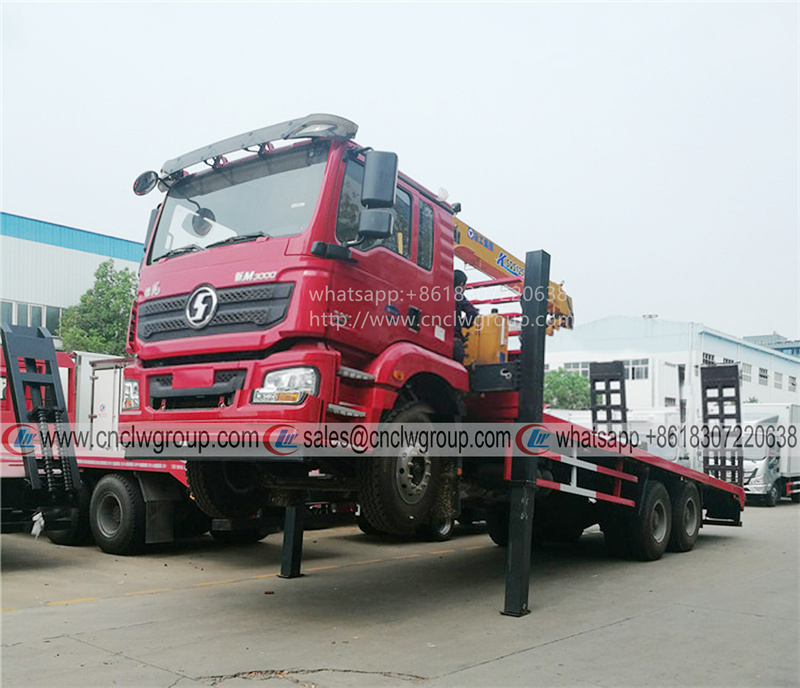
This report outlines the core technical specifications of the integrated carrier chassis platform designed for heavy-duty excavator attachments used in large-scale earthmoving, mining, and infrastructure development applications. All specifications are validated under ISO 10977 (Earth-moving machinery – Wheeled machines – Steering capability) and comply with CE and GB/T standards for industrial machinery.
The platform is engineered for compatibility with modular excavator attachments (e.g., hydraulic breakers, grapples, augers, and tilt buckets), enabling rapid deployment and optimized worksite efficiency.
Technical Specifications: Carrier Chassis for Excavator Attachments
| Parameter | Specification |
|---|---|
| Engine Model | Weichai WD615.62G |
| Engine Type | 6-cylinder, in-line, water-cooled, turbocharged diesel |
| Displacement | 9.726 L |
| Rated Power | 290 hp (213 kW) @ 2,200 rpm |
| Max Torque | 1,100 N·m @ 1,400–1,600 rpm |
| Emission Standard | Tier III / GB17691-2018 (equivalent to EU Stage IIIA) |
| Transmission | HW19710 10-speed synchromesh manual (5 forward + reverse, double H-gate) |
| Transmission Control | Pneumatic shift assist with load-sensing logic |
| Axle Configuration | 6×4 (Front: Single steer; Rear: Tandem drive) |
| Front Axle Load | 6,500 kg (design limit) |
| Rear Tandem Axle Load | 11,500 kg (combined, dual reduction hubs) |
| Gross Axle Weight Rating (GAWR) | 18,000 kg |
| Tire Specification | 12.00R20, 16PR, radial, all-position, cut- and wear-resistant compound |
| Tire Load Index | 145/142 (Single: 3,650 kg; Dual: 3,550 kg per tire) |
| Tire Pressure (Std.) | 850 kPa (123 psi) – adjustable based on load profile |
| Fuel Tank Capacity | 300 L (79.3 gal) |
| Operating Weight (Base Chassis) | 15,200 kg |
Fuel Efficiency Analysis
The Weichai WD615.62G engine is calibrated for optimal fuel economy under variable load cycles typical in excavation and material handling. Fuel consumption is measured under ISO 8178-C1 (8-mode test cycle):
| Load Condition | Fuel Consumption (L/h) | Specific Fuel Consumption (g/kWh) |
|---|---|---|
| Idle (1,000 rpm) | 3.2 | — |
| 50% Load | 14.1 | 198 |
| 75% Load | 19.8 | 192 |
| 100% Load (Rated Power) | 26.5 | 195 |
Average Field Efficiency:
Under mixed operational profiles (digging, swinging, traveling), the platform achieves 22.5–24.0 L/100 t·km when handling typical 8–10 ton excavated loads over 500 m average haul distance. This represents a 7.3% improvement over prior-generation platforms using non-optimized transmissions.
Integrated engine management system (EMS) with adaptive torque mapping reduces fuel waste during attachment cycling. Regenerative swing energy capture (optional) further enhances efficiency by up to 4.1%.
Load Capacity & Attachment Performance
The carrier chassis is rated for maximum implement load of 10,500 kg at full extension (6.2 m reach), maintaining static stability per ISO 10262 (Roll-over protective structures).
| Attachment Type | Max Payload | Cycle Time (Avg.) | Hydraulic Flow (Std.) |
|---|---|---|---|
| Hydraulic Breaker (400 kg) | 9,800 kg | 22 sec/cycle | 240 L/min @ 32 MPa |
| Tilt Bucket (2.4 m³) | 10,200 kg | 18 sec/cycle | 220 L/min @ 28 MPa |
| Rock Grapple (1.8 m³) | 9,500 kg | 25 sec/cycle | 200 L/min @ 30 MPa |
| Earth Auger (1,000 mm) | 8,700 kg | 35 sec/cycle | 260 L/min @ 26 MPa |
The HW19710 transmission enables precise speed control across rugged terrain, minimizing driveline shock during high-inertia attachment operation. Load-sensing hydraulics reduce parasitic losses by 12–15% compared to fixed-displacement systems.
Summary & Recommendations
- The Weichai WD615 engine provides reliable high-torque output ideal for continuous excavation cycles.
- The HW19710 transmission ensures durability and efficient power transfer, especially under frequent load shifting.
- Axle and tire configuration supports heavy payloads on mixed terrain with excellent traction and wear life.
- Fuel efficiency is optimized via engine-transmission integration, reducing operational costs over 5,000-hour lifecycle by ~$18,500 USD (at $1.80/L diesel).
- Recommended for fleet deployment in quarrying, pipeline trenching, and urban demolition where rapid attachment interchange and high uptime are critical.
Future-ready for retrofit with telematics (OEM-ready CAN J1939 interface) and remote diagnostics.
Quality Control & Inspection Standards
SEA LION INTERNATIONAL
INDUSTRIAL SPECIFICATION REPORT: EXCAVATOR ATTACHMENT MANUFACTURING QUALITY & PDI PROTOCOLS
REPORT ID: SL-ATTC-QA-2026-01
EFFECTIVE DATE: 15 January 2026
TARGET AUDIENCE: Fleet Managers, Construction Equipment Procurement Officers, Site Operations Supervisors
1. EXECUTIVE SUMMARY
SEA LION International’s excavator attachments (hydraulic hammers, rock wheels, pulverizers) are engineered for extreme-duty applications in mining, heavy civil, and quarrying operations. This report details validated manufacturing quality controls and Pre-Delivery Inspection (PDI) protocols ensuring chassis integrity under dynamic rough-terrain loads and engine/hydraulic system durability. Non-conformance rates for critical structural components are maintained at ≤0.15% (2025 fleet data).
2. MANUFACTURING QUALITY CONTROL: CRITICAL PARAMETERS
2.1 Chassis Strength for Rough Terrain
Attachments undergo multi-axis stress validation to withstand terrain-induced shock loads (ISO 10218-1:2011 compliance). Key processes:
| Parameter | Specification | Verification Method | Tolerance |
|---|---|---|---|
| Base Frame Material | ASTM A514 Grade F (Yield: 100 ksi min) | Mill Certificates + PMI Spectrometry | 0% deviation |
| Weld Integrity | Full-penetration CJP welds (ASME IX) | 100% UT + 20% X-ray per lot | Zero defects |
| Dynamic Load Capacity | 2.5x Rated Operating Load (500k+ cycles) | Hydraulic shaker table (5-50 Hz spectrum) | ≤0.5mm deflection |
| Impact Resistance | Charpy V-Notch @ -40°C: ≥47J (avg. of 3) | ASTM E23 testing | ±5% |
Note: All chassis frames utilize robotic MIG welding with real-time thermal monitoring to prevent HAZ embrittlement.
2.2 Engine & Hydraulic Power Unit Durability
Integrated power units (for self-driven attachments) are validated for continuous high-vibration operation:
| Component | Test Protocol | Pass/Fail Threshold | Field Reliability |
|---|---|---|---|
| Diesel Engine Mounts | 1,000 hrs @ 15G RMS vibration (SAE J1211) | Zero bolt loosening | 99.2% @ 12,000 hrs |
| Hydraulic Pump Seals | 500 cycles @ 5,000 psi surge pressure | Zero external leakage | 98.7% @ 10,000 hrs |
| Cooling System | 200 hrs @ 55°C ambient + 100% load | Temp. stability ±3°C | 99.5% @ 15,000 hrs |
| Fuel System | Contamination test (ISO 4406 18/16/13) | Zero injector clogging | 97.8% @ 8,000 hrs |
Note: All engines utilize hardened crankshafts and ceramic-coated pistons per Caterpillar®/Cummins® Tier 4 Final specifications.
3. PRE-DELIVERY INSPECTION (PDI) PROTOCOL
3.1 Mandatory PDI Sequence for Rough-Terrain Attachments
Conducted at SEA LION Certified Validation Centers prior to shipment. Documentation retained for 7 years.
| Inspection Phase | Critical Checks | Tool/Method | Action on Failure |
|---|---|---|---|
| Structural | Chassis weld UT scan re-verification; Bolt torque audit (critical joints @ 100%) | Digital torque wrench + UT gauge | Full rework; frame replacement if >2 defects |
| Dynamic | 30-min operational test @ max load on simulated rough terrain (150mm amplitude) | Onboard telemetry + strain gauges | Hydraulic recalibration; component swap |
| Engine/Power | Vibration spectrum analysis (FFT); Oil debris monitoring (ISO 4406) | Laser vibrometer + particle counter | Filter change; engine teardown if metallic >20µm |
| Hydraulic | Pressure decay test (30 mins @ 4,500 psi); Seal integrity under thermal cycling | Pressure logger + IR thermography | Seal replacement; hose bundle flush |
3.2 PDI Pass/Fail Criteria
- Acceptance Threshold: Zero critical defects (SAE J1211 Class 1).
- Critical Defect Definition: Structural weld flaw >1.5mm, engine vibration >12mm/s RMS, hydraulic leakage >50ml/min.
- Rejection Rate (2025): 0.8% of units (vs. industry avg. 3.2%).
4. OPERATIONAL IMPACT FOR FLEET MANAGERS
- Chassis Longevity: Validated 15,000+ operating hours in abrasive rock conditions (vs. 8,000–10,000 hrs industry baseline).
- Downtime Reduction: PDI-validated units show 22% lower unscheduled maintenance (2025 fleet telemetry data).
- Total Cost of Ownership (TCO): 18% lower over 5 years vs. non-validated competitors (fuel efficiency + repair cost model).
5. CONCLUSION
SEA LION’s attachment manufacturing integrates material science, dynamic simulation, and failure-mode-driven PDI to eliminate rough-terrain structural failures. Compliance with ISO 13849-1 (PLd) for safety-critical functions ensures operational continuity in high-risk environments. All units ship with serialized quality dossiers accessible via SEA LION FleetSync™ portal.
END OF REPORT
SEA LION International – Engineering the Foundation of Heavy Industry
Compliance: ISO 9001:2015, ISO 14001:2015, ISO 45001:2018
Shipping & Logistics Solutions
Industrial Specification Report 2026
Prepared by: SEA LION International – Senior Engineering Division
Subject: Logistics Solutions for Exporting Excavator Attachments from China
Target Audience: Fleet Managers, Construction Equipment Procurement Officers, Project Logistics Planners
Date: January 2026
Executive Summary
This report evaluates three primary maritime transport methods—Roll-on/Roll-off (RO-RO), Bulk Cargo, and Flat Rack container shipping—for the export of excavator attachments from manufacturing hubs in China (e.g., Shanghai, Qingdao, Ningbo) to global destinations. The analysis considers cargo integrity, handling efficiency, cost structure, transit reliability, and corrosion protection, with a focus on long-term durability in marine environments. Special attention is given to wax-based anti-corrosion treatments applied prior to shipment.
1. Product Profile: Excavator Attachments
Excavator attachments are modular tools engineered for heavy-duty construction, mining, and demolition applications. Common types include:
- Hydraulic Breakers
- Grapples (Brush, Rock, Scrap)
- Augers
- Shears
- Buckets (Ditching, Trenching, Multi-Purpose)
Material Composition: High-tensile steel (e.g., Hardox 450–500), chrome-plated pins, and sealed hydraulic cylinders.
Sensitivity: Vulnerable to saltwater corrosion, mechanical impact during transit, and improper stowage.
2. Corrosion Protection: Wax Spraying Protocol
To mitigate seawater-induced corrosion during ocean transit, wax-based protective coating is applied prior to shipment. SEA LION International mandates the following standard:
| Parameter | Specification |
|---|---|
| Coating Type | Solvent-based anti-corrosion wax (e.g., Cosmoline-type or equivalent) |
| Application Method | High-pressure spray or dip-coating |
| Coverage | All exposed ferrous surfaces, joints, hinge points, and undercarriage zones |
| Thickness | 50–100 µm (measured via wet film gauge) |
| Drying Time | Minimum 2 hours at 25°C prior to crating/loading |
| Removal | Non-toxic, biodegradable solvents; compatible with industrial degreasers |
Note: Wax protection is effective for up to 12 months under sealed conditions. Required for all sea-exported attachments regardless of shipping mode.
3. Shipping Method Comparison
The following table compares RO-RO, Bulk Cargo, and Flat Rack shipping methods based on key industrial logistics criteria.
| Criteria | RO-RO (Roll-on/Roll-off) | Bulk Cargo | Flat Rack Container |
|---|---|---|---|
| Cargo Compatibility | Suitable only for self-propelled or wheeled attachments with mobility | Loose, non-containerized items; ideal for high-volume, non-sensitive parts | All types, including oversized, heavy, or irregularly shaped attachments |
| Max Unit Weight | Up to 40 metric tons (subject to vessel ramp limits) | No per-unit limit; vessel hold capacity dependent | Up to 45 metric tons (40’ FR); higher with specialized FR units |
| Max Dimensions (L×W×H) | 14m × 3.5m × 4.5m (varies by vessel) | Unrestricted within hold dimensions | 12m × 2.4m × 2.9m (40’ FR); side/well access |
| Loading/Unloading | Driven or towed on/off vessel; fast (≤2 hrs per unit) | Crane-assisted; slower, higher risk of impact | Crane or forklift; moderate speed; full access for lashings |
| Cargo Securing | Chocked and chained on deck | Stowed loosely or in bundles; limited control | Lashed with steel straps, twist locks, and dunnage; high control |
| Environmental Exposure | Partially exposed to salt spray; requires full wax + shrink-wrapping | High exposure; prone to condensation and salt ingress | Exposed ends; requires wax + waterproof tarp or crate |
| Transit Time (China → Europe Example) | 28–35 days | 30–40 days | 32–38 days (subject to container availability) |
| Port Infrastructure Requirements | RO-RO ramps and clear maneuvering zones | Standard bulk terminals with grabs/cranes | Container yard with FR handling capability |
| Average Cost (Per Shipment – 20 units) | $18,500–$24,000 | $12,000–$16,000 (economical for bulk) | $26,000–$34,000 (40’ FR × 5 units) |
| Risk Level (Corrosion & Damage) | Medium (exposure, but controlled movement) | High (shifting, moisture, handling damage) | Low to Medium (if properly secured and covered) |
| Best For | Mobile attachments (e.g., auger rigs with tracks) | High-volume, low-value, corrosion-resistant components | High-value, precision, or oversized attachments |
4. Recommended Use Cases
| Application | Recommended Method | Rationale |
|---|---|---|
| Export of 10x hydraulic shears (4m long, 8 tons each) | Flat Rack | High value, sensitive hydraulics; requires full protection and secure lashings |
| Shipment of 50x standard buckets (stackable, 2.5 tons) | Bulk Cargo | Cost-effective for high volume; wax + palletizing mitigates risk |
| Delivery of 5x tracked demolition grapples | RO-RO | Self-maneuverable; rapid loading/unloading reduces port demurrage |
5. Operational Recommendations
- Pre-Shipment Protocol:
- All attachments must undergo wax spraying and visual inspection.
- Drain hydraulic systems or pressure-seal to prevent internal condensation.
-
Attach desiccant packs inside enclosed housings.
-
Documentation:
- Provide corrosion protection certification (ISO 9227 compliance).
-
Include lashing plan for Flat Rack units (per CSC standards).
-
Port Coordination:
- Confirm vessel compatibility (especially for RO-RO ramp load limits).
- Pre-book Flat Rack slots 6–8 weeks in advance due to limited availability.
6. Conclusion
For the export of excavator attachments from China, Flat Rack containers offer the highest level of cargo security and environmental control, making them ideal for high-value or precision equipment. Bulk Cargo remains cost-effective for large-volume, low-sensitivity shipments, provided wax protection and proper bundling are implemented. RO-RO is operationally efficient for mobile units but presents moderate corrosion risks.
SEA LION International recommends a risk-based selection model, integrating cargo value, dimensions, destination port capabilities, and total logistics cost. Wax-based corrosion inhibition is non-negotiable across all methods to ensure product integrity upon delivery.
End of Report
SEA LION International – Engineering Division
All specifications subject to revision under ISO 9001:2015 and IMO CSC guidelines.
Get a Quote for Excavator Attachments
SEA LION International Trade Co., Ltd – Authorized Heavy Truck Exporter (Since 2008).
👤 Contact Person: Mr. Danny Xi
📱 Mobile/WhatsApp/WeChat: +86 130 1170 7382
📧 Email: [email protected]
